
The Peaceful House in Saigon: A Showcase of Tropical Architecture in Vietnam
The article explores The Peaceful House in Saigon, a sustainable and flexible example of tropical architecture tailored to Vietnam's climate.


The Peaceful House in Saigon is a remarkable example of tropical architecture in Vietnam. Designed by Cong Sinh Architects, this house embodies a harmonious blend of traditional Vietnamese design principles with modern architectural solutions that respond to the unique challenges of Vietnam's tropical climate. The design incorporates natural ventilation, green spaces, and sustainable materials, all while offering flexible living spaces that cater to a multi-generational family.
Design Inspiration
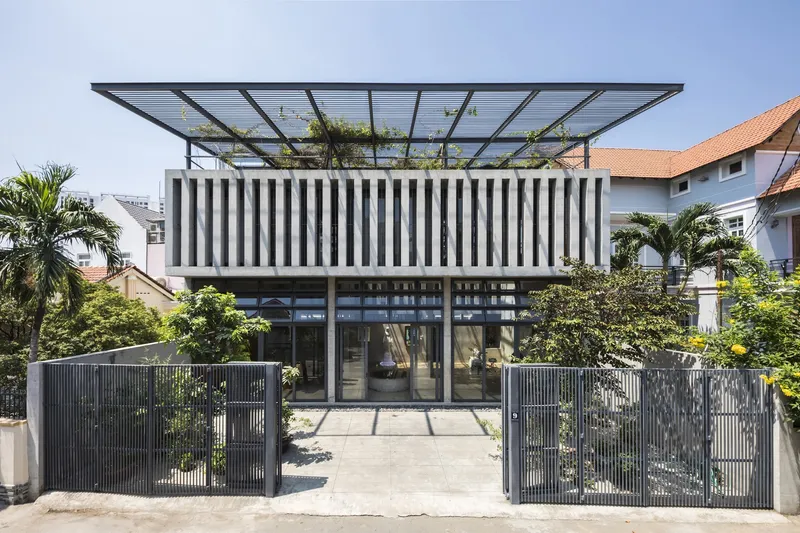
The design of the Peaceful House is inspired by the traditional Vietnamese three-room house, a familiar typology in the country's architecture for hundreds of years. This traditional design approach has been adapted to meet the needs of contemporary living while staying true to its cultural roots. The house is situated in Thanh Tam Parish, Ho Chi Minh City, and focuses on creating a comfortable, sustainable, and flexible living space.
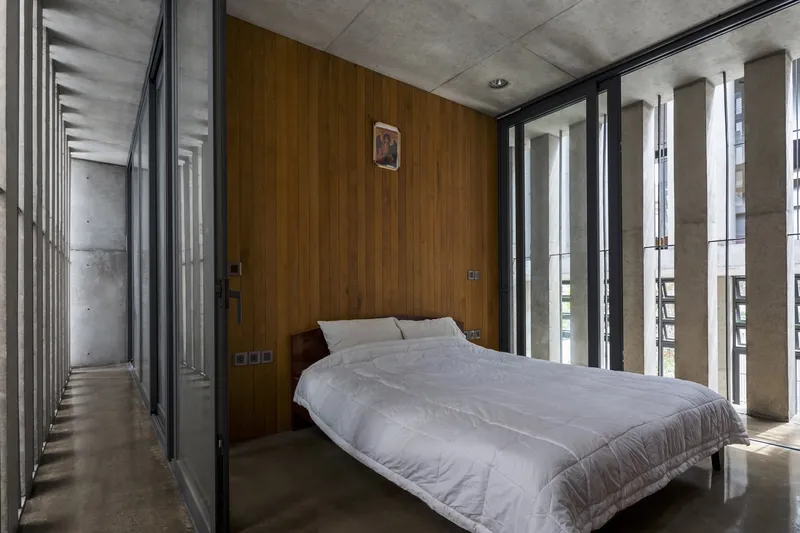
Climate-Responsive Design
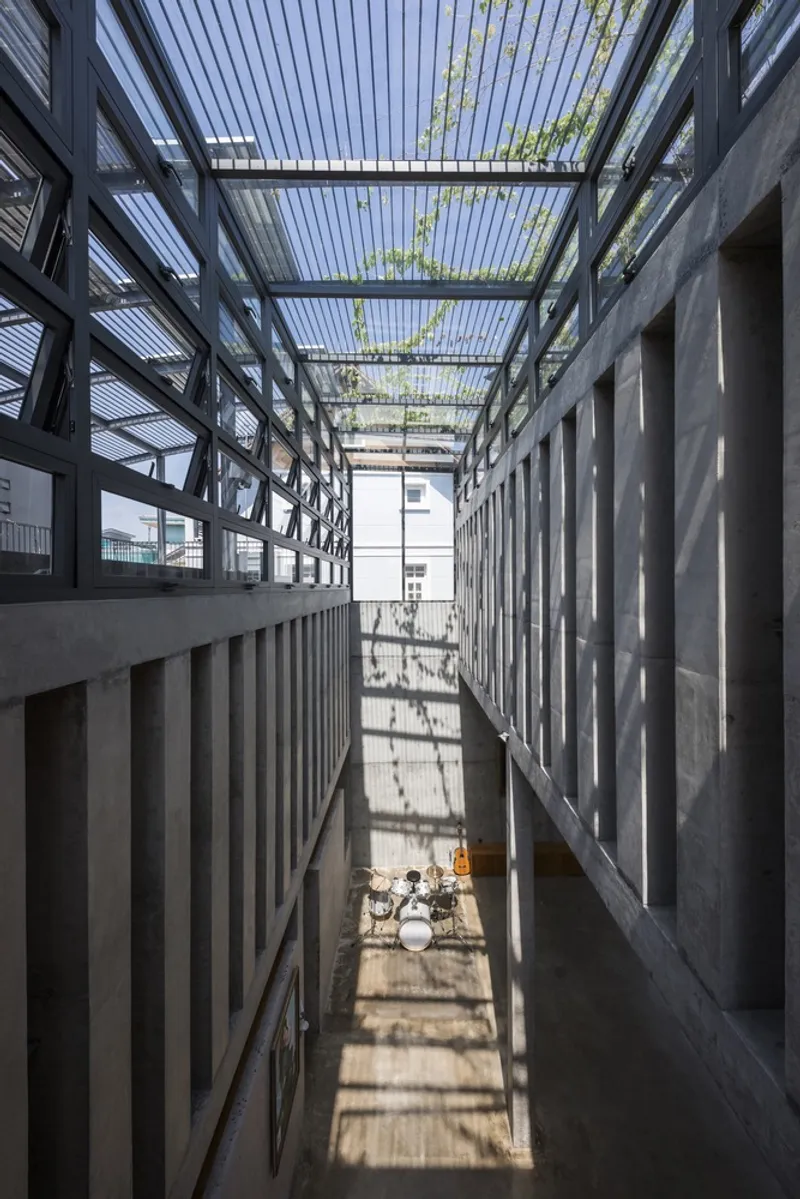
One of the standout features of this house is its response to the tropical climate of Vietnam. The house is designed to capture natural elements such as sunlight, wind, and water, ensuring a constant flow of fresh air and light throughout the year.
Common Living Space and Natural Ventilation
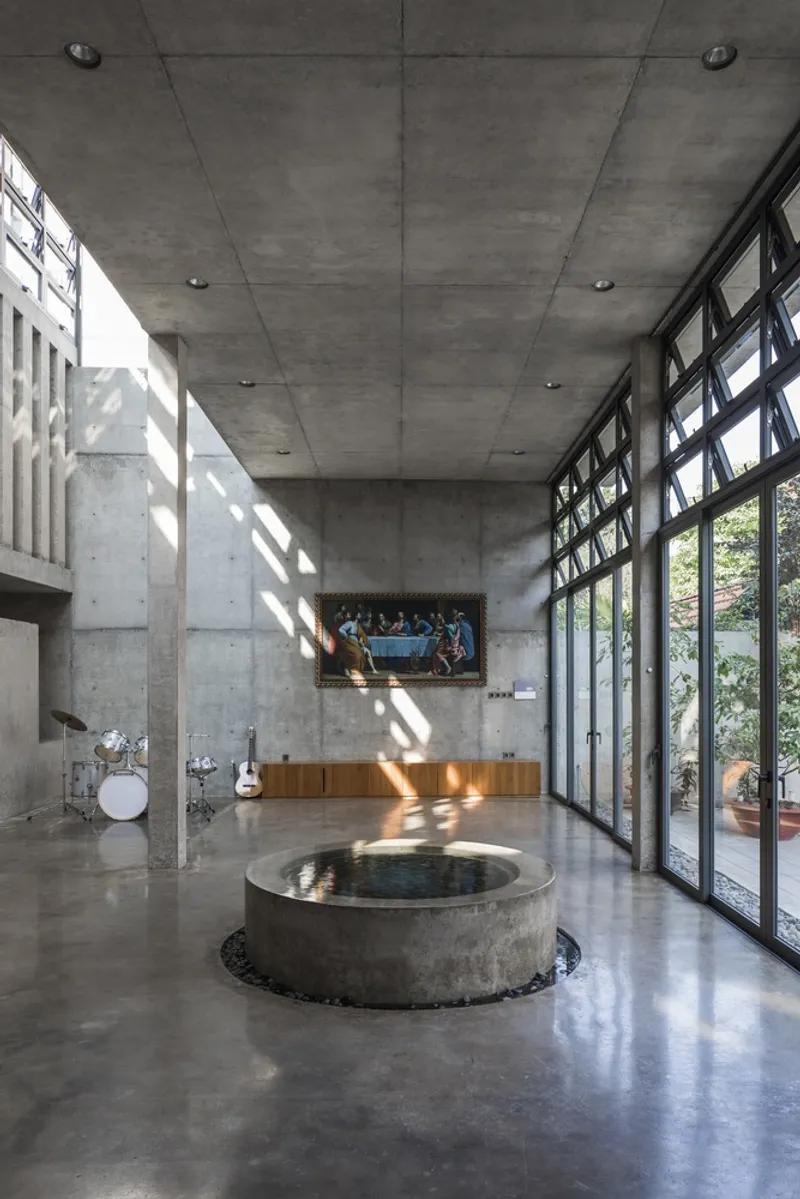
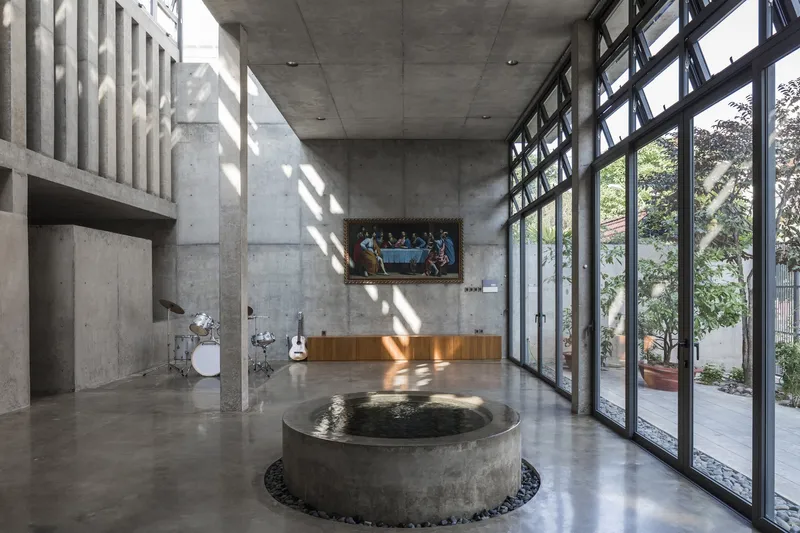
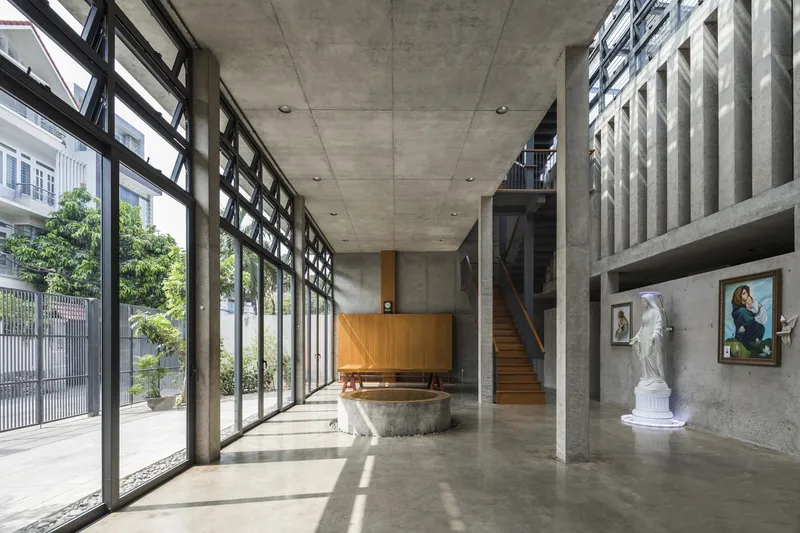
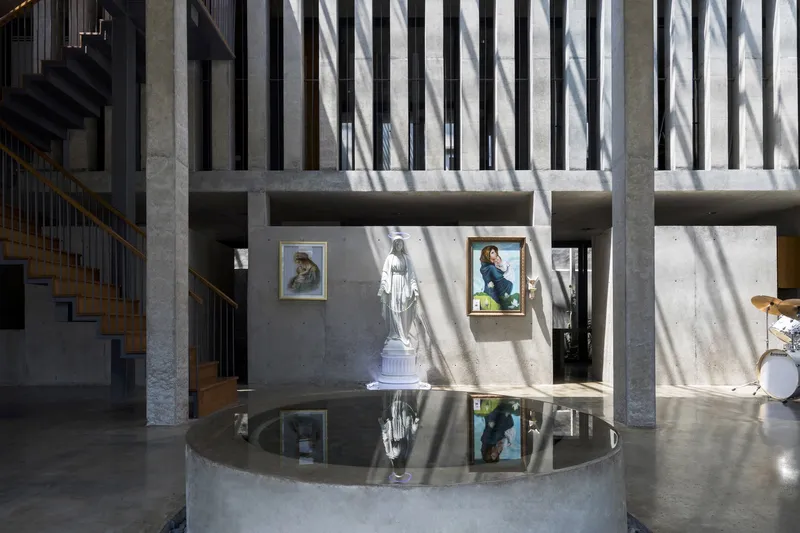
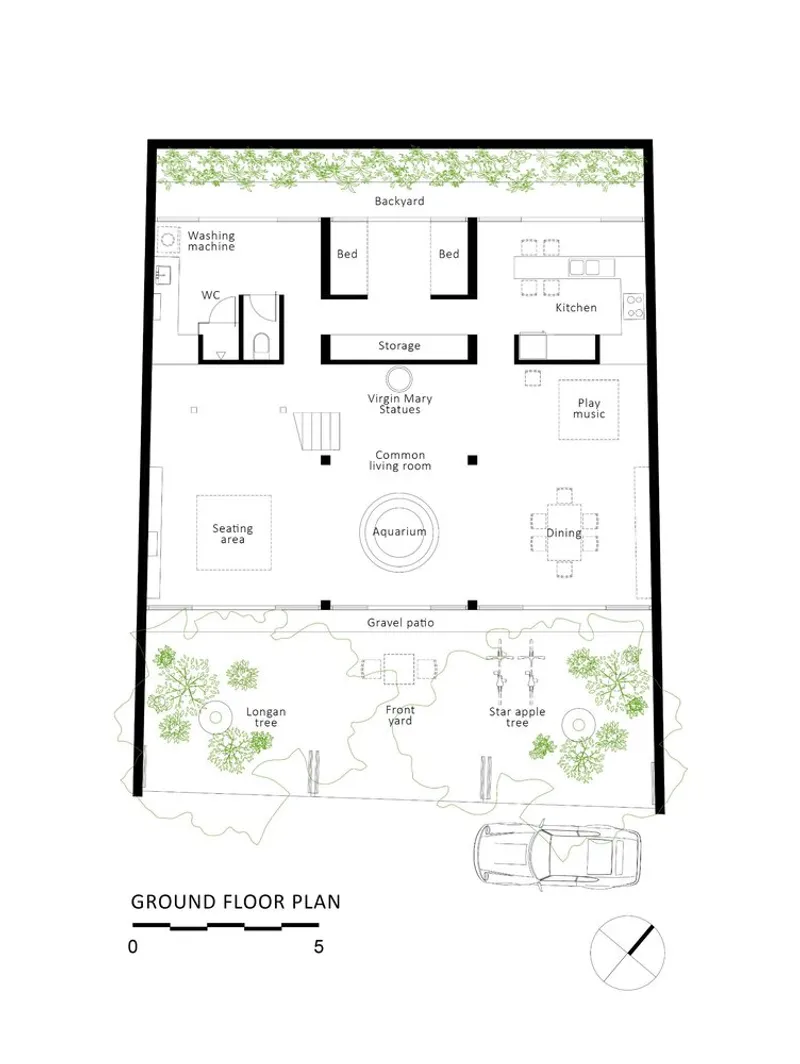
The ground floor of the house features a large common living space, which is designed to be flexible, open, and adaptable. Located at the entrance, it faces the front orchard and connects to an interior courtyard at the back. This courtyard, with its trellis of greenery, allows natural light and ventilation to flow through the house. The arrangement of the space encourages interaction while maintaining privacy, thanks to carefully designed partitions and a central worship area.
This space takes advantage of the natural breeze, creating a fresh, healthy environment for the family. By incorporating natural ventilation, the design reduces the need for artificial air conditioning, thus cutting down on energy usage. The house's layout ensures that all spaces remain comfortable, even in the hot and humid conditions of the tropical climate.
The 'Fish Gills' Concrete Structure
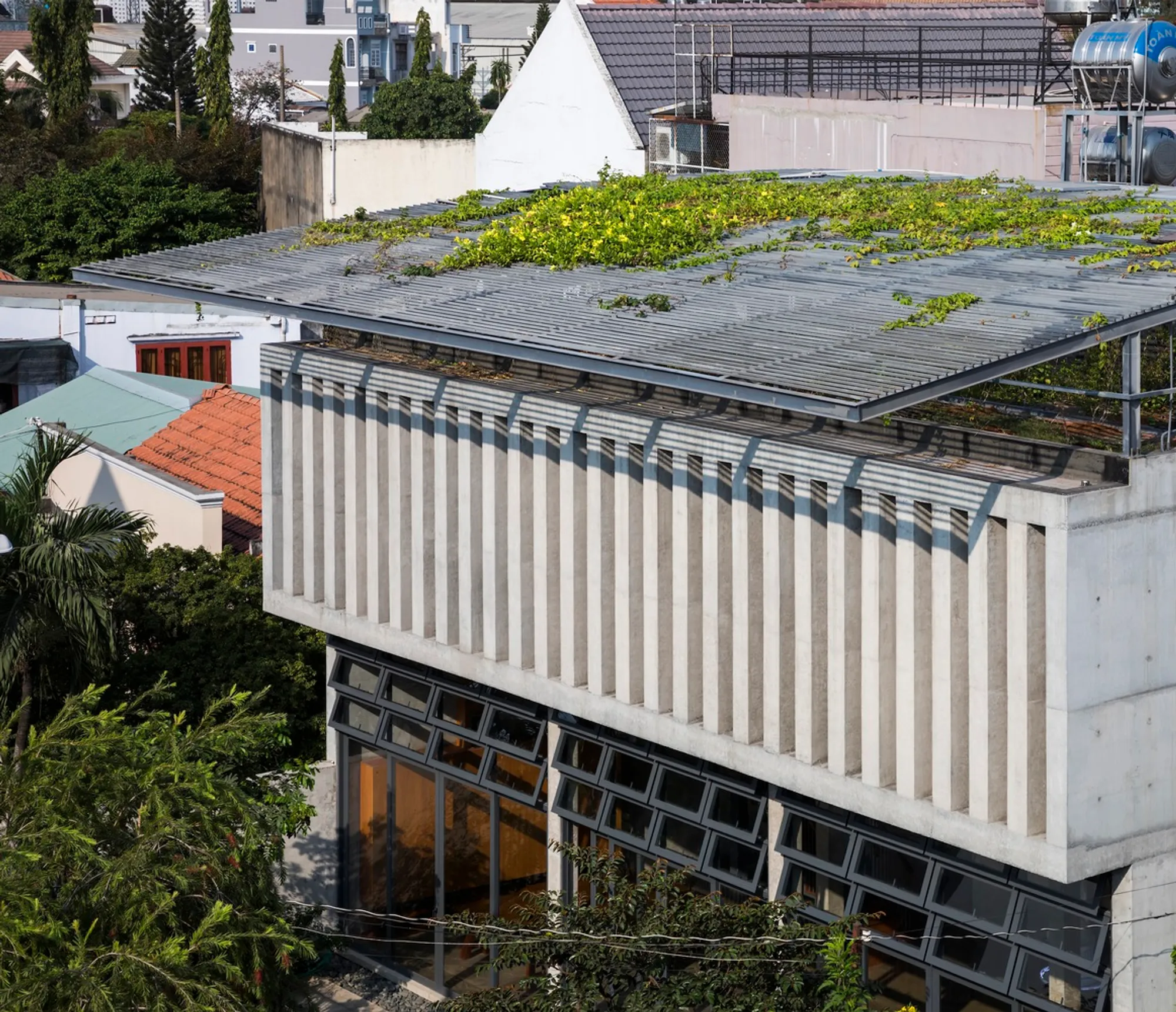
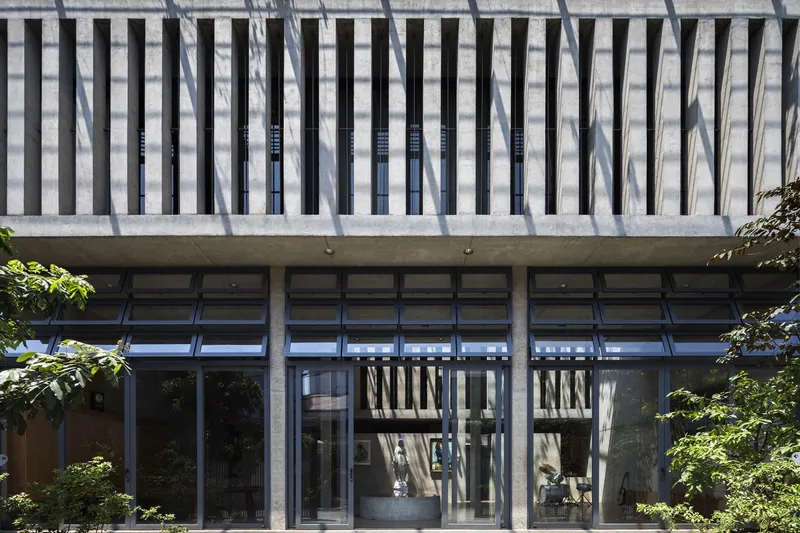
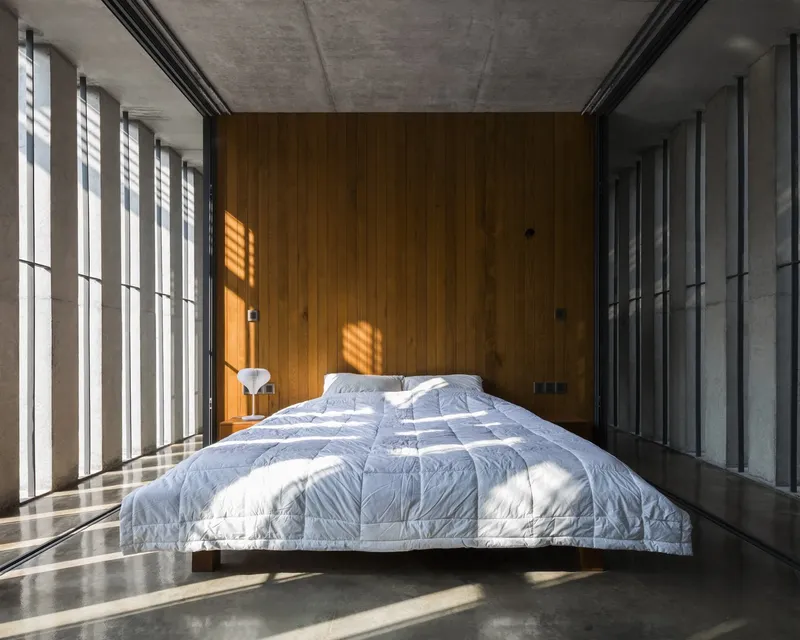
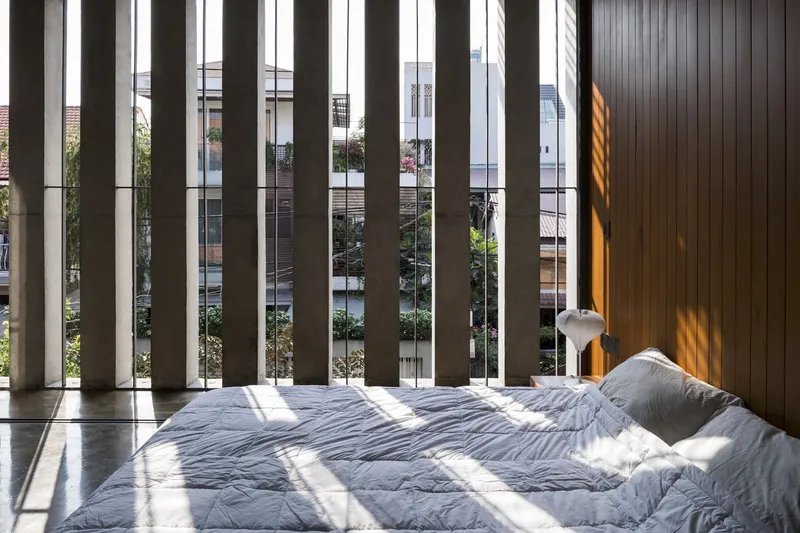
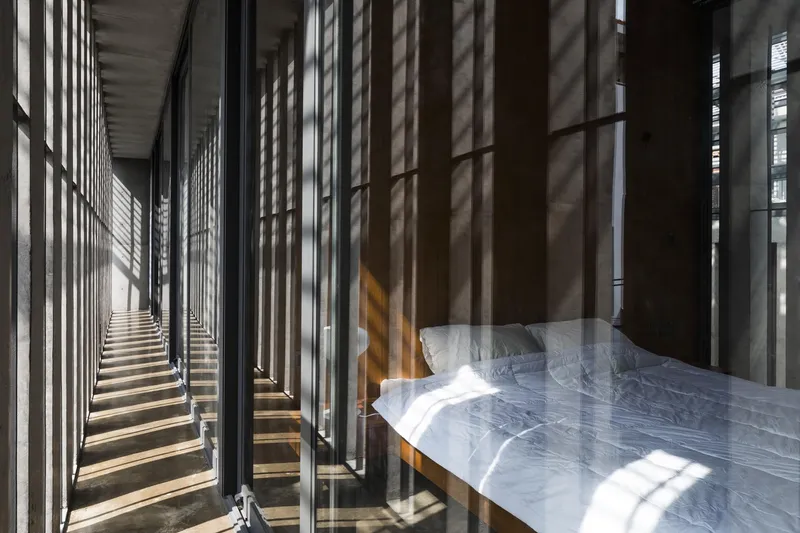
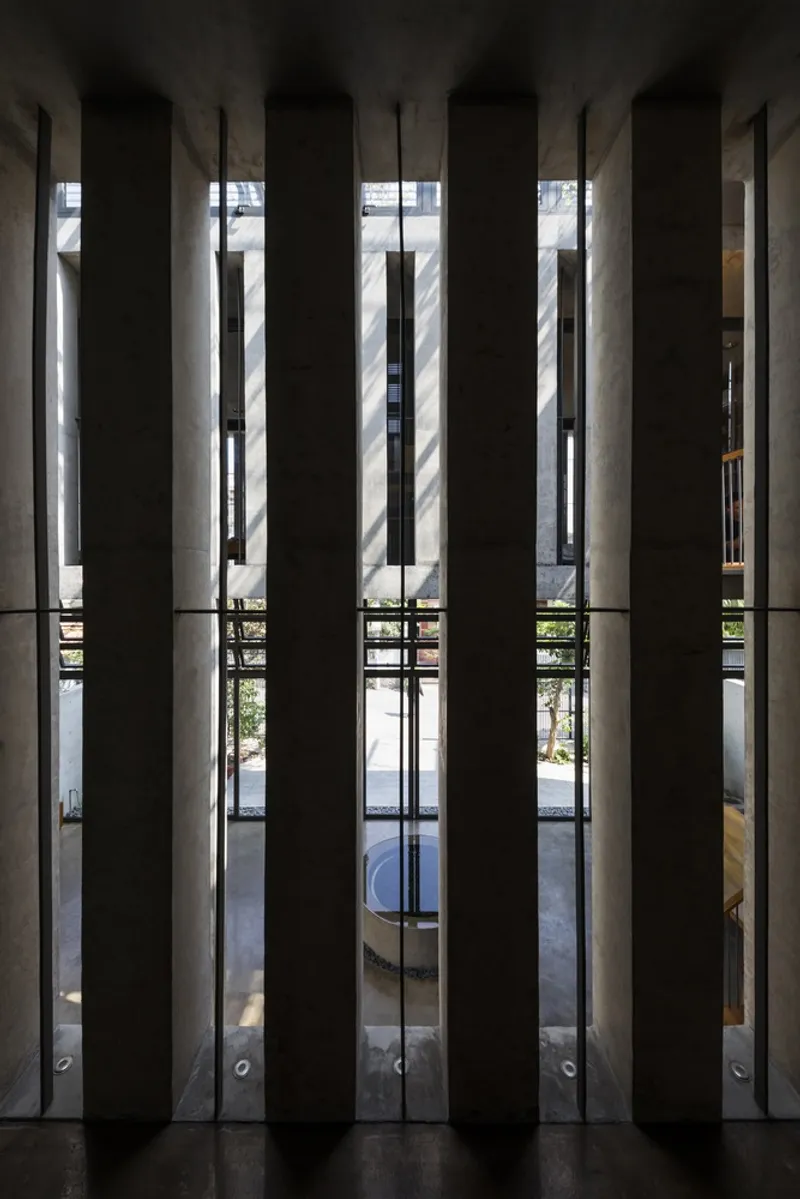
A key design feature of the Peaceful House is the use of concrete structures with hundreds of small openings, referred to as the "fish gills." These openings allow for continuous airflow while protecting the privacy of the family. This clever design element ensures that the home remains cool by providing a barrier against the sun and rain, which is essential in Vietnam's tropical climate.
The design not only enhances ventilation but also regulates the amount of sunlight entering the home, preventing overheating. This sustainable design feature is a perfect example of tropical architecture in Vietnam, where the emphasis is placed on maximizing the use of natural elements while minimizing reliance on mechanical cooling systems.
Green Spaces and Energy Efficiency
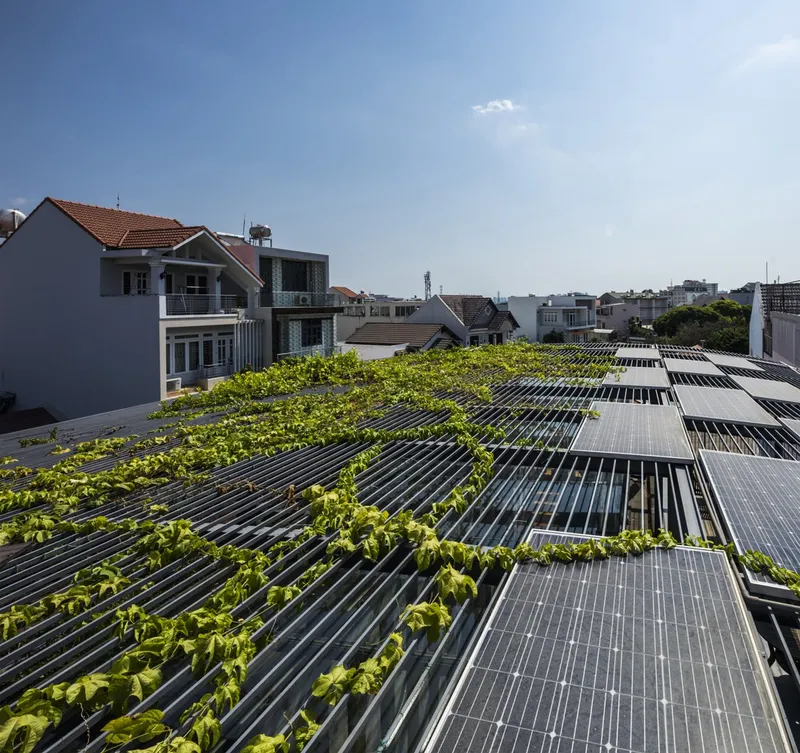
Greenery plays an integral role in the Peaceful House’s design. The house features a front and back orchard and a vegetable trellis on the roof, all of which contribute to creating a cool and quiet environment. The green spaces not only provide aesthetic value but also contribute to the overall energy efficiency of the home. The roof’s green layer acts as insulation, helping to regulate the internal temperature of the house.
The house also incorporates solar panels, making it energy-efficient and reducing the family’s dependence on the local power grid. By harnessing renewable energy, the house ensures a sustainable living environment that supports both the occupants and the planet.
Flexible Living Spaces
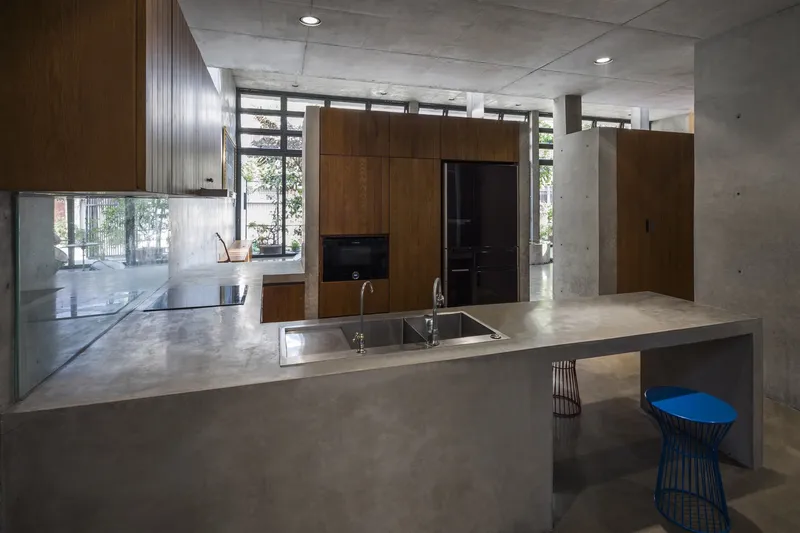
The Peaceful House is designed to accommodate a growing family with changing needs over time. The private spaces are housed in two firm concrete structures on the first floor. These structures are adaptable and can be reconfigured as necessary to suit the family’s evolving needs, whether it’s due to changes in the number of family members or the need for additional space.
The flexible layout of the house, with movable partitions and open spaces, ensures that it can transform over time without major renovations. This adaptability is one of the key elements of tropical architecture in Vietnam, where the built environment is designed to be sustainable and long-lasting.
The Peaceful House in Saigon is a prime example of tropical architecture in Vietnam. With its thoughtful integration of traditional design elements, natural ventilation, and green spaces, the house provides a comfortable and sustainable living environment for its occupants. By focusing on the tropical climate and incorporating energy-efficient features, the architects have created a home that is not only aesthetically pleasing but also environmentally responsible.
This house serves as a model for future residential projects in tropical climates, demonstrating how architecture can respond to both cultural traditions and modern needs while promoting sustainability.
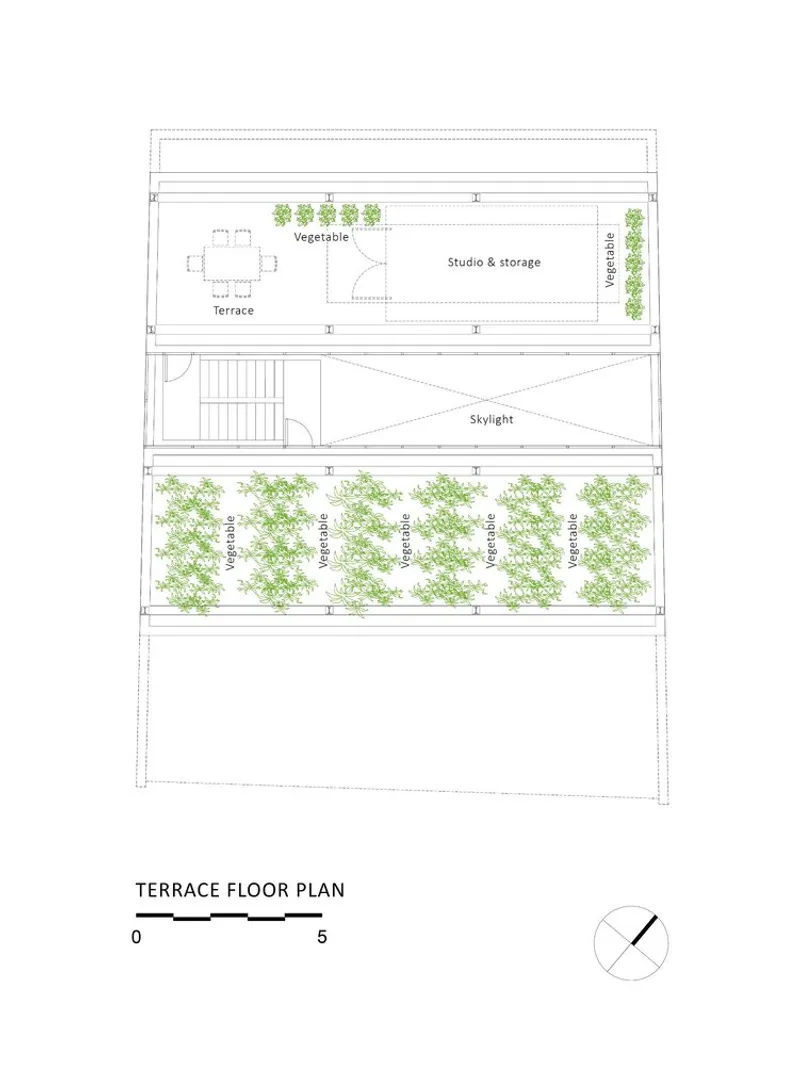
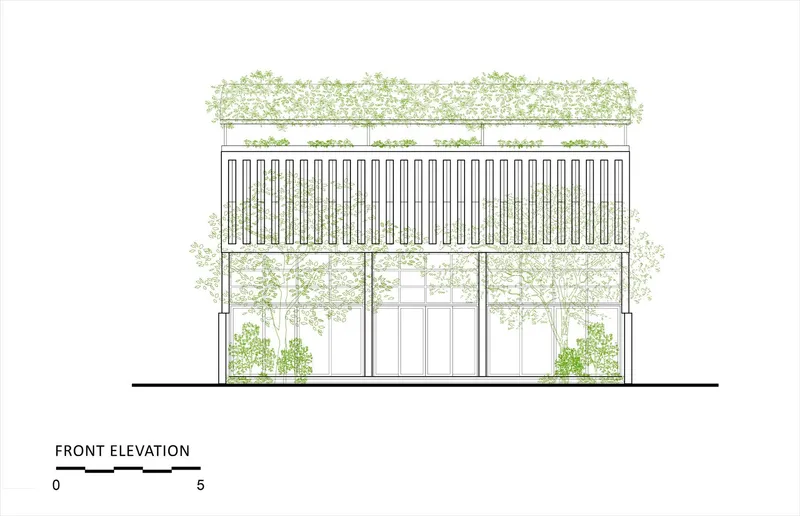
All the photographs are work of Hiroyuki Oki




Popular Articles
Popular articles from the community


Play: Fragments of Their World
Familiar architecture becomes modular playground design, creating safe spaces where displaced children can learn, connect, imagine and play.

The Ocean Hive: Sustainable Architecture for a Self-Sufficient Civilization at Sea
The Ocean Hive imagines sustainable architecture at sea, where modular habitats, algae, wave power and ocean waste sustain a growing colony.

Riyadh For All: Intergenerational Urban Design for Active Aging in Rabat
Riyadh For All reimagines urban design in Rabat with intergenerational co-living, adaptive courtyards, and Moroccan cultural exchange today.

Co-life: Sustainable Architecture for Age-Friendly Community Living
Co-life reimagines sustainable architecture for seniors through courtyards, rammed earth, shared gardens, and spaces designed for belonging.


Similar Reads
You might also enjoy these articles


Hodi-Mandai Geram
Project Function: Preservation and revitalization of the Intangible heritage and socio-spatial identity of the Hodi by Housing, Cultural Memory Center, Sacred Grove, landscape, local tourism economy


Olio Towers: A Mid-Rise for Performers That Fuses Housing, Rehearsal, and Stage
Located blocks from Houston's Theater District, this modular tower stacks living units around a central performance atrium.

Oasis: Modular Green Housing Carved into Dhaka's Urban Fabric
A shortlisted Plugin Housing entry reclaims unauthorized settlements in Dhaka with stepped concrete volumes, green roofs, and ventilation-driven design.

Black Hole: A Floating Megastructure for the Post-Physical Era
Emiliano Mazzarotto envisions a spherical, self-scaling arena where e-sports, digital hotels, and holographic stadiums replace traditional public space.

Explore Vietnam Architecture Competitions
Discover active competitions in this discipline



Challenge to reimagine the Iron Throne


Photograph architecture without architects


Illustrate the lost glory of Angkor Wat - Render Challenge


Design challenge to reuse E-waste
Comments (0)
Please login or sign up to add comments
No comments yet. Be the first to comment!