

The Red Church Reconstruction by Atelier-r: Reviving Heritage with Modern Sensibility
Red Church in Olomouc transformed by Atelier-r into a cultural venue blending historic restoration with a striking modern annex.


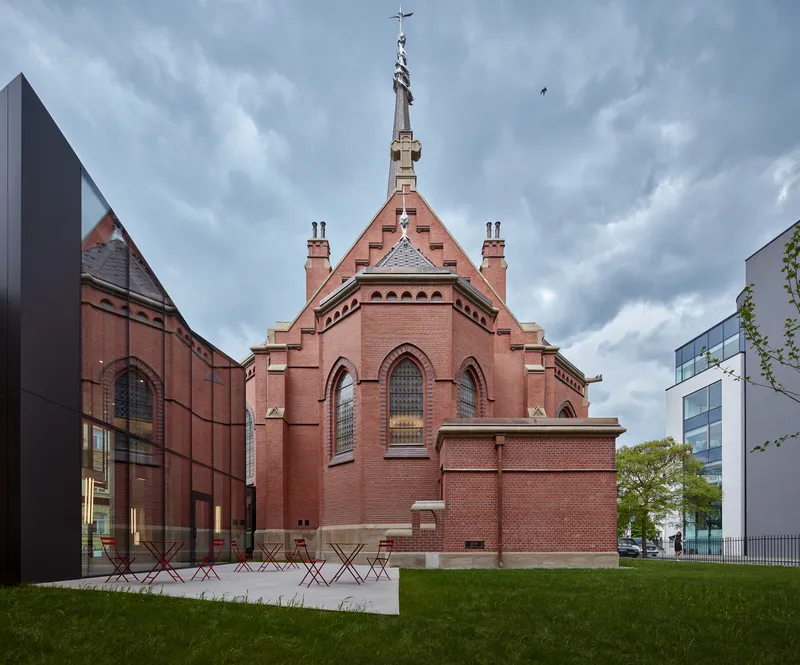
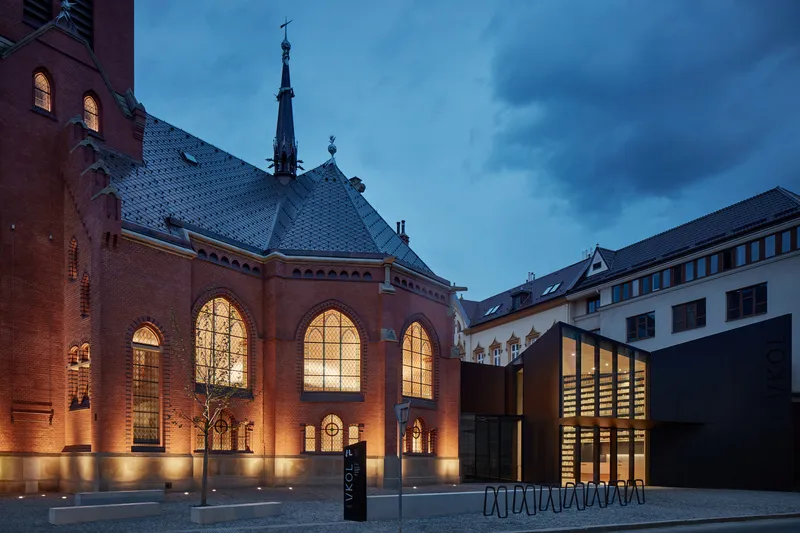
Located in Olomouc, Czechia, the historic Red Church—originally a 1902 neo-Gothic Lutheran structure—has been thoughtfully restored and reimagined byAtelier-r. Once relegated to functioning solely as a book depository for the Olomouc Research Library since 1959, the church had been closed to the public for decades. Today, through a sensitive architectural intervention, it emerges not only as a cultural venue but as a contemporary landmark that bridges heritage conservation and public architecture.
A Cultural Rebirth Through Adaptive Reuse
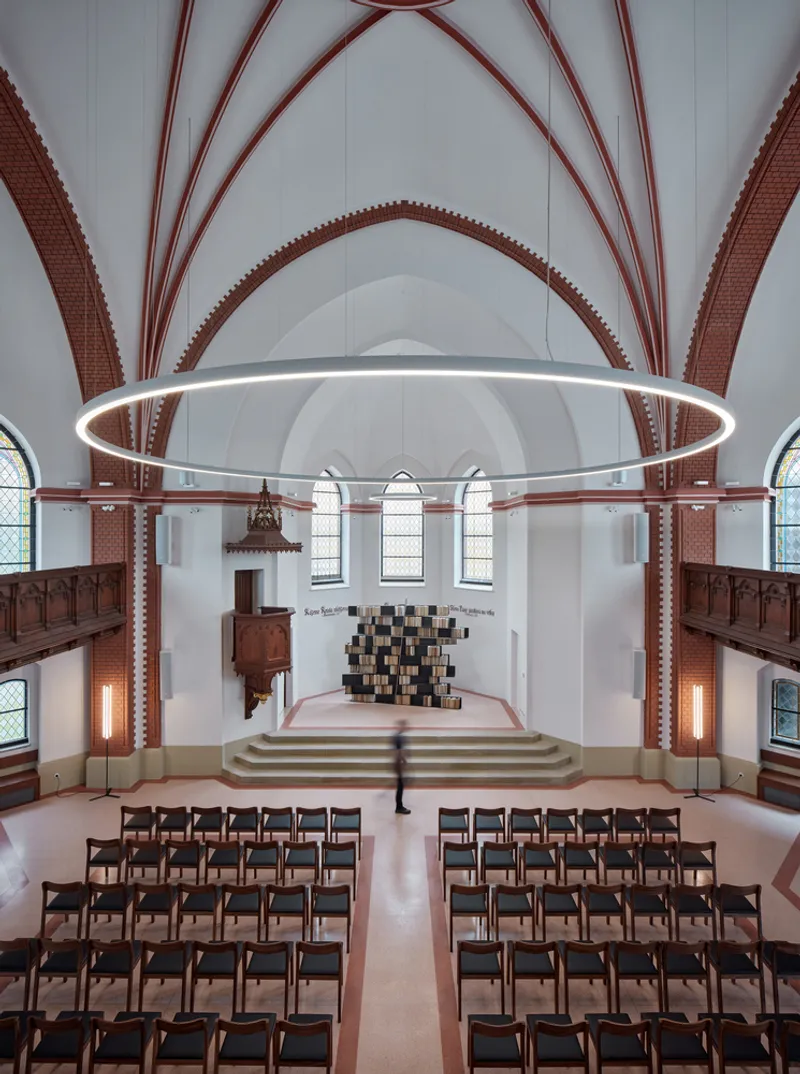
The reconstruction was initiated by the Olomouc Region, which recognized the potential of this historically significant building to serve broader cultural functions. With the construction of a new library building to handle archival needs, the Red Church was liberated to embrace a new role: a multifunctional public space designed for lectures, readings, chamber concerts, and art exhibitions. Additionally, it now acts as an information center for the region and the Research Library.

Restoring Structure and Soul
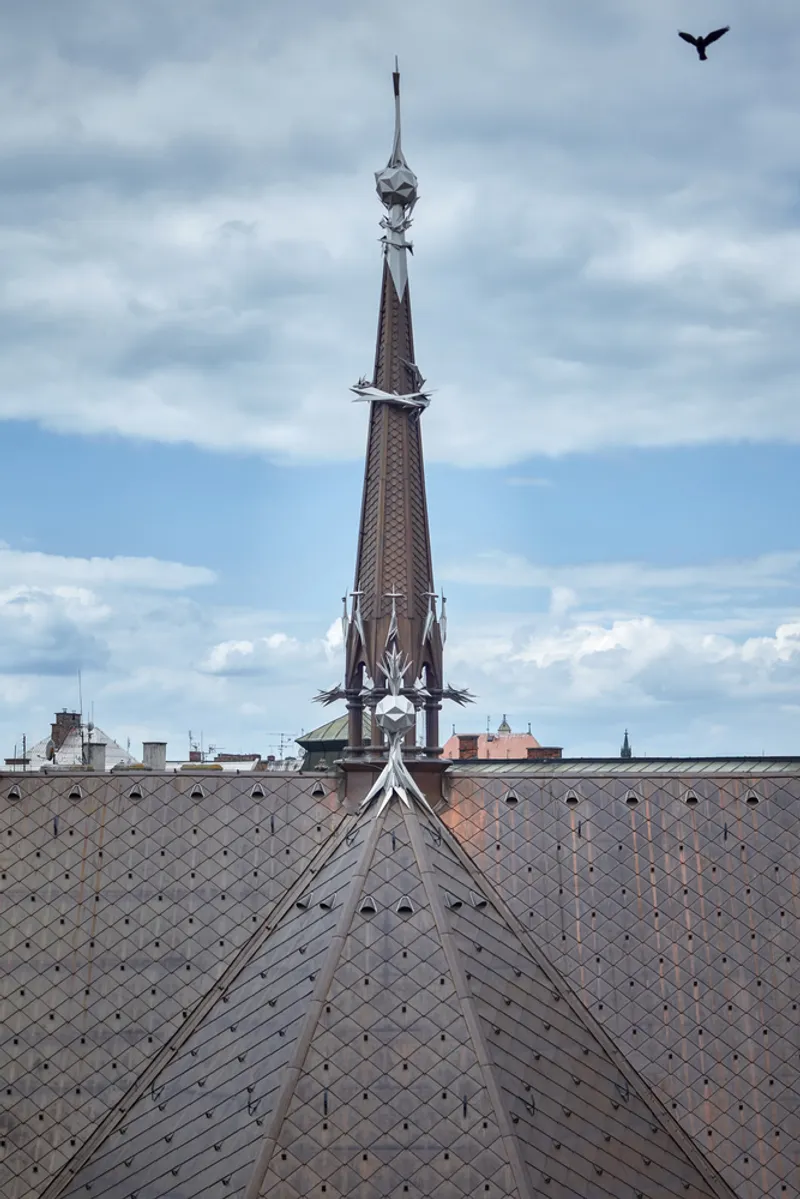
The architectural brief demanded more than cosmetic changes. The Red Church was in a fragile condition, suffering from foundational weaknesses, damp masonry, and a deteriorating roof structure. Atelier-r responded with an in-depth structural rehabilitation, reinforcing foundations, restoring stucco and facade cladding, and rebuilding the floors from base to surface. The roof—critically damaged and on the verge of collapse—was rebuilt using copper tiles that replicated the shape and format of the original, preserving visual continuity.

Since many of the building’s original decorative elements were lost to time, sculptor Jan Dostal was commissioned to design contemporary reinterpretations, integrating artistic expression with architectural preservation.
A Modern Addition with Respectful Dialogue
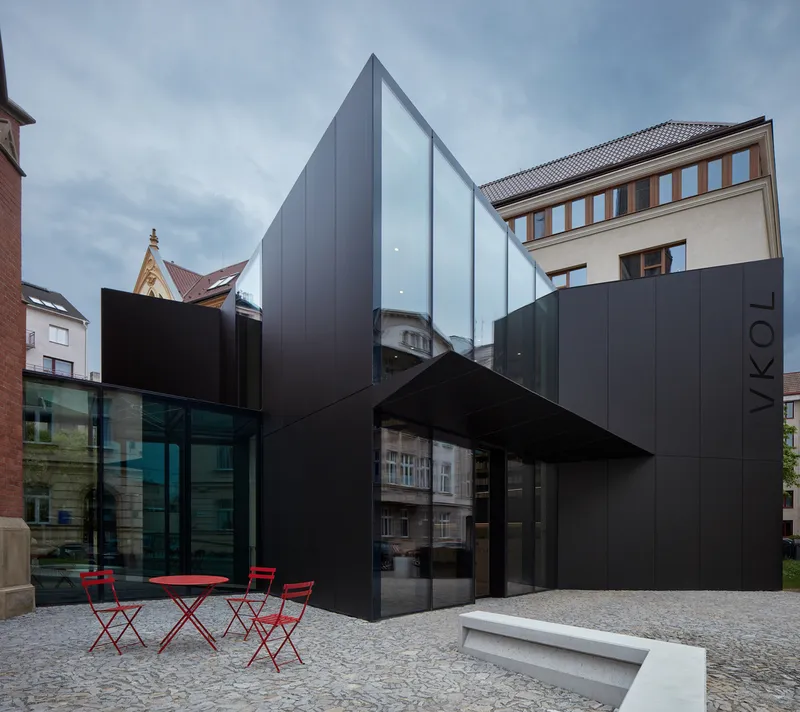
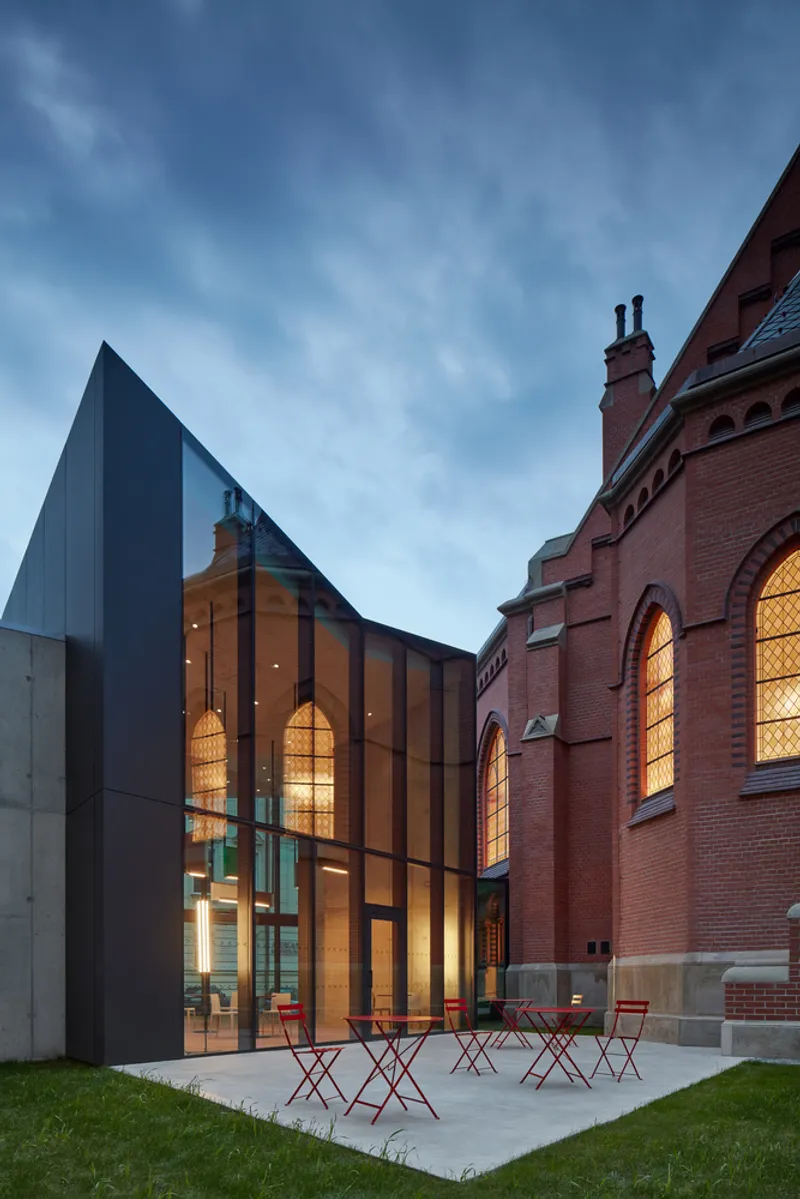
To accommodate essential modern facilities without compromising the historical integrity, a new annex was constructed. Positioned between the Red Church and the existing library offices, the new volume acts as a bridge—both physically and functionally. Designed in matte black aluminum, the annex draws geometric inspiration from the church itself. Its crystalline form is a contemporary response to the church’s vertical rhythm and massing, subtly echoing its neo-Gothic DNA.
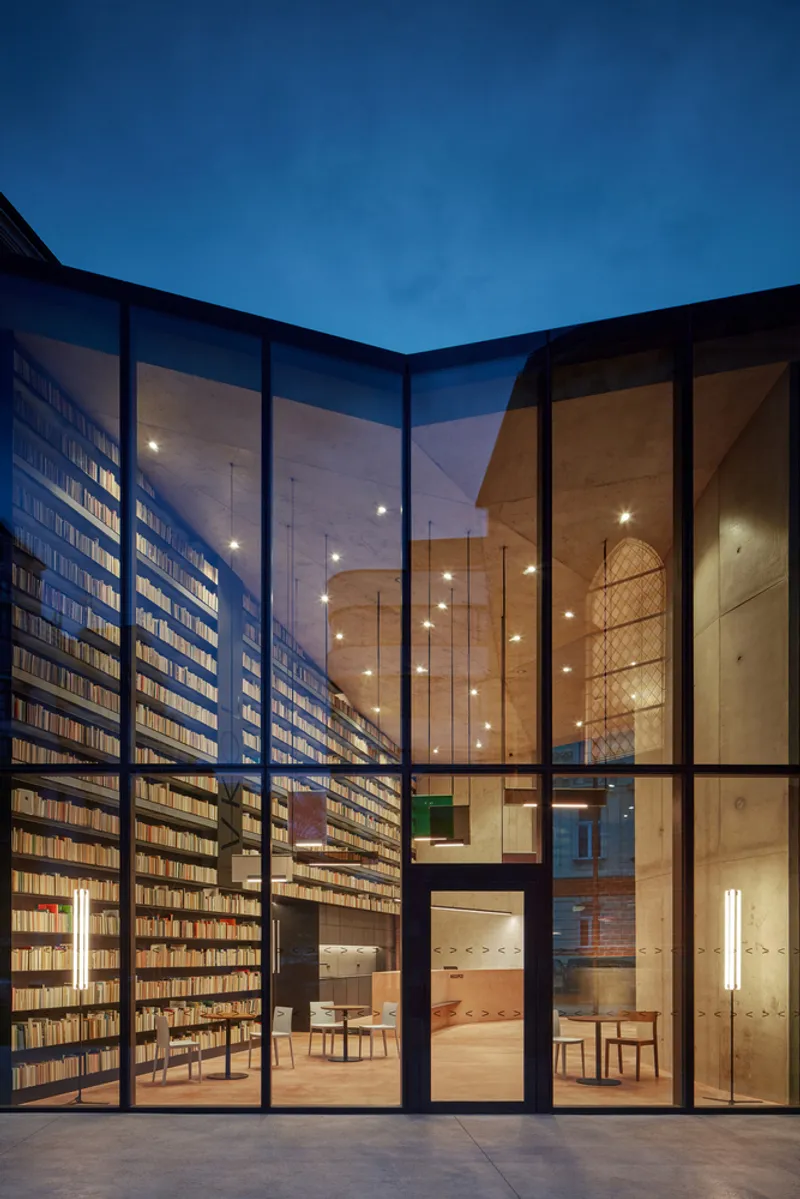
Inside, the annex houses a welcoming entrance hall, reception, and café—transforming what was once an enclosed site into an open cultural hub. The formerly fenced area is now a public piazza, inviting locals and visitors alike to linger and connect.


Harmonizing Interior Design and Materiality
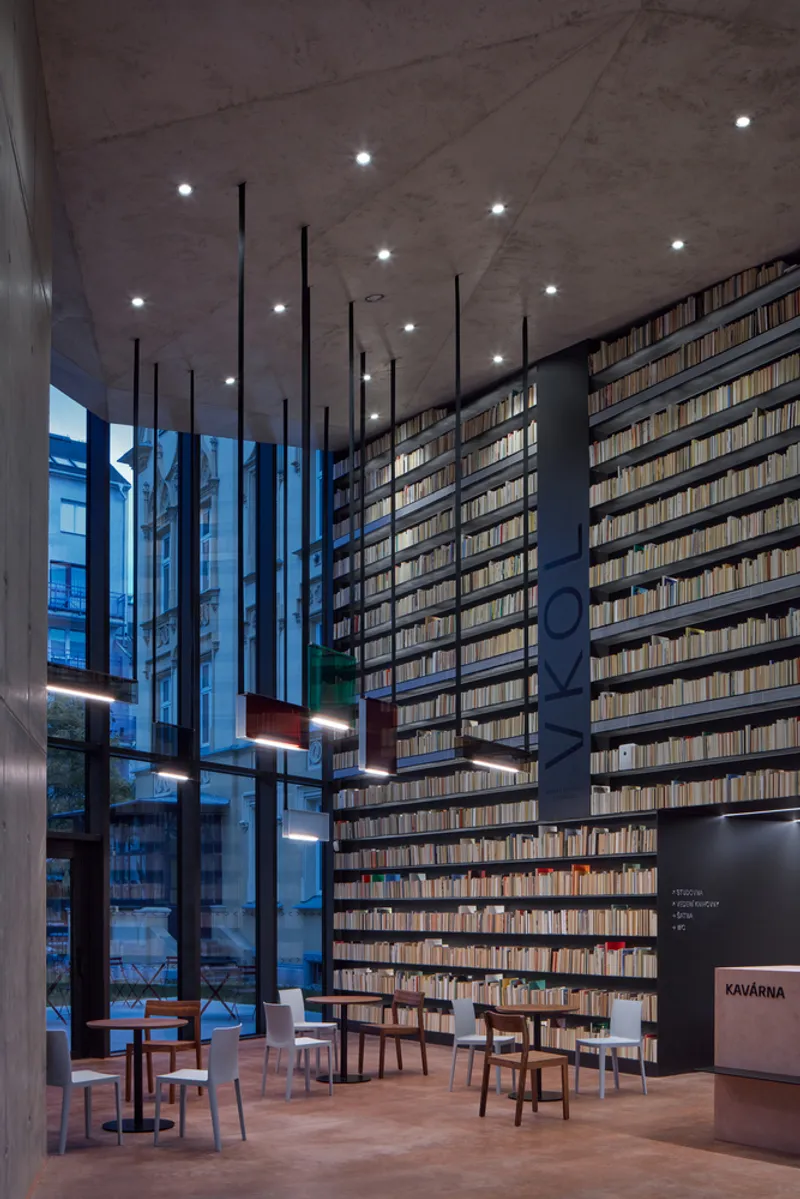
The interiors are the result of a close collaboration between Atelier-r and Denisa Strmiskova Studio. The design reflects a calming, minimalist aesthetic balanced by emotional warmth. The annex interiors use pastel pink concrete—visible on floors, custom furniture, and feature walls—offering a gentle contrast to the church’s historic brick tones.
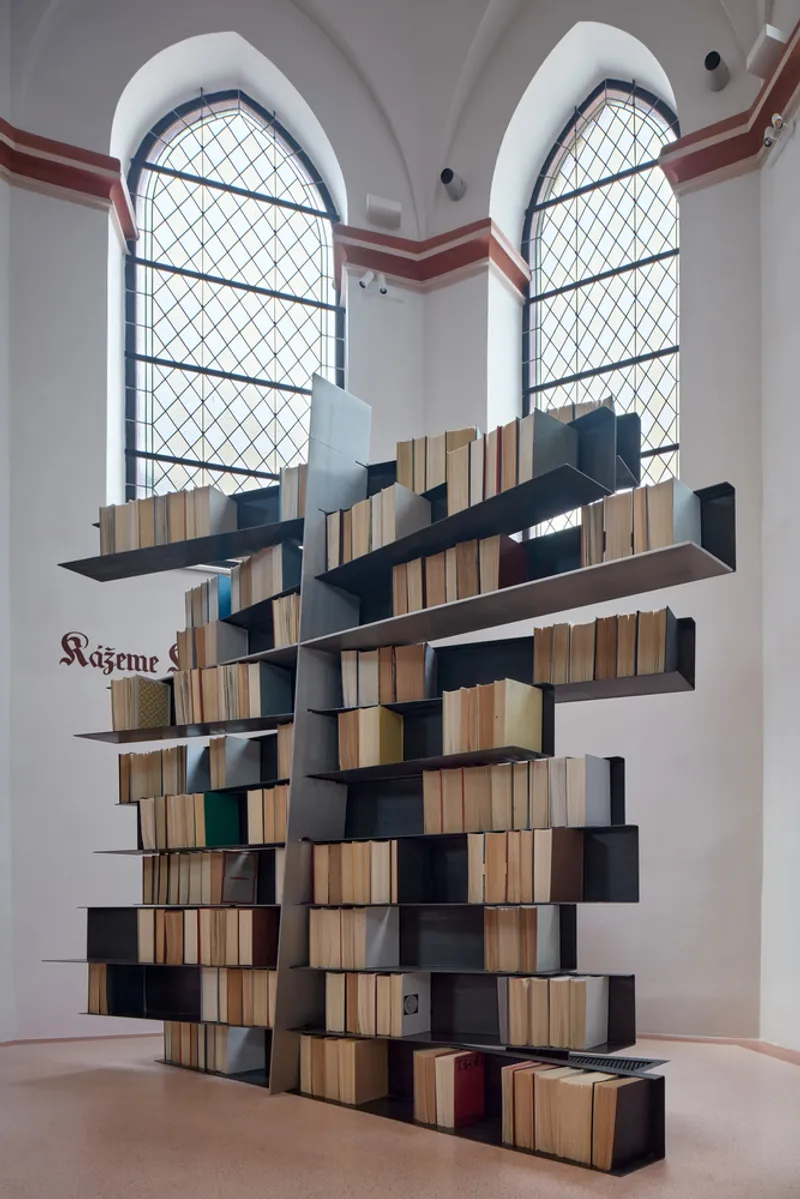
At the heart of the café is a monumental book wall, backlit for evening ambience. Hanging in front is a sculptural, colorful glass light fixture by Lambert & Fils, suspended by nylon threads, creating ephemeral reflections of both the church and nearby buildings.
Furnishings, sourced from Zeitraum, HAY, and custom-made collections, blend craft and contemporary design. Walnut wood chairs, minimalist armchairs, and bespoke coffee tables take cues from ecclesiastical craftsmanship. Lighting from Kaia mimics the poetic presence of flambeaux, subtly illuminating both sacred and social spaces.

A Community-Centric Vision for the Future
This reconstruction is more than a design project; it is a cultural gesture—a revitalization of identity for Olomouc’s urban fabric. By layering contemporary architecture onto a preserved historic structure, Atelier-r has redefined what adaptive reuse means in 21st-century Europe.


Popular Articles
Popular articles from the community


Architekt Andreas Gruber Scatters 23 Dark Timber Chalets Across a South Tyrolean Forest Edge
In Molini di Tures, Amonti Chalets breaks a resort into a hamlet of gabled timber houses, with parking, storage and services pushed into the slope.

longwave studio Reorganizes a 112 m² Tainan Apartment Around the Daily Routines of a Family and Two Cats
In Tainan, Taiwan, birch plywood, rust-red furniture and a freestanding plaster wall link arrival, storage, work and family life in one apartment.

Jaramillo Van Sluys Arquitectura and Urbanismo Turn a Demolished Registry Lot in Quito into an Orchard Plaza
In Quito's Centro Histórico, a 2,800 m² plaza exposes the San Agustín convent wall and redraws its lost Augustinian orchard in volcanic stone.

GROUP A Strips a 1969 Rotterdam Harbor Headquarters to Its Frame and Wraps It in Timber Louvers
In Rotterdam's M4H harbor district, Ferro Offices reuses a 1969 frame, adds one timber storey and reaches BREEAM-NL Outstanding.

Similar Reads
You might also enjoy these articles


Hodi-Mandai Geram
Project Function: Preservation and revitalization of the Intangible heritage and socio-spatial identity of the Hodi by Housing, Cultural Memory Center, Sacred Grove, landscape, local tourism economy


Olio Towers: A Mid-Rise for Performers That Fuses Housing, Rehearsal, and Stage
Located blocks from Houston's Theater District, this modular tower stacks living units around a central performance atrium.

Oasis: Modular Green Housing Carved into Dhaka's Urban Fabric
A shortlisted Plugin Housing entry reclaims unauthorized settlements in Dhaka with stepped concrete volumes, green roofs, and ventilation-driven design.

Black Hole: A Floating Megastructure for the Post-Physical Era
Emiliano Mazzarotto envisions a spherical, self-scaling arena where e-sports, digital hotels, and holographic stadiums replace traditional public space.

Explore Cultural Architecture Competitions
Discover active competitions in this discipline

Challenge to reimagine the Iron Throne

Photograph architecture without architects

Illustrate the lost glory of Angkor Wat - Render Challenge

Bring back Drive In's
Comments (0)
Please login or sign up to add comments
No comments yet. Be the first to comment!