
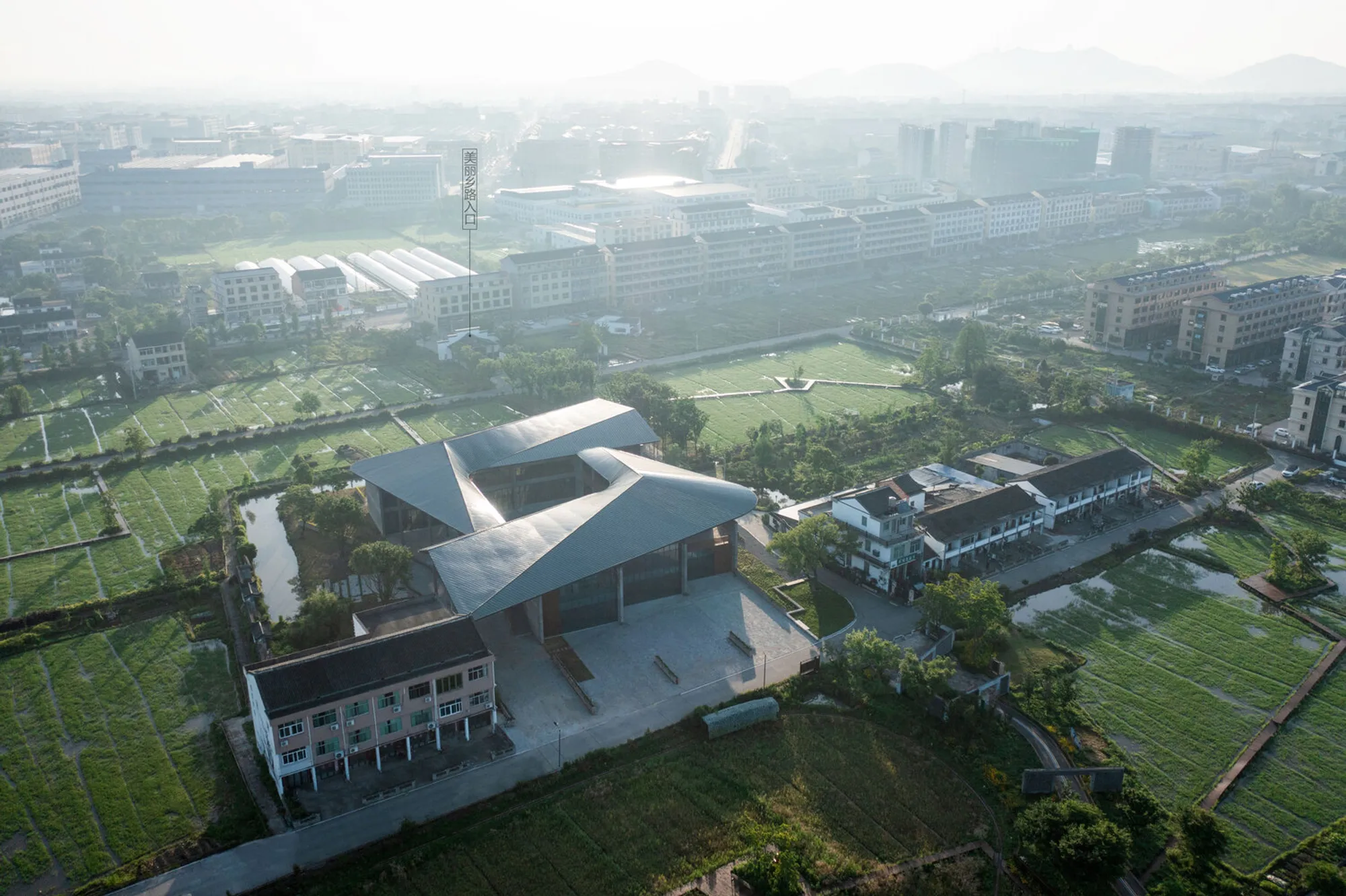
The Road Corridor Cultural Station by YS-ONE DESIGN: A Rural Cultural Gateway in Taizhou
A rural cultural hub blending courtyards, verandahs, and market-inspired design, revitalizing Taizhou's pastoral entrance with community functions.


Reimagining Rural Interfaces: The Entrance to a Pastoral Scenic Complex
Positioned at the threshold of a pastoral complex in Taizhou, China, The Road Corridor Cultural Station by YS-ONE DESIGN transforms a formerly demolished residential zone into a vibrant cultural and community hub. The project reclaims the entrance of the "Beautiful Country Road" — a symbolic and literal gateway that establishes the first impression of the pastoral development zone. Previously scattered with ruins and slated for long-term redevelopment, this site now anchors a vision for sustainable rural transformation.
A Courtyard-Driven Cultural Complex
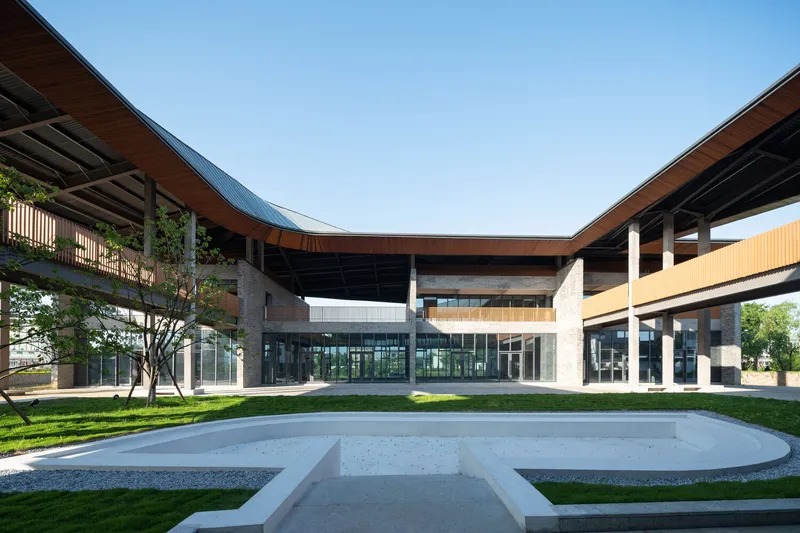
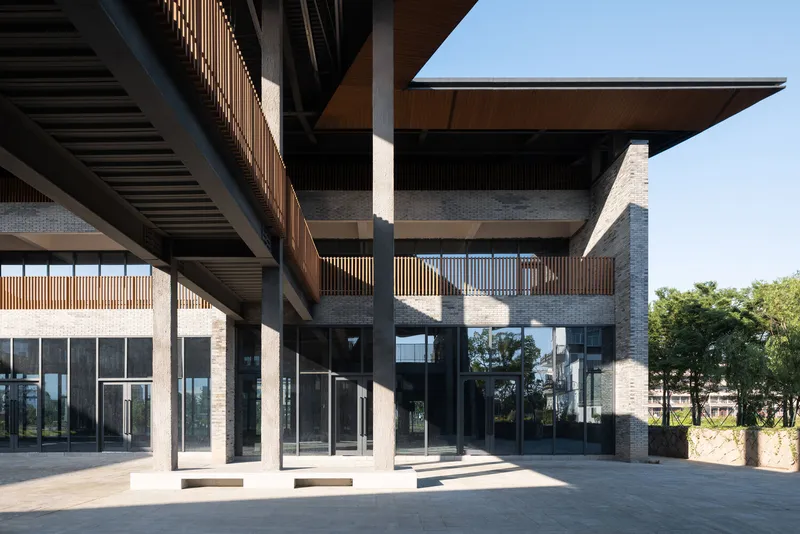
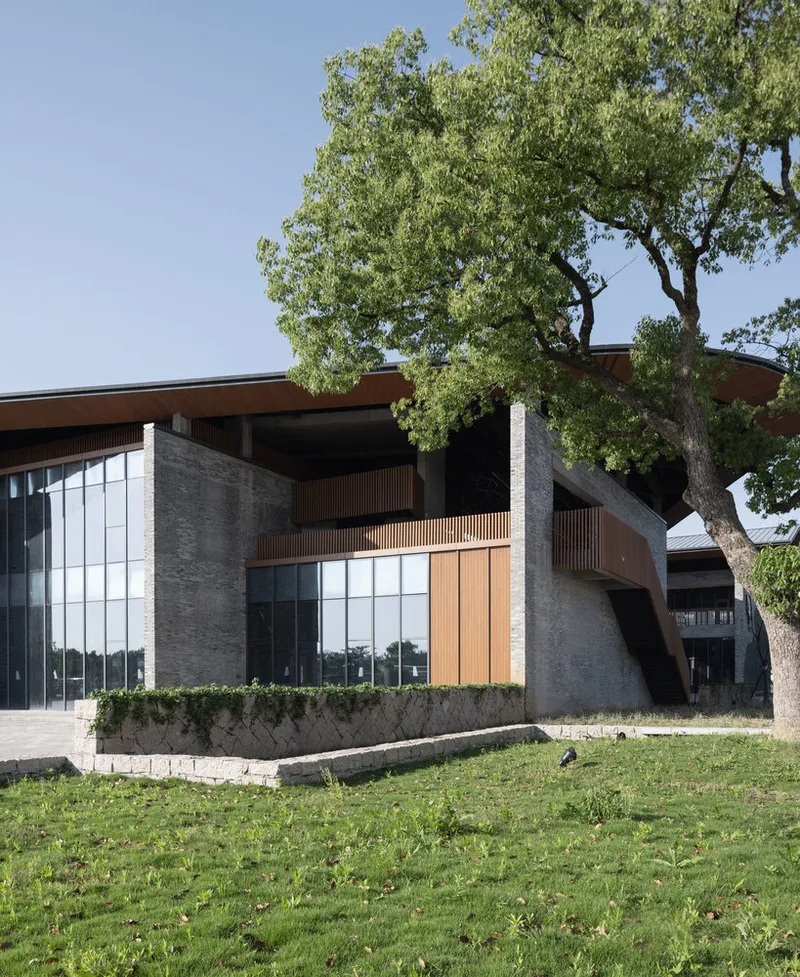
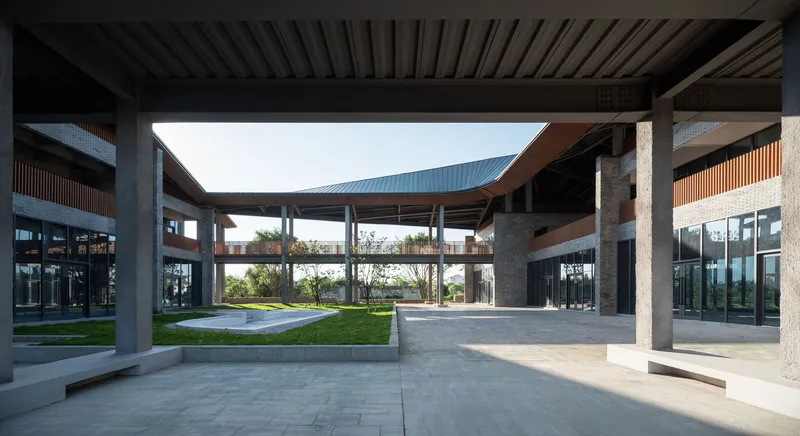
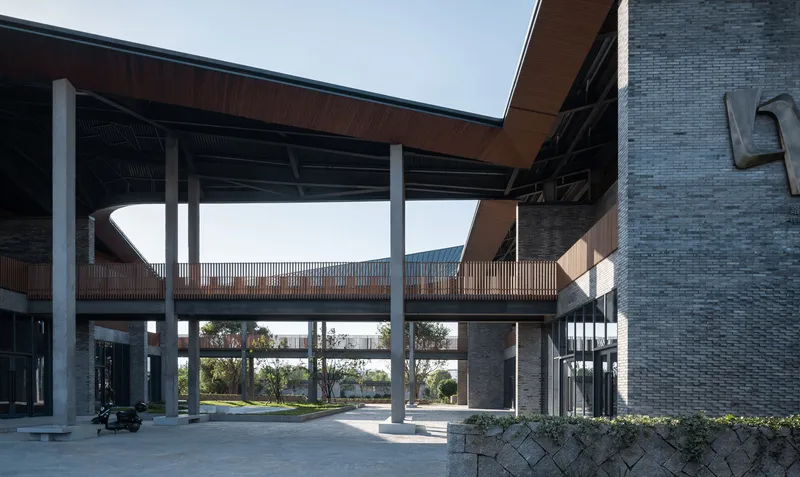
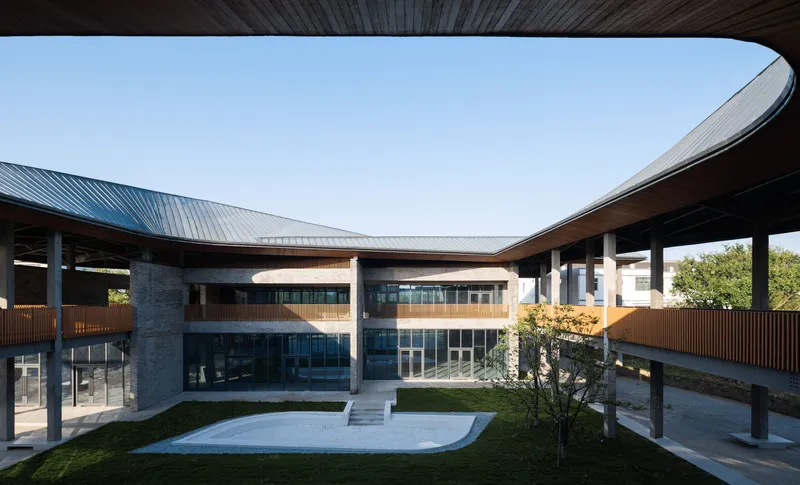
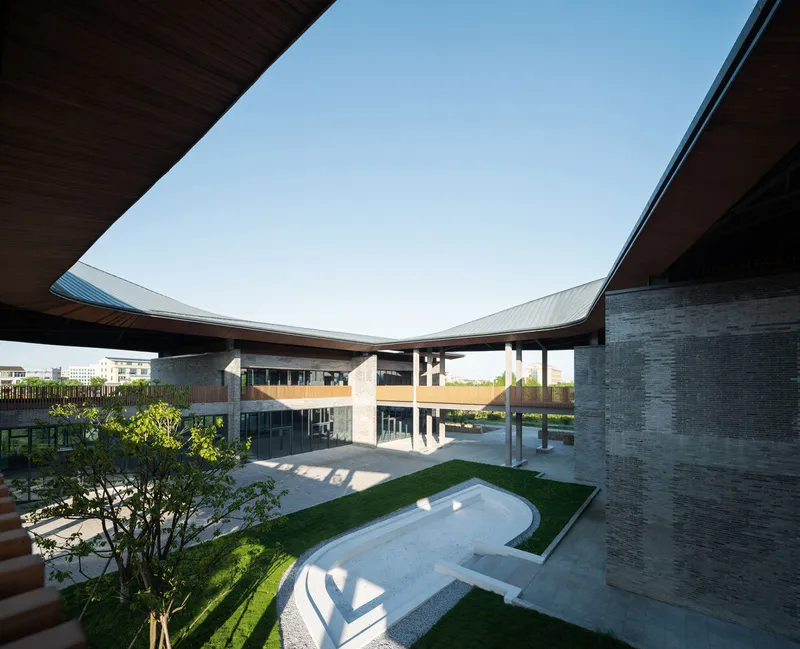
Rooted in traditional rural design language, the cultural station embraces a courtyard typology that fosters spatial openness and community interaction. Its linear layout, with pavilions and shaded corridors running north to south and open spaces stretching east to west, encourages movement, congregation, and rest — evoking the familiar rhythm of rural life.
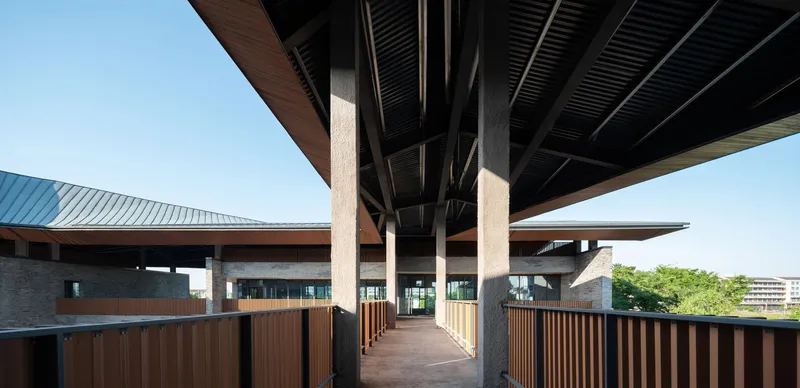
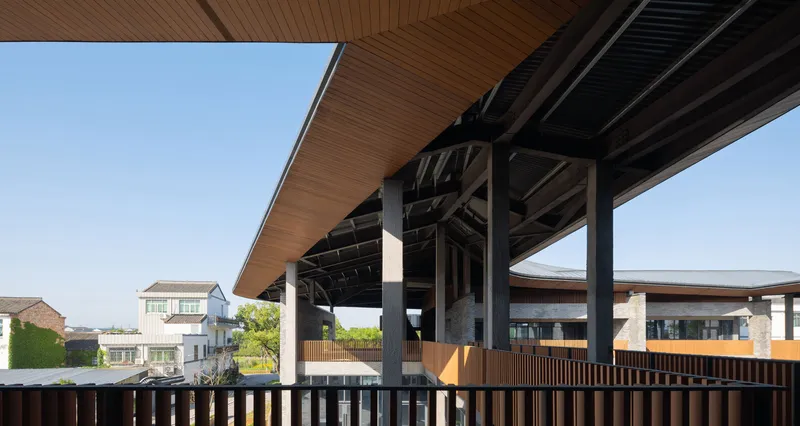
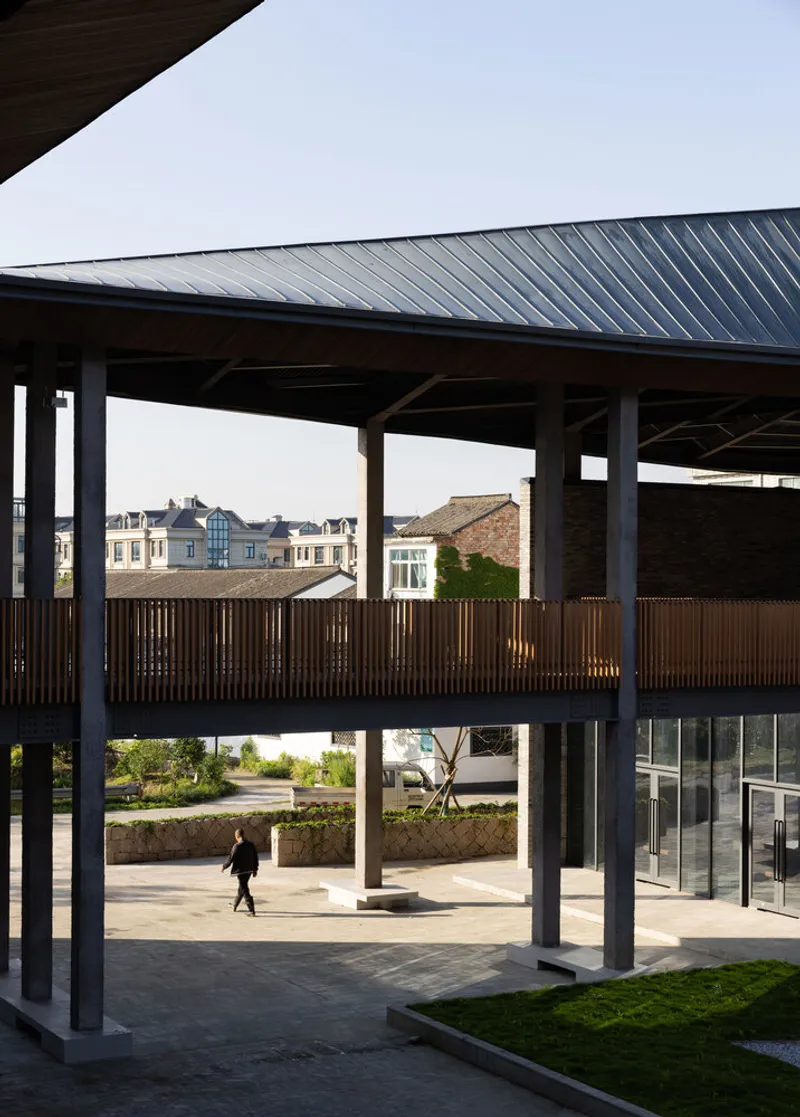
The verandahs, used as a connective tissue between discrete structures, echo the communal spirit of Chinese villages. These sequences of semi-open spaces act as both architectural and social infrastructure, reinforcing a place-based cultural identity.
"Road Corridor" as Heritage and Metaphor
The name "Road Corridor" is deeply rooted in the local heritage of rural market trade, referencing traditional gatherings and exchanges under extended eaves. This reinterpretation creates a "floating roof" marketplace, which becomes a cultural carrier — promoting not only economic activity but also intergenerational learning, storytelling, and leisure.
The station serves as a functional and symbolic starting point for the pastoral complex, bridging modern utility with cultural memory.
Visual Dialogue with the Lake Island Hall
The architectural narrative is enriched through a symbolic relationship between the station and a "four-leaf clover" hall located on a lake island nearby. In this dialogue, the station acts as the "hand", welcoming and guiding visitors, while the island hall represents the "heart" — a destination for gatherings, weddings, and educational salons. This dual-core model defines a spatial and emotional loop, merging movement and meaning.
Multi-Program Use and Community Value
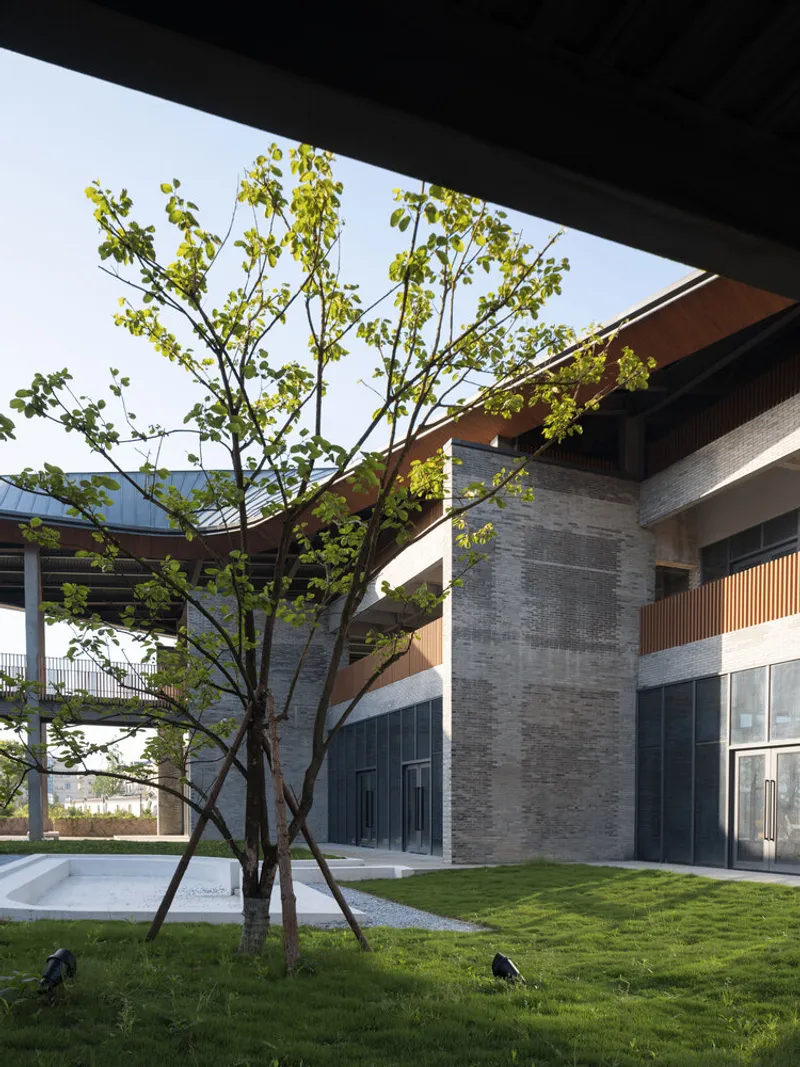
The Road Corridor Cultural Station operates as more than a visitor center. It houses a Children’s Palace, offering education and creative spaces for younger generations, while supporting administration and hospitality functions. Together with the lake island facilities, the station forms a revenue-generating core for the entire rural complex, balancing economic sustainability with cultural programming.
A Model for Rural Cultural Regeneration
YS-ONE DESIGN’s approach reflects the broader trend of rural revitalization through design. With urban sprawl eroding village identities and villages adopting urban behaviors, the firm proposes a hybrid architectural typology — rooted in local traditions yet responsive to modern needs.
By employing low-cost, high-efficiency interventions, the project demonstrates how "acupuncture-style" rural architecture can inject vitality into the countryside, guiding an urban-rural aesthetic and functional exchange.
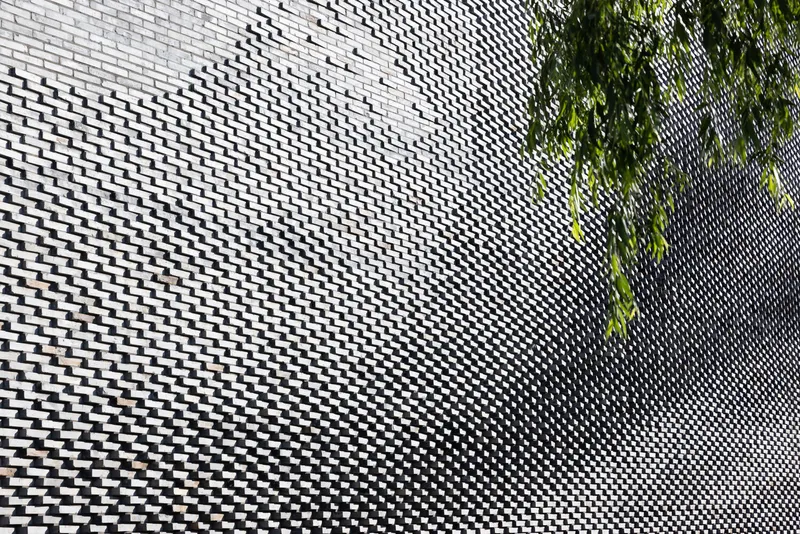
Design Philosophy: From Landscape to Culture
Continuing its signature logic of integrated architecture and landscape, YS-ONE DESIGN sees each project as a narrative structure. At the Road Corridor Cultural Station, this vision materializes through the inner-to-outer storytelling of spatial sequences and the use of cultural symbols as architectural IP. The result is an evocative space that resonates with the identity of place, purpose, and people.
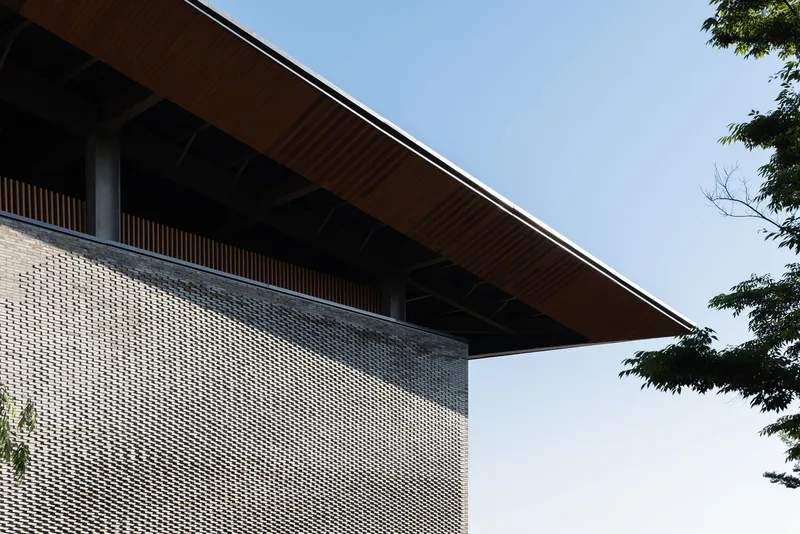
All Photographs are works of Archi-Translator


Popular Articles
Popular articles from the community


The Musturak Paradise: Senior Living Architecture for a Connected Future in Temara, Morocco
The Musturak Paradise reimagines senior living architecture in Temara via private homes, social spaces, culture, community, and shared care.

Lunar Spiral: Space Architecture Shaped by the Mathematics of the Universe
Lunar Spiral reimagines space architecture through Fibonacci geometry, lunar regolith, levitating habitats, and self-sustaining Moon living.

Co-life: Sustainable Architecture for Age-Friendly Community Living
Co-life reimagines sustainable architecture for seniors through courtyards, rammed earth, shared gardens, and spaces designed for belonging.

Co-Life: Senior Housing Design That Reconnects Older Adults With the City
Co-Life reimagines senior housing design through healing gardens, shared streets, workshops, and a sustainable community across generations.


Similar Reads
You might also enjoy these articles


Hodi-Mandai Geram
Project Function: Preservation and revitalization of the Intangible heritage and socio-spatial identity of the Hodi by Housing, Cultural Memory Center, Sacred Grove, landscape, local tourism economy


Olio Towers: A Mid-Rise for Performers That Fuses Housing, Rehearsal, and Stage
Located blocks from Houston's Theater District, this modular tower stacks living units around a central performance atrium.

Oasis: Modular Green Housing Carved into Dhaka's Urban Fabric
A shortlisted Plugin Housing entry reclaims unauthorized settlements in Dhaka with stepped concrete volumes, green roofs, and ventilation-driven design.

Black Hole: A Floating Megastructure for the Post-Physical Era
Emiliano Mazzarotto envisions a spherical, self-scaling arena where e-sports, digital hotels, and holographic stadiums replace traditional public space.


Explore Cultural Architecture Competitions
Discover active competitions in this discipline



Challenge to reimagine the Iron Throne


Photograph architecture without architects


Illustrate the lost glory of Angkor Wat - Render Challenge


Bring back Drive In's
Comments (0)
Please login or sign up to add comments
No comments yet. Be the first to comment!