

The School of Social Development by studio berardi miglio
A community-centered school in rural Nepal, combining education, volunteer housing, and social spaces through simple, sustainable design by studio berardi miglio.


Building Community Through Architecture in Rural Nepal
Set amidst the breathtaking mountain landscapes of Bodgaun, Nepal, The School of Social Development by studio berardi miglio stands as a powerful example of how architecture can transform and empower remote communities. Commissioned by the humanitarian organization Jay Nepal, the project combines a school, a volunteer center, and community gathering spaces—designed and built under extreme constraints of budget, access, and resources.
From the outset, the architects faced significant challenges: limited funding of just €100,000, a design phase conducted remotely during the pandemic, and construction in a region with minimal infrastructure and skilled labor. Yet, these very limitations became the foundation for a project rooted in ingenuity, cultural sensitivity, and human connection.
A Village Within a Village
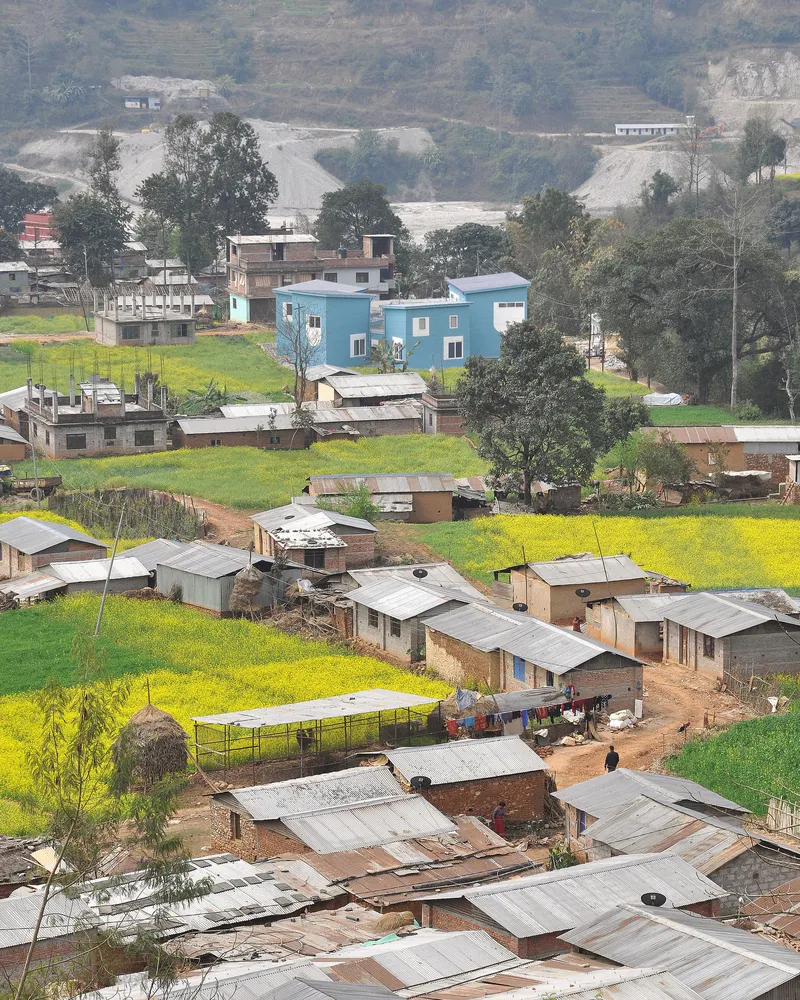
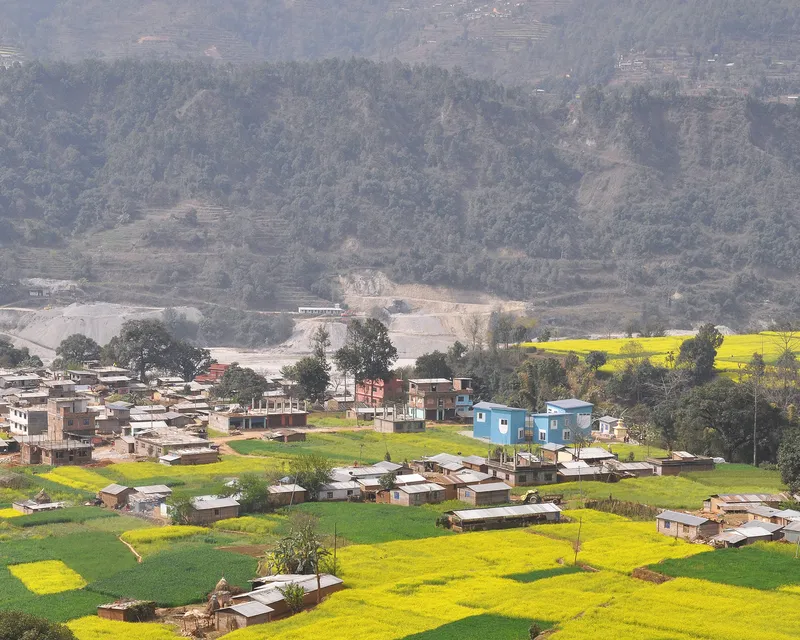
The site is a green plateau surrounded by the Himalayan foothills, scattered with a few modest homes. With no existing urban structure or identifiable public core, the architects envisioned creating not just a building—but a place. Their concept emerged as a “village within a village,” designed to generate social interaction and foster a sense of community identity.
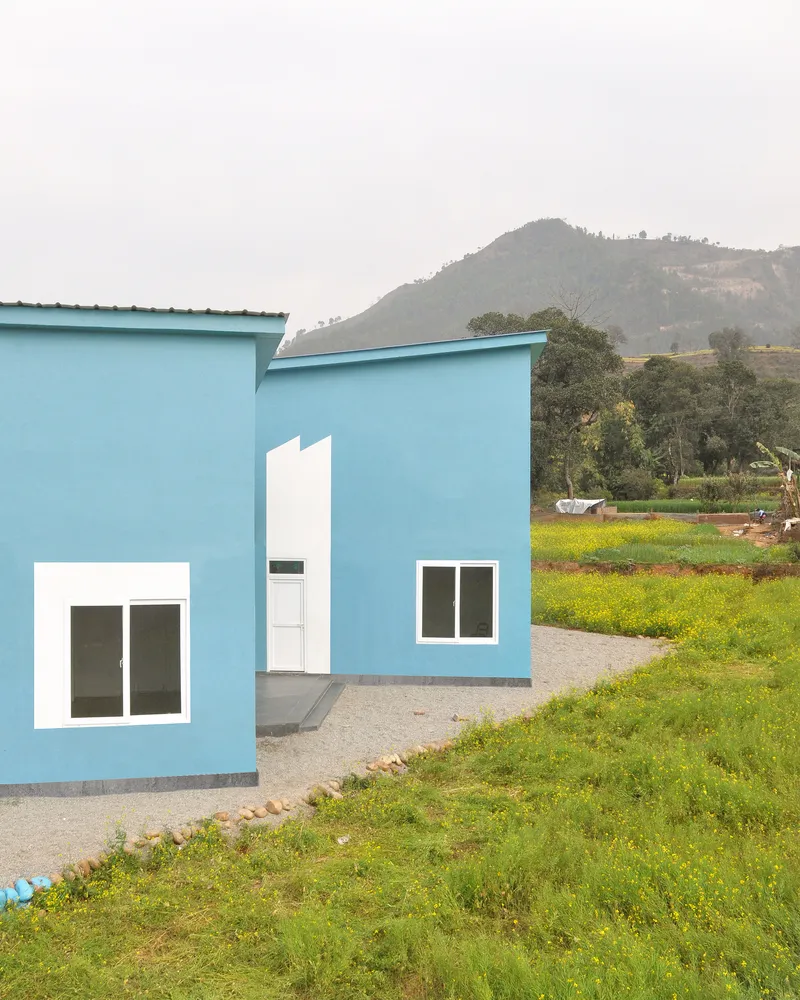
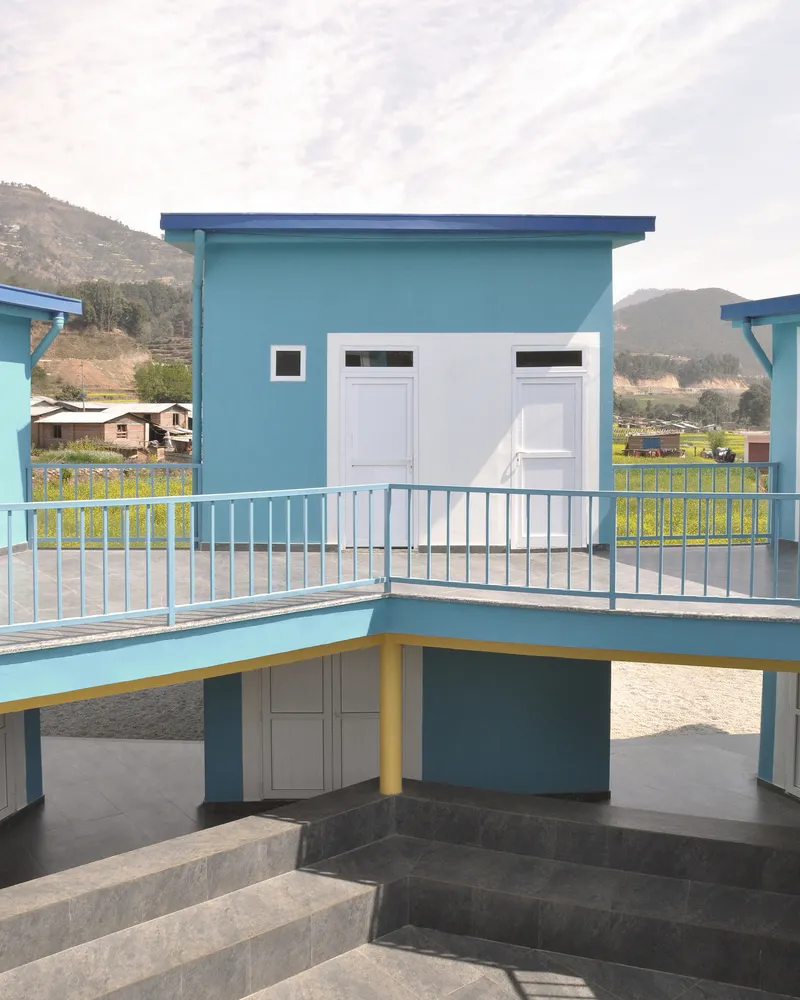
At the heart of the project lies a central open-air theatre, conceived as a civic and cultural focal point. Around it, five simple volumes form a circular layout, each housing different functions. This spatial configuration encourages movement and visibility, allowing the community to flow seamlessly between interior and exterior spaces while maintaining a sense of openness and inclusion.
Simplicity as an Architectural Language
Given the scarcity of skilled workers and materials, the architects adopted a strategy of constructive simplicity. Each volume is designed with clarity and efficiency—emphasizing structure, proportion, and material honesty over ornamentation.
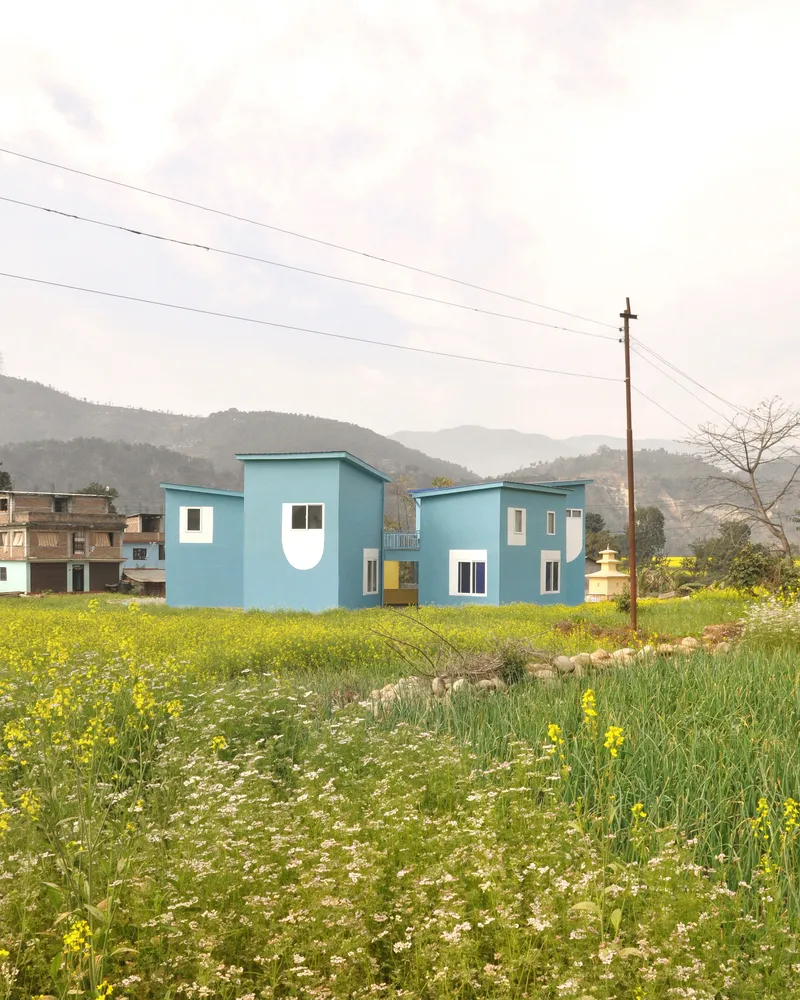
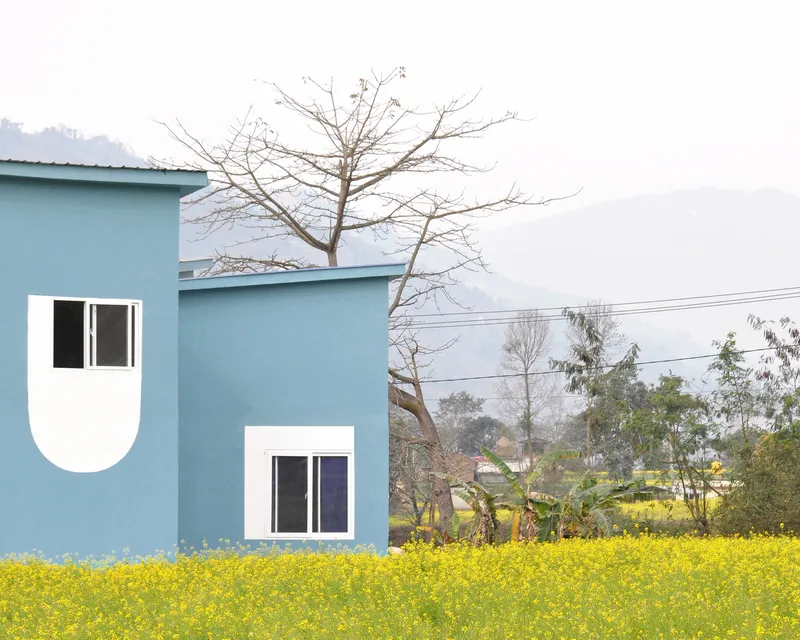
The buildings’ sky-blue façades provide a striking visual identity, creating a sense of optimism and belonging that resonates across the landscape. The overall composition relies on repetition and rhythm, generating a unified aesthetic that speaks to both resilience and hope.
Program and Spatial Organization
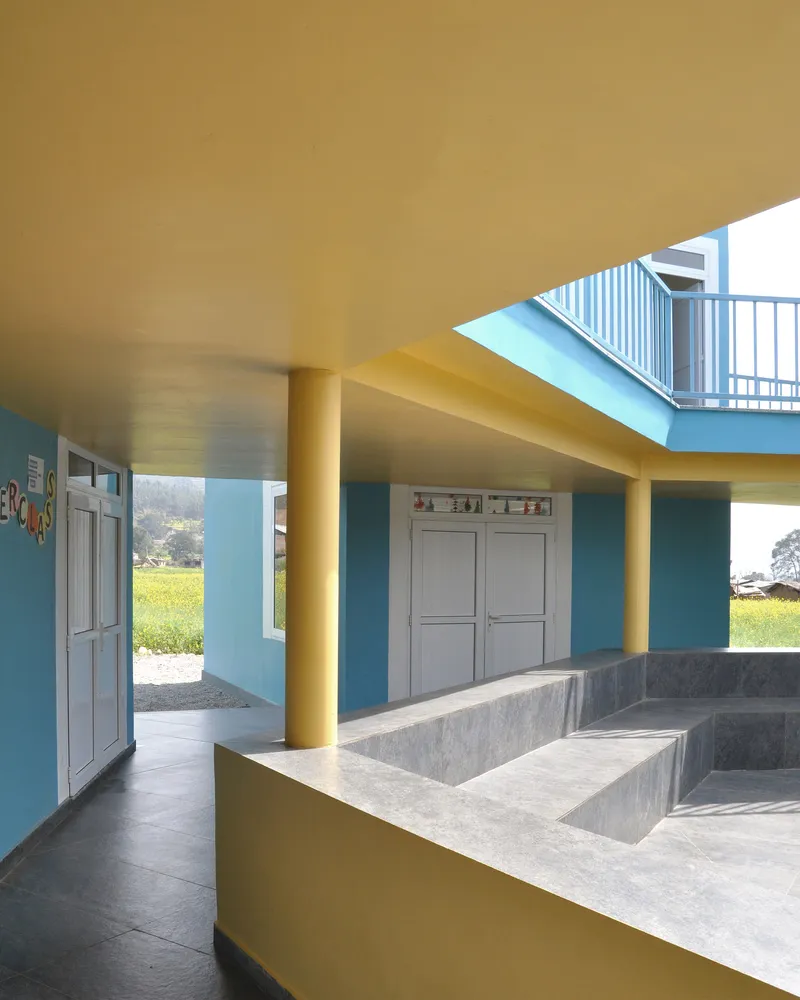
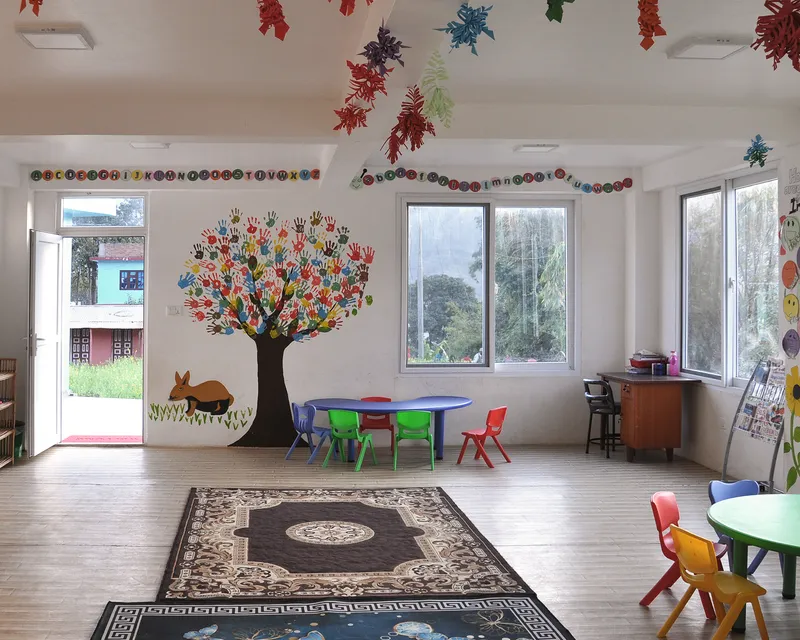
The ground level houses the school and youth training facilities, as well as spaces for community workshops and an open-air performance area that doubles as a social plaza. The upper level accommodates the volunteer residences, a canteen, and a large terrace overlooking the surrounding mountains—a space designed for rest, gathering, and contemplation.
This multi-layered program ensures the building remains active throughout the day and across seasons, bridging educational, residential, and communal needs within one cohesive framework.
Designing for Social Growth and Local Empowerment
More than a building, The School of Social Development serves as a catalyst for local empowerment. Its participatory construction process engaged local workers and volunteers, fostering new skills and shared ownership. The central theatre and surrounding classrooms become spaces for dialogue, learning, and cultural exchange—where architecture becomes a platform for social development, true to its name.
A Model for Sustainable Humanitarian Architecture
In a region where modern infrastructure is scarce, the project demonstrates how architectural design can nurture resilience and identity through minimal means. By combining modular geometry, local labor, and simple materials, studio berardi miglio created a timeless and scalable model for educational architecture in developing regions.
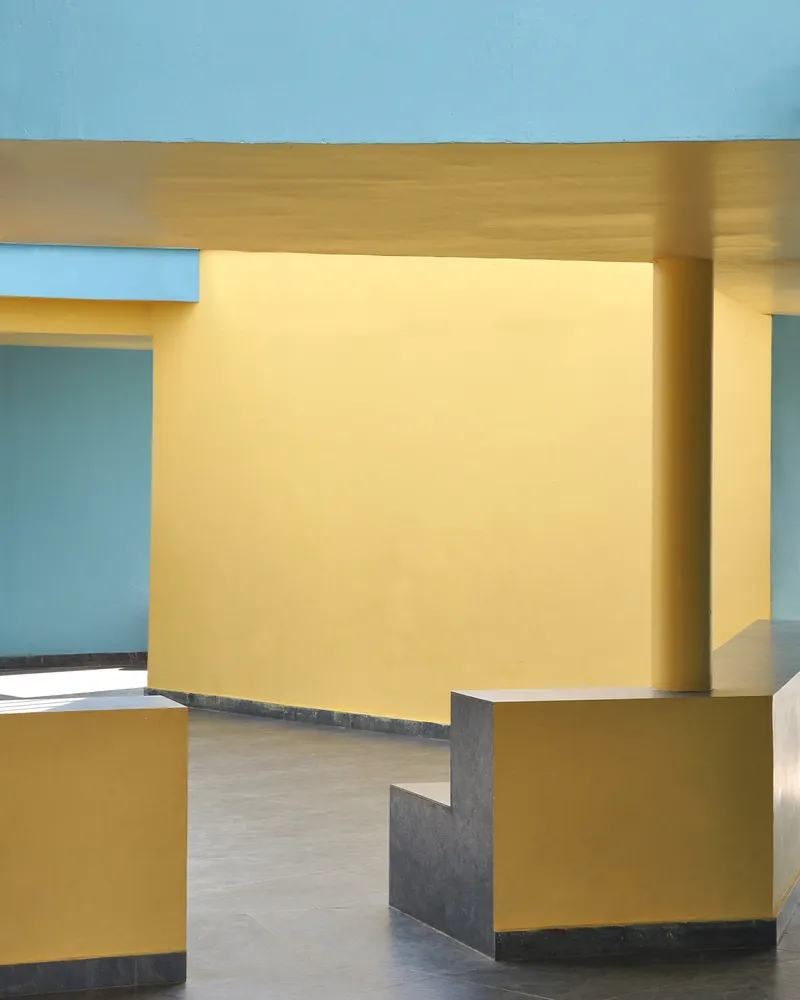
All photographs are works of Filippo Berardi


Popular Articles
Popular articles from the community


The Amber Palace Opera: A Geological Fiction Surfaces on Tallinn's Baltic Waterfront
Pierre Brillard reimagines a Baltic legend as a public landscape, opera house, and waterfront promenade rooted in Tallinn's coastal identity.

Tsunami Convergenics: Turning Catastrophic Ocean Forces into Underwater Housing Infrastructure
A speculative underwater settlement off the coast of Onagawa, Japan, treats tsunamis and typhoons as energy sources rather than threats.

Extended Shell: Retrofitting Kolkata's Balconies as Living Urban Thresholds
A modular retrofit system recovers the social and environmental intelligence of Kolkata's historic verandas for contemporary Park Street residents.
Opera by the Sea Estonia: Three Shells Dissolving Architecture into Tallinn's Coastline
A winning opera house proposal replaces monumental form with interconnected shells that blur the boundary between building, park and Baltic Sea.

Similar Reads
You might also enjoy these articles


Hodi-Mandai Geram
Project Function: Preservation and revitalization of the Intangible heritage and socio-spatial identity of the Hodi by Housing, Cultural Memory Center, Sacred Grove, landscape, local tourism economy


Olio Towers: A Mid-Rise for Performers That Fuses Housing, Rehearsal, and Stage
Located blocks from Houston's Theater District, this modular tower stacks living units around a central performance atrium.

Oasis: Modular Green Housing Carved into Dhaka's Urban Fabric
A shortlisted Plugin Housing entry reclaims unauthorized settlements in Dhaka with stepped concrete volumes, green roofs, and ventilation-driven design.

Black Hole: A Floating Megastructure for the Post-Physical Era
Emiliano Mazzarotto envisions a spherical, self-scaling arena where e-sports, digital hotels, and holographic stadiums replace traditional public space.

Explore Social Design Competitions
Discover active competitions in this discipline

Challenge to design public laboratory

Challenge to reimagine the Iron Throne

Photograph architecture without architects

Illustrate the lost glory of Angkor Wat - Render Challenge
Comments (0)
Please login or sign up to add comments
No comments yet. Be the first to comment!