
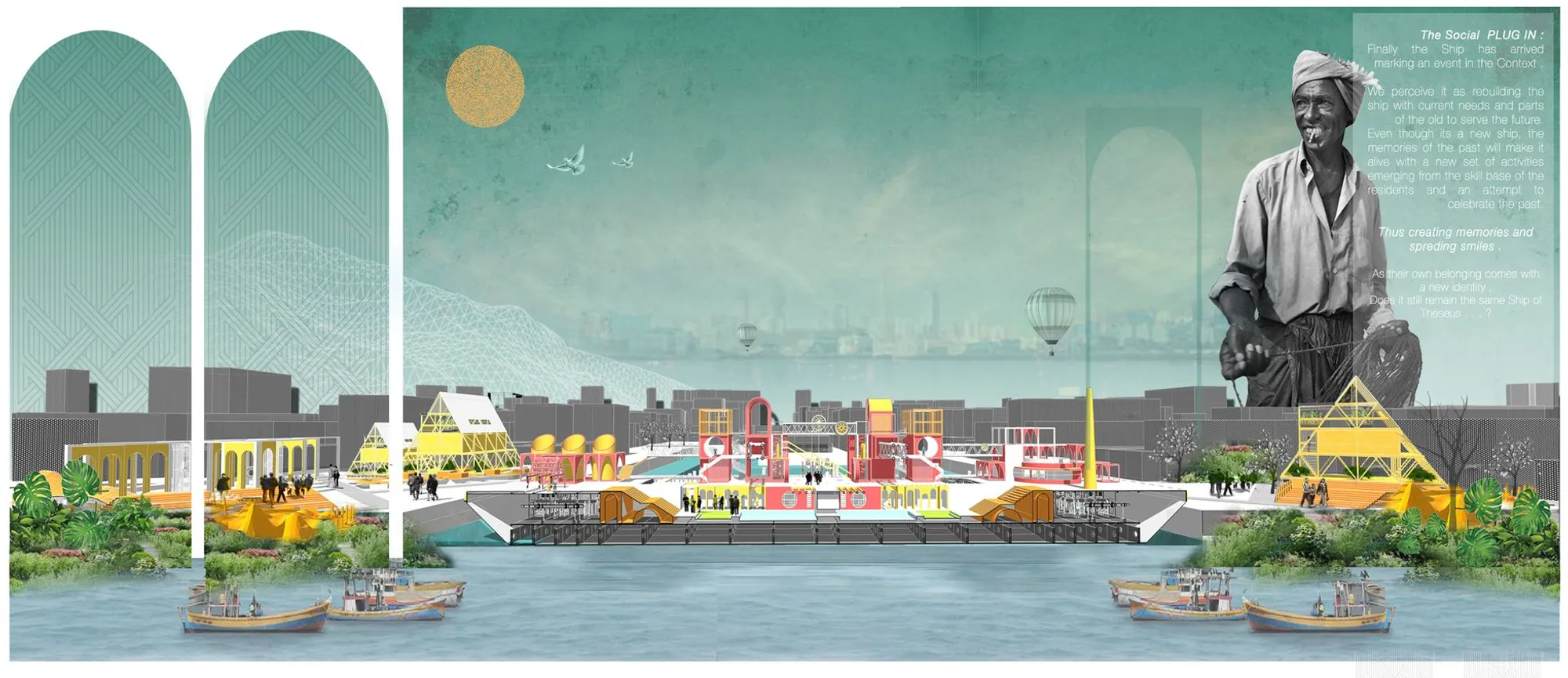
The Ship of Theseus: A Catalyst for Sustainable Urban Architecture
Transforming urban edges with sustainable design and community-driven innovation for a greener, happier tomorrow.


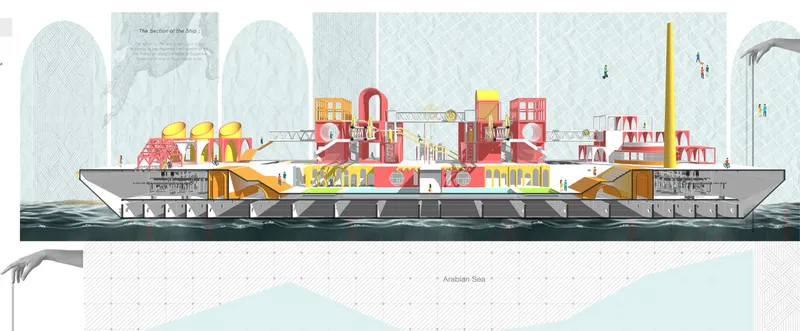
This proposal serves as a device and a thought experiment, enabling the exploration of the potential of urban edges beyond the industrial sprawl of Mumbai. Centered around the concept of "The Ship of Theseus," the project investigates identity transformation and sustainability in urban architecture.
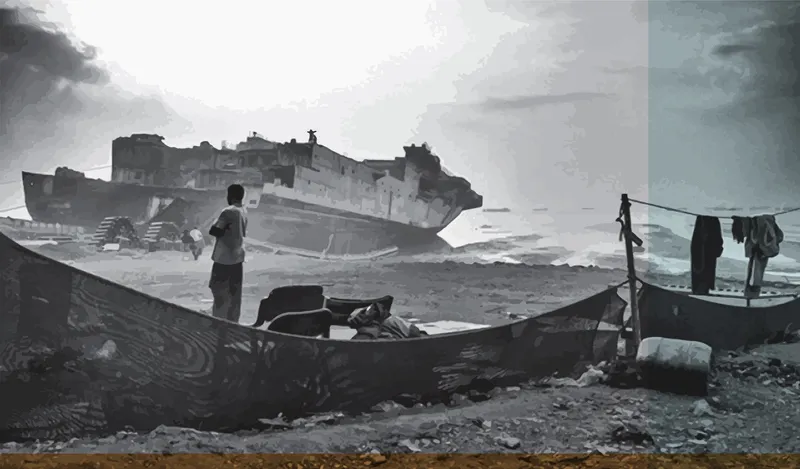
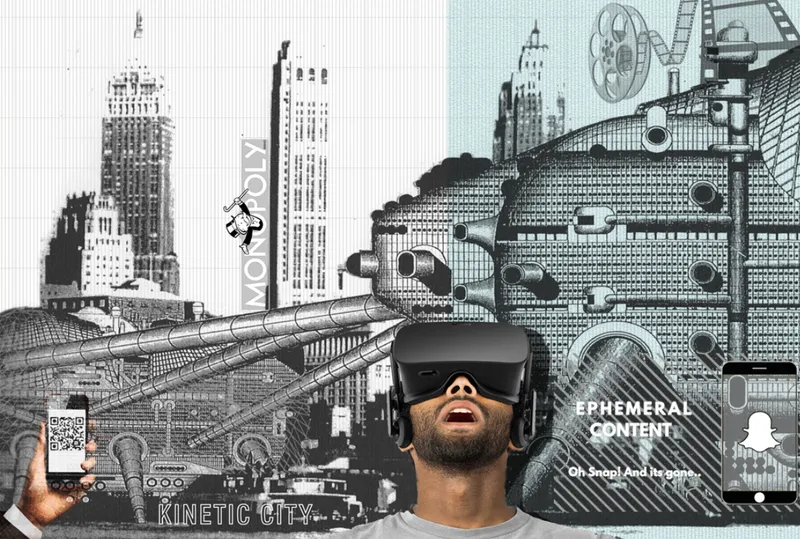
Redefining Mumbai’s Edge: A Visionary Approach
For this project, Mumbai is revisited with the aim of capitalizing on the "economy of happiness" as an alternative to traditional industries. Using the metaphor of "The Ship of Theseus," the proposal delves into questions of permanence, identity, and urban regeneration. It aspires to create a network of spaces that celebrate ephemeral cultures while fostering sustainable development.
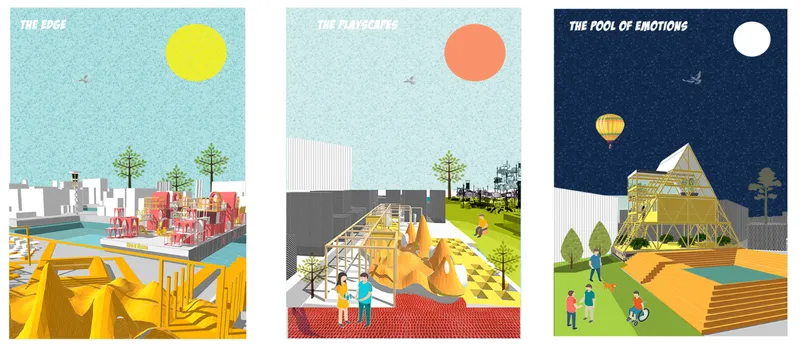
Key Features of the Proposal
1. Ephemeral Culture and Identity
The project highlights the transient nature of physical structures and their role in shaping the urban fabric. This is not just about rebuilding; it is about reimagining spaces with both current needs and the heritage of the past.
2. Understanding Labour Communities
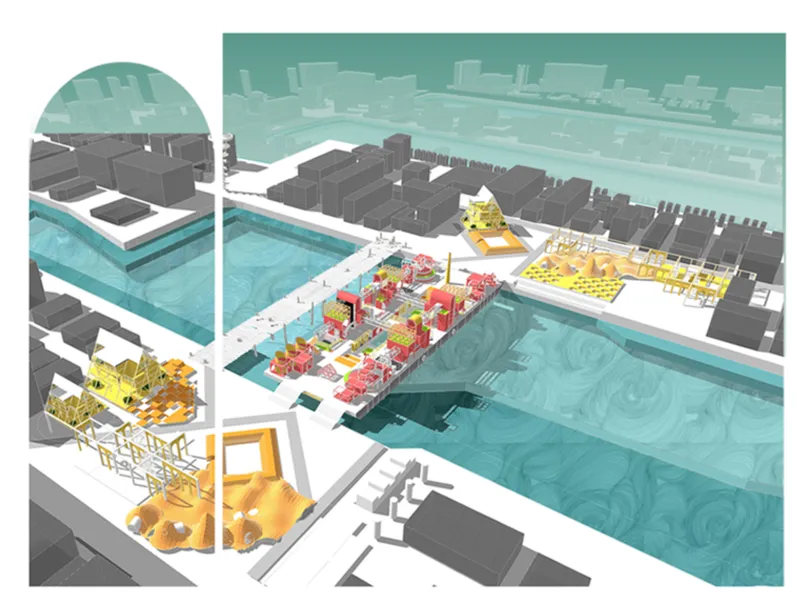
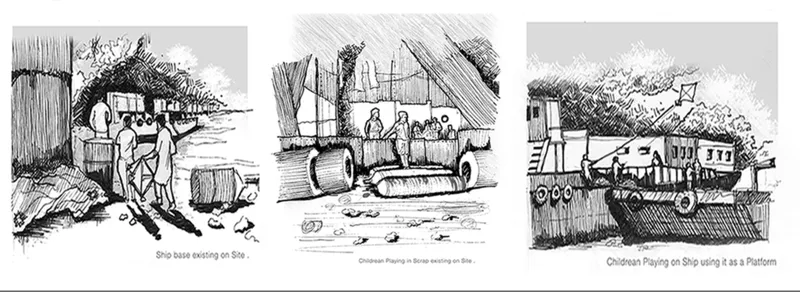
The initiative engages with the saltpan, ship-breaking, and fishing communities along Mumbai's Eastern Waterfront. By incorporating their skills and needs, the project establishes a socio-economic connection between the residents and the envisioned infrastructure.
3. Micro-Level Experiments
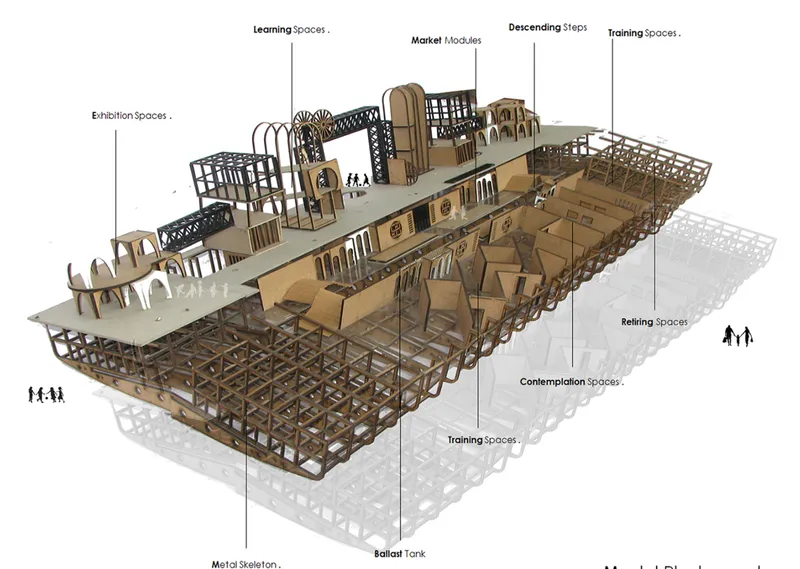
From modular architectural elements to mobile social plug-ins, the design allows for flexibility and adaptability. These components aim to address the impermanent yet vital needs of the urban population.
Objectives
- Rejuvenating Urban Edges: Transforming neglected areas into vibrant social hubs.
- Sustainability: Utilizing ship-breaking materials to promote eco-friendly construction.
- Community Empowerment: Creating spaces that empower local communities while respecting their heritage.
The Future of Sustainable Urbanism
As their belongings evolve with a new identity, does it still remain the same "Ship of Theseus"? This project challenges conventional architectural paradigms by presenting a movement where design meets social responsibility. By embracing the aesthetics of incompleteness and diversity, it offers a roadmap for rethinking urban landscapes globally.
Project by: Kaushal Tatiya
Winner of: UnIATA '19




Popular Articles
Popular articles from the community


Conexión: Biophilic Design Reimagines High-Rise Living in Hong Kong
Conexión reimagines high-rise living in Hong Kong through biophilic design, green facades, shared spaces, daylight, water and nature within.

Co-Life: Senior Housing Design That Reconnects Older Adults With the City
Co-Life reimagines senior housing design through healing gardens, shared streets, workshops, and a sustainable community across generations.

Play: Fragments of Their World
Familiar architecture becomes modular playground design, creating safe spaces where displaced children can learn, connect, imagine and play.

Riyadh For All: Intergenerational Urban Design for Active Aging in Rabat
Riyadh For All reimagines urban design in Rabat with intergenerational co-living, adaptive courtyards, and Moroccan cultural exchange today.


Similar Reads
You might also enjoy these articles


Hodi-Mandai Geram
Project Function: Preservation and revitalization of the Intangible heritage and socio-spatial identity of the Hodi by Housing, Cultural Memory Center, Sacred Grove, landscape, local tourism economy


Olio Towers: A Mid-Rise for Performers That Fuses Housing, Rehearsal, and Stage
Located blocks from Houston's Theater District, this modular tower stacks living units around a central performance atrium.

Oasis: Modular Green Housing Carved into Dhaka's Urban Fabric
A shortlisted Plugin Housing entry reclaims unauthorized settlements in Dhaka with stepped concrete volumes, green roofs, and ventilation-driven design.

Black Hole: A Floating Megastructure for the Post-Physical Era
Emiliano Mazzarotto envisions a spherical, self-scaling arena where e-sports, digital hotels, and holographic stadiums replace traditional public space.


Explore Floating City Competitions
Discover active competitions in this discipline



Challenge to reimagine the Iron Throne


Photograph architecture without architects


Illustrate the lost glory of Angkor Wat - Render Challenge


Design challenge to reuse E-waste
Comments (0)
Please login or sign up to add comments
No comments yet. Be the first to comment!