
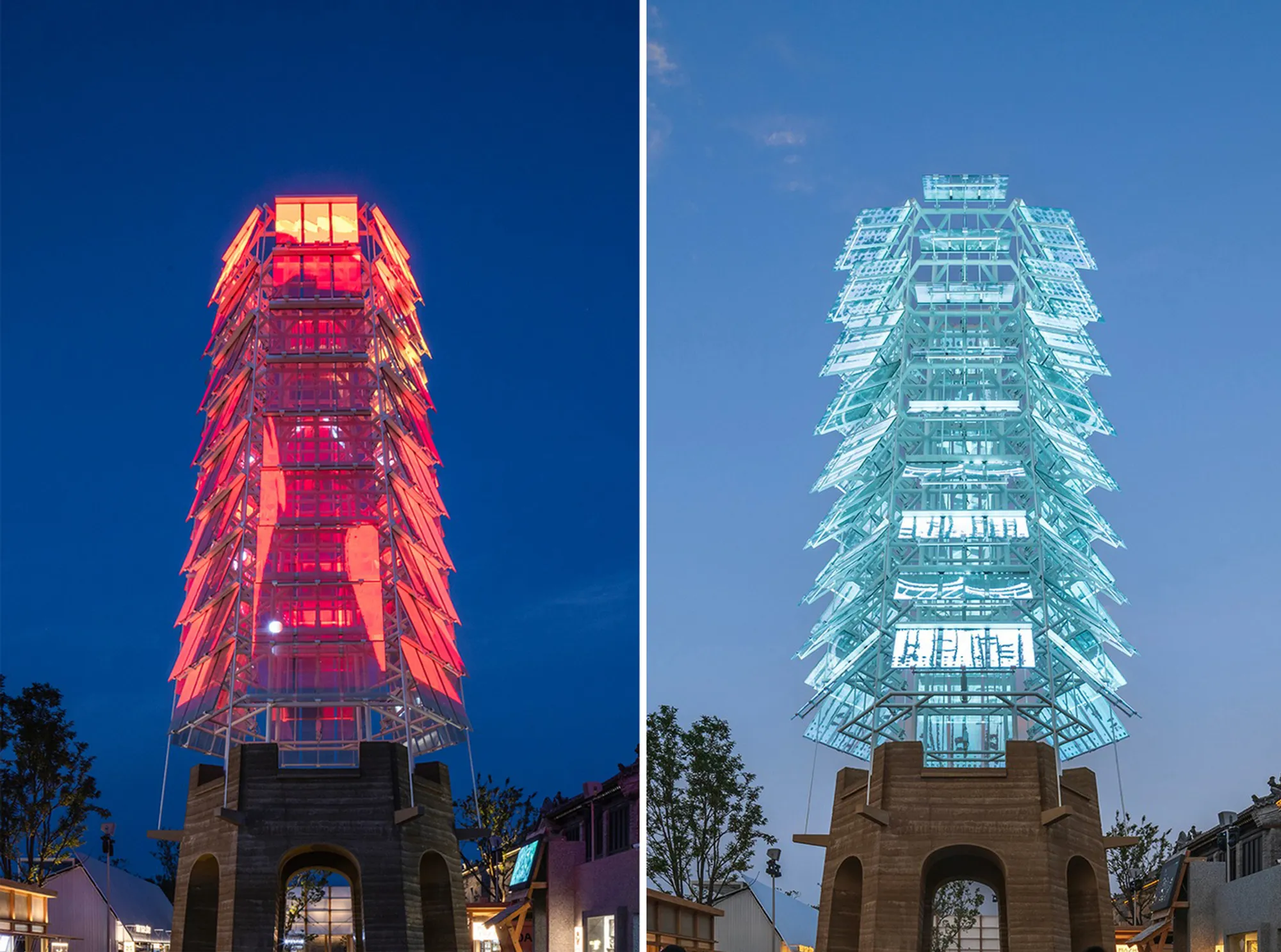
The Southeast of Datong Ancient City Silk Road Tower: A Cultural Landmark by XJ Design Agency
The Silk Road Tower in Datong blends heritage and technology, symbolizing cultural growth, iteration, openness, and digital storytelling through kinetic architecture.


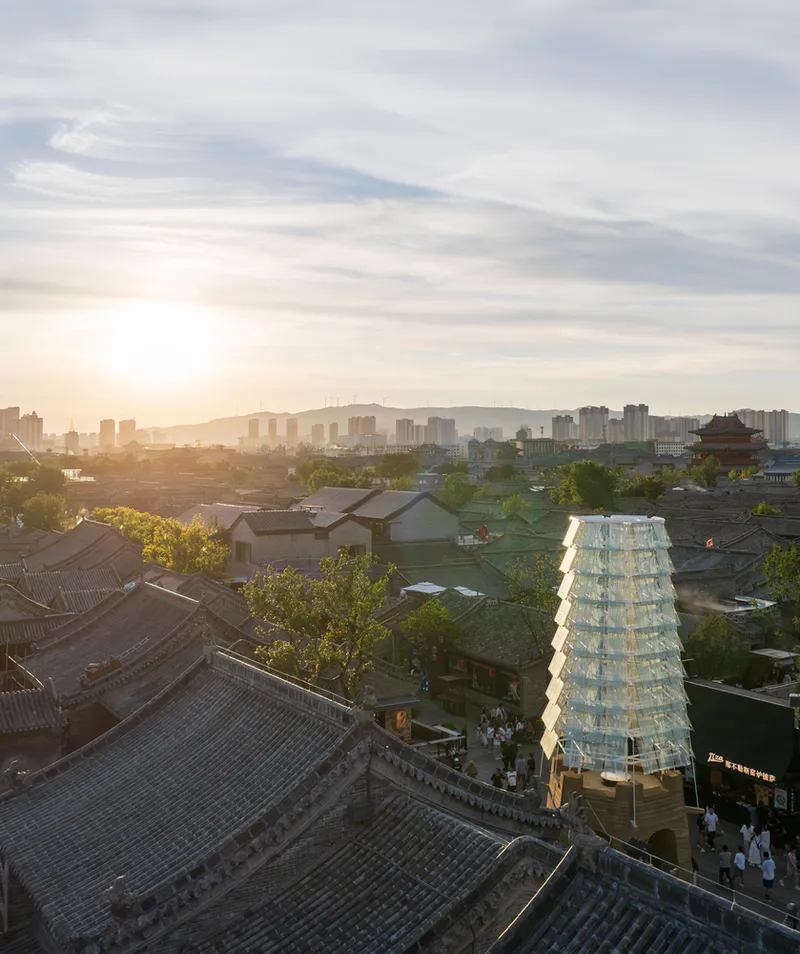
Located at the eastern edge of the Datong Ancient City in Shanxi, China, the Silk Road Tower by XJ Design Agency is more than a monument. It is a dynamic cultural installation that celebrates the historical Silk Road heritage while embracing technological innovation and architectural symbolism. Completed in 2025, this 4,350-square-meter tower serves as a bridge between the ancient spirit of Pingcheng, capital of the Northern Wei Dynasty, and the evolving digital future.
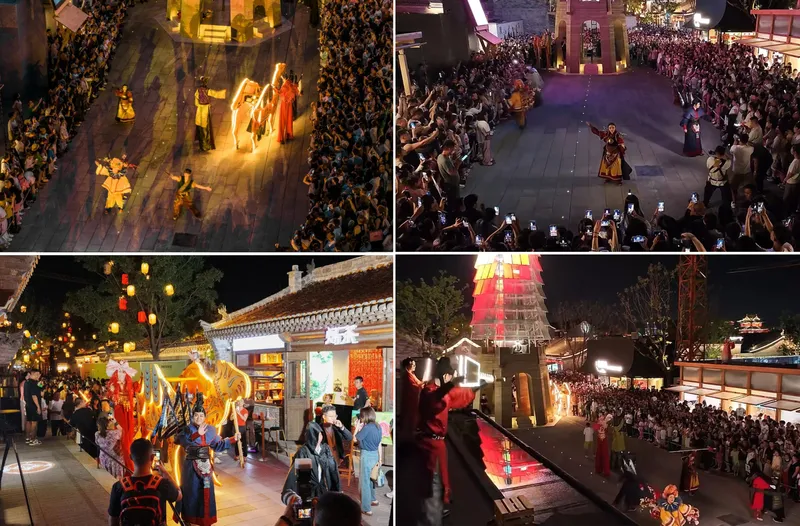
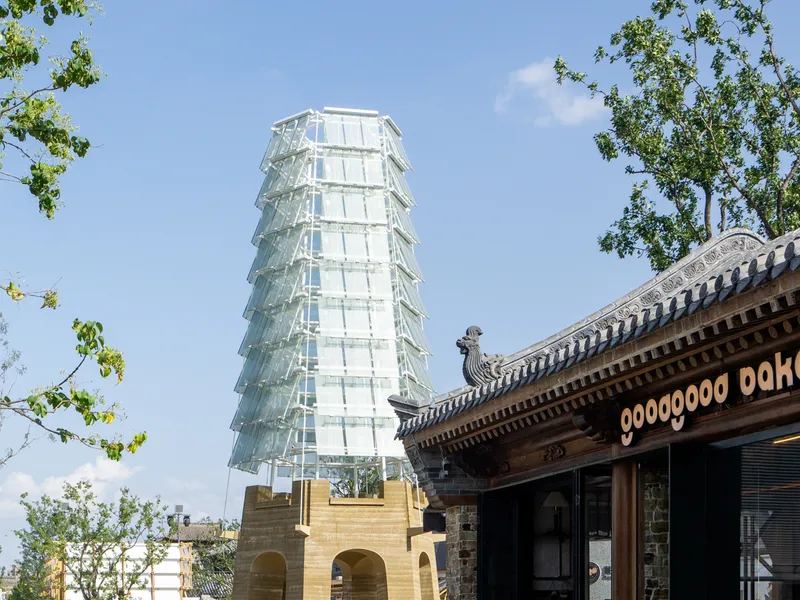
A Modern Landmark on the Historic Silk Road
Datong, once a thriving gateway of trade and cultural exchange, was the starting point of the Silk Road in Northern Wei times. The Silk Road Tower revives this cultural memory, not as a static memorial, but as a living symbol of growth, iteration, and renewal. The project reflects how cultural genes adapt and flourish in the stream of history, technology, and human connectivity.
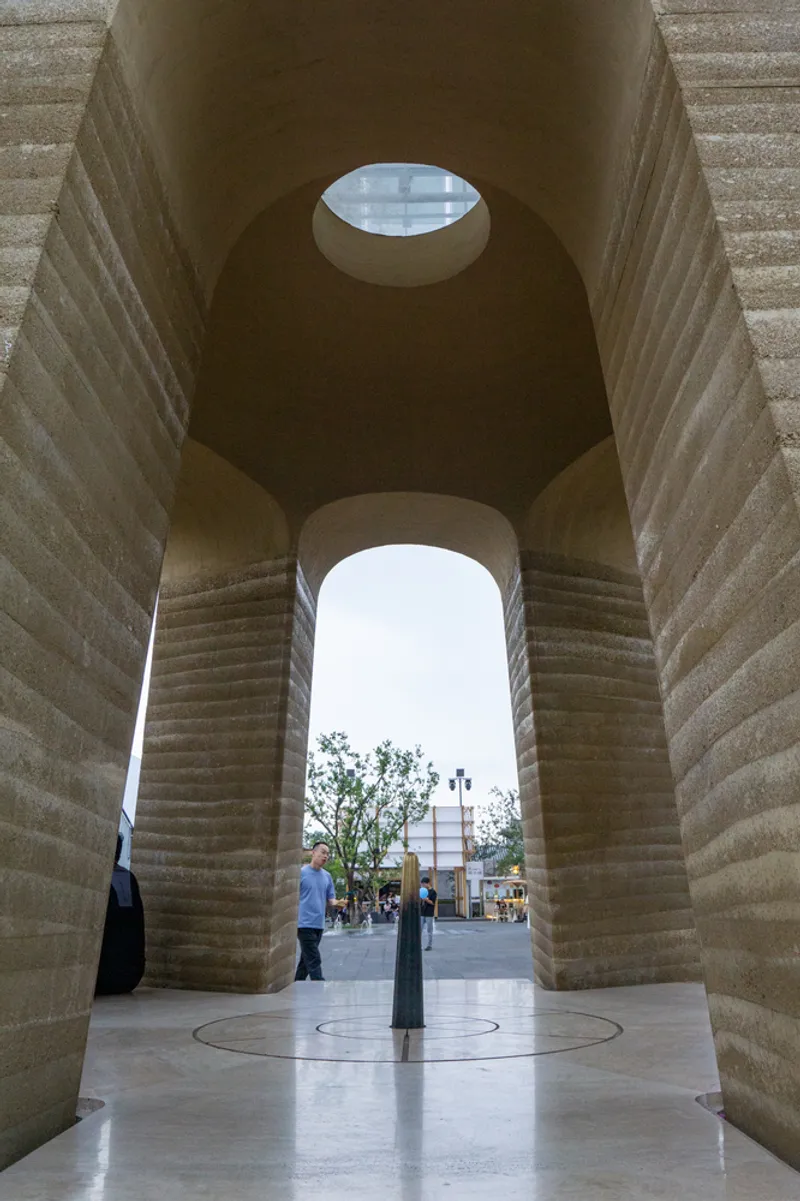
Core Concept: Growth and Iteration
The tower embodies two central ideas: growth and iteration.
- It anchors the historic 0-kilometer point of the Silk Road, symbolizing both a geographical and spiritual origin.
- At the same time, it represents the ongoing vitality of Silk Road culture, evolving across centuries while embracing modern technologies.
By fusing ancient cultural narratives with contemporary design strategies, the tower positions itself as a cultural node for the present and the future.
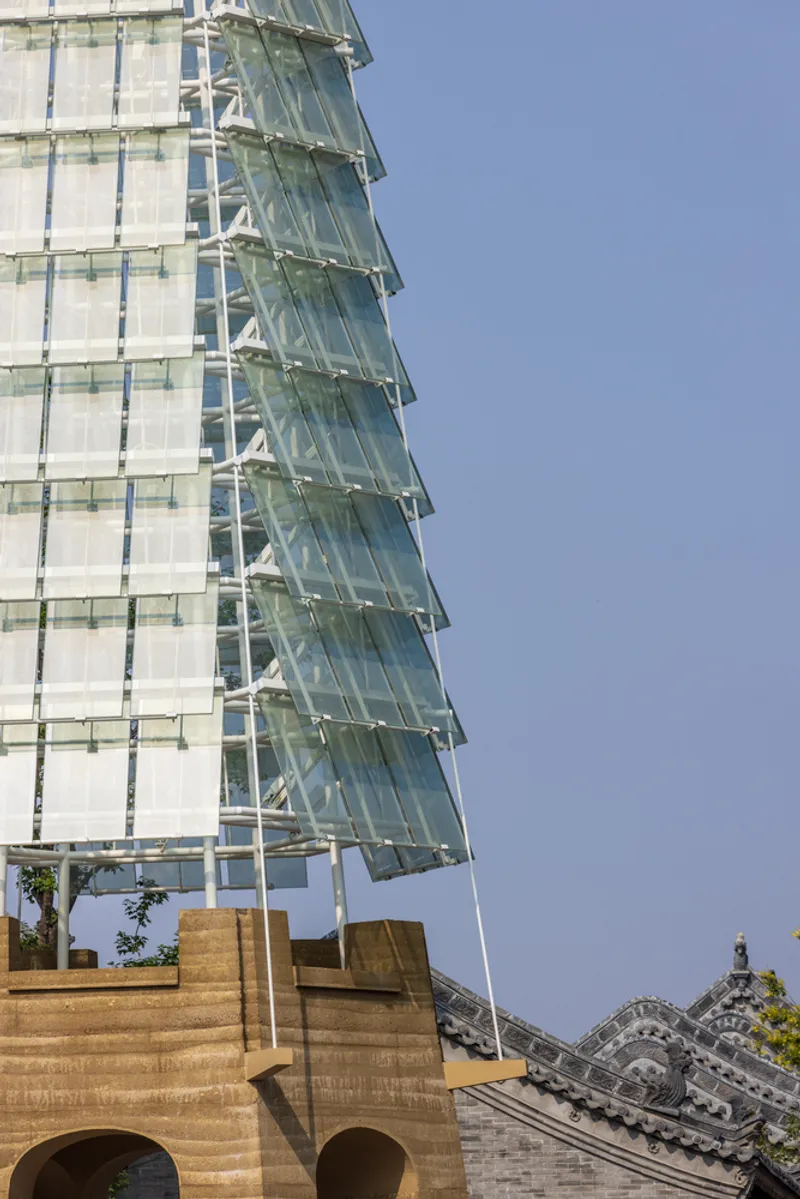
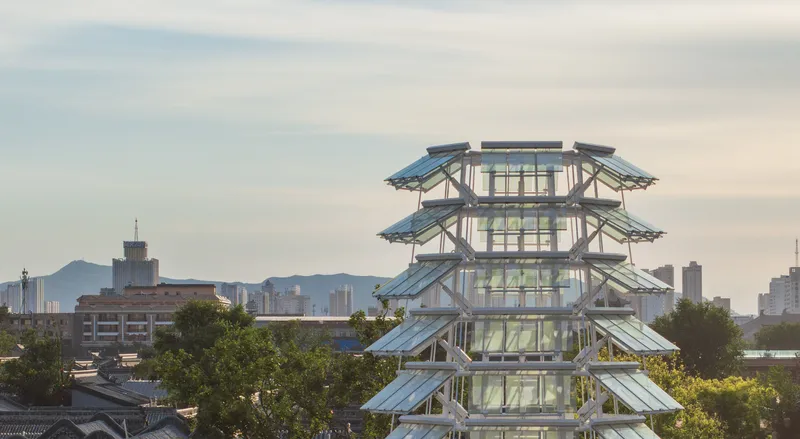
Architectural Language: Monument and Gateway
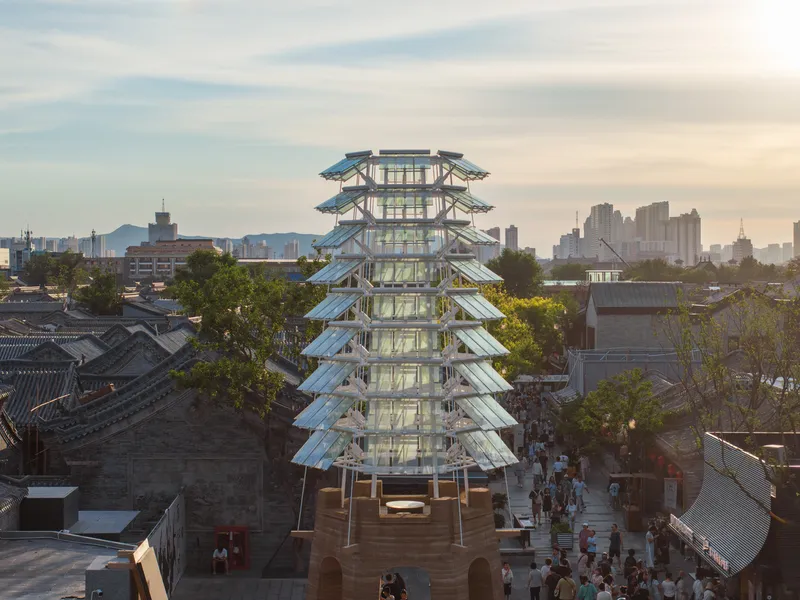
Rising 14 meters high, the tower adopts a refined geometric form that balances urban integration with monumental presence.
- The solid base conveys a sense of historical accumulation and stability.
- The “0-kilometer” marker elevates Datong’s significance as the Silk Road’s origin.
- A dome structure crowns the tower, opening into six symbolic gateways that radiate outward to Central Asia, West Asia, South Asia, and beyond.
This architectural vocabulary echoes the Silk Road’s themes of openness, inclusivity, and interconnection—a journey that transcends geography and time.
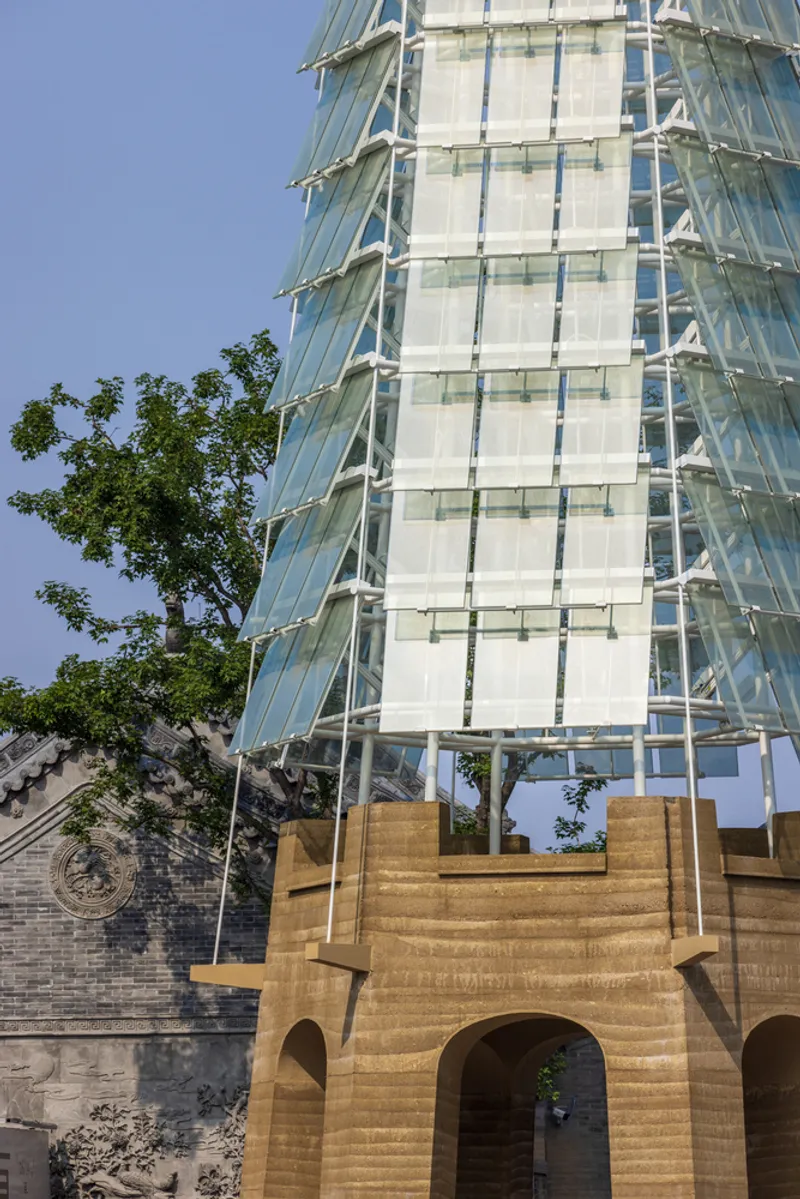
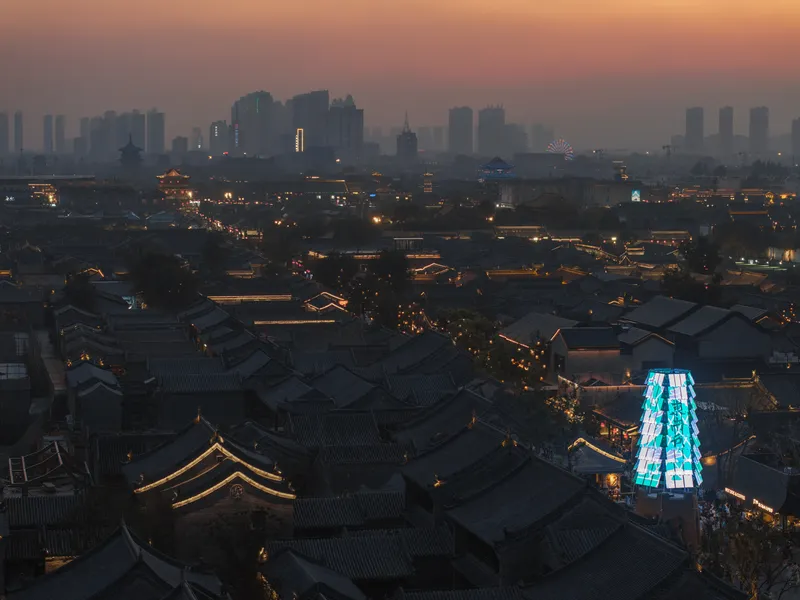
Technology and Performance: A Living Canvas
Unlike traditional monuments, the Silk Road Tower is kinetic and digital.
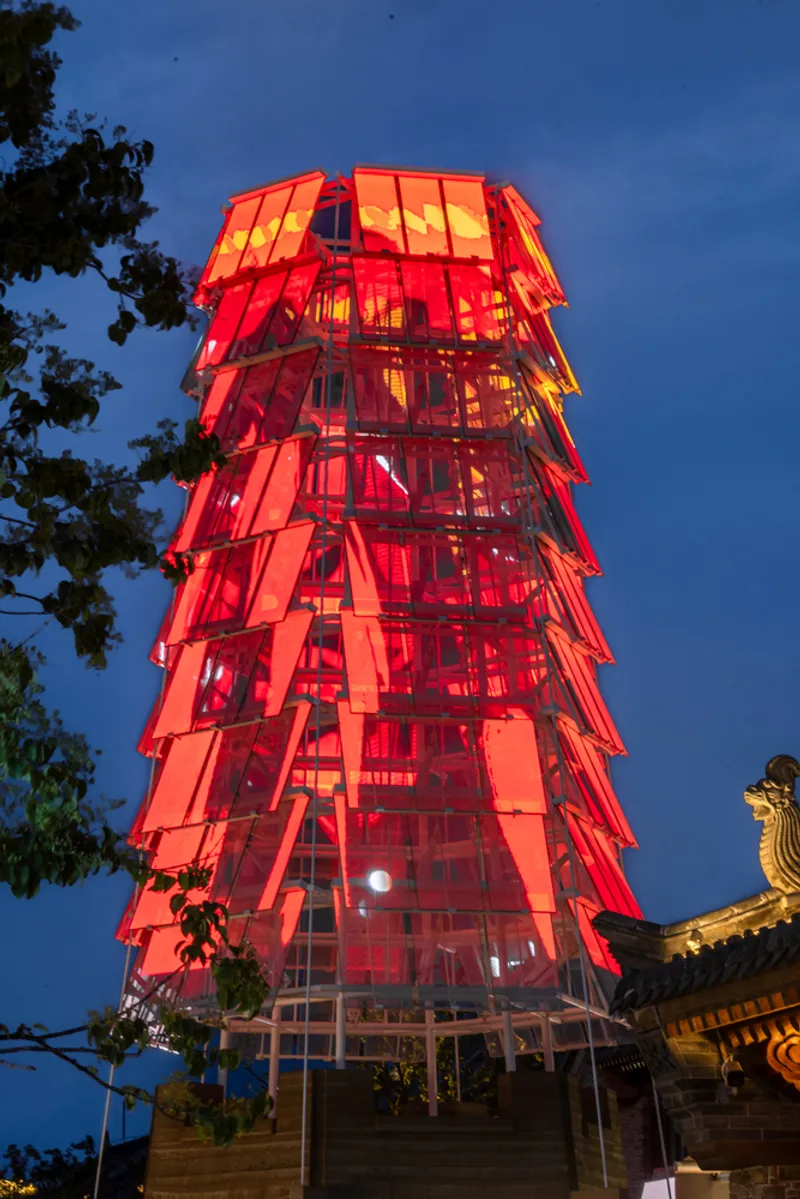
- Dynamic Skin: Its nine-story steel frame is clad with advanced LED screens, creating a responsive surface for cultural storytelling.
- Hydraulic Movement: Each level has an independent system that “breathes” once per minute, unfolding and reorganizing the LED panels.
- Digital Narratives: These transformations project synchronized imagery—desert landscapes, sunsets, digital silk road journeys, and abstract cultural motifs.
This constant cycle of growth, unfolding, and performance makes the tower a theatrical stage for cultural memory and future dialogue, symbolizing the ongoing iteration of civilization.
Cultural and Sustainable Significance
Standing on the historic land of Pingcheng, the Silk Road Tower embodies both heritage and innovation. It demonstrates how modern architecture and digital technology can sustain ancient cultural values, ensuring their relevance in the contemporary world.
The project reinforces the Silk Road’s enduring spirit of openness, exchange, and cooperation, showing that these principles remain vital in today’s interconnected society.

A Digital Silk Road for the Future
The Southeast of Datong Ancient City Silk Road Tower is not only a tribute to the past but also a vision of infinite possibilities. With its growing form, dynamic skin, and iterative design, the tower becomes a digital Silk Road that extends from the Northern Wei Dynasty into the boundless future—toward the stars, the sea, and the evolving narrative of human civilization.
All photographs are works of Guowei Liu, Can Yang



Popular Articles
Popular articles from the community


The Earth Pod: 3D Printed Homes for Resilient Refugee Communities
The Earth Pod reimagines refugee housing through 3D printed homes made from clay, combining resilience, self-sufficiency, and rapid shelter.

Hill & Cross Opera: Sculptural Opera House Architecture Shaped by Tallinn’s Landscape and Identity
Hill & Cross Opera reimagines opera house architecture in Tallinn through its sculptural hill, civic plaza, glass wave and a luminous cross.

AL-JANNAH: Sustainable Architecture and Permaculture for Afghan Widows
AL-JANNAH uses sustainable architecture and permaculture to create resilient oasis of housing, learning, work and renewal for Afghan widows.
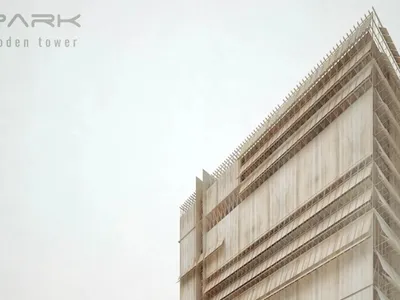
EW PARK: Sustainable Architecture Reimagines the Future of Urban Parking
EW PARK reimagines city parking as a modular wooden tower combining automation, solar energy, electric mobility, and adaptable urban design.


Similar Reads
You might also enjoy these articles


Hodi-Mandai Geram
Project Function: Preservation and revitalization of the Intangible heritage and socio-spatial identity of the Hodi by Housing, Cultural Memory Center, Sacred Grove, landscape, local tourism economy


Olio Towers: A Mid-Rise for Performers That Fuses Housing, Rehearsal, and Stage
Located blocks from Houston's Theater District, this modular tower stacks living units around a central performance atrium.

Oasis: Modular Green Housing Carved into Dhaka's Urban Fabric
A shortlisted Plugin Housing entry reclaims unauthorized settlements in Dhaka with stepped concrete volumes, green roofs, and ventilation-driven design.

Black Hole: A Floating Megastructure for the Post-Physical Era
Emiliano Mazzarotto envisions a spherical, self-scaling arena where e-sports, digital hotels, and holographic stadiums replace traditional public space.


Explore Cultural Architecture Competitions
Discover active competitions in this discipline



Challenge to reimagine the Iron Throne


Photograph architecture without architects


Illustrate the lost glory of Angkor Wat - Render Challenge


Bring back Drive In's
Comments (0)
Please login or sign up to add comments
No comments yet. Be the first to comment!