
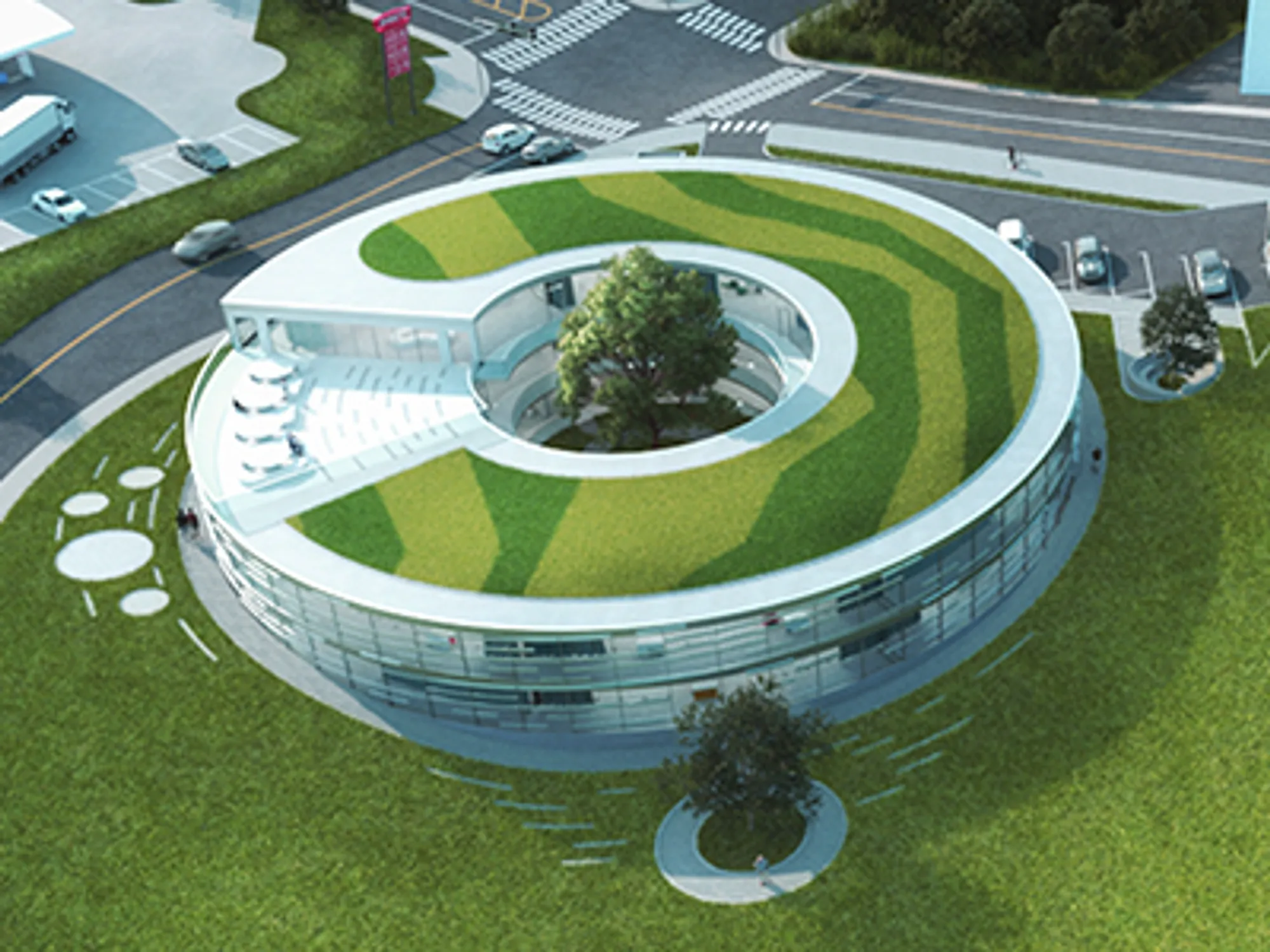
The Spiraling Circuit
The main concept of the spiraling circuit is continuity.

Q: What was the intent behind the organization of elements across various levels?
A: We imagined a new platform; A continuous platform that can escape the vertical and horizontal surveillance network of Taylorism while at the same time integrating each space like a single space.
As a result, the main concept of the new building we propose is a continuous circuit. The continuous flow on the spiral circuit actively induces users' interactions.
-Oh JongHee-
Q: What was the concept behind the project?
A: The office space required by the institution requires more space than we imagine. However, we had to propose a platform where all the programs required could be organically connected in a situation where we had a narrow land and where there were many restrictions. We focus on 'organic connections' and start looking for answers, and as a result of this, we propose spiraling circuit.
-Kim GyeongJeung-
A: The main concept of the spiraling circuit is continuity. In the circle plan, you can see the continuity of two contexts. Visual continuity and physical continuity.
-Oh JongHee-
A: On the visual side, it is designed as an open space without artificial concrete walls inside the building, so you can share your gaze beyond the ‘glass-wall’ in each space. The circle plan is divided into eight parts connected by a continuous, spiraling route through the levels which creates views up, down, across and out as required, sometimes framing views of the courtyard, sometimes offering glimpses of other levels.
On the physical side, the main spaces of the office are listed along the spiral corridor. Since space is separated by utilizing the height difference of the slab caused by the spiral flow without using artificial walls, practically all spaces are integrated. Therefore, using the spiraling corridor from the ground to the rooftop, users face a variety of office spaces, and in this process, unintended contacts with others occur, encouraging interaction.
-Yu SangGu-


Popular Articles
Popular articles from the community


The Earth Pod: 3D Printed Homes for Resilient Refugee Communities
The Earth Pod reimagines refugee housing through 3D printed homes made from clay, combining resilience, self-sufficiency, and rapid shelter.

Riyadh For All: Intergenerational Urban Design for Active Aging in Rabat
Riyadh For All reimagines urban design in Rabat with intergenerational co-living, adaptive courtyards, and Moroccan cultural exchange today.

Co-Life: Senior Housing Design That Reconnects Older Adults With the City
Co-Life reimagines senior housing design through healing gardens, shared streets, workshops, and a sustainable community across generations.

The Ocean Hive: Sustainable Architecture for a Self-Sufficient Civilization at Sea
The Ocean Hive imagines sustainable architecture at sea, where modular habitats, algae, wave power and ocean waste sustain a growing colony.

Similar Reads
You might also enjoy these articles
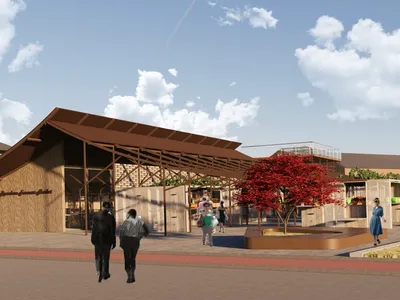
The Rhythm of Seasons
A Farmers' Market Connecting Nature and the City
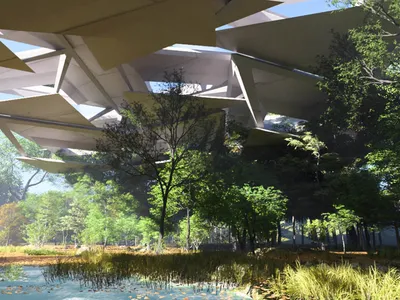

More Than a Building-Designing a Living System
More Than a Building-Designing a Living System
Base Beyond
DESERT COMPOUND ARID: TOURISM OF ABSENCE AND ABUNDANCE

Explore Spiral Staircase Competitions
Discover active competitions in this discipline


Challenge to design luxury tourism on rails


VR headsets Storefront design competition

Designing a staircase for a client
Comments (0)
Please login or sign up to add comments
No comments yet. Be the first to comment!