
The Urban Canyon: Innovative Urban Furniture Design
An innovative urban furniture design that embraces natural erosion.


Urban furniture plays a pivotal role in bringing the human scale to a city. For this competition, Adriaan Moerdijk and Bouke de Jong explored the idea of a dynamic piece of urban furniture that embraces natural processes and decay.
The Urban Canyon
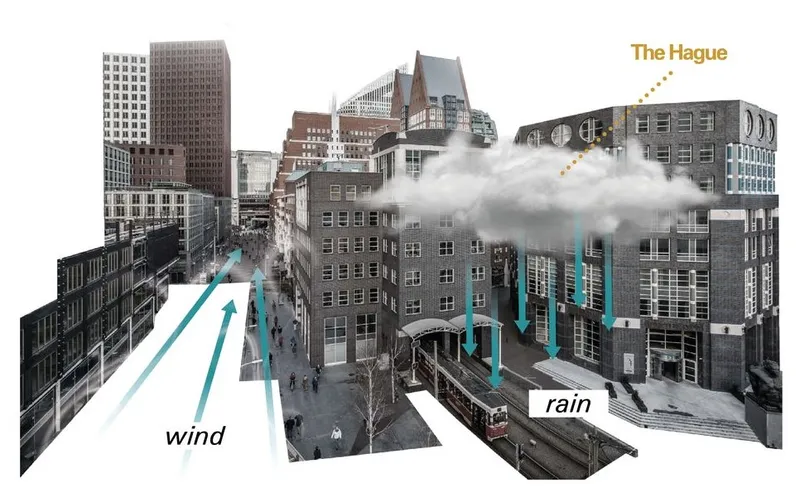
As urban areas continue to grow, the human scale can easily get lost amidst towering buildings and bustling streets. Urban furniture serves as a vital element in creating spaces that prioritize comfort, interaction, and well-being. Urban furniture plays a pivotal role in the ever-expanding landscape of our cities. For this design, the city of The Hague in the Netherlands was chosen as the site. As the heart of the Dutch government and part of the Randstad, The Hague is a rapidly increasing city, close to the North Sea and the dunes. In the heavily urbanized context of The Hague, it is easy to lose connection with the adjacent coastal nature. By inserting the natural dynamics of the beach into urban furniture, citizens can retain the link with nature and thus themselves.
Design Concept: Beach Dynamics in the City
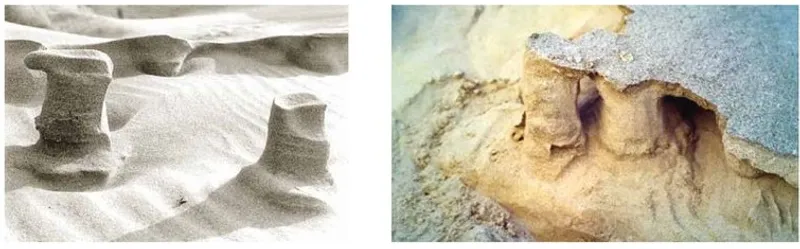
The Urban Canyon draws inspiration from the natural erosion processes observed on the beach. The phenomenon of 'sand pillars' created by the eroding effect of rain and wind on the beach serves as a conceptual foundation. This dynamic interaction with nature is brought into the urban environment through innovative design.
Material and Erosion
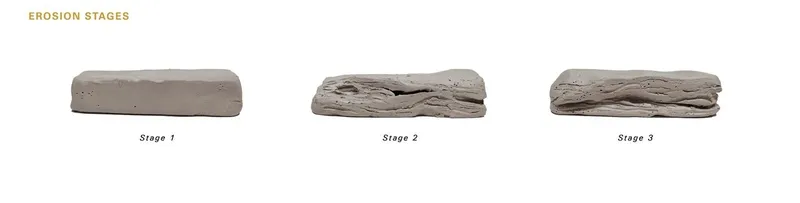
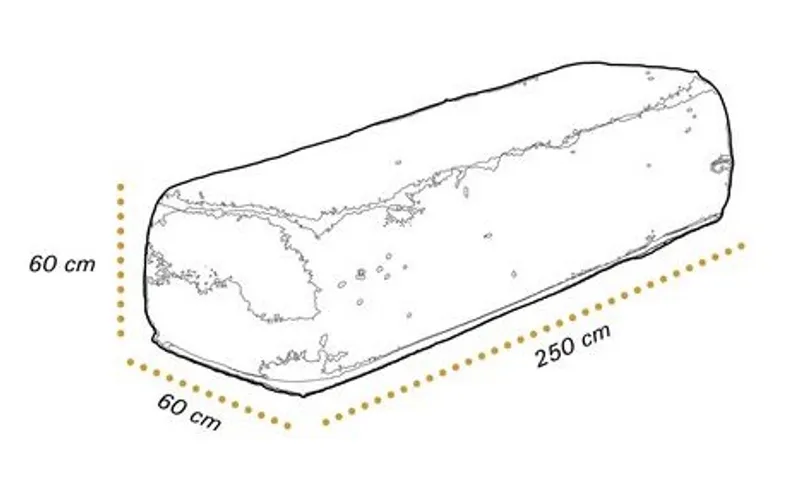
The starting point is a block of sandstone measuring 250 centimeters long, 60 centimeters wide, and 60 centimeters high. Sandstone was chosen because of its capability to erode relatively easily. This allows it to become a piece of urban furniture which changes over time. The shape of the urban furniture will be determined by wind, rain, or both, making it highly site-specific. Wind may have more influence in one place and rain in another. This has been taken into account in the design. The scenarios of wind, rain, and both wind and rain are modeled and made with clay to suggest how the object will be designed by nature.
Erosion Scenarios
Wind Erosion: In this scenario, the block of sandstone is placed so that it is formed almost solely by wind erosion. The block is under trees so that it is sheltered from rain.
Rain Erosion: In this scenario, the block of sandstone is set so that it is formed almost solely by rain. The block is behind a wall so that it is sheltered from the wind.
Wind and Rain Erosion: In this scenario, the block of sandstone is placed so that it is wind and rain-shaped. The block stands freely in the public space.
Usage and Interaction
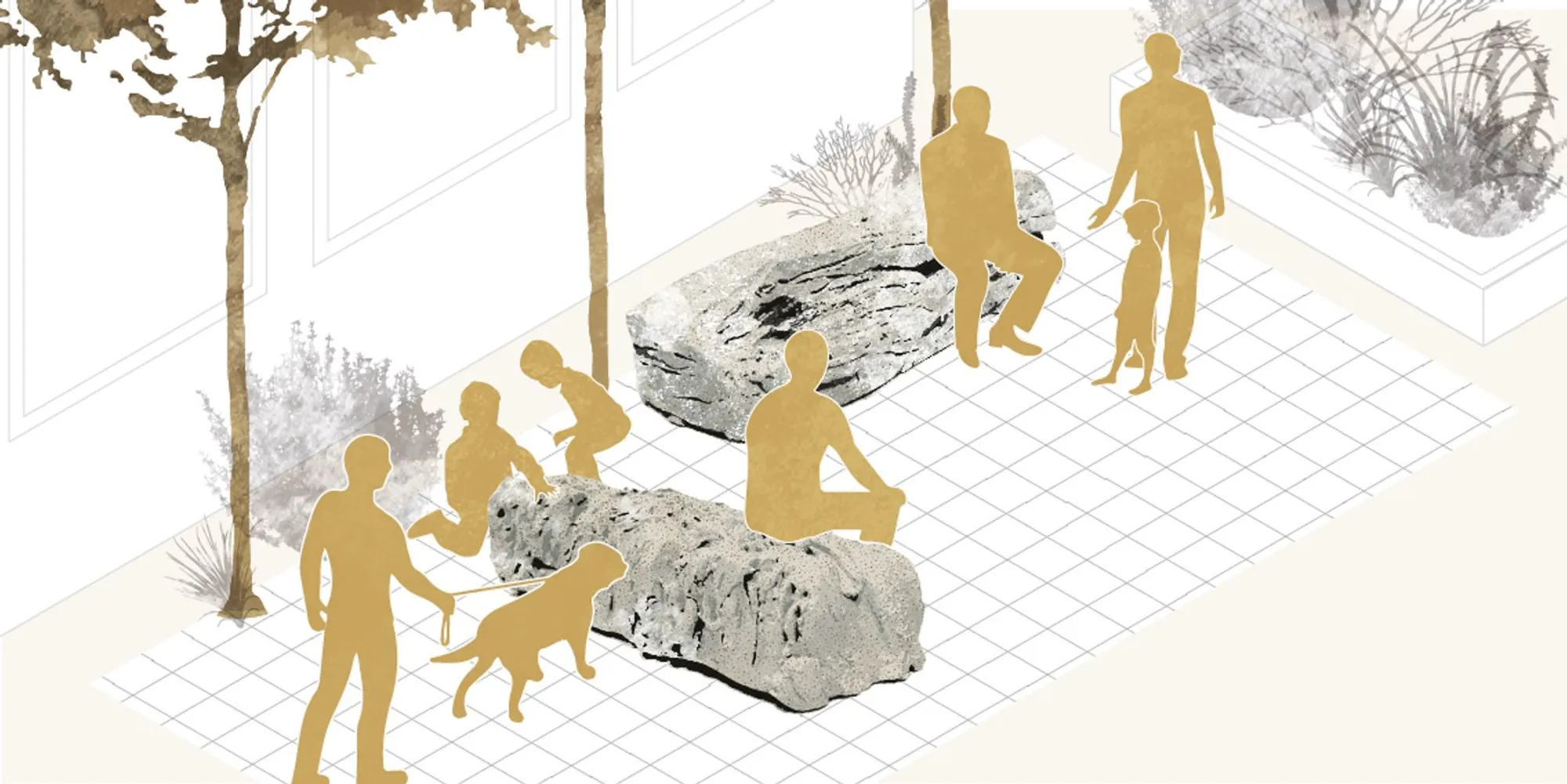
The sandstone bench offers urban dwellers the opportunity to observe often hidden natural processes and dynamics on the sidewalk. It connects people in the city with their coastal context. The bench is a starting point for conversation and exploration, showing powerful natural forces through the process of erosion. The shapes and curves designed by nature are often more bizarre and surprising than our imagination. Every bench is unique and site-specific, offering a full sensory experience to both kids and adults alike. Besides all that, it offers everyone a seat and a welcoming place to rest in the middle of a busy city.
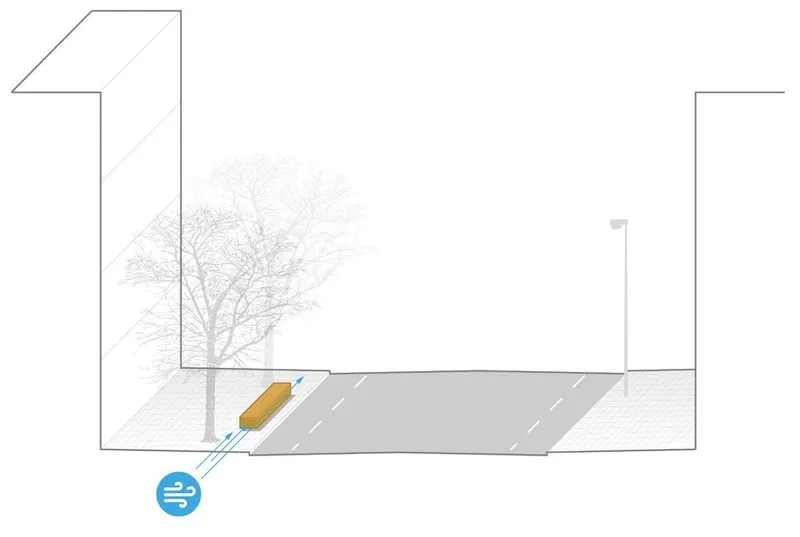
The Urban Canyon project by Bouke de Jong and Adriaan Moerdijk, Winner entry of Urbanscape competition is an innovative approach to urban furniture design, blending natural processes with the urban environment. By embracing the natural erosion processes of wind and rain, the sandstone bench not only provides functional seating but also serves as a dynamic, ever-changing piece of urban art that reconnects city dwellers with the natural world.


Popular Articles
Popular articles from the community


Lunar Spiral: Space Architecture Shaped by the Mathematics of the Universe
Lunar Spiral reimagines space architecture through Fibonacci geometry, lunar regolith, levitating habitats, and self-sustaining Moon living.

Co-Life: Senior Housing Design That Reconnects Older Adults With the City
Co-Life reimagines senior housing design through healing gardens, shared streets, workshops, and a sustainable community across generations.

Co-life: Sustainable Architecture for Age-Friendly Community Living
Co-life reimagines sustainable architecture for seniors through courtyards, rammed earth, shared gardens, and spaces designed for belonging.

The Ocean Hive: Sustainable Architecture for a Self-Sufficient Civilization at Sea
The Ocean Hive imagines sustainable architecture at sea, where modular habitats, algae, wave power and ocean waste sustain a growing colony.

Similar Reads
You might also enjoy these articles

Day and Night Park: A Time-Based Urban Newsstand in Beijing
A temporary urban newsstand in Beijing blending travel, light, and reading through poetic colors, compact form, and community-focused design.

Modernist Patio Renovation in El Masnou, Barcelona by Oliver Segura Arquitectura + Cebrià Arquitectura
Modernist patio renovation blending tradition and innovation with a movable pool, leveled floors, and Catalan materials in El Masnou.

Alto Residencial Coop: Cooperative Housing Development in Santiago de Compostela by Carbajo Barrios Arquitectos
A linear cooperative housing complex blending white volumes and perforated metal façades, enhancing community living, natural light, privacy, and urban integration.
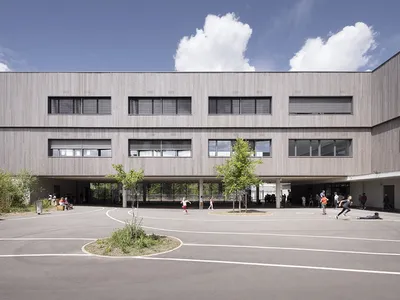
Vil Genis School by BPA ARCHITECTURE – Massy, France
Vil Genis School in Massy, France, features sustainable design, south-facing classrooms, community integration, accessible spaces, and modern educational architecture.

Explore Urban Furniture Competitions
Discover active competitions in this discipline



Challenge to reimagine the Iron Throne


Photograph architecture without architects


Illustrate the lost glory of Angkor Wat - Render Challenge


Design challenge to reuse E-waste
Comments (0)
Please login or sign up to add comments
No comments yet. Be the first to comment!