
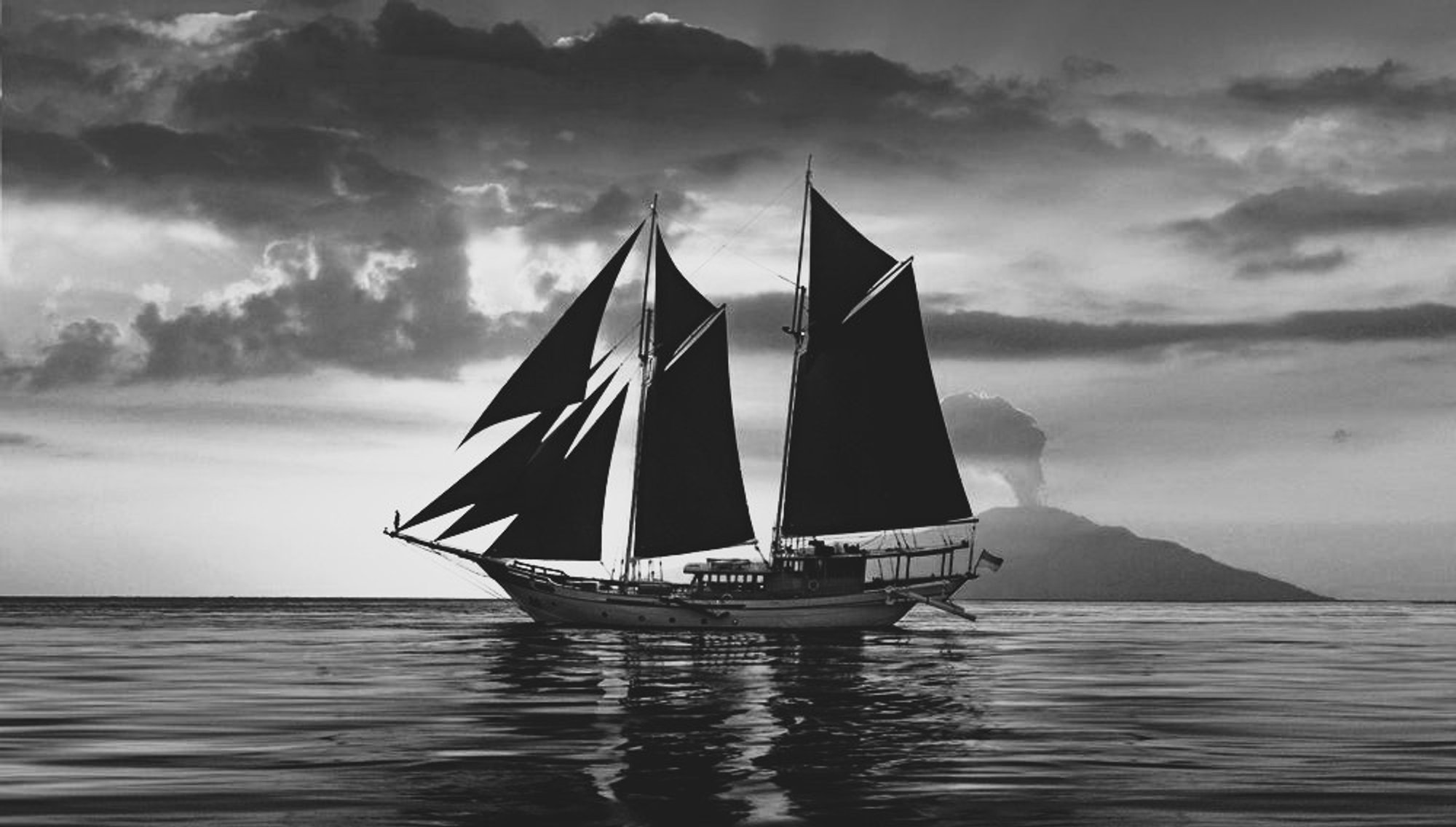
The Vessels of the Archipelago
How Indonesia's traditional Boats carry the nation's Soul

The Vessels of the Archipelago: How Indonesia's Traditional Boats Carry the Nation's Soul Source: Riara Marine, "Types of Traditional Indonesian Boats" — rewritten and adapted for editorial publication
Indonesia is not merely a nation of islands. It is a nation of water — a civilization built as much upon the sea as upon the land. As the world's largest archipelago, stretching across more than seventeen thousand islands, Indonesia has forged over centuries a maritime culture of extraordinary depth and diversity. Its traditional boats are the most eloquent expression of that culture: vessels that do not simply carry people and goods from one shore to another, but carry with them the memory, belief, and identity of entire communities.
Long before modern infrastructure connected the islands, boats were the arteries of Indonesian life. They enabled the spice trade that drew the world's gaze to this corner of the globe, sustained the fishing livelihoods of coastal villages, and linked remote communities across vast stretches of open sea. Their construction was never merely a technical act. It was — and in many places remains — a ritual one, accompanied by offerings, ancestral blessings, and ceremonies that treat the finished vessel as a living thing. The knowledge required to build them passes not through blueprints or manuals, but through the hands and memory of generations: from parent to child, master to apprentice, in an unbroken chain that modern shipbuilding has yet to fully supplant.
Each of the major boat traditions that survive today reflects the particular character of the people and coastline that produced it.
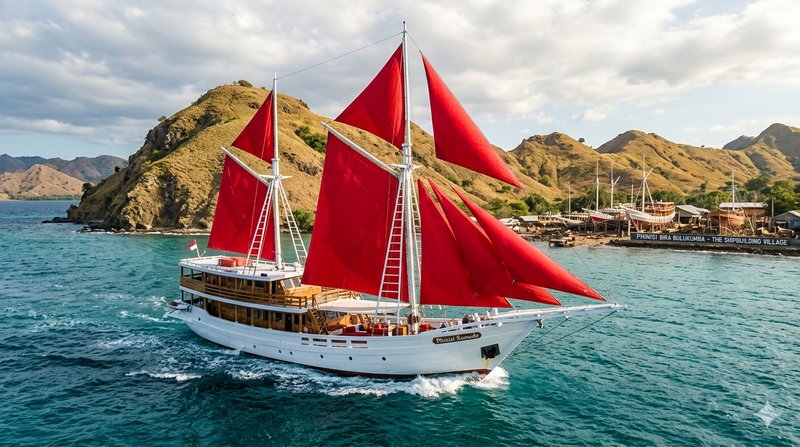
The Phinisi stands as the undisputed icon of Indonesian seafaring. Born from the Bugis and Makassarese communities of South Sulawesi, this two-masted schooner was recognized by UNESCO as an element of Intangible Cultural Heritage — an acknowledgment of the extraordinary craftsmanship that goes into its construction. Built entirely by hand from tropical hardwoods such as ironwood and teak, and assembled without modern blueprints, the Phinisi once carried traders across the length of the archipelago and beyond. It remains the vessel by which Indonesia's maritime ambition is most readily recognized.
The Jukung, by contrast, operates on an altogether more intimate scale. This small outrigger canoe, found primarily in Bali and eastern Indonesia, is as much a work of visual art as a functional craft. Painted in vivid colors and adorned with symbolic eye motifs believed to offer spiritual protection, the Jukung rides the coastal waters on double outriggers, its crab-claw sail catching even the most capricious of breezes. Fishermen still launch it into the reef at dawn; increasingly, it also carries tourists seeking something more authentic than a speedboat.
The Sandeq represents the exhilarating, daring dimension of Indonesian maritime culture. Originating among the Mandar people of West Sulawesi, its very name means "pointed" — a reference to the aerodynamic, narrow hull that allows it to reach speeds of up to twenty knots under sail alone. Where other vessels are built for cargo or ceremony, the Sandeq is built for speed, and it is celebrated each year in a long-distance race from Mamuju to Makassar that draws both competitors and spectators from across the region.
The Kora-Kora carries a more dramatic history. This long war canoe from the Maluku Islands was once deployed in battle and regional defense, manned by dozens of rowers moving in synchronized formation beneath flags and carved ornaments. Today it has been reclaimed by peace, appearing in annual sea festivals — most notably in Ternate — where its processions across the water read as something between a dance and a ceremony, a collective act of memory and communal pride.
The Lancang speaks the language of royalty. Used historically by Malay sultans in Sumatra and the Riau Islands, this ceremonial barge was never built for fishing or trade but for diplomacy, ritual, and procession. Its graceful lines, fine carvings, and gold paintwork set it apart as an artifact of Indonesia's noble maritime heritage — one that still surfaces in royal and national celebrations, though its active use has grown rare.
The Mayang makes no claim to grandeur. A modest, open-decked fishing boat found along the coasts of Central and East Java, it is the workhorse of Indonesia's coastal communities — launched at nightfall with a lantern at its bow, returning at dawn with catches that supply the local markets. Its importance lies precisely in its ordinariness: in the quiet, daily continuity it represents for those whose lives are organized around the tides.
The Paduwang, finally, is the largely unsung vessel of Madura and East Java. With its twin outriggers and distinctive wide rectangular sail woven from palm or canvas, it has served for generations as a transport link between communities, carrying goods, people, and the rhythms of Madurese coastal life across waters that larger vessels might not navigate as nimbly.
Taken together, these seven vessels constitute something far greater than a catalogue of boat types. They are a portrait of a civilization — one that learned, over thousands of years, to read the sea as others read the land. At a time when traditional boatbuilding is under pressure from cheaper materials and industrial alternatives, the communities that continue to practice it are preserving not merely a craft but a way of understanding the world. To encounter one of these boats — in a shipyard, on a festival river, or at the edge of a reef at first light — is to touch something that no museum can quite replicate. It is history that still moves.
References (1)
Types of Traditional Indonesian Boats



Popular Articles
Popular articles from the community

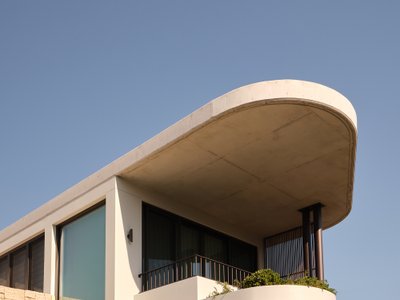
Stanton Architects Sculpts a Curving Family Home into Sydney's Inner West Fabric
Five Dock House uses cantilevers, curved concrete, and layered courtyards to carve out privacy on a tight suburban lot in Sydney.
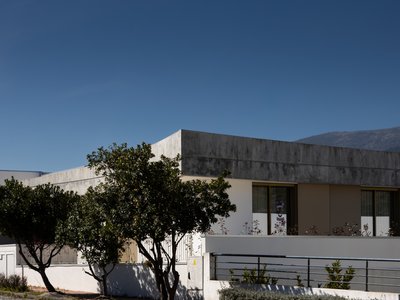
PLATAFORMArq Folds a Concrete Roof Over the Portuguese Mountains in House #474
A 220-square-meter residence in Teixoso, Portugal, wraps board-formed concrete into an angular canopy that frames the Serra da Estrela foothills.
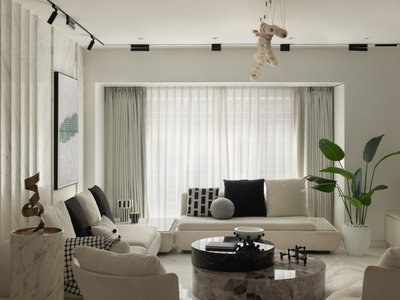
Inside a Timeless Mumbai Residence by Aether Studio
Aether Studio's 2,250 sq ft apartment in Malad, Mumbai uses marble, brass, boucle, and disciplined restraint to build a quiet retreat from the city.

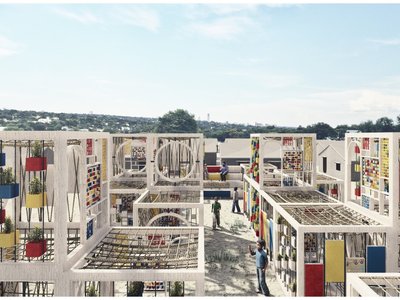
The Faith: Modular Architecture for Play, Learning, and Hope in Kutupalong Refugee Camp
A modular playground architecture project in Bangladesh where play, learning, safety, and hope rebuild childhood inside a refugee camp anew.


Similar Reads
You might also enjoy these articles
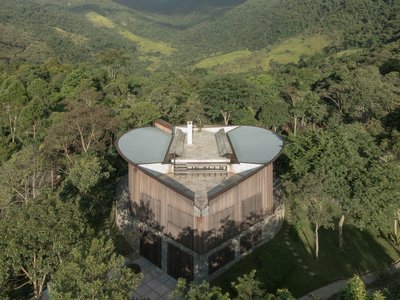
House in Bocaina by Ana Altberg + Cesar Jordão: A Circular Retreat Embracing the Atlantic Forest
Circular forest home in Brazil by Ana Altberg and Cesar Jordão, blending sustainable materials, passive design, and immersive landscape integration.
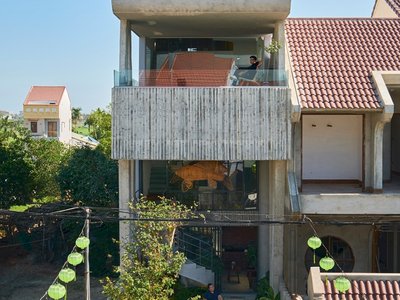
Cherry Homestay: A Harmonious Blend of Modern Design and Traditional Hoi An Architecture
Cherry Homestay blends modern architecture with traditional Hoi An elements, featuring spiral stairs, rooftop mezzanine, sustainable materials, and open, airy spaces.
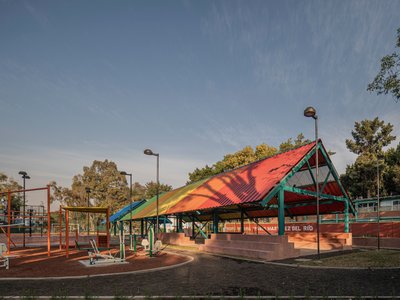
Revitalizing Culhuacán: Housing Unit Infonavit CTM Square by AMASA Estudio
AMASA Estudio revitalized CTM Culhuacán Square, transforming neglected housing unit spaces into vibrant, accessible, community-focused public areas with sustainable design elements.
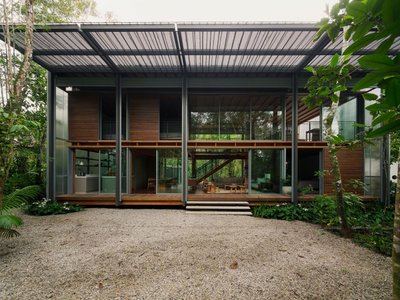
FR House by Andrade Morettin Arquitetos Associados: A Coastal Retreat Embedded in Brazil’s Native Landscape
Coastal vacation house blending into native vegetation, using translucent polycarbonate, timber structure, passive shading, and elevated design for climate-responsive living.






Comments (0)
Please login or sign up to add comments
No comments yet. Be the first to comment!