
Revitalizing Culhuacán: Housing Unit Infonavit CTM Square by AMASA Estudio
AMASA Estudio revitalized CTM Culhuacán Square, transforming neglected housing unit spaces into vibrant, accessible, community-focused public areas with sustainable design elements.


The Housing Unit Infonavit CTM Culhuacán Square, designed by AMASA Estudio, stands as a pioneering example of urban public space revitalization in Mexico City. Originally part of the largest Infonavit development constructed in the second half of the 20th century, CTM Culhuacán spans approximately 15,000 homes in the Coyoacán borough, bordering Iztapalapa. Established in 1974, its full name—Confederación de Trabajadores de México (CTM) Culhuacán—reflects both the indigenous heritage of Culhuacán and Mexico’s mid-century welfare-state vision, offering housing to a growing working- and middle-class population.
Over the decades, like many large-scale housing projects in Mexico City, CTM Culhuacán faced challenges: deteriorating communal areas, unclear administrative responsibilities, and fragmented neighborhood organization hindered effective maintenance. Shared spaces suffered neglect, informal occupation, and misuse, impacting both community cohesion and the physical quality of the environment.
In particular, the square near the tenth section of CTM Culhuacán had fallen into disrepair, hosting worn-out courts, damaged playgrounds, and leftover areas prone to antisocial activities. The National Workers’ Housing Fund Institute (Infonavit) issued a “turnkey” bidding process on June 22, 2023, inviting design and execution proposals for four housing units, including CTM Culhuacán.
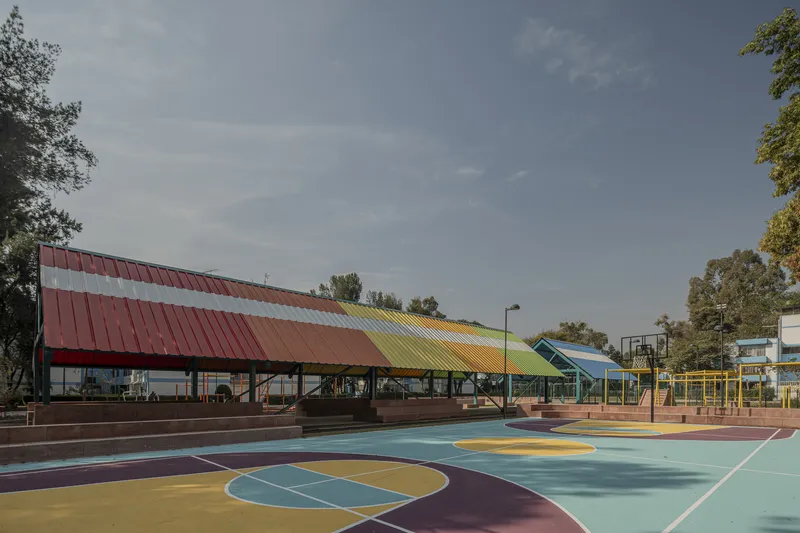
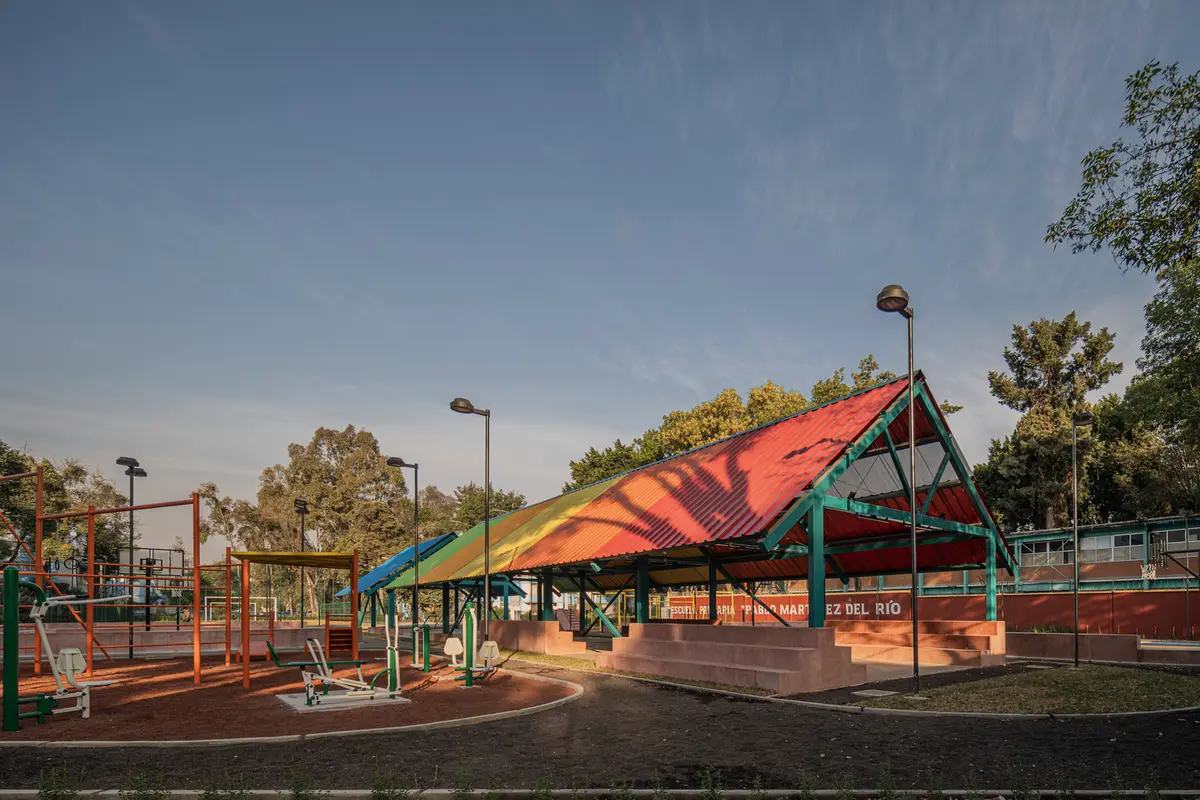
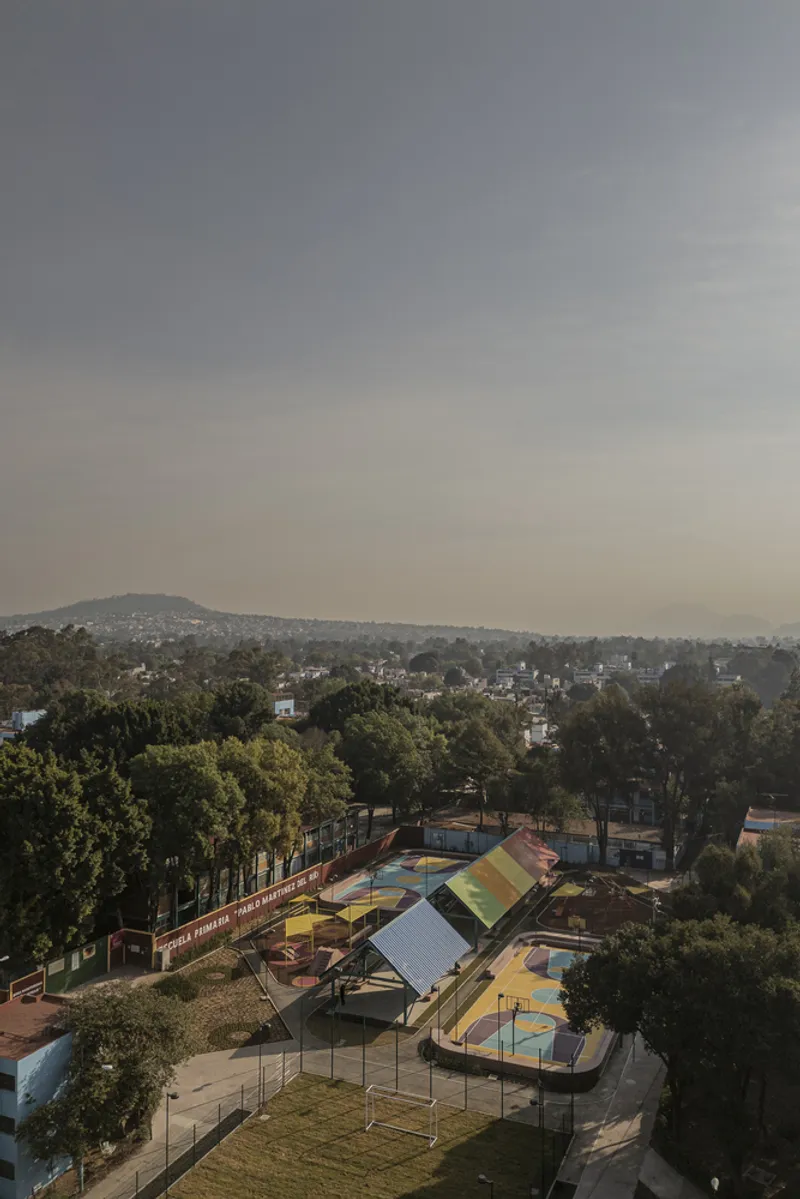
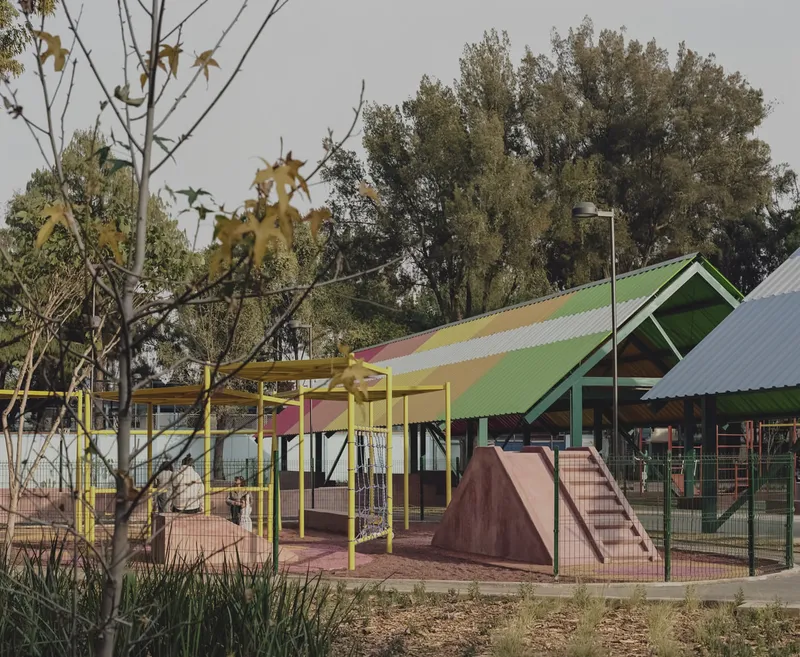
AMASA Estudio, led by Andrea López and Agustín Pereyra, won the contract with a conceptual intervention that transformed this neglected square into a vibrant social hub. The design strategically centers on a colorful chromatic arch, creating scale, containment, and a focal point for visibility and community engagement. This arch is not merely decorative; it anchors the space, prevents irregular use, and ensures continuous natural surveillance, restoring safety and order.
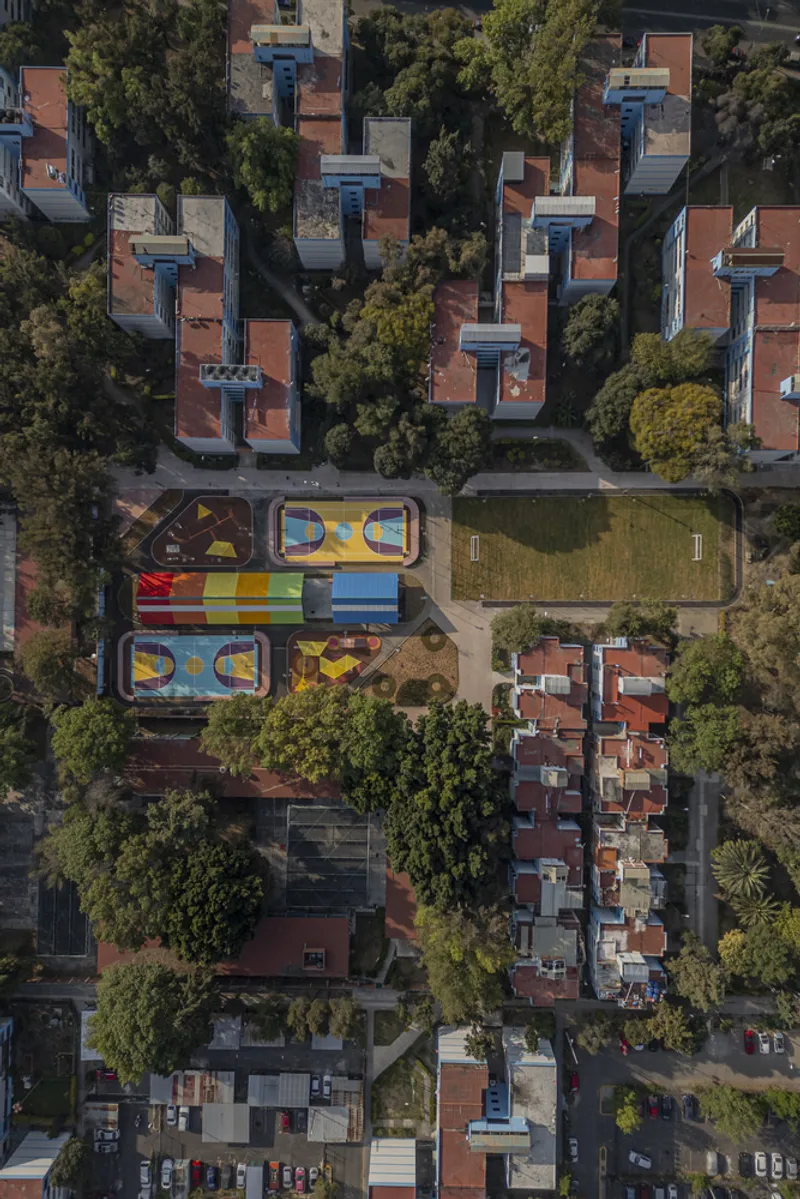
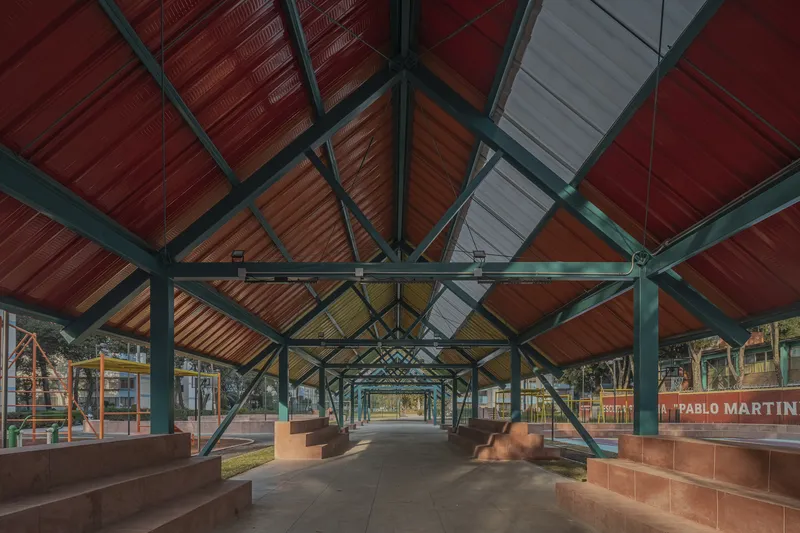
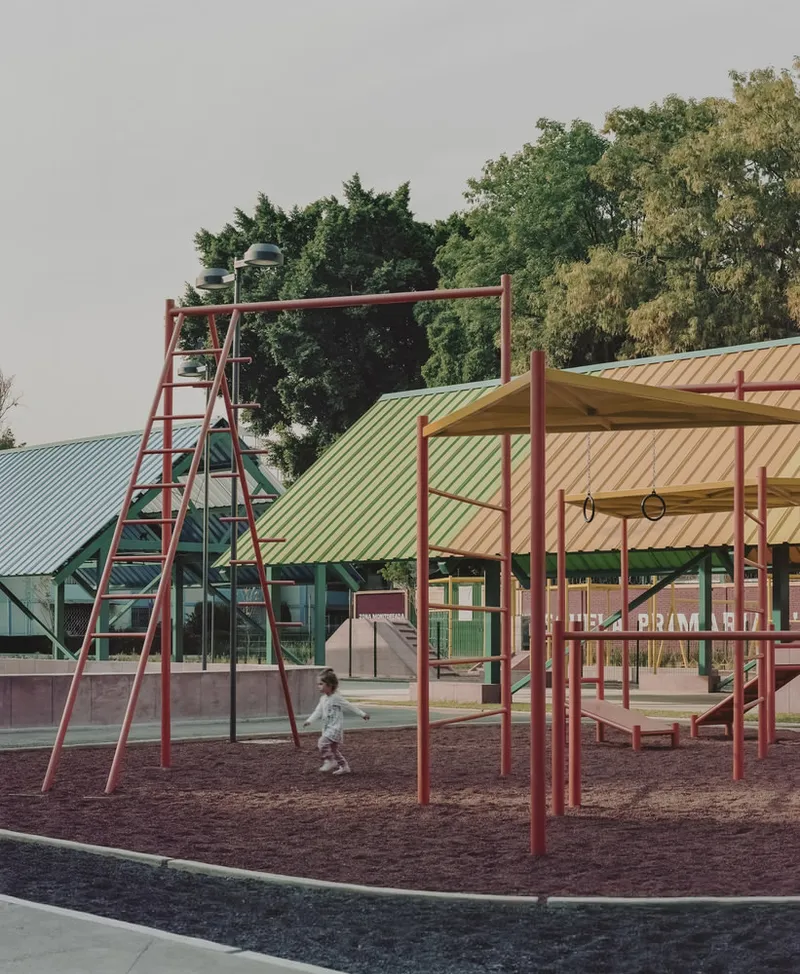
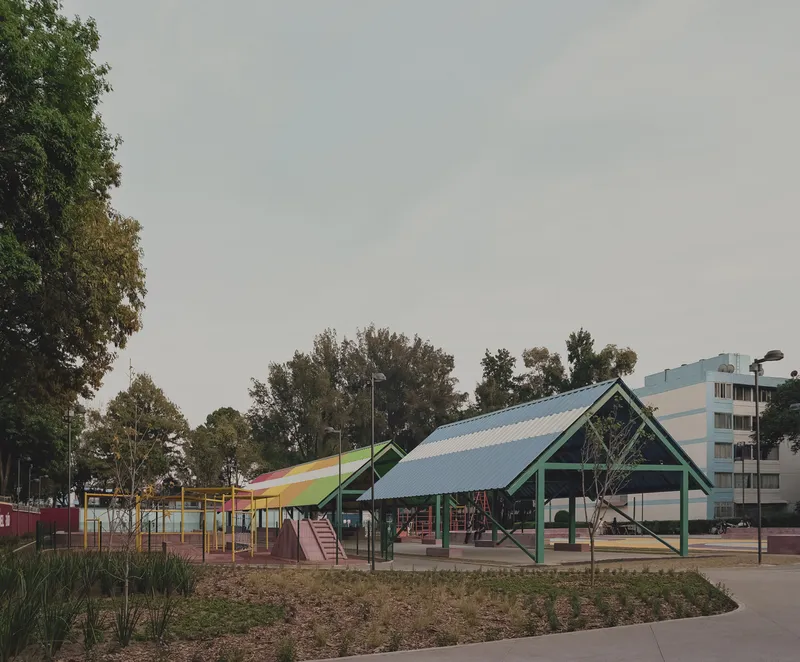
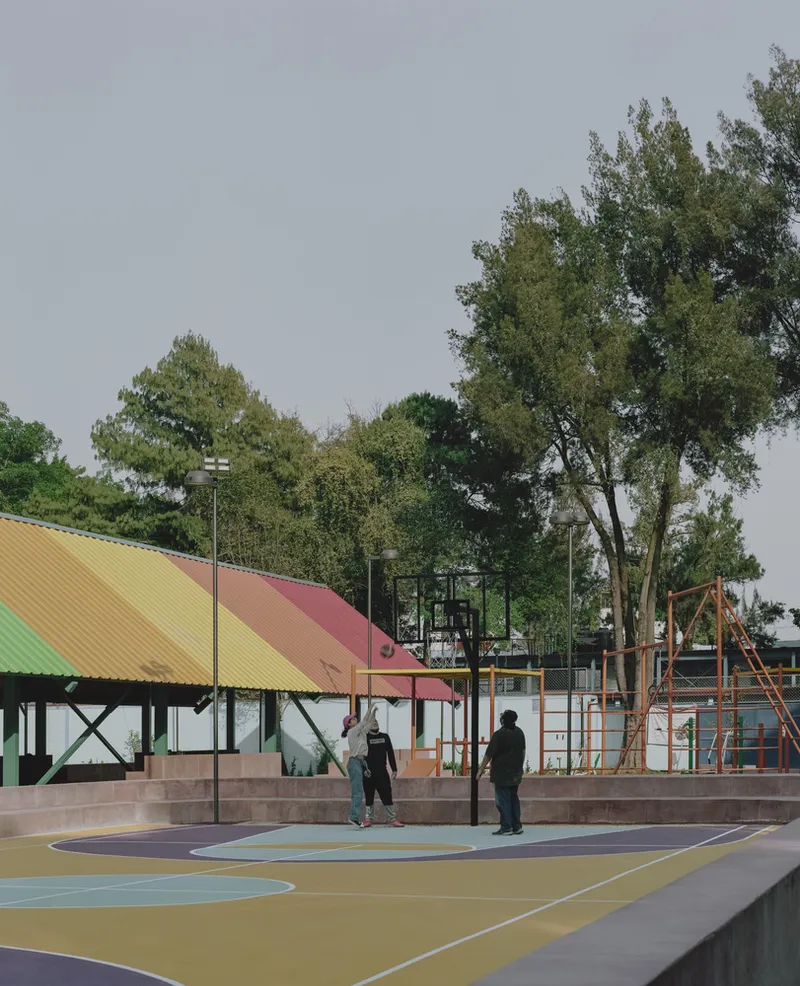
Surrounding this central structure are thoughtfully integrated public amenities, developed through participatory sessions with residents. The program includes two basketball courts, a calisthenics area, a covered forum with seating, children’s play equipment, and a 600-meter running track, ingeniously woven into the pedestrian circulation. This holistic approach optimizes space and budget while meeting technical standards.
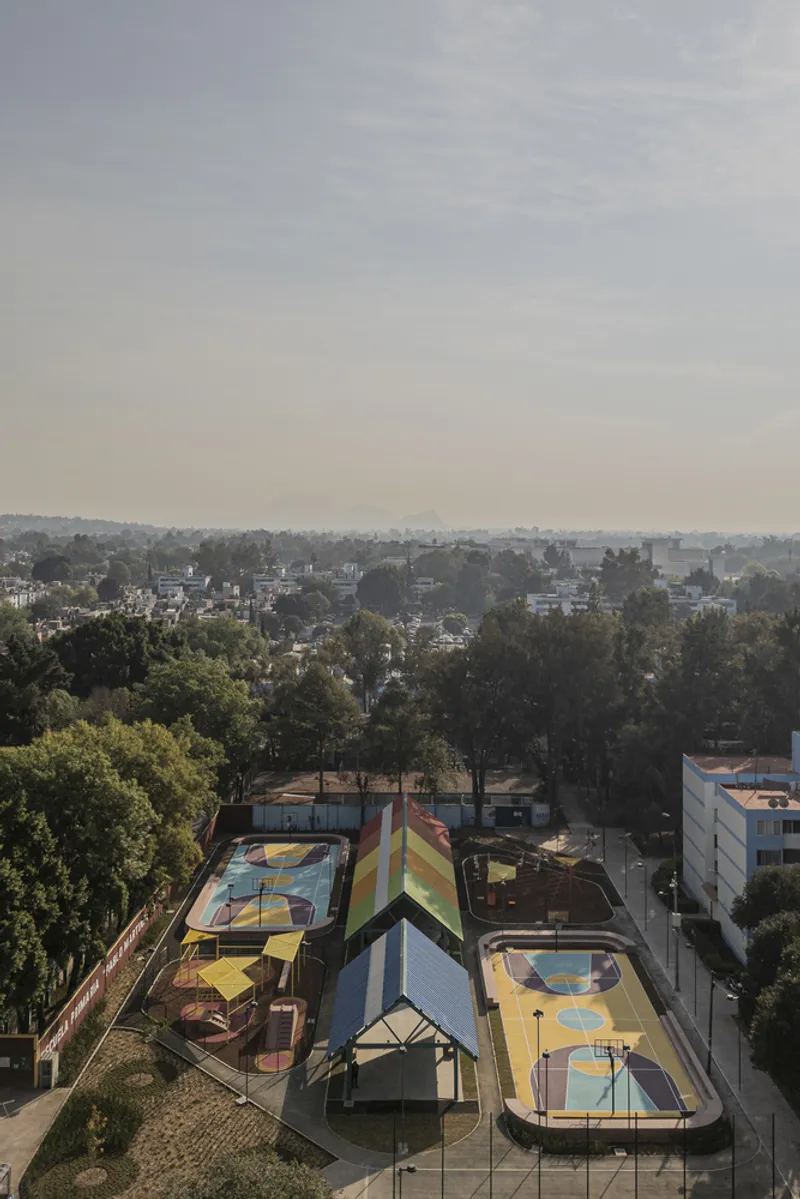
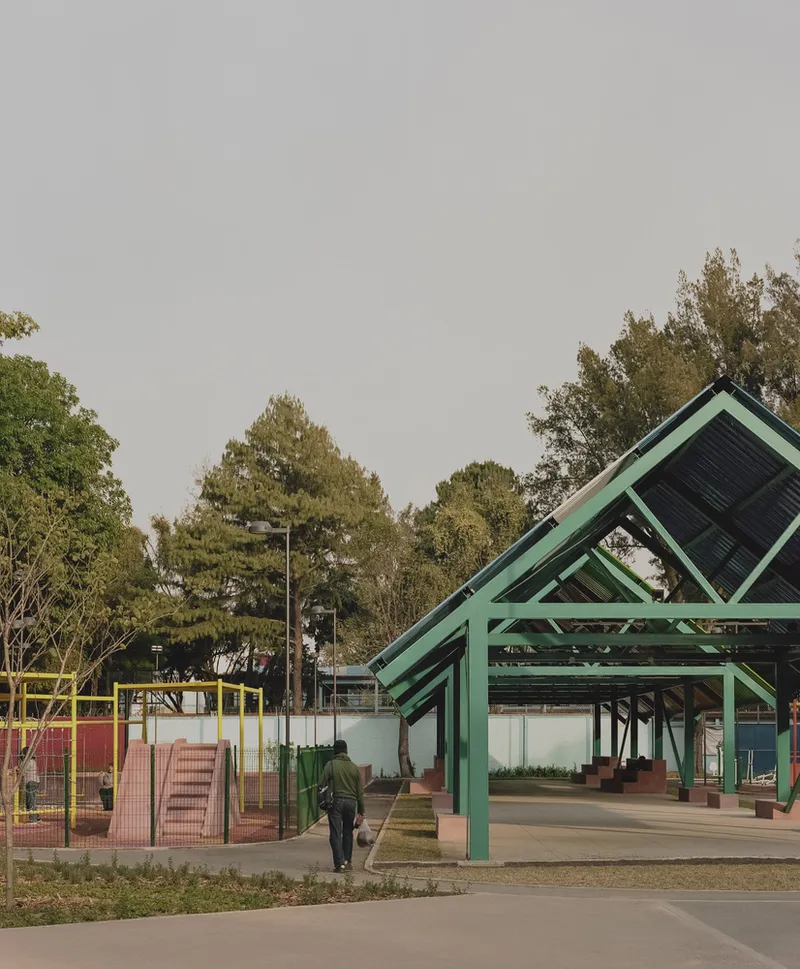
Collaboration with Desarrolladora de Ideas y Espacios ensured a high-quality execution despite budget adjustments, enabling resource-efficient construction. Lessons learned from the four awarded projects allowed for shared materials, modular solutions, and consistent design strategies between architectural interventions and public space enhancements.
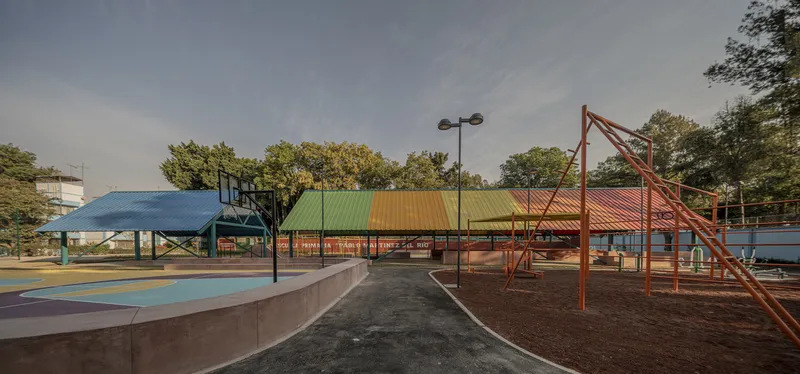
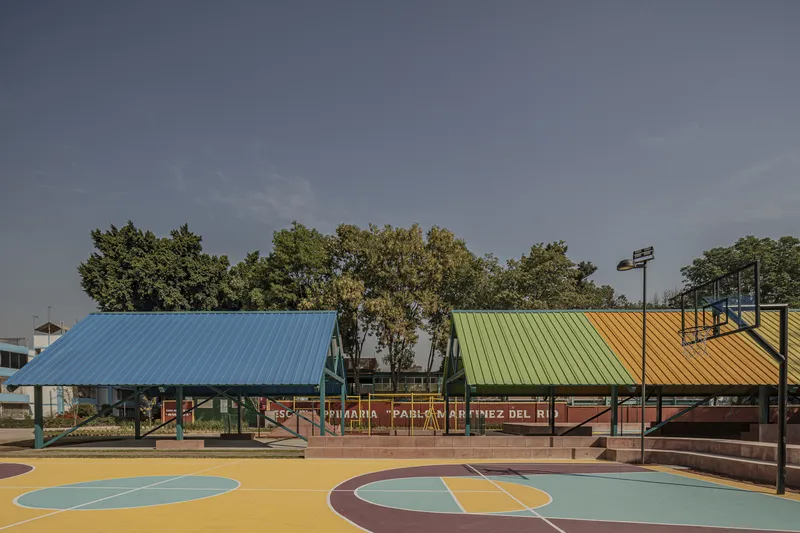
The revitalized square emphasizes sustainable urban design: rainwater infiltration areas, universal accessibility, and pedestrian-friendly circulation transform former pathways into lively gathering spaces. Thoughtful attention to color, pavement texture, curb modulation, and material selection unites the components into a coherent, harmonious composition.
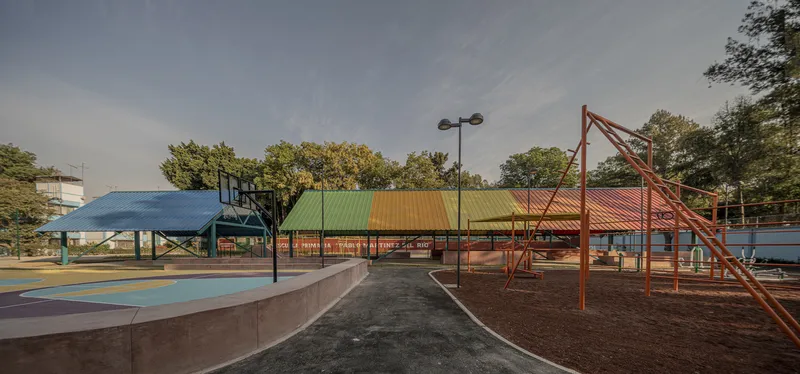
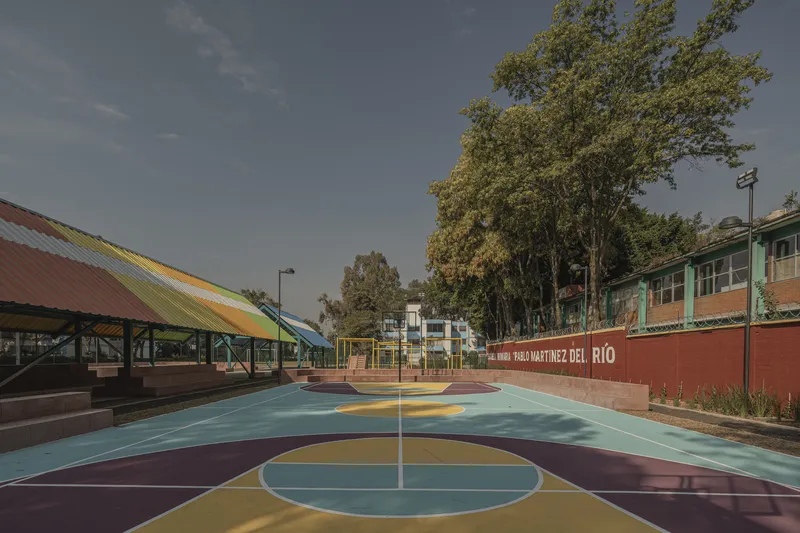
Nearly fifty years after the construction of CTM Culhuacán, this intervention exemplifies how collaborative architecture—between designers, residents, and institutional partners—can restore the social value of public spaces. Using simple yet powerful architectural elements, such as structural steel profiles, pigmented concrete, and corrugated sheets, AMASA Estudio redefined a once-forgotten courtyard into a thriving, cared-for community landmark.
All photographs are works of Zaickz Moz, Andres Cedillo, Gerardo Reyes Bustamante


Popular Articles
Popular articles from the community


ALGAL REALM: A Bio-Integrated Lunar Habitat Design for Life Beyond Earth
ALGAL REALM reimagines lunar habitat design with algae-powered life support, 3D-printed regolith, and vertical living for a lunar future.

Lunar Spiral: Space Architecture Shaped by the Mathematics of the Universe
Lunar Spiral reimagines space architecture through Fibonacci geometry, lunar regolith, levitating habitats, and self-sustaining Moon living.

Conexión: Biophilic Design Reimagines High-Rise Living in Hong Kong
Conexión reimagines high-rise living in Hong Kong through biophilic design, green facades, shared spaces, daylight, water and nature within.

Little Red Riding Hood: Architectural Design as a Journey Through Fear, Light, and Storytelling
Little Red Riding Hood reimagines the fairy tale through architectural design shaped by fear, light, scale, memory, uncertainty, and choice.

Similar Reads
You might also enjoy these articles


Hodi-Mandai Geram
Project Function: Preservation and revitalization of the Intangible heritage and socio-spatial identity of the Hodi by Housing, Cultural Memory Center, Sacred Grove, landscape, local tourism economy


Olio Towers: A Mid-Rise for Performers That Fuses Housing, Rehearsal, and Stage
Located blocks from Houston's Theater District, this modular tower stacks living units around a central performance atrium.

Oasis: Modular Green Housing Carved into Dhaka's Urban Fabric
A shortlisted Plugin Housing entry reclaims unauthorized settlements in Dhaka with stepped concrete volumes, green roofs, and ventilation-driven design.

Black Hole: A Floating Megastructure for the Post-Physical Era
Emiliano Mazzarotto envisions a spherical, self-scaling arena where e-sports, digital hotels, and holographic stadiums replace traditional public space.

Explore Sustainable Design Competitions
Discover active competitions in this discipline

Challenge to reimagine the Iron Throne

Photograph architecture without architects

Illustrate the lost glory of Angkor Wat - Render Challenge

Design challenge to reuse E-waste
Comments (0)
Please login or sign up to add comments
No comments yet. Be the first to comment!