

The Wave Office by H.a: A Lightweight, Sustainable Workspace Rooted in Reuse and Regeneration
A modular, eco-conscious office using recycled materials and a wave-like roof, designed for flexibility, mobility, and urban regeneration.


Architects: H.a
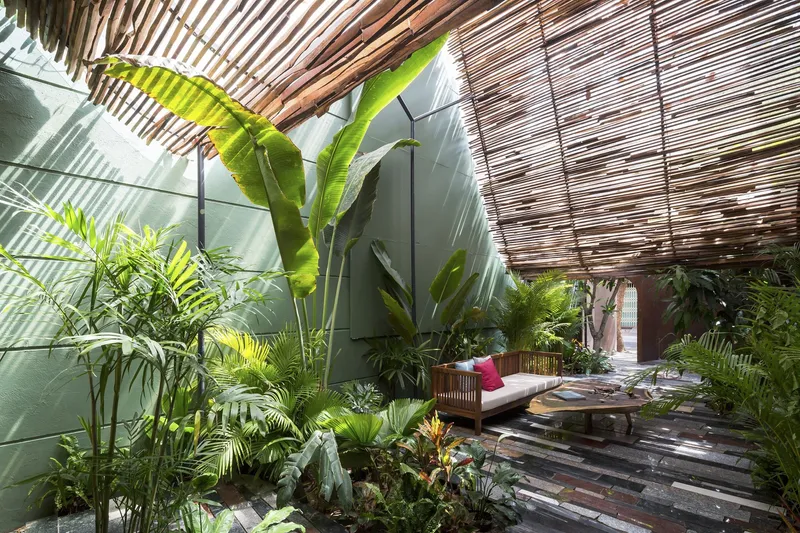
A Sustainable Workspace Born from Urban Voids
In the coastal city of Vũng Tàu, Vietnam, The Wave Office emerges as a bold reimagining of urban infill. Designed by H.a, this compact 80-square-meter office stands as a prototype for flexible, low-cost, and eco-conscious workspaces constructed on short-term leased lots. Built on a narrow 4x20 meter plot—commonplace in the region—this temporary office redefines how vacant urban land can be reactivated, offering not just space, but inspiration.
With a five-year lease and tight budget, the architects sought to craft a lightweight, mobile, and regenerative structure. In doing so, they challenged traditional office design by integrating nature, reused materials, and a modular construction system that can be dismantled and rebuilt elsewhere.

Design Concept: Minimum Intervention, Maximum Utility
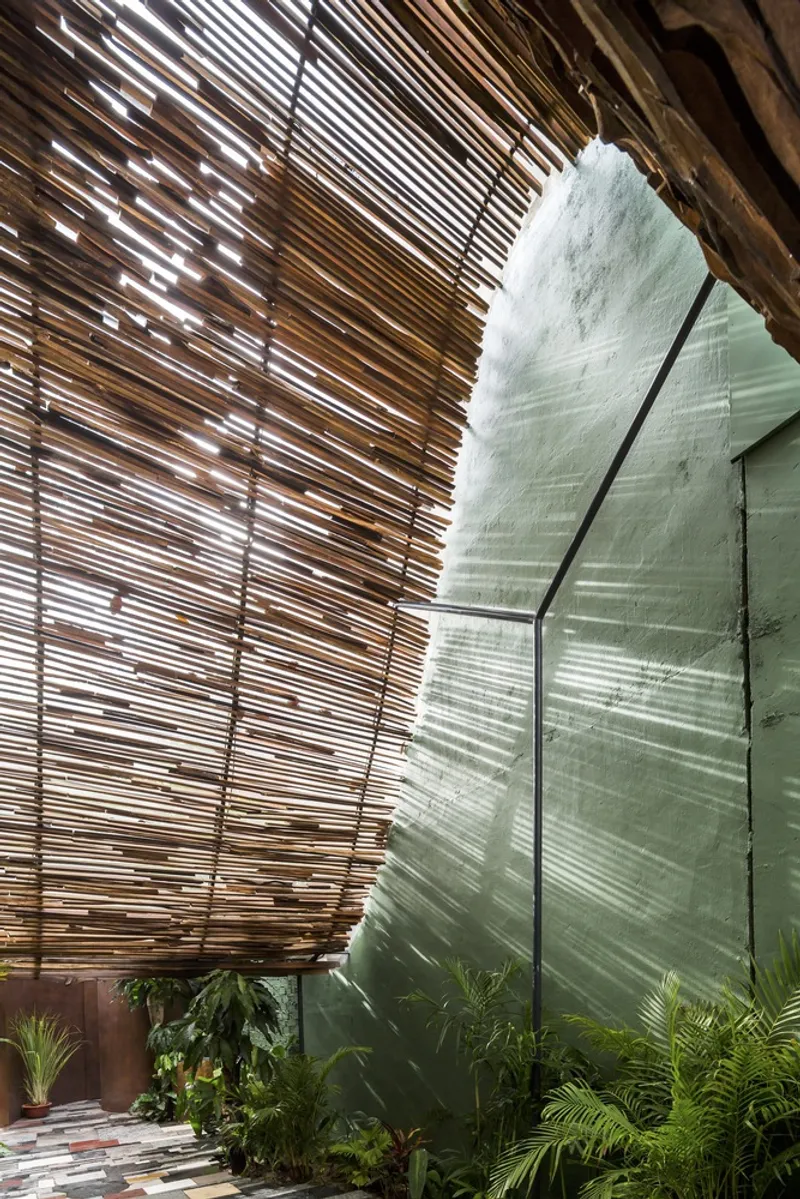
The design begins with a single, defining architectural gesture—a long, undulating roof structure made of interlocking recycled wooden slats mounted on a light steel frame. Positioned between two existing townhouse walls, the roof becomes the main organizing element, shaping spatial zones through changes in height and transparency.
- Open slat areas allow filtered sunlight to enter, nurturing greenery and creating the feel of a garden.
- Denser slats create cooler, shaded zones reminiscent of enclosed interiors.
This approach blurs the boundaries between inside and outside, forming a series of functional yet flexible "rooms" without rigid walls.

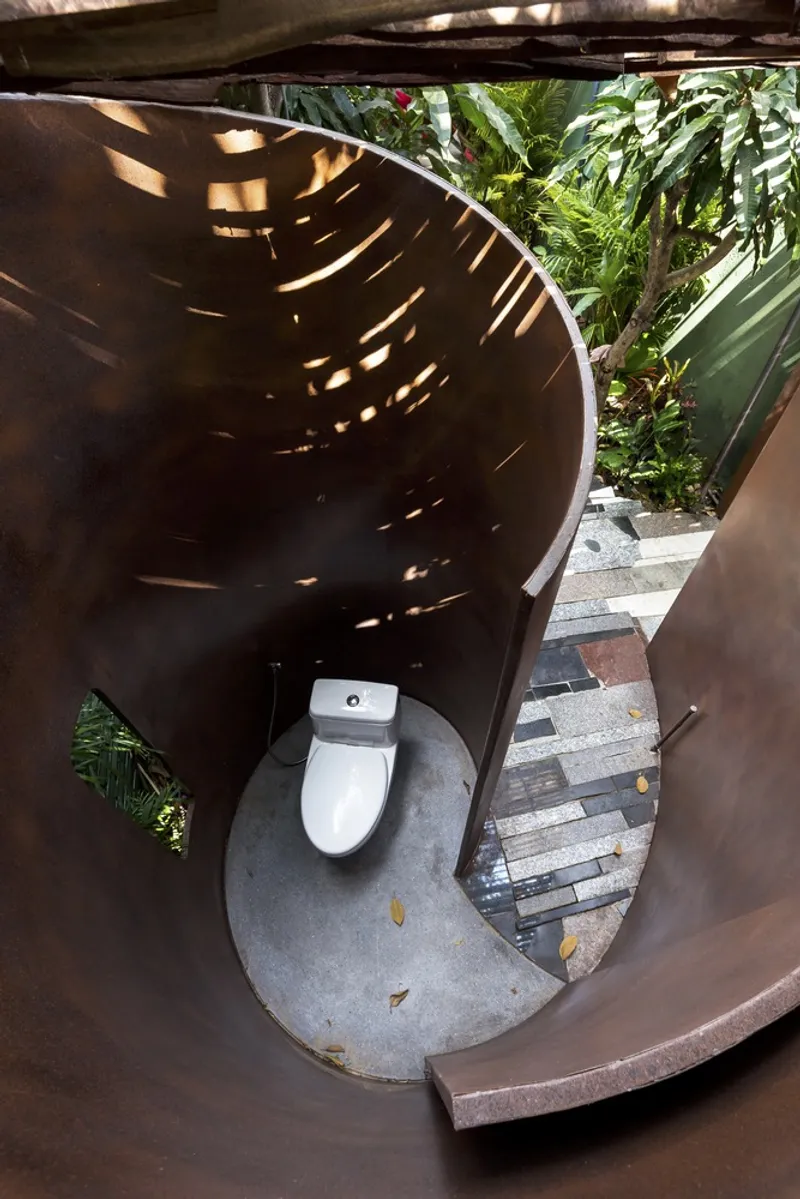
Materials and Craft: Architecture of Utilization
Every material used in The Wave Office is a celebration of resourcefulness and reuse.
- Roof slats were made from discarded wood—leftovers from lumber mills, usually burned or milled into plywood.
- Flooring consists of randomly arranged cover stones salvaged from local stone-processing factories.
- Trees and vegetation were either pre-existing on-site or transplanted from other nearby construction projects.
The construction team comprised the architecture studio’s own staff and carpenters from its affiliated workshop. Woodworkers doubled as ironworkers, and architects took part in landscaping—making the process deeply collaborative and intimate.
“The office may look simple,” the architects share, “but it is filled with care, effort, and affection.”

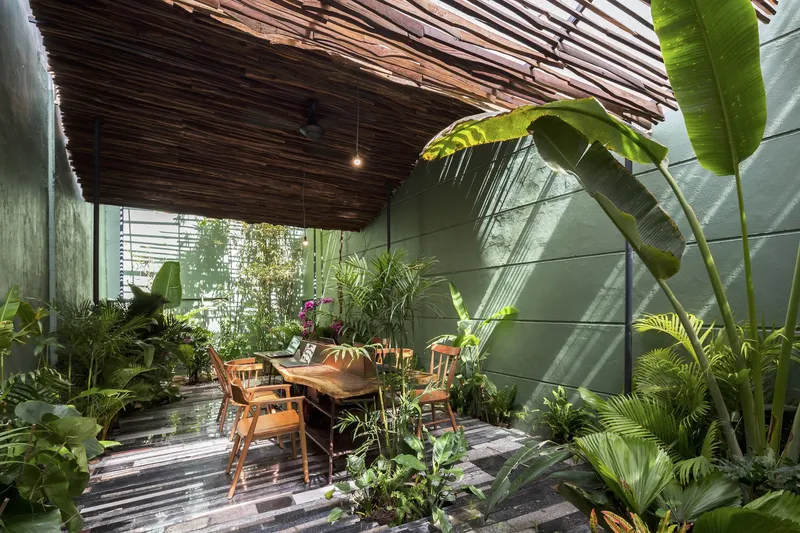
Adaptability and Regeneration: Architecture on the Move
The Wave Office isn’t just temporary—it’s designed to migrate and evolve. Its demountable, bolt-fastened system allows for effortless relocation without the use of mortar or permanent adhesives. In fact, once the original lease expired, the structure was completely dismantled and rebuilt on a new site—maintaining its form, spirit, and even materials, except for the stone floor, which couldn’t be moved.
This makes The Wave an architectural model for mobile sustainability—a structure that can shrink, grow, and adapt depending on future needs and site conditions.

A New Model for Urban Infill Workspaces
By embracing impermanence, The Wave Office offers a visionary alternative to wasteful construction practices on short-term plots. Its lifecycle-based design and regenerative structure align with modern sustainability goals, making it a prime example of how small-scale architecture can have large-scale impact.
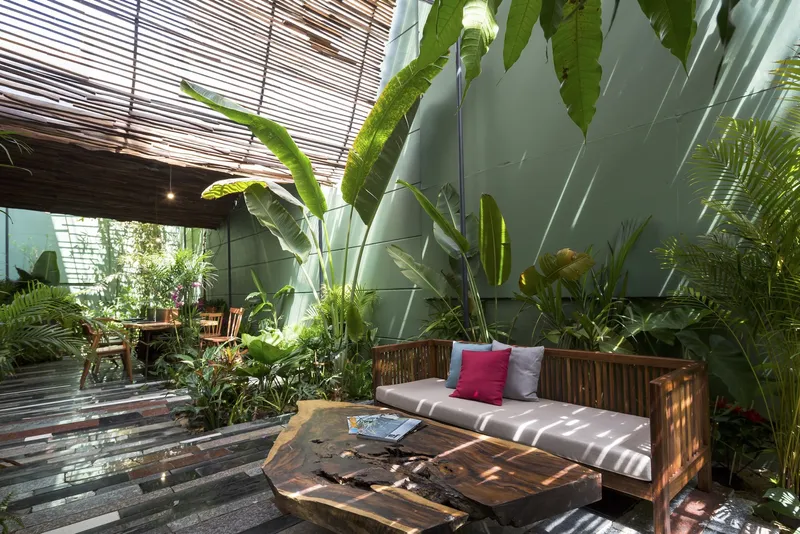
All photographs are works of
Hoang Le


Popular Articles
Popular articles from the community


Architekt Andreas Gruber Scatters 23 Dark Timber Chalets Across a South Tyrolean Forest Edge
In Molini di Tures, Amonti Chalets breaks a resort into a hamlet of gabled timber houses, with parking, storage and services pushed into the slope.

Juan García Correa, John González and Claudia Rueda Sink a Circular Amphitheater into a Manizales Engineering Building
On the La Nubia campus in Manizales, Colombia, the S1 Building folds labs and offices into a hillside of ramped lawns that double as a campus route.

longwave studio Reorganizes a 112 m² Tainan Apartment Around the Daily Routines of a Family and Two Cats
In Tainan, Taiwan, birch plywood, rust-red furniture and a freestanding plaster wall link arrival, storage, work and family life in one apartment.

Jaramillo Van Sluys Arquitectura and Urbanismo Turn a Demolished Registry Lot in Quito into an Orchard Plaza
In Quito's Centro Histórico, a 2,800 m² plaza exposes the San Agustín convent wall and redraws its lost Augustinian orchard in volcanic stone.

Similar Reads
You might also enjoy these articles


Hodi-Mandai Geram
Project Function: Preservation and revitalization of the Intangible heritage and socio-spatial identity of the Hodi by Housing, Cultural Memory Center, Sacred Grove, landscape, local tourism economy


Olio Towers: A Mid-Rise for Performers That Fuses Housing, Rehearsal, and Stage
Located blocks from Houston's Theater District, this modular tower stacks living units around a central performance atrium.

Oasis: Modular Green Housing Carved into Dhaka's Urban Fabric
A shortlisted Plugin Housing entry reclaims unauthorized settlements in Dhaka with stepped concrete volumes, green roofs, and ventilation-driven design.

Black Hole: A Floating Megastructure for the Post-Physical Era
Emiliano Mazzarotto envisions a spherical, self-scaling arena where e-sports, digital hotels, and holographic stadiums replace traditional public space.
Explore Office De Architects Competitions
Discover active competitions in this discipline

Challenge to reimagine the Iron Throne

Photograph architecture without architects

Illustrate the lost glory of Angkor Wat - Render Challenge

Design challenge to reuse E-waste
Comments (0)
Please login or sign up to add comments
No comments yet. Be the first to comment!