

Thoravej 29 by Pihlmann Architects: A Radical Model for Circular Architecture in Copenhagen
Thoravej 29 transforms a 1967 factory into a cultural hub, reusing 95% of materials to create sustainable, raw, community-focused architecture.


Transforming a 1967 Industrial Building into a Contemporary Cultural Hub
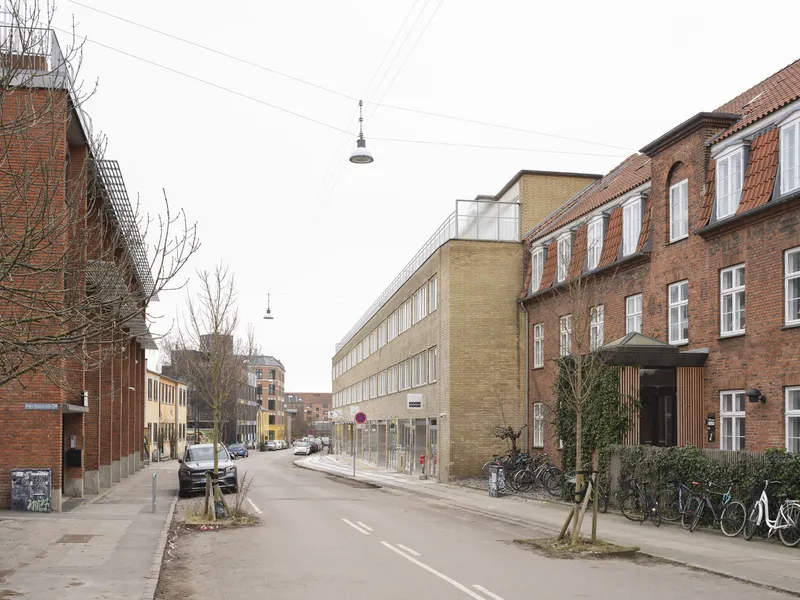
Thoravej 29 in Copenhagen represents a pioneering step in circular architecture and adaptive reuse. Designed by Pihlmann Architects, the project transforms a former 1967 factory and municipal disability center by Erik Stengade into a vibrant cultural and creative hub, championing a radical reuse strategy that sets new standards for sustainable renovation in Denmark.
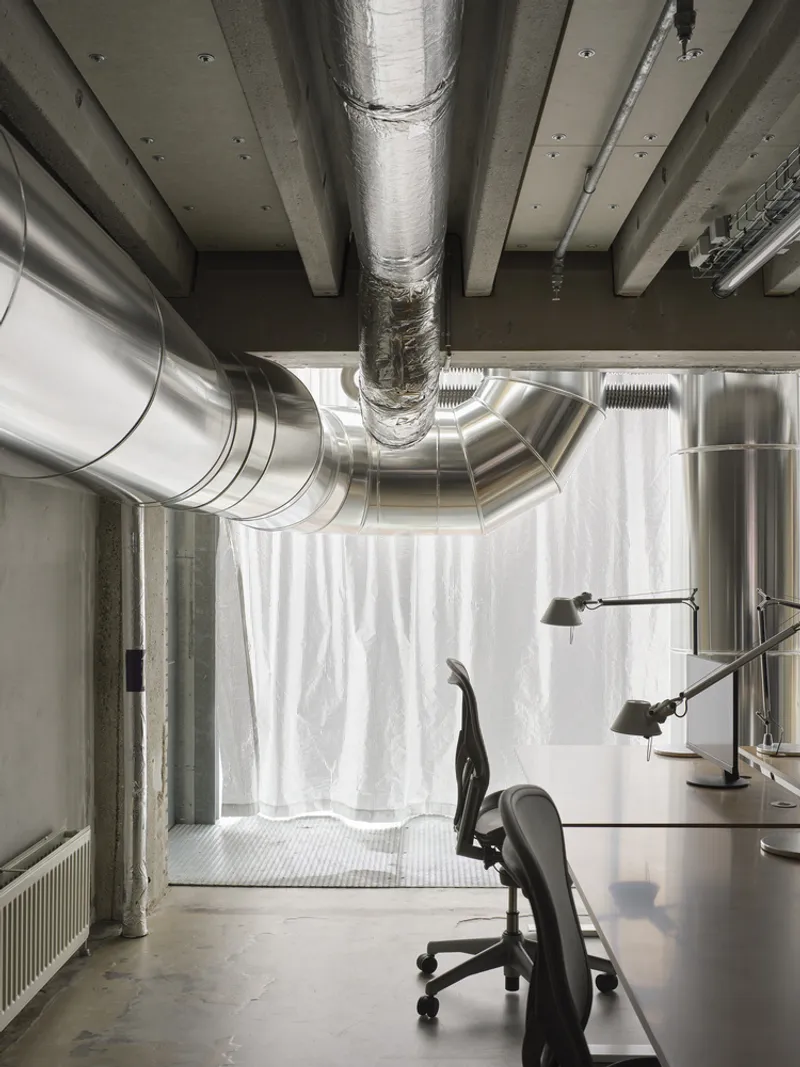
Located in Copenhagen’s evolving industrial district, the 6,336 m² building now houses galleries, exhibition spaces, studios, workshops, offices, meeting rooms, and a public canteen and café, serving a community of more than 150 creative professionals across 30 organizations.
A Building That Rebuilds Itself: Circular Design at Its Core
This project treats the existing building as a material bank—a resource to be harvested rather than demolished. Structural components, facade elements, fittings, and interior materials are carefully dismantled, cataloged, and reintegrated in new configurations.
Key Circular Achievements
- 95% reuse or recycling rate (by weight of existing materials)
- Up to 88% reduction in carbon emissions compared to new construction
- 90% reduction in construction waste
- LEED-guided lifecycle research conducted in collaboration with DTU
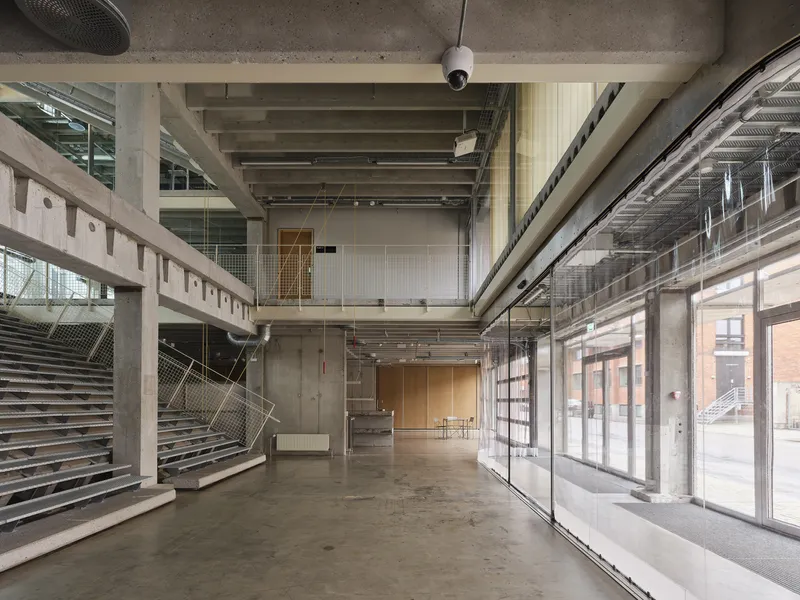
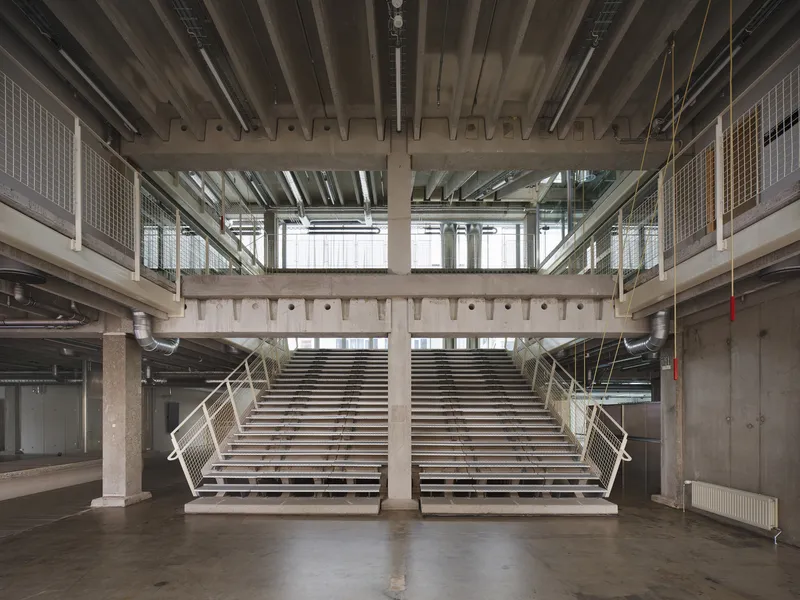
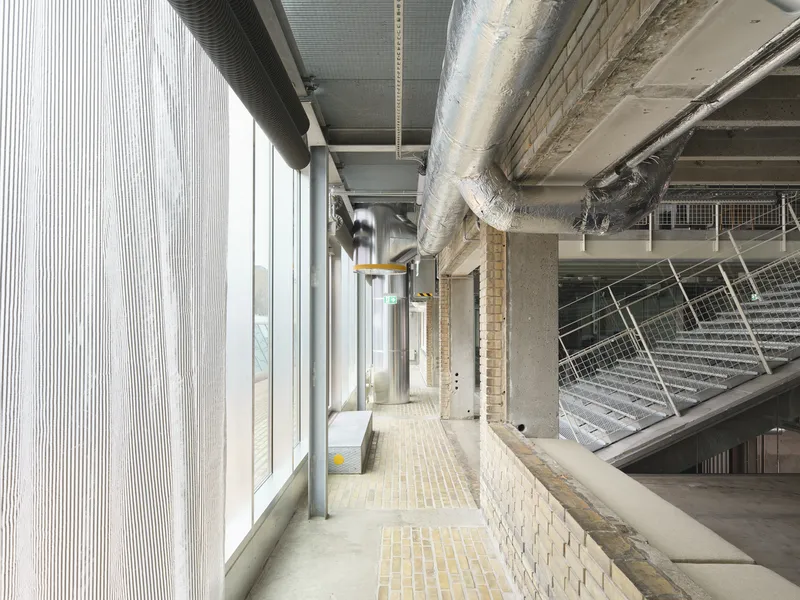
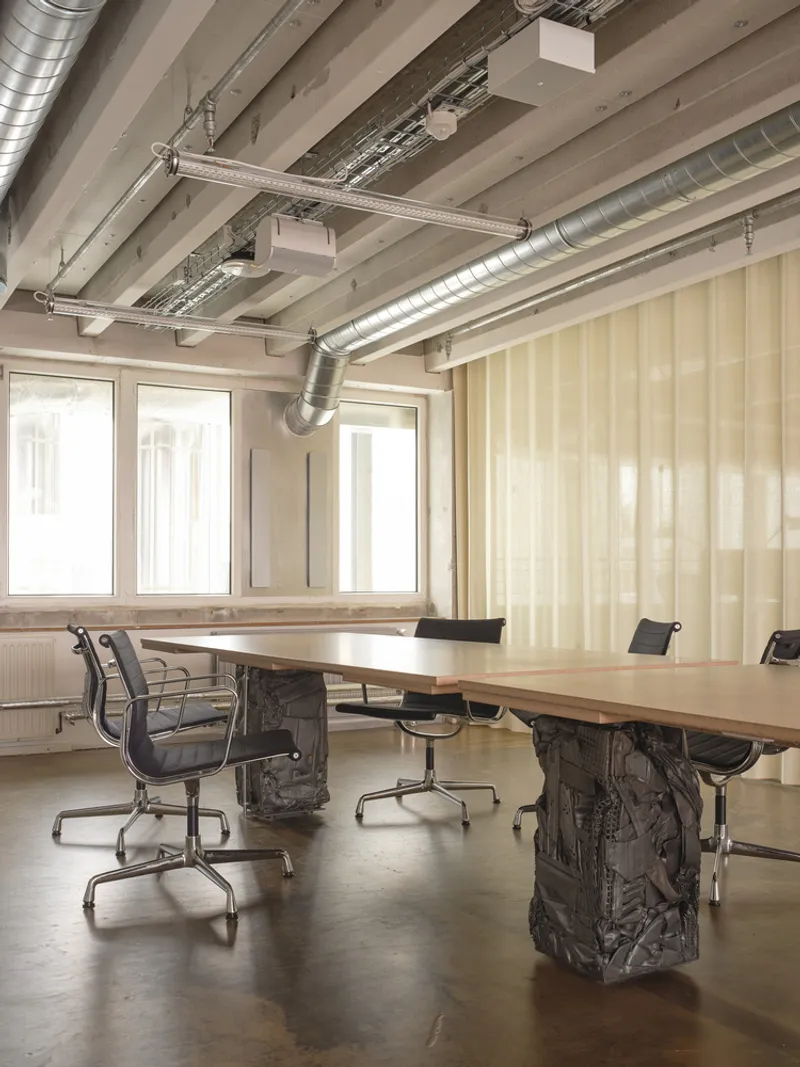
Concrete floor slabs become broad sculptural staircases. Facade bricks reappear in landscape paving. Door handles, carpentry elements, and lighting are repositioned or re-crafted into bespoke furniture and interior detailing. Rather than relying on conventional finishes, the architects celebrate the rawness and history of each salvaged piece.
Architectural Strategy: Subtraction, Reuse, and Spatial Re-Animation
Stripping Back to the Industrial Bones
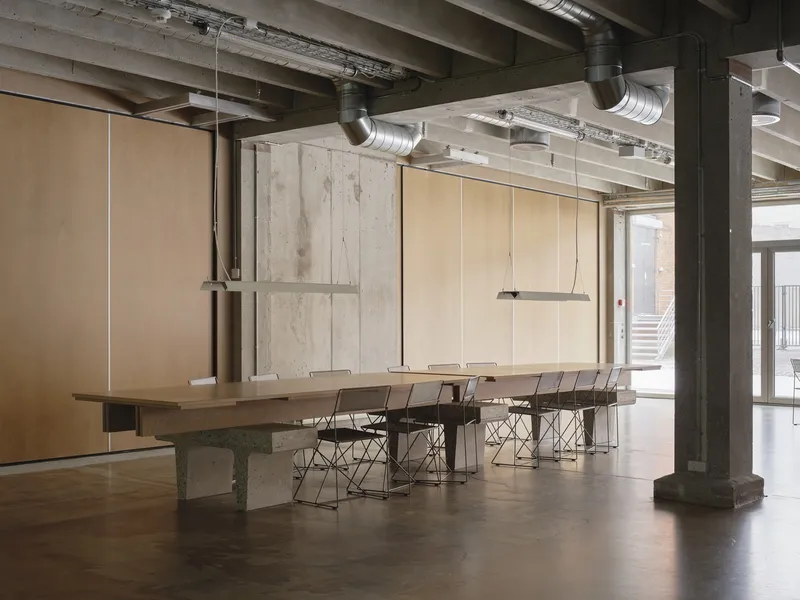
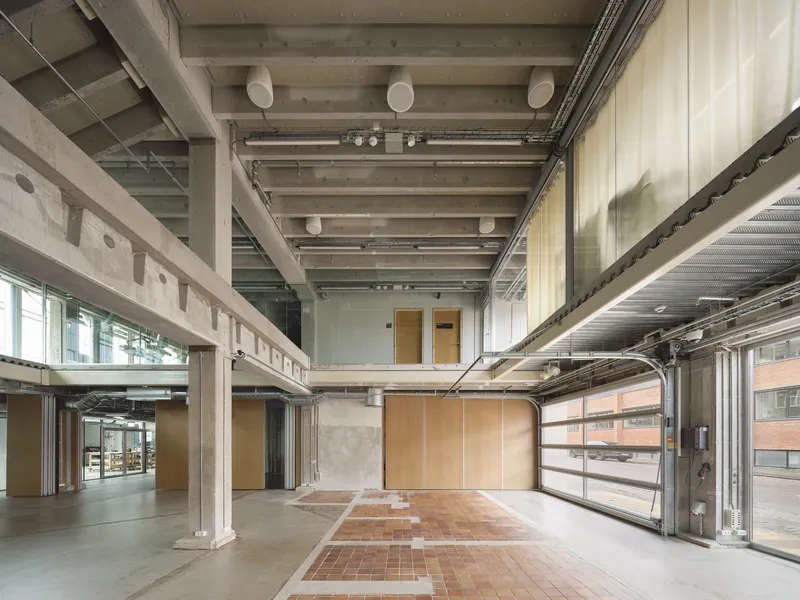
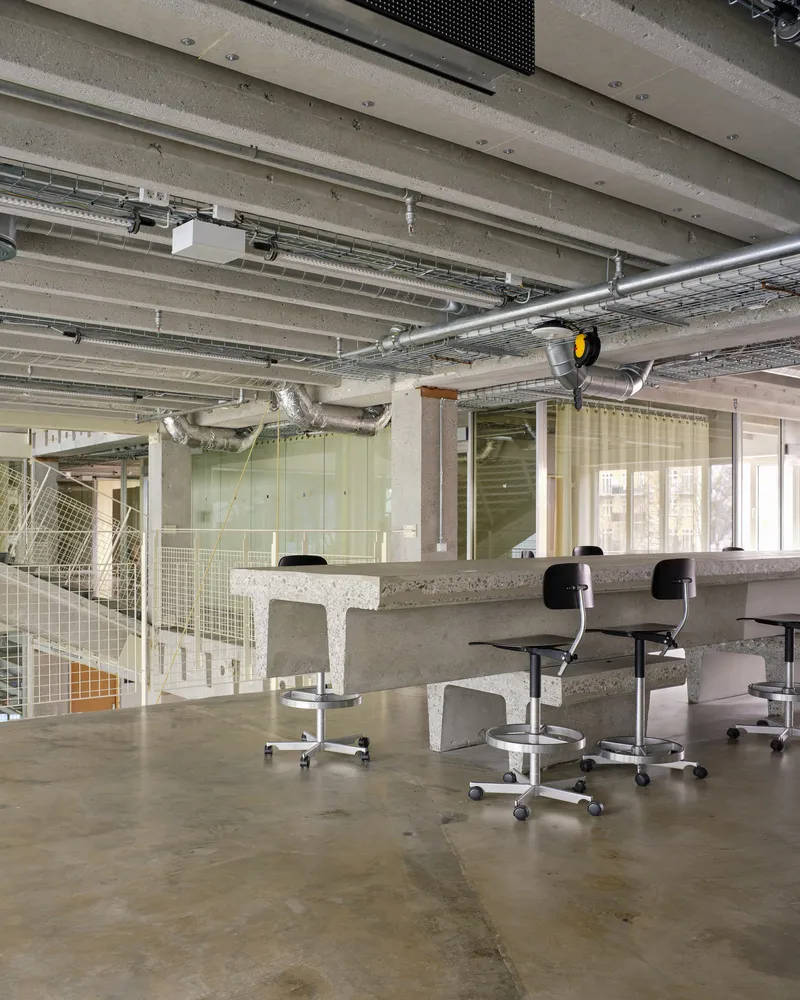
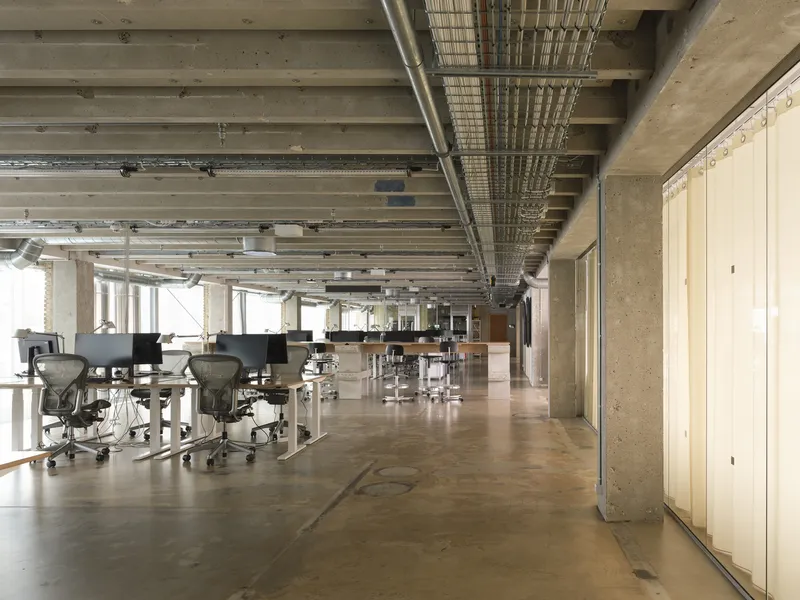
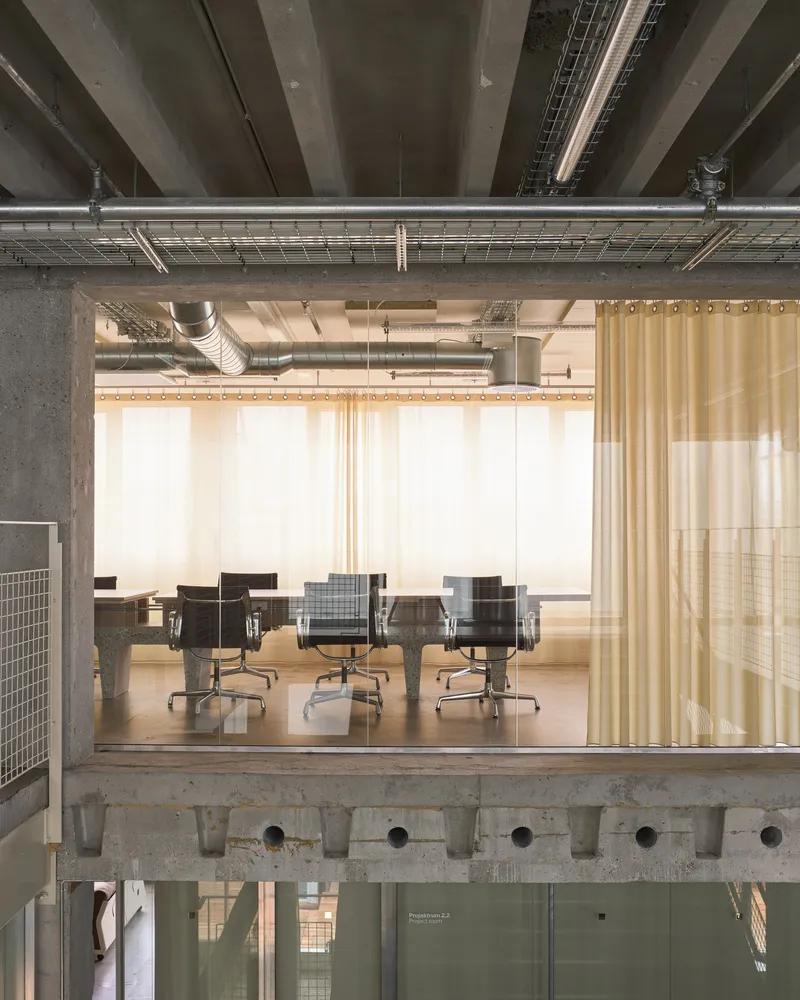
The building was returned to its fundamental structure—column-beam frame, TT slabs, and linear façade composition—allowing new interventions to emerge with clarity and honesty. Lightweight partitions were removed, stored, and selectively reused to support the project’s evolving spatial needs.
Spatial Transformation
The intervention reinterprets the building’s horizontality through TT-slabs carved into generous stairs and seating terraces, weaving together floors and creating dynamic, interconnected environments. Formerly closed facades are opened to reveal large windows and transparent garage doors, establishing visual and physical dialogue with the street and inviting the public inside.
Material Honesty & Industrial Preservation
Thoravej 29 embodies a raw yet refined character, preserving the industrial DNA of the site while introducing new layers of program and experience. Elements are left exposed or minimally refined—shredded, compressed, resurfaced, or repositioned—based on material capability, not aesthetic assumptions.
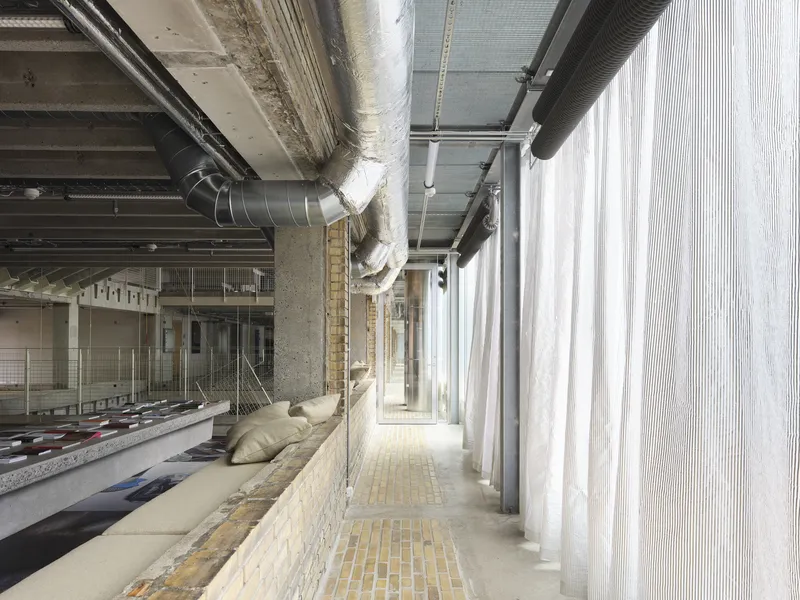
This approach creates a living archive of the building’s memories, where adaptation outweighs addition, and creative reuse becomes a powerful architectural language.
Awards & Recognition
Thoravej 29 has quickly become a benchmark for sustainable renovation and cultural reuse, earning prestigious awards and honors including:
- Building of the Year 2024 – Licitationen
- Copenhagen Municipality Building Award 2025
- Renoverprisen 2025 (Denmark’s most significant renovation prize)
- Finalist – AR New into Old Awards 2025
- Finalist – Danish Design Awards 2025
A Blueprint for Future-Forward Adaptive Reuse
Thoravej 29 demonstrates how resource-responsible architecture can reshape cities, strengthen cultural infrastructure, and celebrate the material story of existing buildings. By embracing subtraction, adaptation, and innovative reuse techniques, Pihlmann Architects proves that sustainability is not only measured in metrics—but experienced in material memory, urban dialogue, and community impact.
Thoravej 29 stands as a model for future circular building practices, pushing the boundaries of adaptive reuse and redefining architectural sustainability in Europe.
All photographs are works of Hampus Berndtson


Popular Articles
Popular articles from the community


Architekt Andreas Gruber Scatters 23 Dark Timber Chalets Across a South Tyrolean Forest Edge
In Molini di Tures, Amonti Chalets breaks a resort into a hamlet of gabled timber houses, with parking, storage and services pushed into the slope.

LT2A and OPEN Architectes Thread a Brick and Glass High School Through a Wooded Belgian Campus
In Braine-l'Alleud, a 3,000 m² wing for Collège Cardinal Mercier pairs pale brick with a glazed colonnade, deferring to a small chapel and a dense wood.

Jaramillo Van Sluys Arquitectura and Urbanismo Turn a Demolished Registry Lot in Quito into an Orchard Plaza
In Quito's Centro Histórico, a 2,800 m² plaza exposes the San Agustín convent wall and redraws its lost Augustinian orchard in volcanic stone.

GROUP A Strips a 1969 Rotterdam Harbor Headquarters to Its Frame and Wraps It in Timber Louvers
In Rotterdam's M4H harbor district, Ferro Offices reuses a 1969 frame, adds one timber storey and reaches BREEAM-NL Outstanding.

Similar Reads
You might also enjoy these articles


Hodi-Mandai Geram
Project Function: Preservation and revitalization of the Intangible heritage and socio-spatial identity of the Hodi by Housing, Cultural Memory Center, Sacred Grove, landscape, local tourism economy


Olio Towers: A Mid-Rise for Performers That Fuses Housing, Rehearsal, and Stage
Located blocks from Houston's Theater District, this modular tower stacks living units around a central performance atrium.

Oasis: Modular Green Housing Carved into Dhaka's Urban Fabric
A shortlisted Plugin Housing entry reclaims unauthorized settlements in Dhaka with stepped concrete volumes, green roofs, and ventilation-driven design.

Black Hole: A Floating Megastructure for the Post-Physical Era
Emiliano Mazzarotto envisions a spherical, self-scaling arena where e-sports, digital hotels, and holographic stadiums replace traditional public space.

Explore Cultural Architecture Competitions
Discover active competitions in this discipline

Challenge to reimagine the Iron Throne

Photograph architecture without architects

Illustrate the lost glory of Angkor Wat - Render Challenge

Bring back Drive In's
Comments (0)
Please login or sign up to add comments
No comments yet. Be the first to comment!