
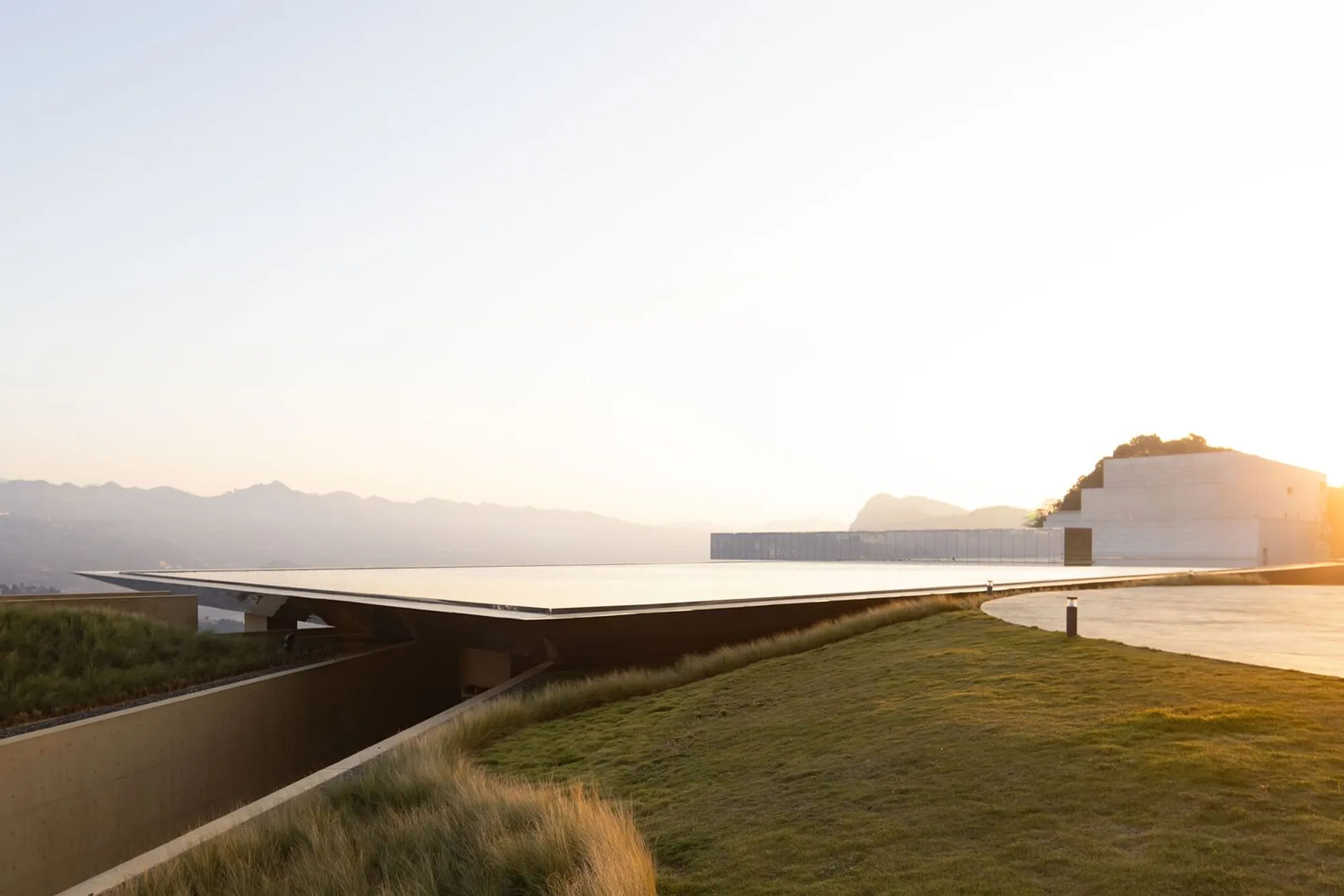
Tianbao Mountain Jingtiantai Cliff Liquor Experience Center
The Tianbao Mountain Jingtiantai Cliff Liquor Experience Center blends architecture, landscape, and reflections, offering immersive cultural journeys through nature and tradition.


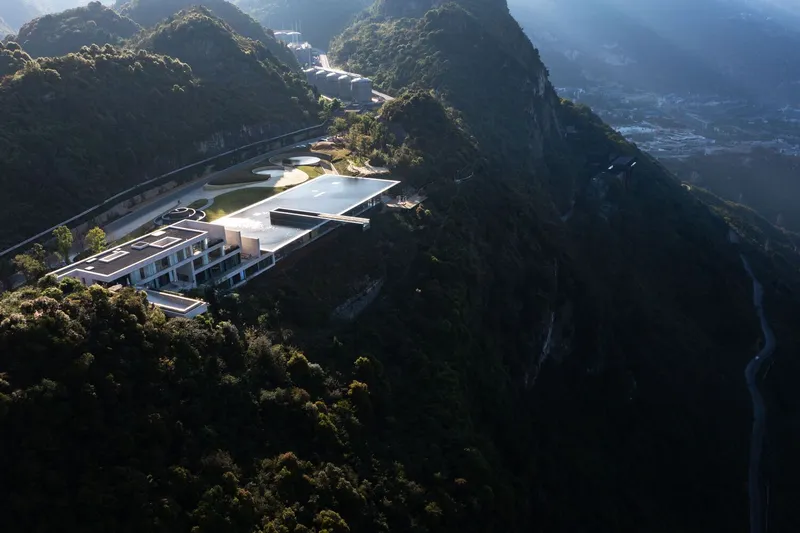
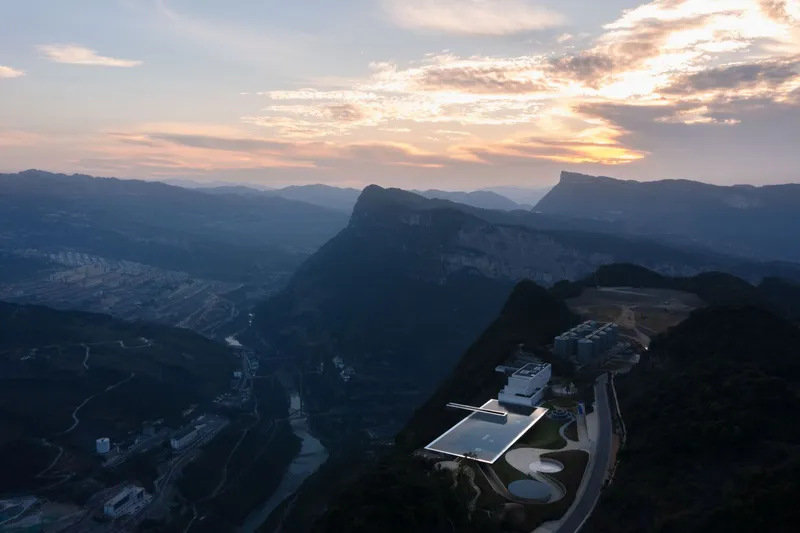
Perched high on Tianbao Mountain in Luzhou, China, the Jingtiantai Cliff Liquor Experience Center redefines the relationship between architecture, nature, and culture. Designed by Zone of Utopia, Mathieu Forest Architecte, and Lin Xiaoguang Studio, this 3,688 m² project blends immersive spatial design with the deep heritage of Langjiu liquor culture. Completed in 2022, the center invites visitors on a sensory journey where sky, mountain, and reflection converge.
Sky Mirrors: Architecture Between Earth and Heaven
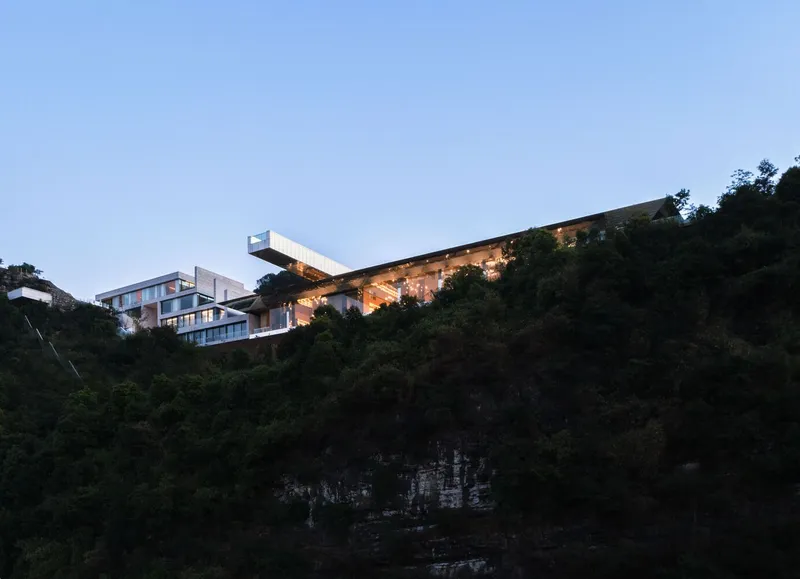
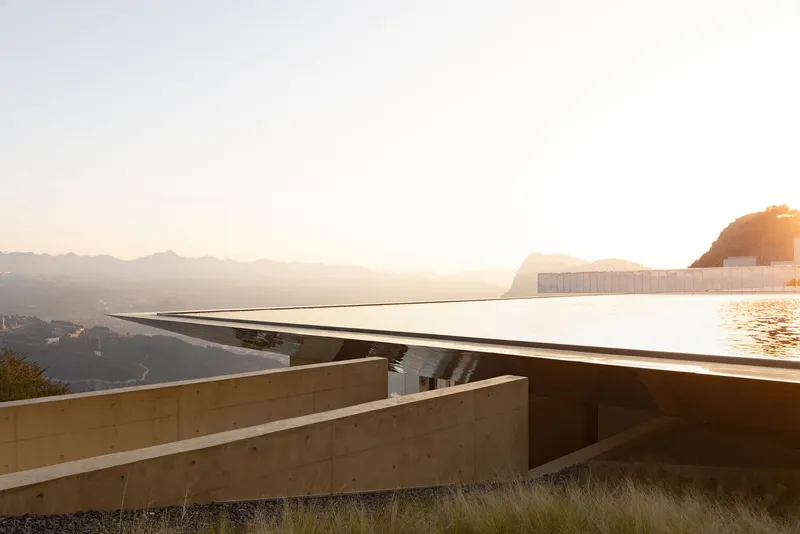
The most striking feature of the project is its dual mirror design—two suspended reflections that create a surreal dialogue between sky and earth.
- Above, a vast water mirror doubles the sky, extending its infinity and blurring the horizon.
- Below, a steel mirror reflects the valley and river, crafting an illusion of an artificial sky beneath the real one.
Together, these sky mirrors transform the site into an immersive optical experience, amplifying the surrounding landscape.
A Tribute to Nature and Liquor Heritage
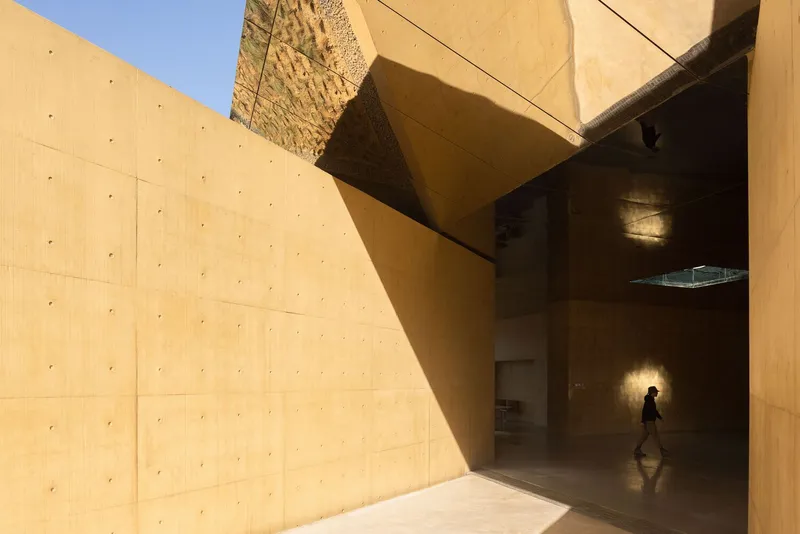
Rather than dominating the mountaintop, the architecture is buried underground, preserving the pristine view of mountains and skies. This design reflects a deep respect for natural landscapes and cultural heritage.
The immaterial reflections of mirrors and artificial constellations interact with the solidity of rock-like concrete walls, echoing the caves where liquor has been aged for centuries. Architecture here is not only built but also anchored in nature’s rhythm.
A Journey Through Reflections
Visitors begin at a 50-meter-wide water mirror, which frames the vast horizon. From there, a curved ramp leads them underground, evoking the sensation of entering an ancient archaeological site.
The journey is designed in stages, where visitors experience fragments of the landscape before finally confronting the full view. Along the way:
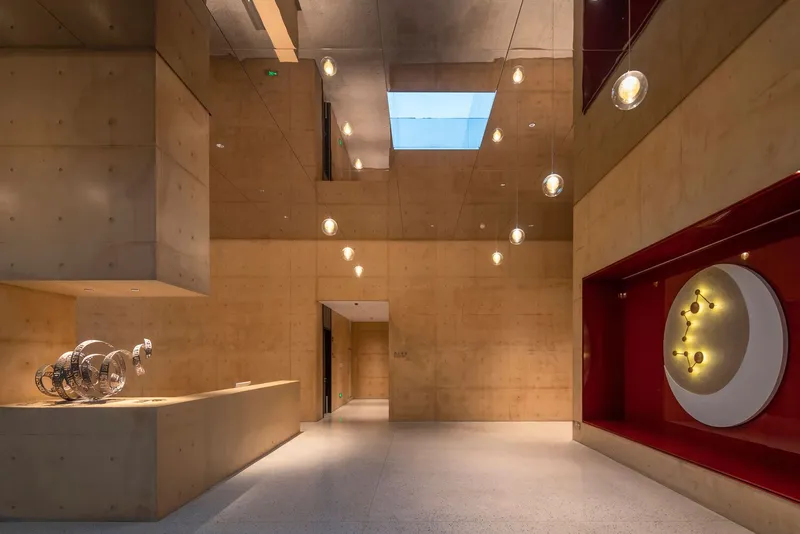
- Tasting rooms showcase rare bottles in displays reminiscent of scholarly libraries.
- Mirror ceilings transform hanging lamps into artificial constellations, merging with the real stars at night.
- Panoramic windows reveal uninterrupted mountain and valley vistas, amplifying the grandeur of the natural setting.
A Treasure and a Belvedere
The center reserves intimate spaces for the most precious liquor collections, elevating the cultural narrative of Langjiu. In contrast, the grand tasting room opens to an expansive valley view, magnified by mirrored reflections above.
The journey culminates in an unexpected ascent—a staircase leading to a suspended footbridge. This belvedere offers a 360° panorama, leaving visitors with both a sense of weightlessness and intoxication, not from liquor alone but from the overwhelming scale of nature and architecture combined.
The Tianbao Mountain Jingtiantai Cliff Liquor Experience Center is more than a cultural destination—it is an immersive architectural poem. Through mirrors, reflections, and spatial illusions, it celebrates both the natural grandeur of Tianbao Mountain and the timeless tradition of Chinese liquor culture. It is at once a museum, a landscape observatory, and a sensory journey, where earth and sky, past and future, converge.
All Photographs are works of Arch-Exist, Li Zhou


Popular Articles
Popular articles from the community


The Ocean Hive: Sustainable Architecture for a Self-Sufficient Civilization at Sea
The Ocean Hive imagines sustainable architecture at sea, where modular habitats, algae, wave power and ocean waste sustain a growing colony.

Riyadh For All: Intergenerational Urban Design for Active Aging in Rabat
Riyadh For All reimagines urban design in Rabat with intergenerational co-living, adaptive courtyards, and Moroccan cultural exchange today.

Co-life: Sustainable Architecture for Age-Friendly Community Living
Co-life reimagines sustainable architecture for seniors through courtyards, rammed earth, shared gardens, and spaces designed for belonging.

Lunar Spiral: Space Architecture Shaped by the Mathematics of the Universe
Lunar Spiral reimagines space architecture through Fibonacci geometry, lunar regolith, levitating habitats, and self-sustaining Moon living.

Similar Reads
You might also enjoy these articles


Hodi-Mandai Geram
Project Function: Preservation and revitalization of the Intangible heritage and socio-spatial identity of the Hodi by Housing, Cultural Memory Center, Sacred Grove, landscape, local tourism economy


Olio Towers: A Mid-Rise for Performers That Fuses Housing, Rehearsal, and Stage
Located blocks from Houston's Theater District, this modular tower stacks living units around a central performance atrium.

Oasis: Modular Green Housing Carved into Dhaka's Urban Fabric
A shortlisted Plugin Housing entry reclaims unauthorized settlements in Dhaka with stepped concrete volumes, green roofs, and ventilation-driven design.

Black Hole: A Floating Megastructure for the Post-Physical Era
Emiliano Mazzarotto envisions a spherical, self-scaling arena where e-sports, digital hotels, and holographic stadiums replace traditional public space.

Explore Cultural Architecture Competitions
Discover active competitions in this discipline



Challenge to reimagine the Iron Throne


Photograph architecture without architects


Illustrate the lost glory of Angkor Wat - Render Challenge


Bring back Drive In's
Comments (0)
Please login or sign up to add comments
No comments yet. Be the first to comment!