

Tianjin Juilliard School by Diller Scofidio + Renfro: A Global Hub for Music, Architecture, and Innovation
Tianjin Juilliard School blends music, architecture, and technology through transparent pavilions, glass bridges, and acoustic excellence by Diller Scofidio + Renfro.


A Landmark for Performing Arts in China
Located in the Yujiapu Financial District of Binhai, Tianjin, the Tianjin Juilliard School (TJS) by Diller Scofidio + Renfro redefines the relationship between music, education, and architecture. As the first performing arts institution in China authorized to confer a U.S.-accredited Master of Music (MM) degree, the building embodies the global expansion of Juilliard’s legacy while fostering a dynamic cultural exchange between China and New York.
Architectural Vision: Bridging Music and Space
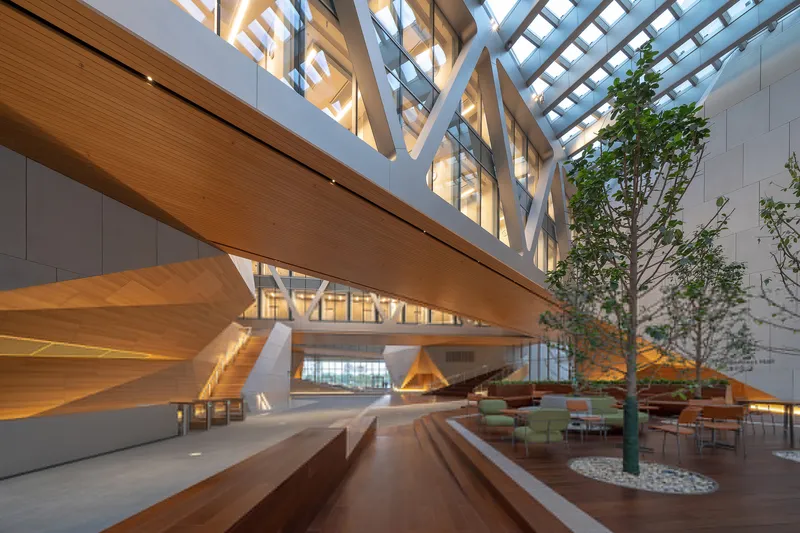
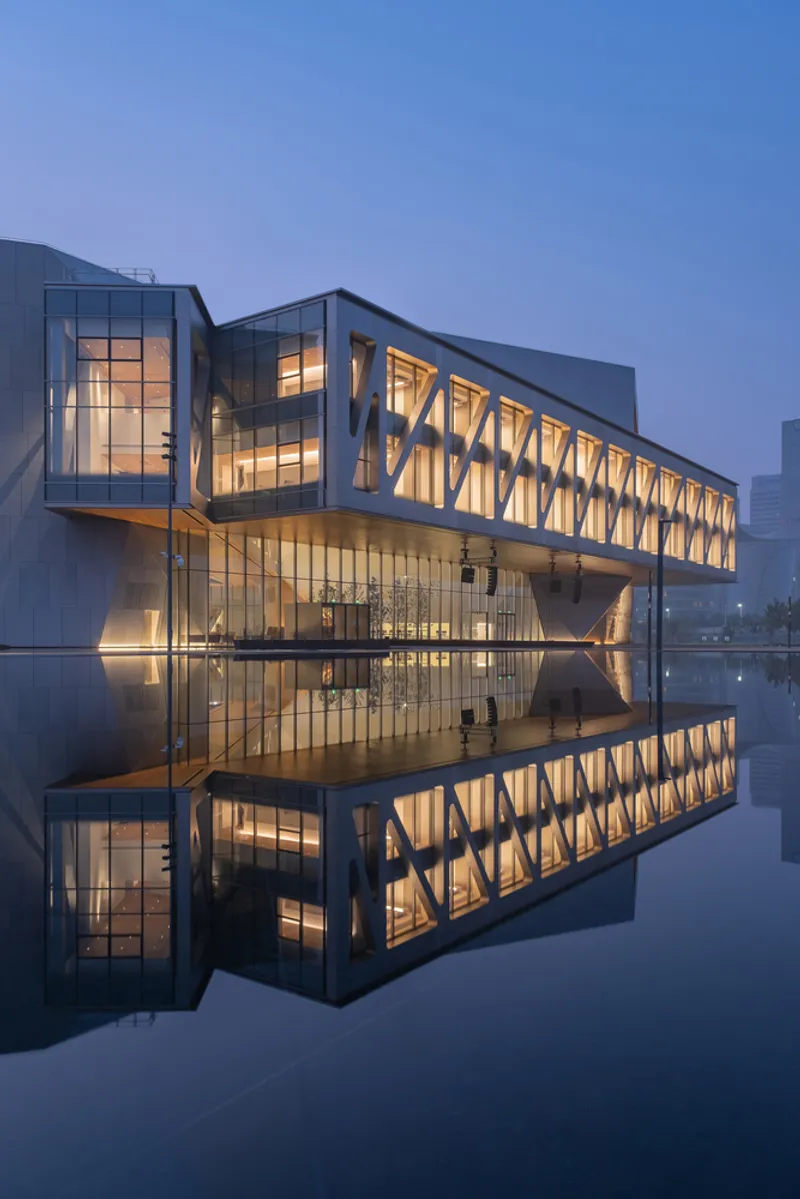
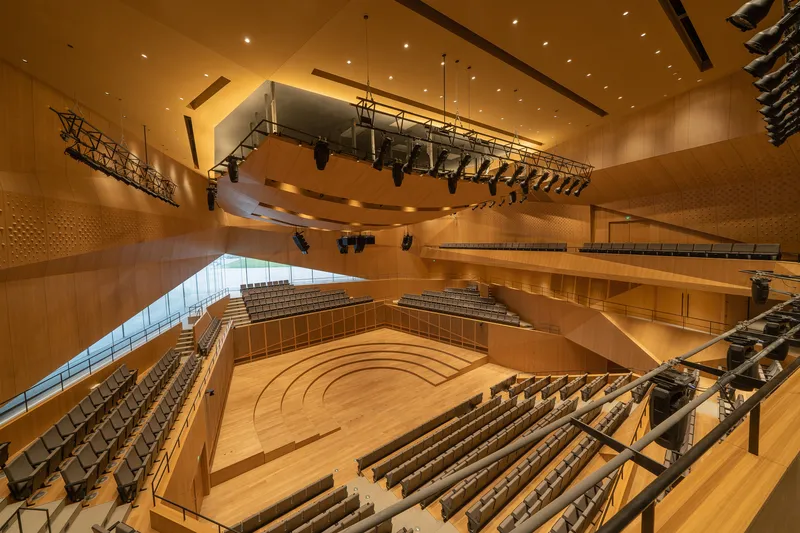
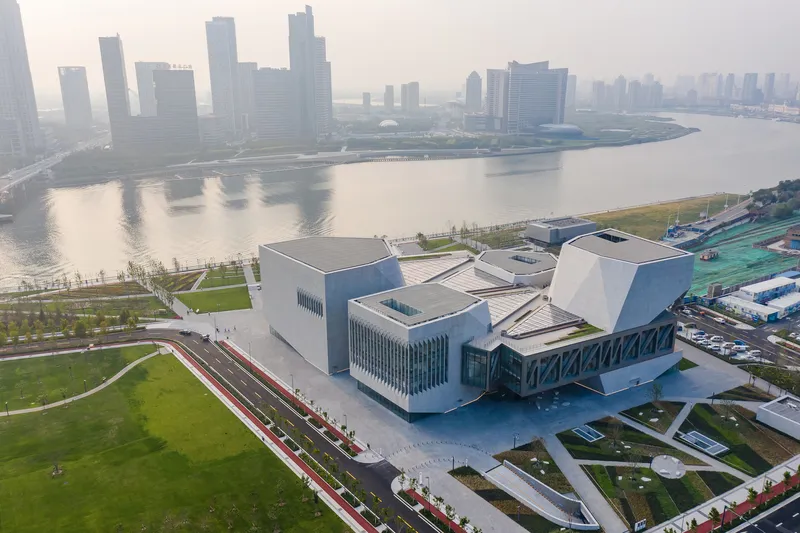
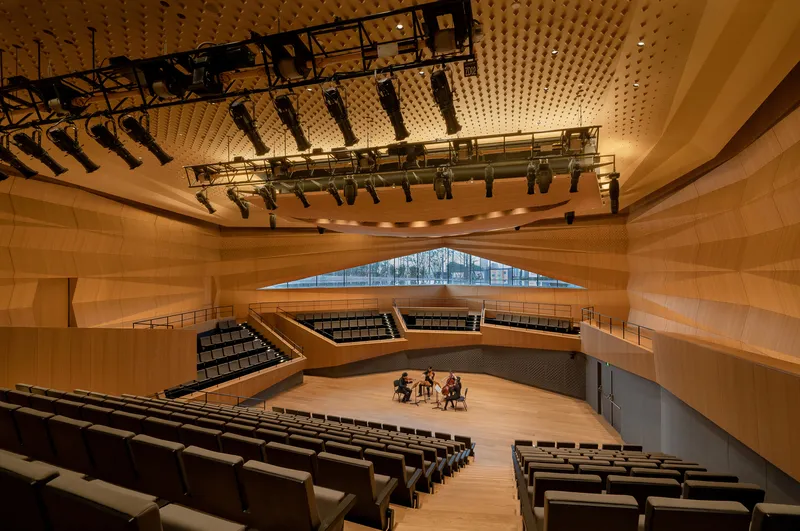
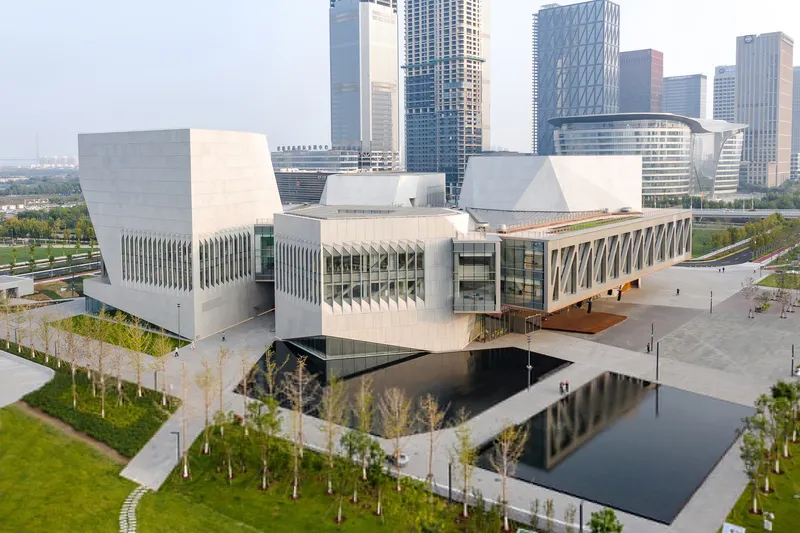
Spanning 32,500 square meters, the Tianjin Juilliard School was conceived as a center for performance, practice, research, and public engagement. The architectural concept integrates music and transparency, inviting the public into the creative process. The structure consists of four sculpted pavilions, each housing key performance venues—a 690-seat concert hall, a 299-seat recital hall, and a 225-seat black box theater—alongside academic and administrative spaces.
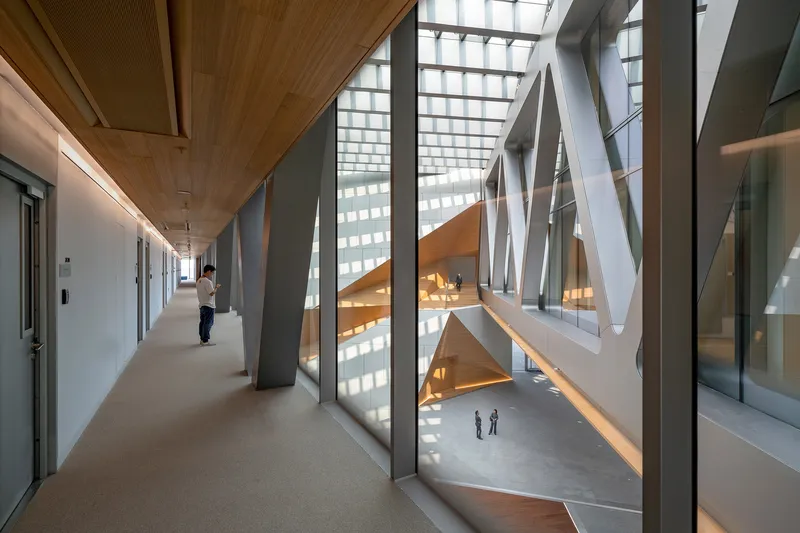
Five glass bridges connect these pavilions, forming a network of classrooms, teaching studios, and practice rooms. These transparent links symbolize connectivity and collaboration, allowing visual and auditory interaction between students, faculty, and visitors. The bridges overlook an expansive public plaza that blurs the boundaries between education, performance, and community, extending the nearby park into the heart of the building.
Designing a Publicly Engaged Campus
The Tianjin Juilliard School embraces the spirit of open learning and cultural inclusivity. Beyond degree programs, it offers a Saturday Pre-College program for students aged 8 to 18, continuing education courses for professionals, and public programs for learners of all ages. The architectural openness mirrors the institution’s mission to make music accessible to everyone, encouraging spontaneous interaction and informal performances throughout the shared spaces.

Materiality and Spatial Experience
The exterior of the building is characterized by faceted glass façades and wood cladding—notably the NATURCLAD-W panels by Parklex Prodema—which enhance the natural warmth and acoustical performance of the structure. Inside, visitors encounter a harmonious balance of wood, glass, and concrete, reinforcing a tactile dialogue between natural and industrial materials. Carefully integrated lighting, developed with Tillotson Design Associates, highlights the architectural rhythm while creating an atmosphere conducive to both performance and study.
The landscape design by Hargreaves Jones further strengthens the relationship between the building and its surroundings, connecting the waterfront setting with interior courtyards and green promenades.
A Digital Connection Between Tianjin and New York
Reflecting Juilliard’s global philosophy, the school is equipped with state-of-the-art telecommunication and video conferencing systems that link Tianjin directly with The Juilliard School in New York. The “Juilliard Imagination” space, for instance, enables live-streamed concerts and digital collaborations across continents, turning architecture into a real-time cultural bridge between East and West.
Sound, Technology, and Architecture in Harmony
Acoustic excellence lies at the core of the project, realized through collaboration with Jaffe Holden Acoustics. Each performance space was engineered to achieve perfect sound quality, from the intimate black box theater to the grand concert hall. This commitment to acoustical precision ensures that every performance resonates with clarity and depth, embodying the school’s dedication to both musical artistry and architectural craftsmanship.
A Global Stage for the Future of Music
The Tianjin Juilliard School stands as a beacon of innovation in performing arts architecture, uniting technology, education, and design into a seamless cultural ecosystem. Through its transparent spaces, community-centered layout, and international connectivity, the project not only expands Juilliard’s global footprint but also sets a new precedent for academic and architectural collaboration.
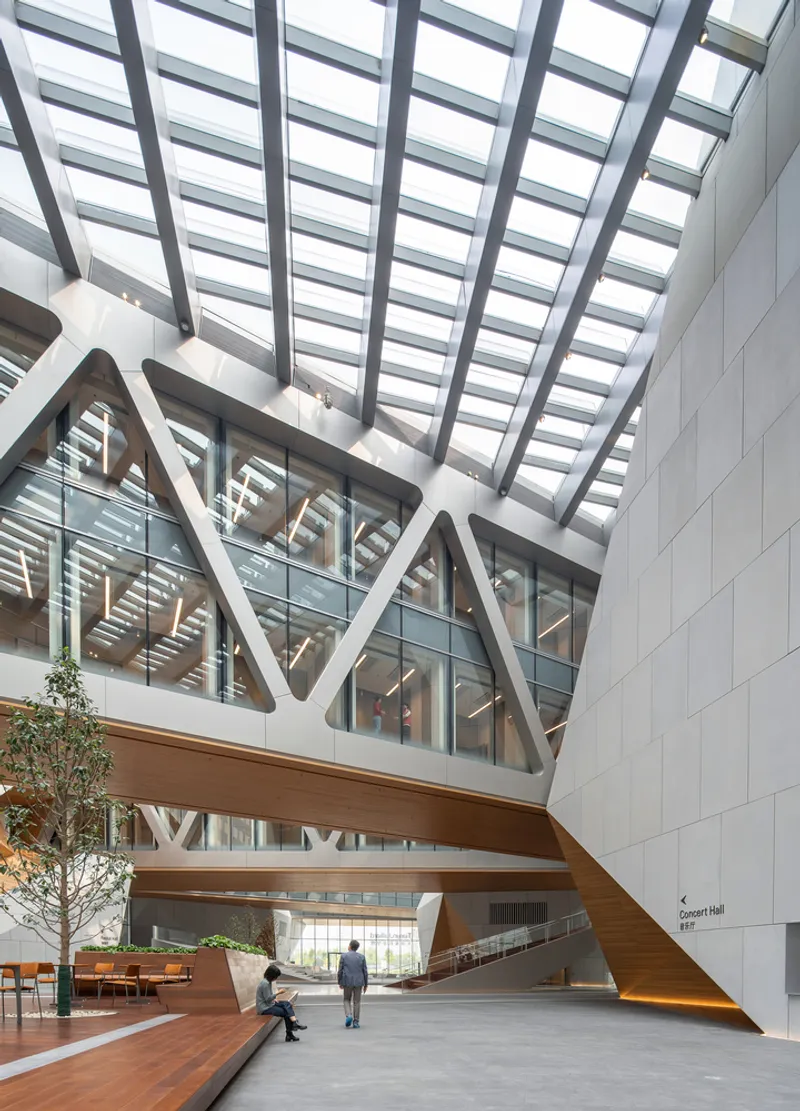
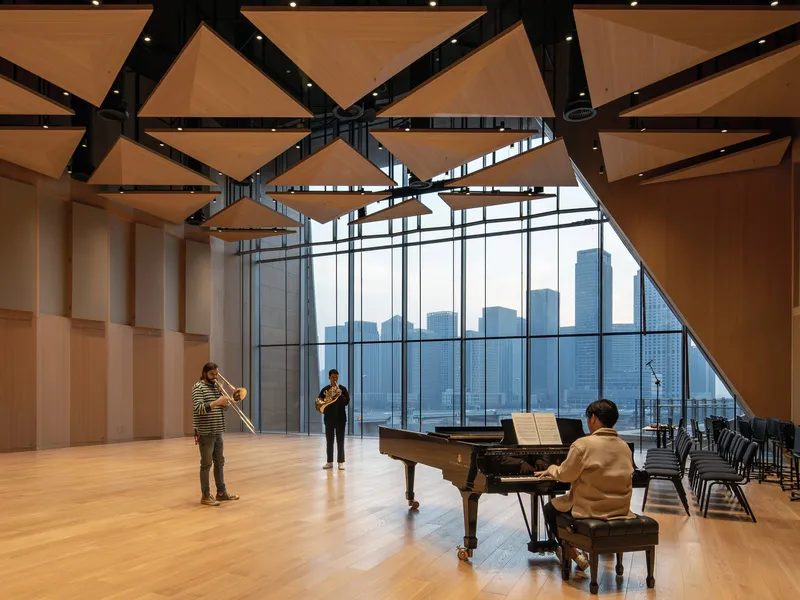
All photographs are works of Zhang Chao


Popular Articles
Popular articles from the community


David Ortega Stacks a Two-Story Mexico City Penthouse Around a Steel Stair and a Pergola-Shaded Roof Terrace
In Colonia Roma, a 300 m² penthouse uses oak joinery, a planted steel stair and a slatted roof pergola to make a new-build apartment feel like a house.

Juan García Correa, John González and Claudia Rueda Sink a Circular Amphitheater into a Manizales Engineering Building
On the La Nubia campus in Manizales, Colombia, the S1 Building folds labs and offices into a hillside of ramped lawns that double as a campus route.

Jaramillo Van Sluys Arquitectura and Urbanismo Turn a Demolished Registry Lot in Quito into an Orchard Plaza
In Quito's Centro Histórico, a 2,800 m² plaza exposes the San Agustín convent wall and redraws its lost Augustinian orchard in volcanic stone.

longwave studio Reorganizes a 112 m² Tainan Apartment Around the Daily Routines of a Family and Two Cats
In Tainan, Taiwan, birch plywood, rust-red furniture and a freestanding plaster wall link arrival, storage, work and family life in one apartment.

Similar Reads
You might also enjoy these articles


Hodi-Mandai Geram
Project Function: Preservation and revitalization of the Intangible heritage and socio-spatial identity of the Hodi by Housing, Cultural Memory Center, Sacred Grove, landscape, local tourism economy


Olio Towers: A Mid-Rise for Performers That Fuses Housing, Rehearsal, and Stage
Located blocks from Houston's Theater District, this modular tower stacks living units around a central performance atrium.

Oasis: Modular Green Housing Carved into Dhaka's Urban Fabric
A shortlisted Plugin Housing entry reclaims unauthorized settlements in Dhaka with stepped concrete volumes, green roofs, and ventilation-driven design.

Black Hole: A Floating Megastructure for the Post-Physical Era
Emiliano Mazzarotto envisions a spherical, self-scaling arena where e-sports, digital hotels, and holographic stadiums replace traditional public space.

Explore Cultural Architecture Competitions
Discover active competitions in this discipline

Challenge to reimagine the Iron Throne

Photograph architecture without architects

Illustrate the lost glory of Angkor Wat - Render Challenge

Bring back Drive In's
Comments (0)
Please login or sign up to add comments
No comments yet. Be the first to comment!