
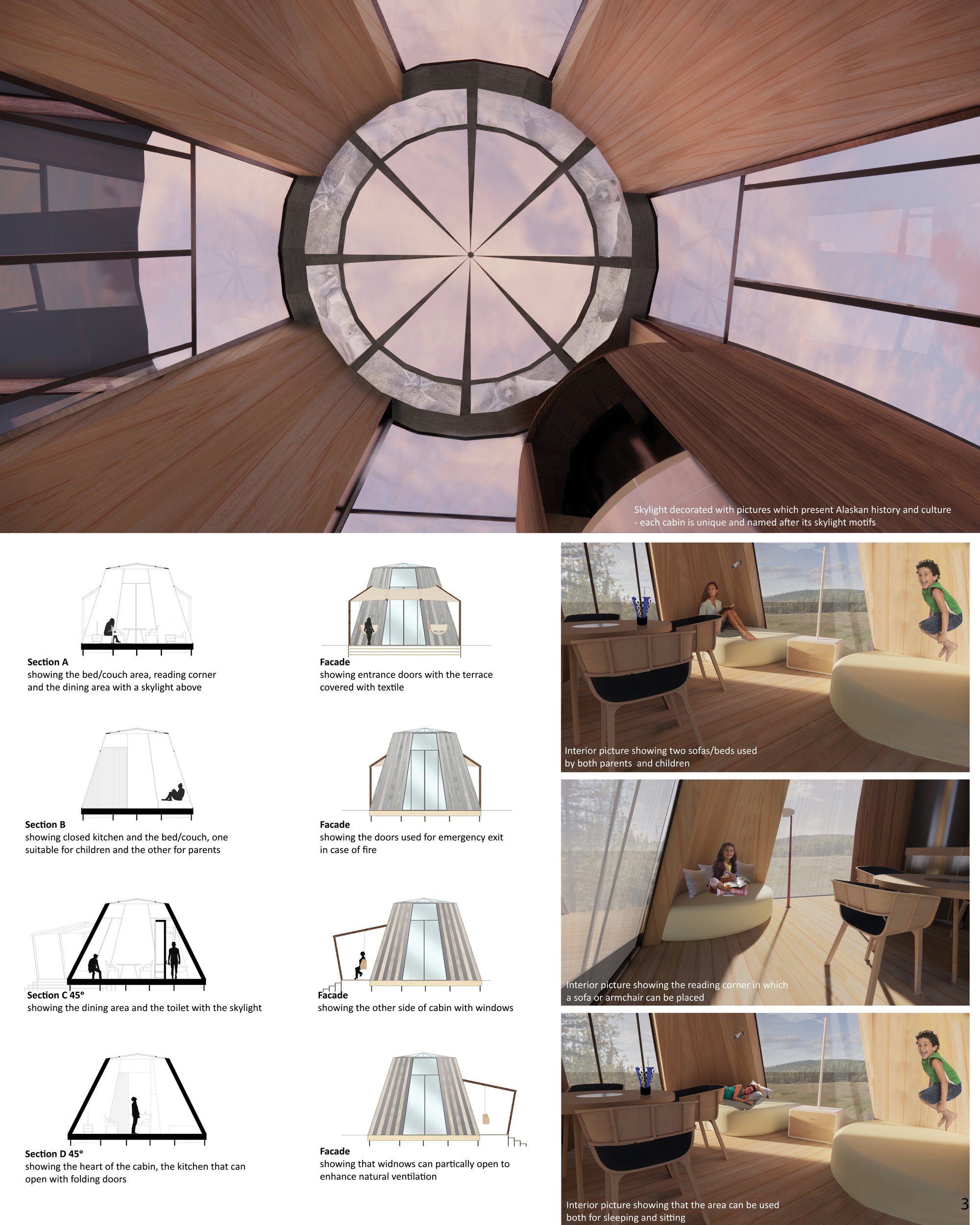
Tinneh - the house of people, culture, food and relaxing
The name "tinneh" comes from the language of Alaskan Athabaskans, native Alaska inhabitants, and it means ”people”. Alaskan history, as well as people, were the main point of the project, therefore the word "tinneh" simply describes our idea.
The project was guided by four key aspects that were implemented in all phases of the project.
- culture
- food
- stress-free surrounding
- environmentally friendly
The inspiration for the cabin's shape came from Alaskan Athabaskans and their way of living. They resided in tent shape houses, as they lived a nomadic lifestyle. The tent shape was taken as a starting point not just because of historical reasons but also because it fits with Alaskan surroundings and a very snowy climate in which the house with a sloped roof performs the best.
The shape, layout and materials, are giving a minimalistic impression to the cabin. The cabin consists of a big dining/sleeping area and a circular element including a bathroom and integrated kitchen. The net area is 25 square meters, and it is the perfect size for a couple that wants to escape from everyday life and destress in a minimalistic and natural environment. However, the cabin size, as well as two couches/ beds, provide a slipping area for children, therefore the cabin can be utilized by a family. Bigger couch/bed can be visually separated from the rest of the cabin, thanks to the curtains that are placed around the couch/bed, ensuring a privacy.
Three main materials were used in the project; aluminium prefabricated elements as an external facade material, two types of wood as internal and terrace materials, and glass. Glass and glazed areas, in general, are important aspects of the project, as two big glass doors (one entrance and another emergency door in case of fire), and two windows are placed on both sides. A sloped skylight is situated on the roof which makes the cabin seem larger and fully connected to nature and its surroundings. This connection to nature was one of the key aspects, as spending time in a natural environment and looking at it lowers the levels of stress and helps to relax. With the implementation of window areas on all walls and the roof, our design fully merges with nature, ensuring that nature is experienced from all angles, during the daytime and night time. However, in order to make the design as flexible as possible and accommodate it to the users, the windows open automatically, depending on users’ needs. Moreover, curtains are implanted on windows, which allow full privacy for the visitor. The outer part of the skylight is decorated with pictures showing different topics of Alaska and its people. These pictures can be experienced during the daytime, and each cabin has its topic, either history, culture, tradition or flora and fauna. Moreover, each cabin is named after the topic which helps with wayfinding and makes each cabin unique for itself. During the night the skylight can be utilized as an observation area of aurora borealis (Northern light) which is an Alaskan main tourist attraction.
As the main objective of the competition was a creation of an off-grid green retreat, environmental sustainability was a crucial aspect and a topic that was implemented through all stages of our design.
The form of the cabin is very compact which helps with energy efficiency, as well as rounded corners that minimize cold bridges. The cabin is very well isolated with the prefabricated wall structure. Solar energy is utilized to produce electricity with solar panels which are integrated on the aluminium corners on all sides, utilizing the sun all day long. The excess of electricity is stored in the batteries which are placed under the cabin, as the cabin is lifted from the ground. The cabin is heated with the cast iron oven/ fireplace incorporated in the kitchen in the central part. In the floor, floor heating is installed. The water is collected and reused for the toilet with the help of reused-water tanks stored also under the cabin. Moreover, the visitors are encouraged to recycle the garbage, as recycling bins are provided. The cabin is lifted 60 cm to store all necessities, and the rest of the height is used as a ventilation gap and moisture barrier. Natural ventilation is meant to be utilised since all glass areas are openable. In terms of materials, wood as natural and sustainable material was used for most surfaces. However prefabricated aluminium elements were used in the corners. These elements give stability and allow that the cabin can be easily disassembled and its pieces reused for other purposes. The cabin itself can easily be moved and placed somewhere else.
As we mentioned at the beginning "tinneh" is a cabin designed for people. This concept led us also when designing the surroundings and placing the cabins. Each cabin is orientated to have the most privacy and merged with trees. To give the feeling of community, the central part of the site is utilized for common areas. They consist of a supermarket and kitchen which are mutually connected with a sheltered terrace. Food was one of the key features when designing, therefore it was important to provide visitors with locally produced products that can be bought in the supermarket, immediately prepared in the kitchen by the staff, and enjoyed on the terrace or in the cabin. Some meals can also be prepared in the cabin itself, since the cabin has a small kitchen, with a stove, sink, fridge and small dishwasher. As environmental sustainability was critical in the project the visitors are encouraged to use bikes as the main transportation, even though the site is bounded with a car road. Therefore the visitor can come with a car, check in to the cabin, and park outside the site. Bikes and electrical bikes are provided, as well as 2.5 bike parking space for each cabin. The bikes, as well as the furniture, are our design. Through the design of this green retreat, we encourage people not just to think green, but also to spend holidays and eventually live "GREEN".


Popular Articles
Popular articles from the community

Takeshi Hosaka Architects Suspends a Concrete Cross Above a Yokohama Cemetery
A 28-square-meter burial renovation in Yokohama lifts the symbol of resurrection into the sky so mourners see it against heaven.
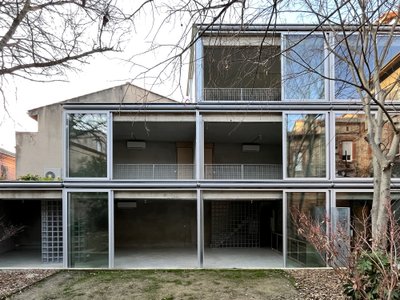
BAST Slots a Four-Story Glass House into a Narrow Gap Between Toulouse Townhouses
In the dense Bonnefoy district, a stepped infill building merges home and office while preserving a majestic hackberry tree.
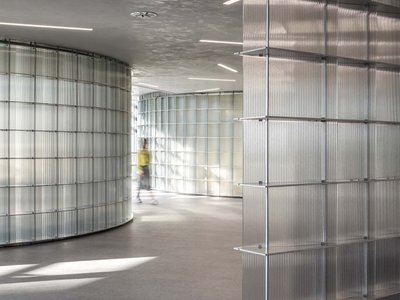
HCCH Studio Wraps a Shanghai High-Rise Office in Curved Walls of Translucent Glass
A 1,000 square meter fit-out in Lujiazui replaces the typical tech-office palette with layered glass, micro-cement, and quiet rigor.
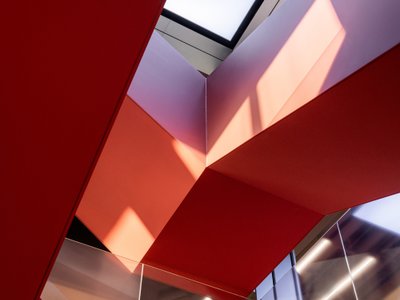
Ippolito Fleitz Group Identity Architects Turn Eight Floors in Shanghai into a Vertical Creative City
Publicis Groupe's new headquarters in Xintiandi reimagines the office as a courtyard-driven urban landscape stacked across eight floors.

Similar Reads
You might also enjoy these articles

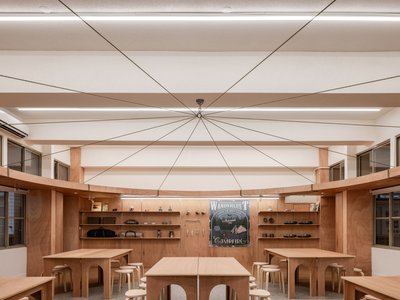
317studio Turns an 87 m² Classroom into a Forest Clearing for Scouts in New Taipei City
A rope canopy, student-made specimens, and campfire geometry replace rows of desks in this Scouting classroom in Xizhi District.
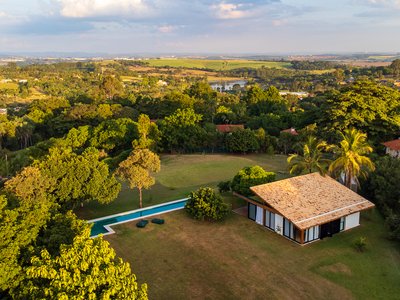
24 7 Arquitetura Builds a Timber Pavilion as a Family's First Act on a 5,000 m² Brazilian Plot
In Jaguariúna, a prefabricated glulam house nestles among mature trees as the opening move of a larger residential masterplan.
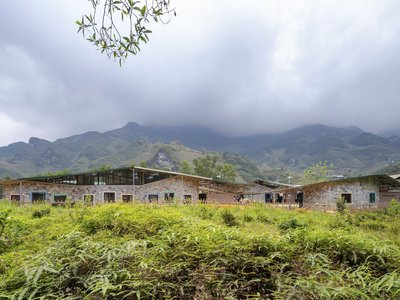
1+1>2 Architects Build a School from 900 Blocks of Hmong Stone on Vietnam's Rocky Plateau
On a barren valley in Ha Giang province, a community quarried its own stone to raise a kindergarten and primary school rooted in Hmong identity.
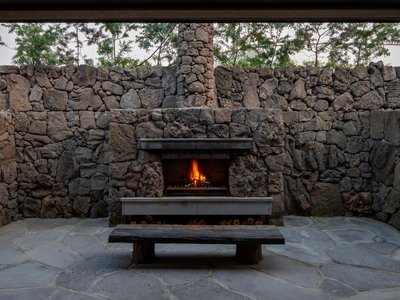
100A Associates Builds a Volcanic Stone Retreat on Jeju Island Rooted in Ritual and Restraint
Watarstay [Wa:Tar] in Bongseong-ri channels Jeju's basalt, reed, and hemp into a 150 m² hospitality space shaped by contemplation.

Explore Cultural Architecture Competitions
Discover active competitions in this discipline




The Global Benchmark for Architecture Dissertation Awards


The Global Benchmark for Graduation Excellence


Challenge to design an urban locus of culture and heritage
Comments (0)
Please login or sign up to add comments
No comments yet. Be the first to comment!