

Tongxiang National Fitness Center and Li Ning Sports Park by PT Architecture Design
Tongxiang National Fitness Center blends sports, culture, and nature into a multifunctional hub with arenas, fitness spaces, running tracks, and landscapes.


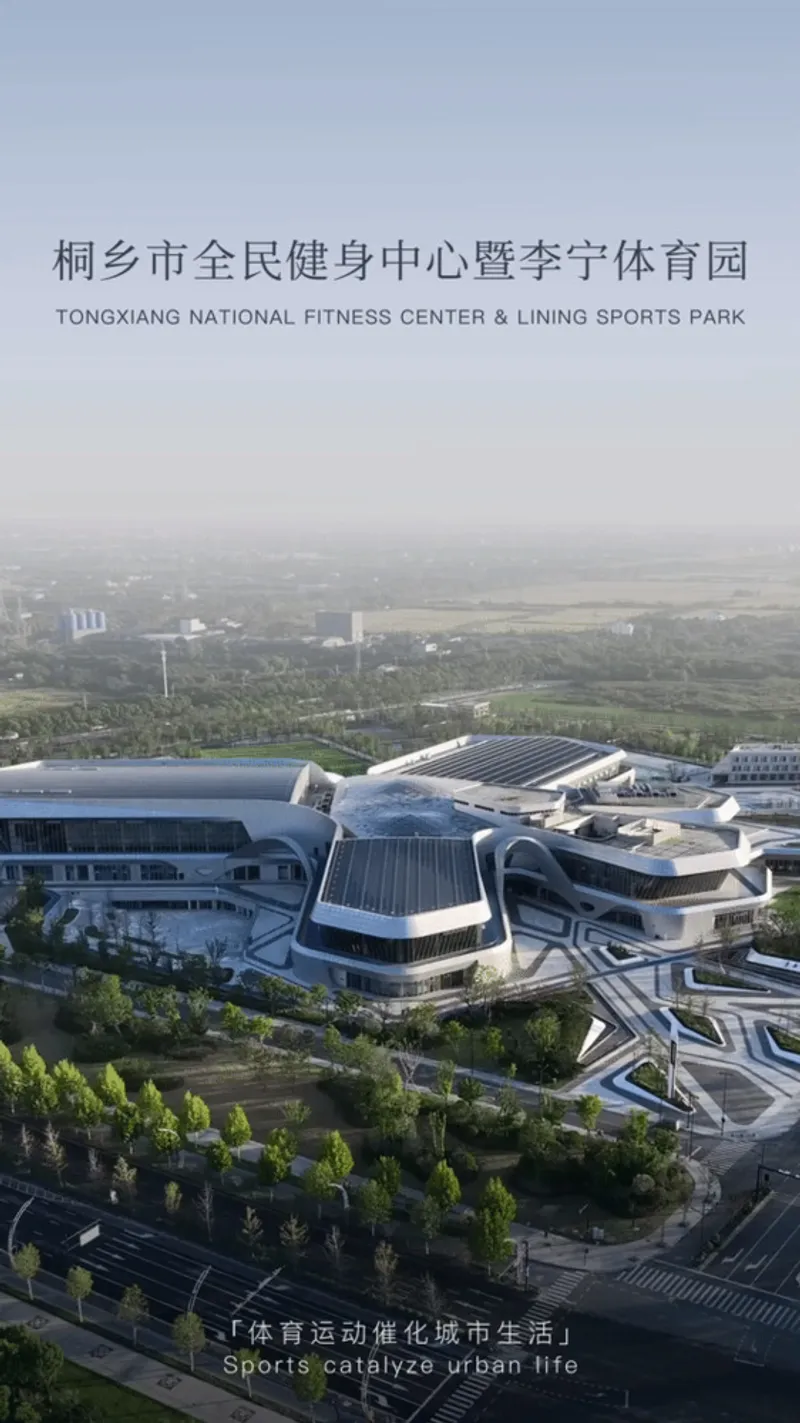
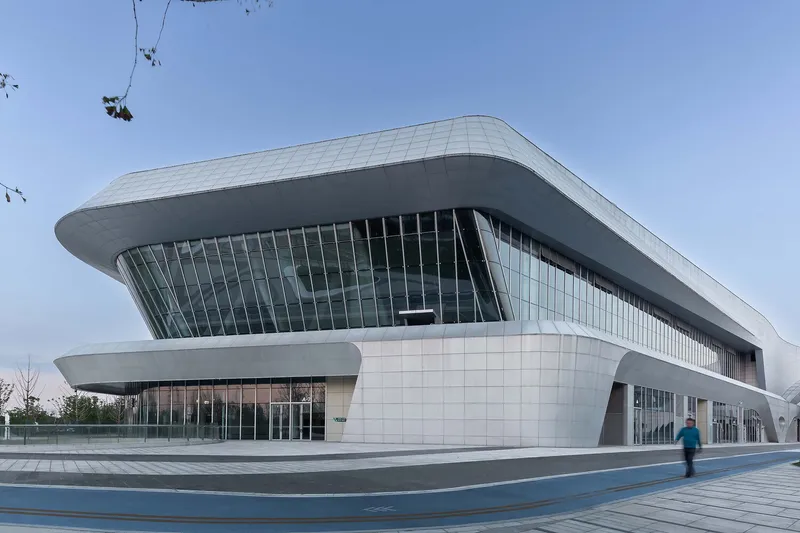
The Tongxiang National Fitness Center and Li Ning Sports Park, designed by PT Architecture Design, is a landmark project that redefines the relationship between sports, culture, and urban life. Completed in 2021 and covering an expansive 96,400 square meters, this ambitious development in Jiaxing, China, integrates competitive sports, leisure activities, and public green spaces into a unified cultural hub.
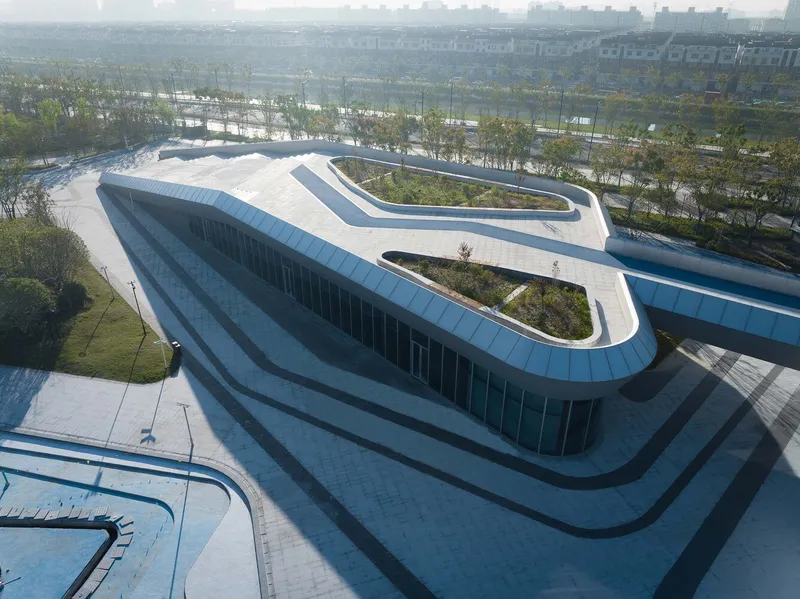
Urban Context and Design Vision
Strategically located along Wuzhen Avenue, which links the heart of Tongxiang City to the historic Wuzhen Town, the project reinforces the cultural and sports identity of the region. The architects envisioned the center as a city living room—a place where fitness, recreation, and social exchange merge seamlessly.
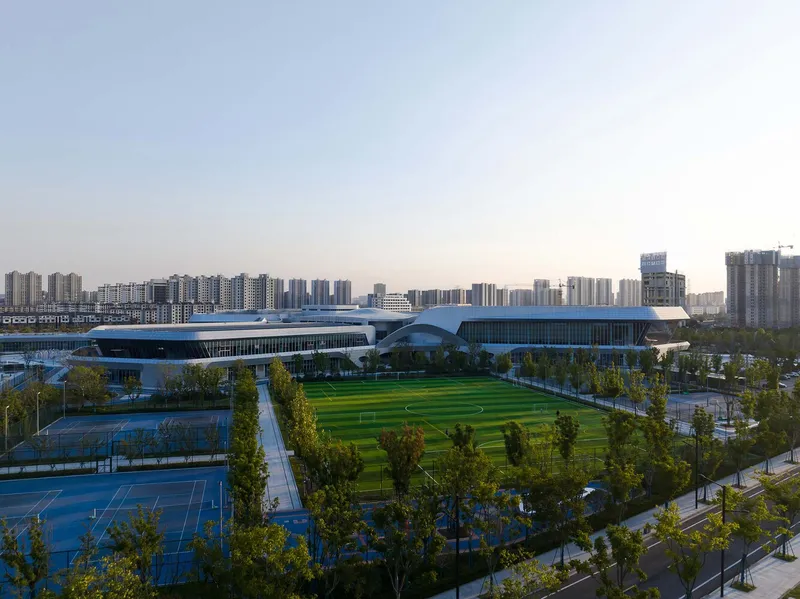
By blending the building volume with the surrounding sports park, the design creates a holistic environment that encourages interaction between urban life, nature, and physical activity. This integration transforms the site into a future-oriented lifestyle destination that promotes well-being and inclusivity.
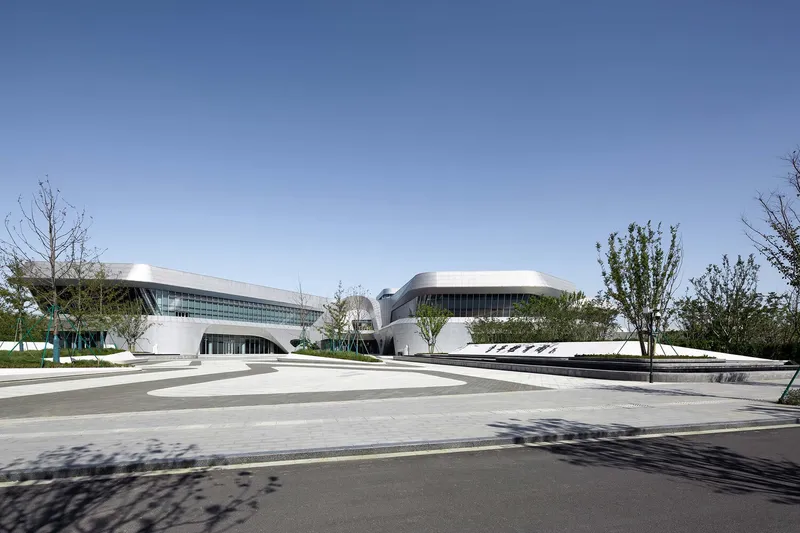
Functional Programs and Flexibility
The Fitness Center introduces the principle of “mass sports”, balancing elite competition, community recreation, and leisure activities.
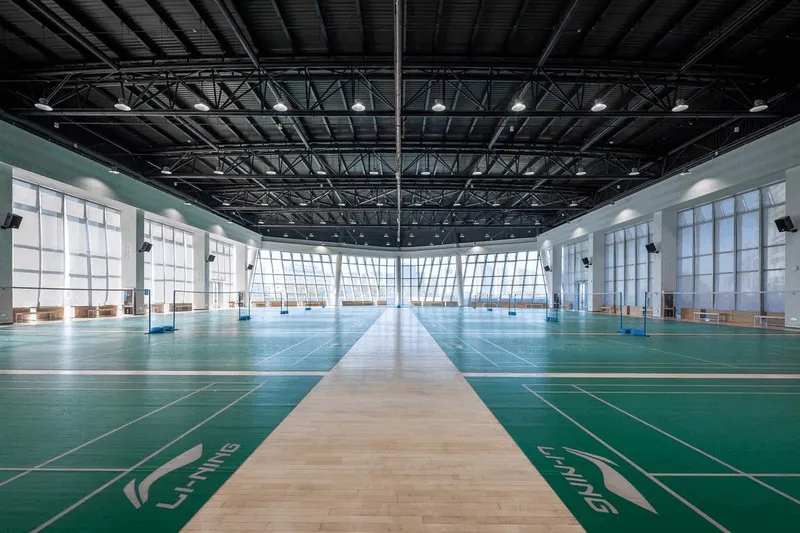
- Multifunctional Competition Hall – a 5,000 m² adaptable arena that serves daily activities and large-scale events. With movable seating, the space can transform from a training venue to a performance hall accommodating up to 3,000 spectators, fulfilling the requirements of a second-class gymnasium.
- Swimming Pool & Fitness Hall – spaces designed for both professional athletes and casual users.
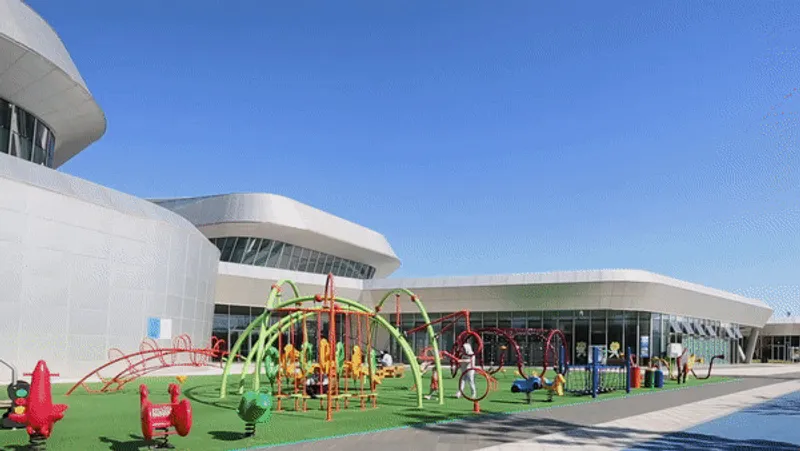
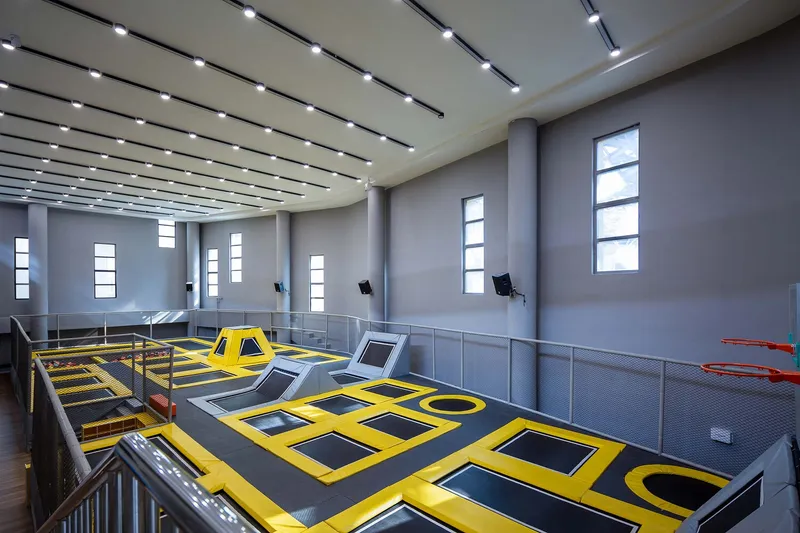
- New Sports Extensions – facilities for rock climbing, trampoline, esports, rehabilitation, and children’s training, moving beyond traditional definitions of fitness centers.
This flexibility ensures that the complex supports a diverse sports ecosystem, encouraging both professional excellence and community participation.
Spatial Concept: The Sports Mall
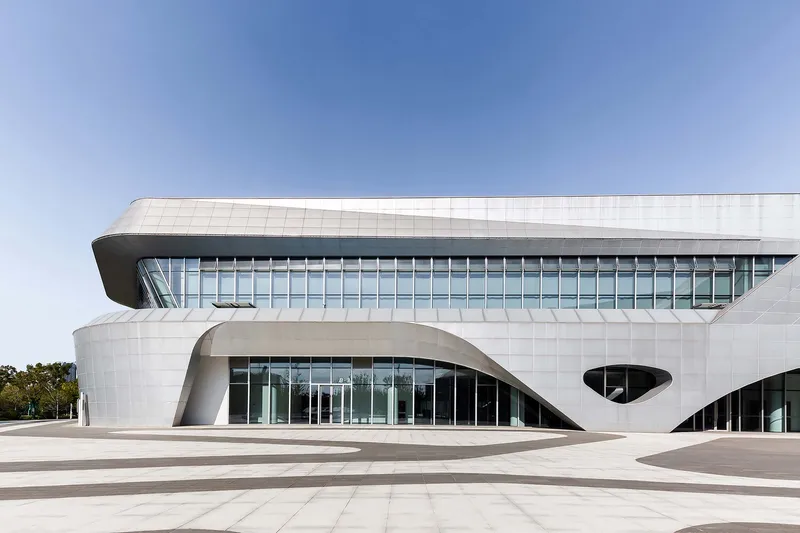
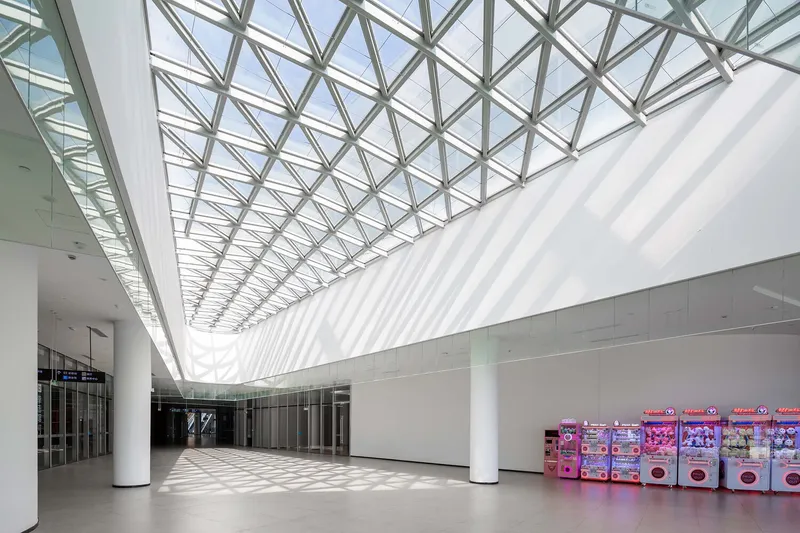
The architects adopted the concept of a “sports mall”, with a radial layout organized around one central atrium and multiple activity cores.
- One Center – A sunlit shared atrium acts as the heart of the complex, connecting multiple activity zones and enhancing visual and social interaction.
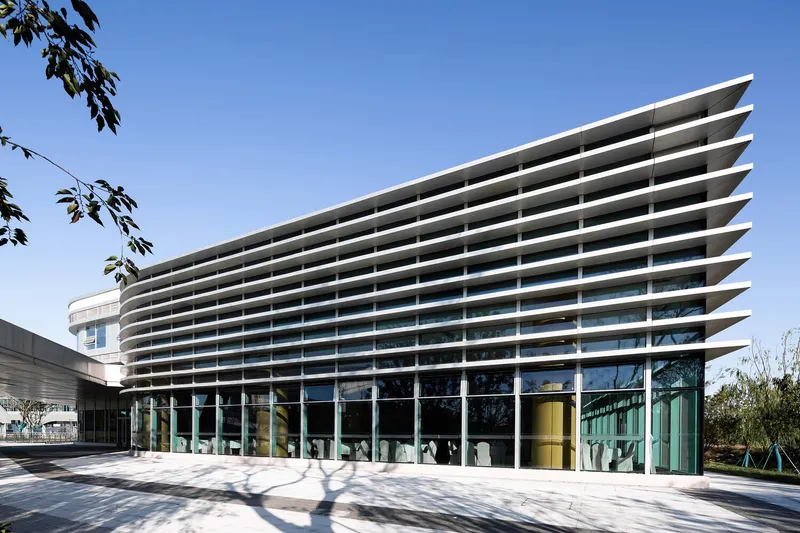
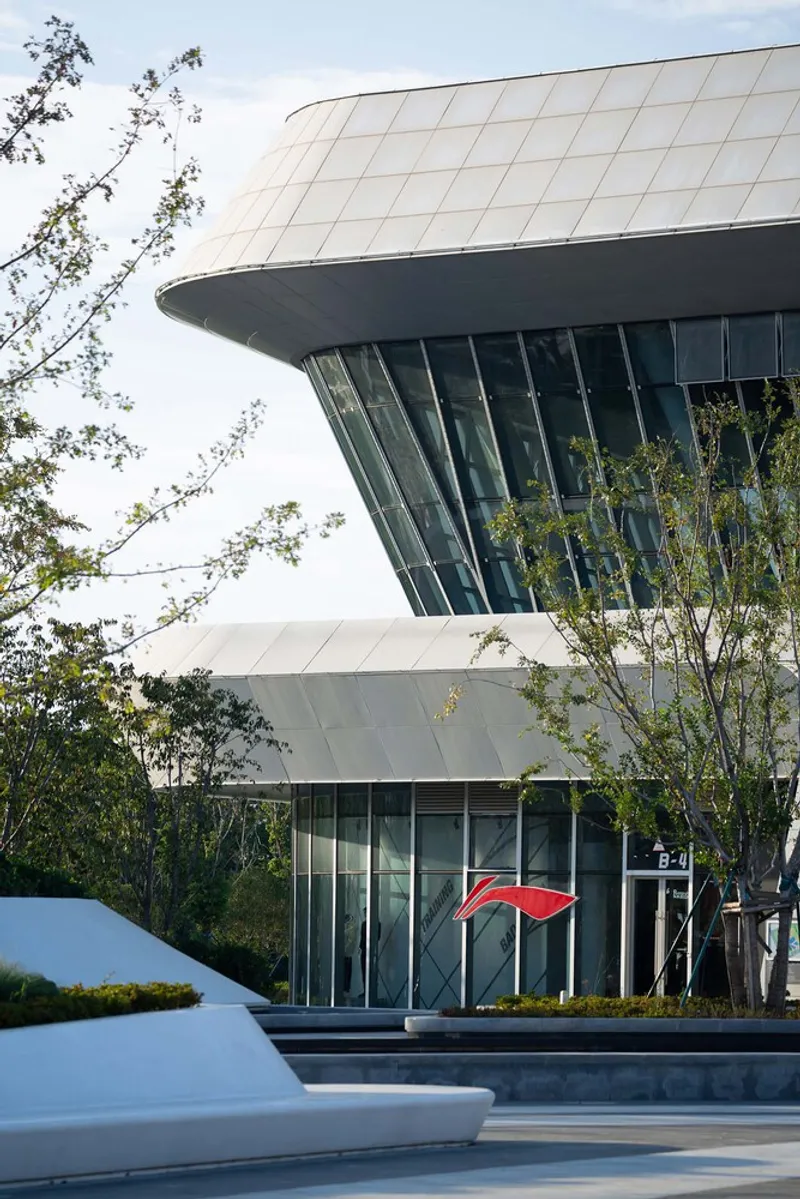
- Multiple Cores – A variety of venues surround the atrium, each with unique architectural expressions: The gym features large curved windows, creating a visual connection with the atrium. The trampoline hall uses perforated metal panels with varied openness, symbolizing the diversity of human interaction. A grand stairway doubles as seating, gathering, and performance space, emphasizing openness and community use.
- The gym features large curved windows, creating a visual connection with the atrium.
- The trampoline hall uses perforated metal panels with varied openness, symbolizing the diversity of human interaction.
- A grand stairway doubles as seating, gathering, and performance space, emphasizing openness and community use.
The design philosophy encourages participatory architecture, where visitors are both actors and spectators, breaking down social barriers and fostering active lifestyles.
Landscape and Running Loops
The Fitness Center extends beyond indoor facilities to create a multi-level sports park:
- A 2.3 km ground-level running track weaves through landscaped zones, water features, and outdoor courts, blurring the boundary between built form and parkland.
- A 1.2 km elevated rooftop running path links the second-floor garden with the park, offering panoramic views and ensuring functional emergency evacuation routes.
These layered pathways create a dynamic circulation system that connects the city, the park, and the fitness center, enriching both athletic experience and urban vitality.
Cultural and Social Impact
The Tongxiang National Fitness Center and Li Ning Sports Park goes beyond its role as a sports facility. It:
- Serves as a public gathering hub that encourages daily activity and community life.
- Blends sports, recreation, and cultural expression into a continuous urban experience.
- Establishes a model for future urban fitness centers in China, where architecture and landscape are designed to support health, inclusivity, and cultural identity.
All photographs are works of Guiming Chen



Popular Articles
Popular articles from the community


The Earth Pod: 3D Printed Homes for Resilient Refugee Communities
The Earth Pod reimagines refugee housing through 3D printed homes made from clay, combining resilience, self-sufficiency, and rapid shelter.

Co-Life: Senior Housing Design That Reconnects Older Adults With the City
Co-Life reimagines senior housing design through healing gardens, shared streets, workshops, and a sustainable community across generations.

The Musturak Paradise: Senior Living Architecture for a Connected Future in Temara, Morocco
The Musturak Paradise reimagines senior living architecture in Temara via private homes, social spaces, culture, community, and shared care.

Riyadh For All: Intergenerational Urban Design for Active Aging in Rabat
Riyadh For All reimagines urban design in Rabat with intergenerational co-living, adaptive courtyards, and Moroccan cultural exchange today.

Similar Reads
You might also enjoy these articles


Hodi-Mandai Geram
Project Function: Preservation and revitalization of the Intangible heritage and socio-spatial identity of the Hodi by Housing, Cultural Memory Center, Sacred Grove, landscape, local tourism economy


Olio Towers: A Mid-Rise for Performers That Fuses Housing, Rehearsal, and Stage
Located blocks from Houston's Theater District, this modular tower stacks living units around a central performance atrium.

Oasis: Modular Green Housing Carved into Dhaka's Urban Fabric
A shortlisted Plugin Housing entry reclaims unauthorized settlements in Dhaka with stepped concrete volumes, green roofs, and ventilation-driven design.

Black Hole: A Floating Megastructure for the Post-Physical Era
Emiliano Mazzarotto envisions a spherical, self-scaling arena where e-sports, digital hotels, and holographic stadiums replace traditional public space.


Explore Sports Center Competitions
Discover active competitions in this discipline



Challenge to reimagine the Iron Throne


Photograph architecture without architects


Illustrate the lost glory of Angkor Wat - Render Challenge

Bring back Drive In's
Comments (0)
Please login or sign up to add comments
No comments yet. Be the first to comment!