
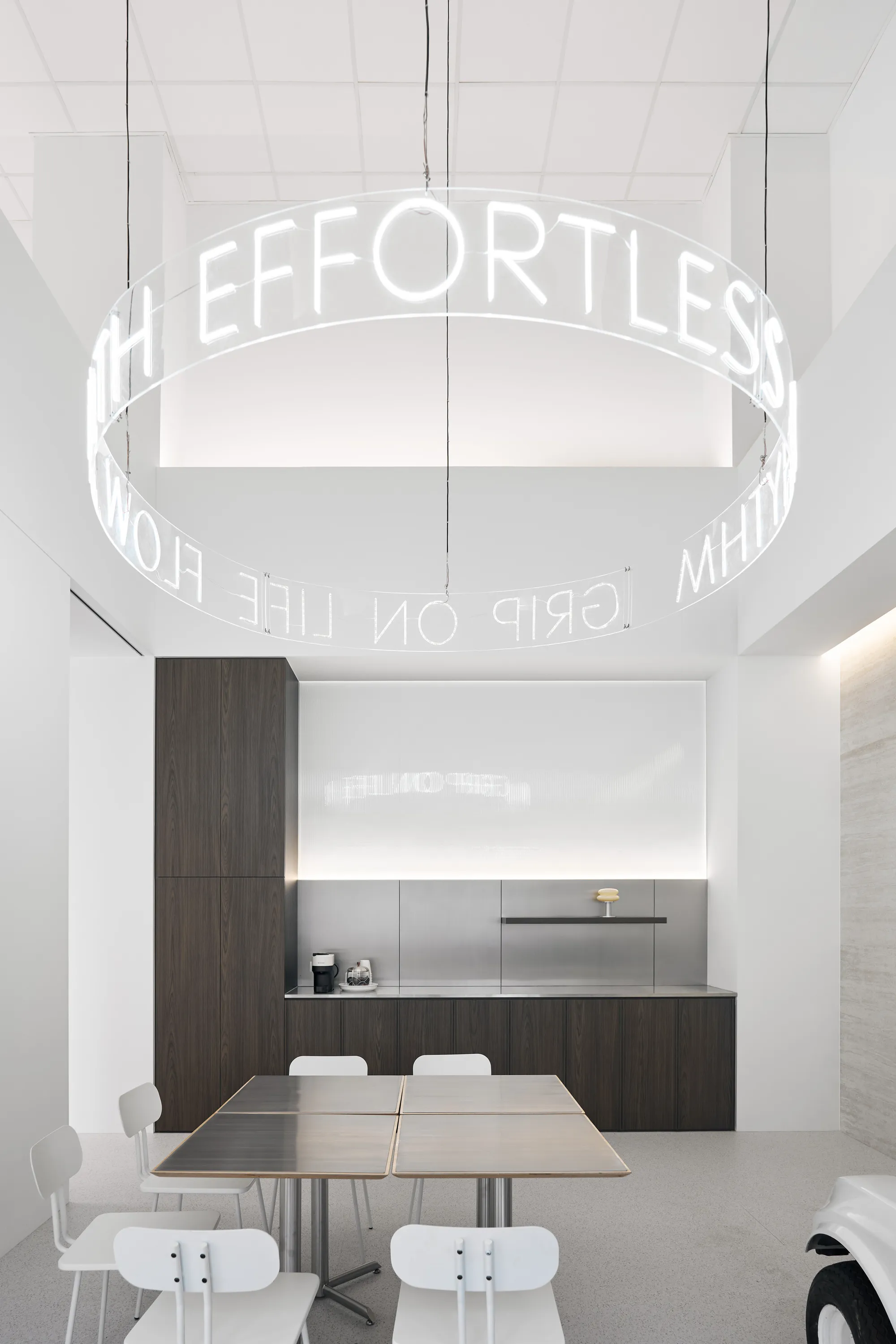
Traces of Light Indoor Golf Course by Degree Design
Traces of Light by Degree Design transforms an indoor golf course into a serene interplay of illumination, motion, and minimalist elegance.


A Dialogue Between Light, Space, and Motion
The Traces of Light Indoor Golf Course by Degree Design in Taichung, Taiwan, redefines the traditional concept of recreational interiors through a masterful play of illumination, texture, and rhythm. Designed by Tseng Chih-Hao, the project transforms a 161-square-meter space into a serene, sensory environment where light becomes architecture, guiding both movement and emotion.
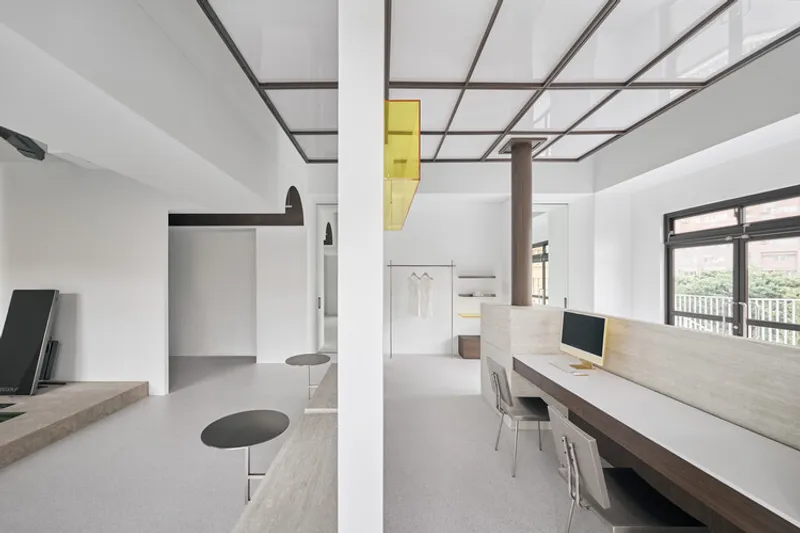
The design explores the ephemeral nature of light—how it bends, reflects, and reshapes perception. Inspired by the trajectory of a golf swing, light moves through the interior “like an arc drawn in air,” leaving subtle traces that define spatial rhythm and form. The result is a tranquil and poetic environment that blends precision, balance, and spatial flow.
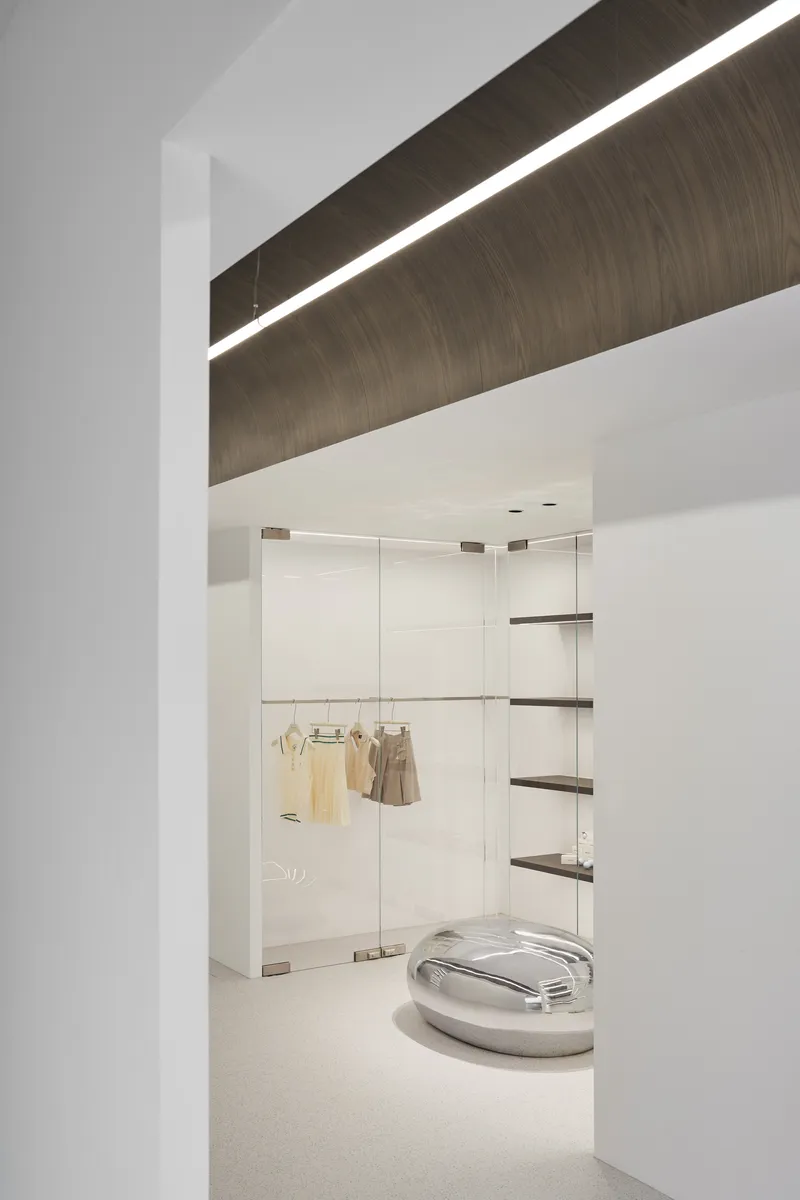
Spatial Composition and Material Harmony
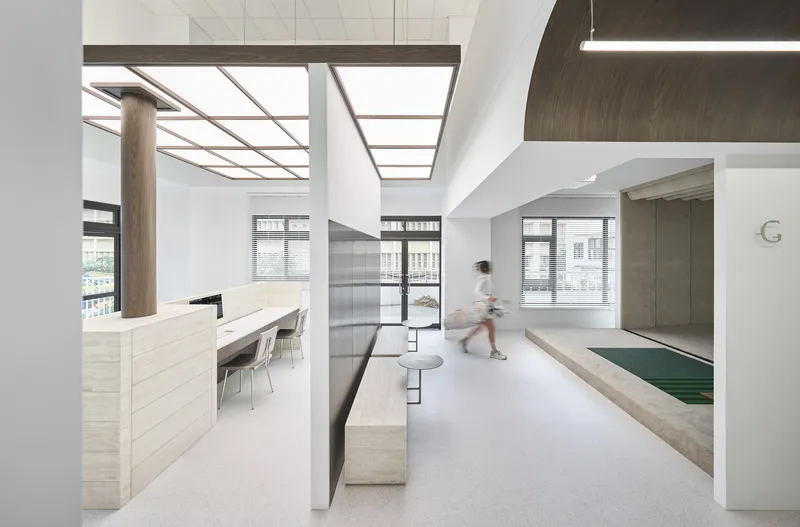
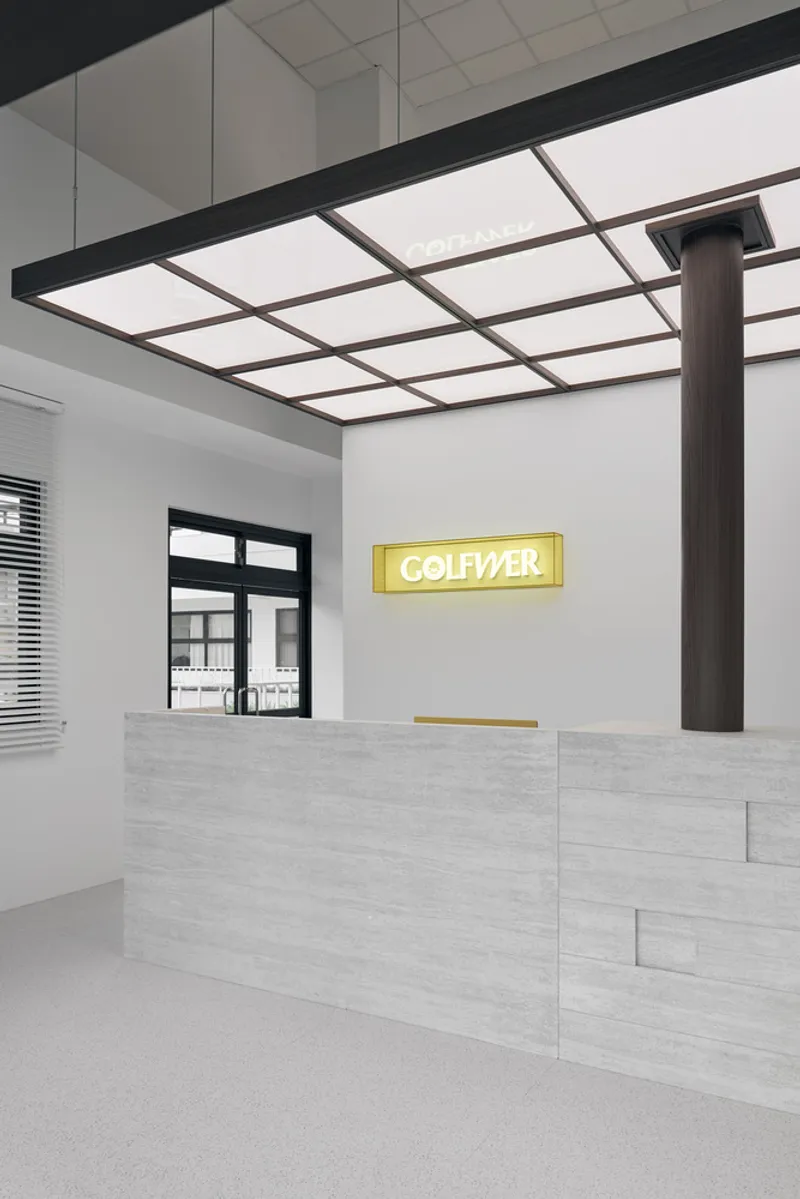
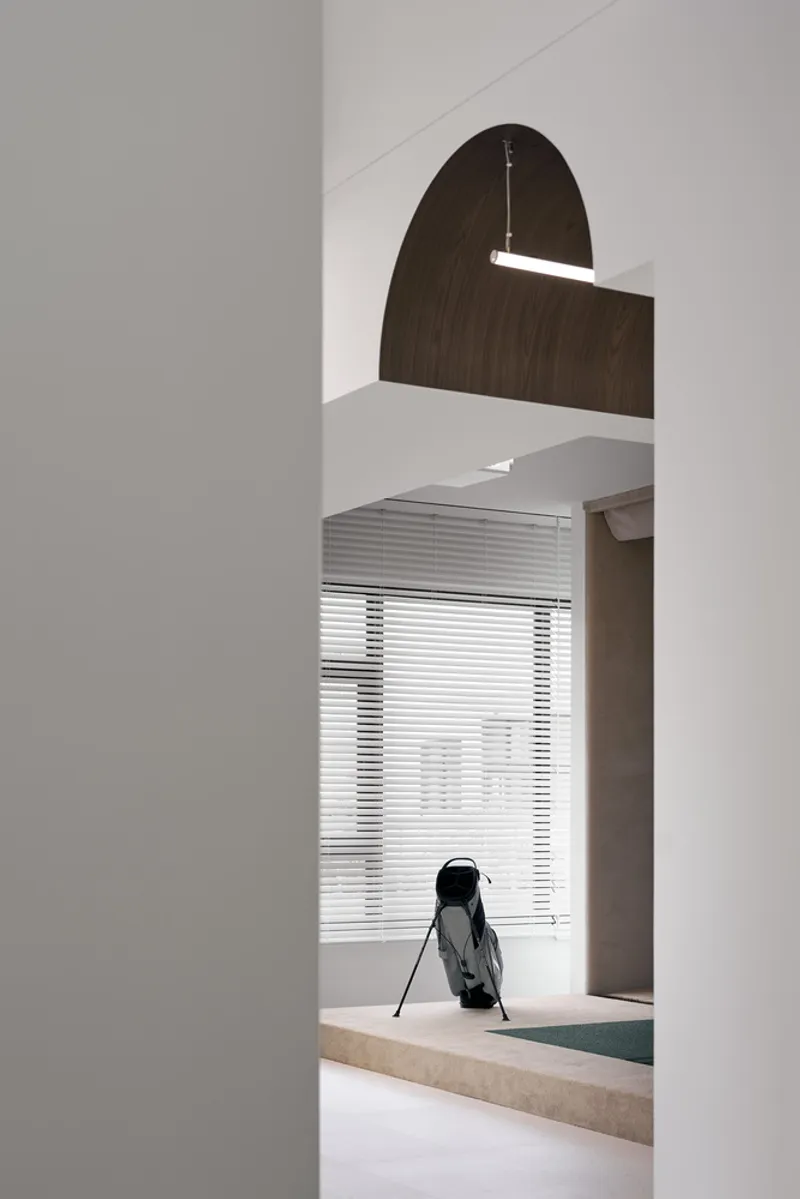
Upon entry, visitors are greeted by a double-height volume, where a luminous ceiling softly cascades downward, establishing the space’s rhythm and atmosphere. This initial gesture sets a tone of fluidity and elegance, establishing light as both a sculptural and functional element.
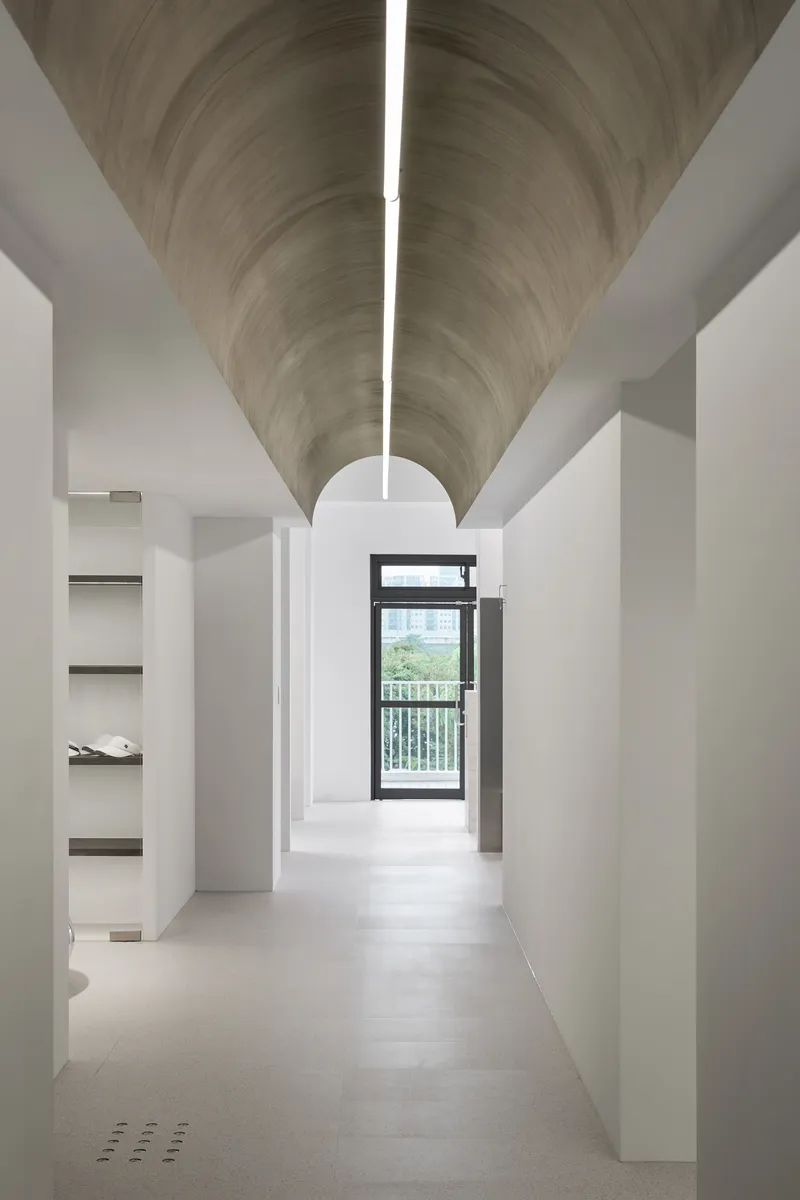
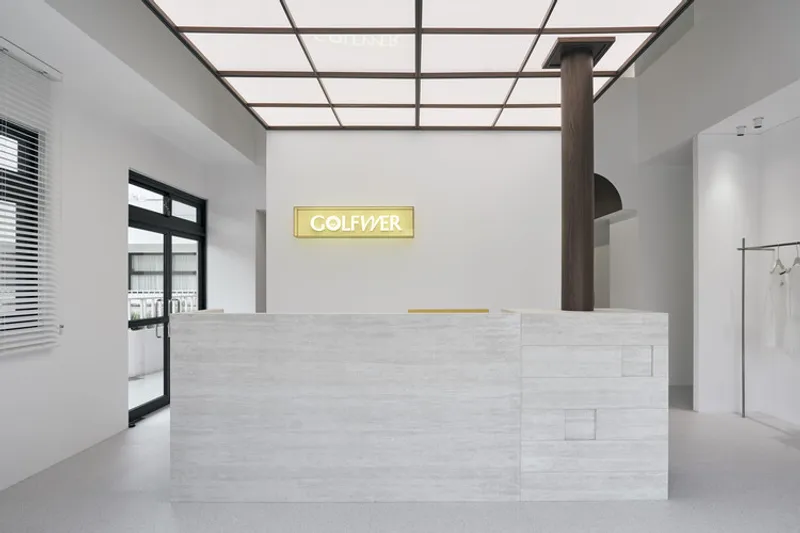
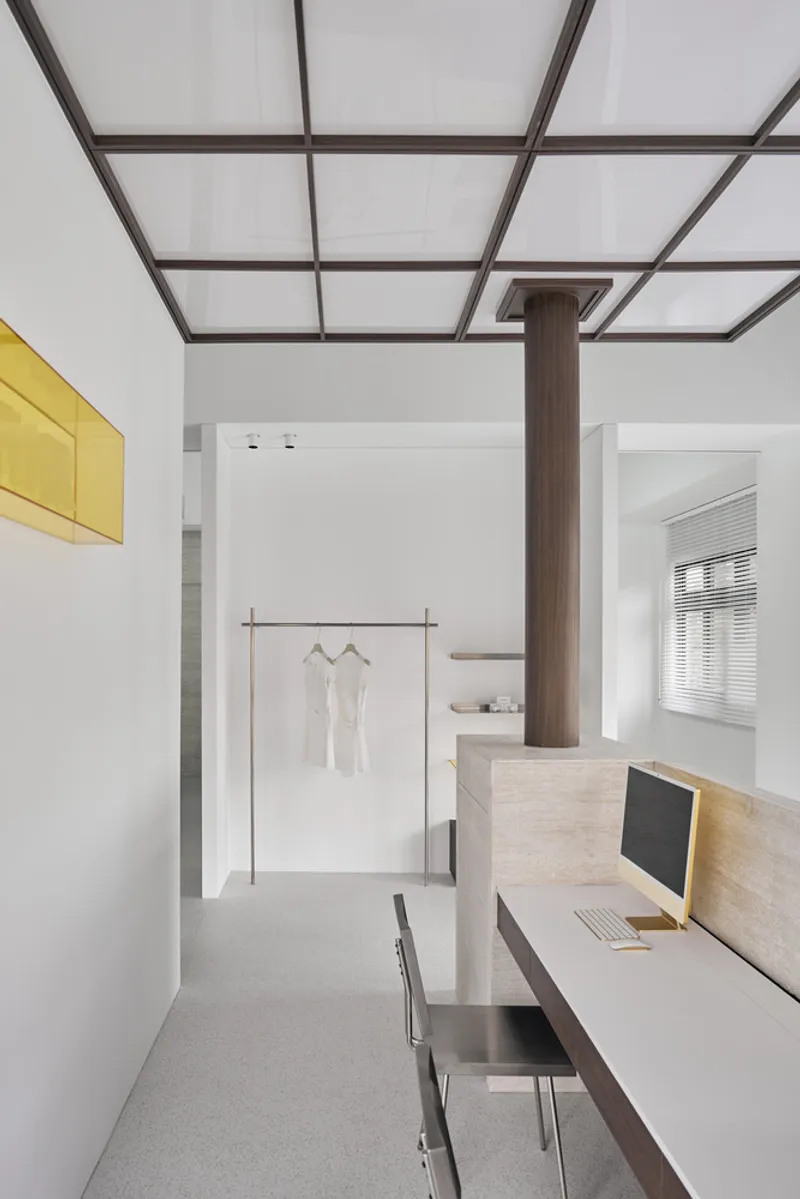
The material palette—comprising stone, timber veneer, and brushed metal—weaves together contrasting textures to create a dialogue between cool minimalism and warm tactility. These materials ground the space while allowing light to glide effortlessly across surfaces, revealing the subtle interplay of reflection and transparency.
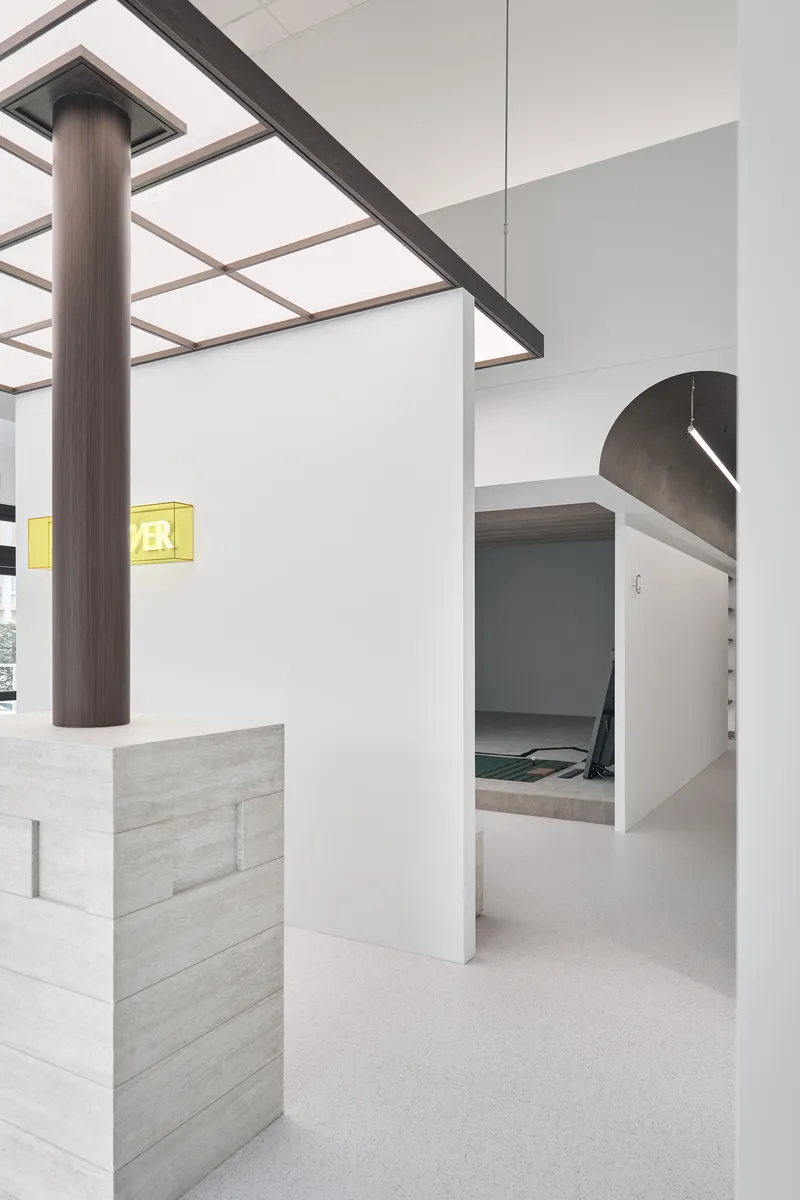
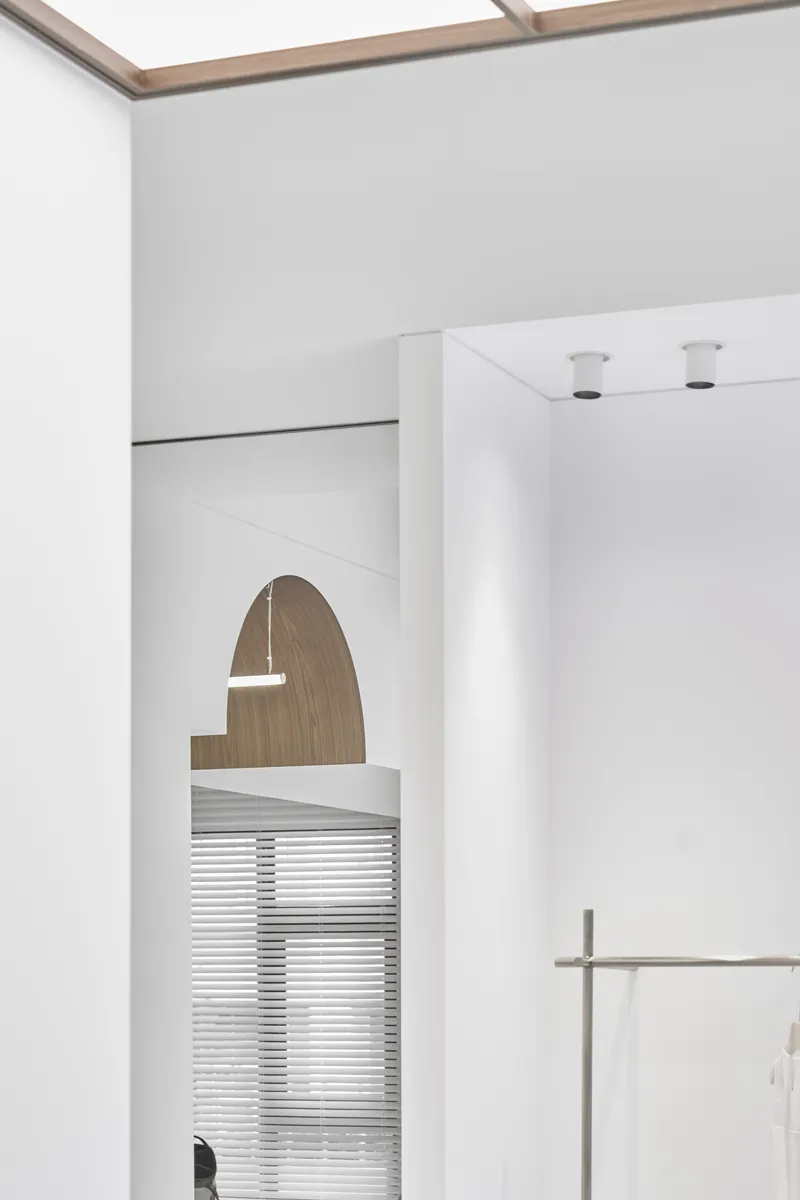
Mirrored planes and glass partitions extend visual boundaries, amplifying depth and light diffusion. Every detail is carefully orchestrated to balance clarity and softness, creating a refined yet inviting ambiance.
Architectural Flow and Functionality
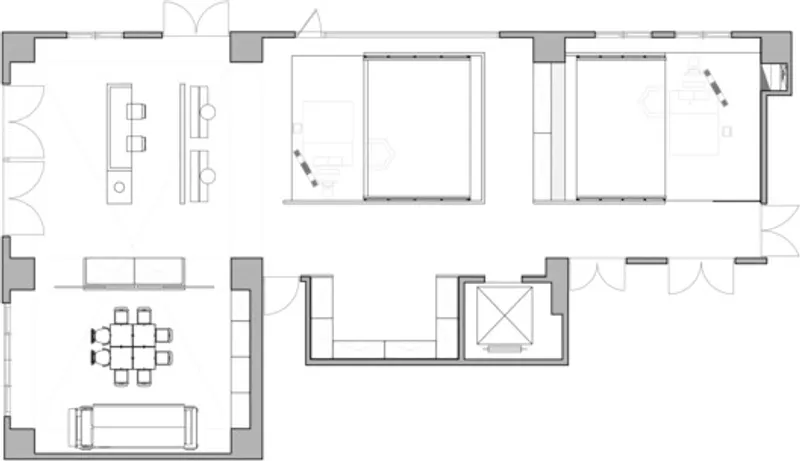
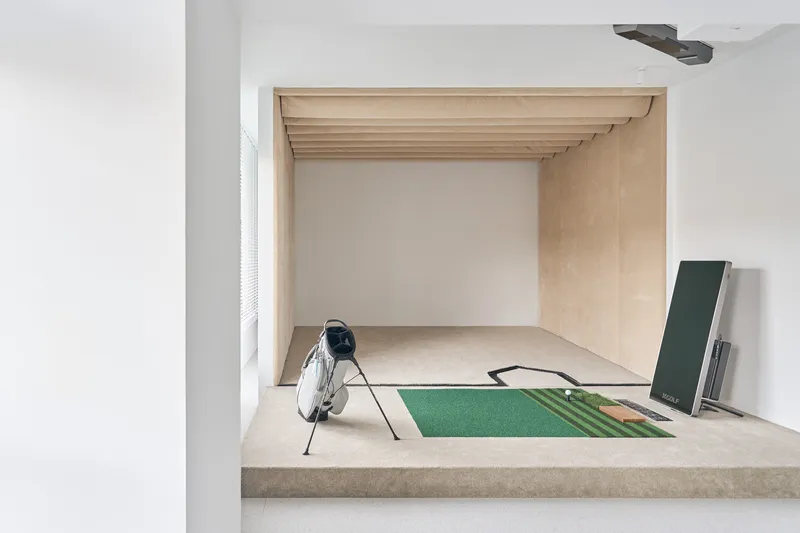
The spatial organization follows the rhythm of movement—like the calm, controlled arc of a golf swing. A gently arched ceiling defines the circulation, drawing visitors seamlessly from one zone to another. The design encourages a sense of natural continuity, making the transition between the golf simulation zones, lounge areas, and private training spacesfeel intuitive and meditative.
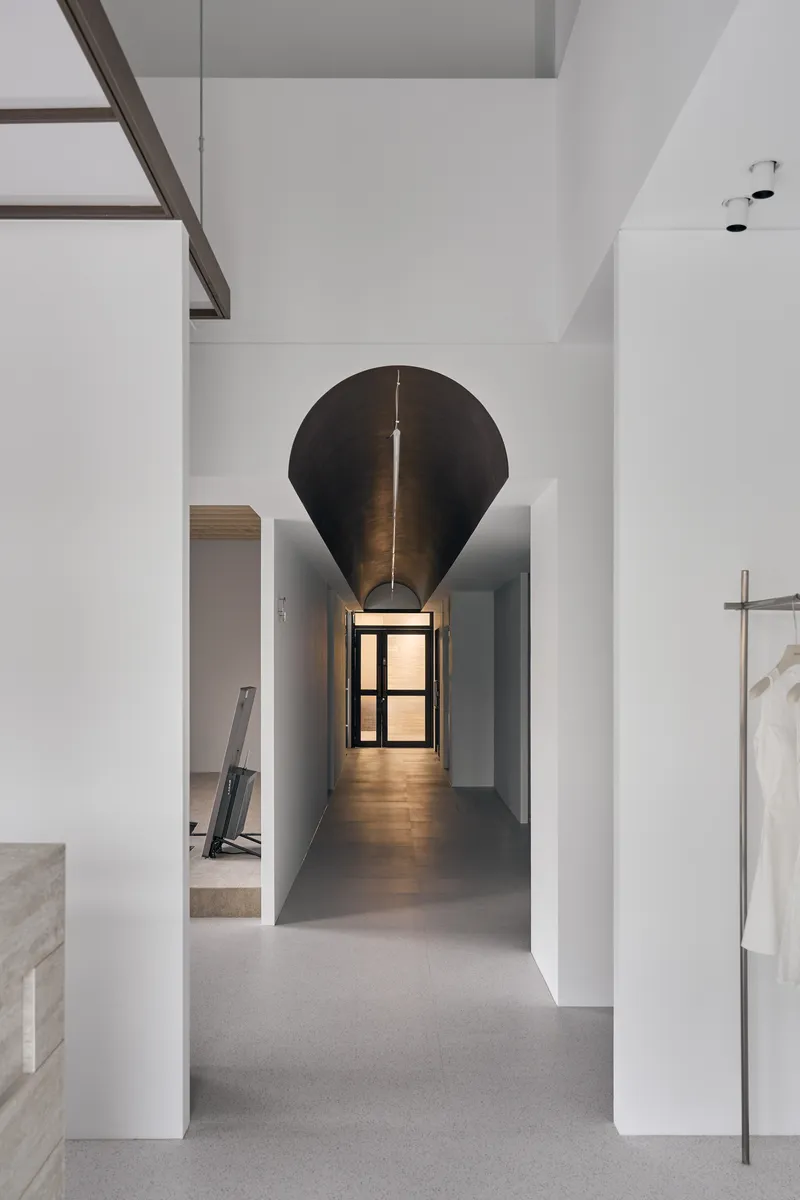
Concealed doors allow the space to transform effortlessly. When opened, they extend light and sightlines across the room; when closed, they craft private enclaves of calm, balancing openness with intimacy. This adaptable design ensures that the environment serves both performance and retreat.
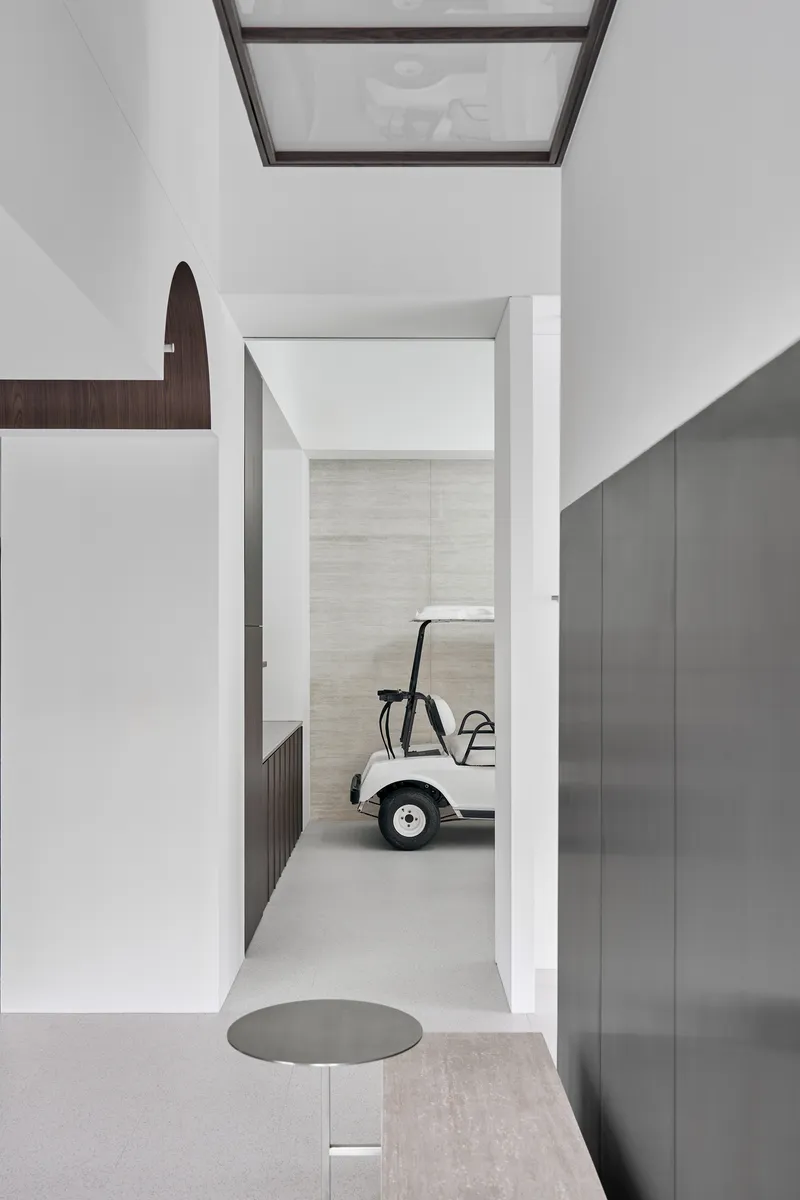
Light as a Design Medium
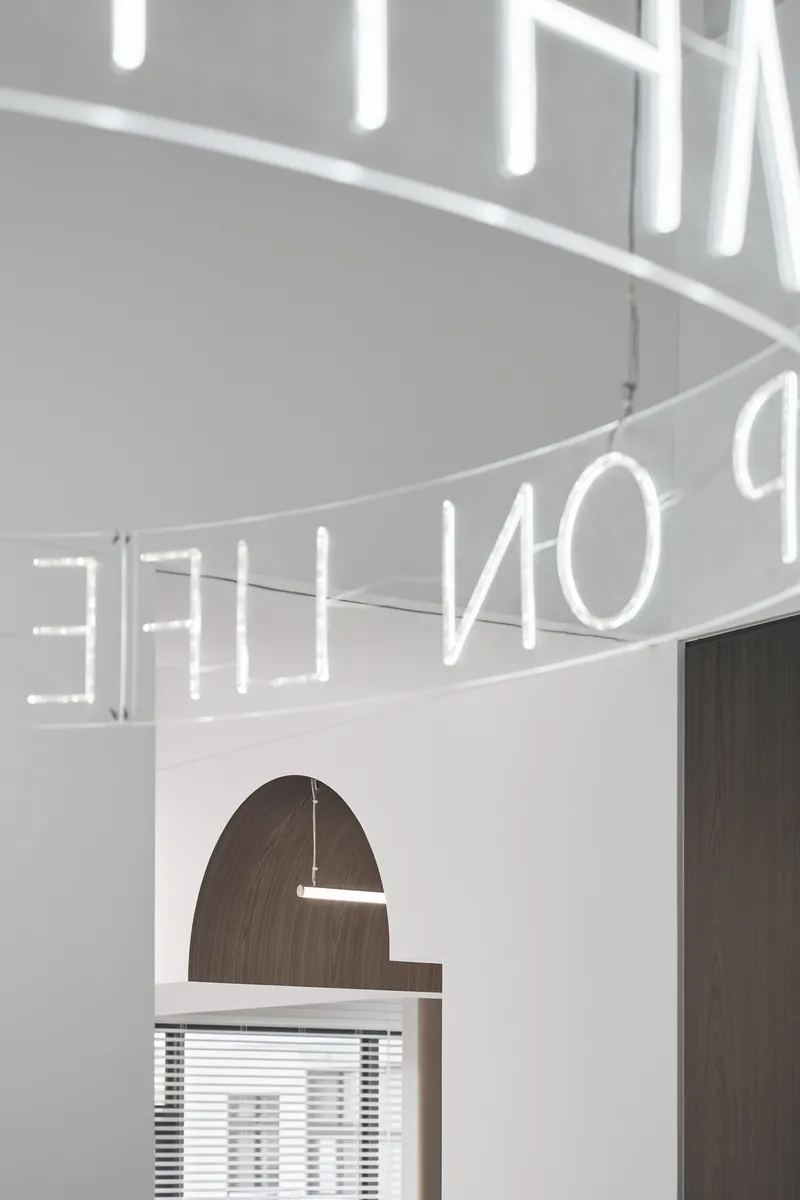
Light is treated as both material and metaphor. It delineates paths, highlights textures, and generates rhythm. The dynamic lighting system captures the passage of time and motion, echoing the precision of a golfer’s focus and the poetic restraint of minimalist architecture.
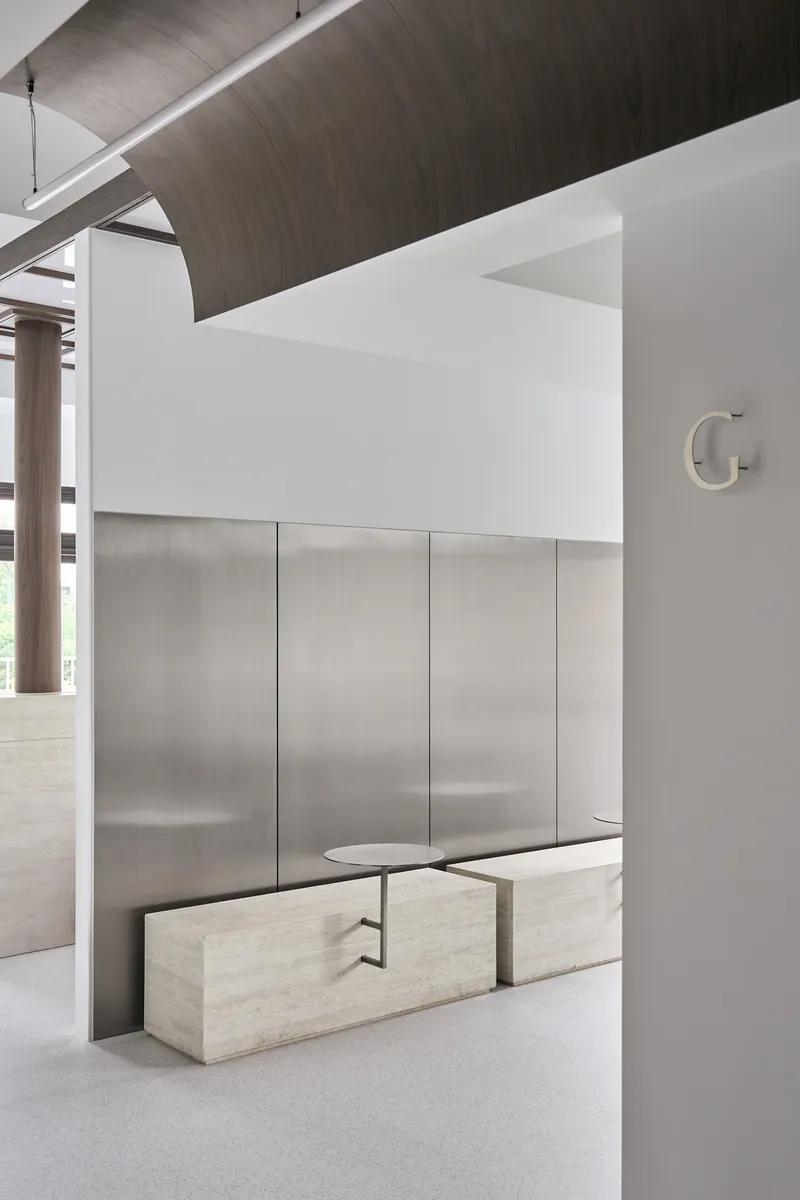
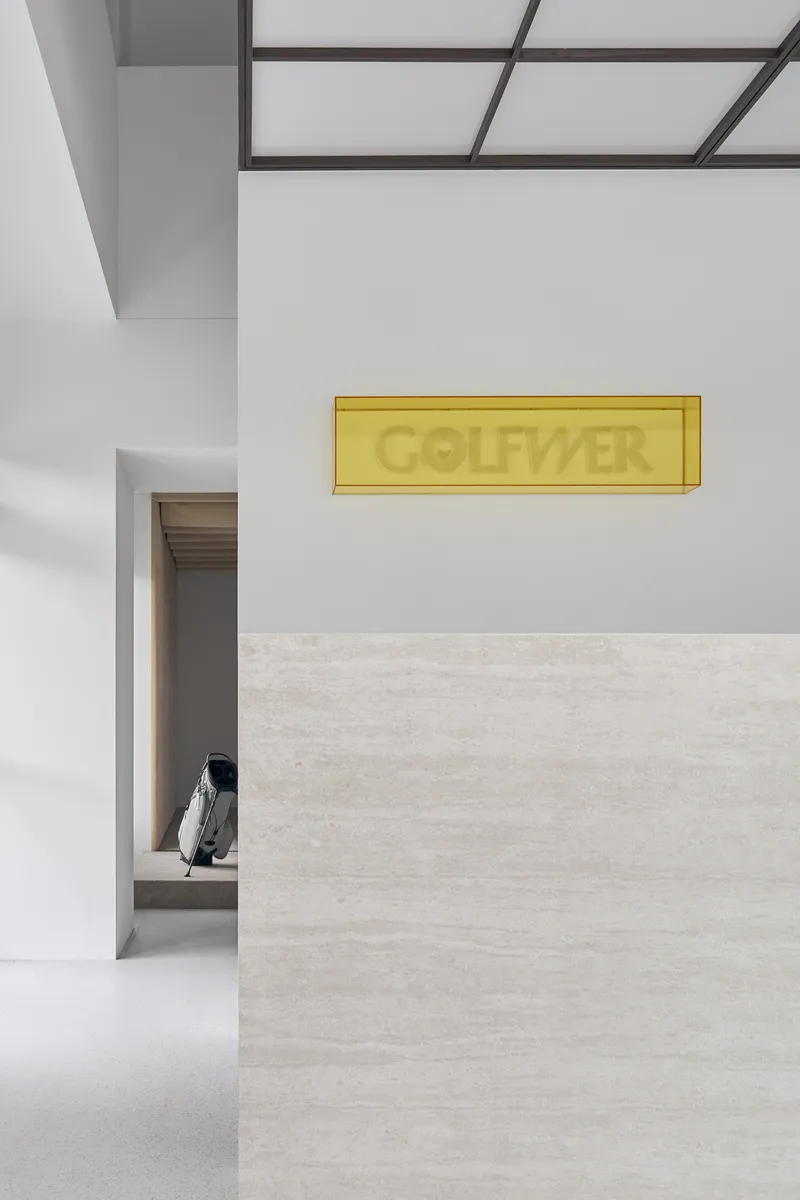
In “Traces of Light,” illumination transcends its functional role—becoming a narrative of energy, emotion, and stillness. It animates surfaces and defines moments of pause, allowing users to experience the architecture as a living, breathing presence.
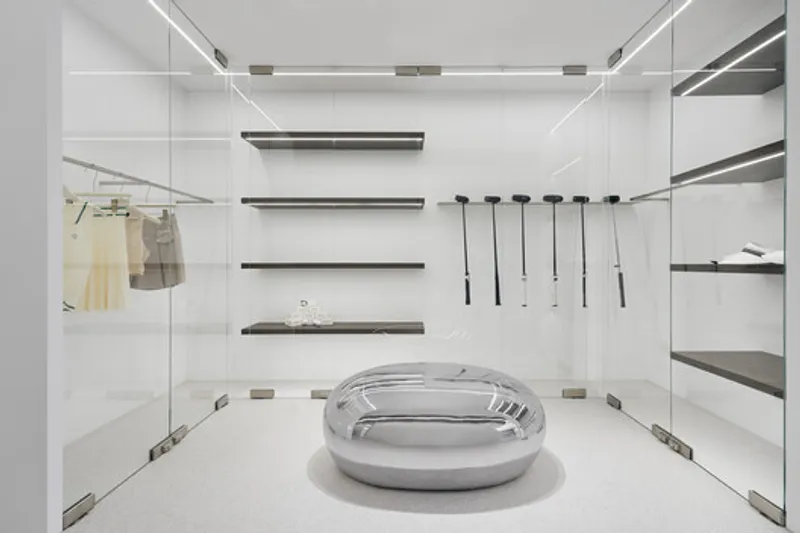
A Minimalist Ode to Motion and Balance
The Traces of Light Indoor Golf Course by Degree Design exemplifies contemporary Taiwanese interior innovation, where spatial balance and sensory experience converge. Through light, material precision, and subtle geometry, the project transforms an athletic space into a meditative architectural journey—where every reflection, every shadow, and every movement becomes part of an evolving choreography.




Popular Articles
Popular articles from the community


The Ocean Hive: Sustainable Architecture for a Self-Sufficient Civilization at Sea
The Ocean Hive imagines sustainable architecture at sea, where modular habitats, algae, wave power and ocean waste sustain a growing colony.

Conexión: Biophilic Design Reimagines High-Rise Living in Hong Kong
Conexión reimagines high-rise living in Hong Kong through biophilic design, green facades, shared spaces, daylight, water and nature within.

Riyadh For All: Intergenerational Urban Design for Active Aging in Rabat
Riyadh For All reimagines urban design in Rabat with intergenerational co-living, adaptive courtyards, and Moroccan cultural exchange today.

The Earth Pod: 3D Printed Homes for Resilient Refugee Communities
The Earth Pod reimagines refugee housing through 3D printed homes made from clay, combining resilience, self-sufficiency, and rapid shelter.


Similar Reads
You might also enjoy these articles


Hodi-Mandai Geram
Project Function: Preservation and revitalization of the Intangible heritage and socio-spatial identity of the Hodi by Housing, Cultural Memory Center, Sacred Grove, landscape, local tourism economy


Olio Towers: A Mid-Rise for Performers That Fuses Housing, Rehearsal, and Stage
Located blocks from Houston's Theater District, this modular tower stacks living units around a central performance atrium.

Oasis: Modular Green Housing Carved into Dhaka's Urban Fabric
A shortlisted Plugin Housing entry reclaims unauthorized settlements in Dhaka with stepped concrete volumes, green roofs, and ventilation-driven design.

Black Hole: A Floating Megastructure for the Post-Physical Era
Emiliano Mazzarotto envisions a spherical, self-scaling arena where e-sports, digital hotels, and holographic stadiums replace traditional public space.


Explore Architecture Competitions
Discover active competitions in this discipline



Challenge to reimagine the Iron Throne


Photograph architecture without architects


Illustrate the lost glory of Angkor Wat - Render Challenge


Design challenge to reuse E-waste
Comments (0)
Please login or sign up to add comments
No comments yet. Be the first to comment!