

TRADITIONAL WOODEN BOAT CRAFTING CENTRE: REJUVENATING CRAFTSMANSHIP OF WOODEN BOAT MAKERS COMMUNITY
The project aims to serve as a nexus for preserving and promoting the invaluable skills of boat makers while rejuvenating their community spirit as ours is a riverine country with boat culture.

PROJECT BRIEF
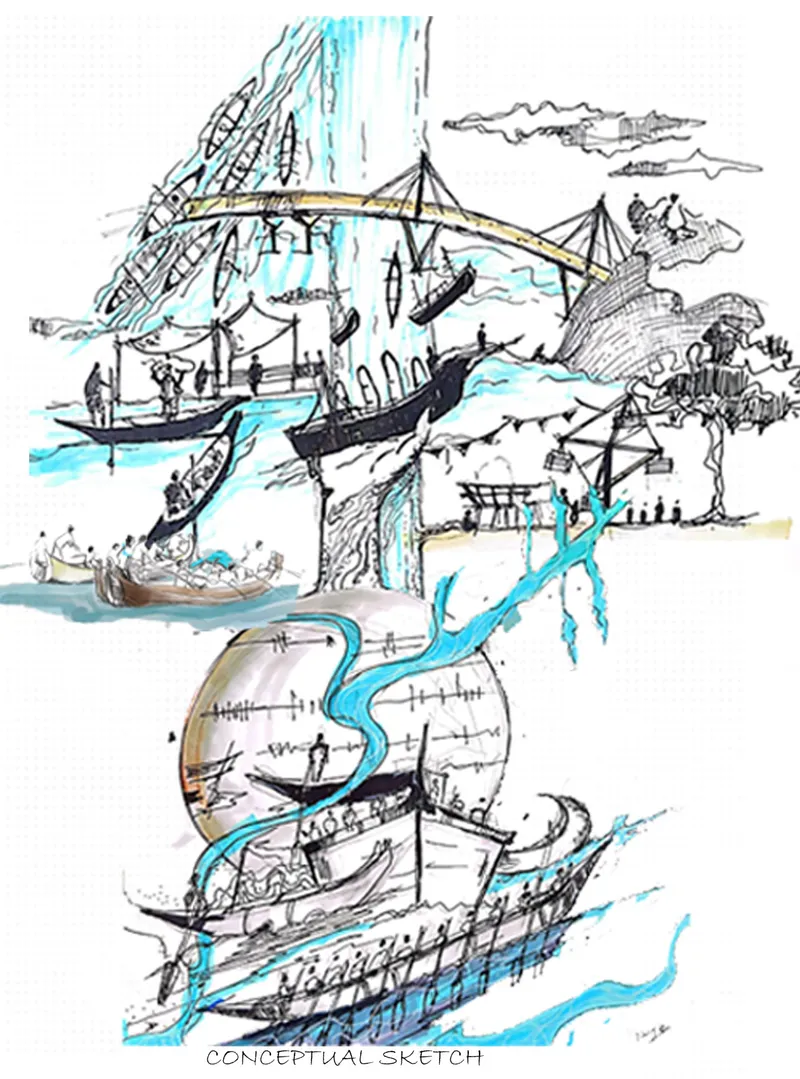
From the dawn of human history, boats have been an integral part of survival, culture, and progress, embodying the timeless relationship between people, water, and craft. Bangladesh is the largest delta in the world, formed by the Ganges, Brahmaputra, and Meghna rivers. Over 700 rivers flow across the country, creating a vast network of waterways that have historically defined its landscape, economy, and culture. Boats have therefore been the primary mode of mobility and livelihood for centuries, especially in rural and coastal region.
Along the Karnaphuli River's banks, the craft of building wooden boats is deeply ingrained in local culture and history, acting as a critical conduit between the villages and their maritime past. However, because of a number of socioeconomic issues, this rich legacy has steadily declined over the years. The art of creating traditional wooden boats is vanishing due to modernization and a decline in enthusiasm from newer generations. The dwindling quality of this artistry jeopardises not just the integrity of cultural identity but also the means of subsistence for talented artisans who have spent centuries perfecting their profession. Additionally, the lack of locations specifically designated for boat building has resulted in a dispersion of artisans and a loss of collective knowledge within the community.
EVOLUTION OF BOAT BUILDING AND RELATED
The evolution of boat building in Bangladesh is closely linked to its geography, rivers, and waterways, as well as its socio-cultural and economic history. Bangladesh, with its intricate network of rivers, has a long-standing tradition of boat building that dates back to ancient times. Boats have been a critical means of transportation, trade, and livelihood, especially in rural and riverine areas.
CHALLENGES AND CONSERVATION
The traditional boat-building industry faces several challenges. Deforestation has made high-quality wood more expensive and harder to obtain, while competition from modern materials and mechanized boats has reduced demand for traditional wooden boats. Additionally, climate change and rising sea levels threaten many of the coastal communities reliant on boat building and fishing.
Efforts have been made by cultural organizations and NGOs to preserve the art of traditional boat building in Bangladesh, recognizing its importance to both the economy and the country's cultural heritage. Boat festivals, exhibitions, and workshops have been organized to keep this tradition alive.
Modern Adaptations
In some regions, boat builders have started incorporating new materials like steel and fiberglass into traditional designs, blending old and new techniques. This modernization allows them to remain competitive in the evolving transportation and fishing industries.
SITE CONTEXT
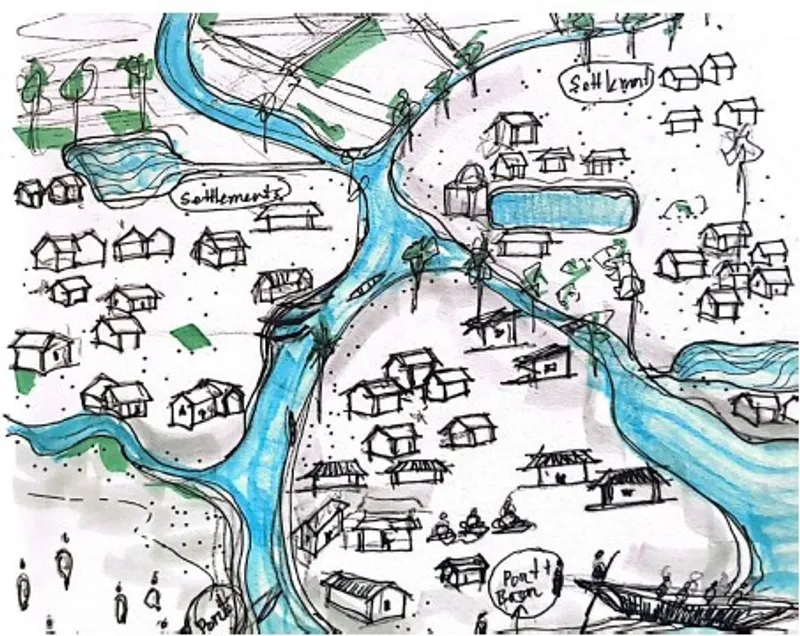
Charpathorghata village in Chittagong district rely on generational boat crafting as their source of income. The site is located on the bank of the Karnaphuli river. A part of the site is located under the karnaphuli bridge (Notun Bridge). The bridge spans the Karnaphuli river, which has been central to Chittagong’s boat-making legacy. This placement highlights the deep connection between craft, water, and modern development. The community face an array of challenges such as reduced productivity, fire hazards, proceess discontinuities, inadequate facilities. This operation is often conduct in open air settings without adequate mechanaries which make the process lengthy. Also, the community lack skilled craftsmen because of proper knowledge sharing space from the master craftsmen, leading to inadequate returns for their efforts.
CONCEPT AND DESIGN PHILOSOPHY
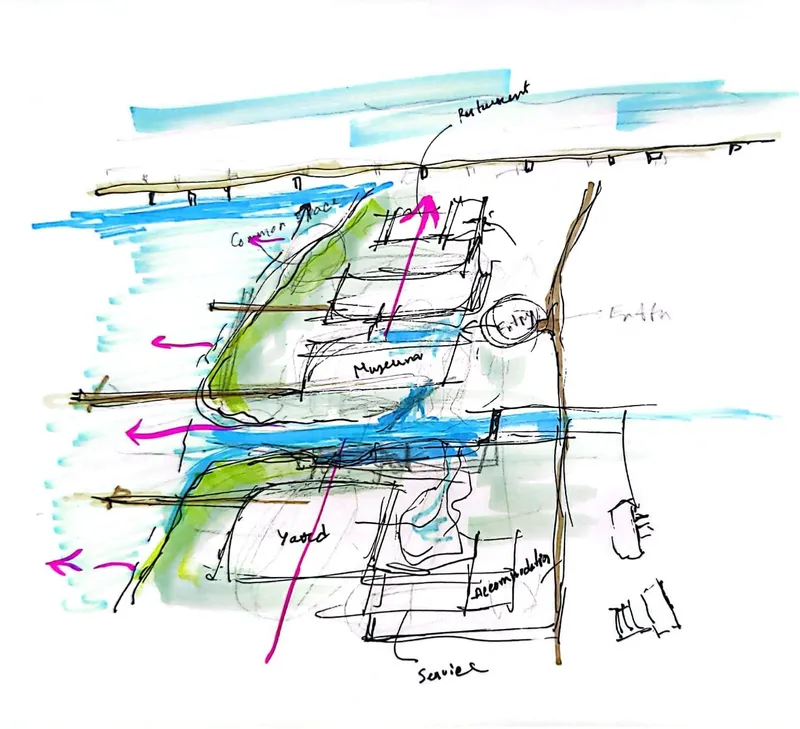
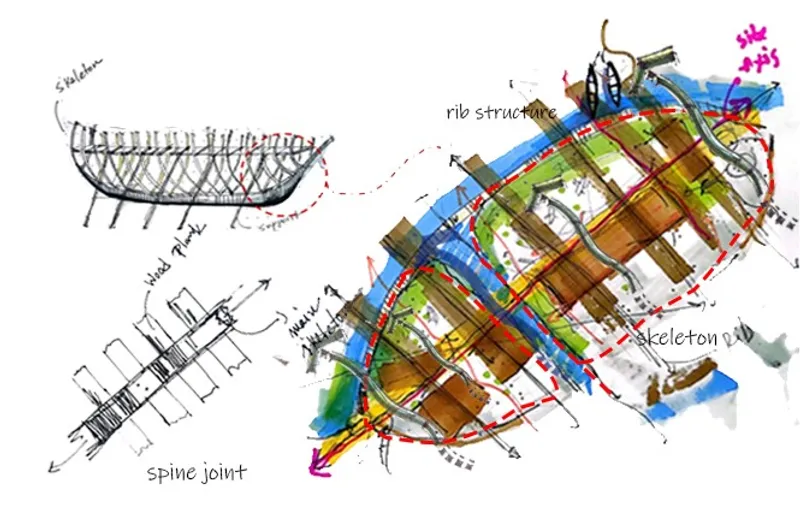
The concept draws inspiration from the intricate anatomy of traditional wooden boats, their ribbed spines, flowing hulls and hand-carved ornamentation. The architectural language is borrowed from this natural but precise geometry, adopting the rhythm and harmony of boat building as both functional craft and artwork. The site is considered as a boat skeleton and the masterplan is formed according to the geometry of skeleton.
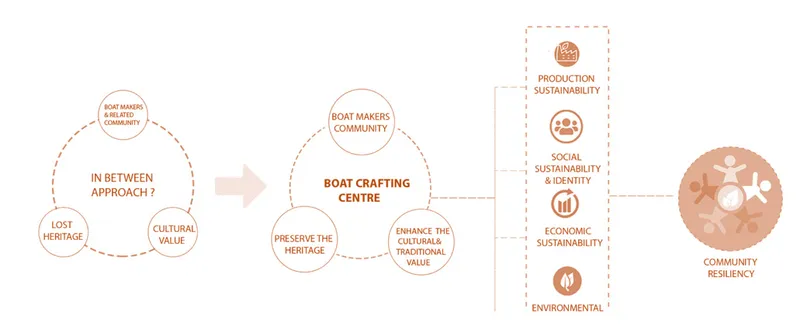
The purpose of this project is to address two objectives at the same time: How to revitalize a relatively remote boat makers community? and how to help to preserve elements of heritage and culture through the means of design? Project aims to create a co-existence between tradition and modernization.
In the project the bridge spans the Karnaphuli river, which has been central to Chittagong’s boat-making legacy. This placement highlights the deep connection between craft, water, and modern development. Hence the site justifies the concept of the project.
DESIGN STRATEGY
The project explores the intersection of tradition, sustainability and innovation aiming to preserve and provide a space to modernize an ancient traditional craft while empowering communities and fostering a deeper connection to Bangladesh’s riverine heritage with modern design. The project comprises with the concept “Tradition + Modernity”. The centre will serve as a social hub, encouraging community interaction and creativity. Key components include a museum to celebrate the rich artistry of wooden boat construction, educating visitors about the craft's cultural significance and history via exhibits and programs. A public space will further engage the community, promoting artisan interaction and appreciation for boat-making skills. The local culture is closely intertwined with the Karnaphuli River, which is central to annual events like fishing festivals and boat races. An open plaza is planned as a vibrant gathering spot for these celebrations, nurturing community spirit and reinforcing connections to the wooden racing heritage. The riverfront design will optimize the natural landscape with pathways, seating areas, and green spaces, creating a welcoming environment for recreation and social activities. Equipped with modern workshops, the boat-making zone will facilitate collaboration and innovation among craftsmen, merging traditional techniques with contemporary practices to ensure the craft's survival. Supportive facilities, including a research unit, medical room, resting area, community kitchen, and a dedicated space for “Nauka Haat,” will bolster the livelihoods of craftsmen while promoting knowledge sharing. Open boat making space can be used as “NOUKAR HATT”. The area beneath the bridge will be transformed into a net-mending space and temporary market during festivals, enhancing the project's overall function. Connectivity between these zones will be enriched by an elevated bridge, designed to link people to nature and the water gently. The biophilic strategy reduce environmental footprints while fostering greater emotional and cultural connection to the riverine space. At its core, the design is not simply about the preservation of a craft, but about creating a regime of resilience by means of architecture that valorises identity, knowledge of craft, culture, heritage and the transformative role of place.
TECHNICAL DATA
In the design strategy of “Crafting Centre,” the rethinking of sustainable architecture has been linked with locally practiced “Traditional Boat-making crafts”. In this process, local adaptive method of vernacular architecture and available local material has been used enabling local artisans to actively participate in the building process, reinforcing a sense of ownership and continuity. The design integrates traditional craftsmanship with contemporary sustainability, honoring the ancestral wisdom of boat makers and related communities. In terms of sustainability, the design prioritizes using eco-friendly wooden materials and traditional building practices along with the steel joint ensuring that the construction and operation of the institute align with environmentally respectful principles. Engineered wood products like Glulam (Glued Laminated Timber) are introduced for major load-bearing elements, offering not only a low-carbon alternative to concrete and steel but also aligning with the regional context and craftsmanship. Glulam’s resilience and expressive quality make it particularly suitable for spaces inspired by boat hulls and skeletal frames. When compared to other construction systems, GLULAM has a NEAR-ZERO carbon footprint. It has been demonstrated to be a more durable and appropriate material in this context and cultural aspect. In designing the boat crafting centre, I essentially focused on the people who would use the space and their relationships with it. Passive design strategies are employed throughout: extended overhangs, wooden facades, and naturally ventilated roof profiles ensure thermal comfort while reducing mechanical load. The spatial configuration allows for natural daylighting and cross-ventilation, supporting the well-being of users, especially the boat craftsmen who spend long hours in the workshops. Research demonstrates that environments emphasizing human interaction can significantly enhance creativity and community engagement. By incorporating biophilic design principles such as communal crafting workshops, open collaboration spaces, and areas that provide visual and physical connections to the natural environment, the centre works as a cultural hub and can foster a spirit of collaboration and shared learning among artisans.


Popular Articles
Popular articles from the community

Opera by the Sea Estonia: Three Shells Dissolving Architecture into Tallinn's Coastline
A winning opera house proposal replaces monumental form with interconnected shells that blur the boundary between building, park and Baltic Sea.

Manzana Morphosis: Stretching Barcelona's Grid into a Living Landscape for 2050
A radical reworking of the Eixample manzana turns density into a tool for generous public space, vertical ecology, and environmental performance.
Tsunami Convergenics: Turning Catastrophic Ocean Forces into Underwater Housing Infrastructure
A speculative underwater settlement off the coast of Onagawa, Japan, treats tsunamis and typhoons as energy sources rather than threats.

Opera on the Sea: Driftwood Logic Shapes a Timber Opera House on Estonia's Coast
Trevor Orgill's opera house translates the entangled drift of floating timber into a civic building where wood, water, and music converge.

Similar Reads
You might also enjoy these articles

The Rhythm of Seasons
A Farmers' Market Connecting Nature and the City

More Than a Building-Designing a Living System
More Than a Building-Designing a Living System
Base Beyond
DESERT COMPOUND ARID: TOURISM OF ABSENCE AND ABUNDANCE


Comments (0)
Please login or sign up to add comments
No comments yet. Be the first to comment!