
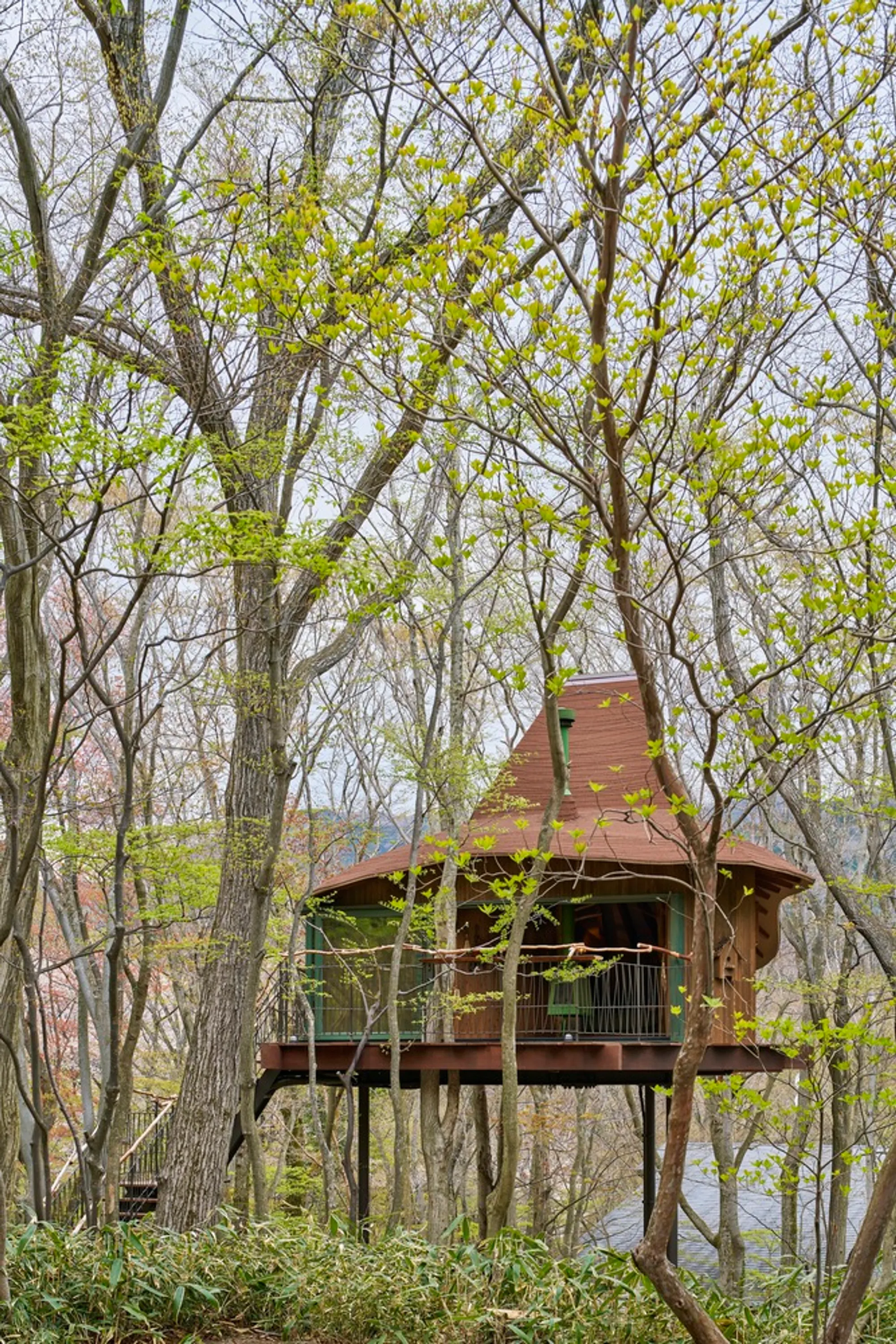
Tree Hut on Volcano by Hiroshi Nakamura & NAP: A Minimalist Sanctuary Suspended Above Nature
A minimalist, elevated treehouse in Hakone by Hiroshi Nakamura, harmonizing with nature, spirituality, and volcanic landscape history.


Location: Yokohama, Japan Architects: Hiroshi Nakamura & NAP Project Type: Minimalist Residential Architecture Completion Year: 2020 Built Area: 19 m² Photography: Koji Fujii / TOREAL Contractor: Double Box
A Floating Treehouse Inspired by Volcanic History and Spiritual Humility
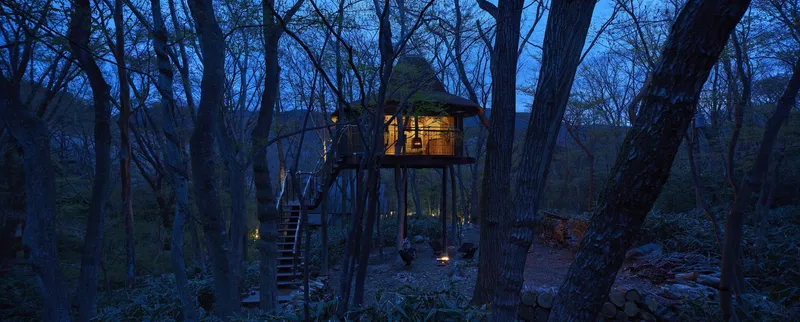
Nestled in the forested slopes near Mt. Kamiyama, the Tree Hut on Volcano by Hiroshi Nakamura & NAP reimagines the concept of minimalist living with a poetic architectural gesture. Suspended nearly 5 meters above the volcanic terrain, this compact 19m² residence is not just a retreat—it's a tribute to nature, spirituality, and the rich cultural landscape of Hakone, Japan.
Designed for a couple with a passion for nomadic lifestyles and small-scale living, this hut serves as a prototype for sustainable tiny homes. It reflects a philosophy that values connection to the land and community over excess and permanence.
Architectural Context: Volcanic Legacy and Cultural Reverence
The site sits approximately 2 kilometers from Owakudani, a dramatic volcanic valley known for its sulfuric vents and steam plumes. Formed over 3,000 years ago by a phreatic eruption of Mt. Kamiyama, the region holds deep spiritual significance, underscored by traditional fire rituals such as the Goshinka-sai festival. These cultural and geological forces informed the hut’s orientation, lifted position, and symbolic design.
Raising the structure above ground level was both a practical and conceptual solution. Elevated on three slender steel columns measuring 15cm in diameter, the hut avoids the dense, sulfuric air that lingers near the forest floor while embracing sunlight from the south-facing slope. This elevation also provides a meditative detachment from the everyday world below.
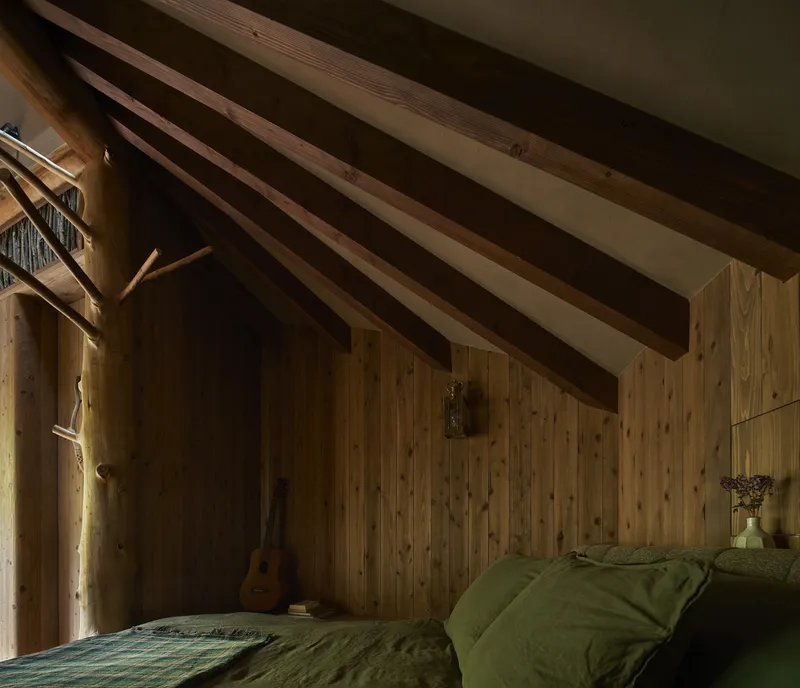
A Shrine-Like Interior Embracing Nature and Spiritual Design
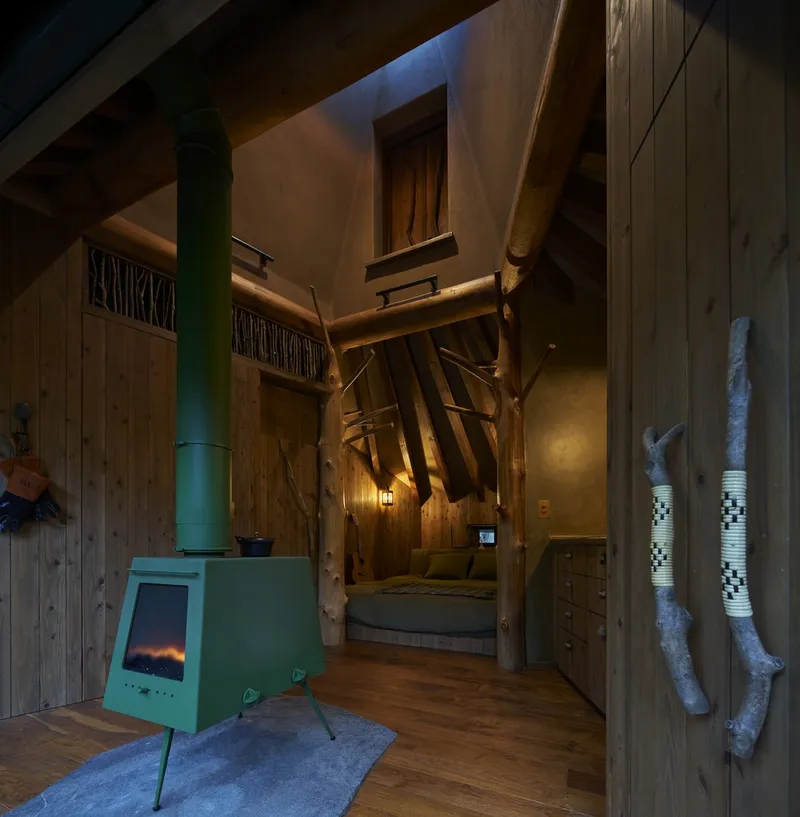
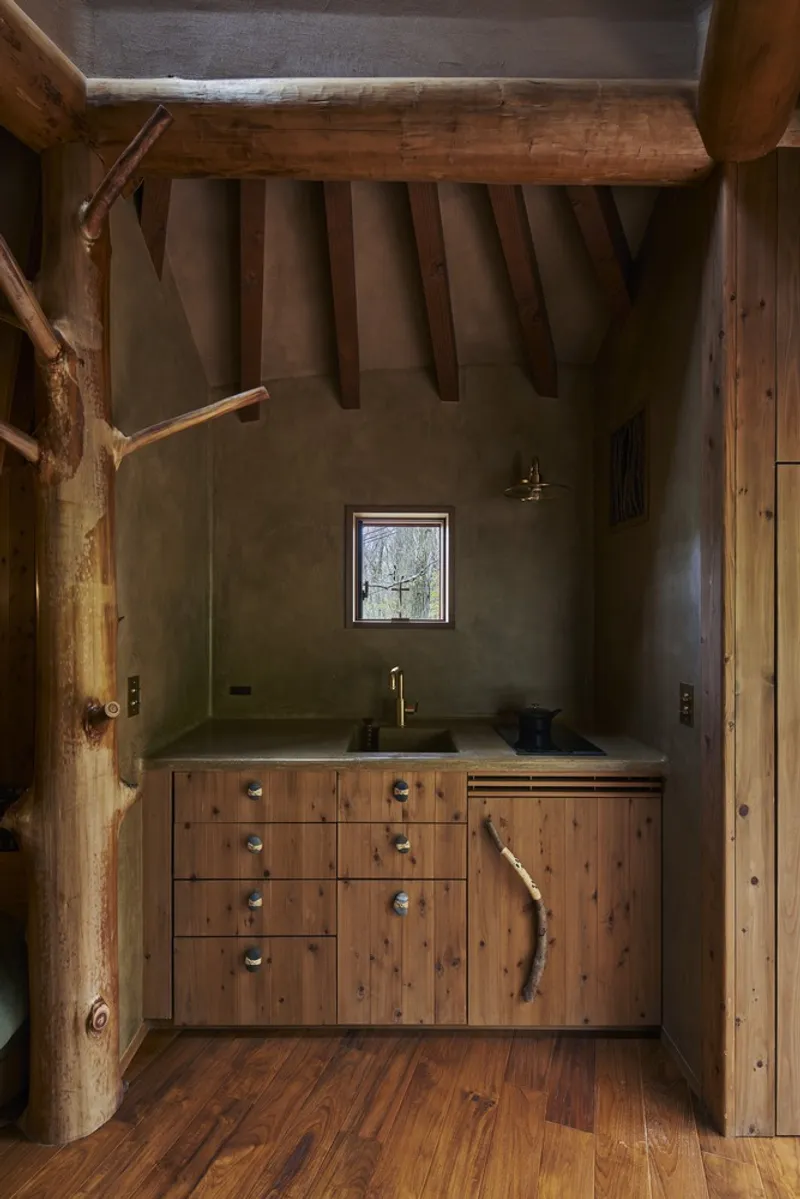
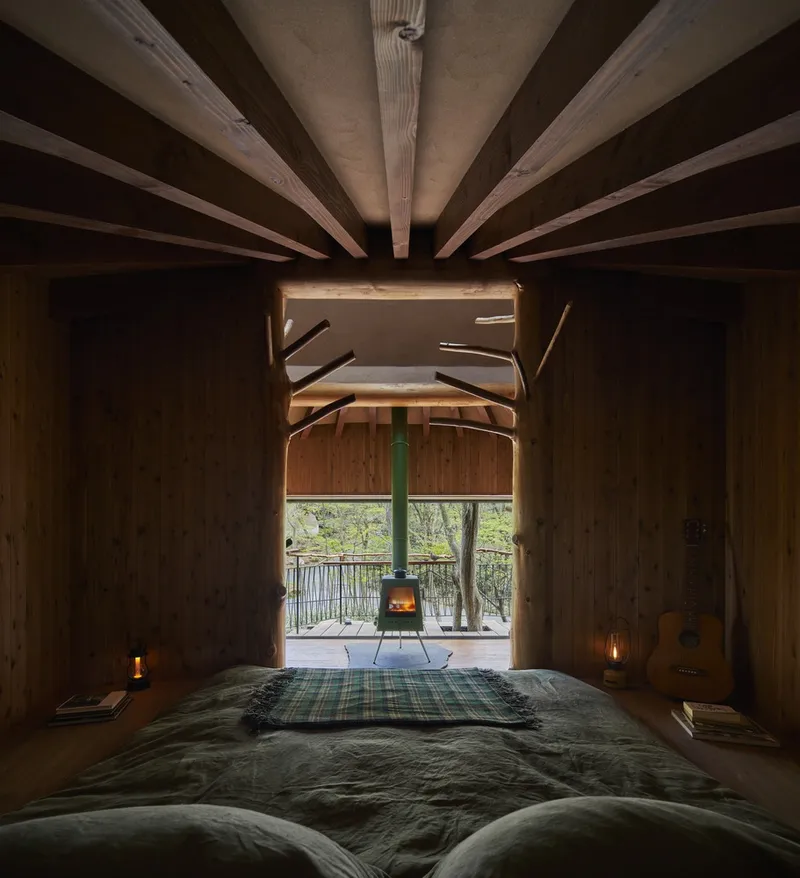
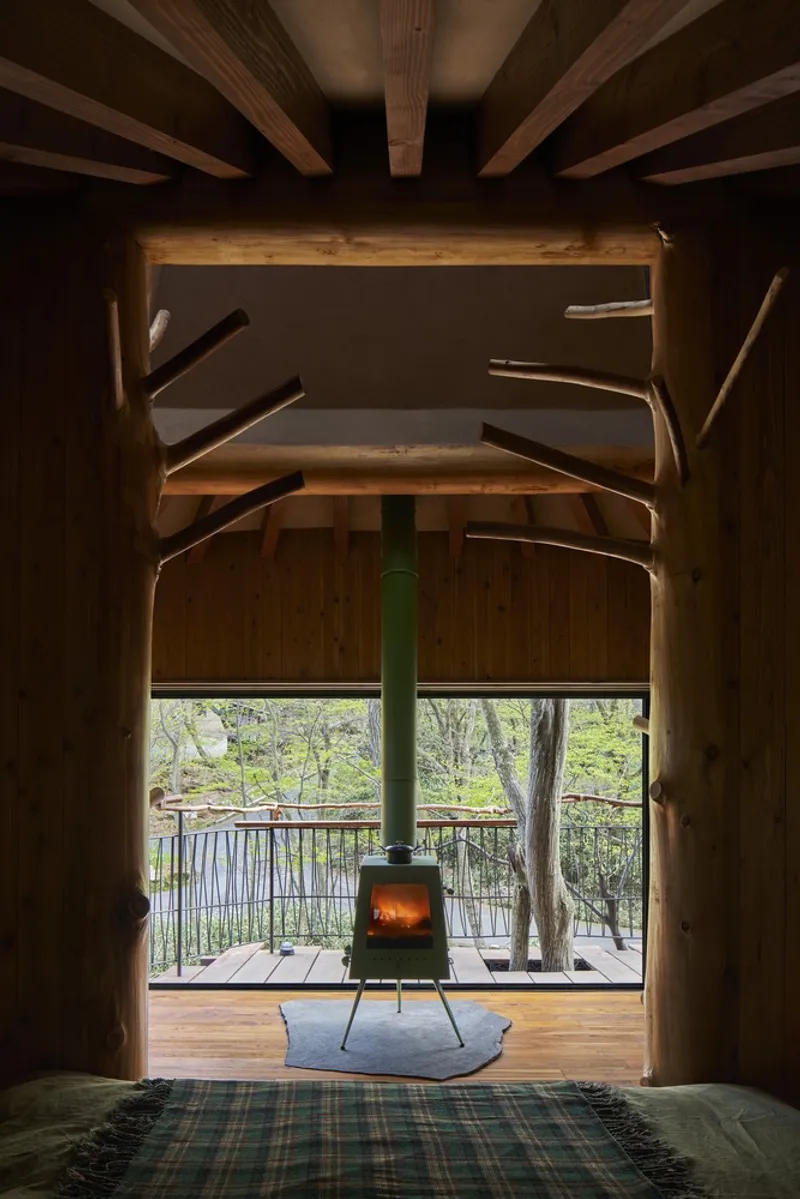
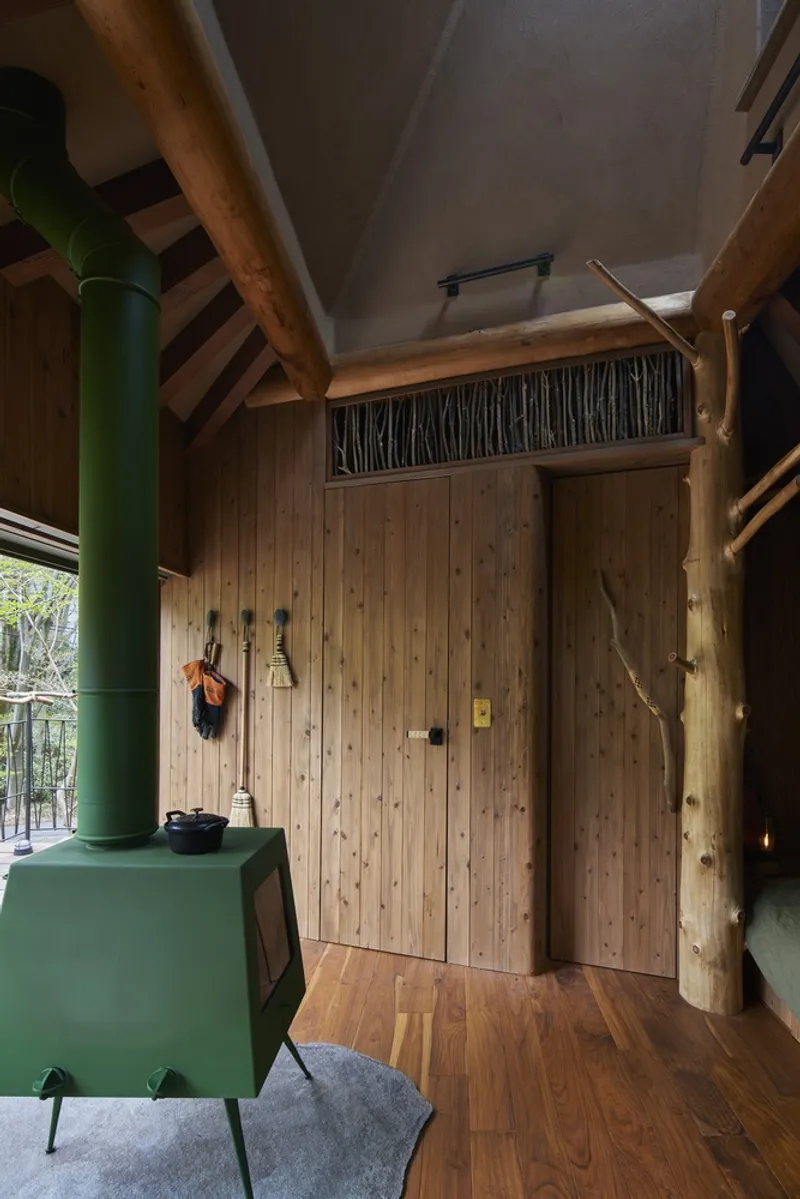
Though small in footprint, the hut’s interior is designed with grandeur of intention. A central 4.9-meter atrium channels light through a skylight, creating a spiritual ambiance. Four timber pillars frame a custom-designed fireplace, which pays homage to the sacred fires of Mt. Kamiyama and the fire rituals of both Buddhist and Shinto traditions.
The trapezoidal floor plan cleverly transforms into a visual square when viewed from within, creating a sense of balance and reverence. Two branched log columns on the northern side subtly reference the traditional torii gates, symbolizing a threshold into a spiritual realm.
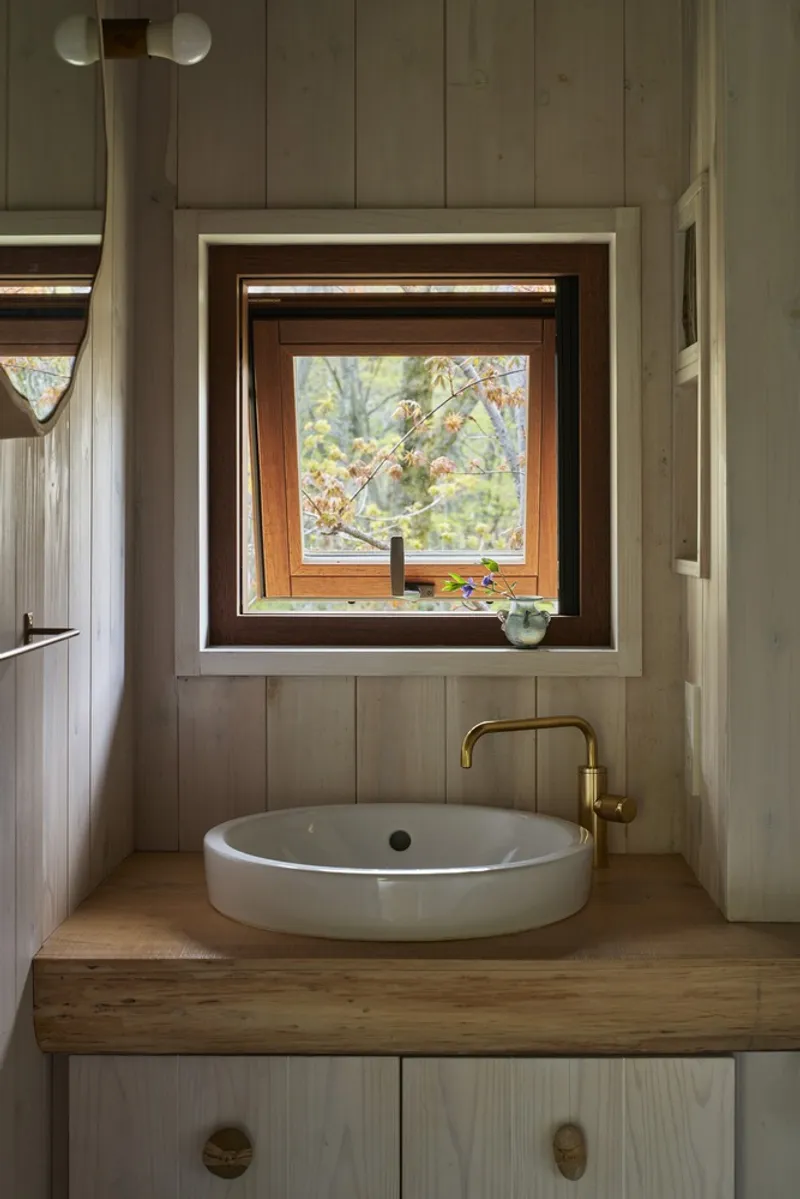
Environmental Design: Tree-Inspired Integration
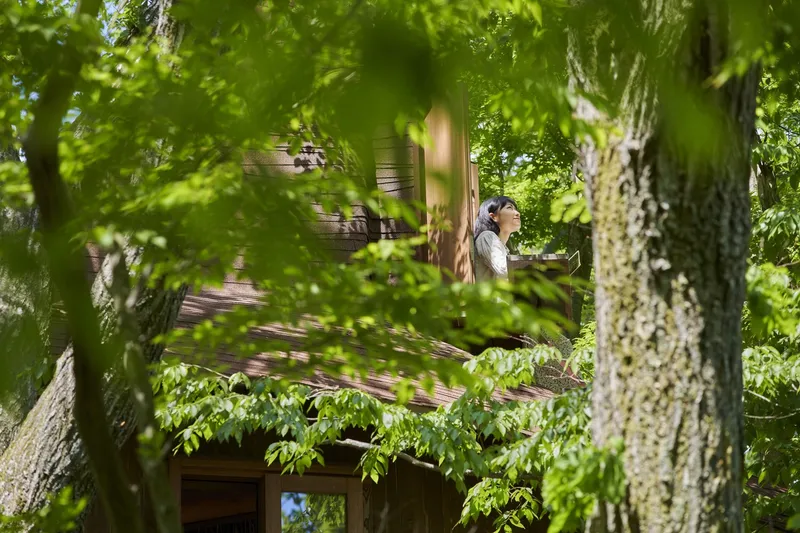
Architecturally, the hut revives the archetype of the treehouse, where human habitation harmonizes with arboreal structures. A dogwood tree grows through the deck, providing shade in summer and allowing sunlight to penetrate in winter after it sheds its leaves. The three supporting columns gently sway with movement and wind, further enhancing the sensation of being among the trees.
Accessed by a forest-blending staircase, the hut becomes part of its surroundings rather than an imposition upon them. The minimalist materials, timber cladding, and elevated stance allow the house to breathe and coexist with the volatile yet fertile landscape shaped by ancient eruptions.
A Reflection on Simplicity and the Art of Reclusion
The Tree Hut on Volcano evokes the philosophies of historical recluses such as Saigyō, Kamo no Chōmei, and Bashō, who sought spiritual clarity in solitude and nature. It also draws parallels to Tao Yuanming and Bai Juyi, whose poetry romanticized the ideals of humble living and detachment from materialism.



Popular Articles
Popular articles from the community


Co-life: Sustainable Architecture for Age-Friendly Community Living
Co-life reimagines sustainable architecture for seniors through courtyards, rammed earth, shared gardens, and spaces designed for belonging.

The Earth Pod: 3D Printed Homes for Resilient Refugee Communities
The Earth Pod reimagines refugee housing through 3D printed homes made from clay, combining resilience, self-sufficiency, and rapid shelter.

The Musturak Paradise: Senior Living Architecture for a Connected Future in Temara, Morocco
The Musturak Paradise reimagines senior living architecture in Temara via private homes, social spaces, culture, community, and shared care.

Play: Fragments of Their World
Familiar architecture becomes modular playground design, creating safe spaces where displaced children can learn, connect, imagine and play.
Similar Reads
You might also enjoy these articles


Hodi-Mandai Geram
Project Function: Preservation and revitalization of the Intangible heritage and socio-spatial identity of the Hodi by Housing, Cultural Memory Center, Sacred Grove, landscape, local tourism economy


Olio Towers: A Mid-Rise for Performers That Fuses Housing, Rehearsal, and Stage
Located blocks from Houston's Theater District, this modular tower stacks living units around a central performance atrium.

Oasis: Modular Green Housing Carved into Dhaka's Urban Fabric
A shortlisted Plugin Housing entry reclaims unauthorized settlements in Dhaka with stepped concrete volumes, green roofs, and ventilation-driven design.

Black Hole: A Floating Megastructure for the Post-Physical Era
Emiliano Mazzarotto envisions a spherical, self-scaling arena where e-sports, digital hotels, and holographic stadiums replace traditional public space.

Explore Tree House Competitions
Discover active competitions in this discipline



Challenge to reimagine the Iron Throne


Photograph architecture without architects


Illustrate the lost glory of Angkor Wat - Render Challenge


Design challenge to reuse E-waste
Comments (0)
Please login or sign up to add comments
No comments yet. Be the first to comment!