
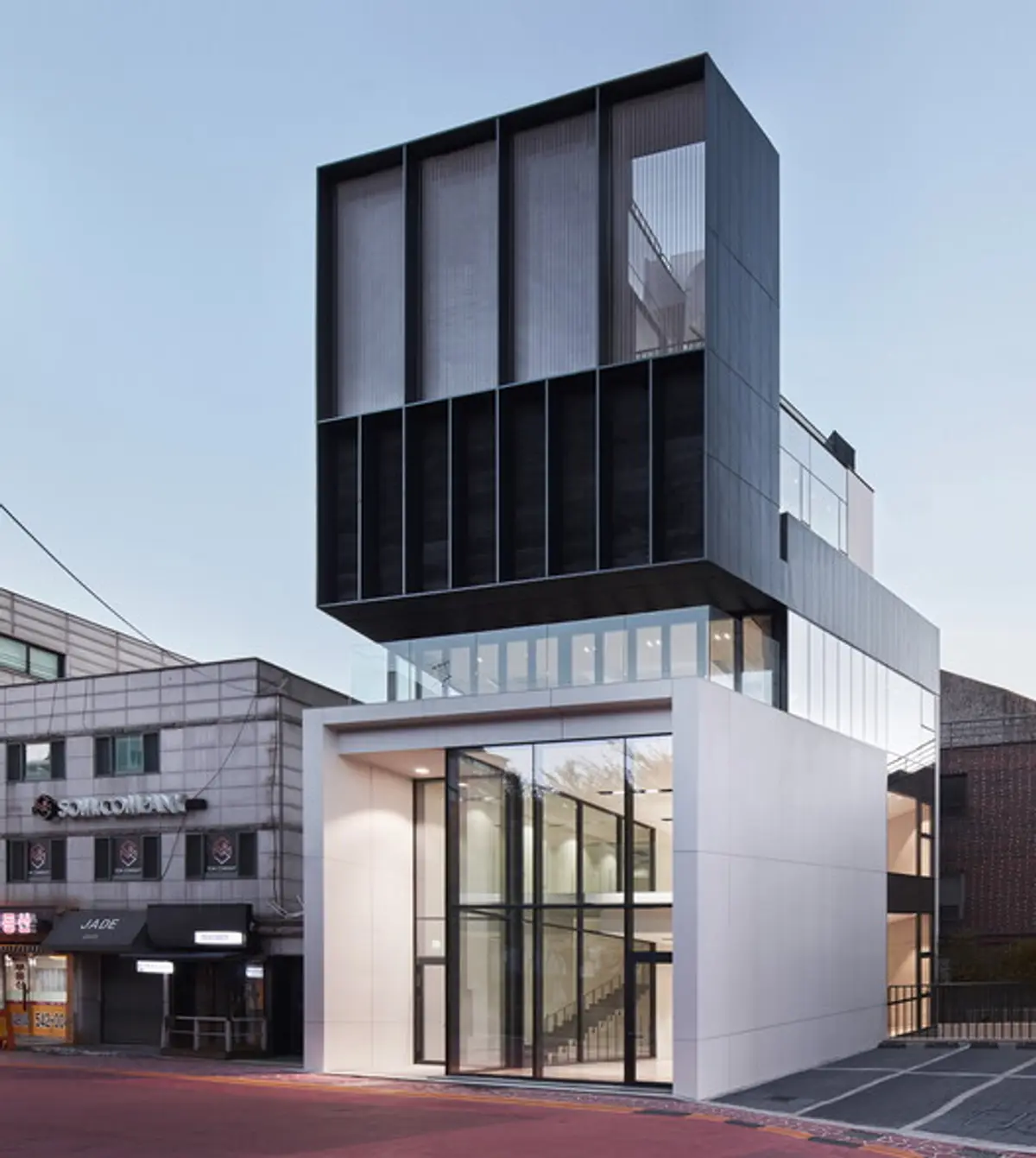
Triplet Code Sinsa Neighborhood Facility by L’EAU design
A vertically layered neighborhood facility in Seoul that guides commercial use through spatial character, balancing openness, privacy, and urban sensitivity.


Completed in 2022 in Sinsa-dong, Seoul, Triplet Code Sinsa Neighborhood Facility by L’EAU design is a carefully calibrated response to the pressures of urban commercialization, gentrification, and neighborhood identity. Positioned at the edge of the vibrant Garosu-gil district, the project navigates a sensitive threshold: where residential calm meets commercial expansion, and where everyday urban life risks being overshadowed by trend-driven development.
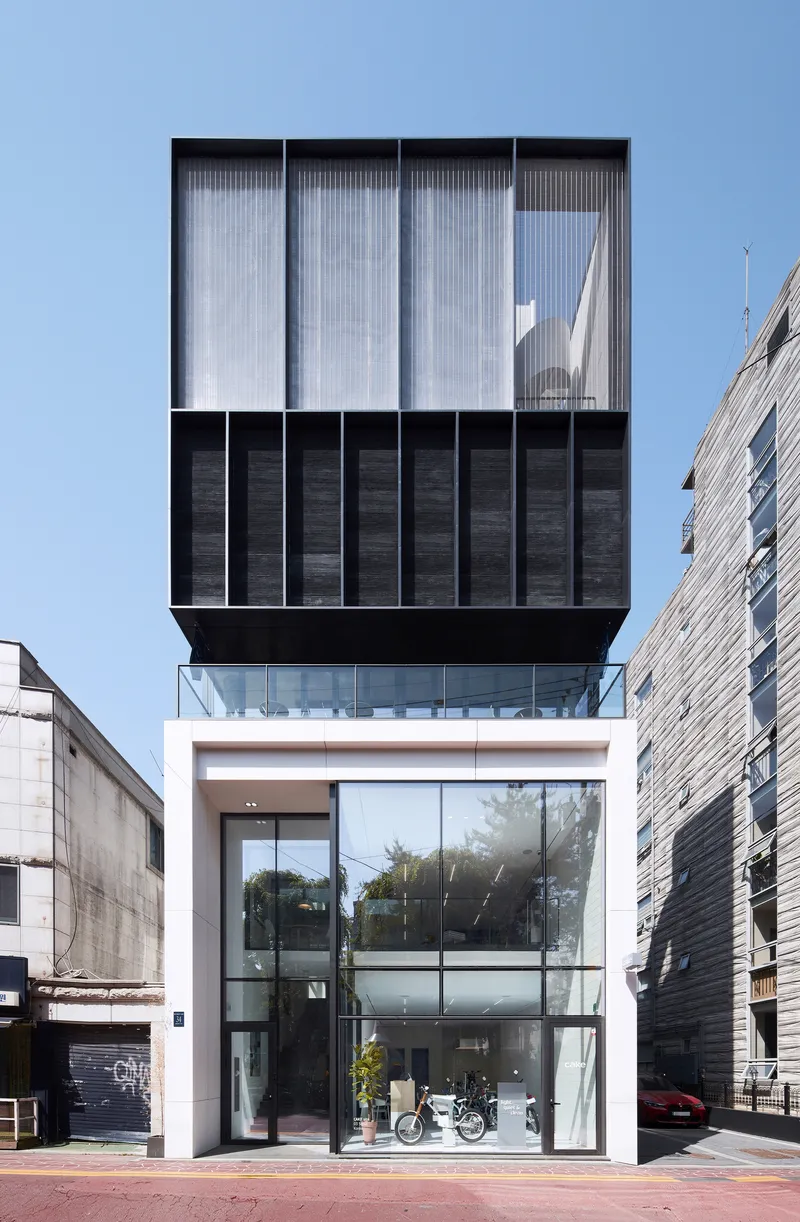
Rather than imposing a fixed program, the architects conceived Triplet Code as a spatial framework—one that interprets existing urban conditions and guides future uses through architectural character. The result is a vertically stratified building whose form, openness, and spatial atmosphere change floor by floor, attracting compatible programs while maintaining harmony with its surroundings.
Urban Context: Between Neighborhood Life and Commercial Pressure
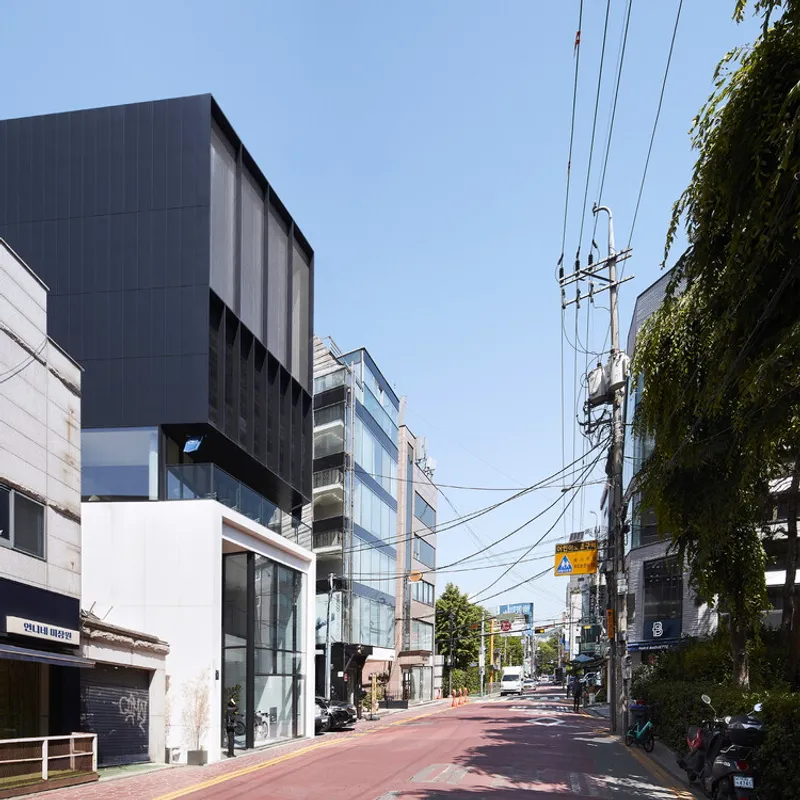
The site occupies a prominent yet delicate position at the end of Serosu-gil, directly facing a small neighborhood park. An elementary school sits adjacent, and low-rise neighborhood shops extend from Garosu-gil into the surrounding back alleys. According to Clarence Perry’s Neighborhood Unit theory, the three essential elements for a livable residential area—a school, neighborhood commerce, and green space—are all present.
On paper, the area appears ideal. In reality, however, Garosu-gil’s rapid commercialization has gradually intensified pressure on nearby residential zones. Trend-driven retail and hospitality spaces have expanded outward, accelerating gentrification and altering the everyday rhythms of local life.
Triplet Code Sinsa emerges precisely at this intersection. Instead of amplifying commercial intensity indiscriminately, L’EAU design sought to mediate between neighborhood stability and economic vitality, using architecture to subtly regulate how commerce inhabits the site.
Designing Without a Fixed Program
As a neighborhood commercial facility, the building faced a common challenge: uncertainty of future tenants. Rather than designing for a specific brand or use, the architects focused on creating differentiated spatial conditions that would naturally attract certain types of programs to specific floors.
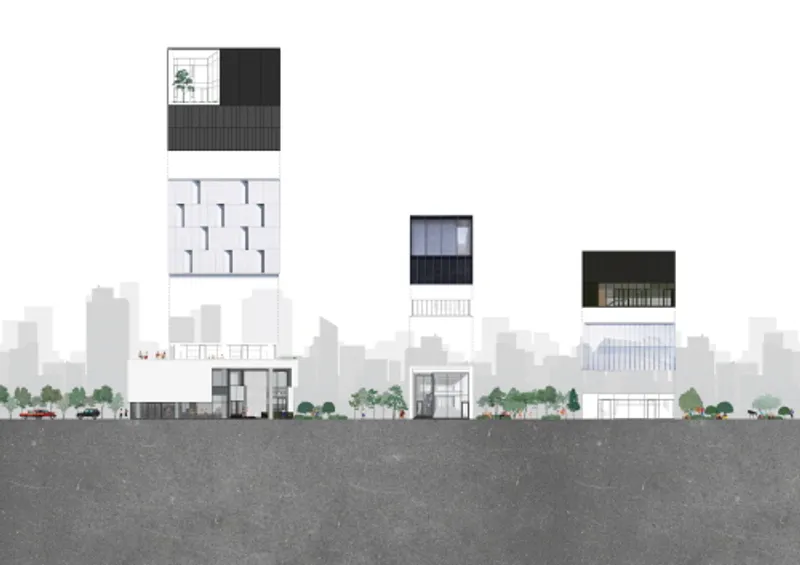
This approach led to the concept of the “Triplet Code”—a three-part vertical composition consisting of lower, middle, and upper zones, each with its own architectural language, degree of openness, and relationship to the street and park.
The building does not dictate function; instead, it codes behavior through space, allowing architecture to guide occupation over time.
The Lower Zone: Transparency, Openness, and Public Engagement
The lower floors form the most public-facing component of the building. Given the exceptional condition of facing a neighborhood park, the architects resisted the conventional approach of limiting openness to the ground floor alone.
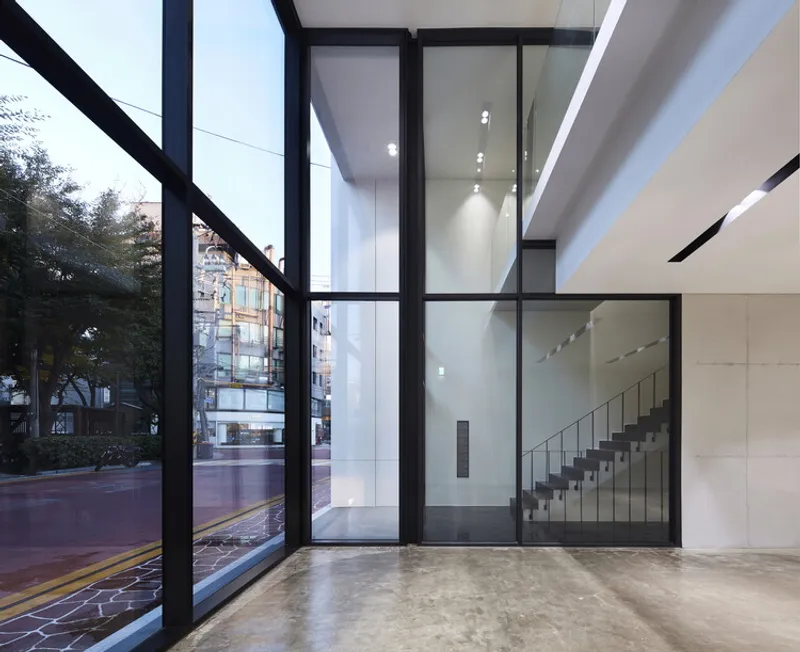
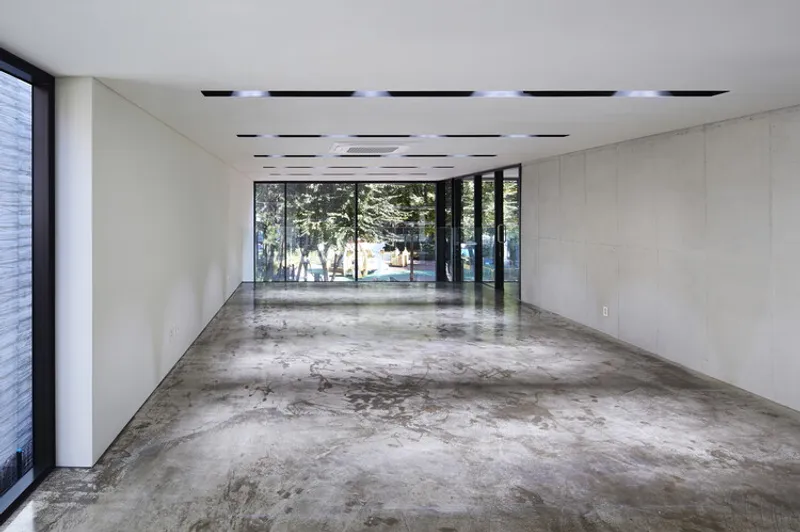
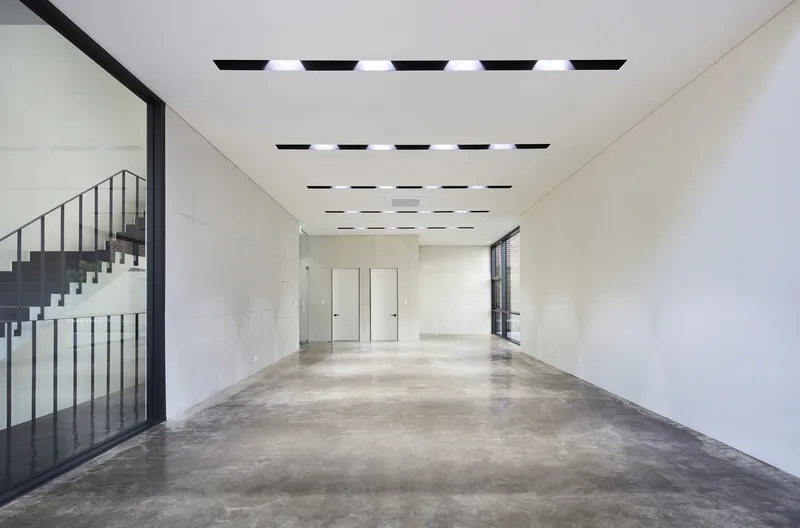
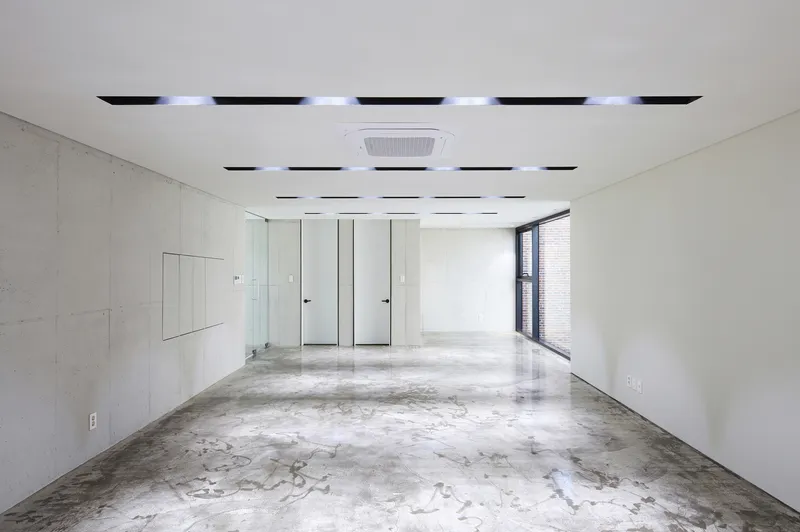
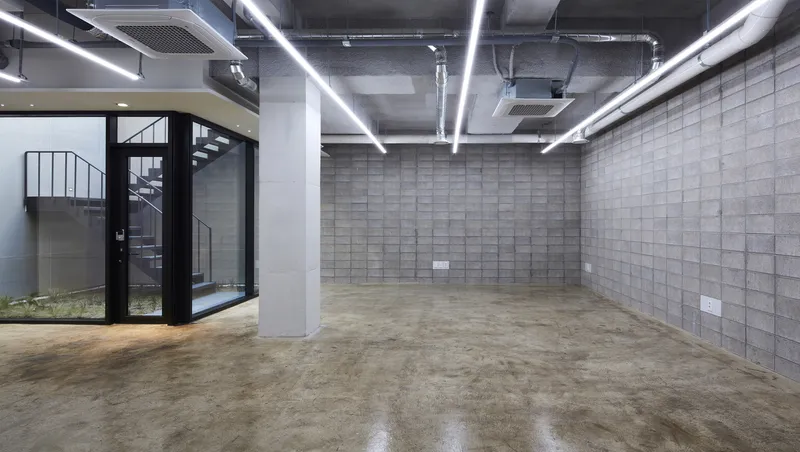
Instead, they created a double-height volume spanning the first floor and a mezzanine level on the second floor. This generous vertical space opens fully toward the park through full-height glazing, allowing daylight to penetrate deep into the interior and visually extending the park into the building.
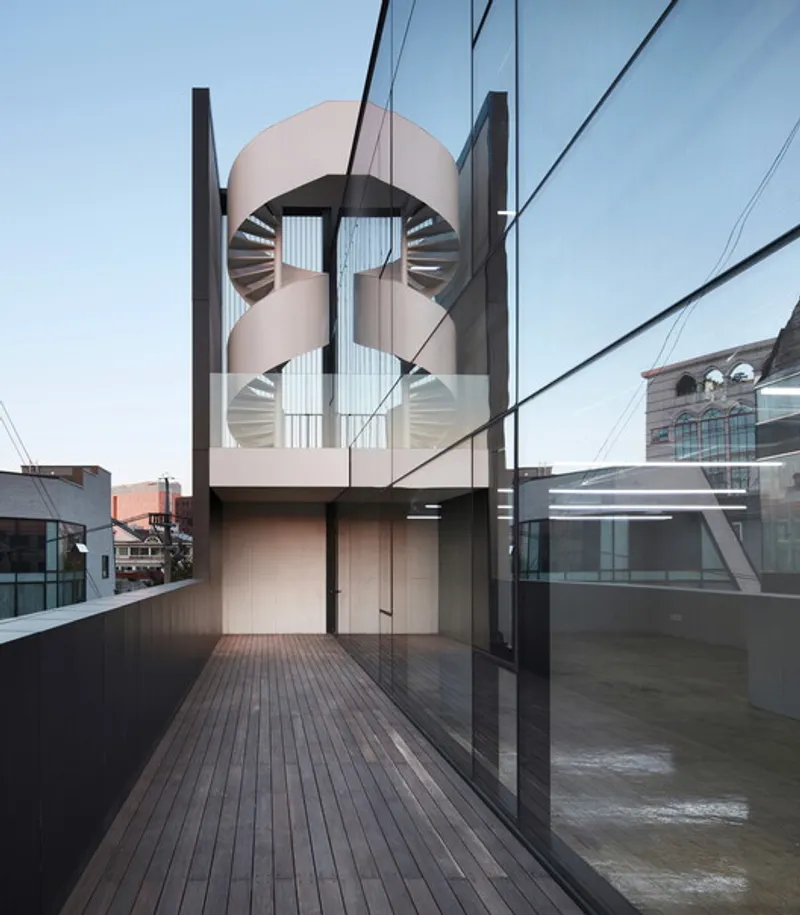
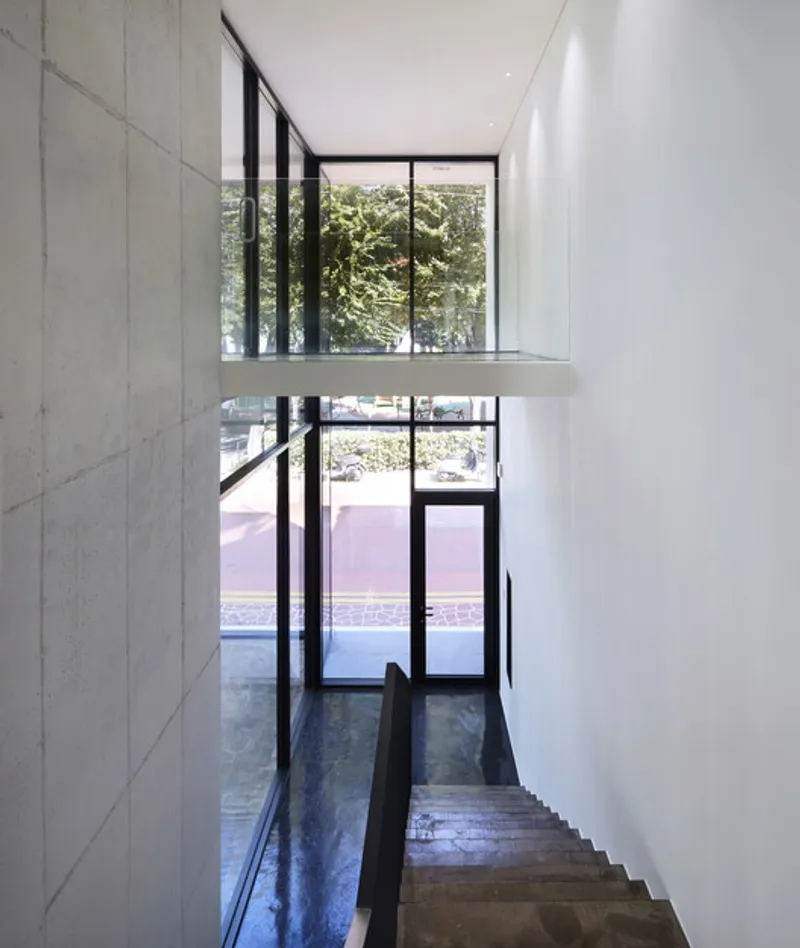
The lower zone was envisioned as a showroom or exhibition-oriented space, capable of hosting displays, events, or cafés that benefit from visual permeability and pedestrian engagement. By elevating the ceiling height and expanding transparency, the building establishes an active dialogue between interior activity and the public realm.
Movement as Spatial Experience
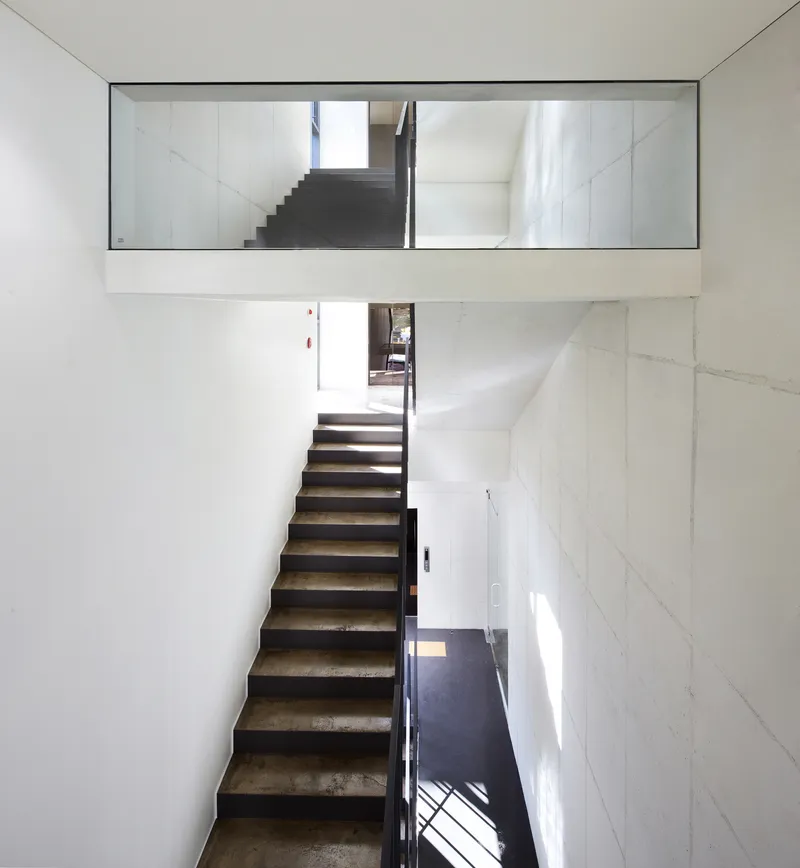
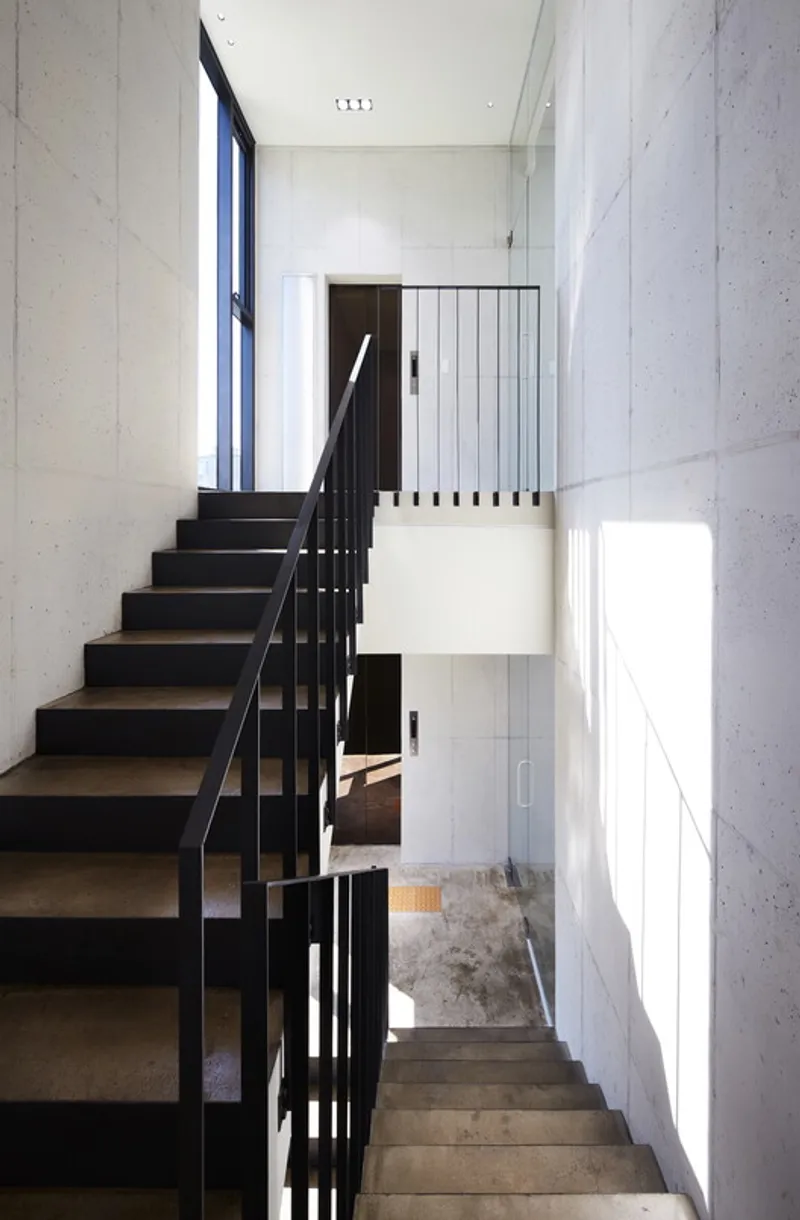
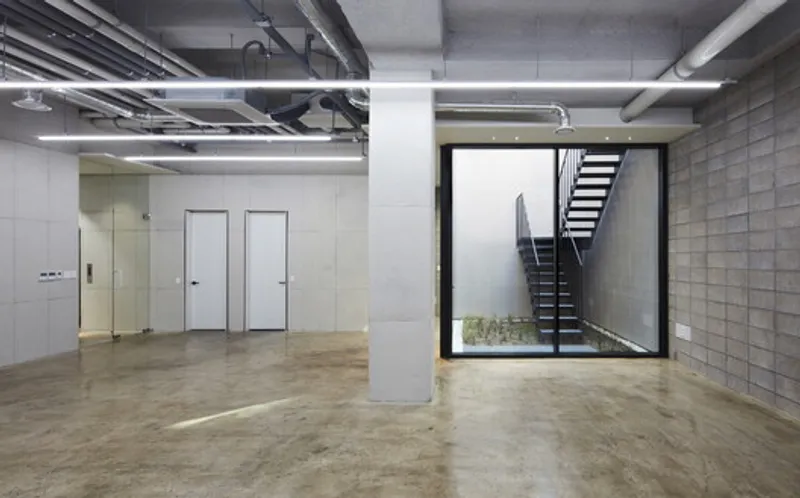
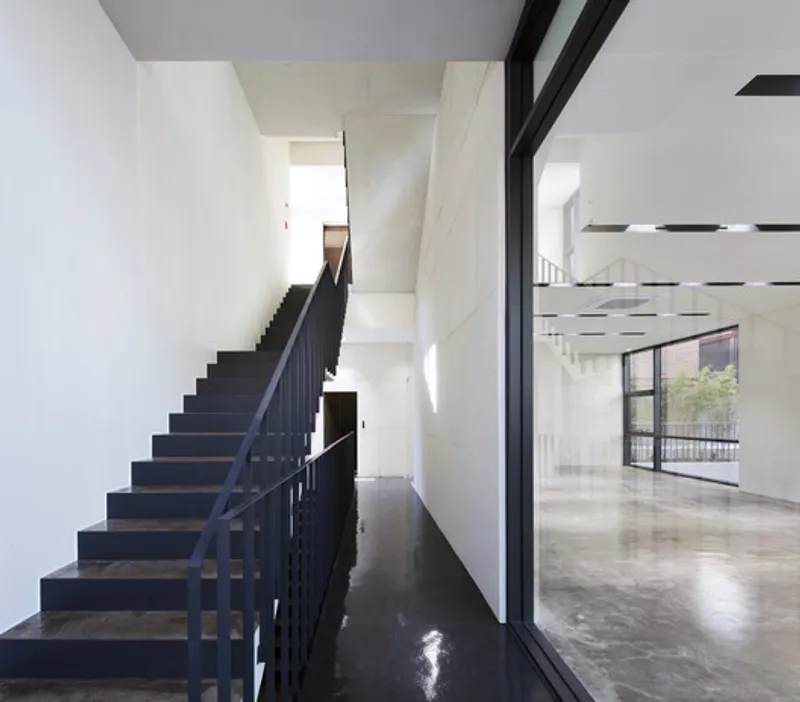
A straight-run staircase hall was introduced as a key organizing element within the lower volume. Positioned to maximize views toward the park, the staircase becomes more than circulation—it is a spatial promenade.
From inside, occupants experience a continuous visual connection to greenery and street life. From outside, the tall, transparent entrance and visible stair create an inviting threshold, naturally drawing pedestrians into the building. Architecture here operates as urban invitation, not enclosure.
The Middle Zone: Transition, Terrace, and Contrast
The third floor functions as a critical mediating layer between the openness below and the more introverted spaces above. Architecturally and programmatically, it is a zone of transition.
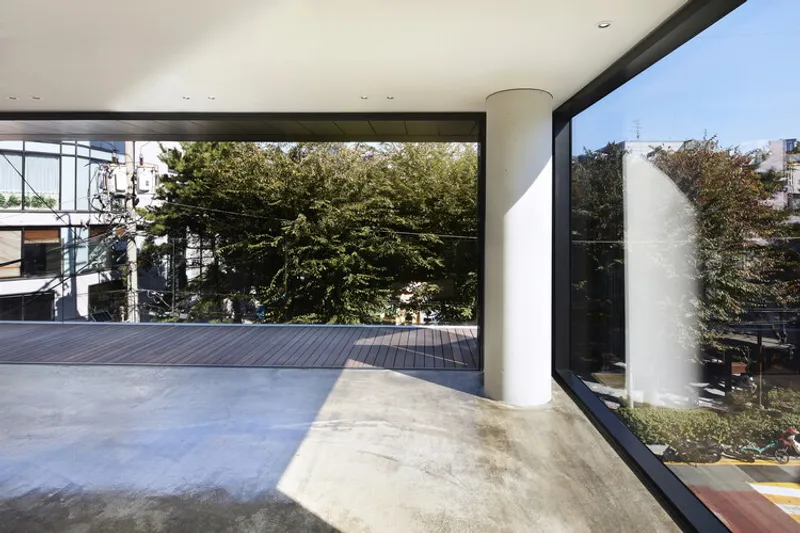
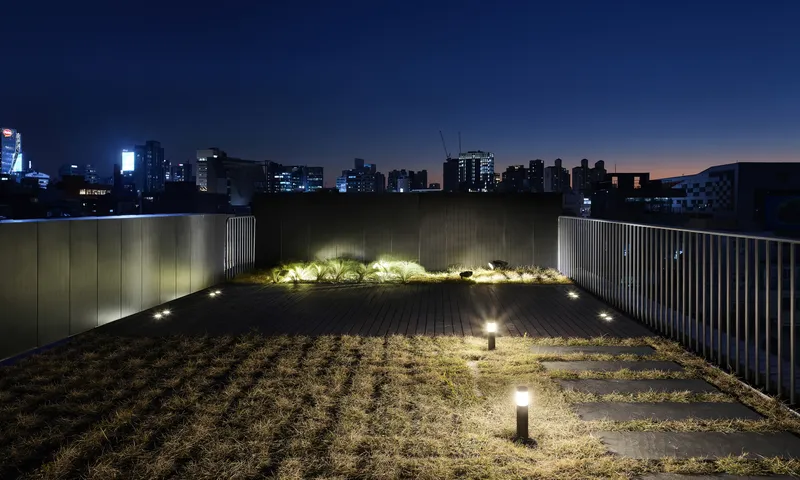
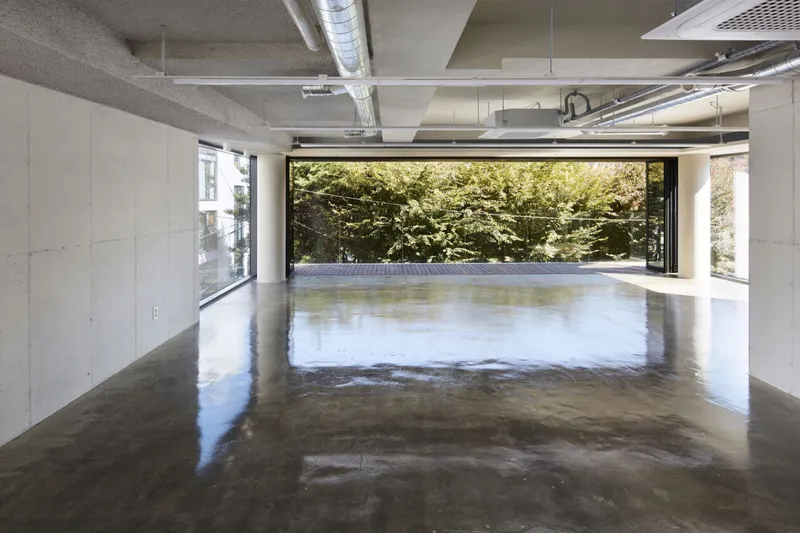
This floor features a generous terrace facing the park, which can be fully opened using folding glass doors. The terrace introduces outdoor space into the building’s midsection, offering flexibility for cafés, lounges, or hybrid commercial uses.
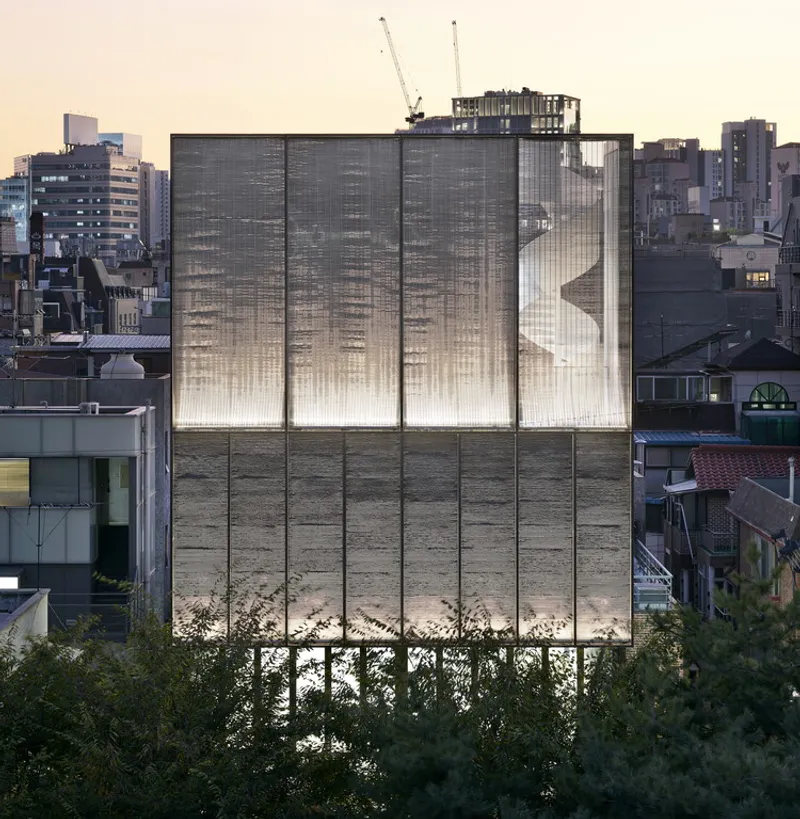
The deep shadows cast by the terrace emphasize the contrast between volumes: the lighter, transparent lower zone and the darker, heavier upper mass. This layered composition reinforces the building’s vertical reading while allowing each level to maintain its own identity.
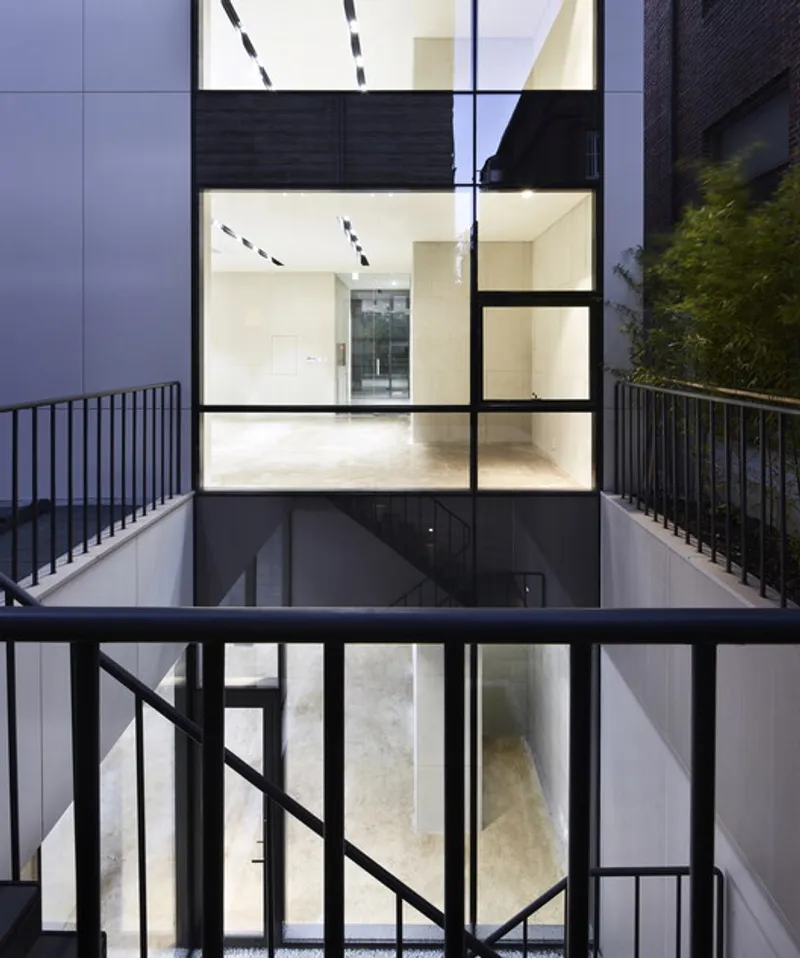
From the third floor, occupants enjoy elevated views across the park, experiencing a sense of retreat without disconnection from the neighborhood below.
The Upper Zone: Privacy, Work, and Inward Focus
The fourth and fifth floors form the building’s most private zone, designed primarily for office use. Due to diagonal height restrictions and neighboring buildings, these floors are set back, creating buffer spaces and opportunities for terraces.
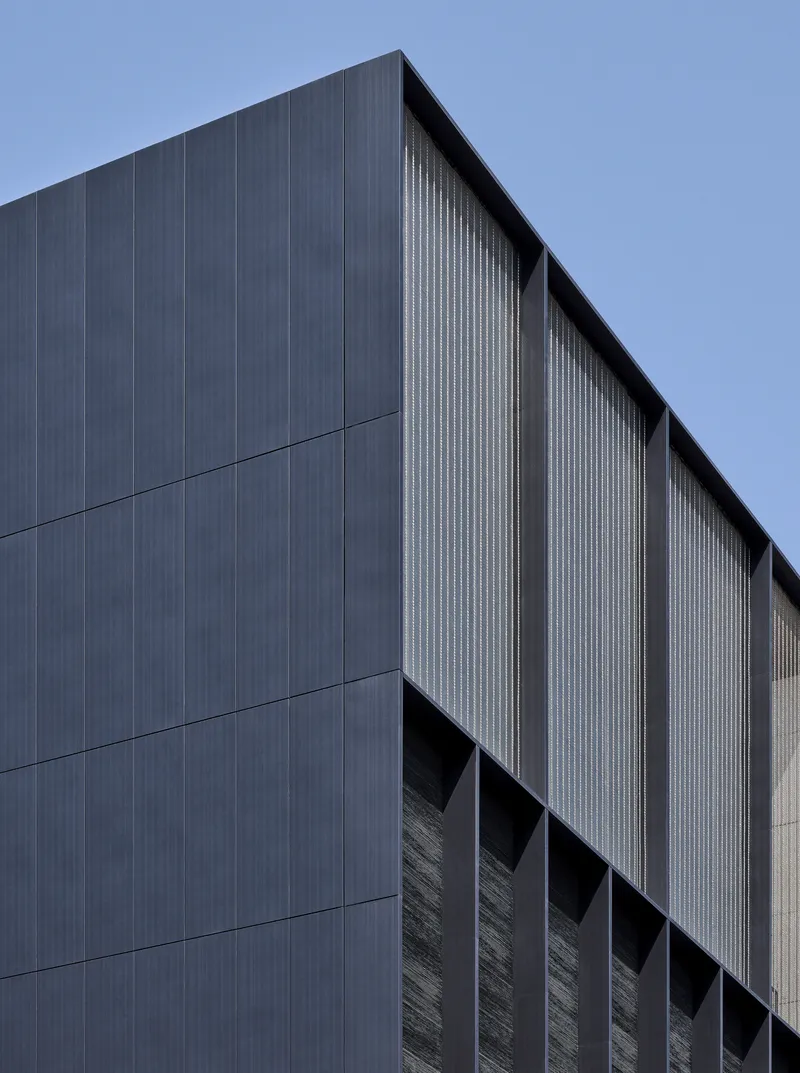
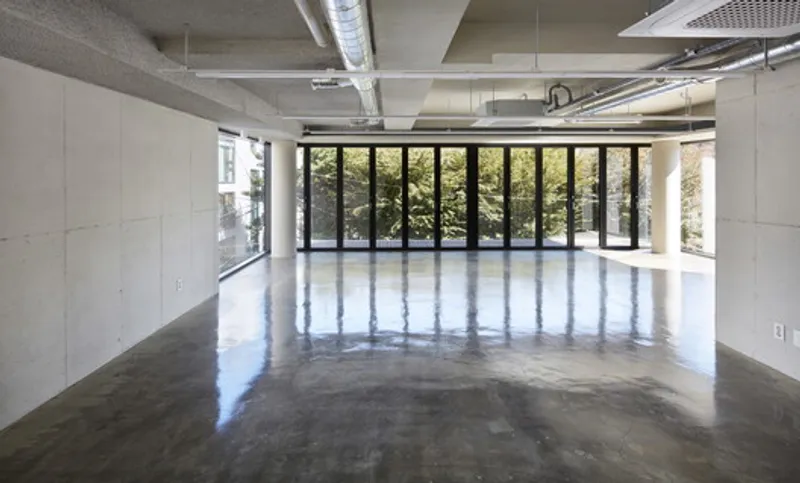
Unlike the transparent lower levels, the upper zone is deliberately closed toward the street and opens instead to the north through inward-facing terraces. This inversion creates a quieter, more focused environment suitable for workspaces, studios, or duplex-style offices.
Intimate terraces encourage informal interaction, breaks, and outdoor work moments, while maintaining privacy from the street below. The contrast between openness and enclosure across the building’s height reinforces the Triplet Code’s core idea: each level responds differently to its urban context.
Façade Strategy: Curiosity and Controlled Exposure
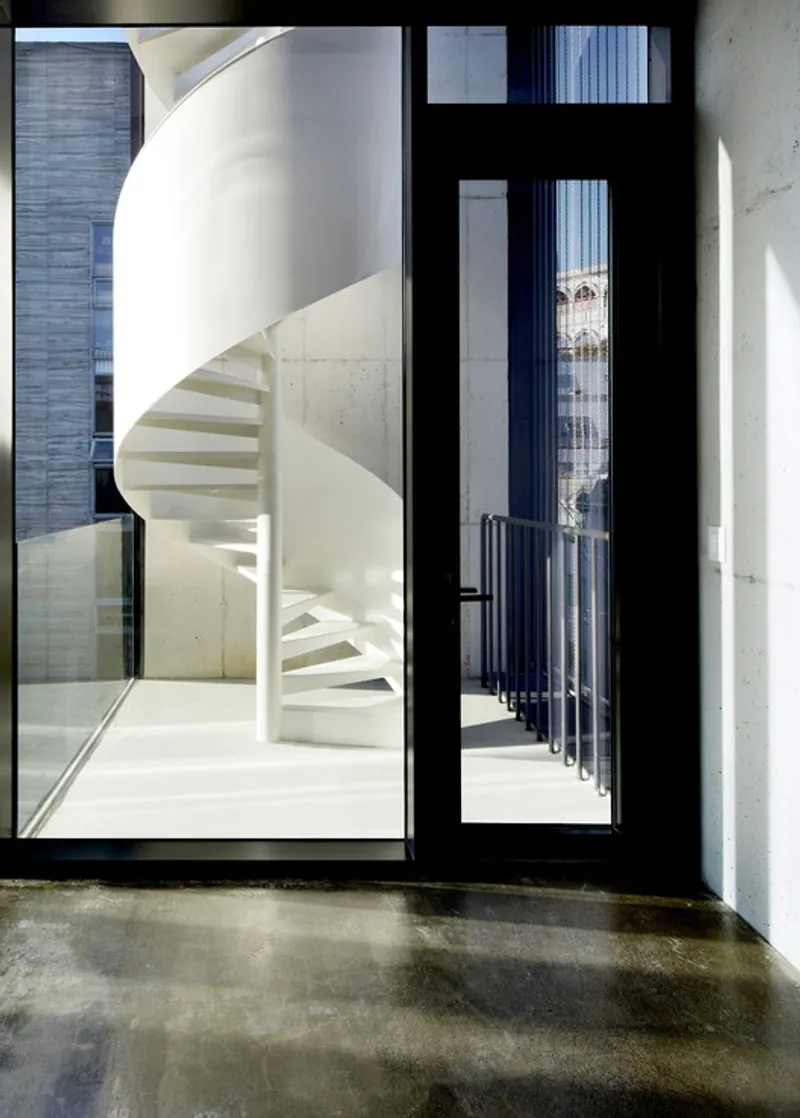
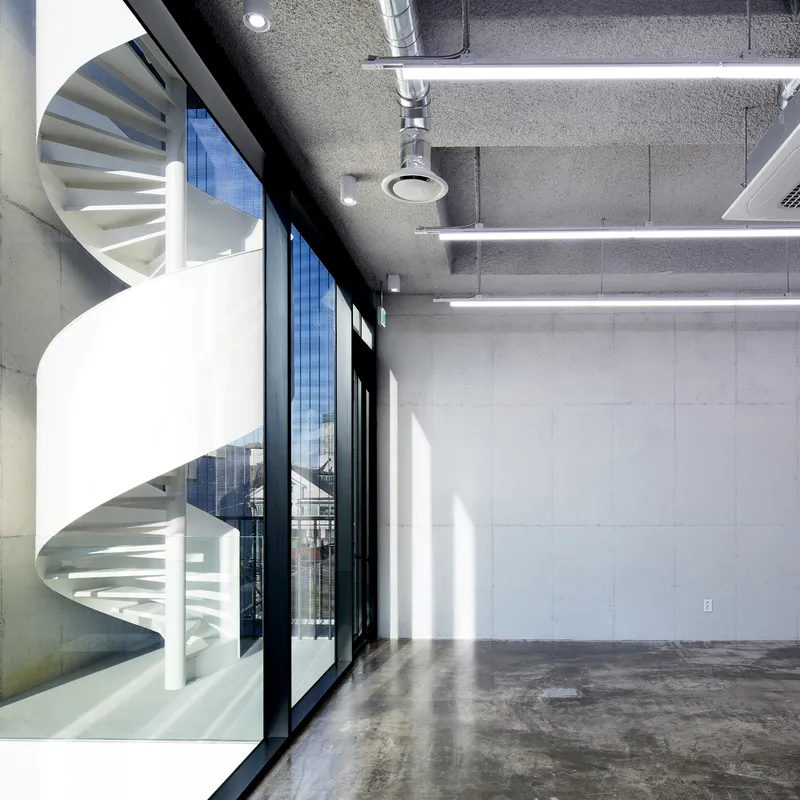
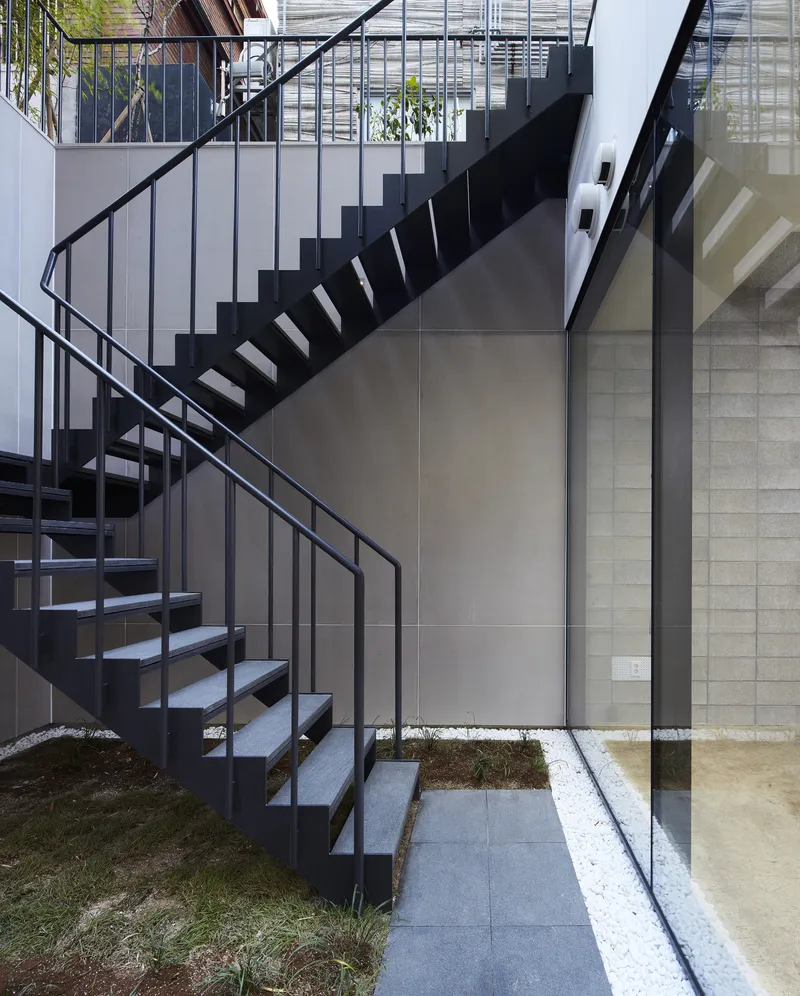
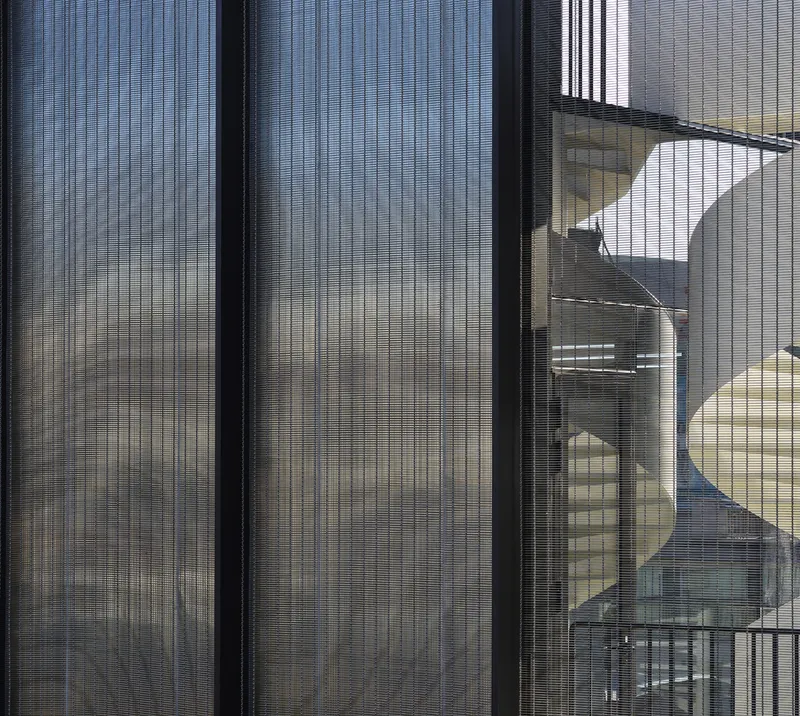
The metal façade of the upper floors appears solid at first glance, reinforcing the sense of mass and privacy. However, subtle openings reveal glimpses of the rooftop terrace and the curved volume of a spiral staircase.
These moments of partial exposure introduce curiosity and depth, hinting at hidden spaces within. Rather than relying on overt transparency, the façade operates through controlled revelation, inviting closer observation without fully disclosing its interior.
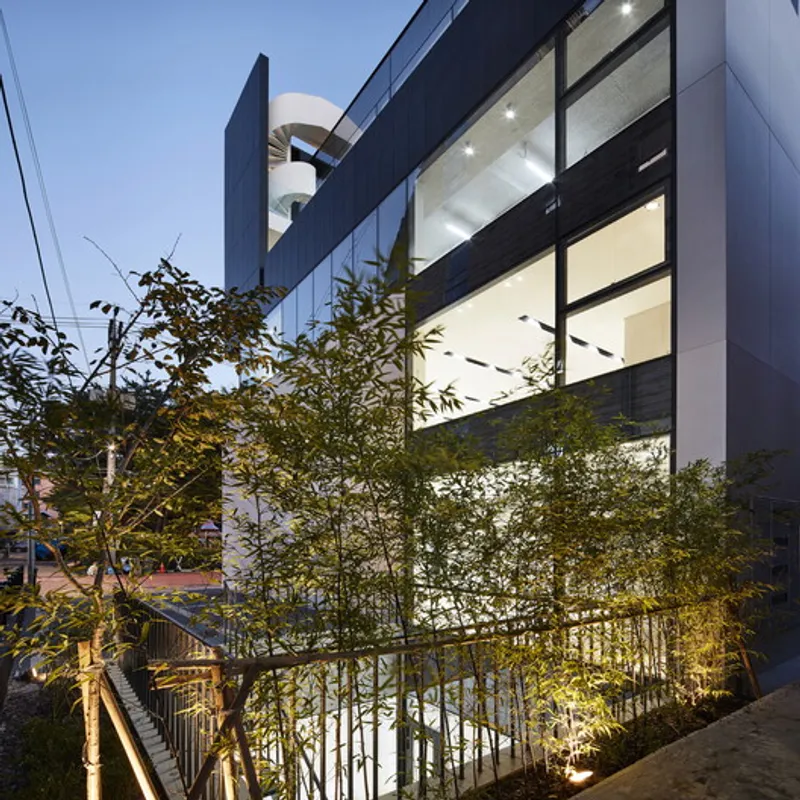
This strategy balances neighborhood sensitivity with architectural expression, ensuring the building remains visually engaging without overwhelming its surroundings.
Flexibility as a Core Design Principle
From the outset, L’EAU design prepared two parallel leasing strategies:
- Vertical division, allowing different tenants to occupy the lower, middle, and upper zones independently
- Single-tenant occupation, enabling one brand or company to inhabit the entire building
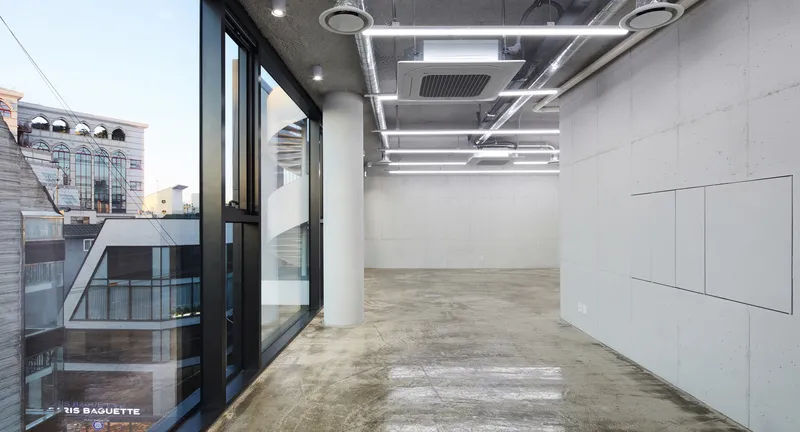
This flexibility ensured the building could adapt to market conditions without compromising architectural intent.
In a fortunate alignment with the original concept, the completed building was leased to a company launching its first electric motorcycle showroom. The lower floors became the display and exhibition space, the third floor a café, and the upper floors offices—perfectly matching the intended spatial hierarchy.
This outcome underscores the project’s success: the architecture did not enforce a program, yet it naturally guided occupation toward a coherent and functional arrangement.
A Three-Part Vertical Composition
Triplet Code Sinsa’s strength lies in its clarity of vertical organization:
- Lower zone: open, transparent, public-facing
- Middle zone: transitional, flexible, semi-open
- Upper zone: private, inward-looking, contemplative
Each layer reacts differently to the park, street, and neighboring buildings, forming an organic stacked composition that responds sensitively to its context.
Rather than a monolithic commercial block, the building reads as a layered urban device, capable of absorbing change while maintaining spatial coherence.
Architecture as Urban Mediator
In a district facing rapid transformation, Triplet Code Sinsa does not attempt to resist commercialization outright, nor does it accelerate it blindly. Instead, it positions architecture as a mediating force, shaping how commerce enters a residential neighborhood.
By calibrating openness, scale, and program vertically, the project demonstrates how small- to mid-scale commercial architecture can contribute positively to urban life—supporting economic activity while respecting everyday residential rhythms.
All the Photographs are works of Yongkwan Kim


Popular Articles
Popular articles from the community


Play: Fragments of Their World
Familiar architecture becomes modular playground design, creating safe spaces where displaced children can learn, connect, imagine and play.

Co-life: Sustainable Architecture for Age-Friendly Community Living
Co-life reimagines sustainable architecture for seniors through courtyards, rammed earth, shared gardens, and spaces designed for belonging.

ALGAL REALM: A Bio-Integrated Lunar Habitat Design for Life Beyond Earth
ALGAL REALM reimagines lunar habitat design with algae-powered life support, 3D-printed regolith, and vertical living for a lunar future.

The Ocean Hive: Sustainable Architecture for a Self-Sufficient Civilization at Sea
The Ocean Hive imagines sustainable architecture at sea, where modular habitats, algae, wave power and ocean waste sustain a growing colony.

Similar Reads
You might also enjoy these articles


Hodi-Mandai Geram
Project Function: Preservation and revitalization of the Intangible heritage and socio-spatial identity of the Hodi by Housing, Cultural Memory Center, Sacred Grove, landscape, local tourism economy


Olio Towers: A Mid-Rise for Performers That Fuses Housing, Rehearsal, and Stage
Located blocks from Houston's Theater District, this modular tower stacks living units around a central performance atrium.

Oasis: Modular Green Housing Carved into Dhaka's Urban Fabric
A shortlisted Plugin Housing entry reclaims unauthorized settlements in Dhaka with stepped concrete volumes, green roofs, and ventilation-driven design.

Black Hole: A Floating Megastructure for the Post-Physical Era
Emiliano Mazzarotto envisions a spherical, self-scaling arena where e-sports, digital hotels, and holographic stadiums replace traditional public space.

Explore Residential Building Competitions
Discover active competitions in this discipline

Challenge to design mud housing for contemporary communities

Challenge to reimagine the Iron Throne

Photograph architecture without architects

Illustrate the lost glory of Angkor Wat - Render Challenge
Comments (0)
Please login or sign up to add comments
No comments yet. Be the first to comment!