
Tripolis Park by MVRDV: Revitalizing Structuralist Heritage with Sustainable Urban Design
Tripolis Park revitalizes Aldo van Eyck’s Structuralist offices with sustainable design, a new landscraper, restored façades, and vibrant green collaborative spaces.


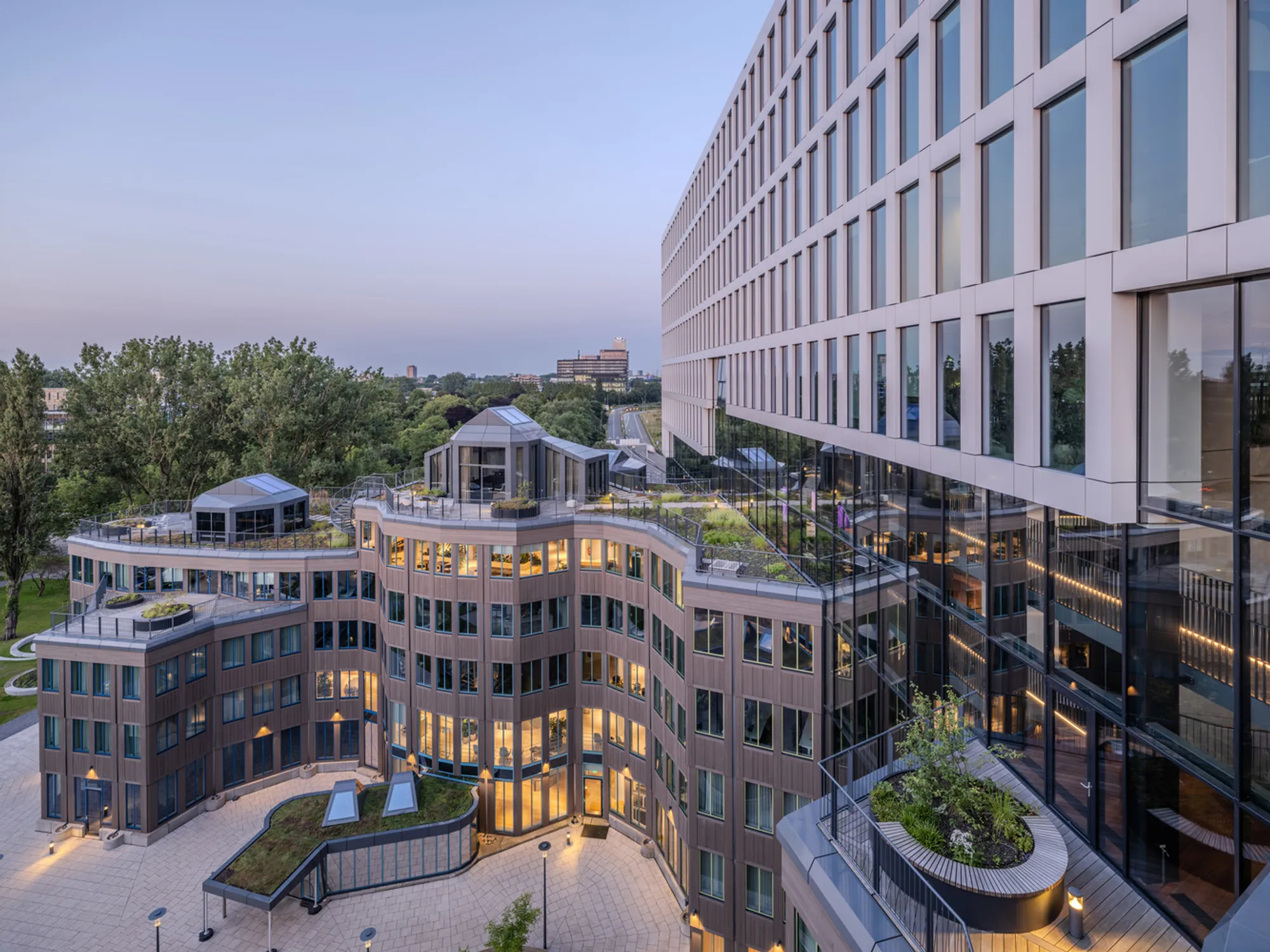
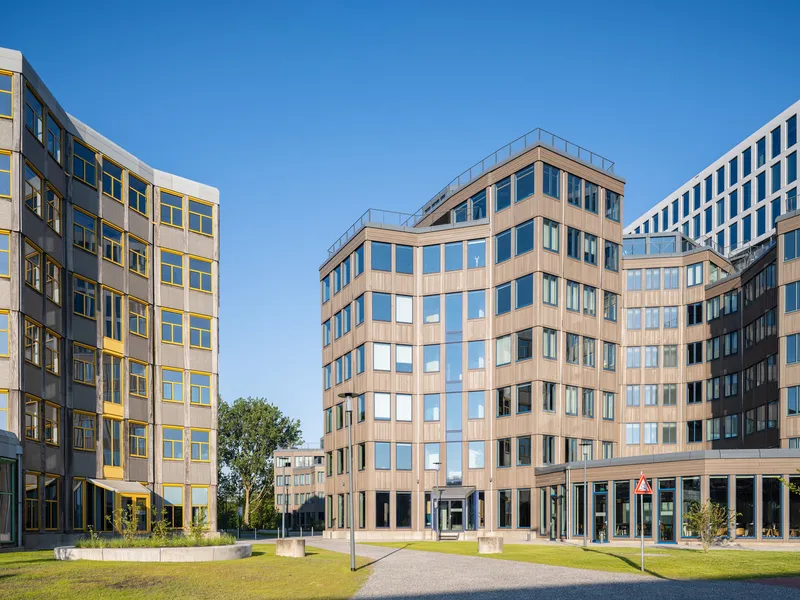
Tripolis Park in Amsterdam represents a transformative architectural intervention where MVRDV breathes new life into Aldo and Hannie van Eyck’s iconic Structuralist office complex. Completed in 2023, the 61,000 m² redevelopment blends heritage preservation, contemporary workplace design, and high-performance sustainability to create a vibrant new office campus along the Zuidas.
A Historic Dialogue with Aldo van Eyck’s Legacy
The story of Tripolis Park is deeply rooted in its relationship with the 1960 Amsterdam Orphanage—an architectural masterpiece of the Structuralist movement. When the orphanage was threatened with demolition in the 1980s, the municipality offered the adjacent land for development with the condition that the Van Eycks design the new office structures. Completed in 1994 as a trio of sculptural buildings, Tripolis became the symbolic protector of the orphanage.
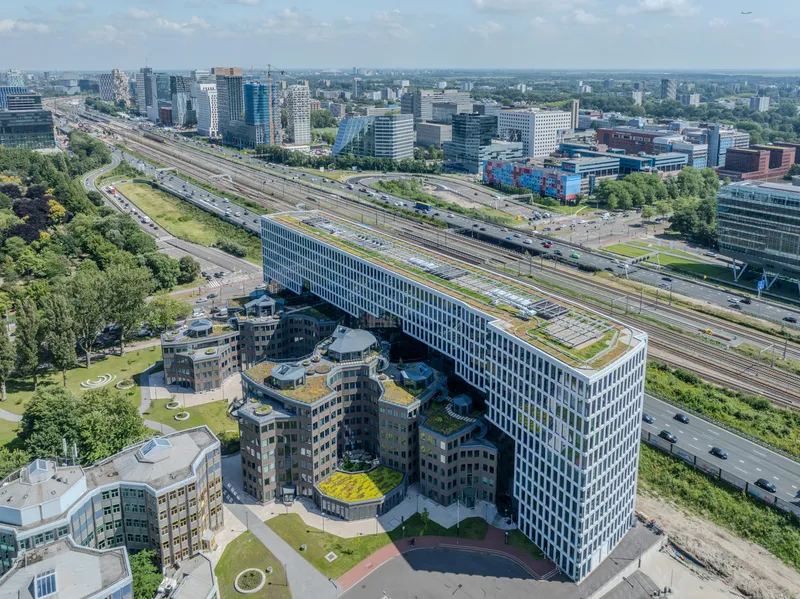
Decades later, however, the original complex faced new challenges: a lack of commercial viability, long-term vacancy, and threats posed by the planned expansion of the A10 highway. As with the orphanage before it, Tripolis required a sensitive yet forward-looking intervention to secure its future.
Restoration “One Step Better” Than the Original
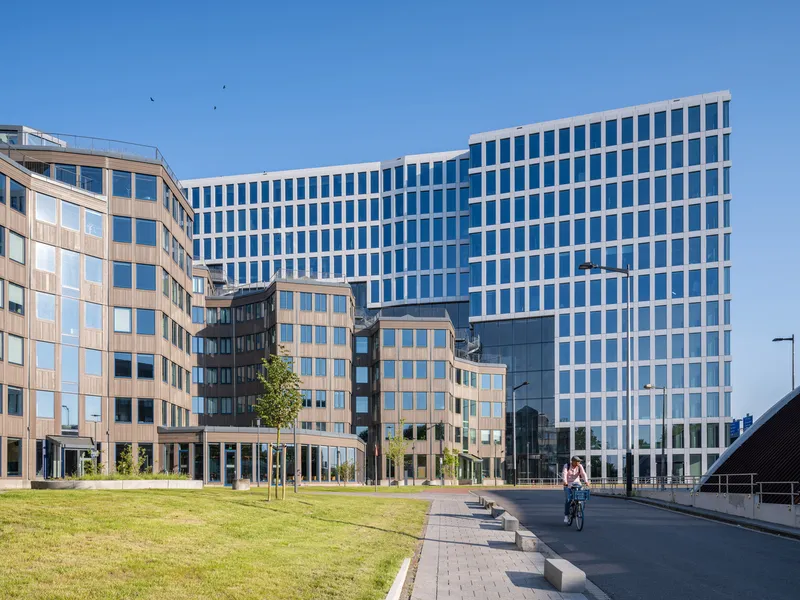
MVRDV’s design builds on extensive archival research and collaboration with the Van Eyck family. Rather than recreating the 1990s version, the architects restored the buildings to match Aldo van Eyck’s early design intentions—“one step better” than the original execution.
Key interventions include:
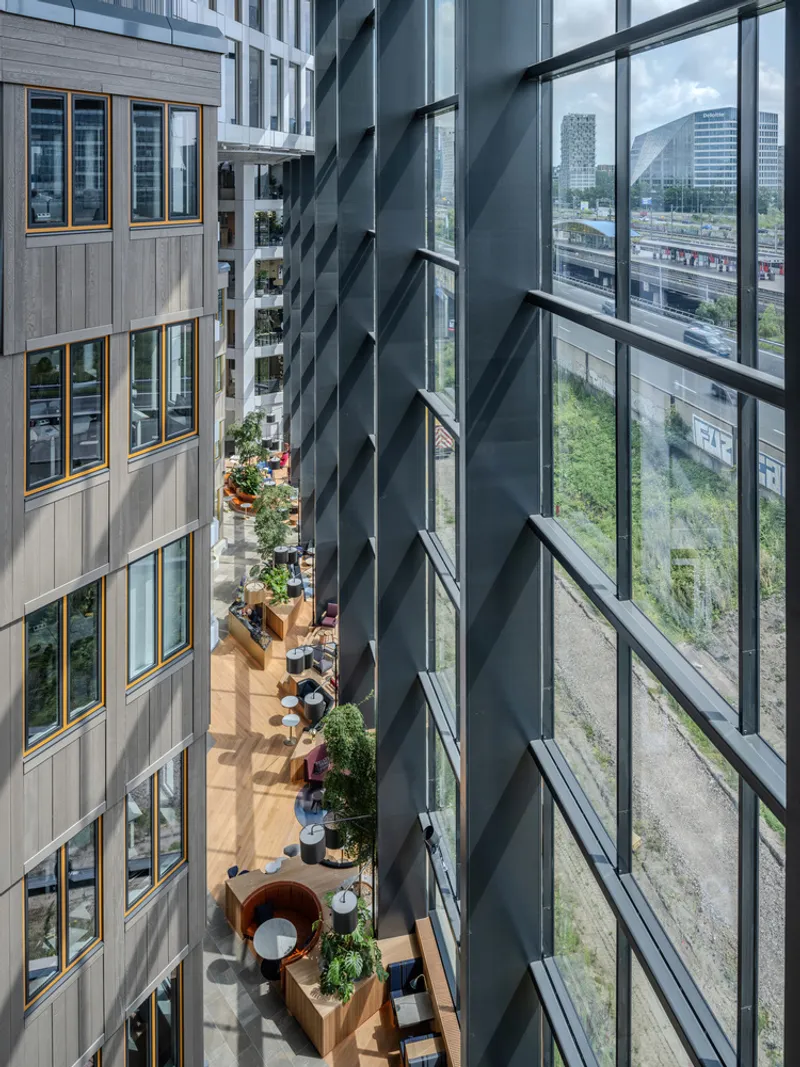
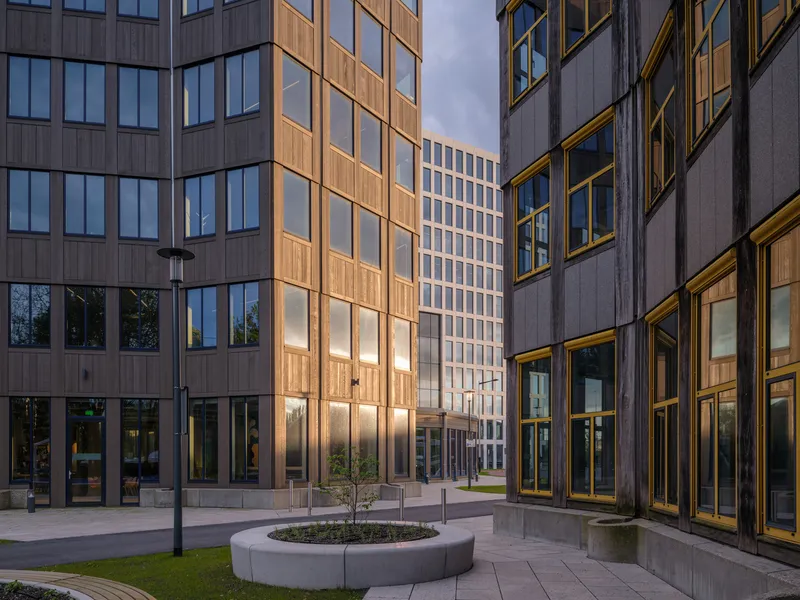
- Fully timber-clad façades, replacing the earlier mixed material palette.
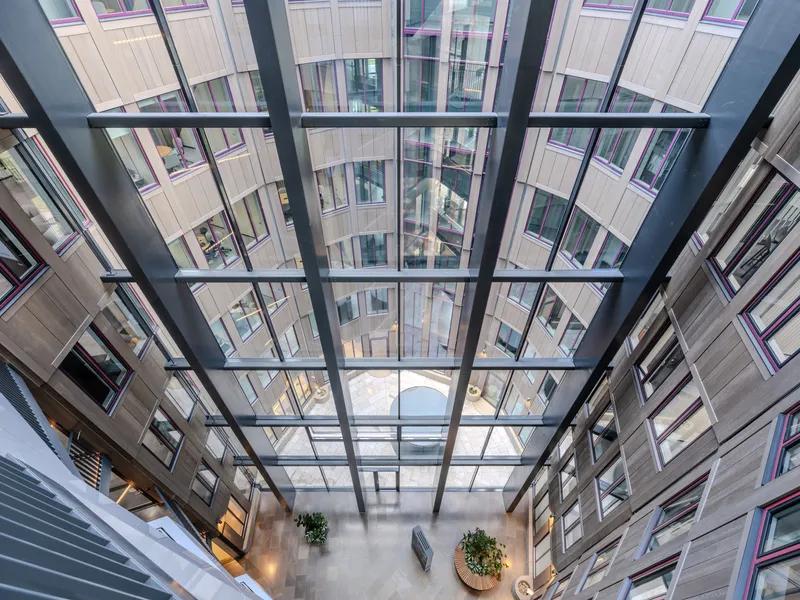
- Preserved multi-colored window frames, maintaining the playful Structuralist character.
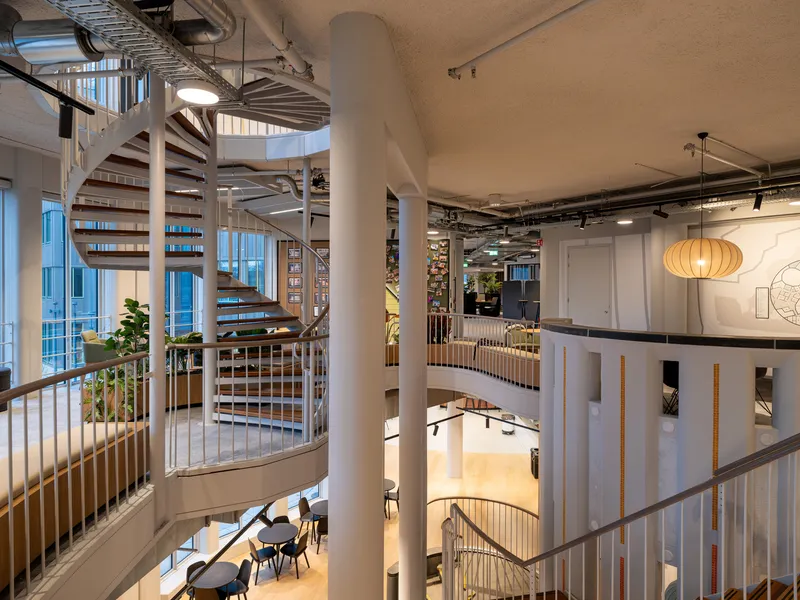
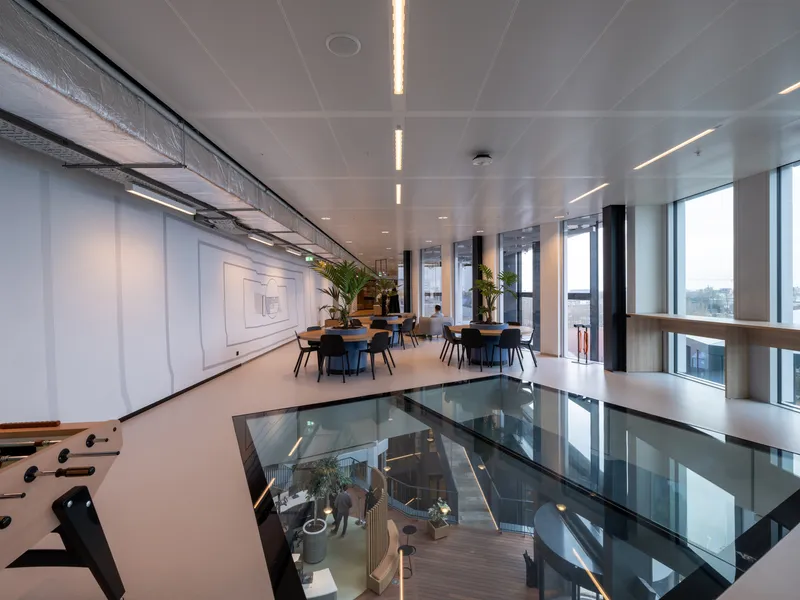
- Retention of original interiors, such as sculptural staircases and stone floors, combined with contemporary workplace strategies.
The renovation removes compartmentalized interiors to create flexible, collaborative, and open-plan office environments aligned with modern workplace needs.
A Sustainable Transformation Rooted in Landscape
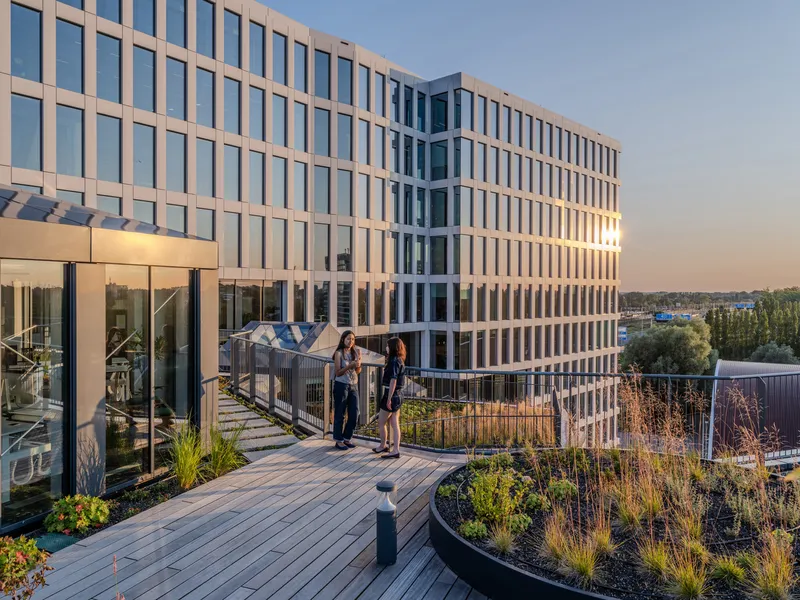
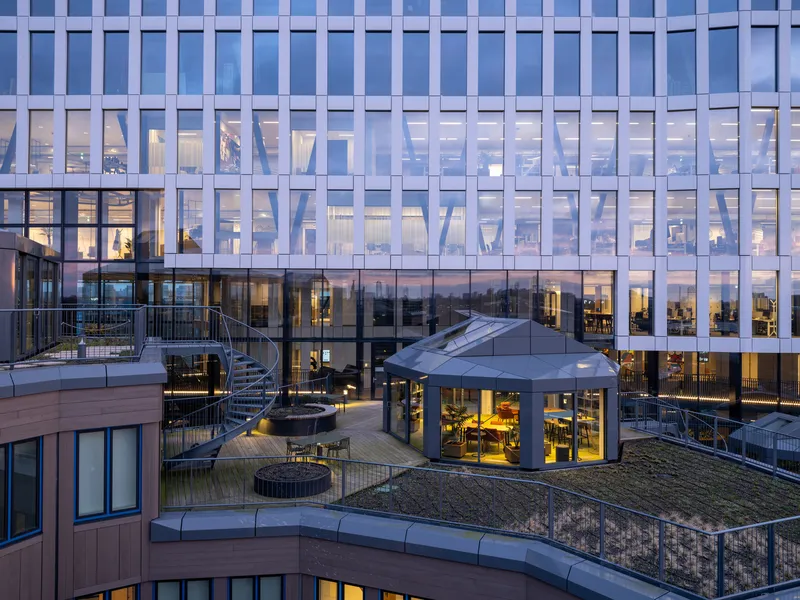
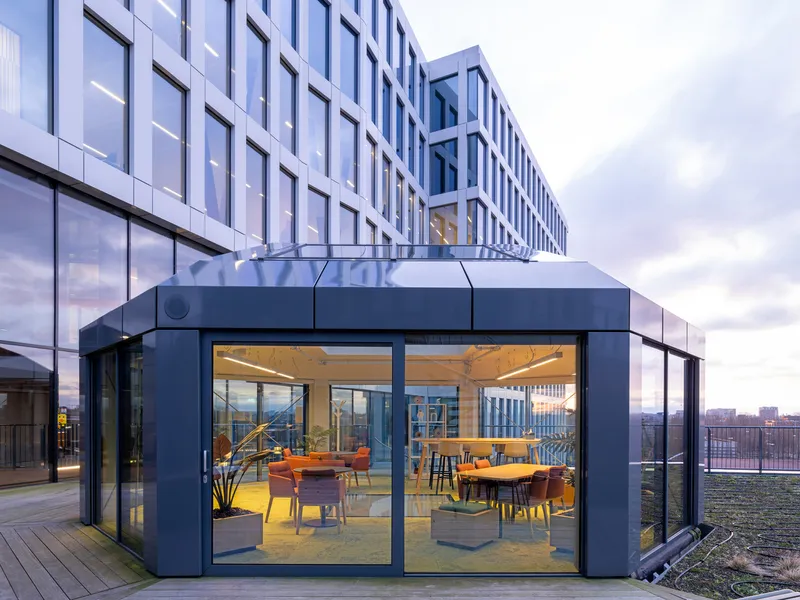
Sustainability is central to the redevelopment. MVRDV transforms the roofs into activated green landscapes featuring planted terraces, pavilions, and communal outdoor spaces that encourage interaction and host events. Solar panels, energy-efficient systems, and environmental enhancements help the project reach BREEAM Outstanding, one of the highest sustainability ratings in Europe.
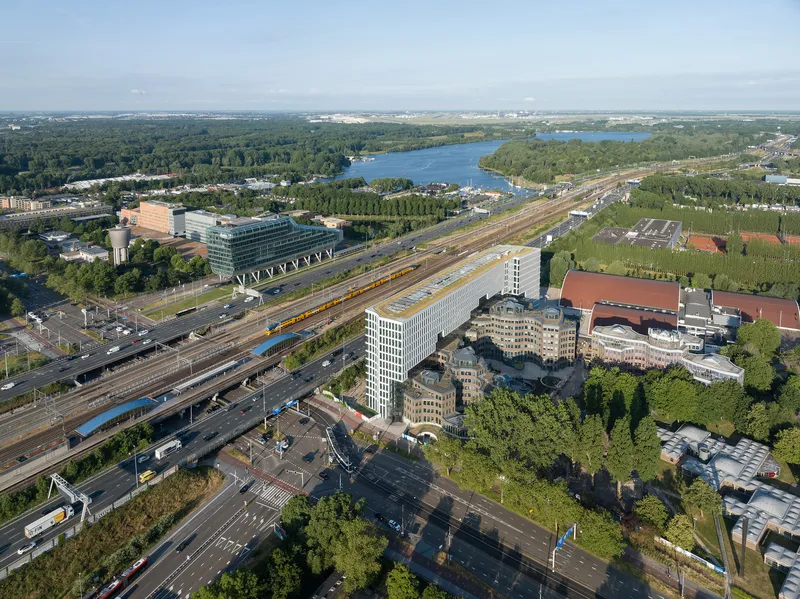
The site is envisioned as a future “green campus” seamlessly connected to bicycle routes, pedestrian paths, and nearby metro links—reinforcing Amsterdam’s eco-conscious mobility culture.
The Window: A New 12-Story Urban Landmark
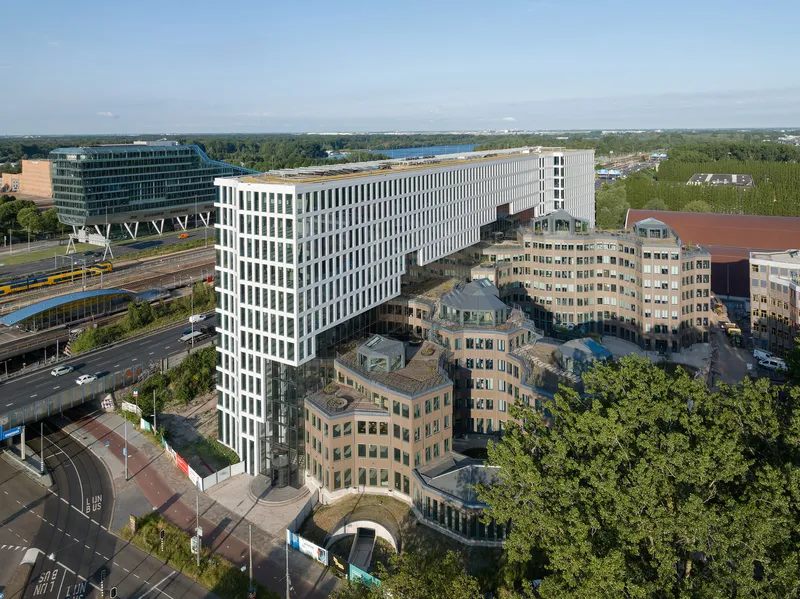
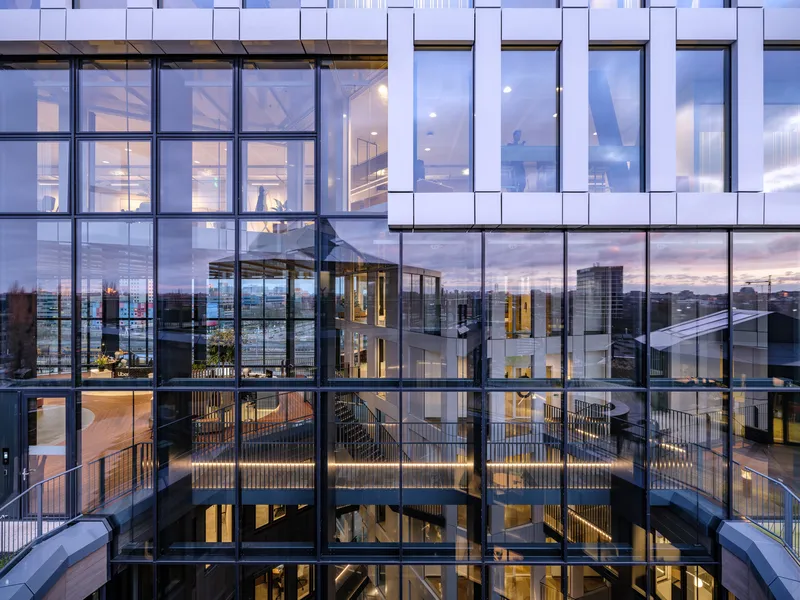
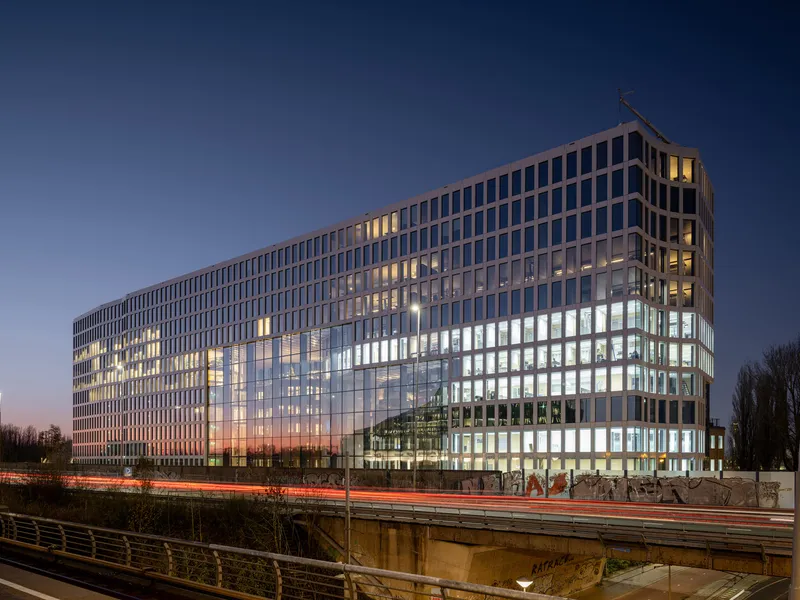
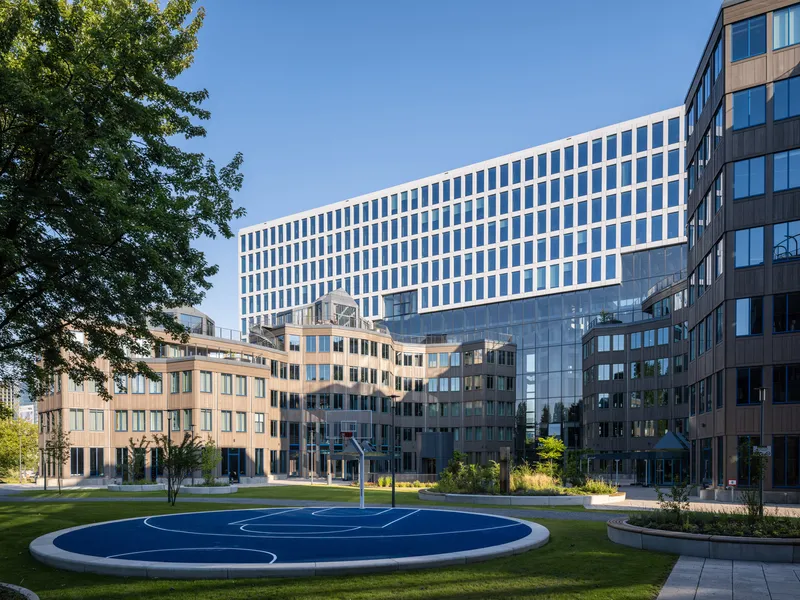
Tripolis Park is not solely a restoration; it is also an expansion. MVRDV introduces The Window, a striking 12-story landscraper positioned as close as possible to the A10. This placement creates a protective barrier that shields the original Tripolis complex from noise and pollution.
Defining features of The Window include:
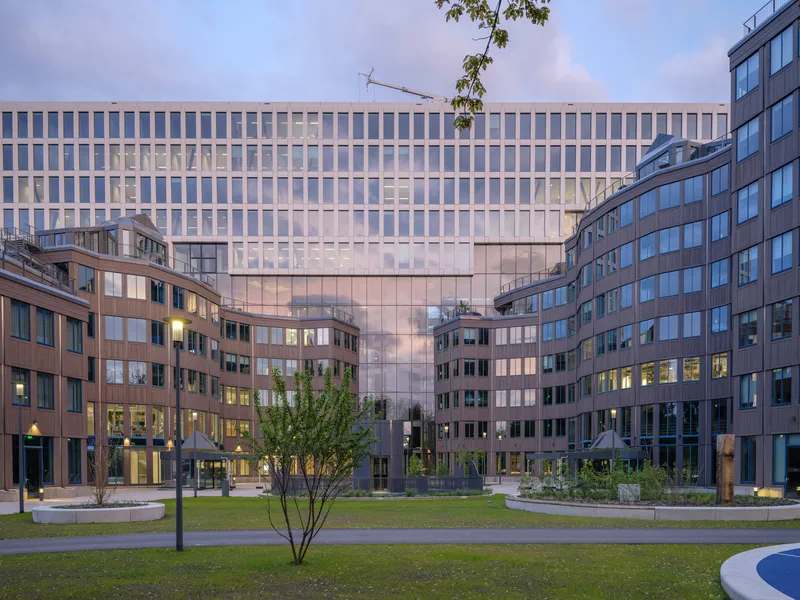
- A monumental rectangular cut-out framing views toward the historic Tripolis buildings.
- An expressive northern façade that echoes and responds to the irregular geometries of Van Eyck’s structures.
- A sculpted interior landscape where bridges connect the new and old, fostering circulation and visual continuity.
This dynamic “in-between” space pays homage to Aldo van Eyck’s philosophy that architecture’s beauty often lies in what happens between buildings—not only within them.
A New Layer of Time and Meaning
MVRDV founding partner Winy Maas describes Tripolis Park as a way to protect heritage while enabling contemporary densification. Instead of imitating the past, the project adds a new architectural layer—one that respects, uplifts, and reframes the Structuralist legacy for today’s urban context.


Popular Articles
Popular articles from the community


The Ocean Hive: Sustainable Architecture for a Self-Sufficient Civilization at Sea
The Ocean Hive imagines sustainable architecture at sea, where modular habitats, algae, wave power and ocean waste sustain a growing colony.

Play: Fragments of Their World
Familiar architecture becomes modular playground design, creating safe spaces where displaced children can learn, connect, imagine and play.

Riyadh For All: Intergenerational Urban Design for Active Aging in Rabat
Riyadh For All reimagines urban design in Rabat with intergenerational co-living, adaptive courtyards, and Moroccan cultural exchange today.

Lunar Spiral: Space Architecture Shaped by the Mathematics of the Universe
Lunar Spiral reimagines space architecture through Fibonacci geometry, lunar regolith, levitating habitats, and self-sustaining Moon living.

Similar Reads
You might also enjoy these articles


Hodi-Mandai Geram
Project Function: Preservation and revitalization of the Intangible heritage and socio-spatial identity of the Hodi by Housing, Cultural Memory Center, Sacred Grove, landscape, local tourism economy


Olio Towers: A Mid-Rise for Performers That Fuses Housing, Rehearsal, and Stage
Located blocks from Houston's Theater District, this modular tower stacks living units around a central performance atrium.

Oasis: Modular Green Housing Carved into Dhaka's Urban Fabric
A shortlisted Plugin Housing entry reclaims unauthorized settlements in Dhaka with stepped concrete volumes, green roofs, and ventilation-driven design.

Black Hole: A Floating Megastructure for the Post-Physical Era
Emiliano Mazzarotto envisions a spherical, self-scaling arena where e-sports, digital hotels, and holographic stadiums replace traditional public space.
Explore Adp Architects Competitions
Discover active competitions in this discipline



Challenge to reimagine the Iron Throne


Photograph architecture without architects


Illustrate the lost glory of Angkor Wat - Render Challenge


Design challenge to reuse E-waste
Comments (0)
Please login or sign up to add comments
No comments yet. Be the first to comment!