
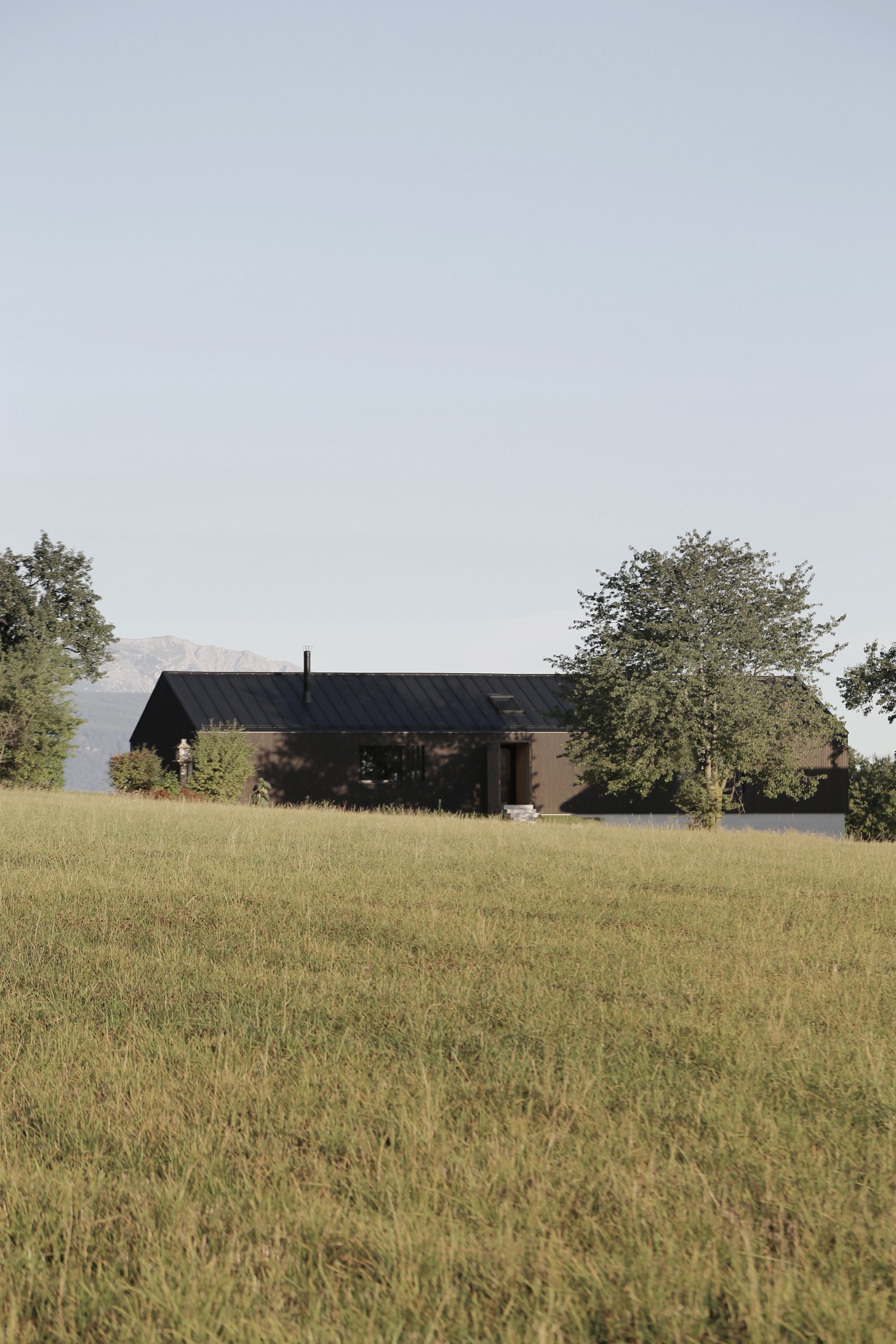
Two Austrian Studios Build a Dark Timber House Named After a Decades-Old Cherry Tree
In a 29-person village near the Rax-Schneeberg massif, a band-sawn spruce volume roots itself to a family hillside in Lower Austria.

Weibnitz is a settlement of 29 inhabitants on the southern edge of a village in Lower Austria, where spruce forests border open meadows and the Rax-Schneeberg mountain massif fills the western horizon. On a family-owned hillside slope here, a decades-old cherry tree has stood long enough to claim naming rights over the house that now sits beside it. Cherry House, completed in 2022 by STEINBAUER architektur + design and Kaltenbacher ARCHITEKTUR, is a 218 square meter residence that derives its logic from one premise: make the simplest possible form, then let the landscape do the rest.
What makes this project worth studying is not its novelty but its discipline. The house is an elongated timber volume under a longitudinal pitched roof, resting on a concrete basement. Dark band-sawn spruce cladding, matt black window frames, a standing seam metal roof: everything conspires toward a single material register that recedes into the surrounding forests. The floor plan splits cleanly along the central axis, with living spaces and a loggia facing south toward the mountains, and bedrooms and a bathroom tucked to the north against the private garden. A central fireplace marks the hinge point. The children's room sits directly under the canopy of the cherry tree. These are quiet decisions, but they are exact.
A Dark Profile Against the Meadow
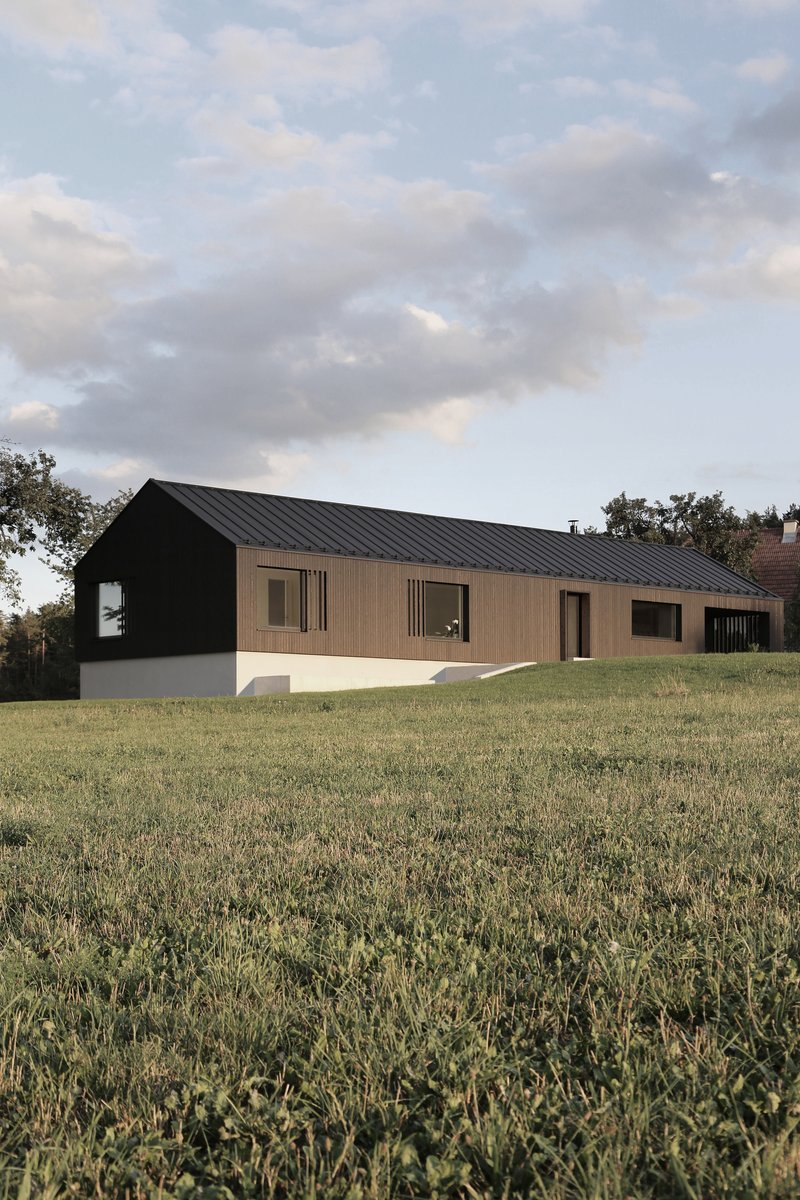
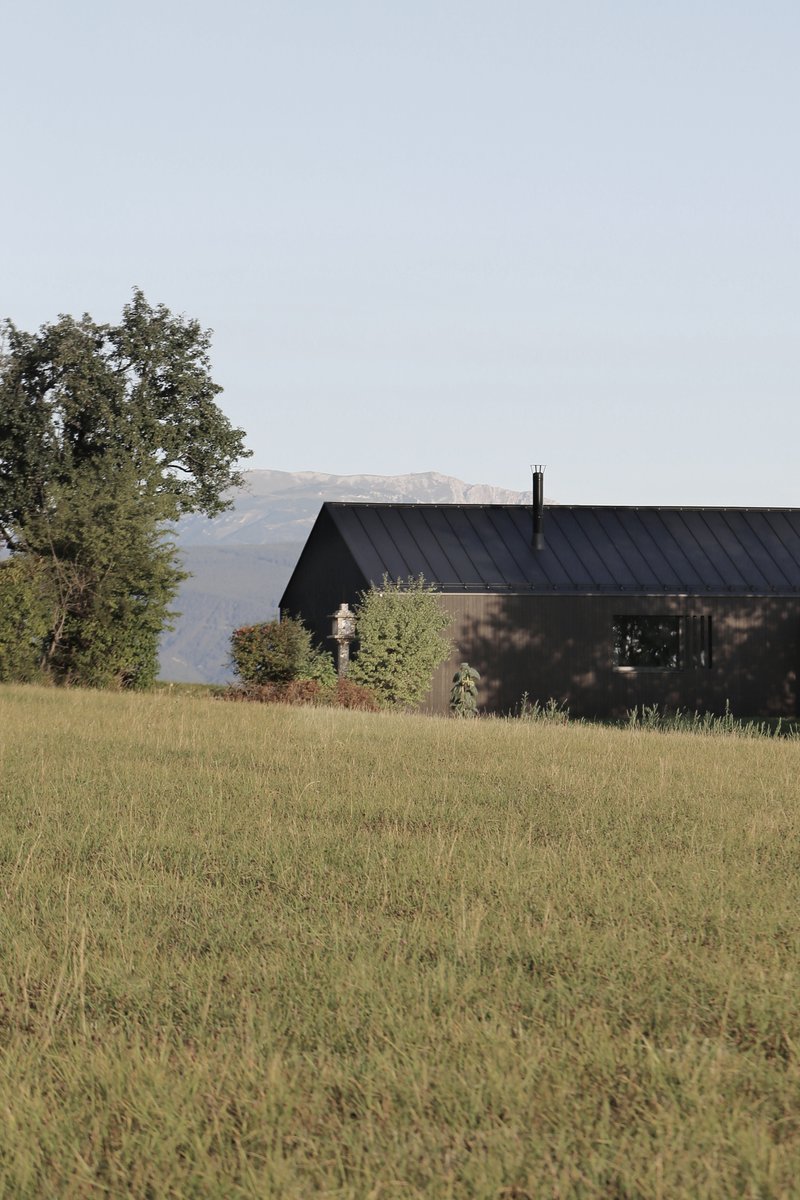
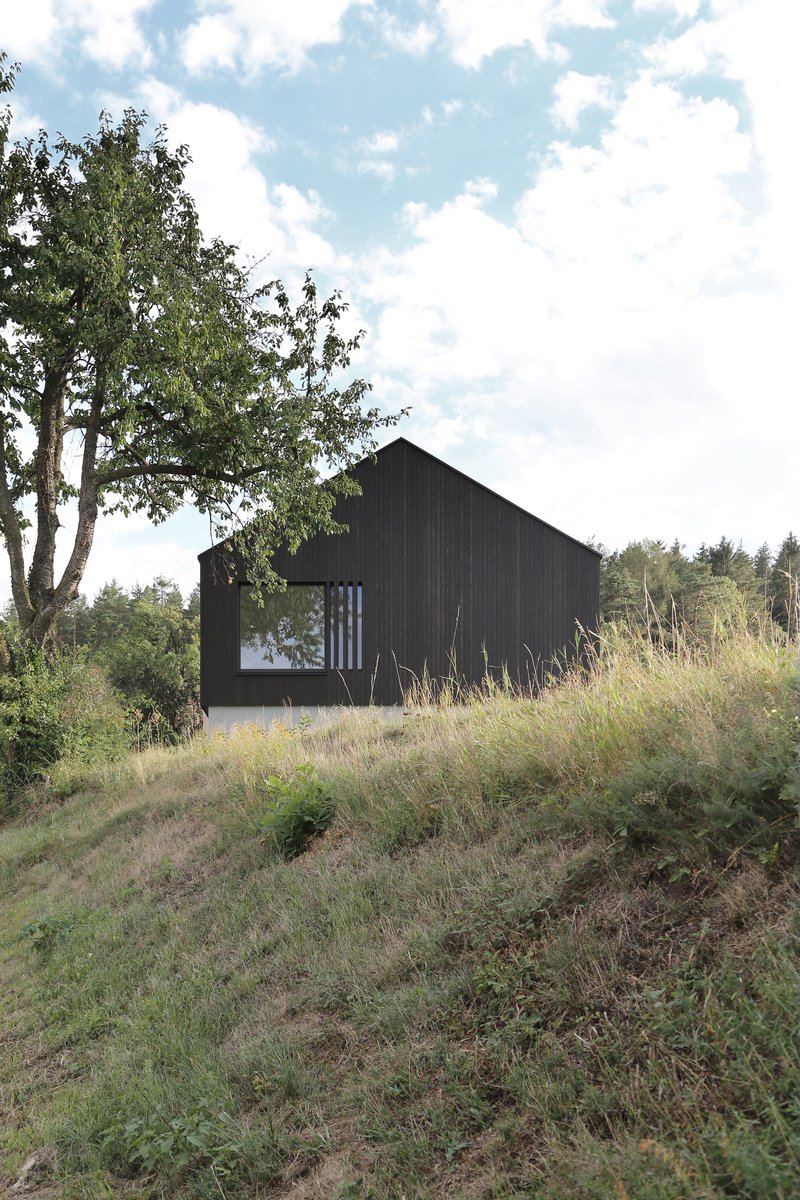
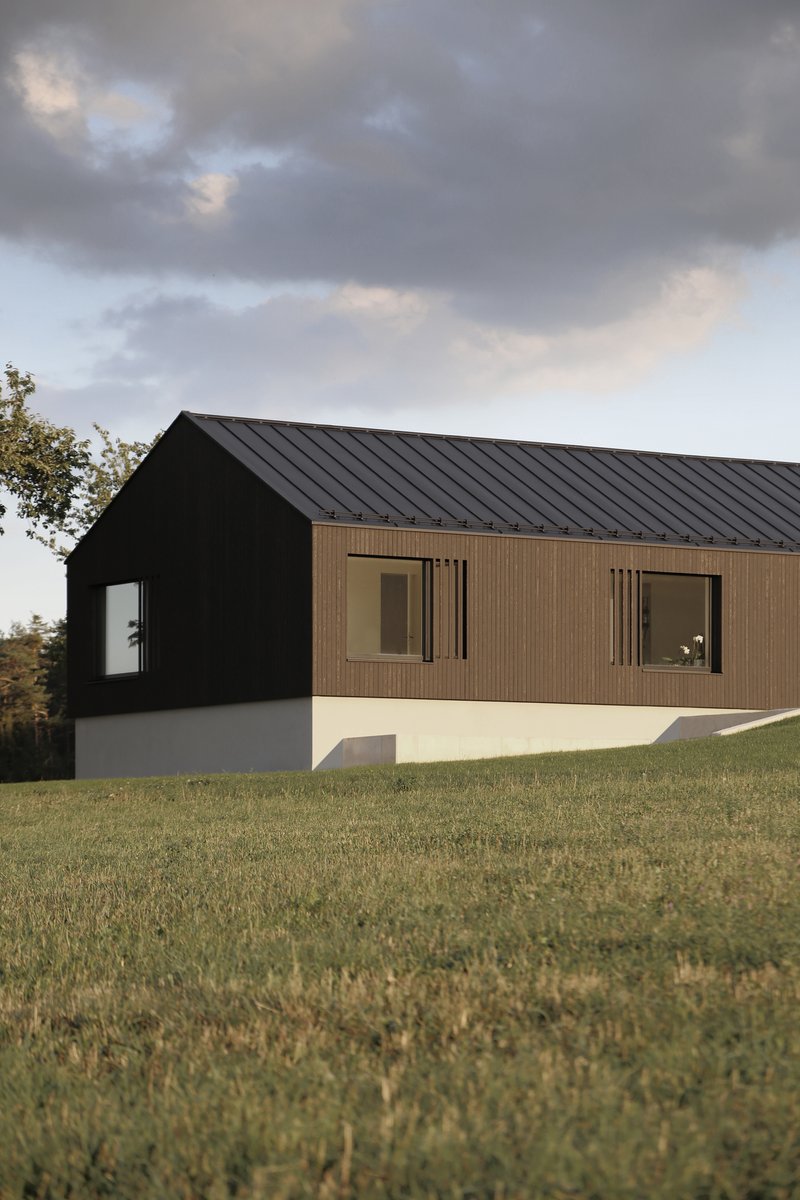
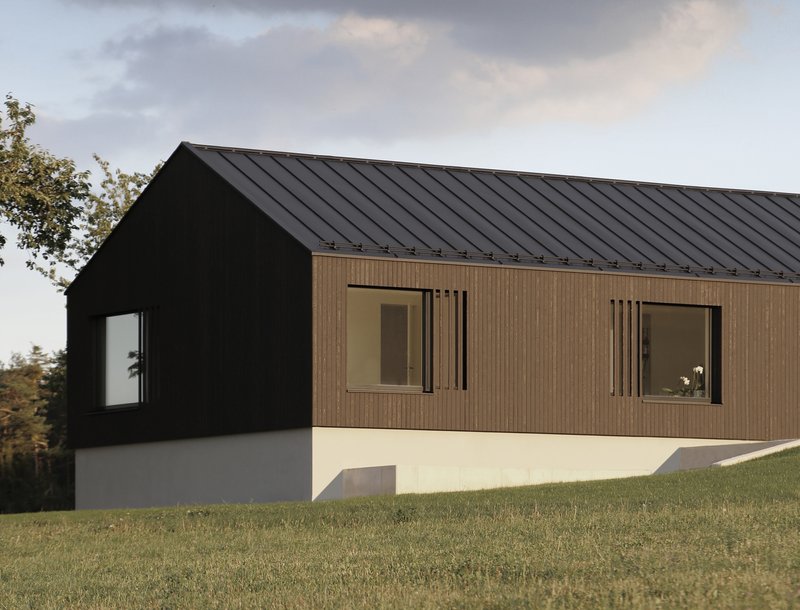
Seen from a distance, Cherry House reads as a single dark stroke against golden grass and treeline. The elongated gable form deliberately echoes the agricultural typology of the region, where barns and farmhouses stretch laterally across hillsides under simple pitched roofs. The dark-ebonized spruce facade does not contrast with the surrounding spruce forest so much as it absorbs its character, creating a building that belongs to the landscape without mimicking it.
At dusk, the volume becomes almost silhouetted, and the relationship between the house and the cherry tree sharpens. The gable end facing west frames the tree as if the building were built around it, which, in a sense, it was. The entry axis on the east side and the garden exit on the west side are aligned, pulling a single line through the house that connects arrival with the landscape beyond.
Materiality at Close Range
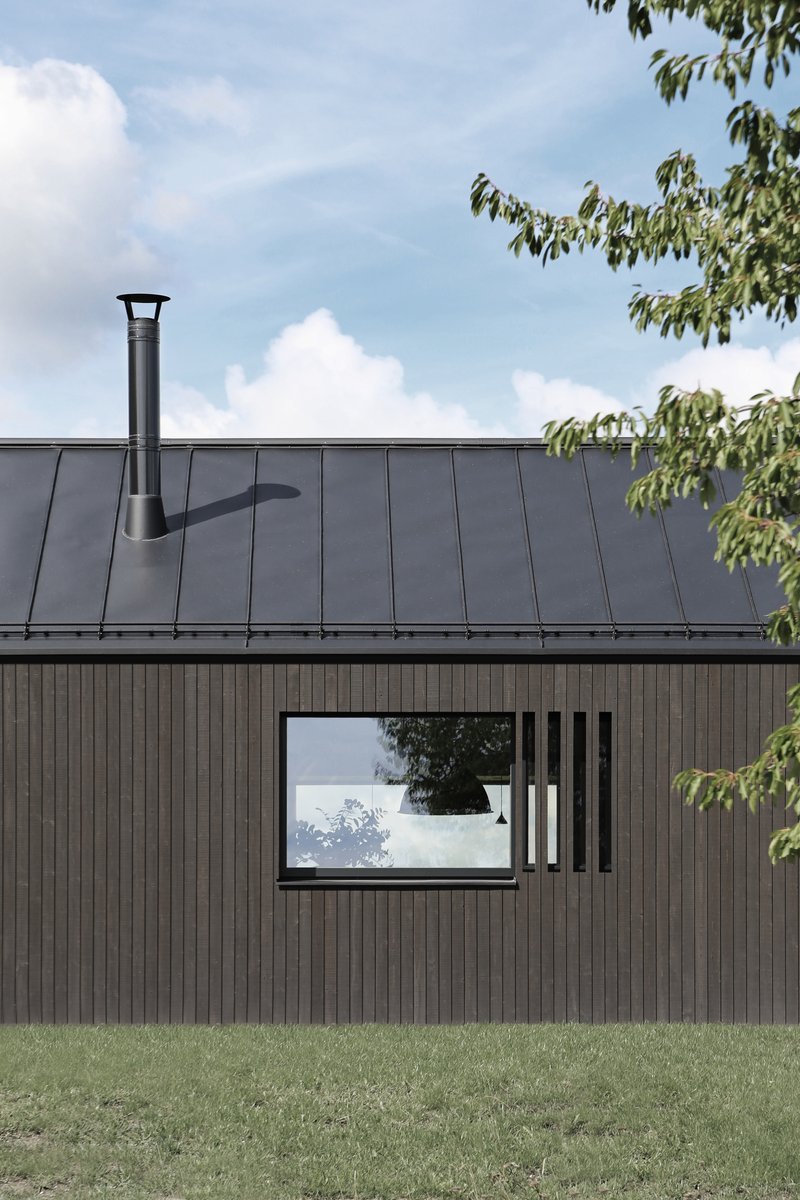
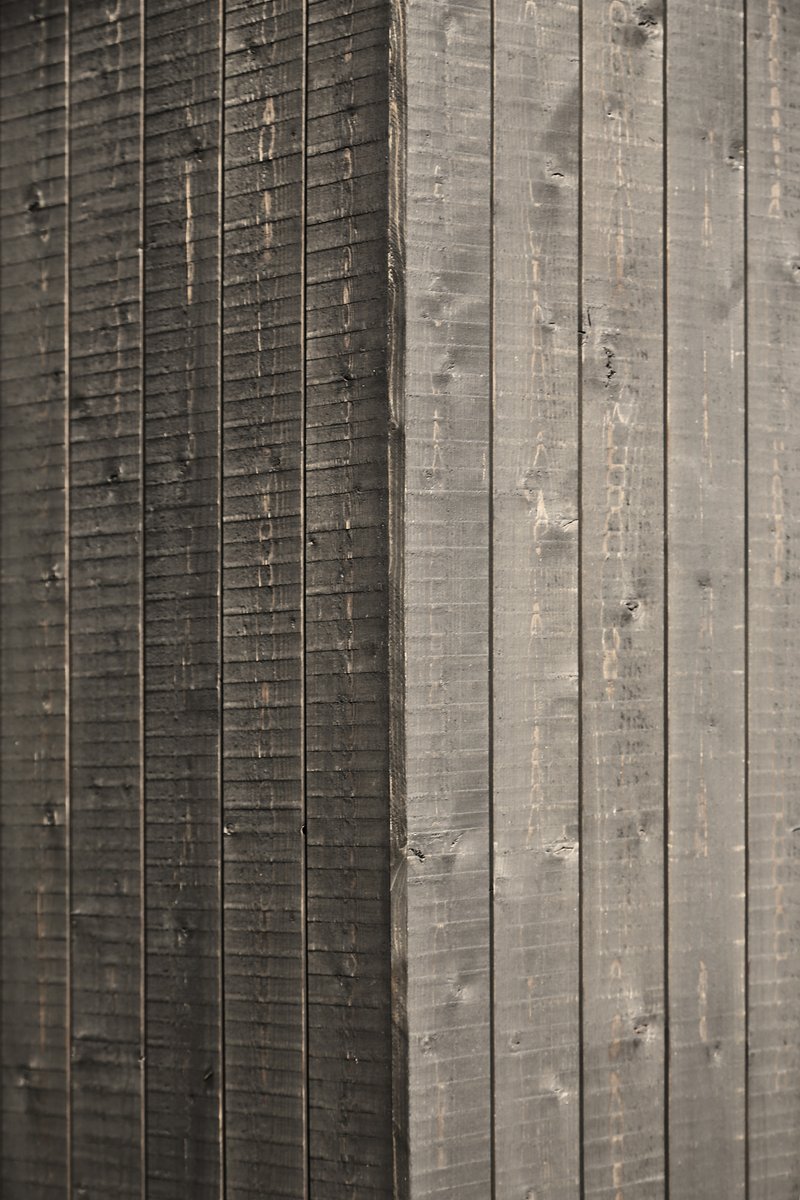
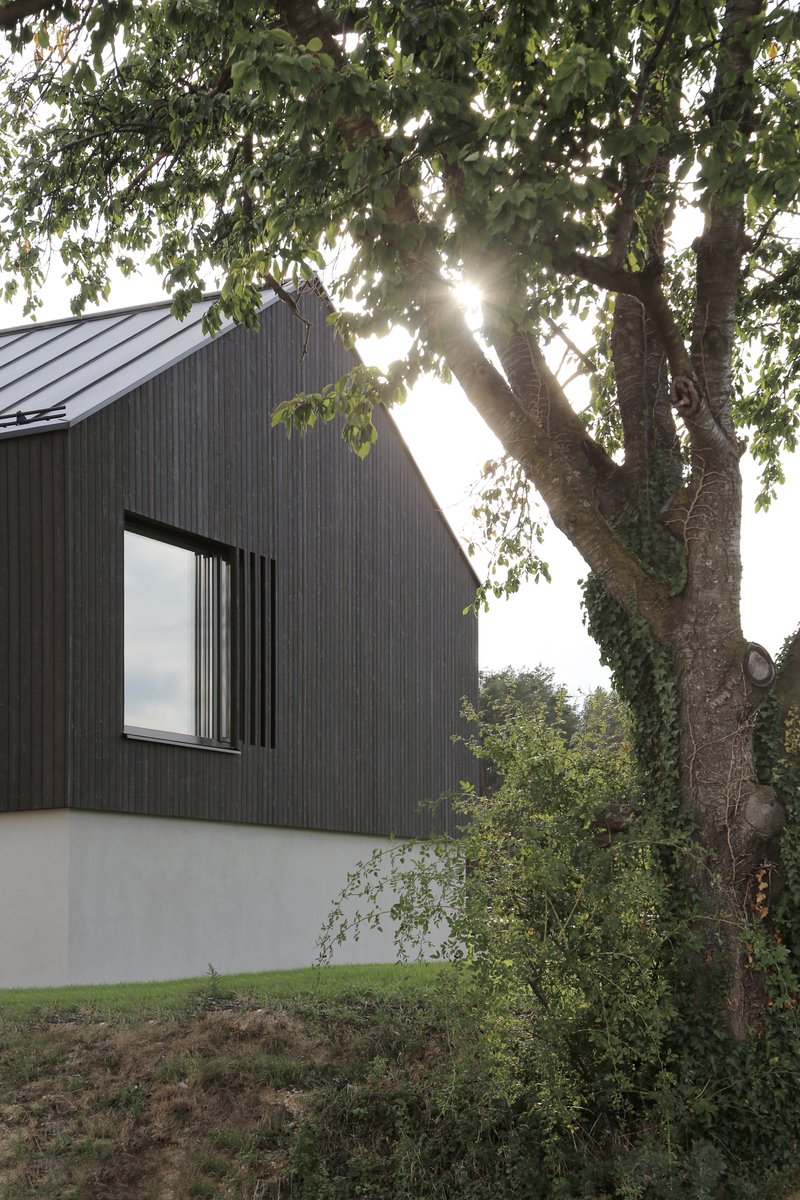
Up close, the facade reveals itself as a sophisticated assembly of tongue-and-groove spruce boards, band-sawn to a rough texture that catches light and shadow differently across the day. The vertical grooves register weather and age, and the whole surface will darken further over time, narrowing the gap between the building and the forest floor. The naturally oiled spruce windows sit flush within matt black frames, so there is no hierarchy of ornament, just material meeting material.
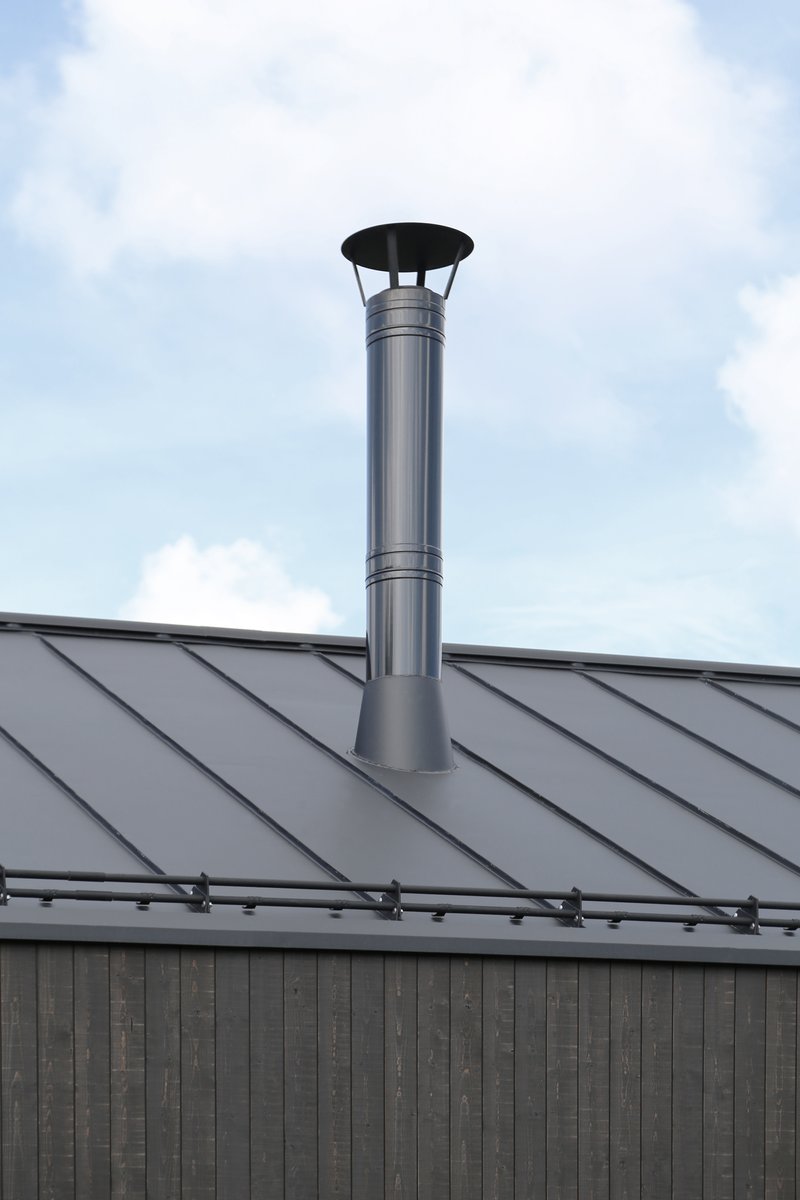
A stainless steel chimney pipe punctures the standing seam metal roof with surgical precision. The plaster base visible at the foundation line is the only concession to a lighter register, grounding the dark timber volume on the slope with a visual datum. Every detail is reductive, but none of it reads as minimal for the sake of style. It reads as economy of means in service of a long lifespan.
The Kitchen Window as Landscape Frame
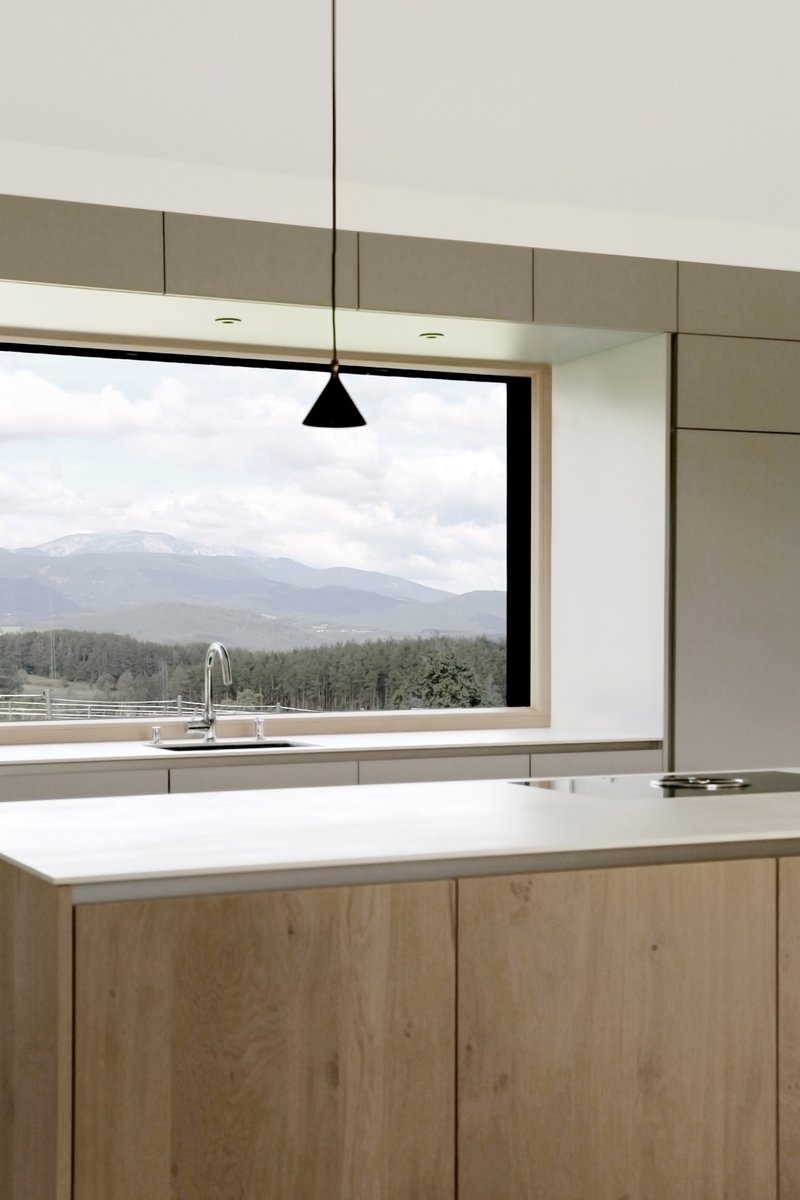
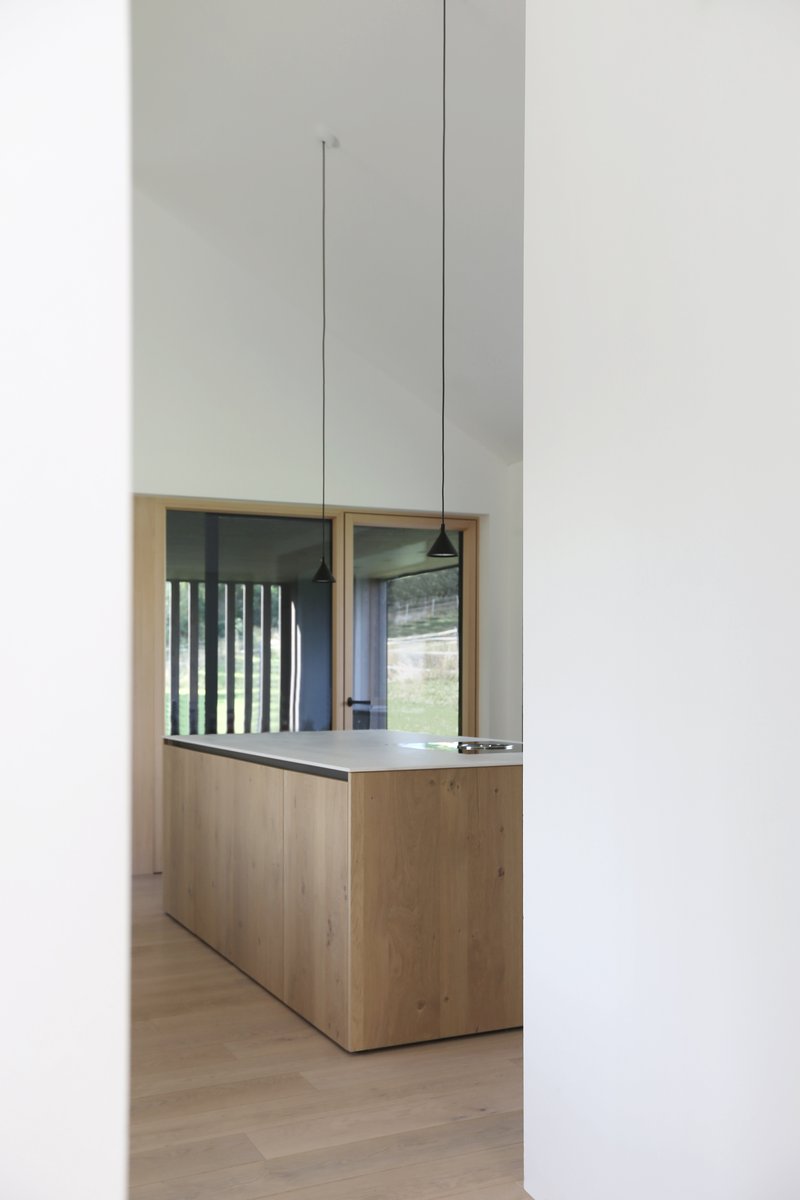
The most memorable interior move is the kitchen window, which runs the full length of the worktop at counter height. Standing at the sink or the stove, you look straight out at a wall of forested mountains. It is a horizontal slot that edits the view into a panoramic strip, eliminating the sky and the foreground to give you just the treeline and peaks. The light timber cabinetry and brushed oak parquet create a warm, neutral backdrop that never competes with what is outside.
From the hallway, the kitchen island and a mirrored backsplash double the depth of the room, pulling reflections of the landscape further into the interior. It is a small trick, but it works because the architects never overloaded the palette. Everything inside is light oak and white plaster, holding space for the views to do the heavy lifting.
The Window Seat Under the Cherry Tree
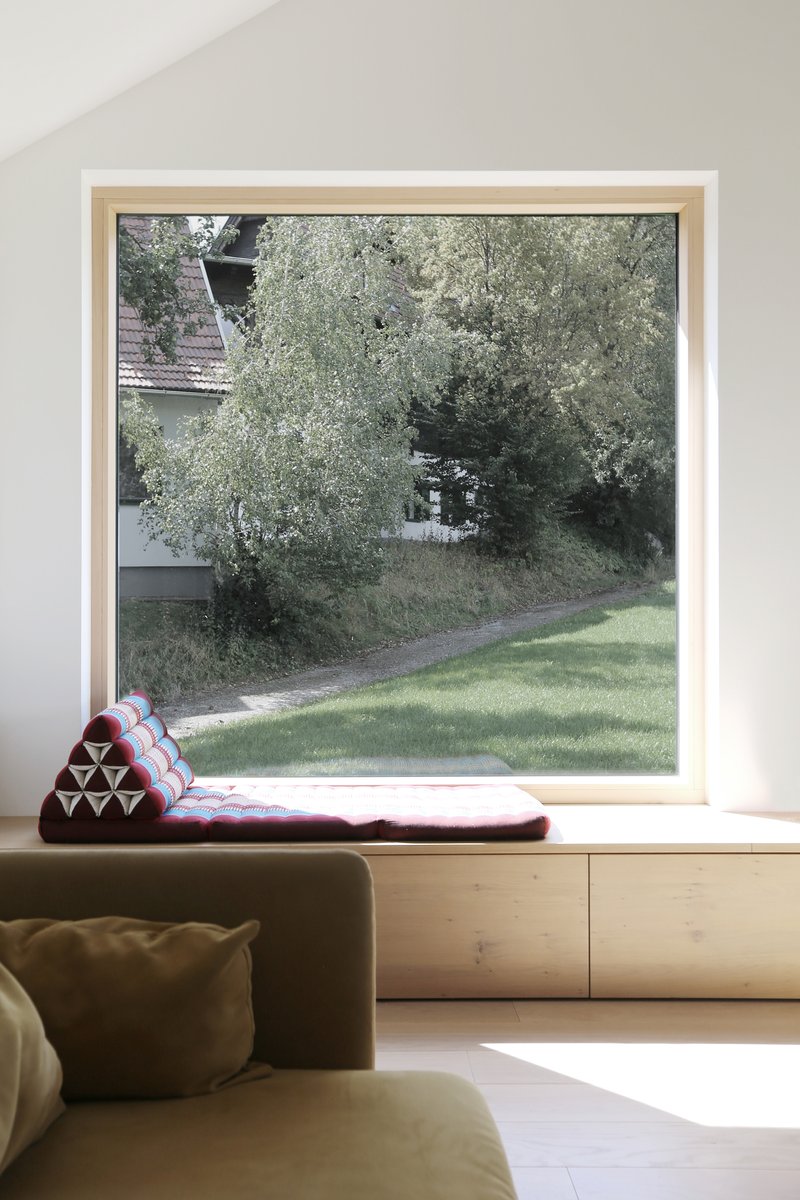
The square window with its deep seat parapet, positioned in the children's room directly under the cherry tree's canopy, is the project's most generous gesture. A cushioned ledge turns the window into a place to sit, read, or just watch the seasons turn on a single tree. The proportions of the opening are nearly square, and the timber surround gives it the quality of a picture frame.
It is the kind of detail that reveals the architects' priorities. Rather than maximizing glass or chasing panoramic views, they chose to give a child one deliberate, scaled, and intimate relationship with the outdoors. The cherry tree is not just a namesake; it is a spatial partner.
Light from Above
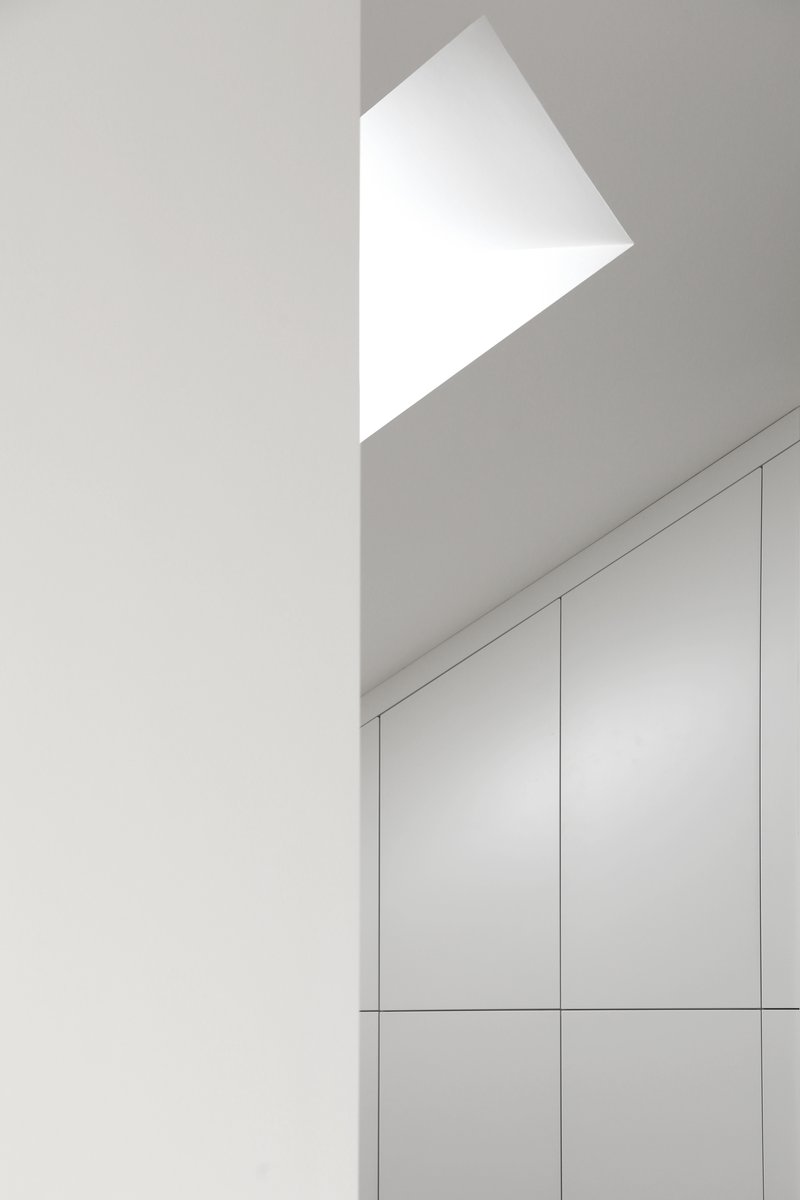
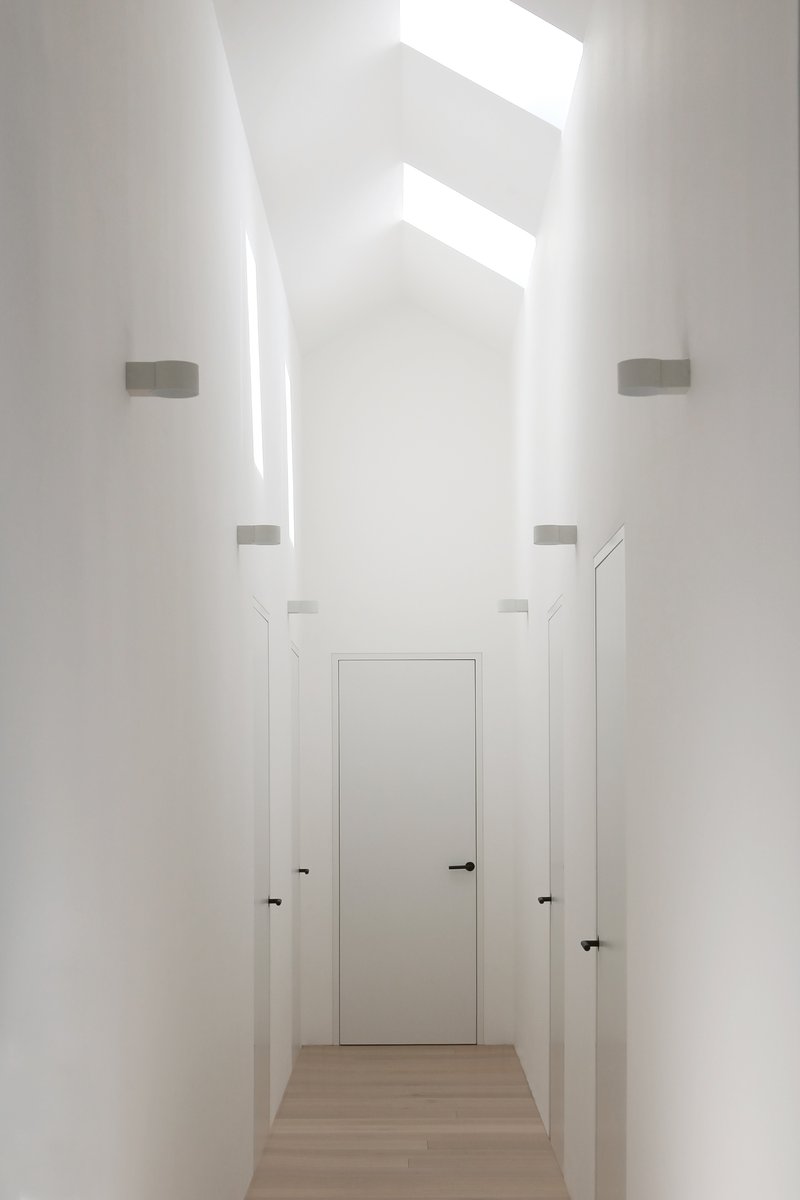
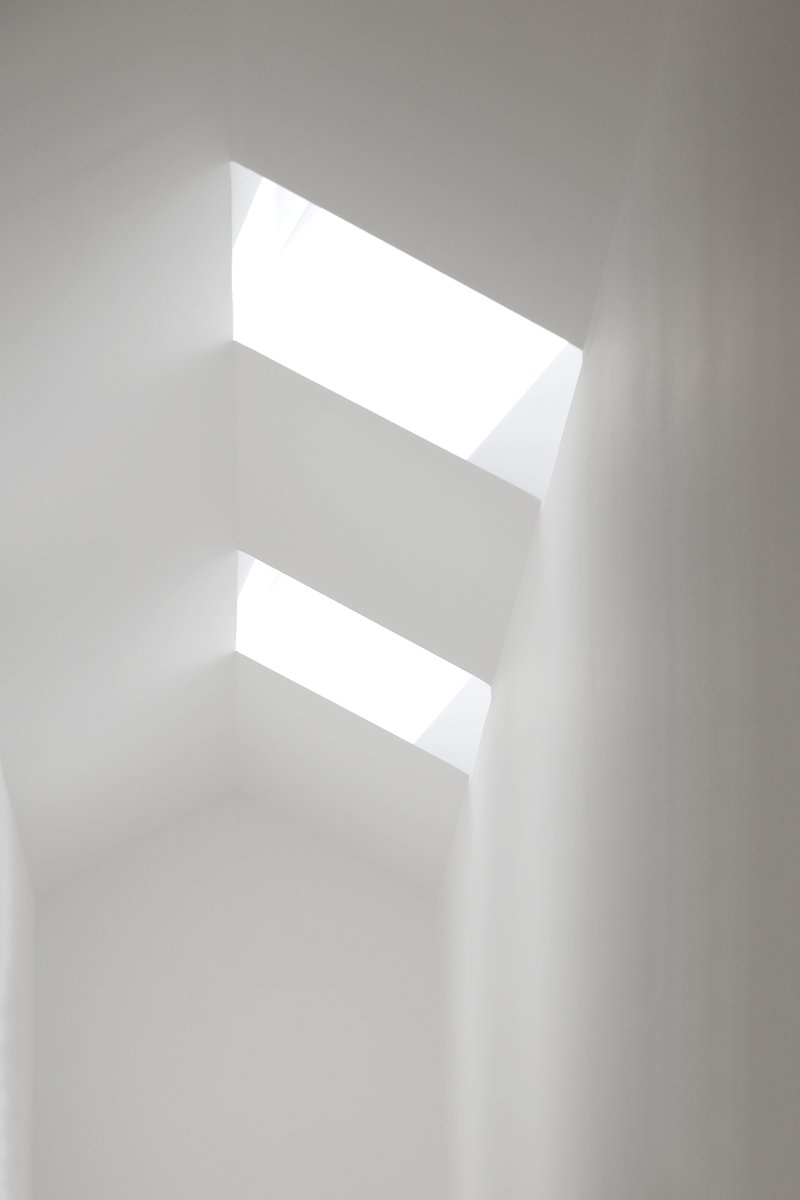
The pitched roof creates opportunities for skylights, and the architects exploited them with care. Angular openings punched through the white plaster ceiling cast geometric shadows that migrate across walls and built-in cabinetry throughout the day. In the narrow hallway, multiple skylights transform what could be a dead circulation zone into one of the most atmospheric spaces in the house.
These are not skylights for illumination alone. They choreograph light as material, turning the interior into a sundial. The concealed wall sconces in the corridor suggest that artificial lighting was treated as secondary, a nighttime backup to what the roof already provides.
Corridor and Threshold
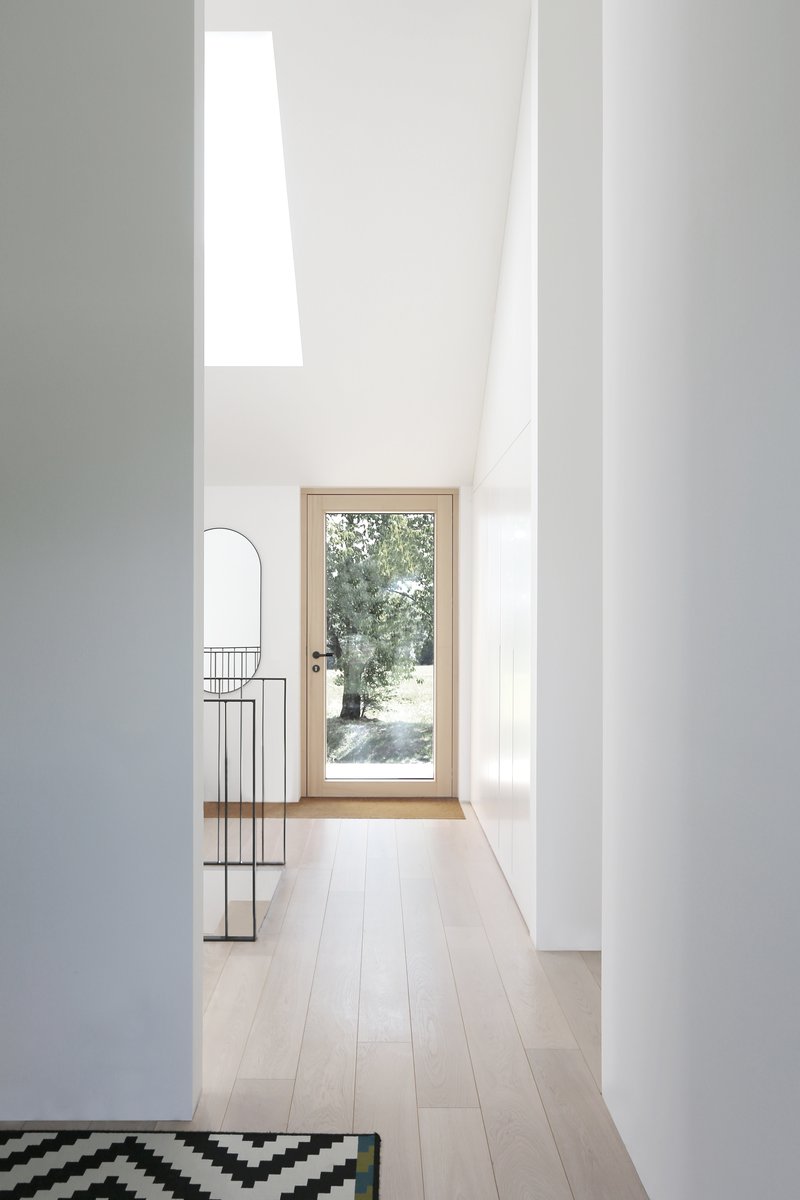
The central axis that the architects established, running from the east entrance to the west garden door, is the organizational spine of the entire plan. Walking through the white corridor with its light wood flooring, you pass from public to private, from arrival to garden, with the fireplace marking the fulcrum. The corridor is spare, and the glass door at its terminus pulls a column of green into the interior.
From the exterior, the gable end with its timber panels and white stucco base clarifies the building's section in a single glance: a heavy masonry platform carrying a light timber frame. It is a classic tectonic expression, handled without fuss.
Settling Into the Site
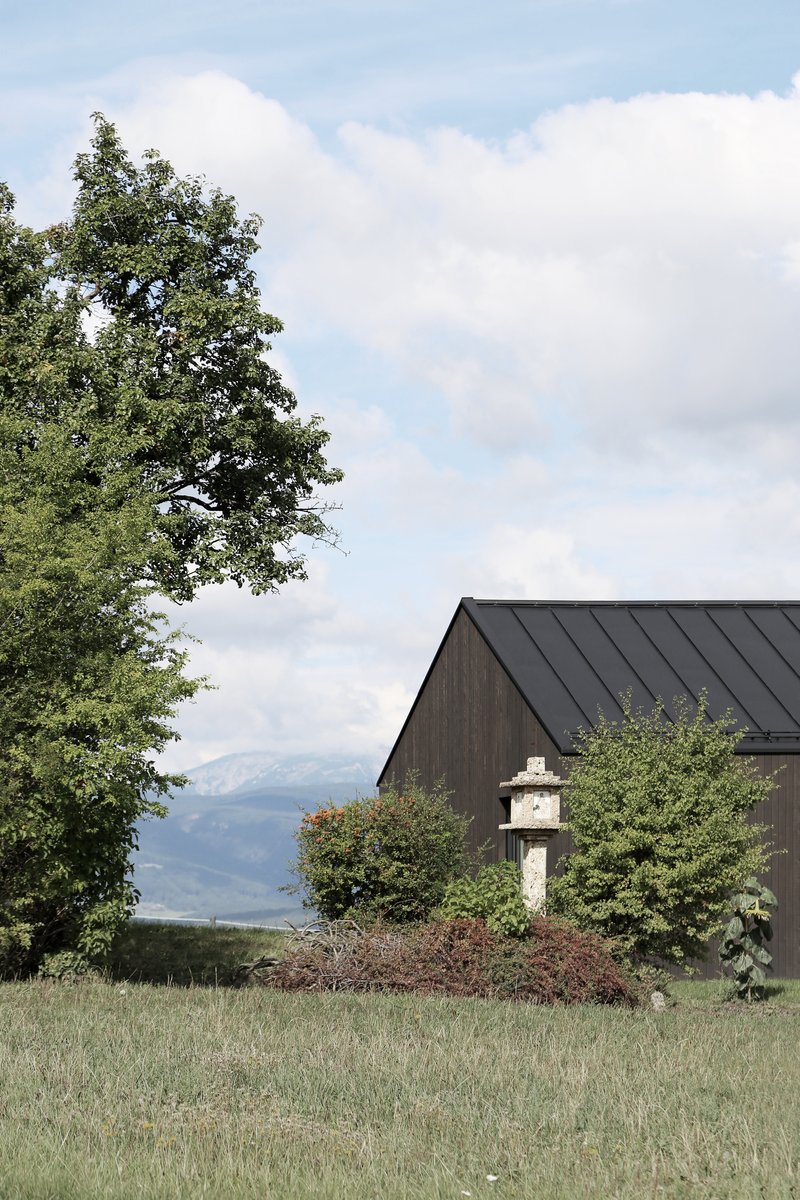
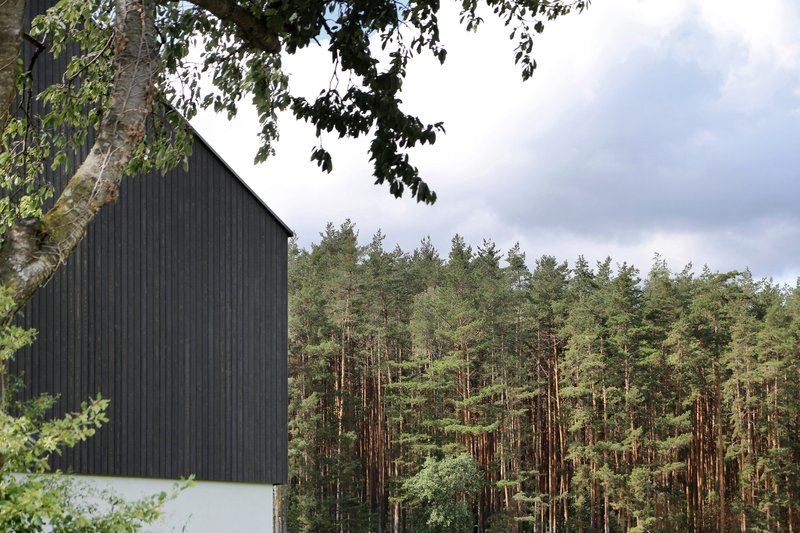
The garden views confirm what the site plan suggests: Cherry House is positioned at the edge of a village that barely registers as one. The building sits among shrubs, grasses, and birch branches with the coniferous forest pressing in from beyond. The roof ridge barely clears the surrounding vegetation in several views, reinforcing the sense that the house is not imposed on the site but nestled into it.
The standing seam roof surface, visible from the garden, is as dark and restrained as the walls. There is no moment where the building breaks character. From ridge to foundation, from chimney to window frame, the house is a single argument for quiet, enduring architecture in a setting that demands nothing less.
Plans and Drawings
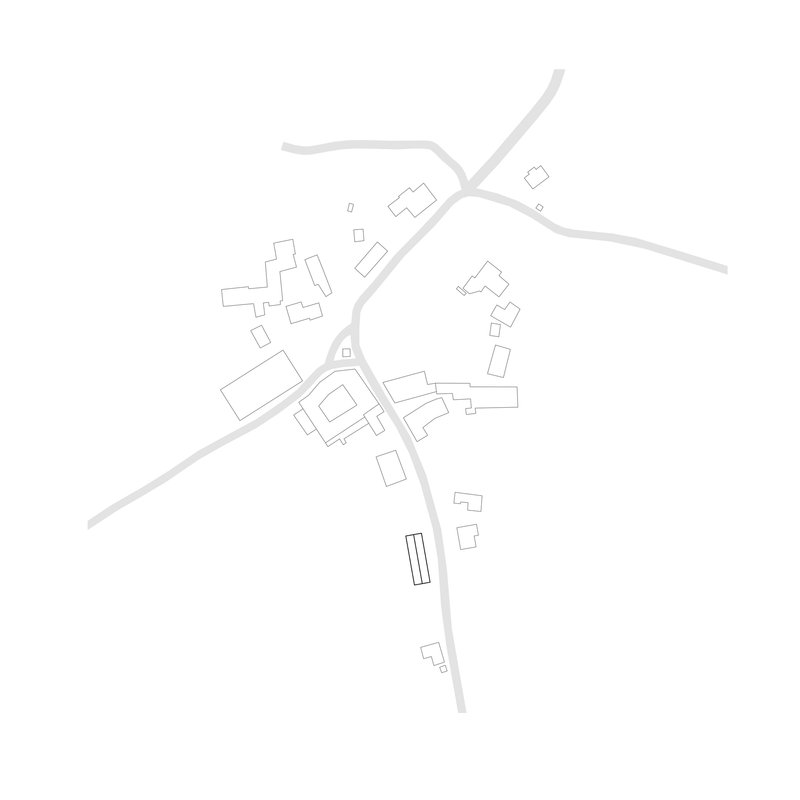
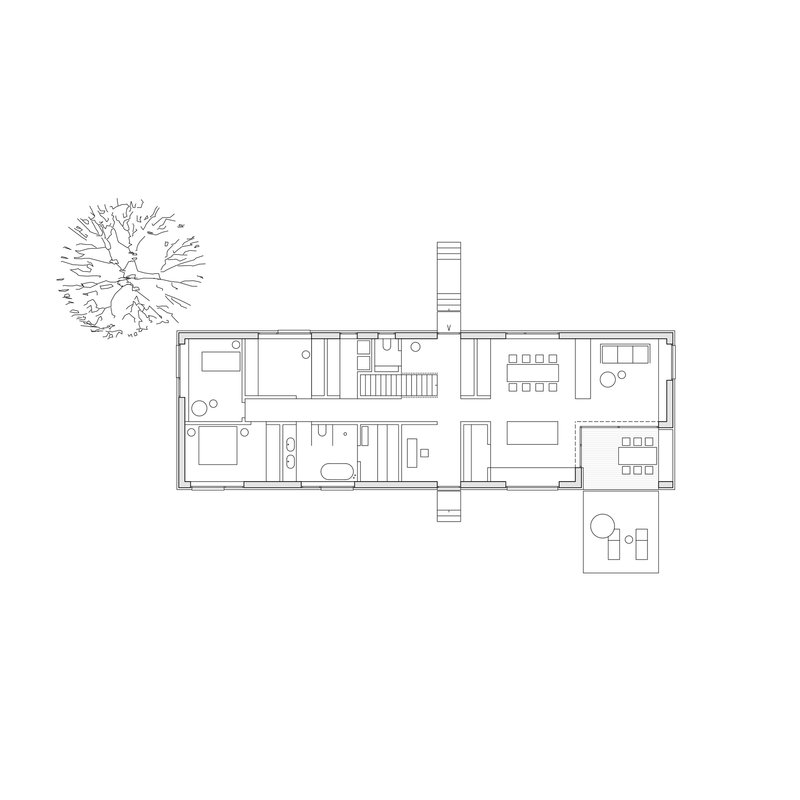
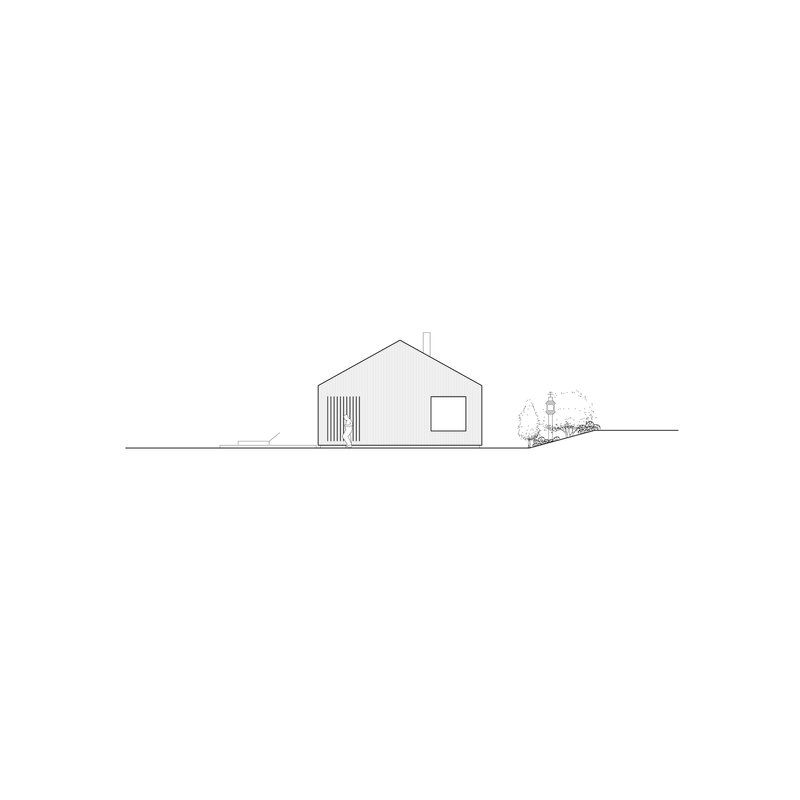
The site plan reveals the scattered, informal grain of Weibnitz, where buildings sit along curving pathways without any rigid geometry. Cherry House takes its cue from this pattern, orienting to the slope and the tree rather than to a road grid. The floor plan confirms the bilateral split: living spaces and loggia to the south, sleeping and bathing to the north, with the central staircase descending to the concrete basement below.
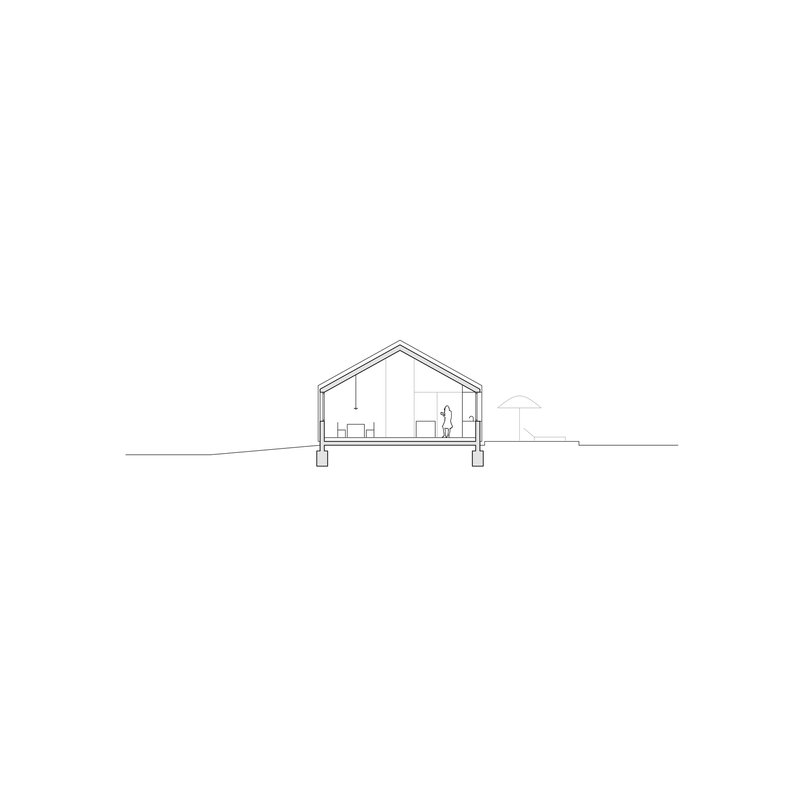
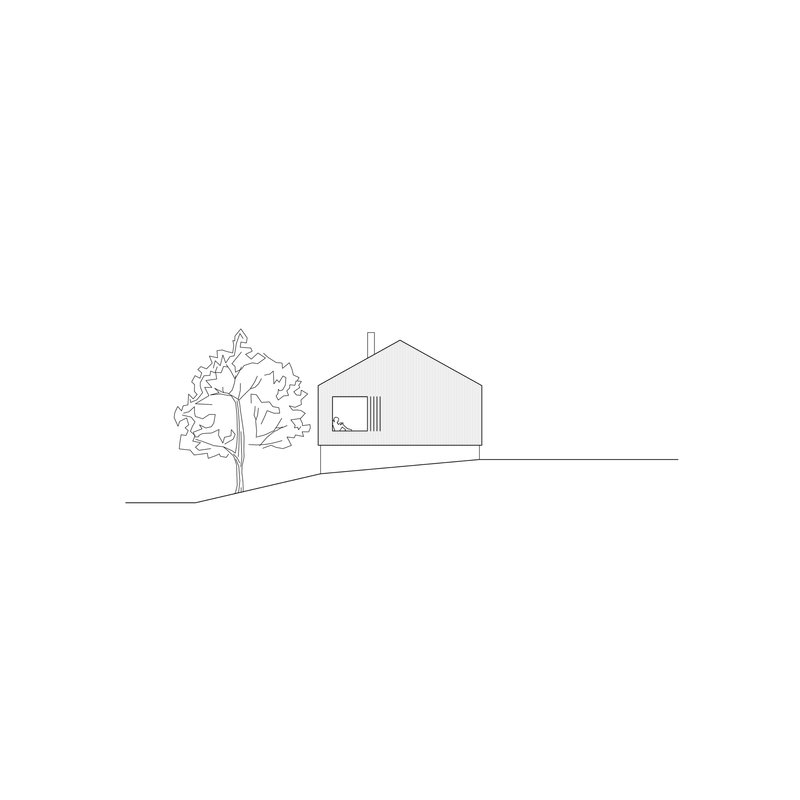
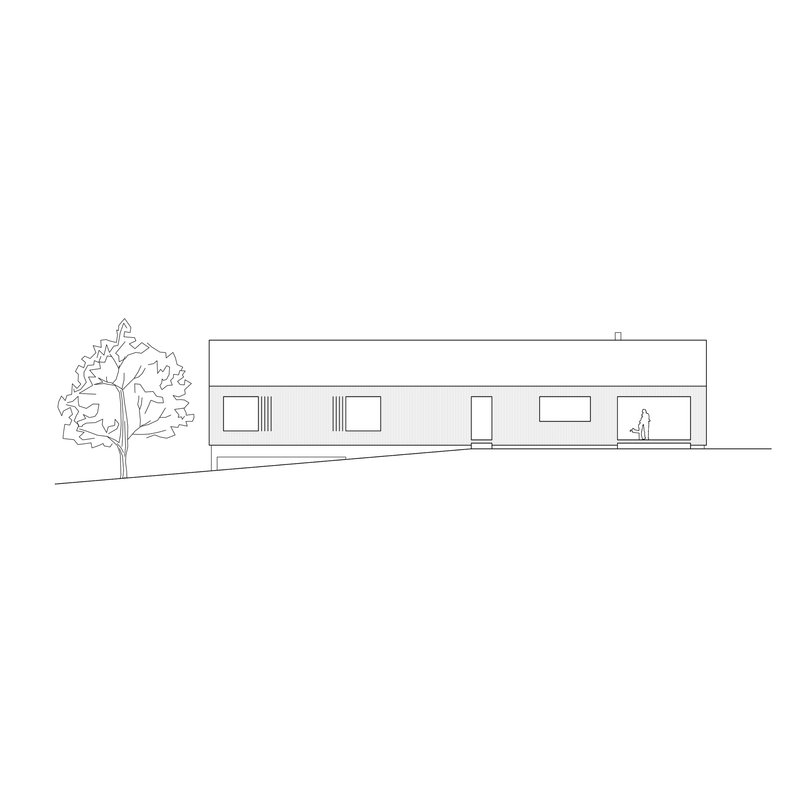
The section drawing is perhaps the most revealing. It shows the relationship between the pitched roof interior, the figure of a person standing beside the cherry tree, and the way the ground plane tilts beneath the house. The elevations document a building that changes character from side to side: the horizontal shuttered facade to the south, the vertical slatted opening on the gable, the recessed window beside the tree. Each face responds to what it looks at.
Why This Project Matters
Cherry House matters because it demonstrates that the most compelling residential architecture often comes not from invention but from precision. Three studios collaborated to produce a building with no formal gimmick, no material experiment, no plan that requires a diagram to decode. Instead, every decision, from the orientation of the kitchen window to the placement of a reading nook under a tree, is calibrated to a specific site condition. The result is a house that could not exist anywhere else.
In a moment when rural housing across Europe often oscillates between nostalgic pastiche and imported urbanism, this project offers a third position. It takes the archetype of the elongated farmhouse and treats it with the rigor and restraint of contemporary practice. The dark spruce will age. The cherry tree will bloom and drop its fruit. The mountains will stay where they are. Cherry House is built to keep company with all of them for a long time.
Cherry House, by STEINBAUER architektur + design and Kaltenbacher ARCHITEKTUR. Weibnitz, Austria. 218 m². Completed 2022.
About the Studio
Share Your Own Work on uni.xyz
If projects like this are the kind of work you want to make, uni.xyz is a place to publish your own, find collaborators, and enter design competitions.



Popular Articles
Popular articles from the community

GGR Architectes Anchors a New Neighborhood in Frouzins with a Brick and Timber School Complex
A cruciform plan of terracotta brick and exposed wood frames four courtyards for 140 students outside Toulouse, France.
Pablo Senmartin Suspends a Steel-and-Timber Refuge Above a River Forest in Córdoba
An 80-square-meter dwelling on pilotis camouflages itself among the trees of Mayu Sumaj, designed to be dismantled without waste.
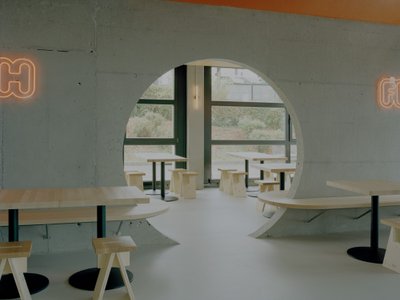
Noue Studio Organizes a Swiss Restaurant Around a Single Concrete Wall
In Granges-Paccot, Switzerland, a 216-square-meter renovation turns raw materials and a central spine into a legible dining experience.

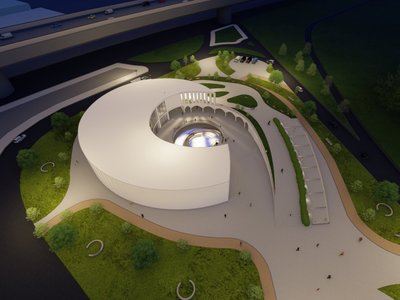
The Heart of Milano: Slow Fashion Architecture for a New Circular Culture
The Heart of Milano turns slow fashion architecture into a civic landmark where learning, making, sharing, and circular culture meets daily.

Similar Reads
You might also enjoy these articles
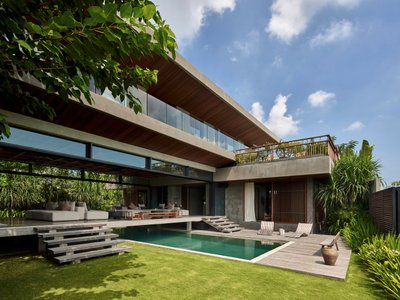
Freebird Residence by Alexis Dornier: A Tropical Modernist Sanctuary in Bali
Floating living pavilion above pool anchors H-shaped tropical villa, blending Japanese minimalism, sustainable strategies, lush landscape, and sculptural interiors.
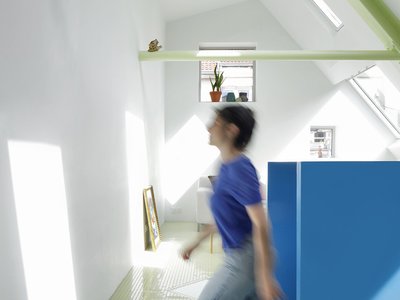
127af Flips a Tiny Bagnolet Rowhouse Upside Down with a Handcrafted Roof Extension
A 55-square-meter terraced house on the edge of Paris gains a luminous upper living floor through lightweight timber and steel.
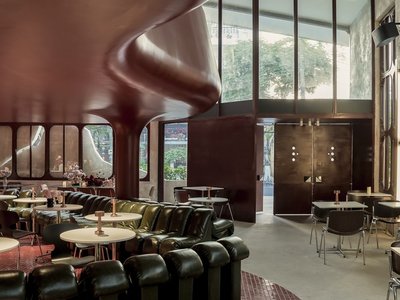
1.61 Design Workshop Wraps a 600-Square-Meter Café in Vietnam in Sculptural Burgundy Drama
Reden Café & Bistro pairs a helical staircase, mosaic floors, and deep red interiors to rethink Vietnamese hospitality space.

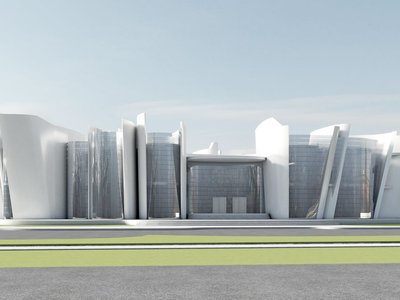
The Unbound Brain: A School Shaped by Cognitive Architecture
Cylindrical learning pods radiate like neurons from a central cortex, turning the floor plan into a spatial model of human thought.

Explore Residential Building Competitions
Discover active competitions in this discipline




The Global Benchmark for Architecture Dissertation Awards


Challenge to design mud housing for contemporary communities
Comments (0)
Please login or sign up to add comments
No comments yet. Be the first to comment!