
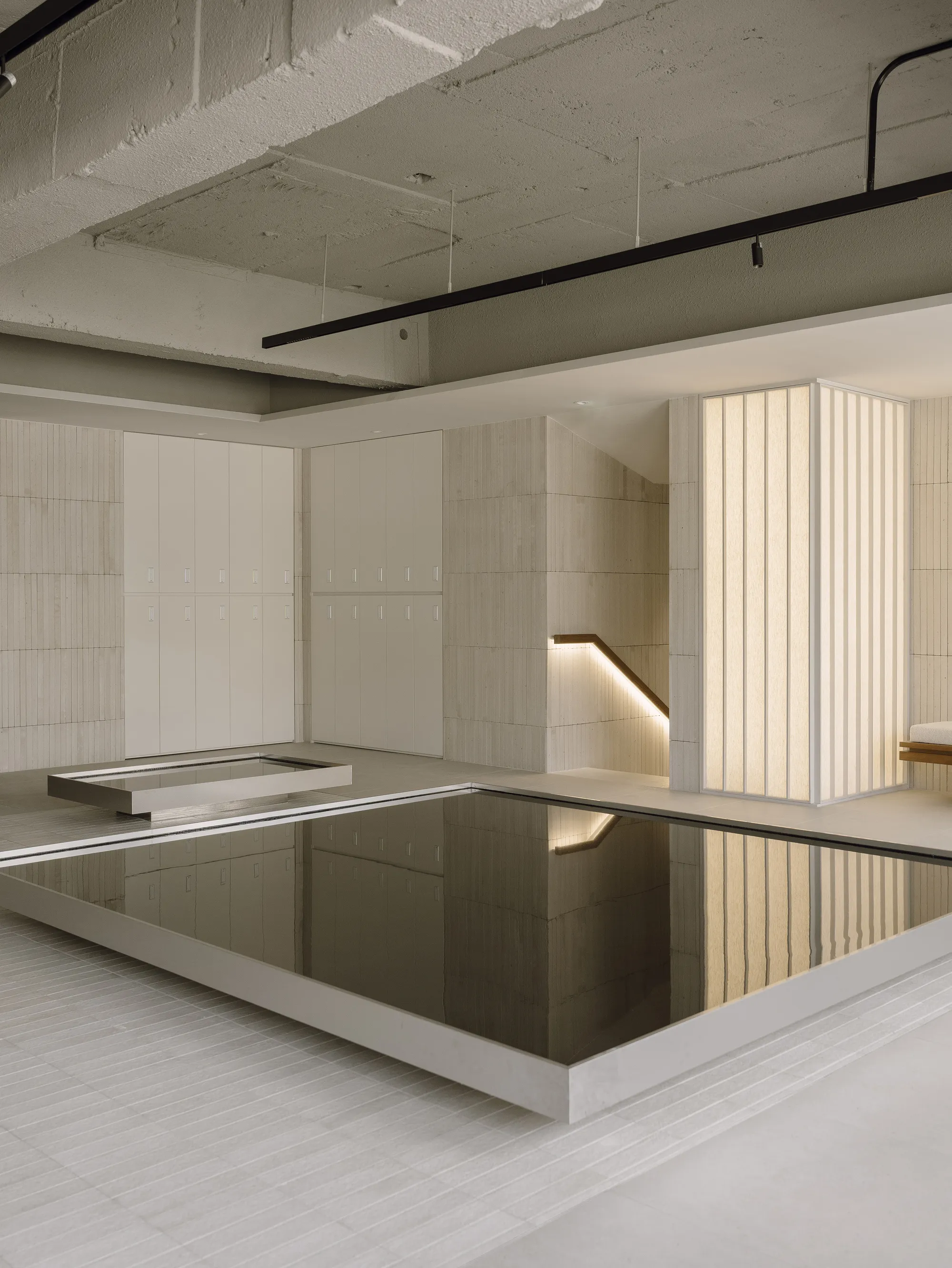
TYPE S Floods a Seoul Hair Salon with Reflective Pools and Ribbed Tile Volumes
Junohair Yangjae 1st renews a long-running salon in Seoul with sunken water features, exposed concrete, and warm timber pavilion forms.


A hair salon is, at its core, a theater of reflection. Mirrors, lighting, the careful positioning of a chair: every decision exists in service of the person sitting in it. At Junohair Yangjae 1st in Seoul, TYPE S takes that idea literally, cutting dark reflective pools into the floor plane so that ceilings, columns, and bodies of light double themselves underfoot. The 432 square meter renovation of a long-running salon doesn't just refresh tired surfaces. It restructures the entire spatial logic around stillness, water, and material contrast.
What makes the project genuinely unusual is the refusal to treat a commercial interior as disposable scenography. TYPE S works with the building's existing concrete frame, exposing ceiling beams and columns rather than concealing them behind drywall, then threads warm timber volumes and pale ribbed tile surfaces through the raw structure. The result reads less like a salon fitout and more like a small public bathhouse that happens to cut hair. It is deliberate, quiet, and surprisingly monumental for its modest program.
A Gabled Timber Pavilion on a Corner Street
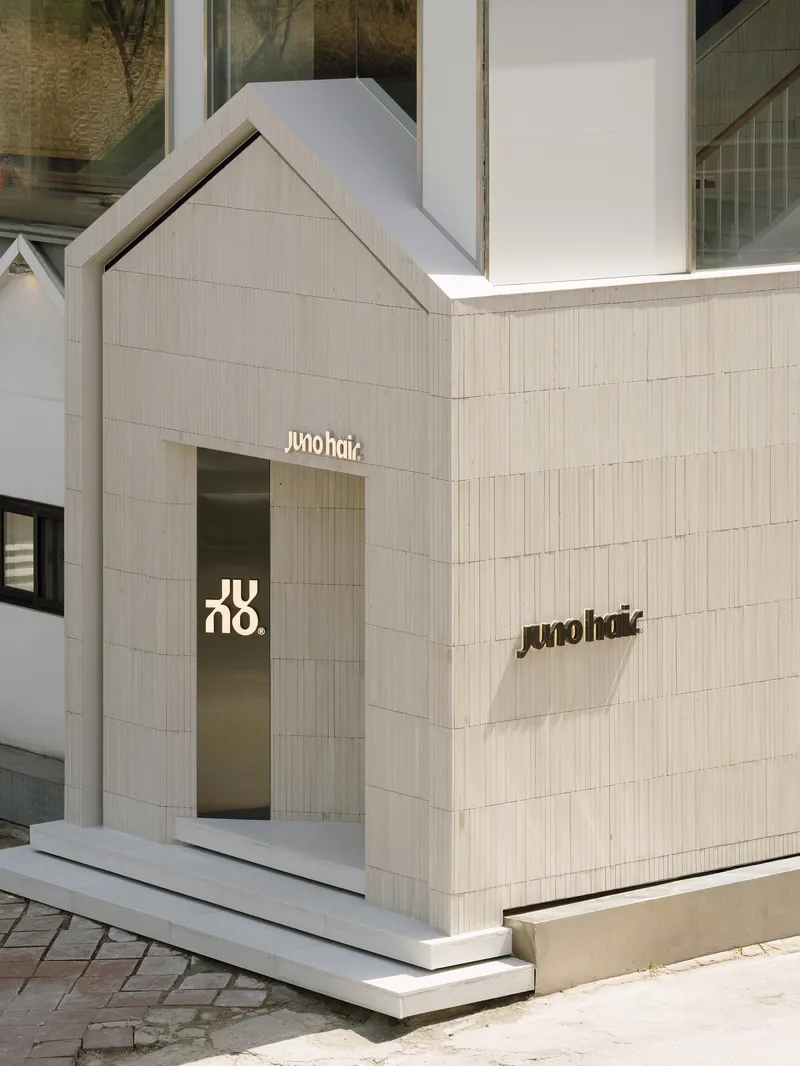
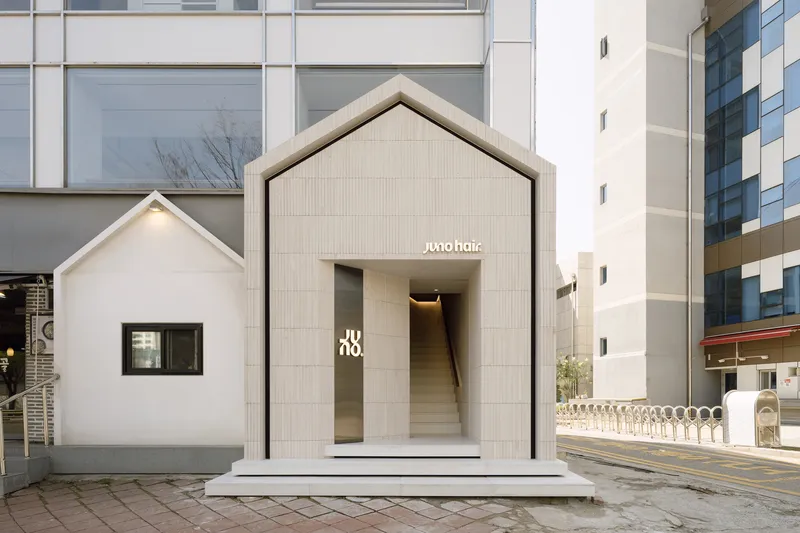
From the street, the intervention reads as an inserted object: a gabled volume clad entirely in vertical timber strips, tucked between the existing buildings on a cobblestone corner. The pitched silhouette is almost domestic, recalling a small chapel or village storefront, and the recessed glass entrance pulls visitors in without fanfare. It's a smart move in a Seoul neighborhood full of competing signage and aggressive retail frontages. By staying quiet and materially consistent, the facade signals a different kind of interior experience before you even step inside.
Exposed Concrete as Inherited Architecture
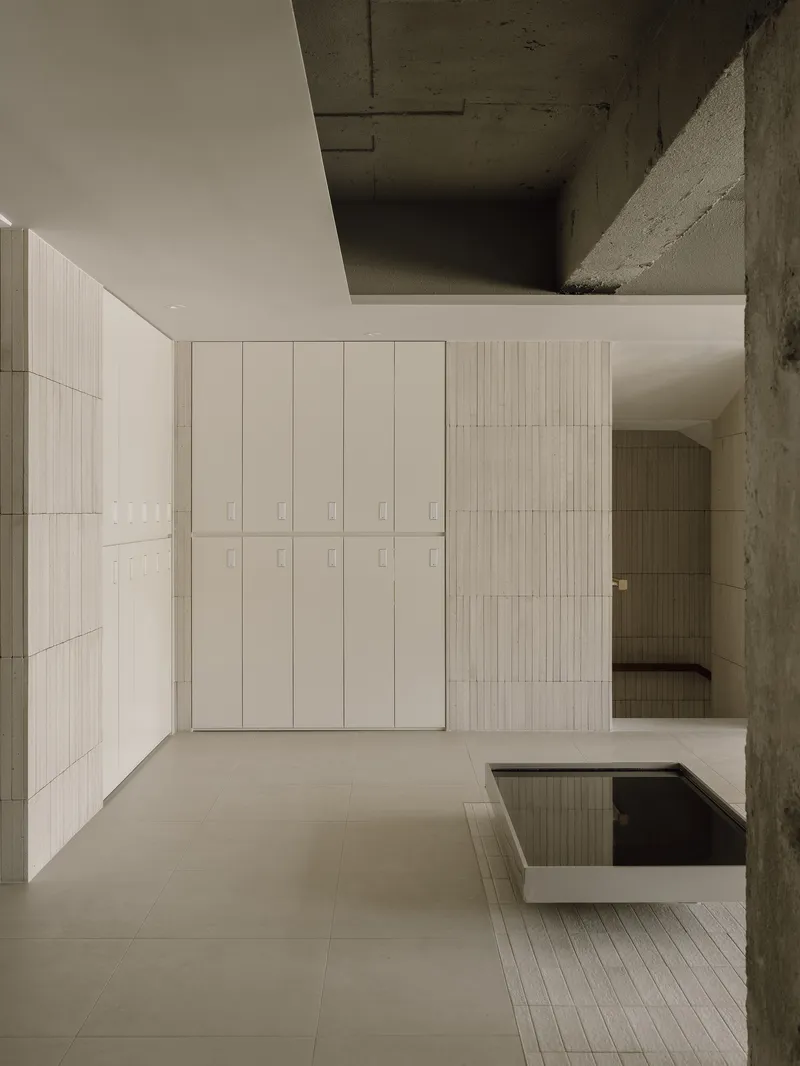
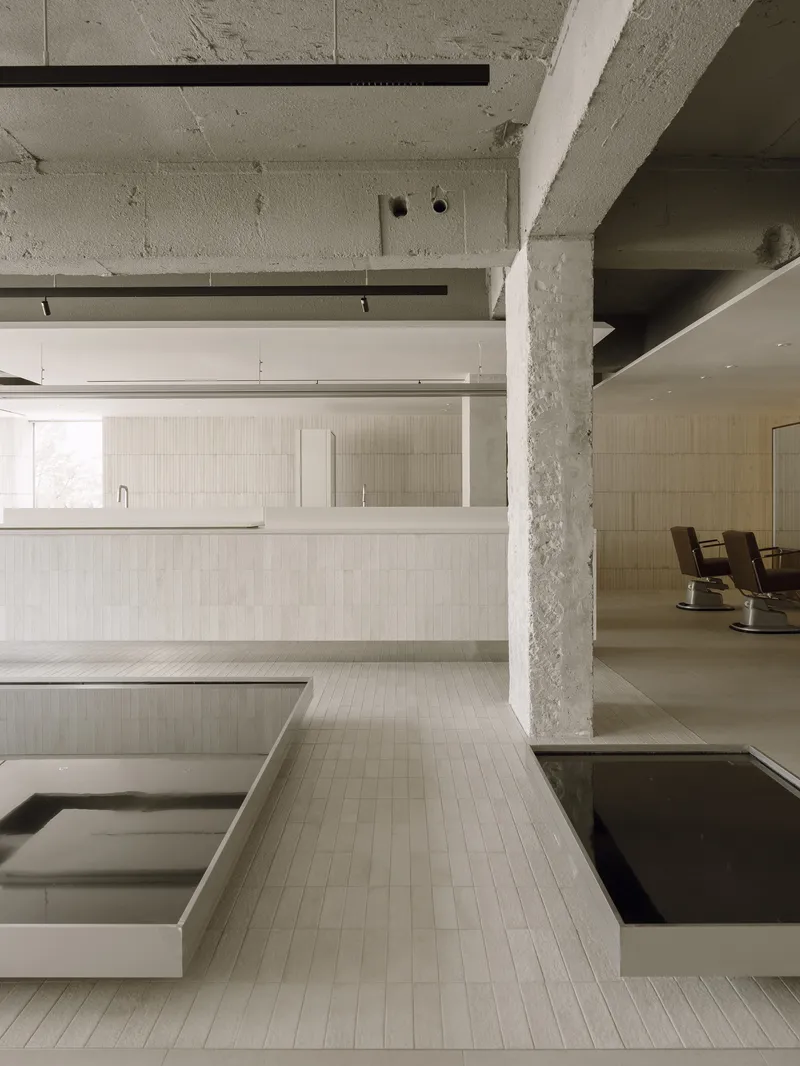
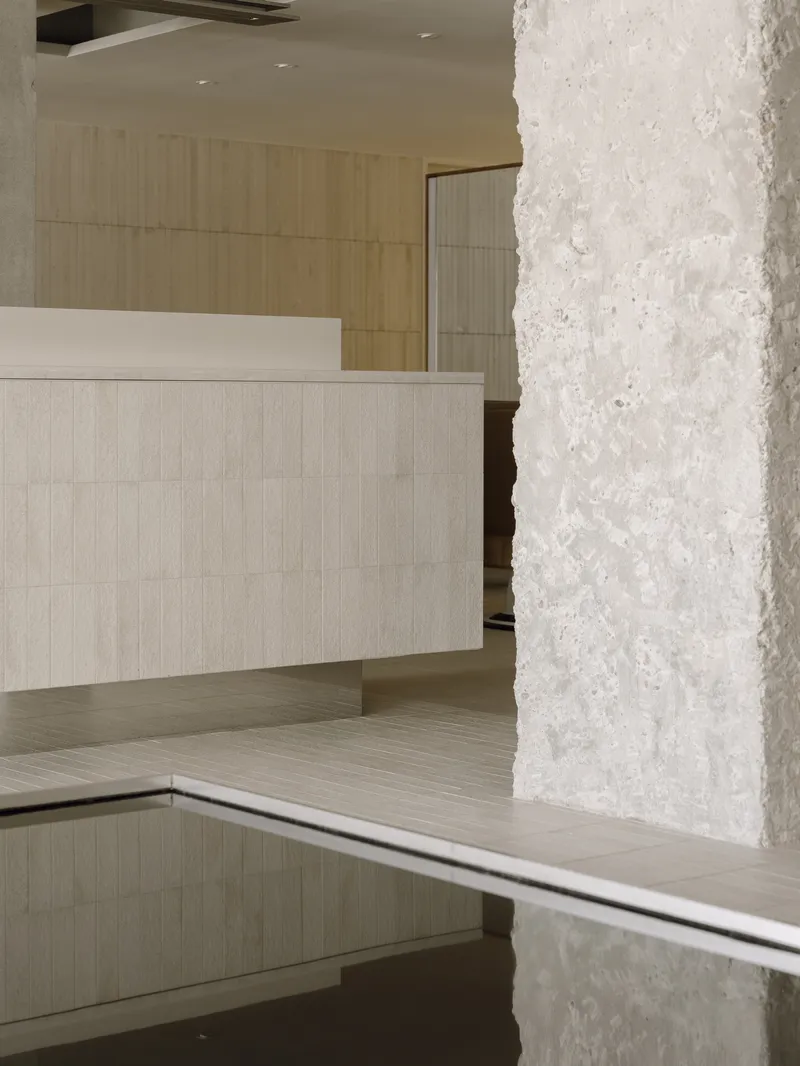
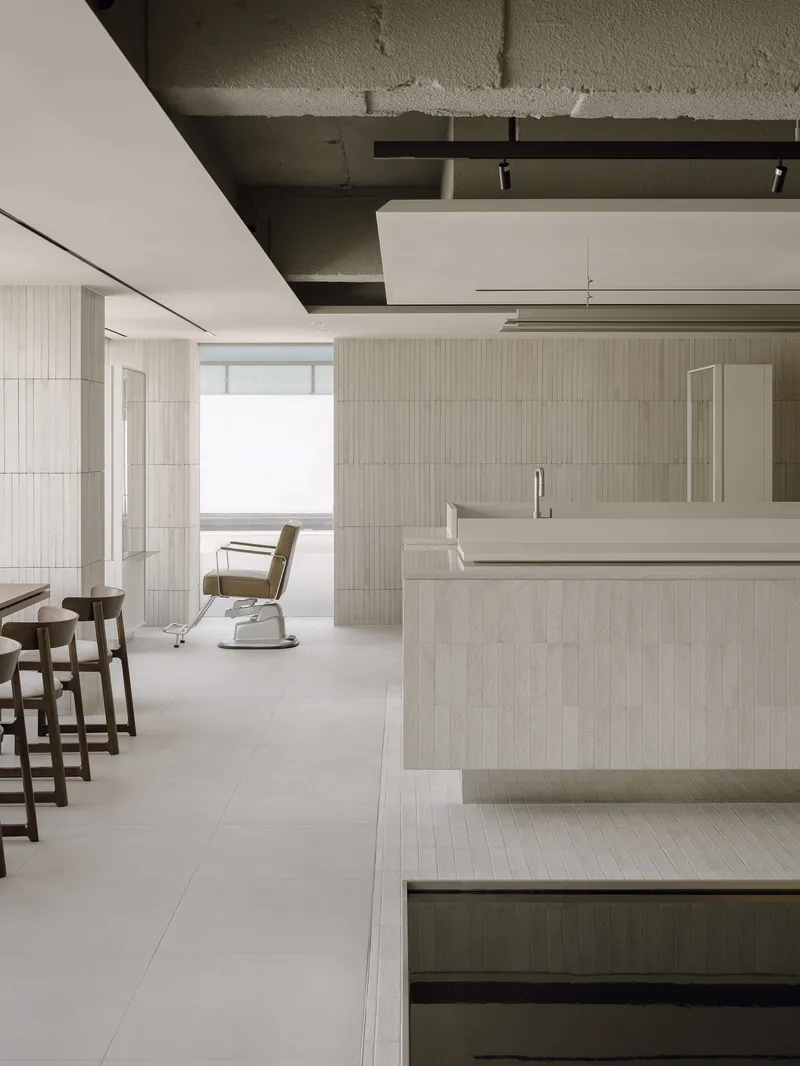
The most striking decision in the renovation is what TYPE S chose to reveal. The existing concrete frame, with its heavy beams and rough-surfaced columns, has been stripped back and left unapologetically bare. This is not the polished concrete of luxury retail. The textures are coarse, the proportions are structural, and the patina of decades of use is legible in the surface. Against this backdrop, the cream-tiled counters and pale flooring feel almost surgically clean.
There's a productive tension here between the permanent and the applied. The concrete reads as geology, something the building always contained and the previous fitout simply buried. TYPE S treats it as a found condition worth celebrating, turning what might be an awkward exposed structure into the dominant spatial character of the salon.
Reflective Pools That Anchor the Ground Plane
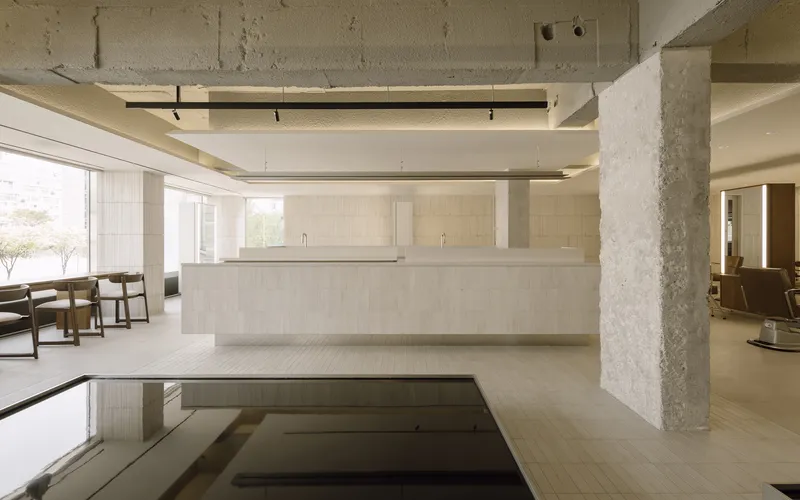
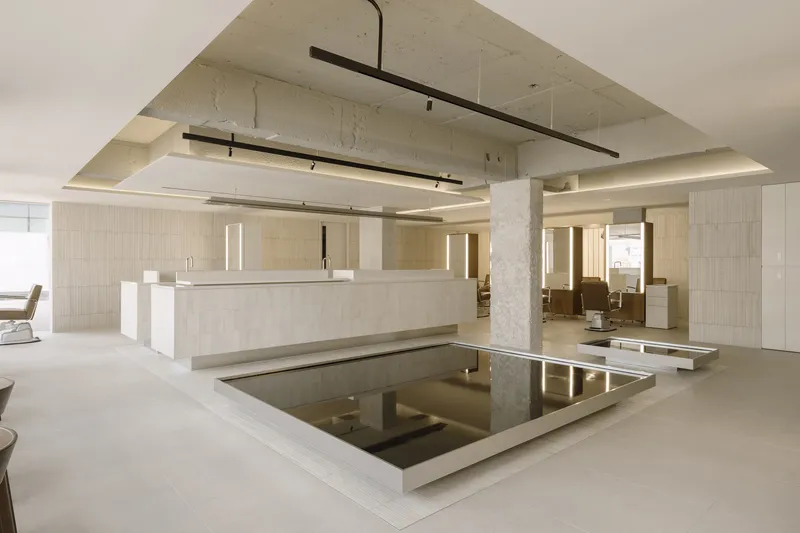
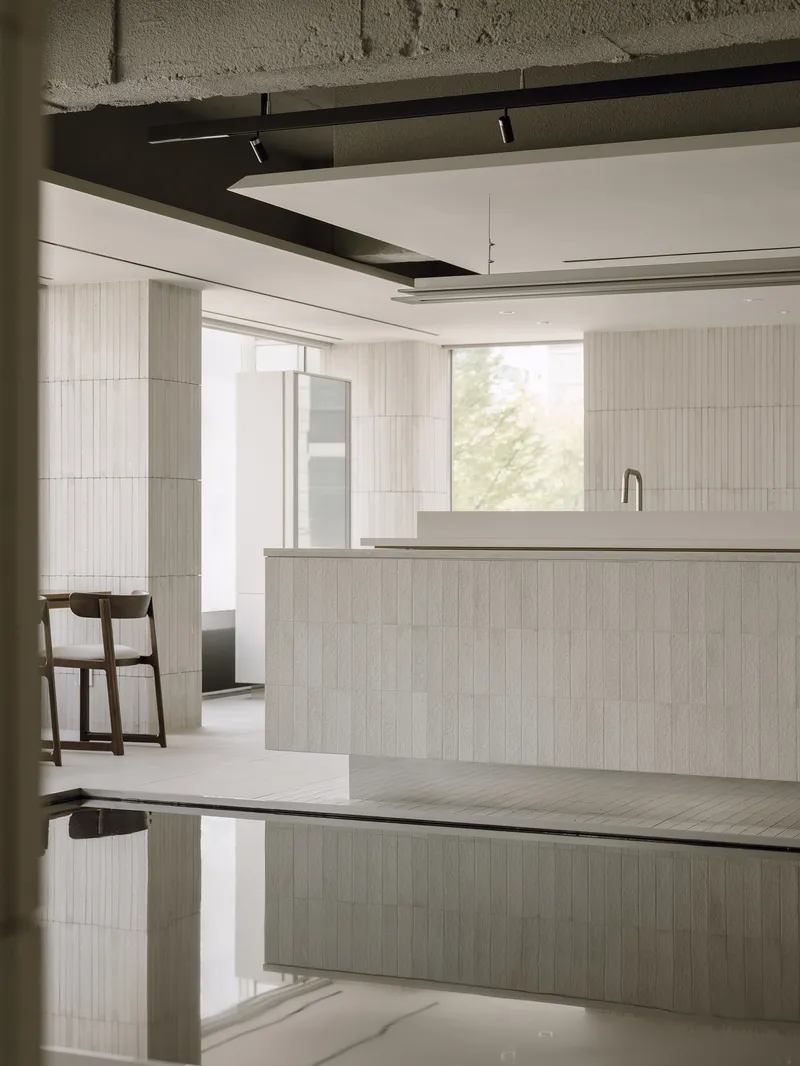
The dark, mirror-like pools recessed into the floor are the project's signature gesture. Set flush with the pale flooring, they capture the exposed ceiling beams, suspended light fixtures, and timber volumes above, producing a doubled interior that feels far taller than its actual section. At the reception desk, a long strip of dark water sits just beyond the counter edge, turning an otherwise functional zone into something contemplative. The effect is closer to a reflecting pool in a courtyard than anything you'd expect in a commercial salon.
These water features aren't decorative afterthoughts. They appear to organize the circulation and zoning of the floor plan, marking transitions between service areas, waiting zones, and the primary salon workspace. You navigate around them the way you'd navigate around a garden element, and their stillness enforces a slower pace of movement through the space.
Ribbed Tile and Curved Walls
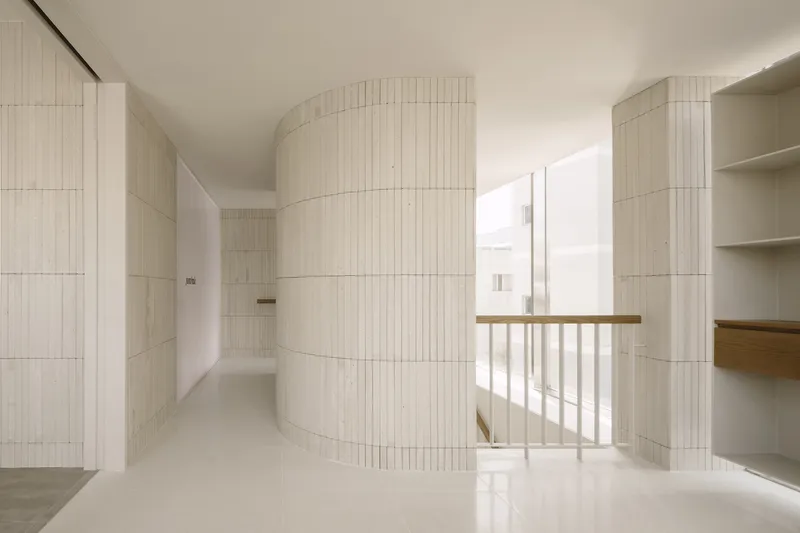
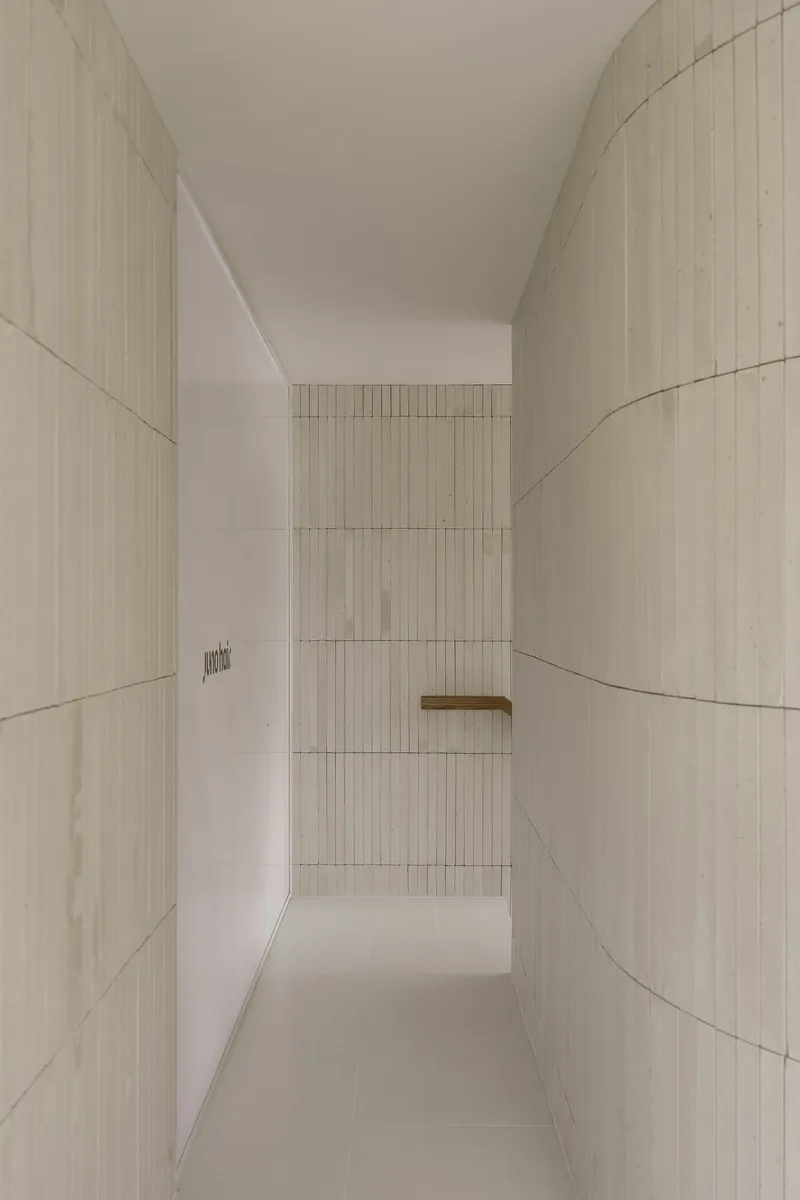
TYPE S wraps several of the interior volumes in vertically ribbed tile, creating curved walls that guide sightlines and soften transitions between zones. Around window openings, these ribbed surfaces frame daylight with an almost devotional quality, channeling it inward through deep reveals. The tiles are pale and matte, catching light along their ridges and throwing soft shadows into the grooves. It's a simple detail, but the cumulative effect across corridors and service stations gives the interior a rhythmic texture that photographs can only partially convey.
The curves are generous but not flamboyant. They don't scream for attention the way parametric geometry often does. Instead, they read as functional choices: smoothing the flow of a narrow corridor, wrapping a column to reduce its visual bulk, creating a gentle boundary between a service chair and the adjacent station. The material does the spatial work.
Timber Warmth Against the Raw Frame
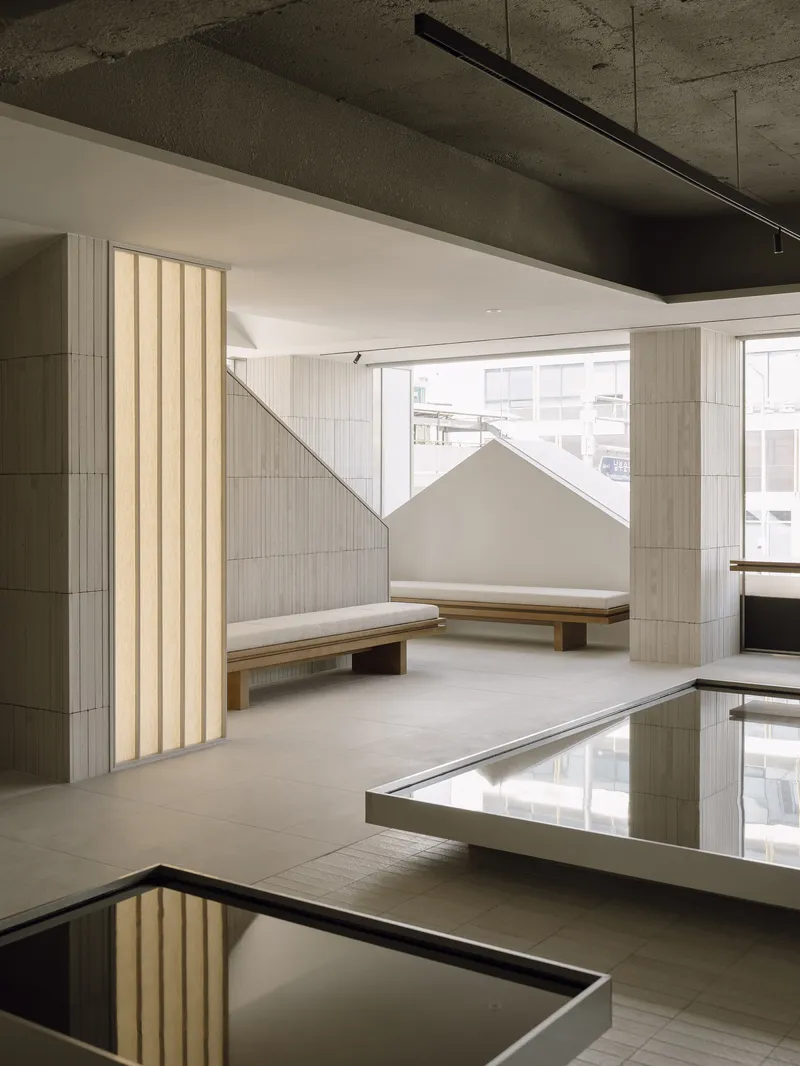
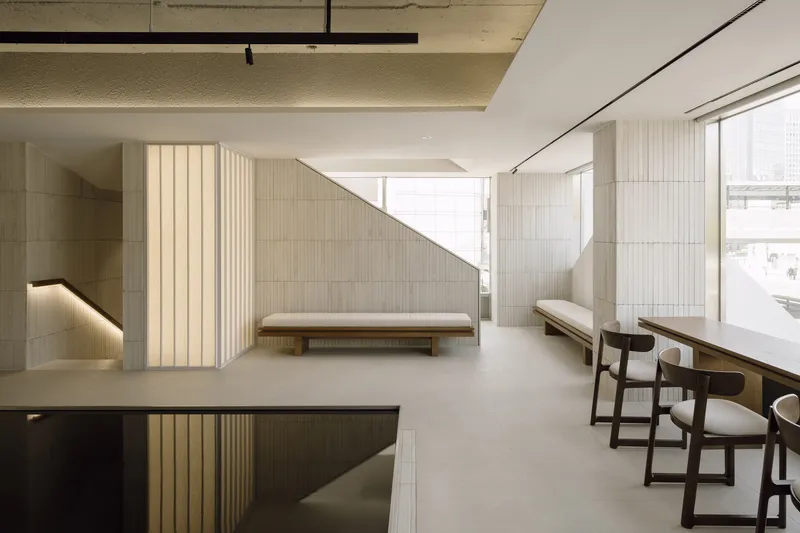
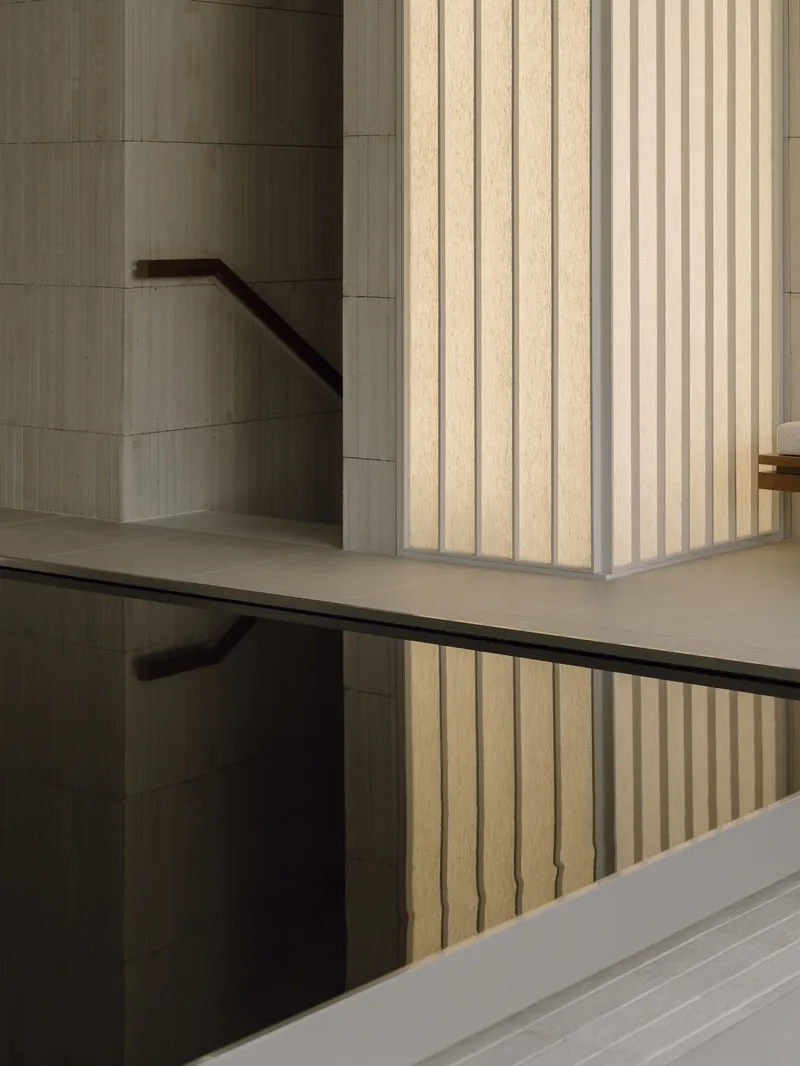
Timber appears throughout the project in multiple roles: as vertical wall cladding, as bench seating, as stair paneling, and as the exterior facade material. Its warmth provides the necessary counterpoint to the exposed concrete above and the reflective dark pools below. In the seating niches, fluted timber panels rise vertically behind benches, creating intimate enclosures that shield clients from the open salon floor. In the stairwell, the same vertical timber cladding wraps the walls in a continuous grain, turning a utilitarian circulation space into something worth pausing in.
The consistency of the timber palette, always light, always vertical, always paired with soft integrated lighting, gives the entire project a coherent material identity. TYPE S resists the temptation to introduce too many finishes. Concrete, tile, timber, dark water: four materials carry the entire design.
Working Stations and Daylight
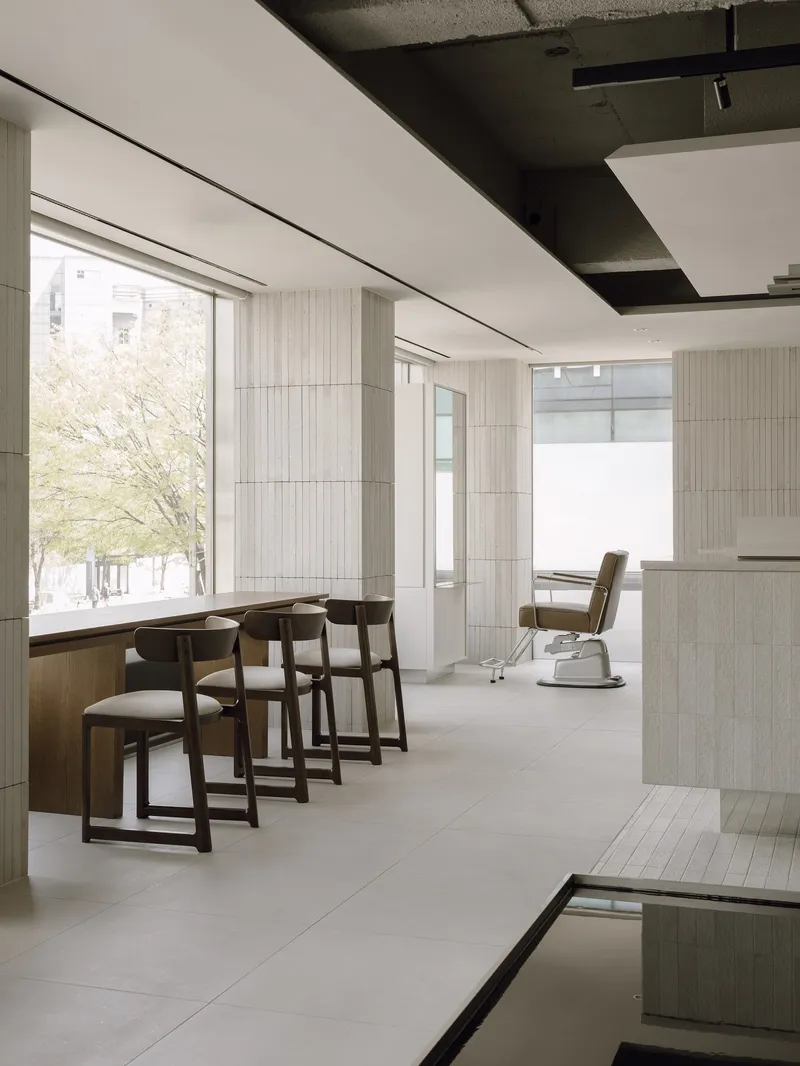
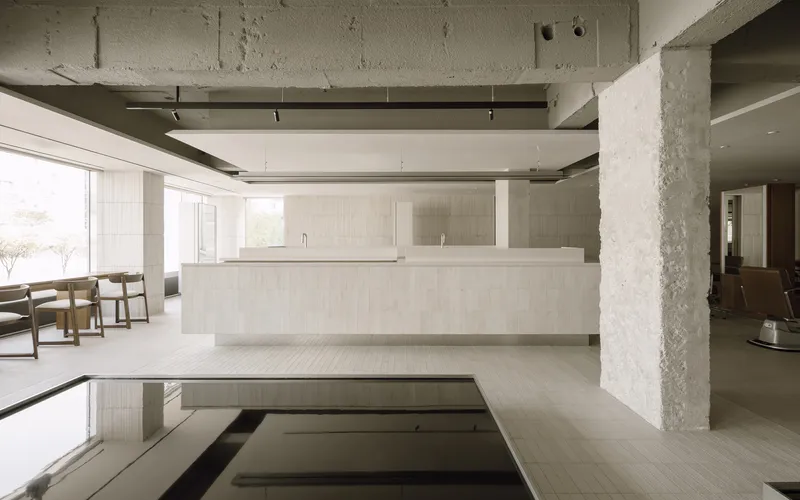
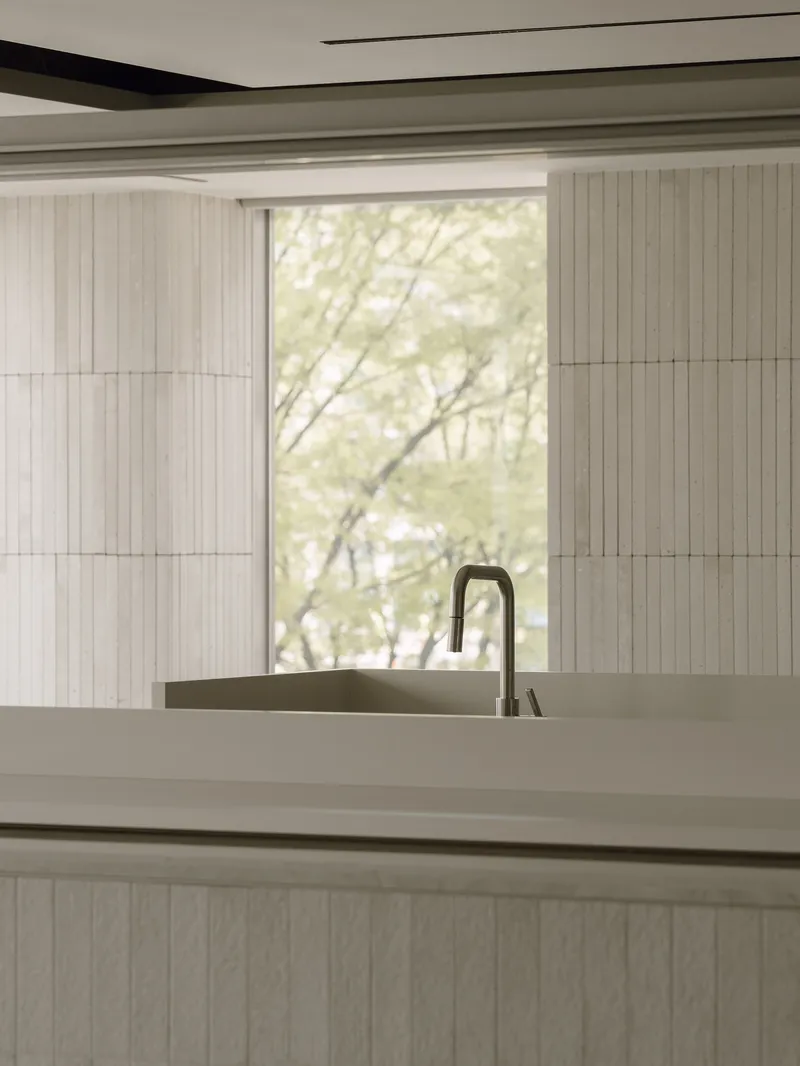
The salon workstations are arranged along floor-to-ceiling windows, a decision that prioritizes natural light for both stylists and clients. A row of wooden chairs faces the glazing, framing views of spring trees outside and flooding the workspace with even, diffuse daylight. This is practical as much as atmospheric: accurate color rendering matters enormously in a salon, and natural light remains the gold standard. The sunken basins at the counters are neatly integrated into the tiled surfaces, keeping the visual profile of the stations clean and low.
A kitchen island with an integrated sink, framed by the same vertical timber paneling, suggests a hospitality zone where the salon experience extends beyond the chair. The boundary between service and care is deliberately blurred.
Material Junctions and Details
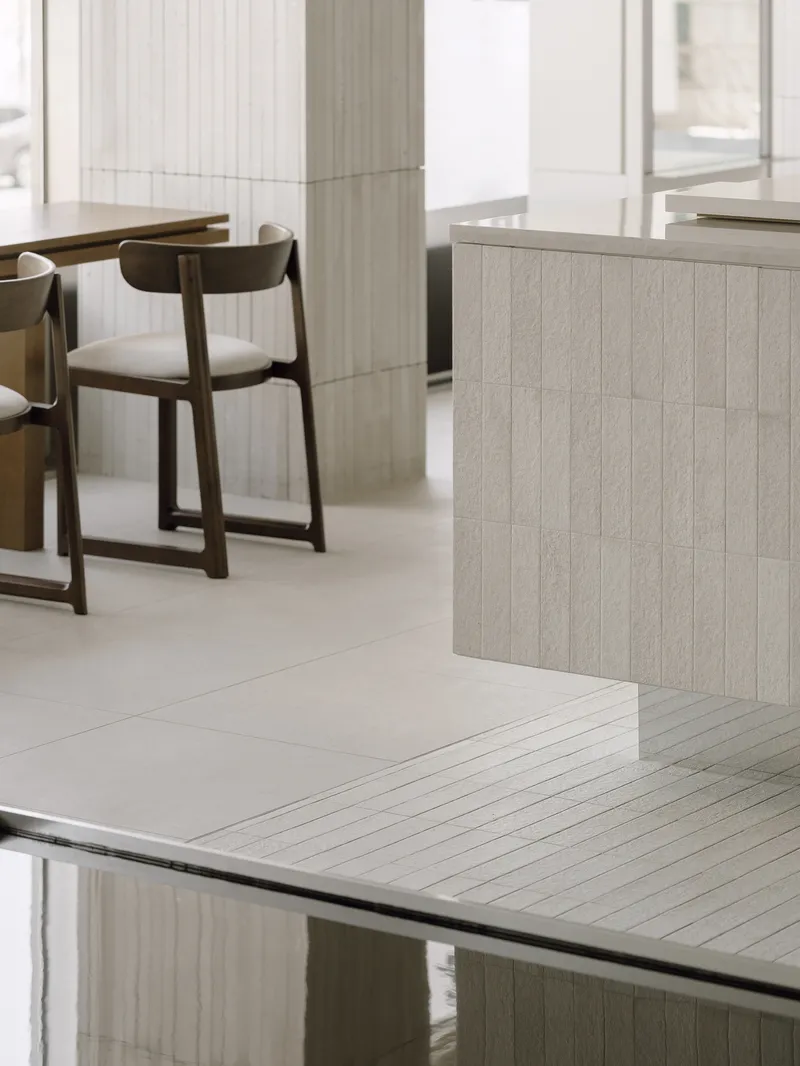
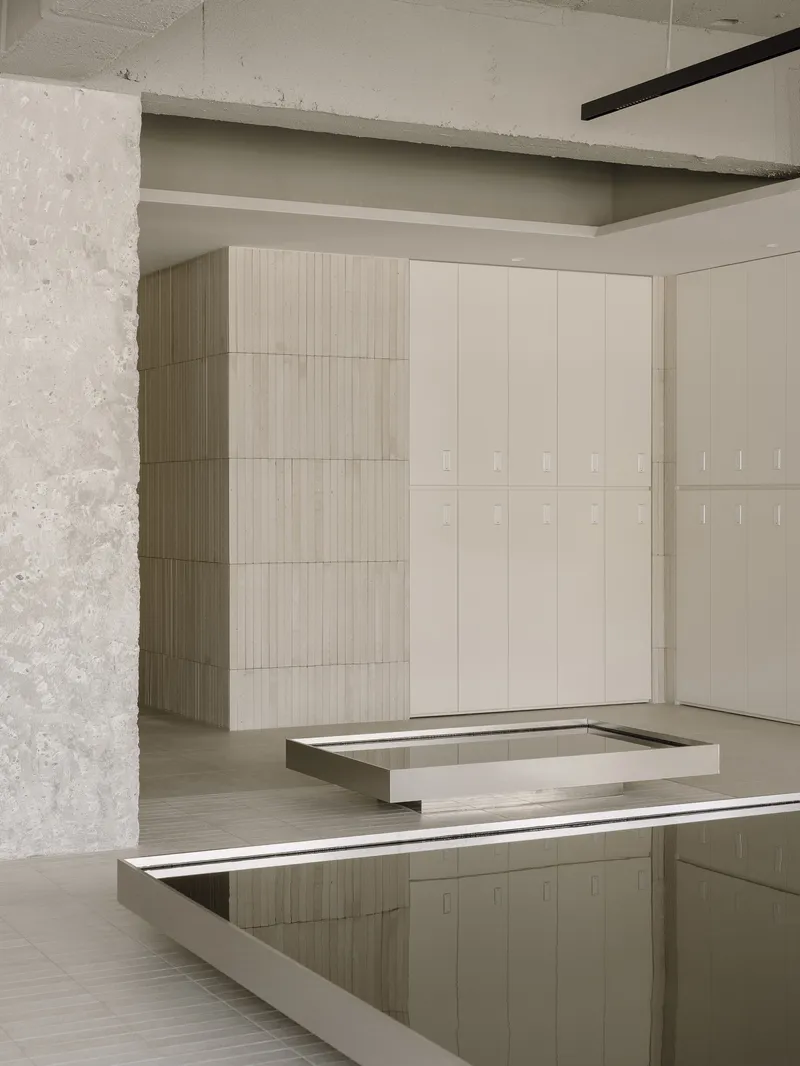
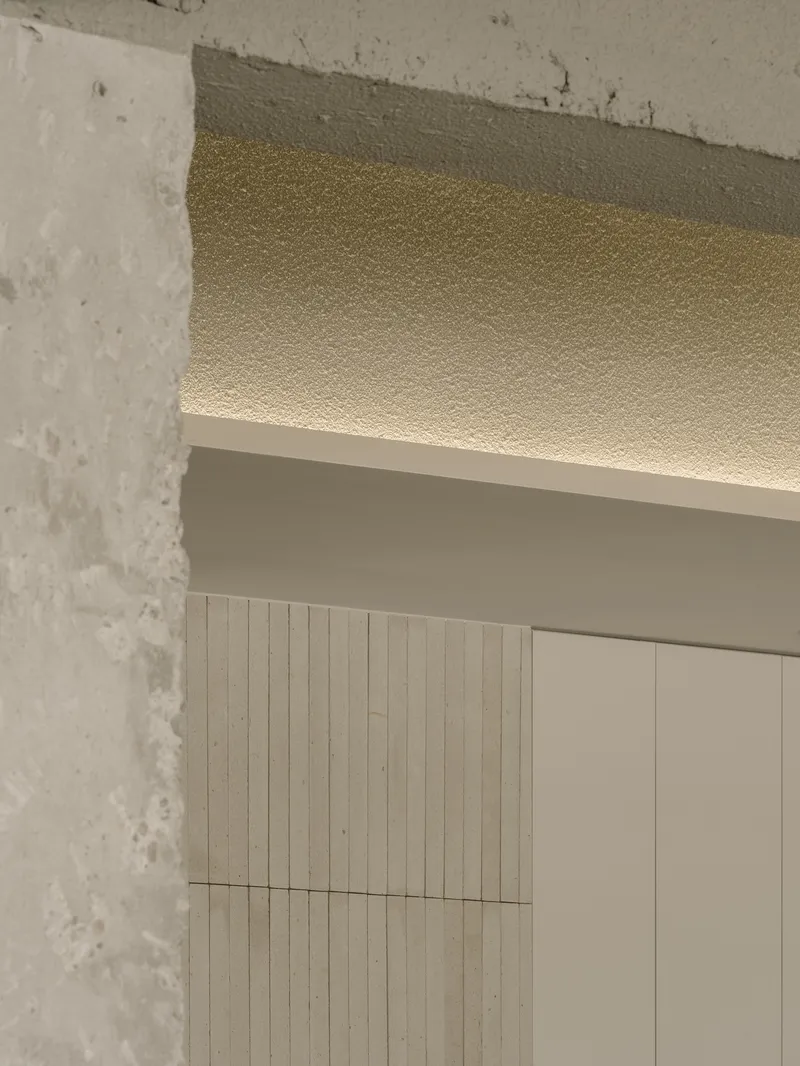
The craft of the project lives in its junctions. Where the pale tiled counter meets the dark reflective glass surface, the transition is sharp and clean, a single line separating two material worlds. Where a concrete column meets a timber locker wall, the gap is precise enough to read as intentional rather than compromised. Concealed lighting at the ceiling reveals the texture of the concrete while preserving the clean edges of the timber volumes below.
These moments are easy to overlook in photographs, but they represent the real labor of the renovation. Making new materials meet old structure without faking a seamless surface requires discipline. TYPE S appears to have drawn every junction as a deliberate confrontation between the found and the inserted, and the result is a salon that rewards close looking.
Plans and Drawings
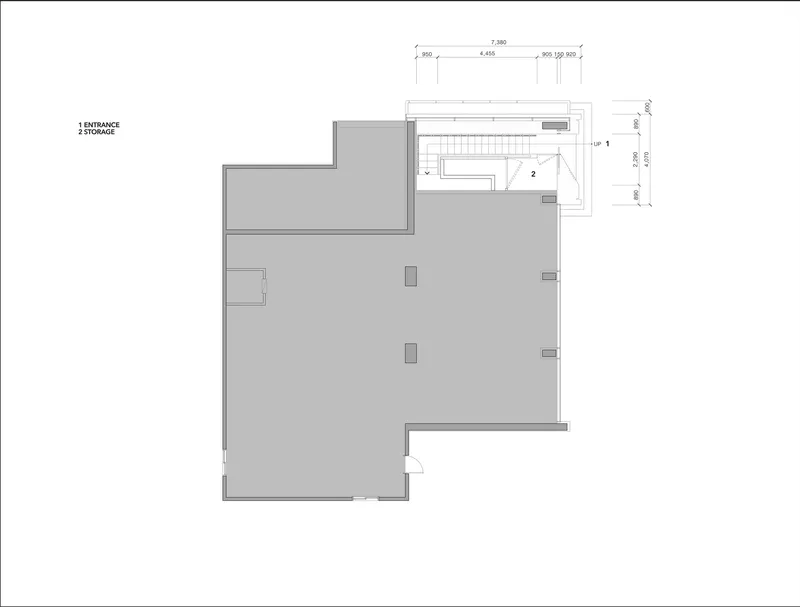
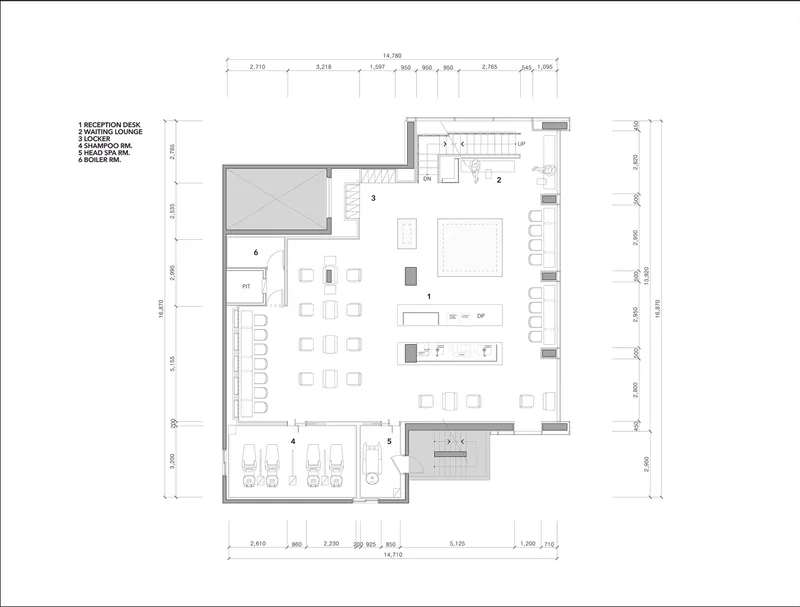
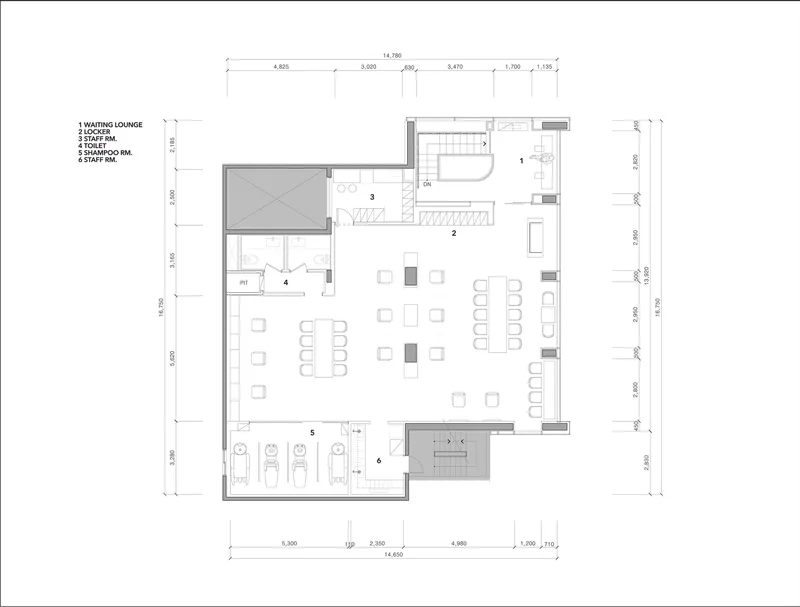
The floor plans reveal a compact but carefully zoned layout across multiple levels. The ground floor positions the entrance and storage alongside the primary stairwell, while the main salon level organizes reception, waiting lounge, head spa, and treatment stations in a clear sequence. A separate level accommodates a waiting lounge with a dining area and adjacent restroom facilities. The plans confirm what the photographs suggest: the reflective pools and curved tile volumes are not random insertions but carefully positioned elements that define the spatial hierarchy and circulation paths of the entire salon.
Why This Project Matters
Salon interiors are among the most frequently renovated and most quickly discarded commercial spaces in any city. The typical cycle, trend-chasing surface treatments replaced every few years, generates enormous waste and produces spaces with no memory. TYPE S pushes back against that cycle by exposing the permanent structure of the building and working with a restrained material palette that doesn't depend on novelty for its impact. If the concrete frame and timber cladding age, they'll age well. That alone makes the project unusual in its category.
More than that, Junohair Yangjae 1st demonstrates that even small commercial programs can carry genuine architectural ambition. The sunken reflective pools, the curved tile corridors, the gabled street pavilion: these are not gestures borrowed from residential or institutional design and awkwardly grafted onto a salon. They are spatial ideas developed specifically for the rhythms of waiting, sitting, being attended to, and looking at yourself. TYPE S has produced a renovation that takes its program seriously, and the result is a space that respects both the building it inherited and the people who will use it.
Junohair Yangjae 1st by TYPE S. Seoul, South Korea. 432 m². Completed 2026. Photography by NAMSEUNGROK.
Share Your Own Work on uni.xyz
If projects like this are the kind of work you want to make, uni.xyz is a place to publish your own, find collaborators, and enter design competitions.


Popular Articles
Popular articles from the community


The Earth Pod: 3D Printed Homes for Resilient Refugee Communities
The Earth Pod reimagines refugee housing through 3D printed homes made from clay, combining resilience, self-sufficiency, and rapid shelter.

Play: Fragments of Their World
Familiar architecture becomes modular playground design, creating safe spaces where displaced children can learn, connect, imagine and play.

The Ocean Hive: Sustainable Architecture for a Self-Sufficient Civilization at Sea
The Ocean Hive imagines sustainable architecture at sea, where modular habitats, algae, wave power and ocean waste sustain a growing colony.

Co-Life: Senior Housing Design That Reconnects Older Adults With the City
Co-Life reimagines senior housing design through healing gardens, shared streets, workshops, and a sustainable community across generations.

Similar Reads
You might also enjoy these articles

Bao Huynh Watercolor Atelier: A Serene Art Retreat in Hội An
Bao Huynh Watercolor Atelier in Hội An blends multifunctional art spaces, sustainable design, local materials, and family-friendly living in a serene environment.

Atelier Macri Concept Store Interior Design by CASE-REAL
Atelier Macri store features a "ko" counter, walnut wood details, cork displays, blending retail, gallery, and seamless customer experiences.

Manuel Vargas Izquierdo Stadium and High-Performance Sports Center: Architectural Excellence in Jalpa de Méndez
The Manuel Vargas Izquierdo Stadium blends sustainable design, inclusive sports facilities, and cultural-inspired architecture, revitalizing Jalpa de Méndez’s public spaces.

KAKR Buluh Awar Hall: Revitalizing Community and Ecology Through Bamboo Architecture
Community built bamboo hall revitalizes Buluh Awar village, empowering youth, restoring ecology, celebrating vernacular craftsmanship through sustainable architecture and culture.


Explore Architecture Competitions
Discover active competitions in this discipline



Challenge to reimagine the Iron Throne


Photograph architecture without architects


Illustrate the lost glory of Angkor Wat - Render Challenge


Design challenge to reuse E-waste
Comments (0)
Please login or sign up to add comments
No comments yet. Be the first to comment!