

Underdream Hygge Lodge By ArCONNECT Architects
Dali lodge integrating stone walls, courtyards, and landscapes, blending mountain forest intimacy with expansive farmland views through layered spatial sequences.


Located at the foot of Cangshan Mountain in Dali, China, Underdream Hygge Lodge by ArCONNECT Architects is a 1,604 m² retreat that redefines the relationship between architecture, landscape, and dwelling. Conceived as both a private residence and a small manor hotel, the project transforms an abandoned farm into a layered spatial experience where nature, memory, and architecture are inseparably intertwined.

At its core, the design is shaped by the site’s dual character, an intimate mountain forest atmosphere to the north and an expansive pastoral landscape to the south. These two contrasting conditions, along with differing spatial scales, form the conceptual foundation of the project.
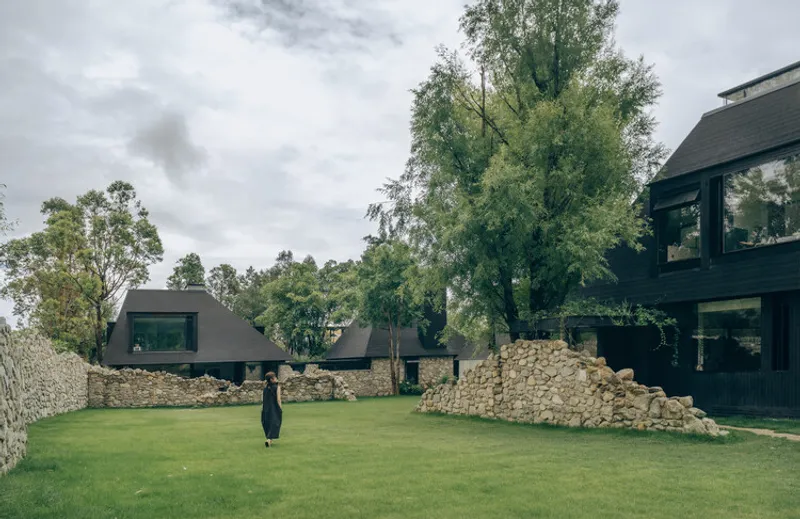
Two Landscapes, Two Scales
The site unfolds as a long, narrow strip of land oriented east, west. To the north, a stream descends from Cangshan, bordered by dense woodland that creates a secluded and immersive natural environment. To the south, the terrain opens dramatically toward farmland, offering panoramic views of the mountain range stretching across the horizon.

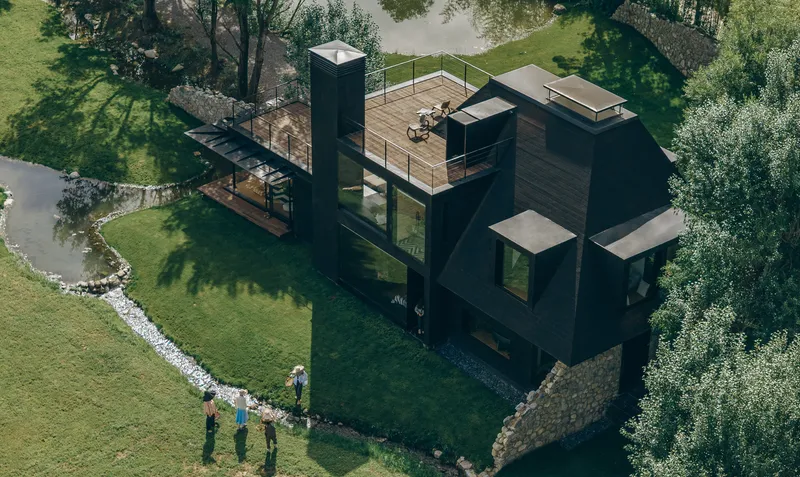
This duality produces two experiential scales. The first is an intimate scale, defined by ponds, trees, shaded paths, and dense vegetation. The second is a landscape scale, where the vast openness of farmland and the distant mountains evoke a sense of boundless space.
Rather than privileging one condition over the other, the architects orchestrate a dialogue between these scales. The project allows inhabitants to move fluidly between enclosure and openness, between immersion in nature and contemplation of distant horizons.

Earth Stone Walls: A New Spatial Framework
The primary architectural strategy lies in the introduction of continuous earth stone walls. These walls serve as the structural and spatial backbone of the project, weaving through buildings, courtyards, and gardens.
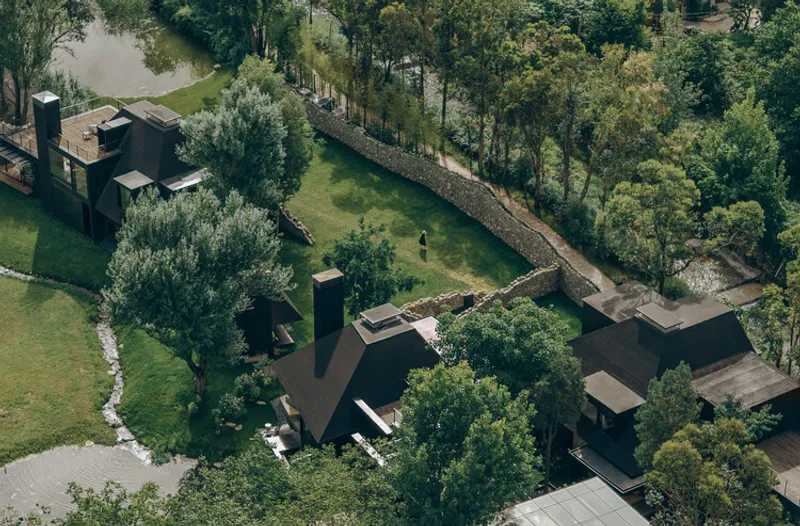
Instead of defining rigid boundaries, the walls blur distinctions between inside and outside. They extend across the site, rising and falling with the terrain, shaping courtyards of varying privacy while expanding the perceived limits of interior space.
Importantly, the design retains the original building footprints due to structural constraints. Within these limits, the earth stone walls become a transformative device, reorganizing spatial relationships without altering the site’s basic geometry.

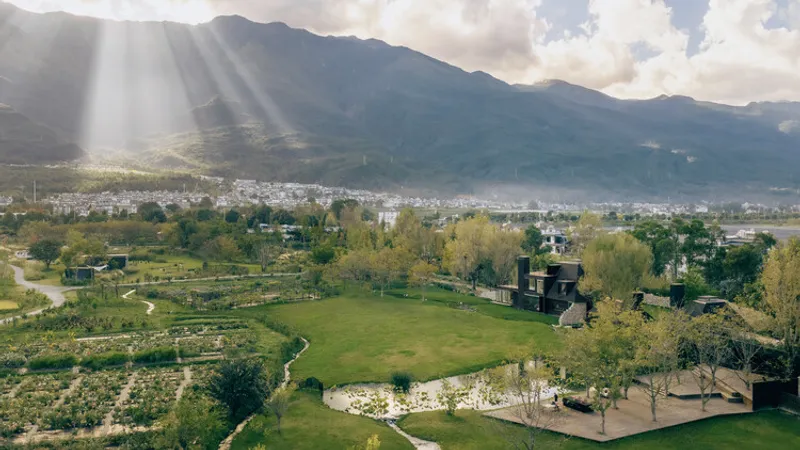
Two dominant “forces” guide their placement:
- The horizontal (pingyuan) force toward the southern farmland and distant mountains
- The vertical (gaoyuan) force toward the pond and framed mountain peaks to the west
These forces generate two primary spatial sequences that structure the experience of the lodge.
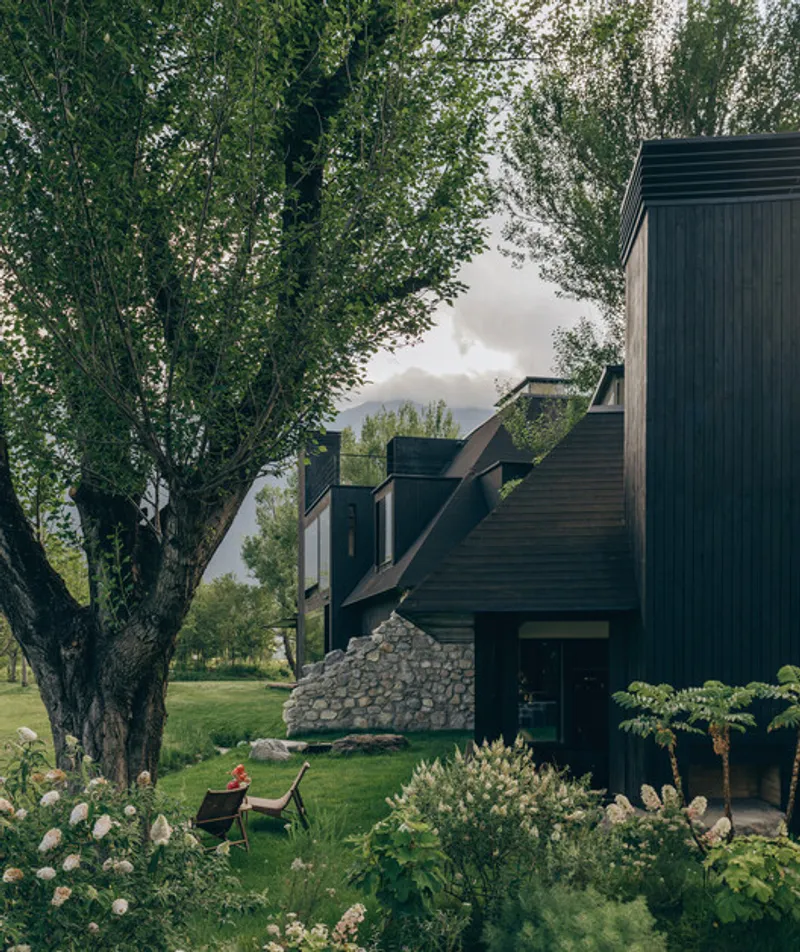
Spatial Sequences: Moving Through Nature
1. North, South Sequence (Forest to Farmland)
The first sequence begins in a semi-enclosed inner courtyard, where dense planting and water features extend the atmosphere of the nearby stream. A teahouse opens toward this courtyard, dissolving the boundary between architecture and nature.

From here, a transparent garden living room mediates the transition toward the south. With sliding glass doors fully open, the space becomes a passage rather than a room. The experience flows into a walnut grove, where visitors rest beneath trees before encountering expansive views of farmland and Cangshan beyond.
This sequence culminates at the pond’s edge, where the mountains stretch horizontally across the entire field of vision.
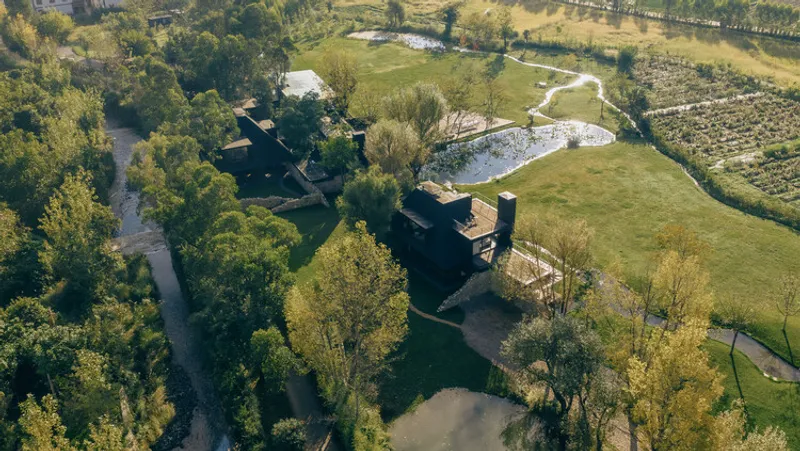
2. East, West Sequence (Depth and Framing)
The second sequence unfolds from a double-height dining hall toward the west. The journey progresses through a semi-enclosed lawn, where mountains are framed between walls, trees, and architectural elements.
As one approaches the pond, the architecture gradually recedes, allowing nature to dominate. The mountains are reflected in water, creating a layered composition of depth and verticality.

Together, these sequences transform movement into an immersive experience: an unfolding narrative of landscape, architecture, and perception.
The Farmhouse: Living Beneath the Roof
The primary residence, referred to as the “Farmhouse,” adapts an L-shaped footprint into a complex interplay of pitched and flat roofs. These roofs create varied interior volumes while responding to functional needs.
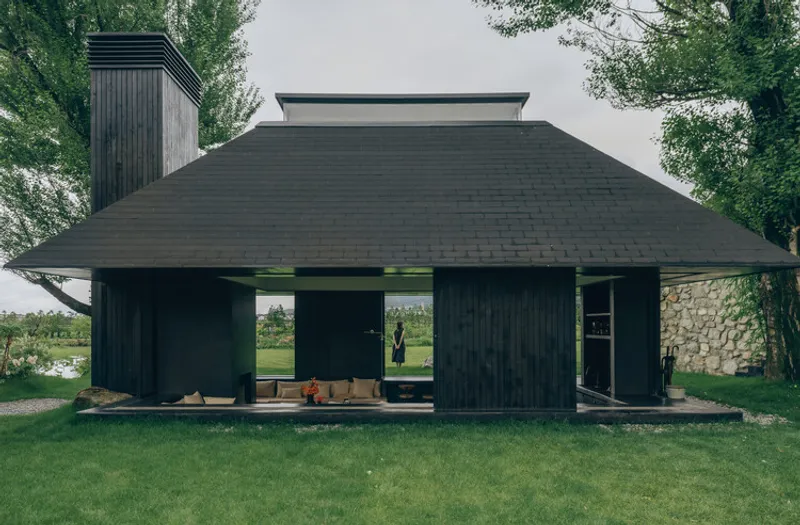
Inside, a sequence of spaces: including an entrance foyer, open staircase, gallery, and attic, unfolds beneath the roofscape. Skylights and dormers introduce natural light, casting shadows of bamboo and surrounding vegetation into the interior.
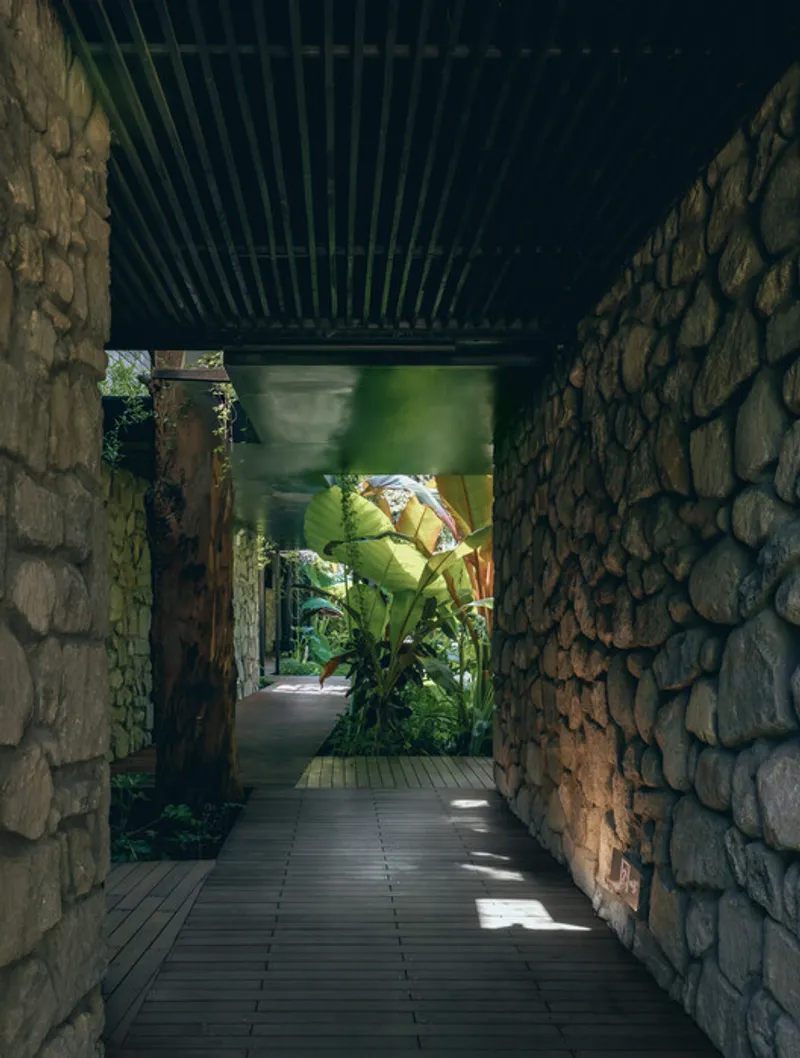
Terraces facing west capture optimal views of Cangshan. Beneath them, living spaces and bedrooms maintain a close relationship with the landscape, balancing openness with intimacy.
The Sunken Lounge: Pavilion and Shelter
In contrast to the farmhouse, the “Sunken Lounge Bar” operates as a pavilion-like structure. Supported by concealed steel columns, its pitched roof opens at all four corners, allowing maximum visual and physical permeability.

The floor is lowered by 0.7 meters, creating a sense of enclosure despite the openness. A central fireplace anchors the space, encouraging gathering and social interaction. As occupants sit close to the ground, the low eaves frame the mountains, gradually revealing their full silhouette.
This interplay between openness and shelter exemplifies the project’s sensitivity to human scale and environmental context.

Architecture as Medium for Nature
In the manor hotel portion of the project, architecture recedes into the background. Buildings act as frameworks through which guests experience gardens, water, trees, and mountains.
The arrival sequence begins in a eucalyptus grove, where a greenhouse-like reception space introduces a calm, plant-filled environment. From there, visitors move through narrowing stone walls into a quiet inner garden, where water, vegetation, and light create a meditative atmosphere.
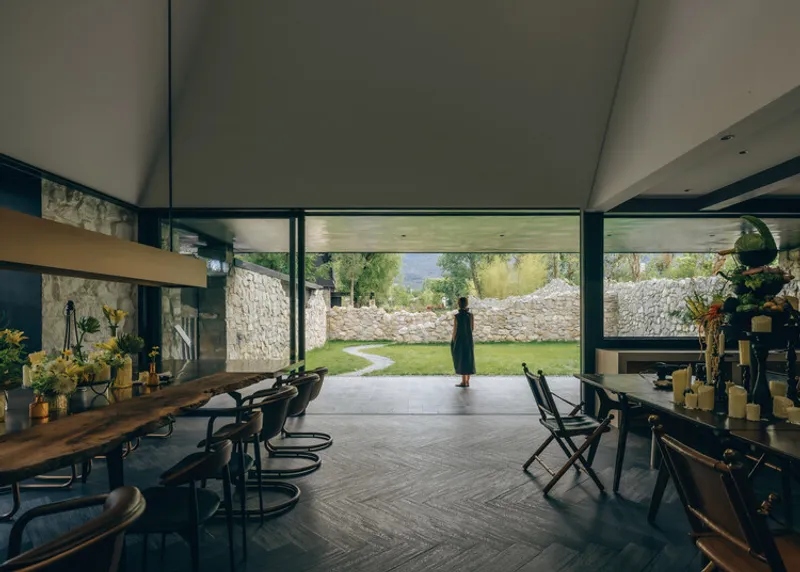
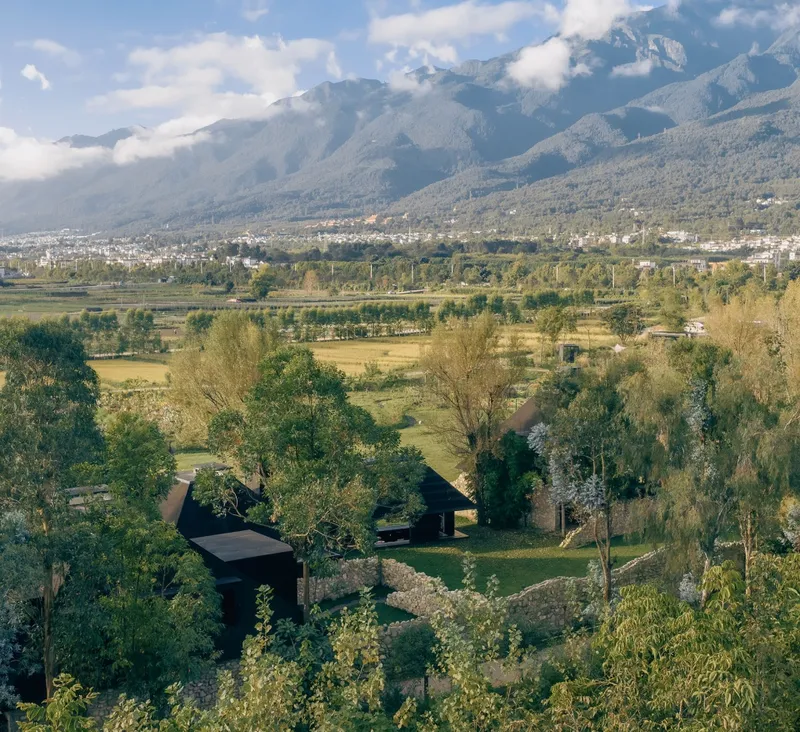
Throughout the site, sliding doors, transparent rooms, and layered courtyards ensure that architecture never fully encloses space. Instead, it facilitates continuous engagement with nature.
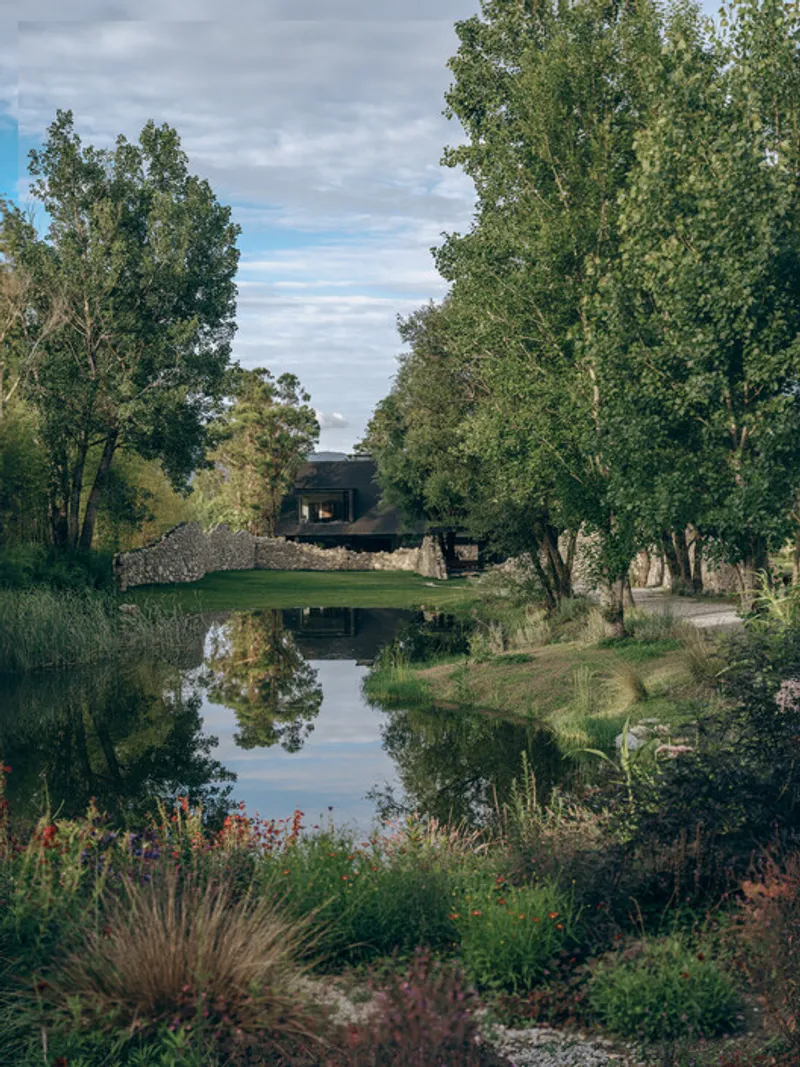
Courtyards and the Dali Way of Life
The project ultimately reinterprets a traditional way of living in Dali: one rooted in courtyards, gardens, and agricultural landscapes. Each of the six guest rooms is paired with a private garden, extending the living space beyond interior walls.


Plants, farmland, and natural elements are not decorative additions but essential components of daily life. The boundaries of rooms dissolve into greenery, reinforcing a sense of calm and slowness.
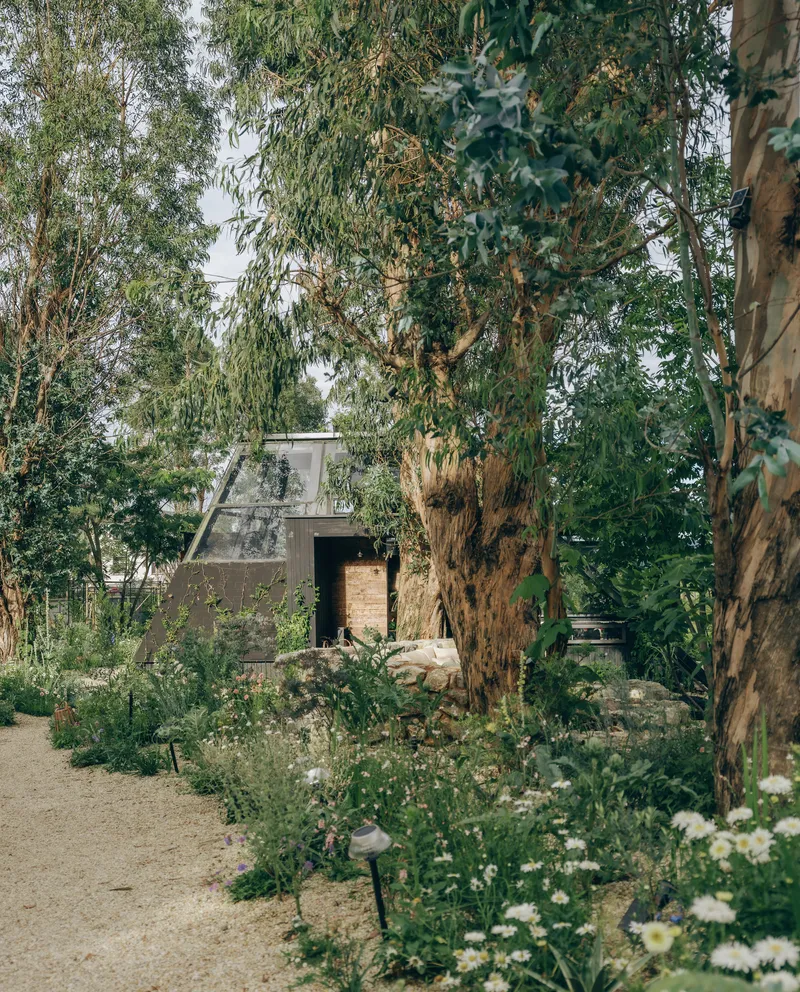
This approach reflects a broader cultural intention: to offer an alternative to urban intensity. The lodge becomes a place of retreat, where time slows and sensory engagement with nature is restored.


All the Photographs are works of Yumeng Zhu, Xinmiao Ye, Guowei Li


Popular Articles
Popular articles from the community


GROUP A Strips a 1969 Rotterdam Harbor Headquarters to Its Frame and Wraps It in Timber Louvers
In Rotterdam's M4H harbor district, Ferro Offices reuses a 1969 frame, adds one timber storey and reaches BREEAM-NL Outstanding.

Juan García Correa, John González and Claudia Rueda Sink a Circular Amphitheater into a Manizales Engineering Building
On the La Nubia campus in Manizales, Colombia, the S1 Building folds labs and offices into a hillside of ramped lawns that double as a campus route.

LT2A and OPEN Architectes Thread a Brick and Glass High School Through a Wooded Belgian Campus
In Braine-l'Alleud, a 3,000 m² wing for Collège Cardinal Mercier pairs pale brick with a glazed colonnade, deferring to a small chapel and a dense wood.

David Macias Steps a Doorless Stone and Plaster House Down a Tropical Colombian Hillside
In the humid hills of Colombia, Threshold House replaces the front door with an open void and terraces its 850 m² down the slope instead of fighting it.

Similar Reads
You might also enjoy these articles


Hodi-Mandai Geram
Project Function: Preservation and revitalization of the Intangible heritage and socio-spatial identity of the Hodi by Housing, Cultural Memory Center, Sacred Grove, landscape, local tourism economy


Olio Towers: A Mid-Rise for Performers That Fuses Housing, Rehearsal, and Stage
Located blocks from Houston's Theater District, this modular tower stacks living units around a central performance atrium.

Oasis: Modular Green Housing Carved into Dhaka's Urban Fabric
A shortlisted Plugin Housing entry reclaims unauthorized settlements in Dhaka with stepped concrete volumes, green roofs, and ventilation-driven design.

Black Hole: A Floating Megastructure for the Post-Physical Era
Emiliano Mazzarotto envisions a spherical, self-scaling arena where e-sports, digital hotels, and holographic stadiums replace traditional public space.

Explore Blocs Competitions
Discover active competitions in this discipline

Challenge to reimagine the Iron Throne

Photograph architecture without architects

Illustrate the lost glory of Angkor Wat - Render Challenge

Design challenge to reuse E-waste
Comments (0)
Please login or sign up to add comments
No comments yet. Be the first to comment!