
Uni Wheel: Mobile Architecture Redefining Public Art Spaces
A mobile architecture concept transforming public plazas into immersive art spaces through adaptive urban design and portable performance technology.

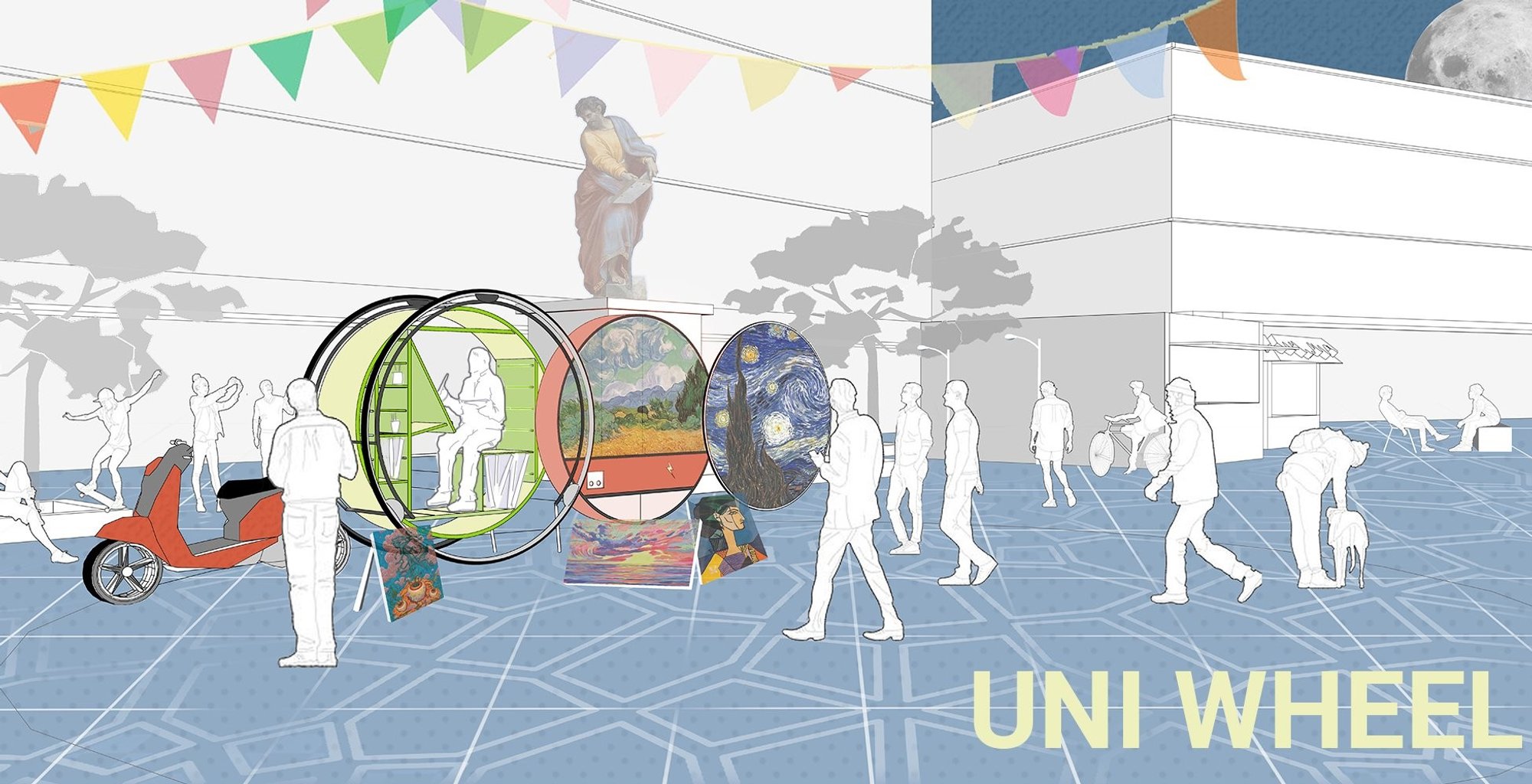
Public spaces have always played an important role in shaping cultural identity, social interaction, and artistic expression. As cities become denser and lifestyles increasingly dependent on technology, opportunities for spontaneous artistic engagement within urban environments continue to decline. Addressing this challenge, Uni Wheel introduces an innovative approach to mobile architecture by transforming a compact transportable device into a fully interactive performance environment for artists and audiences alike.
Designed by Pranav Jadhav, Martemsu Kichu, and Joseph Chonzik, the project was recognized as a Shortlisted entry in the Opera Truck competition. The concept reimagines how architecture can move beyond static structures and evolve into adaptable urban infrastructure capable of activating public plazas, streets, and community gathering spaces.
A Mobile Architecture Concept Inspired by Simplicity
The wheel remains one of the most revolutionary inventions in human history, enabling movement, accessibility, and transformation across civilizations. Drawing inspiration from this timeless invention, Uni Wheel proposes a compact circular mobile architecture system that carries all essential performance components within a minimal footprint.
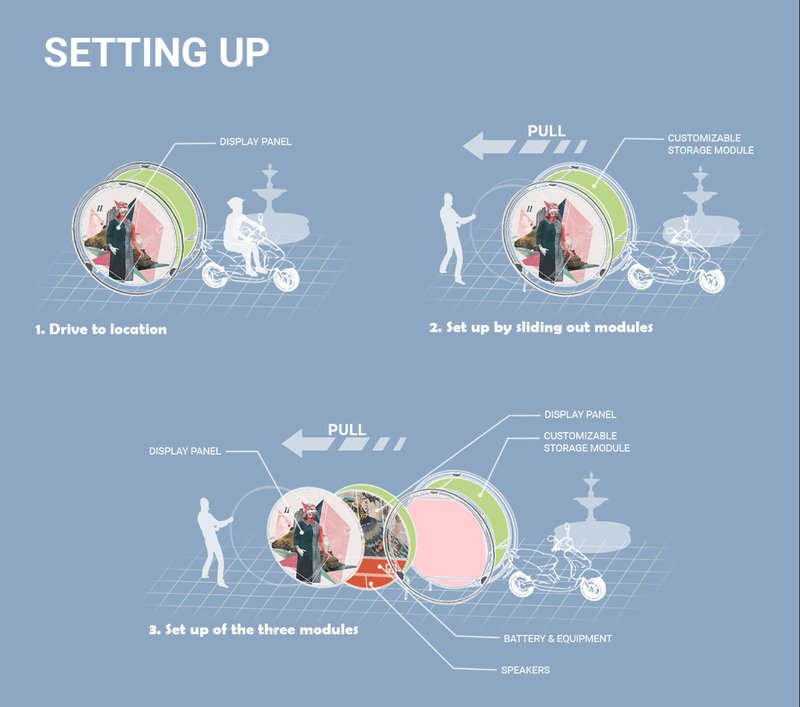
The project focuses on flexibility, adaptability, and ease of transportation. Unlike traditional temporary stages that require extensive setup and large logistical systems, Uni Wheel can travel through narrow urban lanes and crowded streets while maintaining a fully functional performance environment. Its compact dimensions allow transportation using bicycles, scooters, or small vehicles, making it highly accessible for artists operating in dense city environments such as Madrid.
The architectural language of the project embraces simplicity while integrating advanced technology and modular functionality. The circular geometry creates a recognizable visual identity that allows the structure to function simultaneously as transport, storage, display, stage backdrop, and projection device.
Adaptive Urban Design for Contemporary Public Spaces
One of the strongest aspects of the project is its response to contemporary urban conditions. Modern cities often prioritize efficiency and circulation while reducing opportunities for informal cultural interaction. Uni Wheel addresses this issue by introducing a portable urban intervention capable of instantly transforming underused public spaces into immersive artistic environments.
The design operates as a mobile cultural infrastructure system. Once transported to a location, the wheel expands into multiple modules that collectively create a virtual stage experience. Through projection mapping, lighting systems, display panels, and integrated speakers, the structure activates the surrounding environment without requiring permanent construction.
This adaptability allows the installation to support a wide range of artistic practices including music performances, dance, theatre, live painting, digital exhibitions, and multimedia installations. By dissolving the boundaries between performer and audience, the project encourages greater public participation and emotional connection with the arts.
Modular Architecture Supporting Multiple Functions
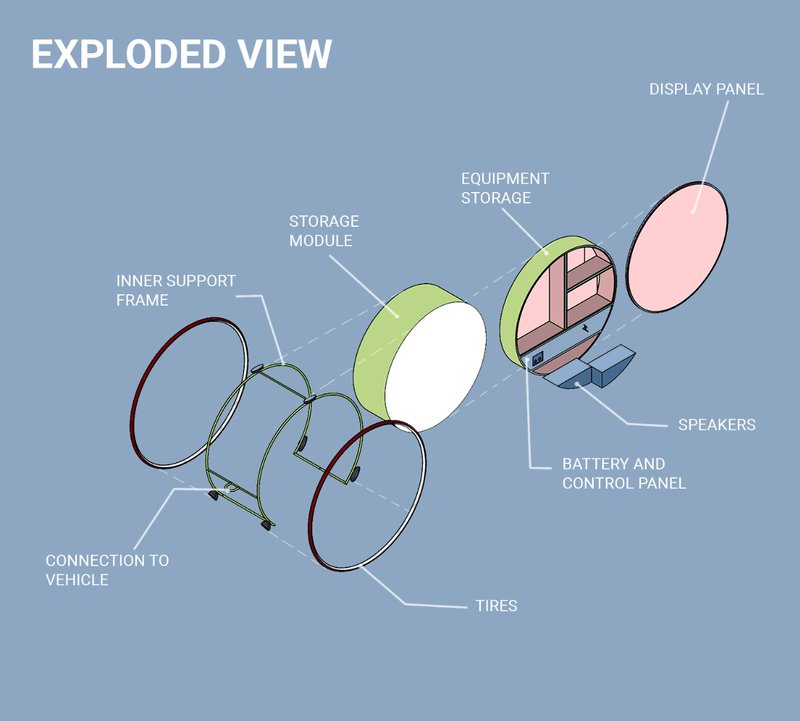
The Uni Wheel is organized into several interconnected modules, each serving a specific purpose within the system. The exploded diagrams reveal a carefully considered modular architecture strategy that balances functionality with portability.
The customizable storage module accommodates instruments, artistic equipment, seating components, and exhibition materials. Adjacent to this is the battery and equipment module, which contains speakers, projection systems, and control panels. The final display module acts as a digital visual surface capable of projecting imagery, animations, and immersive graphics.
These modules slide open through a track-and-gear mechanism that enables smooth expansion while preserving a clean and minimal appearance. The deployment process is intentionally simple, allowing rapid setup in temporary public spaces.
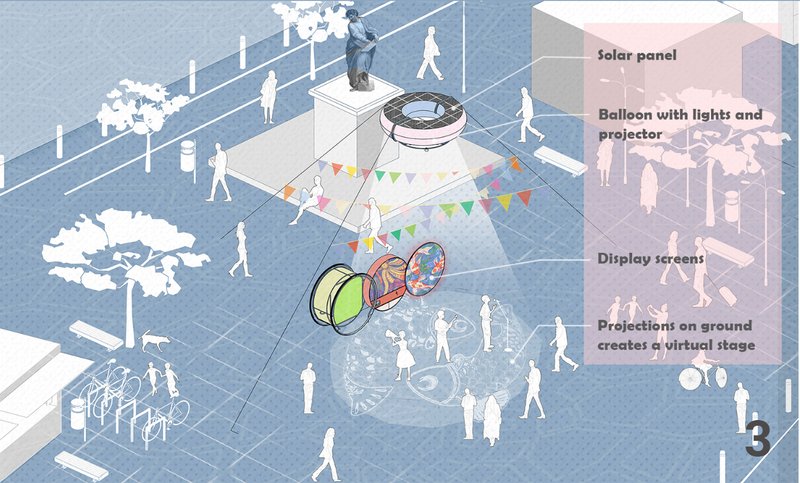
Integrated solar panels further strengthen the project’s sustainable design strategy by providing renewable energy support for lighting, projections, and sound systems. This energy-independent approach increases the flexibility of the structure and reduces reliance on external infrastructure.
Creating a Virtual Stage Through Architectural Technology
A defining feature of Uni Wheel is its ability to generate an immersive virtual stage experience. Instead of relying on conventional stage construction, the project uses projection technology, digital surfaces, and environmental lighting to transform the surrounding ground plane into an active performance area.
This approach expands the definition of theatre architecture beyond enclosed buildings and permanent auditoriums. The ground itself becomes the stage, while projected visuals create dynamic atmospheres around performers and audiences.
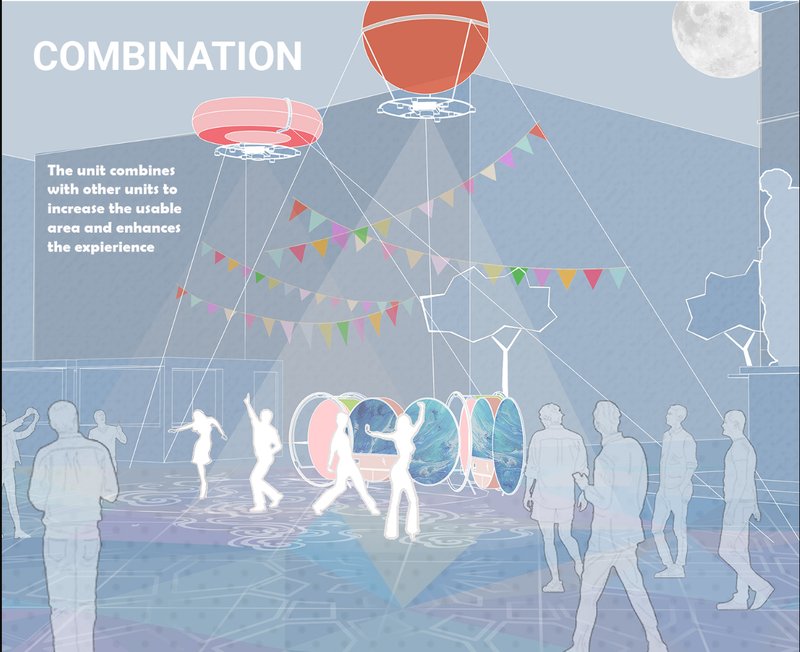
The integration of balloons with lighting and projection systems introduces an additional layer of visual engagement within the urban environment. Suspended illuminated elements create spatial depth while attracting public attention from a distance, helping the installation function as both architecture and urban spectacle.
By combining movement, digital media, and public interaction, Uni Wheel demonstrates how temporary architecture can generate meaningful cultural experiences without requiring permanent physical occupation of urban land.
Flexibility and Scalability in Public Installations
Another important aspect of the project is scalability. Multiple Uni Wheel units can connect together to form larger performance zones and expanded interactive environments. This allows the system to adapt according to audience size, event type, or spatial conditions.
In smaller plazas, a single module may operate independently as a compact street performance platform. In larger urban settings, several units can combine to create immersive event landscapes featuring synchronized projections, lighting systems, and spatial choreography.
This scalable architecture strategy significantly increases the versatility of the design while supporting a broad spectrum of public cultural activities.
Reconnecting Cities with Art Through Mobile Design
At its core, Uni Wheel is not simply a transportable stage system. It is a proposal about reconnecting people with art in everyday life. The designers identify how technological dependence and monotonous urban routines have weakened human engagement with creativity and cultural expression.
Rather than isolating artistic experiences within formal institutions, the project brings art directly into streets, plazas, and public environments where spontaneous interaction becomes possible. This shift transforms architecture into an active participant within cultural exchange rather than a passive container.
The project demonstrates how mobile architecture can create temporary moments of collective experience capable of strengthening urban identity and social engagement.
A New Direction for Portable Performance Architecture
Uni Wheel presents a compelling vision for the future of portable architecture and urban performance design. Through its modular construction, adaptable functionality, renewable energy integration, and immersive technological systems, the project proposes a new typology for temporary cultural infrastructure.
Designed by Pranav Jadhav, Martemsu Kichu, and Joseph Chonzik, this shortlisted Opera Truck entry reflects how architecture can become more responsive, mobile, and socially connected within contemporary cities.
As urban environments continue evolving, projects like Uni Wheel reveal the growing importance of flexible architectural systems capable of transforming ordinary public spaces into meaningful cultural experiences.




Popular Articles
Popular articles from the community

PLATAFORMArq Folds a Concrete Roof Over the Portuguese Mountains in House #474
A 220-square-meter residence in Teixoso, Portugal, wraps board-formed concrete into an angular canopy that frames the Serra da Estrela foothills.

Milan Crossover: Sustainable Architecture for a New Fashion Culture in Milan
Milan Crossover transforms fashion culture through sustainable architecture, linking material libraries, remake studios, and public runways.
Kaffeebühnen: Coffee Shop Architecture Designed as a Civic Stage Between Vienna’s City and Park
Kaffeebühnen turns coffee shop architecture into a civic stage, linking Vienna’s park edge, urban life, warm timber yards, and coffee craft.
IKC de Geluksvogel: Sustainable School Architecture Designed for Free Movement and Digital Learning
IKC de Geluksvogel turns sustainable school architecture into a flexible Maastricht campus for digital learning, nature, and free movement.


Similar Reads
You might also enjoy these articles
Eco Chapel: A Green Architecture Pavilion Designed in Symbiosis with the Forest
Eco Chapel uses green architecture to weave prayer, learning and reuse into a forest pavilion shaped by modular hexagonal canopies for life.
Kaffeebühnen: Coffee Shop Architecture Designed as a Civic Stage Between Vienna’s City and Park
Kaffeebühnen turns coffee shop architecture into a civic stage, linking Vienna’s park edge, urban life, warm timber yards, and coffee craft.
Healing Façade: Sustainable Architecture for Reforestation, Community, and Sacred Ecology in Ethiopia
Healing Façade reimagines sustainable architecture as a living wall that restores soil, catches water and renews Ethiopia's forest churches.


Urban Forest: A Vertical Ecosystem for 5,000 Workers in Singapore's Changi Business Park
Radially stacked pods and layered green decks turn a 7-acre plot into 47 acres of ecological workspace projected for 2040.

Explore Architecture Competitions
Discover active competitions in this discipline




The International Standard for Design Portfolios


The Global Benchmark for Architecture Dissertation Awards


The Global Benchmark for Graduation Excellence


Challenge to reimagine the Iron Throne
Comments (0)
Please login or sign up to add comments
No comments yet. Be the first to comment!