
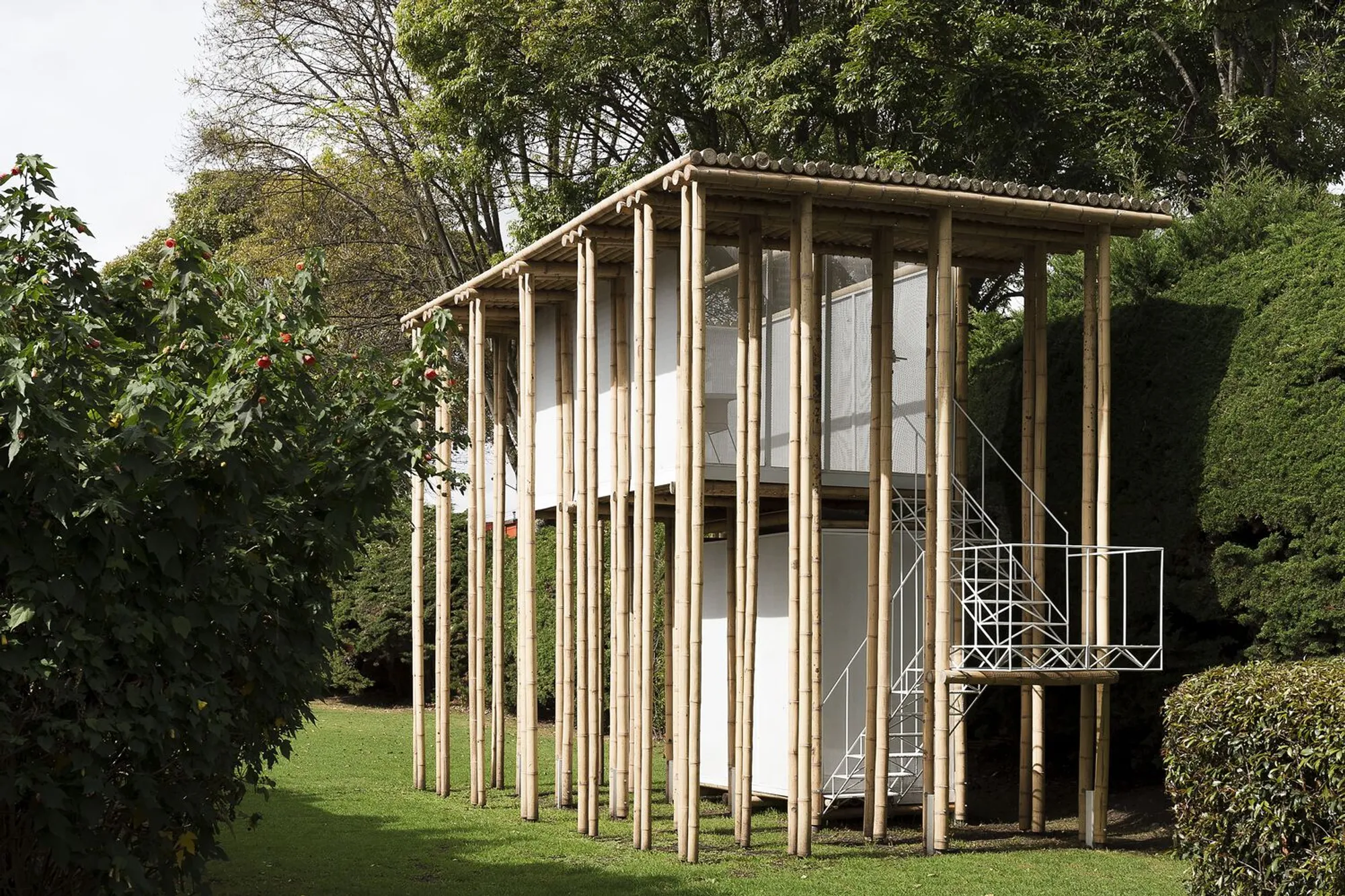
Urban Apiary in Bogotá by Palafito Arquitectura
Sustainable bamboo structure integrating beehives and research space, promoting urban biodiversity, scientific study, and human-bee coexistence in Bogotá, Colombia.


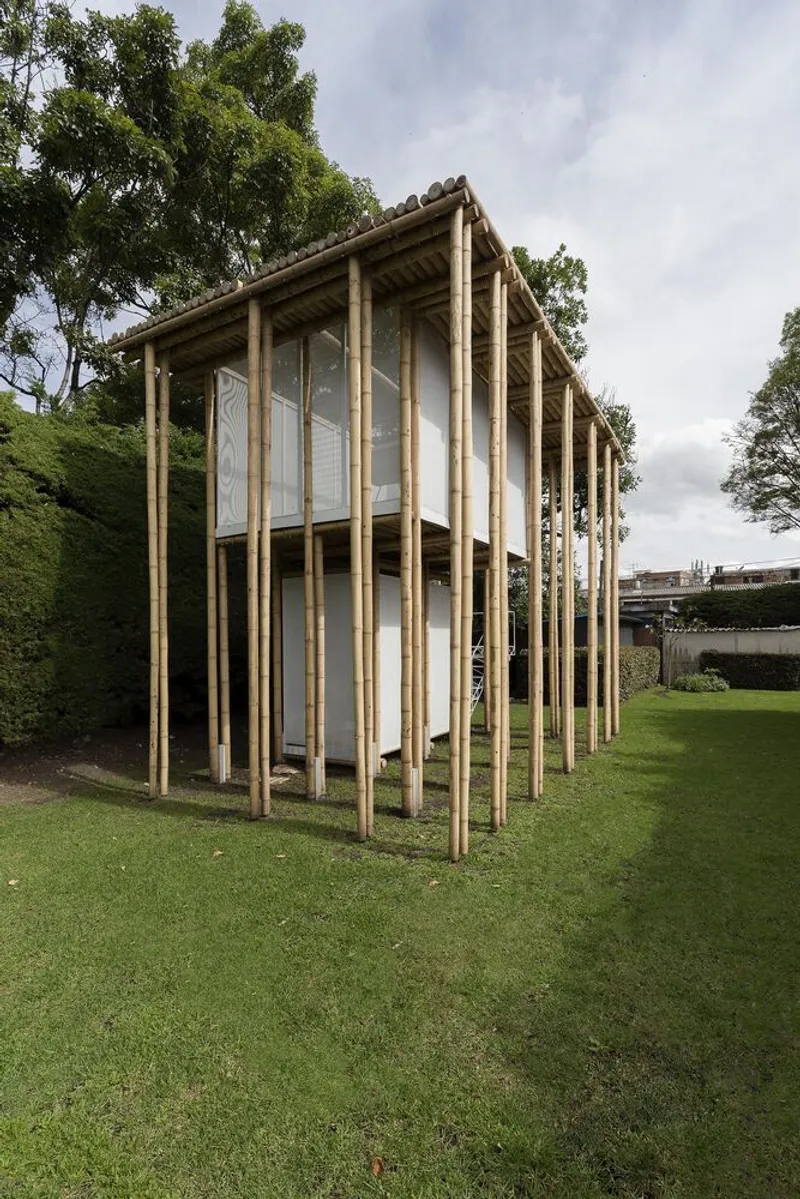
In the heart of Bogotá, Palafito Arquitectura has redefined the coexistence of nature and architecture through the Urban Apiary, a compact and sustainable beekeeping structure designed to support urban biodiversity and education. This 68-square-meter bamboo pavilion provides a shared space for Apis mellifera bees and university students, transforming an unconventional brief into a poetic spatial experience.
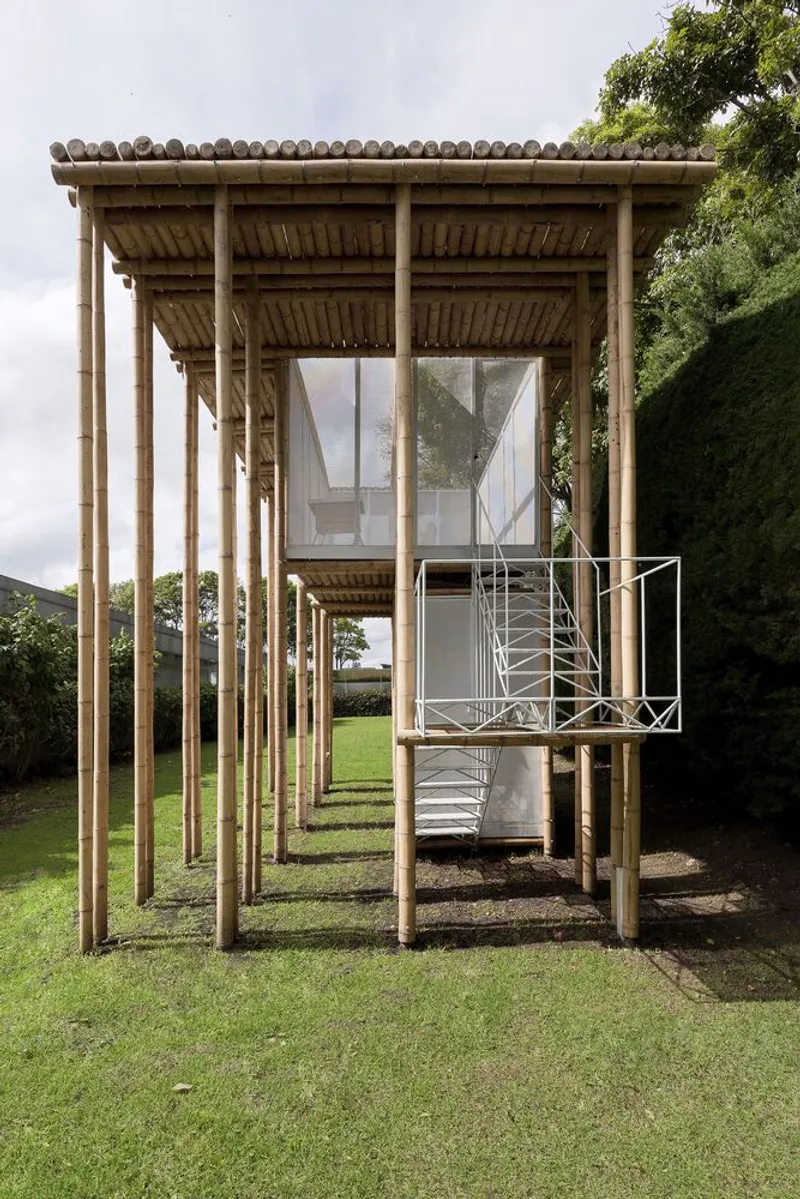
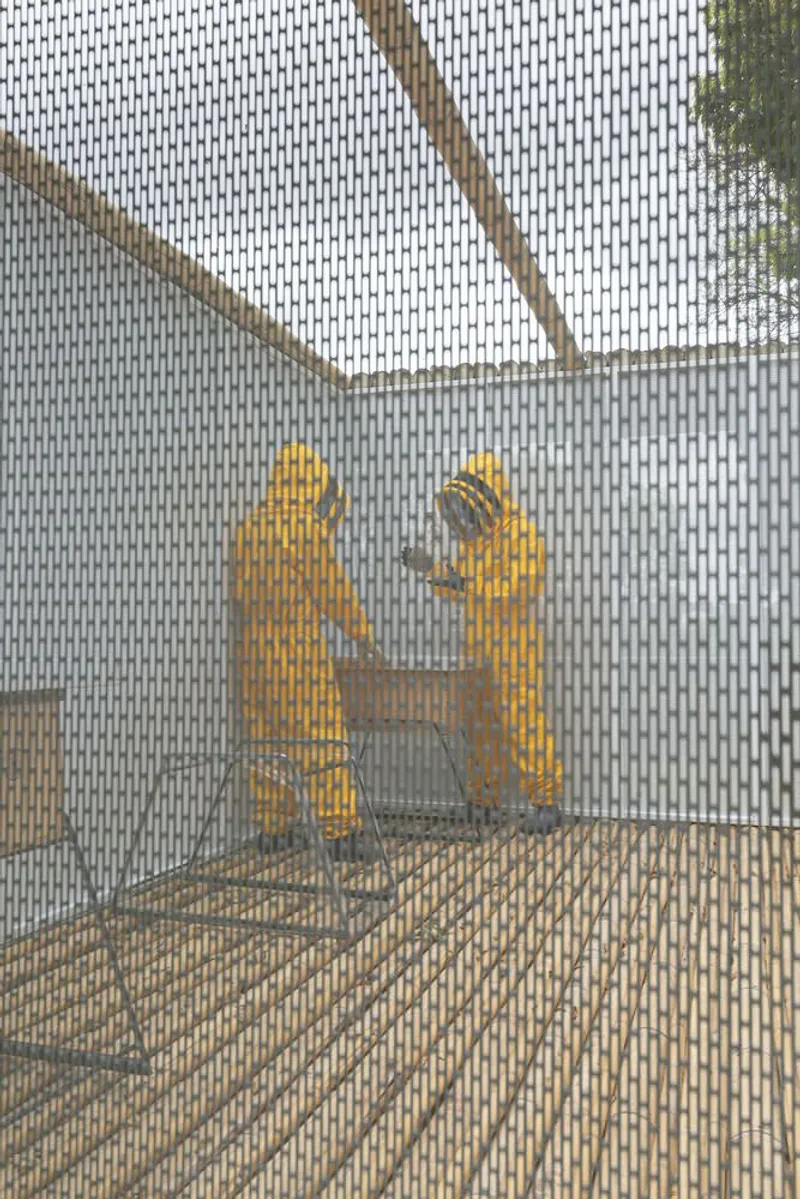
Selected for both the XII BIAU and the Colombian Architecture Biennial, the project emphasizes environmental awareness, sustainable materials, and architectural innovation on a small scale. The structure blurs the lines between nature and the built environment: while the bees reside within an enclosure that opens to the sky, humans circulate around the structure, shielded by a vertical forest of bamboo columns.
Spatial Logic and Materiality
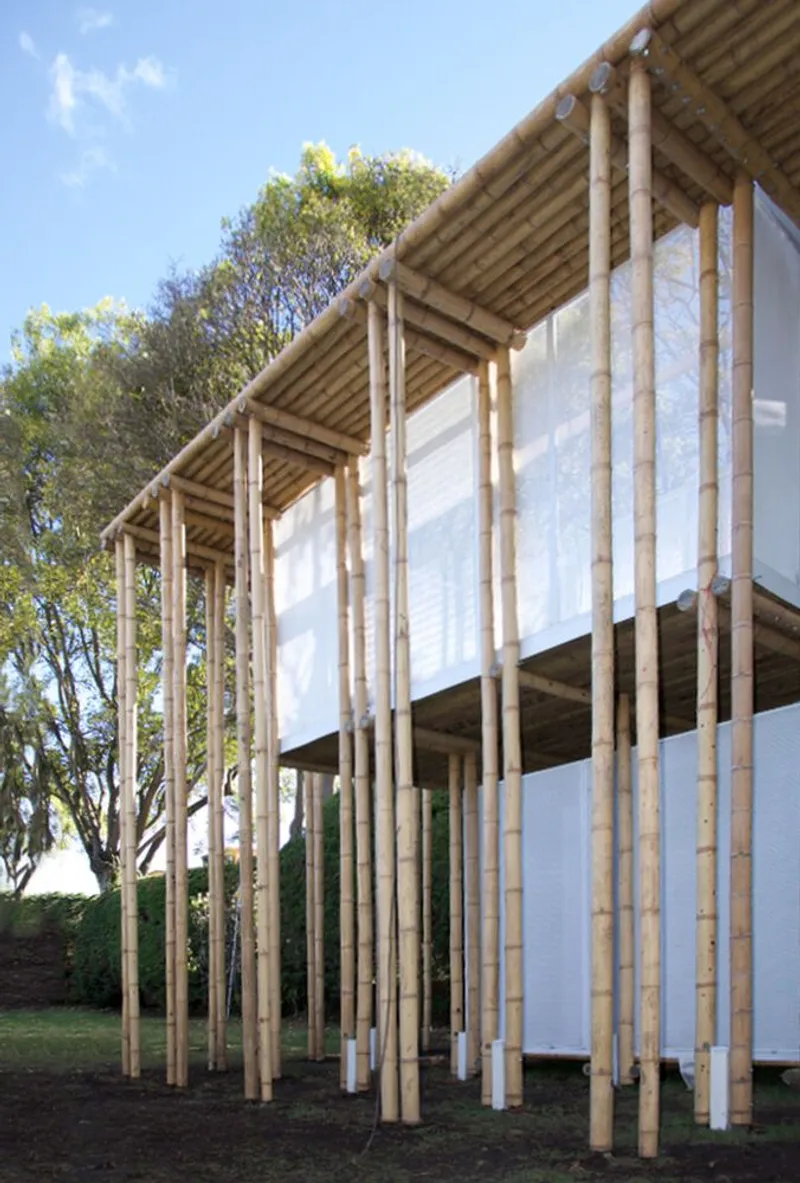
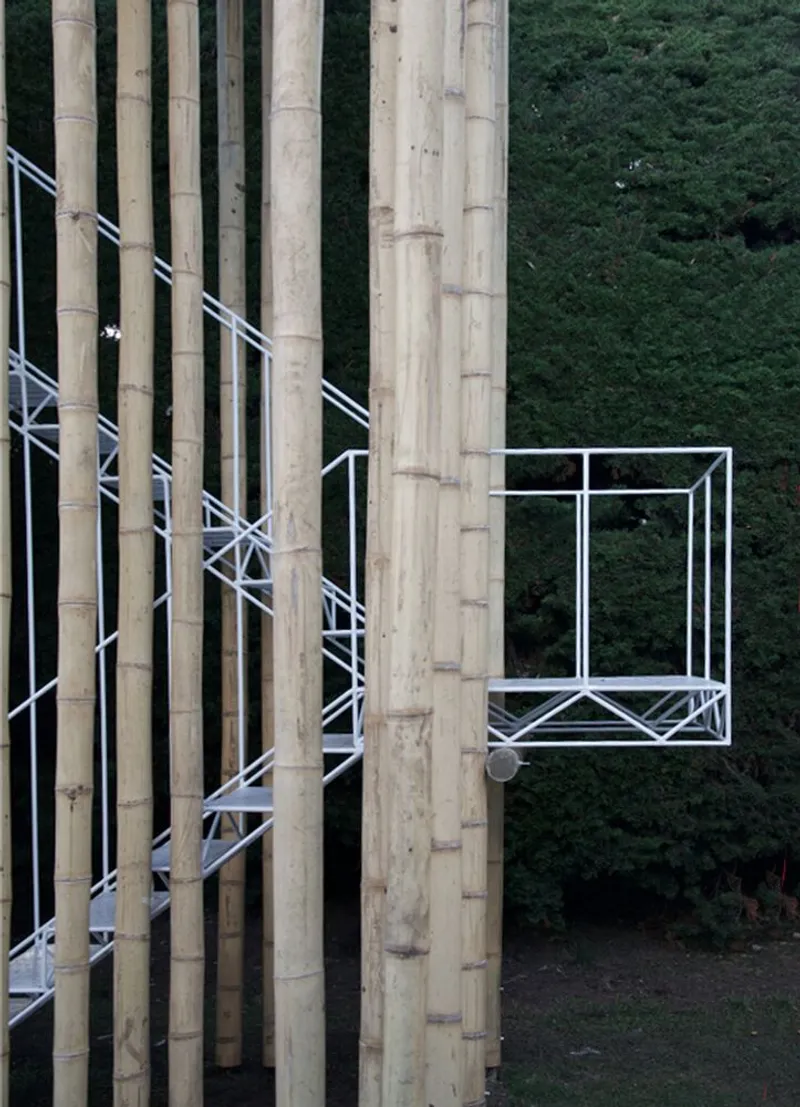
The architectural concept revolves around the use of modular square geometries, which define the building’s plan and section. This geometry underpins an efficient structural system constructed from only two materials: bamboo and metal. The bamboo columns, varying in length and sometimes suspended above the ground, establish rhythm and verticality—evoking a lightweight forest canopy. In contrast, metal is used for the enclosures, offering translucency, ventilation, and visual permeability between interior and exterior spaces.
Coexistence Through Design
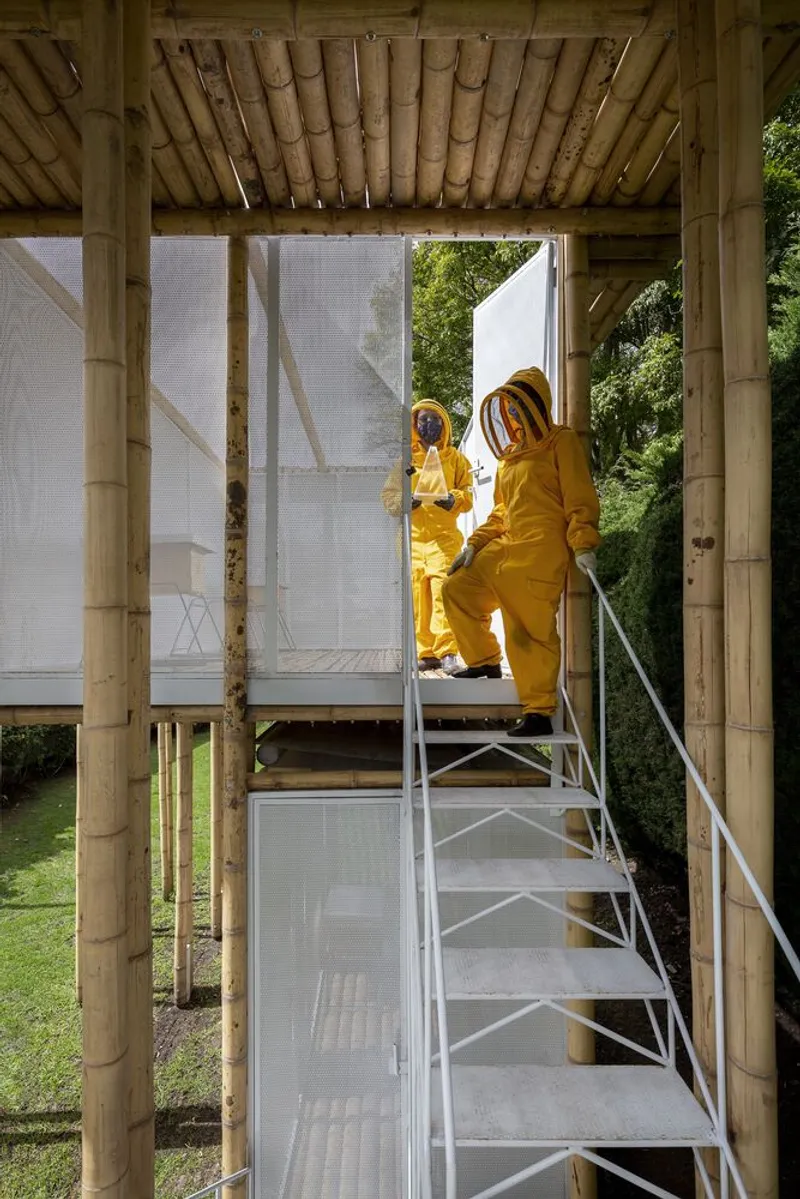
The apiary is carefully zoned to meet the dual needs of humans and bees. On the ground floor, a translucent metal-clad laboratory allows researchers from the University’s Faculty of Science to study bees in a protected, bee-free zone. Elevated above, the upper level houses the beehives within an airy, open-to-the-sky structure that encourages bees to venture into nearby urban gardens.
Informed by scientific collaboration, the design even considers bees' sensitivities to color—eschewing black in favor of white for better bee behavior. Circulatory paths and vertical thresholds are articulated through varying column densities, creating layers of spatial permeability that mediate between exposure and enclosure, humans and pollinators.
A Model for Urban Ecology
The Urban Apiary is more than just a beekeeping facility—it’s an architectural prototype for urban ecological integration, demonstrating how cities can foster biodiversity through design-led interventions. Its compact footprint, sustainable materials, and poetic expression make it a benchmark in small-scale architecture that balances scientific function and spatial experience.





Popular Articles
Popular articles from the community


Co-life: Sustainable Architecture for Age-Friendly Community Living
Co-life reimagines sustainable architecture for seniors through courtyards, rammed earth, shared gardens, and spaces designed for belonging.

Lunar Spiral: Space Architecture Shaped by the Mathematics of the Universe
Lunar Spiral reimagines space architecture through Fibonacci geometry, lunar regolith, levitating habitats, and self-sustaining Moon living.

The Musturak Paradise: Senior Living Architecture for a Connected Future in Temara, Morocco
The Musturak Paradise reimagines senior living architecture in Temara via private homes, social spaces, culture, community, and shared care.

Play: Fragments of Their World
Familiar architecture becomes modular playground design, creating safe spaces where displaced children can learn, connect, imagine and play.


Similar Reads
You might also enjoy these articles


Hodi-Mandai Geram
Project Function: Preservation and revitalization of the Intangible heritage and socio-spatial identity of the Hodi by Housing, Cultural Memory Center, Sacred Grove, landscape, local tourism economy


Olio Towers: A Mid-Rise for Performers That Fuses Housing, Rehearsal, and Stage
Located blocks from Houston's Theater District, this modular tower stacks living units around a central performance atrium.

Oasis: Modular Green Housing Carved into Dhaka's Urban Fabric
A shortlisted Plugin Housing entry reclaims unauthorized settlements in Dhaka with stepped concrete volumes, green roofs, and ventilation-driven design.

Black Hole: A Floating Megastructure for the Post-Physical Era
Emiliano Mazzarotto envisions a spherical, self-scaling arena where e-sports, digital hotels, and holographic stadiums replace traditional public space.


Explore Bogota Competitions
Discover active competitions in this discipline



Challenge to reimagine the Iron Throne


Photograph architecture without architects


Illustrate the lost glory of Angkor Wat - Render Challenge


Design challenge to reuse E-waste
Comments (0)
Please login or sign up to add comments
No comments yet. Be the first to comment!