

Urban Criss: Modular Urban Furniture Architecture for Human: Nature Interaction
A modular urban furniture system that reconnects people, public space, and nature through adaptable, human-centric architectural design.


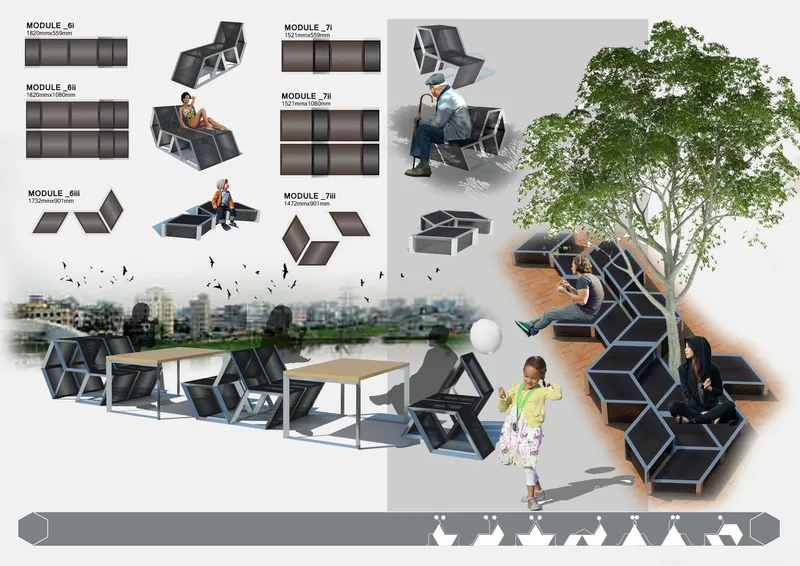
Urban Criss is an exploration of modular urban furniture architecture that redefines how people interact with public space, nature, and each other within dense urban environments. Conceived as an adaptable urban platform, the project investigates the evolving relationship between human behavior, landscape, and architectural form. Rather than treating furniture as a static object, Urban Criss positions seating as an active architectural element: one that shapes movement, social interaction, and spatial experience in cities.
Developed by Mukti Boby, Mohammad Saiful Islam, and Md Ismil, the project received Runner‑Up recognition at Urbanscape 2018, highlighting its relevance in contemporary discussions around sustainable and human‑centered urban design.
Concept: Simplicity of Human Comfort
At the core of Urban Criss lies a simple yet powerful idea: human comfort as an architectural driver. In everyday urban life, seating becomes a temporary refuge: used while waiting, resting, conversing, observing, or gathering. Urban Criss translates these daily behaviors into a modular architectural language that accommodates people of different ages, physical abilities, and social needs.
The project emphasizes clarity of form, ergonomic logic, and intuitive usability. The seating system assumes that comfort does not require complexity; instead, it emerges from proportion, material honesty, and thoughtful spatial relationships.
Modular Urban Furniture Architecture
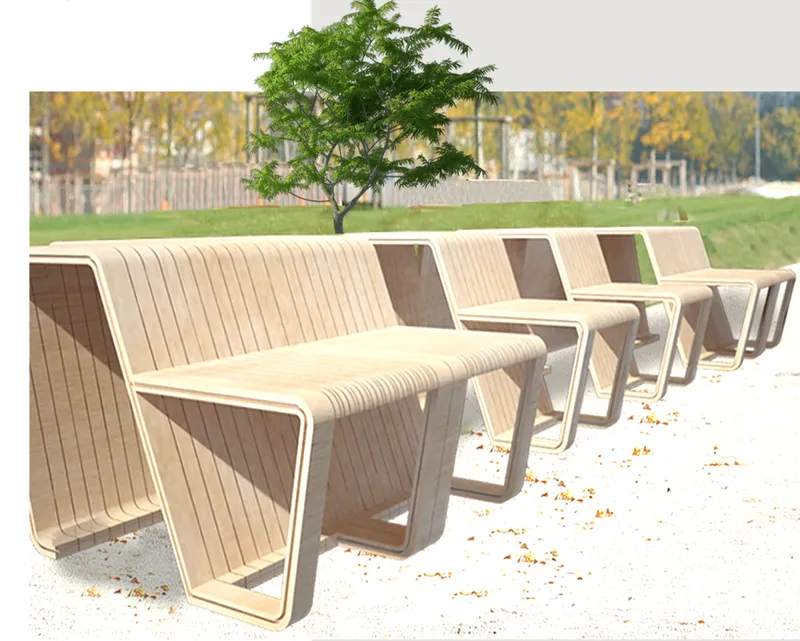
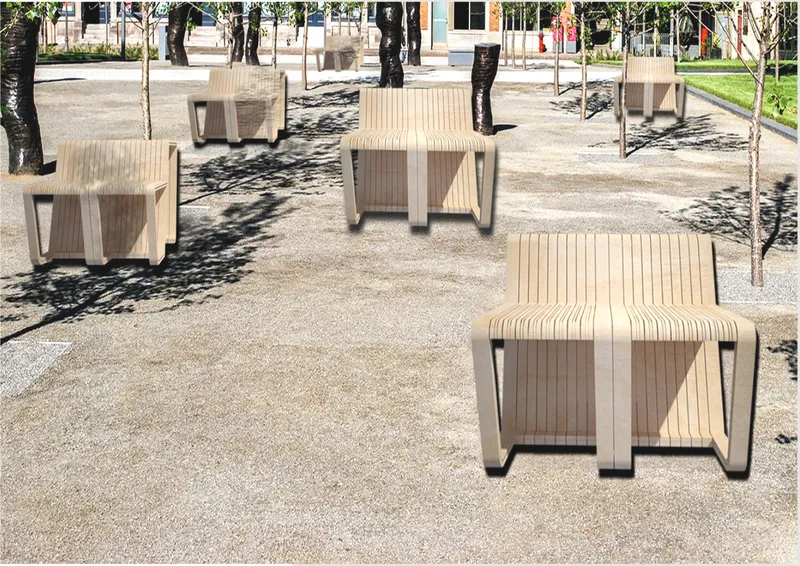
Urban Criss is designed as a modular system, allowing multiple configurations to emerge from a single base geometry. This modularity enables the furniture to adapt to diverse urban conditions such as plazas, streetscapes, parks, waterfronts, and transitional spaces between buildings.
The system includes:
- Individual seating modules for solitary use
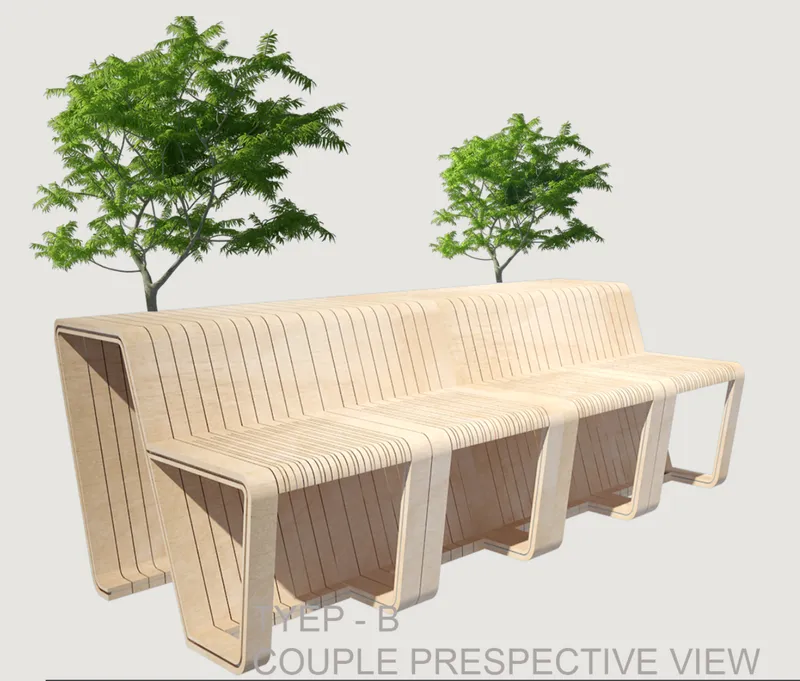
- Couple seating configurations encouraging face‑to‑face interaction
- Group seating arrangements that foster social gathering and community engagement
Through repetition and variation, the modules form larger urban platforms that respond fluidly to context while maintaining a coherent architectural identity.
Human Scale and Spatial Relationships
A defining aspect of Urban Criss is its careful calibration to the human scale. Seat heights, depths, and backrest inclinations are derived from ergonomic studies to support different postures: sitting, leaning, reclining, and informal lounging.
By introducing level variations within the same seating system, the project creates a hierarchy of use:
- Lower seats encourage rest and pause
- Elevated seats provide visual connection and observation
- Transitional edges support informal perching and interaction
This layered approach transforms simple furniture into an architectural landscape of micro‑spaces.
Fabrication Logic and Construction Methodology
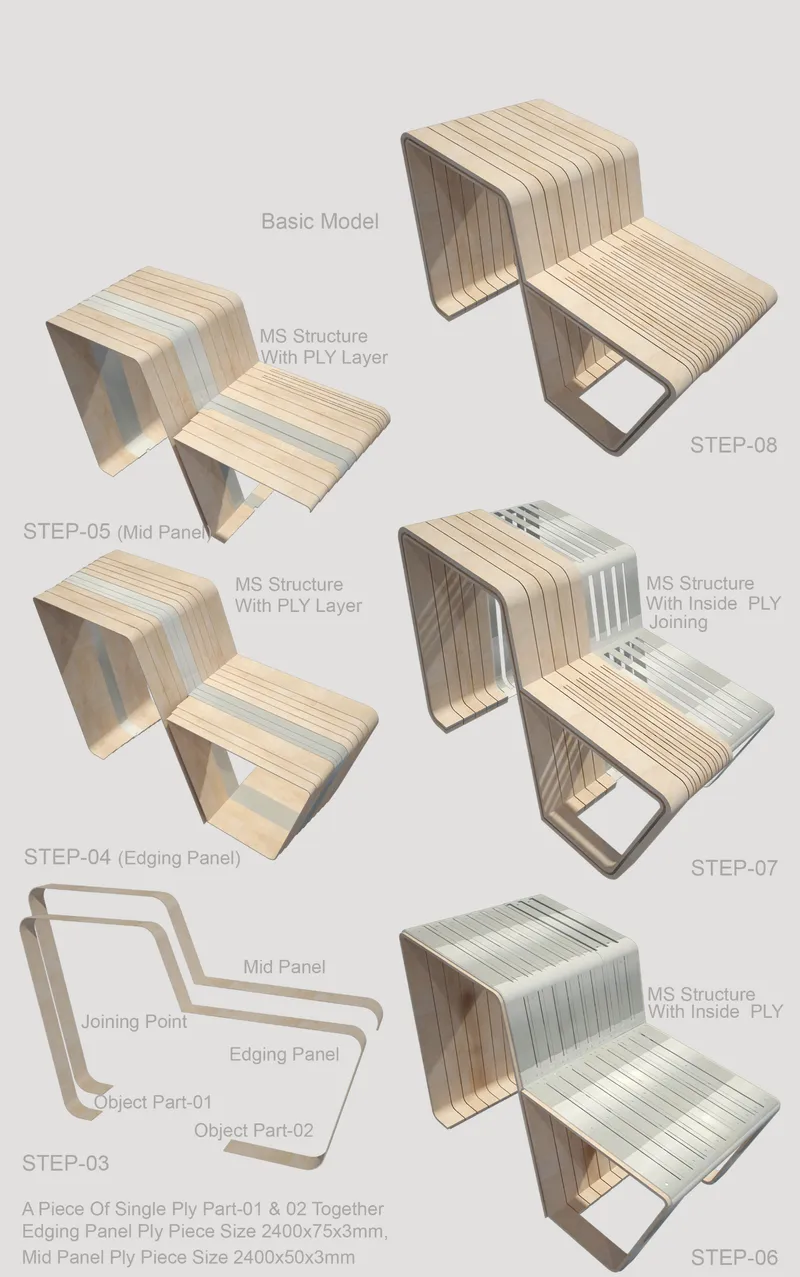
The fabrication strategy reinforces the project’s architectural clarity. Urban Criss utilizes a bent structural framework combined with layered surface panels, resulting in a continuous flowing form. The curvature is not decorative but functional: enhancing comfort, strength, and visual continuity.
Materials such as plywood, MDF, wood, and metal frameworks are employed for durability and scalability. The modular fabrication system allows easy replication, repair, and reconfiguration, making it suitable for long‑term public use in urban environments.
Sustainability in Urban Context
As a piece of sustainable urban furniture architecture, Urban Criss prioritizes longevity, adaptability, and minimal environmental impact. The modular nature reduces material waste, while the use of durable materials ensures extended lifecycle performance.
By encouraging outdoor social activity and passive engagement with nature, the project contributes to healthier urban lifestyles. Seating is positioned not merely as an object but as an interface between people and landscape, reinforcing the emotional and physical connection to public space.
Urban Applications
Urban Criss can be deployed across multiple urban scenarios:
- Public plazas and civic spaces
- Pedestrian streets and sidewalks
- Urban parks and green corridors
- Waterfront promenades
- Institutional campuses and cultural precincts
Its flexibility allows city planners and designers to create dynamic seating landscapes that evolve with changing urban needs.
Recognition and Impact
Awarded Runner‑Up at Urbanscape 2018, Urban Criss stands out as a forward‑looking example of how modular urban furniture architecture can address contemporary challenges in public space design. The project demonstrates that small‑scale architectural interventions can have a significant impact on social interaction, comfort, and spatial quality in cities.
Urban Criss reimagines seating as architecture: adaptive, human‑centered, and deeply connected to nature. Through modular design, ergonomic intelligence, and sustainable thinking, the project offers a compelling model for future urban furniture systems. It is not just about sitting; it is about shaping meaningful urban experiences through thoughtful architectural design.




Popular Articles
Popular articles from the community


Co-Life: Senior Housing Design That Reconnects Older Adults With the City
Co-Life reimagines senior housing design through healing gardens, shared streets, workshops, and a sustainable community across generations.

Co-life: Sustainable Architecture for Age-Friendly Community Living
Co-life reimagines sustainable architecture for seniors through courtyards, rammed earth, shared gardens, and spaces designed for belonging.

Play: Fragments of Their World
Familiar architecture becomes modular playground design, creating safe spaces where displaced children can learn, connect, imagine and play.

Hill & Cross Opera: Sculptural Opera House Architecture Shaped by Tallinn’s Landscape and Identity
Hill & Cross Opera reimagines opera house architecture in Tallinn through its sculptural hill, civic plaza, glass wave and a luminous cross.


Similar Reads
You might also enjoy these articles

Maya Harvest: A Cacao Resort Village Rooted in Mayan Tradition and Local Craft
Situated within a Tabasco cacao plantation, this shortlisted resort proposal merges vernacular materials with hands-on cultural immersion.
Harmonia: A River-Shaped Community That Grows Over Decades in Boa Vista
Curved pathways and modular grid structures along the Branco River create a phased settlement designed to evolve from 2030 to 2050.

The Architecture of Bathing: A Mughal Hammam Reimagined Across the Yamuna
Charlotte May's honorable mention entry for The Black Taj reinterprets Agra's bathing rituals through red sandstone, water, and framed views of the Taj Mah
Om-1: A Wall-Hung System That Moves Your Workspace Off the Desk
Modular plywood boards, magnetic pegs, and utility elements migrate clutter from the horizontal surface to the vertical plane.


Explore Urban Furniture Competitions
Discover active competitions in this discipline



Challenge to merge furniture with learning


Design challenge to equip cities with modern furniture


Competition to design a workstation for architects


Packaging challenge - Design meets sustainability
Comments (0)
Please login or sign up to add comments
No comments yet. Be the first to comment!