
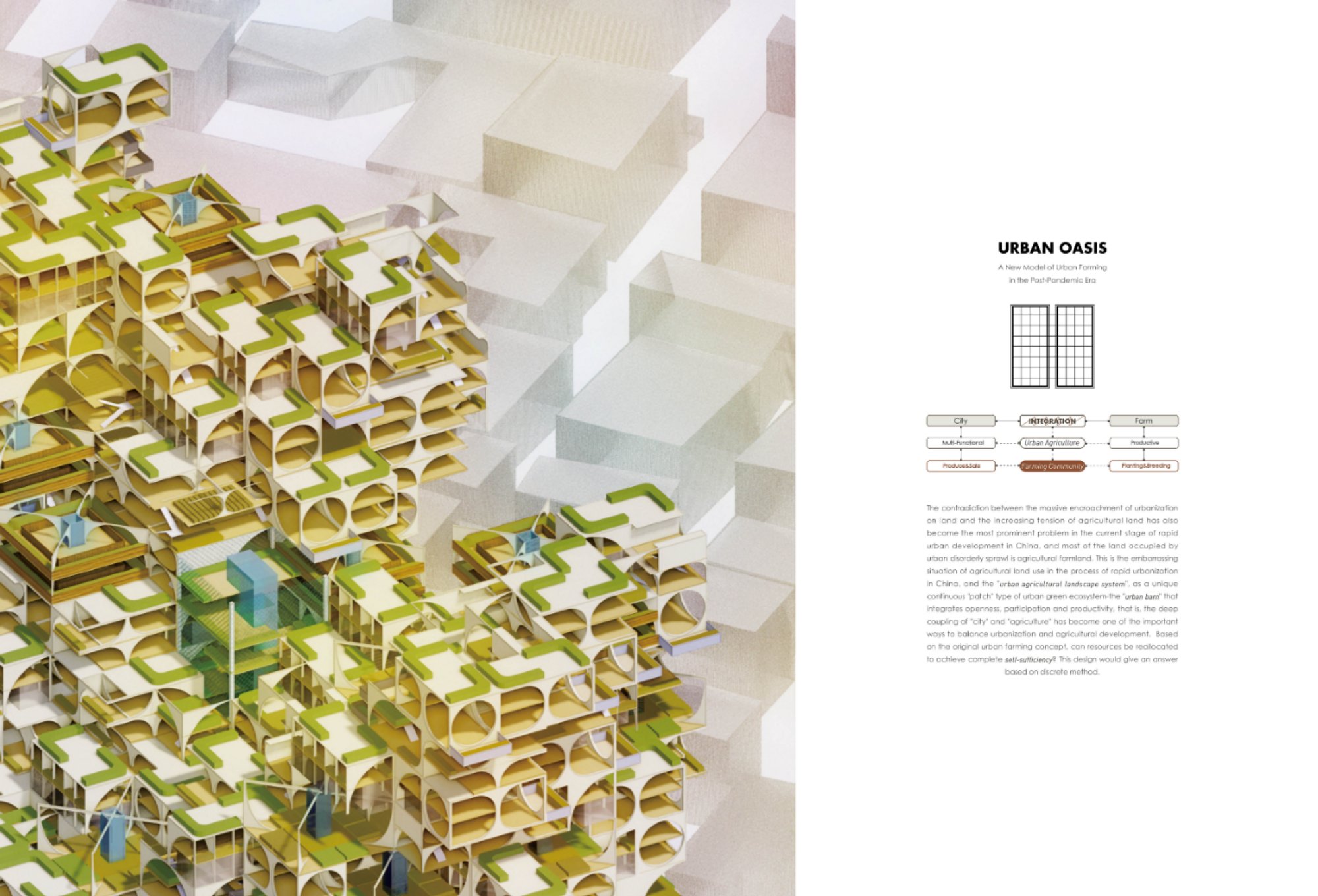
Urban Oasis
A New Model of Urban Farming in the Post-Pandemic Era

Background
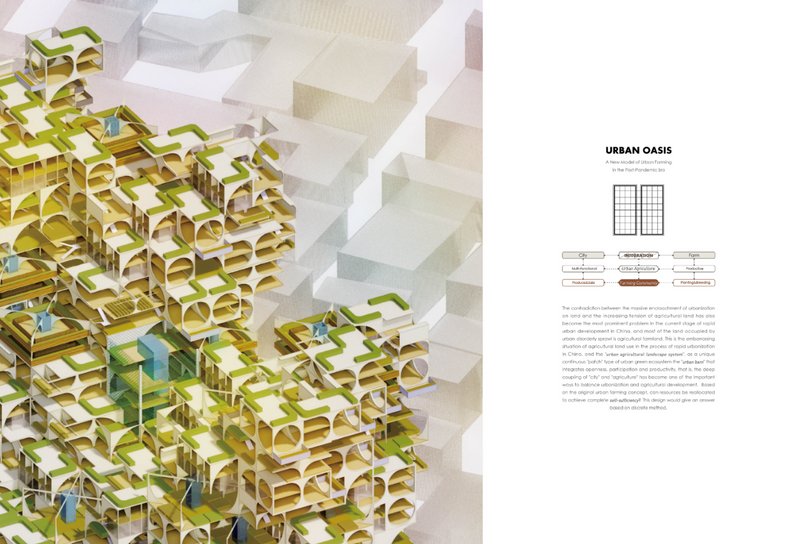
The contradiction between the massive encroachment of urbanization on land and the increasing tension of agricultural land has also become the most prominent problem in the current stage of rapid urban development in China. Most of the land occupied by disorderly urban sprawl is agricultural farmland. This is the embarrassing situation of agricultural land use in the rapid urbanization process in China.
Concept
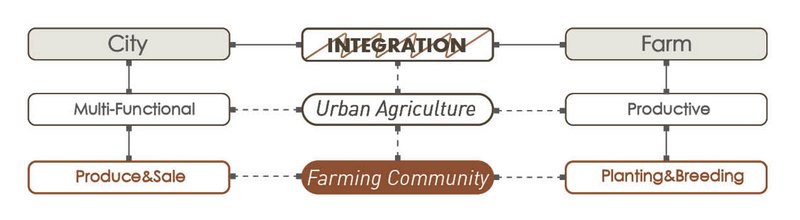
The "urban agricultural landscape system", is a unique continuous "patch" type of urban green ecosystem-the "urban barn" that integrates openness, participation, and productivity, that is, the deep coupling of "city" and "agriculture" has become one of the most important ways to balance urbanization and agricultural development. Based on the original urban farming concept, can resources be reallocated to achieve complete self-sufficiency? This design would give an answer based on a discrete method.
Location
A large-scale COVID-19 outbreak occurred in Shanghai from February to March 2022. Addressing food shortages in major cities has become a challenge as the epidemic has limited transportation and caused food shortages in Shanghai, which relies on foreign food supplies. However, the objective conditions of Shanghai's urban area are not ideal. Traffic jams and barren land.
Method
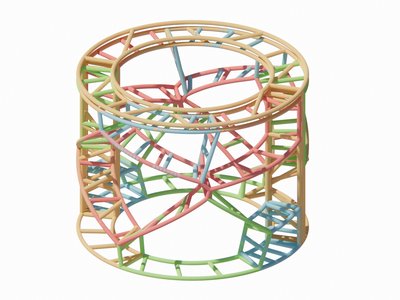
1. Through the data analysis of crops and livestock, as well as the analysis of human life needs, the unit design was carried out, followed by the combination design which conforms to the relationship between supply and demand. Finally, the parametric design was implemented for discrete design to obtain clusters.
2. Generation Process
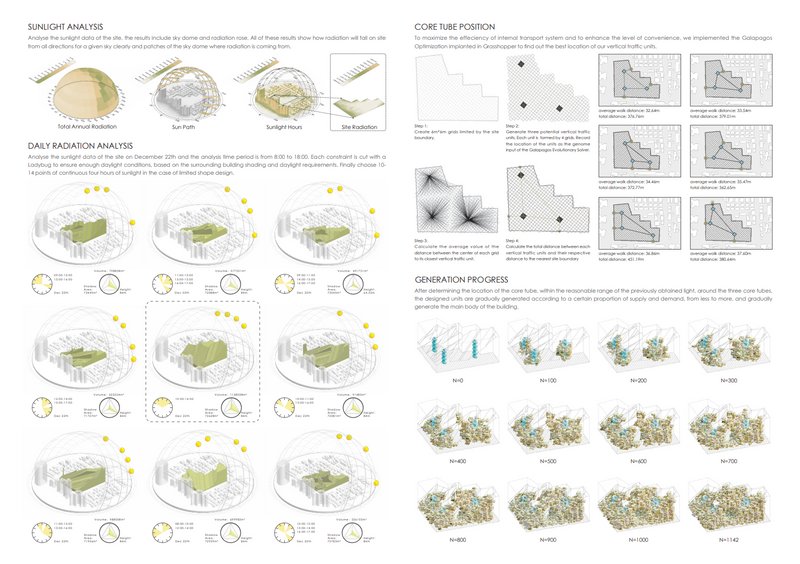
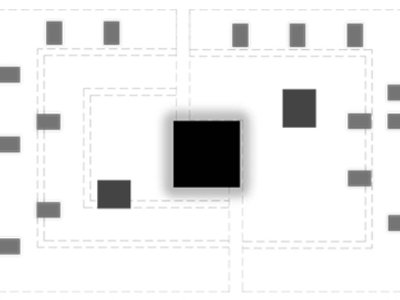
- Analyze the sunlight data of the site, the results include sky dome and radiation rose. All of these results show how radiation will fall on site from all directions for a given sky clearly and patches of the sky dome where radiation is coming from.
- Analyze the sunlight data of the site on December 22th and the analysis period is from 8:00 to 18:00. Each constraint is cut with a Ladybug to ensure enough daylight conditions, based on the surrounding building shading and daylight requirements. Finally, choose 10-14 points of continuous four hours of sunlight in the case of limited shape design.
- To maximize the efficiency of the internal transport system and to enhance the level of convenience, we implemented the Galapagos Optimization implanted in Grasshopper to find out the best location for our vertical traffic units.
- After determining the location of the core tube, within the reasonable range of the previously obtained light, around the three core tubes, the designed units are gradually generated according to a certain proportion of supply and demand, from less to more, and gradually generate the main body of the building.
Future
This will be implemented as a plan that can be scaled up and inserted into the city at different scales. Cells can also be replaced. Hopefully, this plan will shape a productive, hybrid future.



Popular Articles
Popular articles from the community

On the Brooks House by Monsoon Collective – A Contemporary Kerala Home Rooted in Tradition
Kerala home blending tradition and modernity with water-inspired design, brick architecture, courtyard planning, and sustainable rainwater harvesting strategies.
Atelier Macri Concept Store Interior Design by CASE-REAL
Atelier Macri store features a "ko" counter, walnut wood details, cork displays, blending retail, gallery, and seamless customer experiences.
Louis Malle Cinema: A Limestone Cultural Landmark Revitalizing Community Life in Prayssac
Limestone cinema extension with public forecourt, blending heritage and modern design to create flexible cultural spaces and strengthen community interaction.


The Ken Roberts Memorial Delineation Competition (Krob)
As the most senior architectural drawing competition currently in operation anywhere in the world, it draws hundreds of entries each year, awarding the very best submissions in a series of medium-based categories.

Similar Reads
You might also enjoy these articles
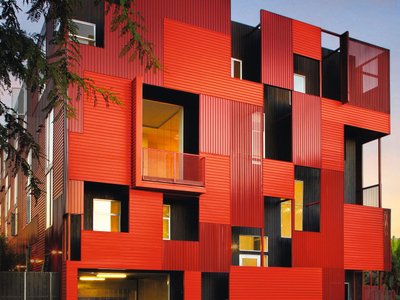
Converge Hub – A Human-Centered and Sustainable Mobility Hub at the Urban Edge
Its open and permeable design promotes sustainable movement through walkable connections, green axes, and integrated public transport
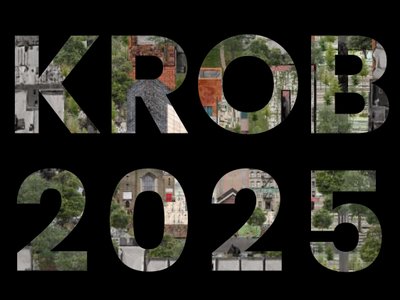
51st Annual KRob - Ken Roberts Memorial Delineation Competition
Join us in celebrating 51 years in excellence in architectural representation! With $2,400 in prize money awarded across 8 categories, this prompt-less competition is accessible to all!



Explore Architecture Competitions
Discover active competitions in this discipline




The International Standard for Design Portfolios


The Global Benchmark for Architecture Dissertation Awards


The Global Benchmark for Graduation Excellence


Challenge to reimagine the Iron Throne
Comments (0)
Please login or sign up to add comments
No comments yet. Be the first to comment!