

Urban Renewal in Beijing: Dinghao Electronics Building Transformed into High-End Office Hub by Nikken Sekkei
A sustainable renovation transforming Dinghao Building into a high-end office hub, blending innovation, TOD strategies, and carbon-conscious design.


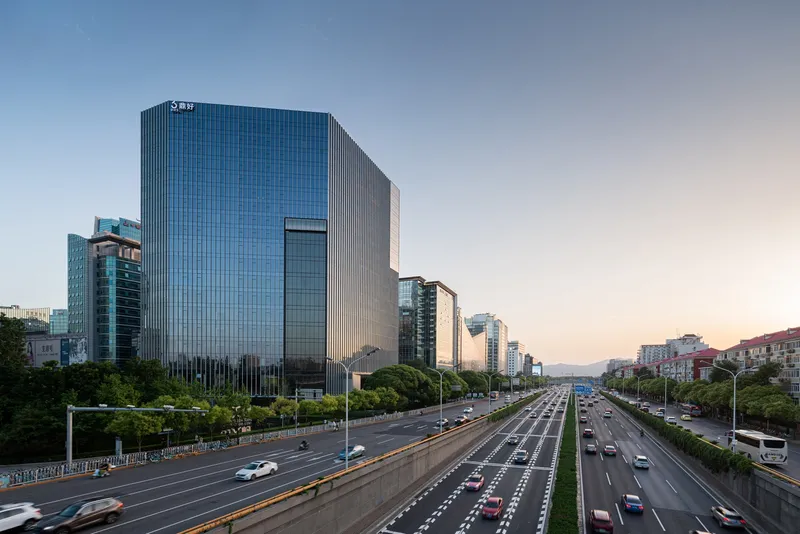
The Dinghao Electronics Building, once a bustling commercial hub in Beijing’s Zhongguancun district, has undergone a transformative upgrade led by renowned architecture firm Nikken Sekkei. This large-scale adaptive reuse project has reimagined the 200,000-square-meter complex into a state-of-the-art high-end office building, embracing sustainable practices and showcasing a new model for urban regeneration in China.
From Silicon Valley of China to Smart Office Complex
Originally constructed in two phases between 2003 and 2008, the Dinghao Building stood as a central fixture in Zhongguancun—often referred to as the "Silicon Valley of China". Surrounded by elite institutions such as Tsinghua University and Peking University, the area is home to numerous leading IT companies and startups. Strategically located at the gateway to Zhongguancun and directly linked to Subway Line 4 via two underground levels, the building once thrived as a retail and electronics marketplace. However, with evolving technology trends and dwindling foot traffic, the structure became crowded with small retail shops and was in urgent need of a visionary transformation.

Adaptive Reuse over Demolition: A Sustainable Urban Strategy
In a bold departure from conventional scrap-and-build urban renewal, Nikken Sekkei adopted an adaptive reuse strategy—preserving the existing structural frame while entirely renovating the facade and reprogramming the interior spaces. The project focused on converting the outdated commercial layout into a dynamic, future-ready office environment to meet the rising demand for premium workspaces in central Beijing.
This approach yielded extraordinary environmental and economic benefits:
- 63% reduction in embodied carbon emissions compared to new construction
- 62% lower construction costs
- 50% shorter construction timeline
This innovative model of urban revitalization aligns with China’s broader policy of reducing carbon footprints while enhancing the value of existing urban assets.
Reconfiguring Spatial Value: Light-Filled Atrium and Functional Layouts
A key architectural move was the rational reallocation of floor space. By carving a central atrium that spans from the ground floor to the top of the building, natural light now permeates the core spaces—enhancing interior quality and user experience. Although this reduced the overall floor area slightly, the reallocated volume was compensated by expanding the upper floors, which command higher rental value in the office market.
In total, approximately 4,000 square meters (7% of above-ground GFA) were reconfigured, optimizing the building for its new office function while minimizing cost and structural intervention.


Transit-Oriented Development: Reviving the Urban Fabric
Leveraging its deep experience in Transit-Oriented Development (TOD), Nikken Sekkei revitalized the building’s connection to the city. Previously, an underused, poorly lit underground corridor linked the subway station to the commercial core. The architects reactivated this circulation route, introducing vibrant retail and communal spaces along the corridor to foster urban vitality and strengthen the connection between public transport and commercial activity.

Innovation and Community: Building a New Urban Ecosystem
The renewed Dinghao Building is not just an office complex—it’s envisioned as a hub of innovation. By blending flexible office spaces with public zones for interaction and exhibition, the architecture promotes synergy among startups, researchers, and entrepreneurs. The project acts as a physical and social bridge between innovation, culture, and community, reinforcing Zhongguancun’s reputation as a global tech center.


A Contemporary Façade with Historic Memory
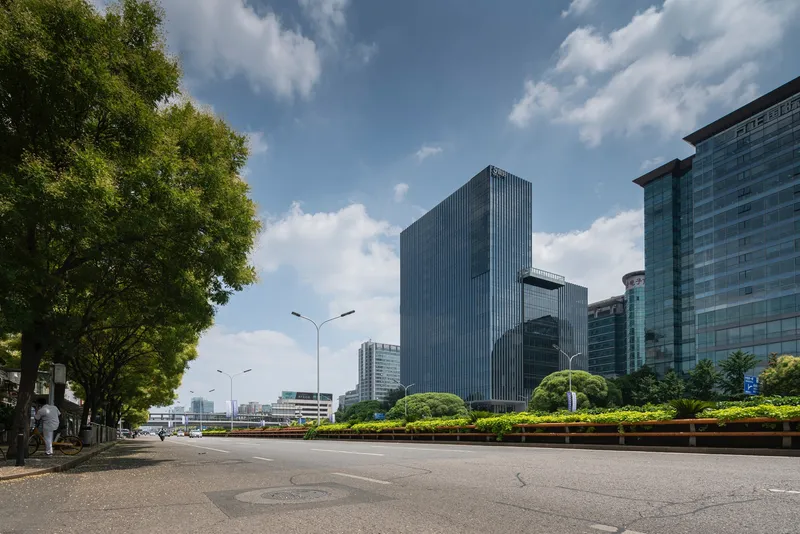
Visually, the building’s identity has been reborn through a complete exterior overhaul. Inspired by the concept of “inlaying,” the design utilizes a blend of materials and volumes that reflect the diverse talents and technologies of Zhongguancun. The previously flat, monolithic façade has been broken down into articulated volumes, echoing the building’s internal logic while creating a more human-scale presence in the cityscape.
The entire previous envelope was removed and replaced with a Low-E glass curtain wall, improving natural daylight and thermal performance. The design expresses functional clarity, with solid surfaces highlighting core areas and transparent zones opening up workspaces to the exterior. This intervention led to a 35% reduction in operational carbon emissions, significantly elevating the building’s environmental performance.


Popular Articles
Popular articles from the community


David Ortega Stacks a Two-Story Mexico City Penthouse Around a Steel Stair and a Pergola-Shaded Roof Terrace
In Colonia Roma, a 300 m² penthouse uses oak joinery, a planted steel stair and a slatted roof pergola to make a new-build apartment feel like a house.

LT2A and OPEN Architectes Thread a Brick and Glass High School Through a Wooded Belgian Campus
In Braine-l'Alleud, a 3,000 m² wing for Collège Cardinal Mercier pairs pale brick with a glazed colonnade, deferring to a small chapel and a dense wood.

U.GA Architects Wraps an Oval Rooftop Pool in Curved Board-Formed Concrete on Busan's Jeollidan-gil
In Busan's Jeonpo-dong, a 454 m² mixed-use block stacks a neighborhood facility, guest rooms and an oval rooftop pool inside spiraling concrete walls.

Architekt Andreas Gruber Scatters 23 Dark Timber Chalets Across a South Tyrolean Forest Edge
In Molini di Tures, Amonti Chalets breaks a resort into a hamlet of gabled timber houses, with parking, storage and services pushed into the slope.

Similar Reads
You might also enjoy these articles


Hodi-Mandai Geram
Project Function: Preservation and revitalization of the Intangible heritage and socio-spatial identity of the Hodi by Housing, Cultural Memory Center, Sacred Grove, landscape, local tourism economy


Olio Towers: A Mid-Rise for Performers That Fuses Housing, Rehearsal, and Stage
Located blocks from Houston's Theater District, this modular tower stacks living units around a central performance atrium.

Oasis: Modular Green Housing Carved into Dhaka's Urban Fabric
A shortlisted Plugin Housing entry reclaims unauthorized settlements in Dhaka with stepped concrete volumes, green roofs, and ventilation-driven design.

Black Hole: A Floating Megastructure for the Post-Physical Era
Emiliano Mazzarotto envisions a spherical, self-scaling arena where e-sports, digital hotels, and holographic stadiums replace traditional public space.

Explore Office Building Competitions
Discover active competitions in this discipline

Challenge to reimagine the Iron Throne

Photograph architecture without architects

Illustrate the lost glory of Angkor Wat - Render Challenge

Design challenge to reuse E-waste
Comments (0)
Please login or sign up to add comments
No comments yet. Be the first to comment!