

Ursulastrasse 6 by Studio Mark Randel & David Chipperfield: Contemporary Housing in Historic Munich
Ursulastrasse 6 by Studio Mark Randel and David Chipperfield is a contemporary Munich apartment block blending modern design with historic context.


Ursulastrasse 6 is a thoughtfully designed apartment block in Munich’s Altschwabing district, nestled between the Münchner Freiheit and the Englischer Garten. The project transforms a low-rise 1920s building into a contemporary residential complex while respecting the historic architectural context of Schwabing, a neighborhood celebrated for its artistic, bohemian, and free-thinking character.
The design demonstrates a sensitive urban intervention, blending modern construction, community engagement, and historical preservation. The building enhances the neighborhood’s vibrancy, connecting residents to the surrounding cultural, recreational, and social amenities, including cafés, galleries, cinemas, theaters, schools, and parks.

Site Context and Urban Planning
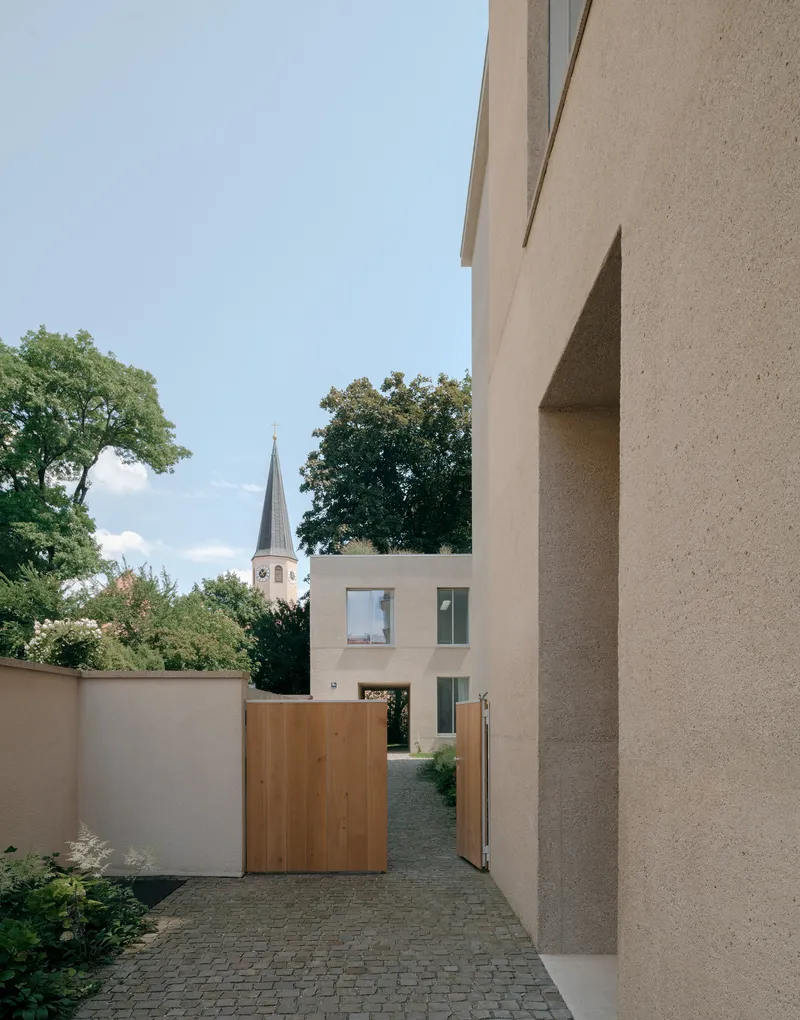
The property sits on a quiet cobblestone street lined with intact 19th- and early 20th-century buildings, some featuring ground-floor restaurants, cafés, and shops. Background sounds: birdsong, church bells, and children at play, create a tranquil atmosphere despite the lively urban context.
The building extends from the street frontage to a small church park surrounding the historic Sankt Silvester church, completing a full city block alongside the adjacent property. The design draws inspiration from Theodor Fischer’s pavilion plan (1893 to 1902), which envisioned U-shaped residential buildings enclosing a shared inner courtyard with tree-lined driveways and semi-private spaces. By replicating floor heights and roof shapes of neighboring buildings, the project preserves the original urban rhythm, maintaining ceiling heights compatible with 18th- and 19th-century apartments.
- Underground Garage: A discreet car elevator provides access to the basement garage, minimizing visual impact and preserving street aesthetics.


Architectural Design
Façade and Materiality
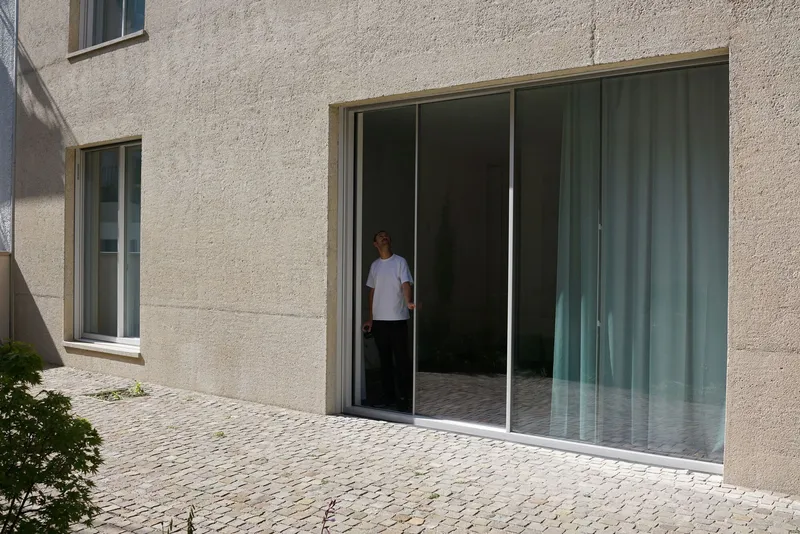
The building’s bush-hammered concrete façade conveys permanence and protection, harmonizing with the rough plastered surfaces of neighboring historic structures. Subtle irregularities and traces of handcrafted work reflect light and shadow, adding a human touch to the otherwise monumental concrete surface.
Windows and Interior Experience
Window placement and size were carefully considered. While maintaining room heights consistent with adjacent buildings, larger windows maximize natural light and views of the surrounding environment. Low balustrades and floor-to-ceiling glass create visual connections to the neighborhood, fostering a sense of community and tranquility within the apartments.

Ground-Floor Community Features
The project contributes to neighborhood vitality through two key interventions:
- Street-Facing Café: Engages passersby and activates the public realm.
- Permanently Installed Bench: Provides seating for residents and visitors, creating social spaces throughout the day.
Landscape and Private Spaces
At the rear, a two-story coach house with private garden complements the main building. A passage links the garden to the main entrance, with future potential for direct access to the church park, blending private and public realms. Landscaping and spatial planning maintain visual continuity and a sense of openness, echoing Fischer’s original urban vision.

Conclusion
Ursulastrasse 6 exemplifies how contemporary residential architecture can integrate with historic urban fabric. Through careful attention to materiality, scale, and context, Studio Mark Randel and David Chipperfield have created a building that:
- Preserves and completes the historic city block
- Enhances community engagement through ground-floor public spaces
- Optimizes daylight, views, and interior comfort
- Balances heritage preservation with modern design
This project serves as a model for sensitive urban infill, where architecture, history, and community coalesce into a harmonious residential environment.


All the photographs are works of Simon Menges


Popular Articles
Popular articles from the community


Opera on the Sea: Driftwood Logic Shapes a Timber Opera House on Estonia's Coast
Trevor Orgill's opera house translates the entangled drift of floating timber into a civic building where wood, water, and music converge.

Singing Woman: Contemporary Architecture Inspired by Estonia’s Voice and the Sea
Singing Woman turns Estonia’s song culture into flowing opera house architecture, blending public life, landscape, sea, and national memory.
Manzana Morphosis: Stretching Barcelona's Grid into a Living Landscape for 2050
A radical reworking of the Eixample manzana turns density into a tool for generous public space, vertical ecology, and environmental performance.

Tsunami Convergenics: Turning Catastrophic Ocean Forces into Underwater Housing Infrastructure
A speculative underwater settlement off the coast of Onagawa, Japan, treats tsunamis and typhoons as energy sources rather than threats.

Similar Reads
You might also enjoy these articles


Hodi-Mandai Geram
Project Function: Preservation and revitalization of the Intangible heritage and socio-spatial identity of the Hodi by Housing, Cultural Memory Center, Sacred Grove, landscape, local tourism economy


Olio Towers: A Mid-Rise for Performers That Fuses Housing, Rehearsal, and Stage
Located blocks from Houston's Theater District, this modular tower stacks living units around a central performance atrium.

Oasis: Modular Green Housing Carved into Dhaka's Urban Fabric
A shortlisted Plugin Housing entry reclaims unauthorized settlements in Dhaka with stepped concrete volumes, green roofs, and ventilation-driven design.

Black Hole: A Floating Megastructure for the Post-Physical Era
Emiliano Mazzarotto envisions a spherical, self-scaling arena where e-sports, digital hotels, and holographic stadiums replace traditional public space.

Explore Residential Design Competitions
Discover active competitions in this discipline

Challenge to reimagine the Iron Throne

Photograph architecture without architects

Illustrate the lost glory of Angkor Wat - Render Challenge

Design challenge to reuse E-waste
Comments (0)
Please login or sign up to add comments
No comments yet. Be the first to comment!