

Valladolid Art School by Estudio Primitivo González | eGa
A contemporary art school in Valladolid blending historic courtyard typology, dark brick exteriors, and bright interiors fostering creativity and community.


Reinterpreting Tradition Through Contemporary Educational Architecture in Valladolid, Spain
Located beside the historic Convent of Las Carmelitas Descalzas, the new Valladolid Art School by Estudio Primitivo González | eGa creates a dialogue between heritage and innovation. Designed with profound respect for its historical surroundings, the project transforms what once were the convent’s orchards into a modern educational complex that balances architectural restraint and creative freedom.

Architectural Concept: Between Heritage and Modern Expression
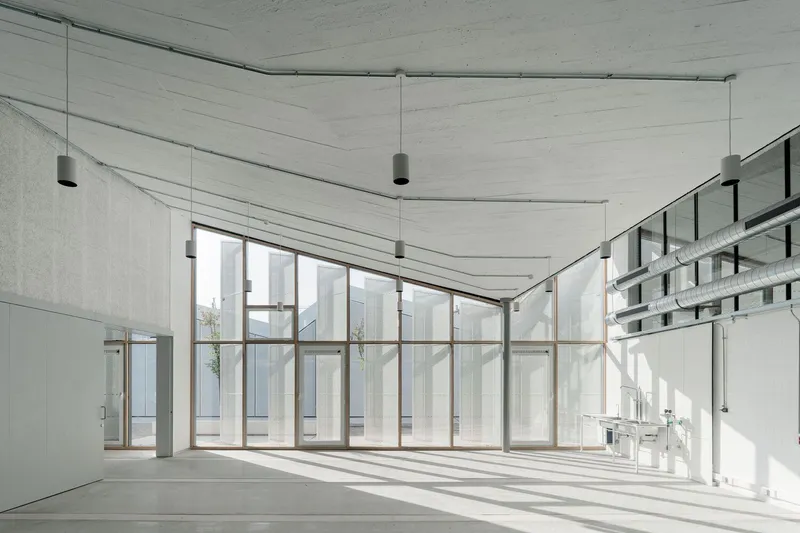
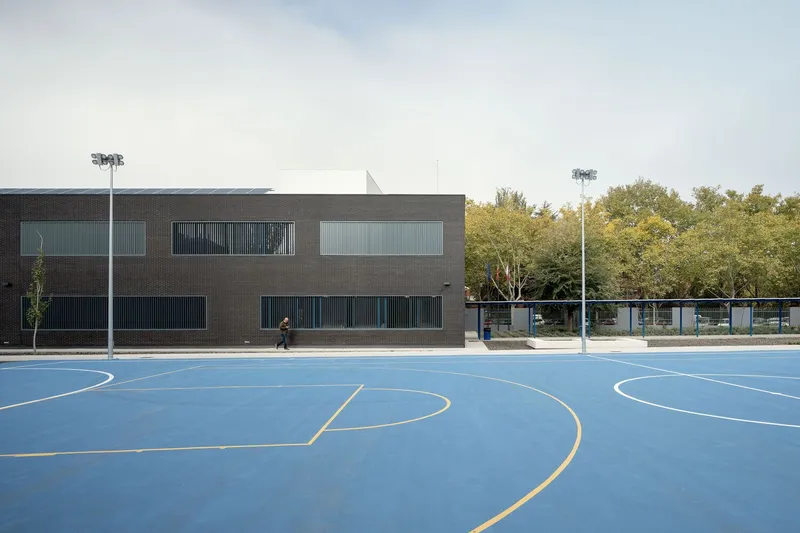
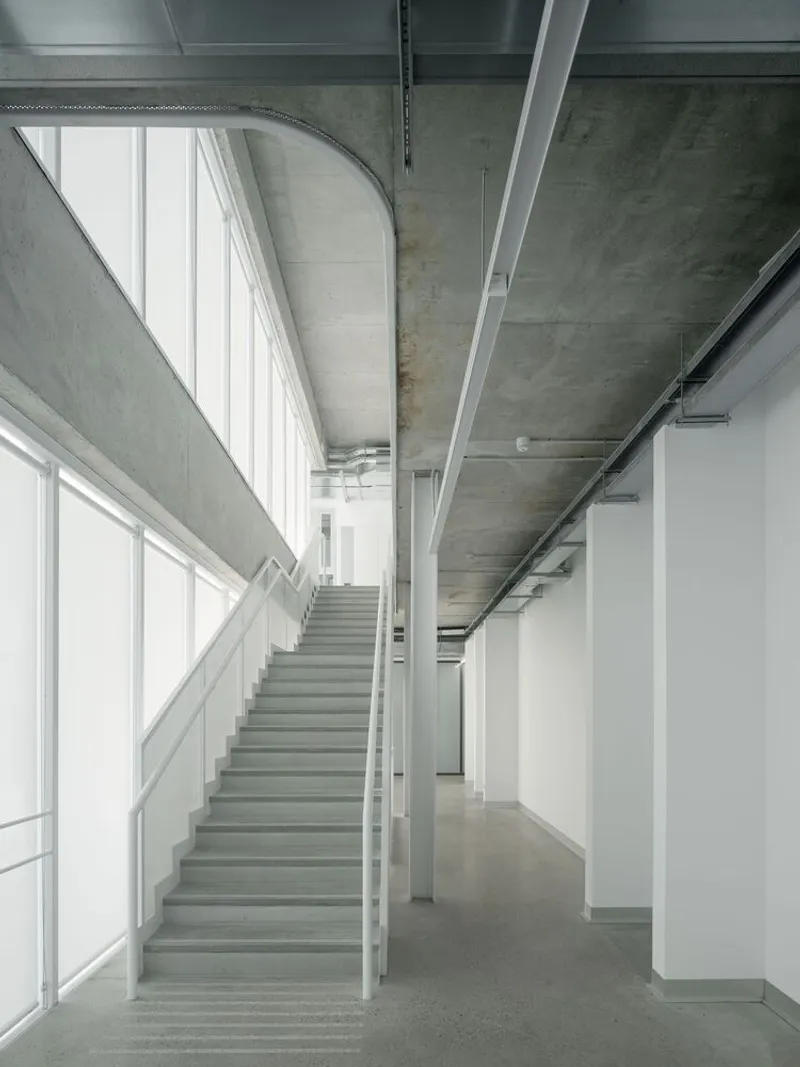
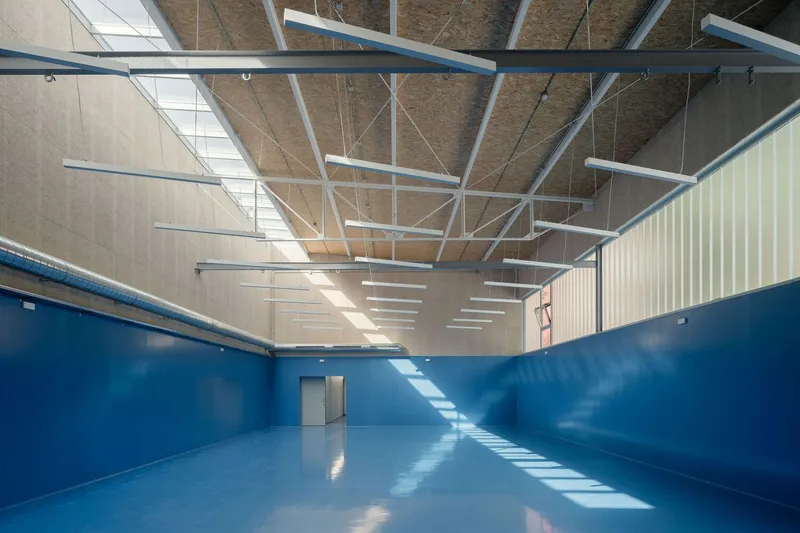
The design unfolds as a composition of contrasts — between solidity and openness, materiality and lightness. Toward the city, the building presents a facade of dark brick, forming an architecture of walls and texture. This tactile surface evokes both permanence and mystery, anchoring the structure within its historical context. In contrast, the interior reveals a bright, white, and technological space, inspired by industrial architecture. This duality — dark and solid outside, luminous and open within — captures the school’s role as a place of creative experimentation protected by tradition.
Courtyard Typology and Spatial Organization
The architectural layout draws directly from the monastic courtyard typology of the neighboring convent. Two central courtyards organize the program:
- The first courtyard articulates the classrooms across two levels, creating a sense of enclosure and community.
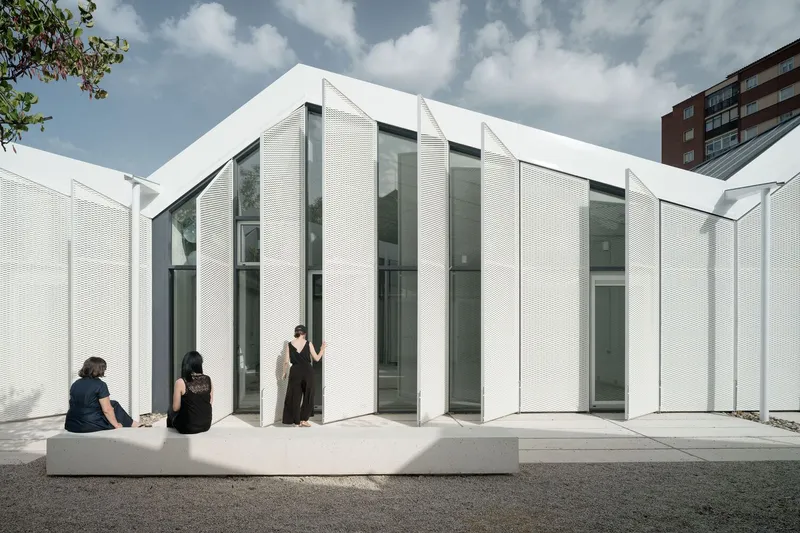
- The second courtyard, larger and framed by a folded concrete shell, houses the workshops. This shell folds inward as it descends into the courtyard, forming a dynamic broken profile and expansive windows that flood the interiors with natural light.
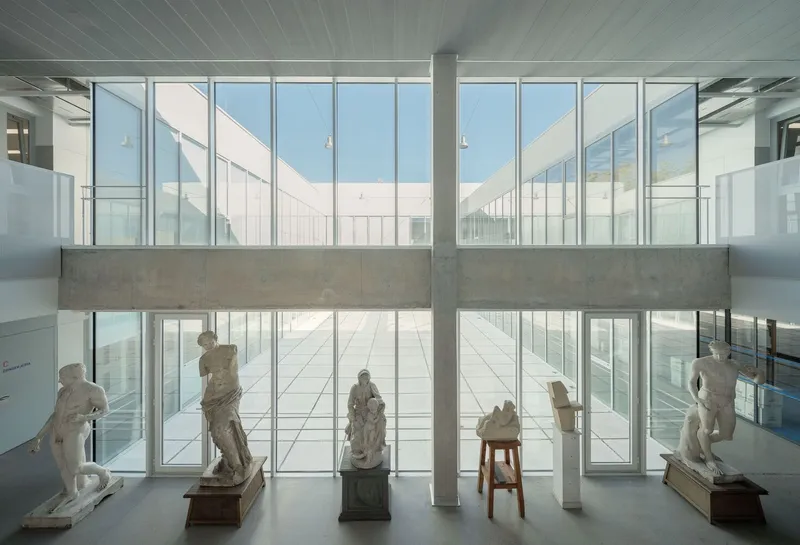
These courtyards act as contemporary agoras — open, flexible spaces for interaction, exhibitions, performances, and artistic collaboration. They reinterpret the cloister not as a place of retreat but as a platform for creativity and dialogue.
A Dynamic Central Lobby
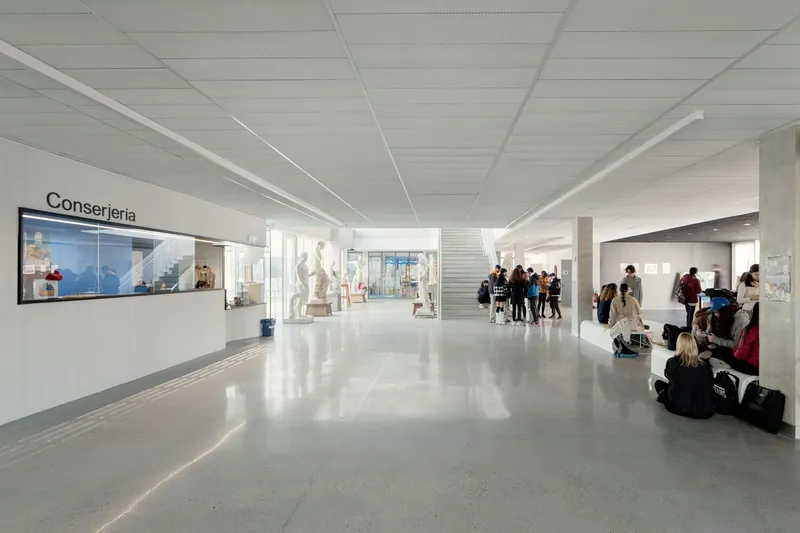
At the intersection of all programs lies the main lobby, conceived as the heart of the school. This double-height space connects classrooms, workshops, and shared amenities such as the library and cafeteria, encouraging informal meetings between students and faculty. It serves not only as a circulation hub but as a social and cultural nucleus where diverse artistic disciplines converge.
Materiality and Atmosphere
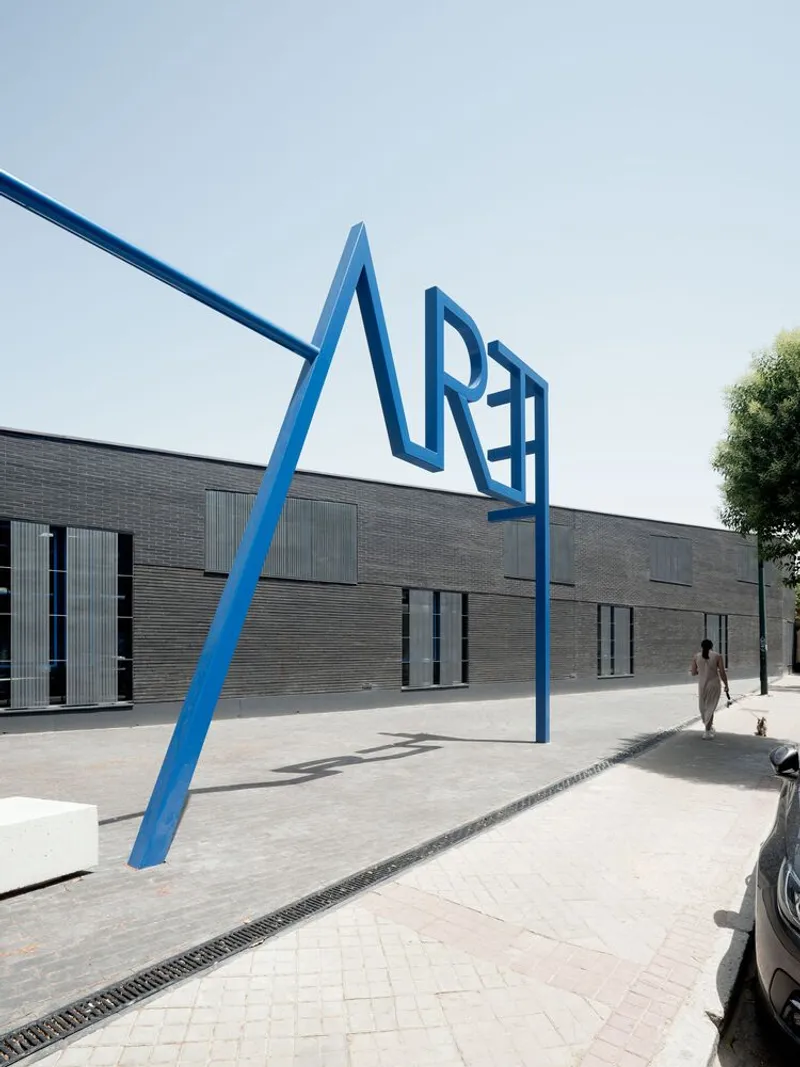
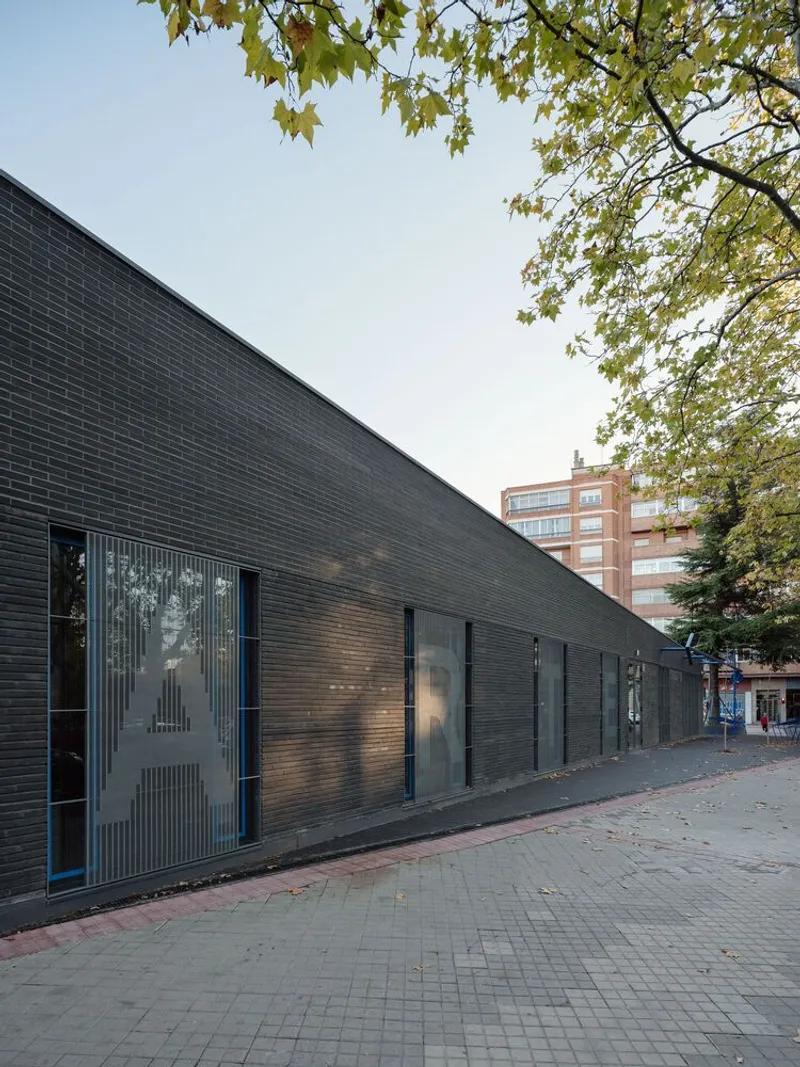
Material choice plays a central role in defining the project’s identity. The black brick exterior lends weight and texture, grounding the building in its urban context while echoing the material austerity of traditional Spanish architecture. Inside, the white, industrial-inspired finishes foster brightness and clarity, creating an atmosphere conducive to learning, making, and imagination. This interplay of material contrast and spatial rhythm defines the architectural character of the Valladolid Art School.


Urban Integration and Public Space
The project not only enriches the academic environment but also contributes to the urban life of Valladolid. A small public square at the building’s entrance offers a welcoming space for students and citizens alike. Marked by large sculptural letters spelling “ART”, the plaza becomes a gathering point — a vibrant threshold between city and school, where young artists meet, rest, and engage with the community.
Here, architecture becomes both background and catalyst: the built form provides the stage, while the daily life of students animates the urban scene. Through this gesture, the school extends its creative energy beyond its walls, transforming education into a public and participatory experience.
The Valladolid Art School by Estudio Primitivo González | eGa stands as a powerful synthesis of historical sensitivity and contemporary design thinking. Rooted in the traditions of cloister architecture yet open to the future, it exemplifies how educational spaces can nurture artistic potential while respecting cultural heritage. The project invites a new generation of artists to learn, experiment, and create — within a setting that celebrates both memory and modernity.
All Photographs are works of Luis Díaz Díaz


Popular Articles
Popular articles from the community


The Amber Palace Opera: A Geological Fiction Surfaces on Tallinn's Baltic Waterfront
Pierre Brillard reimagines a Baltic legend as a public landscape, opera house, and waterfront promenade rooted in Tallinn's coastal identity.

Faces of the Soviet Avant-Garde: Turning Moscow's Street Names into an Open-Air Museum
A network of sculptural installations across a Moscow residential district transforms forgotten architect names into spatial encounters with cultural memor

Manzana Morphosis: Stretching Barcelona's Grid into a Living Landscape for 2050
A radical reworking of the Eixample manzana turns density into a tool for generous public space, vertical ecology, and environmental performance.

Cloaked Colonization: A Mobile Underwater Habitat That Moves Like a Fish
Micah Abaya's shortlisted EHC Pacific entry reimagines ocean settlement as a dispersed network of self-sustaining architectural organisms.

Similar Reads
You might also enjoy these articles


Hodi-Mandai Geram
Project Function: Preservation and revitalization of the Intangible heritage and socio-spatial identity of the Hodi by Housing, Cultural Memory Center, Sacred Grove, landscape, local tourism economy


Olio Towers: A Mid-Rise for Performers That Fuses Housing, Rehearsal, and Stage
Located blocks from Houston's Theater District, this modular tower stacks living units around a central performance atrium.

Oasis: Modular Green Housing Carved into Dhaka's Urban Fabric
A shortlisted Plugin Housing entry reclaims unauthorized settlements in Dhaka with stepped concrete volumes, green roofs, and ventilation-driven design.

Black Hole: A Floating Megastructure for the Post-Physical Era
Emiliano Mazzarotto envisions a spherical, self-scaling arena where e-sports, digital hotels, and holographic stadiums replace traditional public space.

Explore School of Design and Arts Competitions
Discover active competitions in this discipline

Challenge to design public laboratory

Challenge to reimagine the Iron Throne

Photograph architecture without architects

Illustrate the lost glory of Angkor Wat - Render Challenge
Comments (0)
Please login or sign up to add comments
No comments yet. Be the first to comment!