

VEGA House by Archirie
A private family home in Daejeon organized around courtyards and terraces, creating a nature-immersed, flexible retreat within suburban surroundings.


VEGA House, designed by Archirie, is a carefully composed family residence located in a quiet residential corner of Daejeon, South Korea. Conceived as a home for a couple and their two children, the project explores how architecture can foster intimacy, adaptability, and a deep connection to nature within a rapidly developing suburban context.
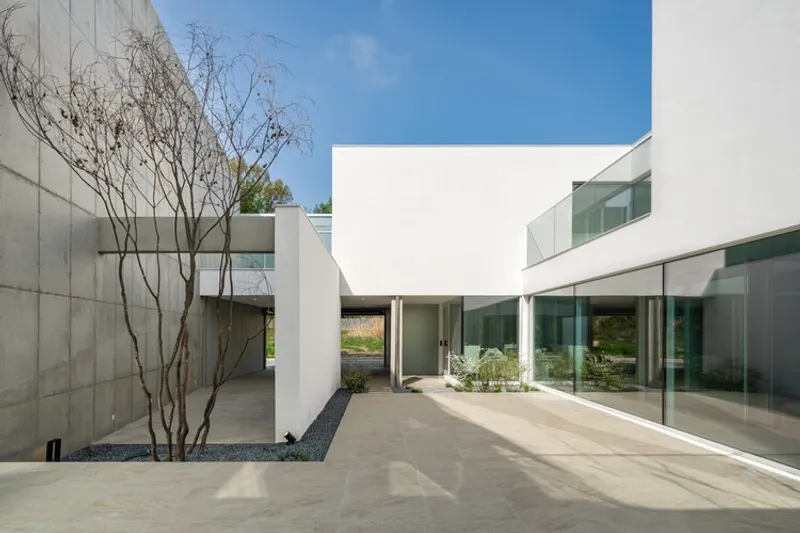
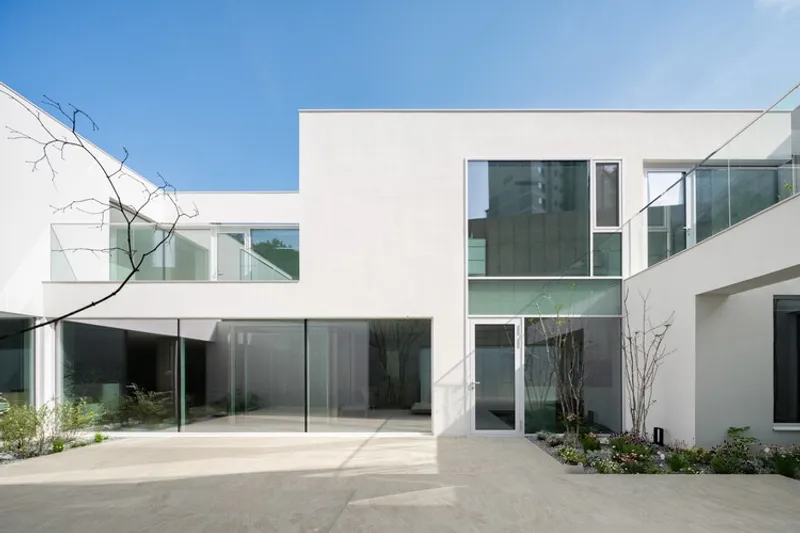
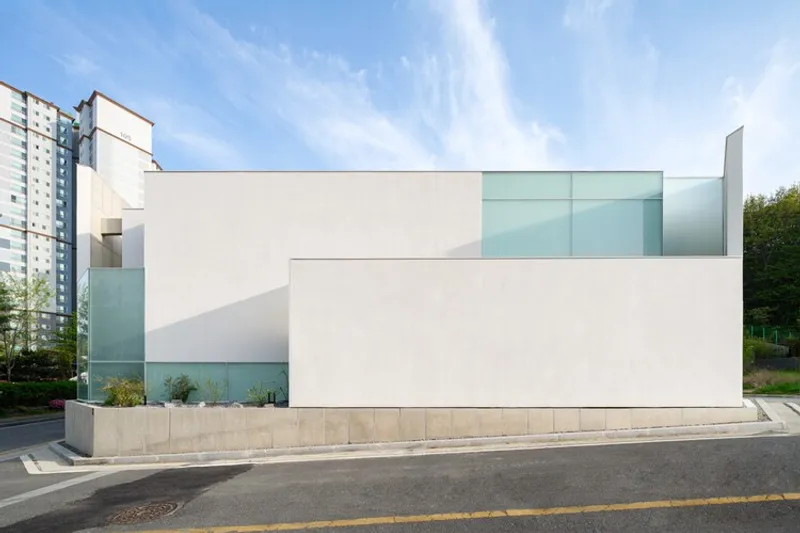
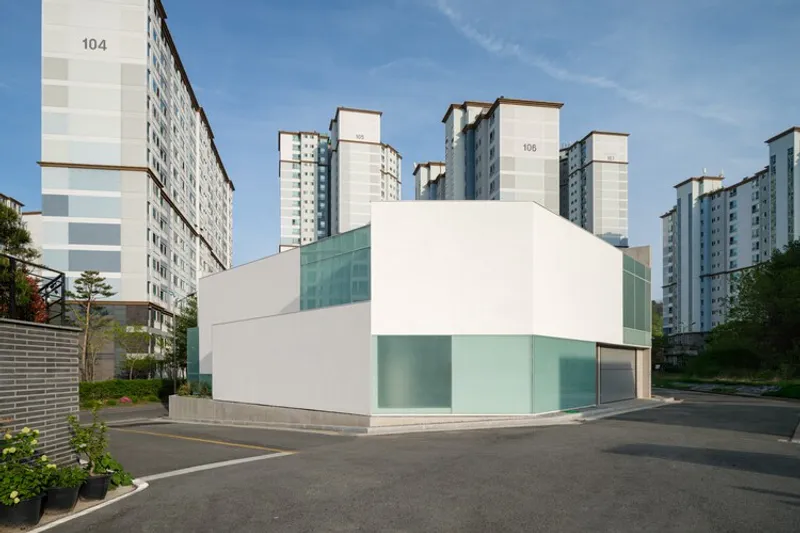
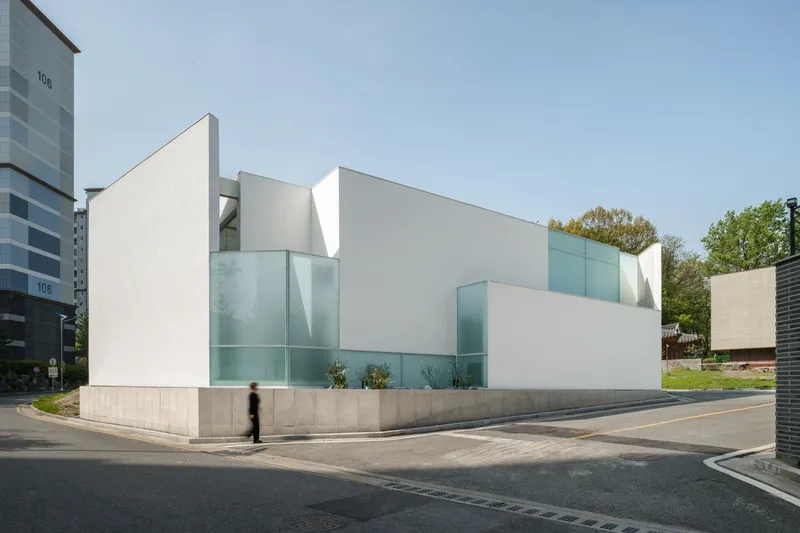
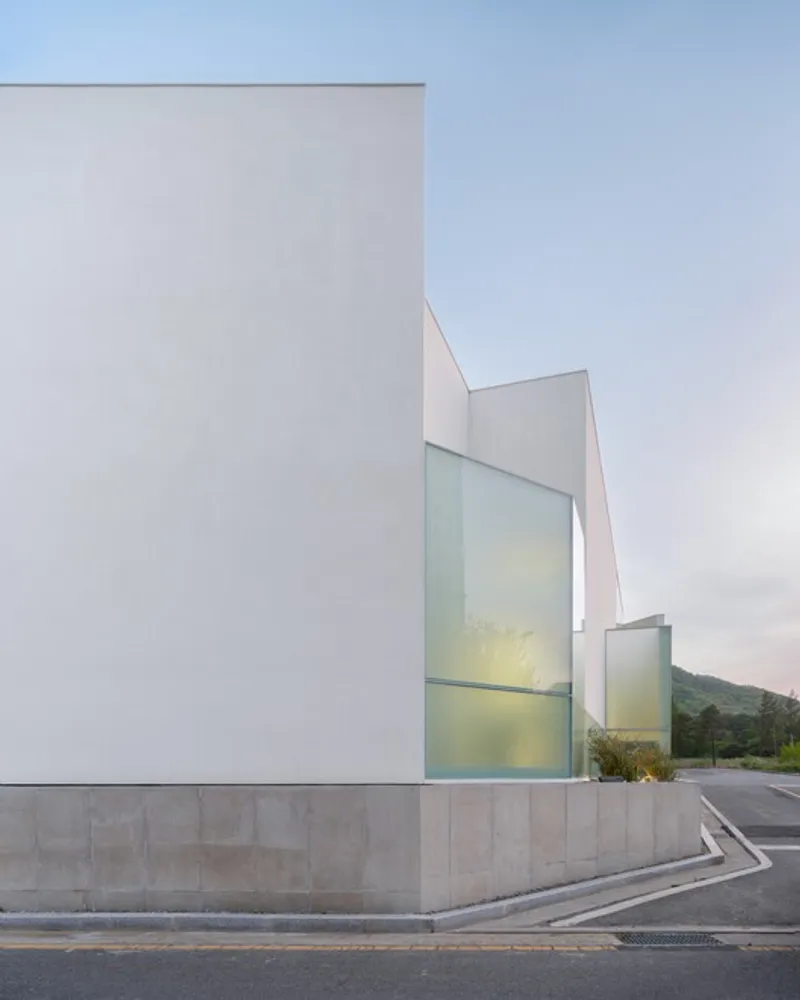
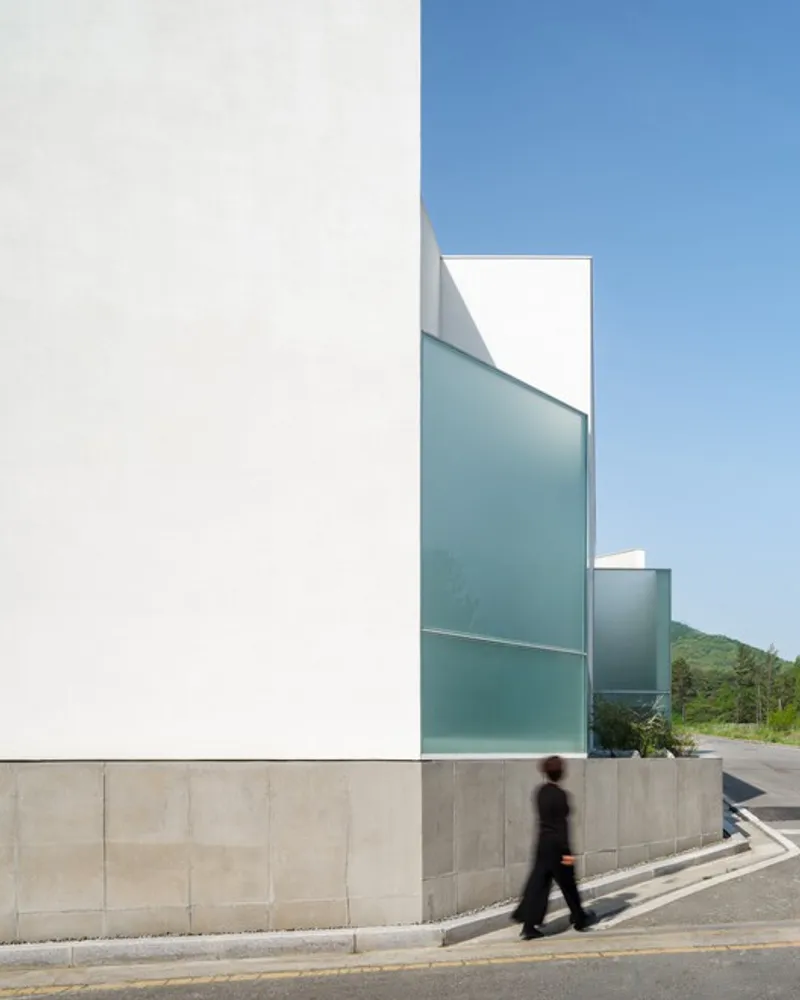
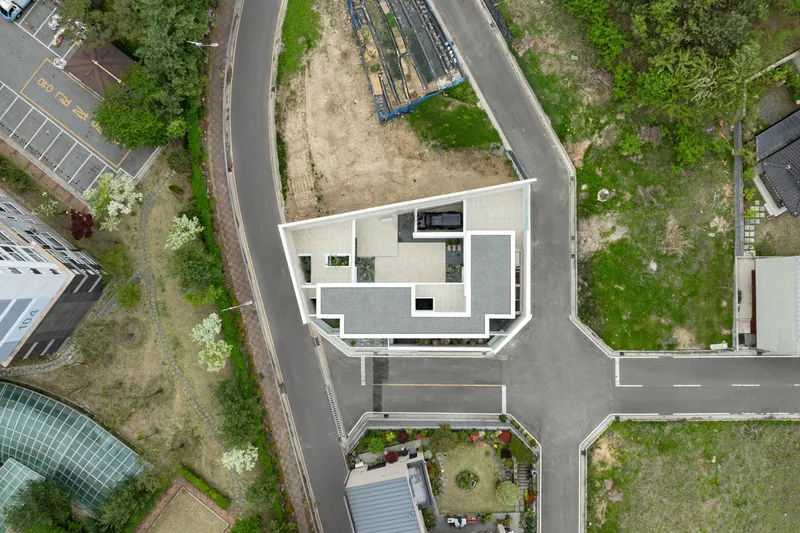
Surrounded on three sides by roads, apartment complexes, and a nearby golf course, the site occupies a transitional zone between built density and open landscapes. The architects responded by creating a house that turns inward—protective and private—while cultivating a rich sequence of courtyards, terraces, and gardens that bring nature into daily family life.
An Enclosed World Within the City
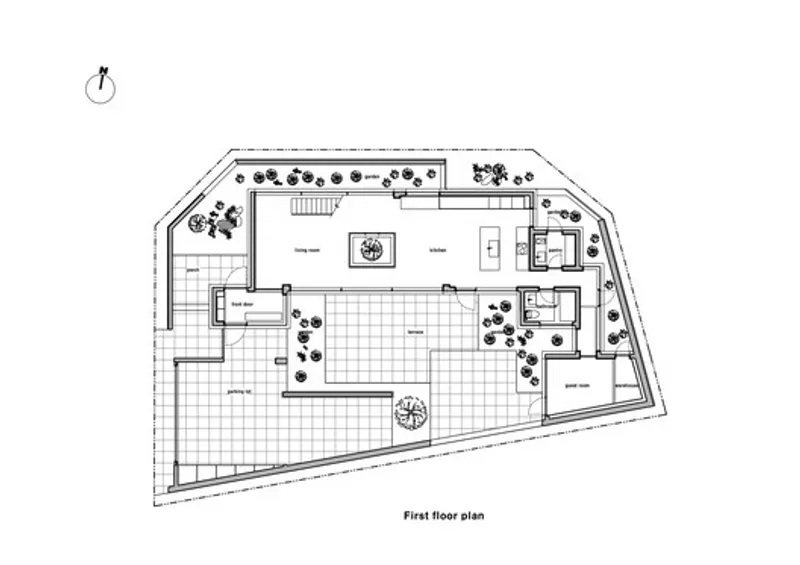
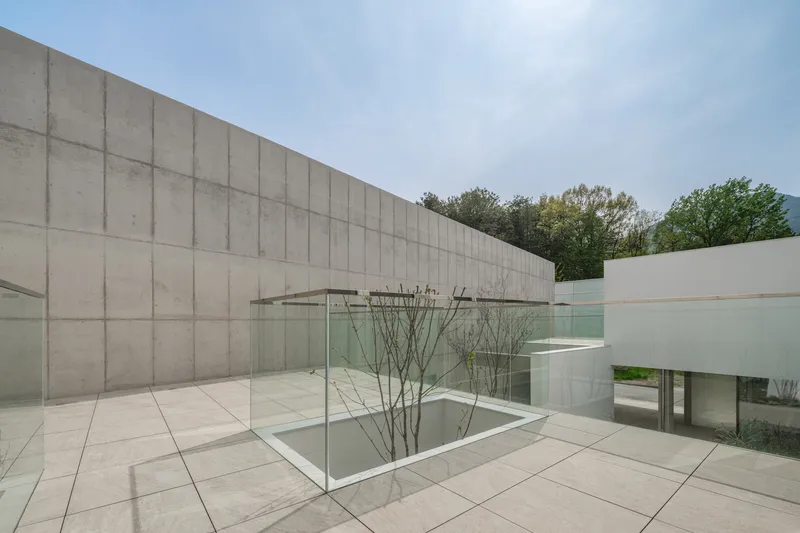
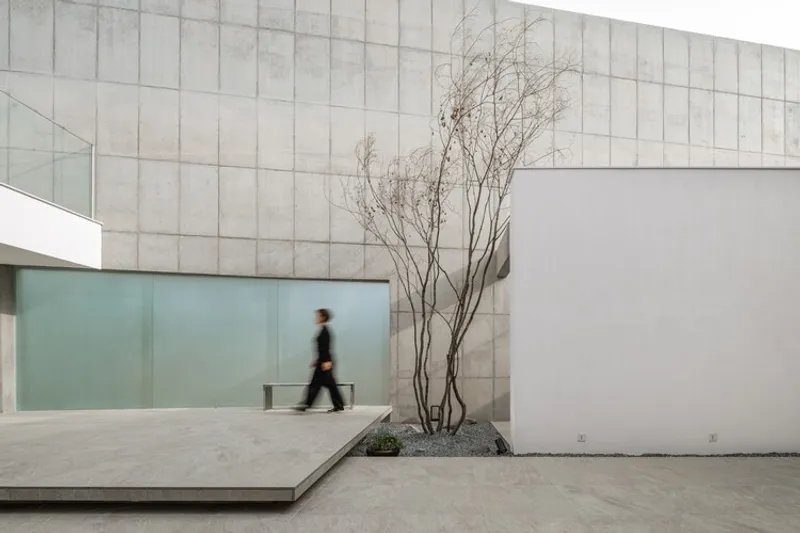
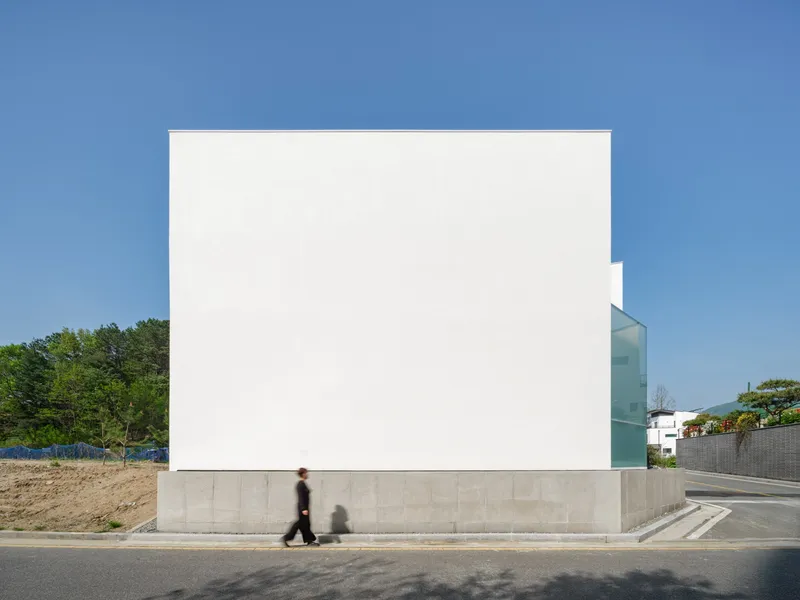
Rather than opening directly to its surroundings, VEGA House establishes a clear boundary along its perimeter. Solid walls enclose the site, shielding the home from future neighboring developments while creating a controlled internal environment. Within this enclosure, a series of outdoor spaces—large and small—are carefully distributed, wrapping around the living areas and becoming extensions of the interior.
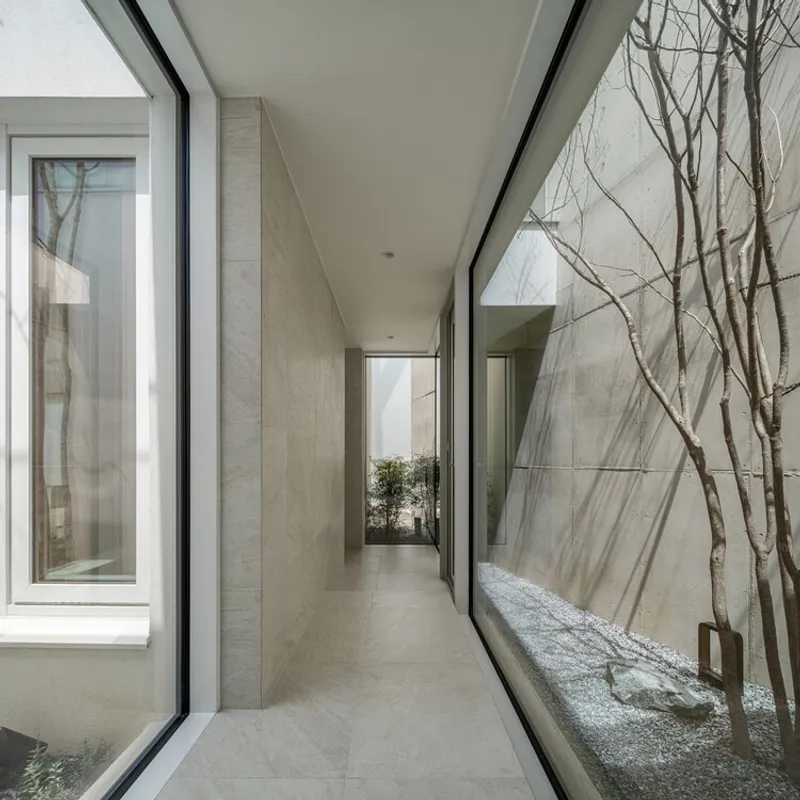
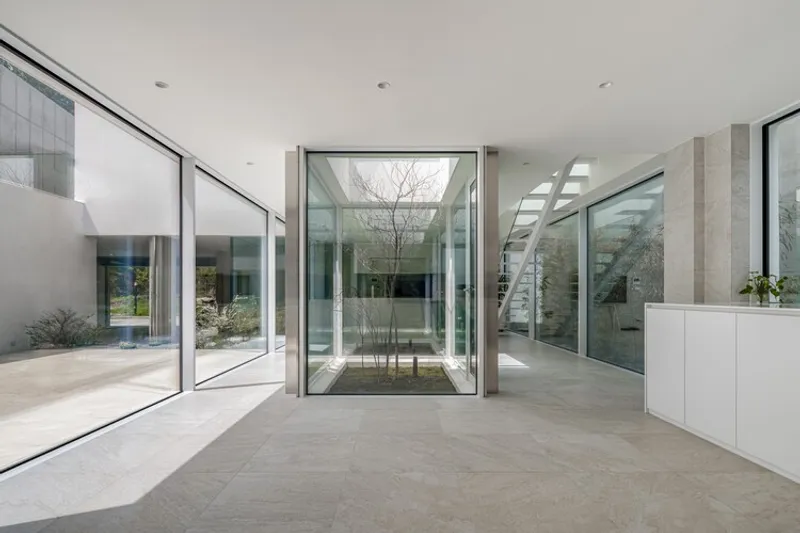
This strategy allows the house to feel secluded without being isolated. The living spaces are consistently oriented toward greenery, light, and sky, reinforcing the sensation of living within a natural landscape rather than a suburban block.
Arrival Through Light and Calm
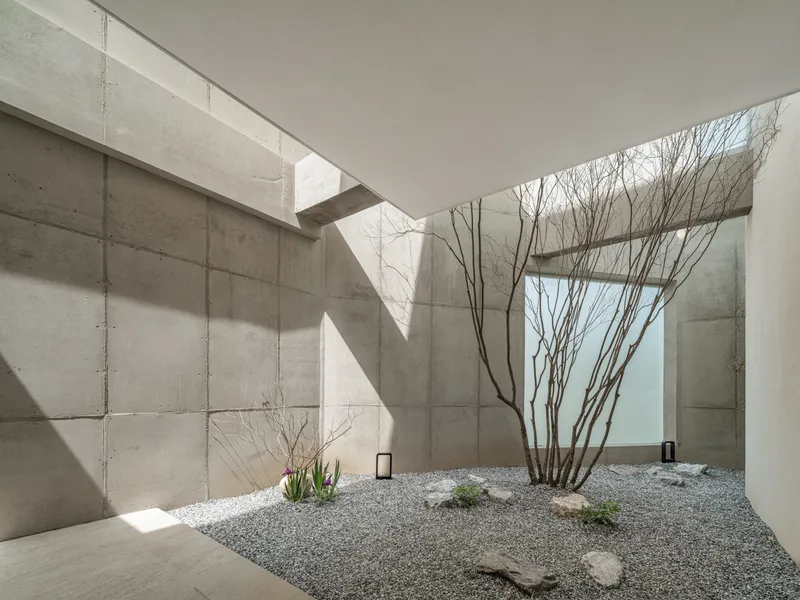
Upon entering the house, visitors are greeted by a tranquil internal garden, softly illuminated by sunlight filtering through upper-level openings. Natural stone and wood elements establish a tactile, grounded atmosphere, immediately distancing the interior from the noise and pace of the surrounding streets.
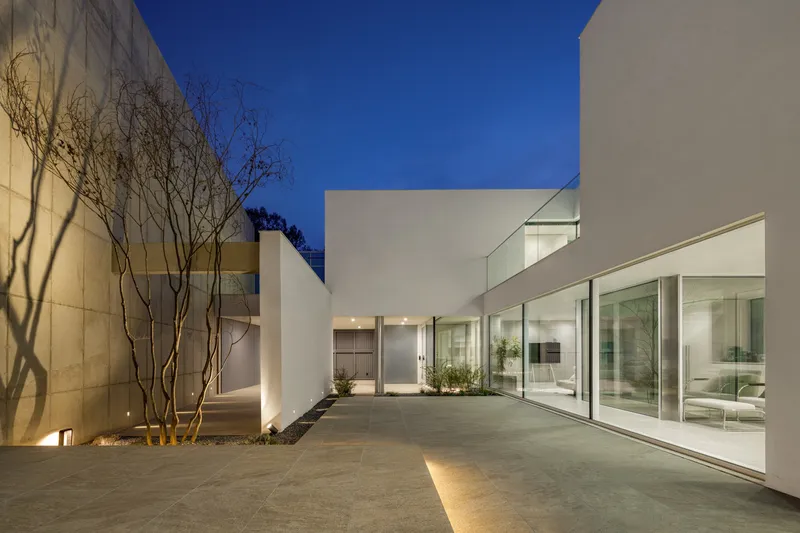
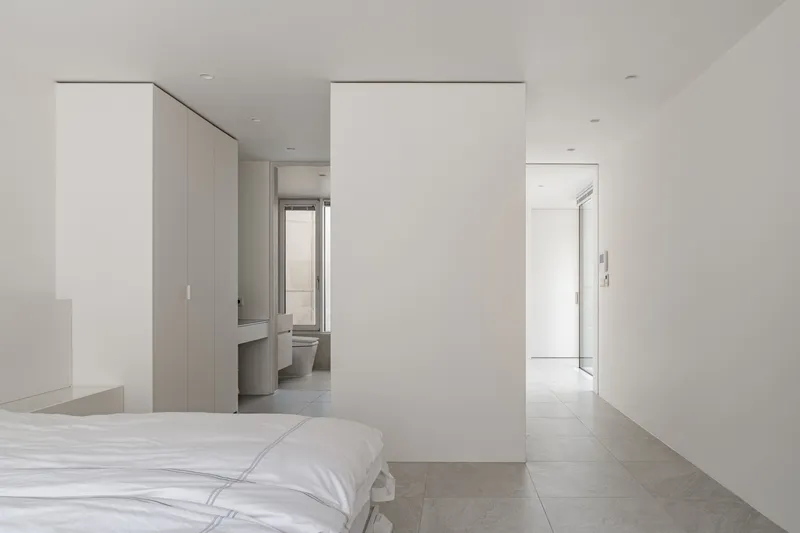
This garden is neither overly bright nor dim; instead, it is deliberately calibrated to create a sense of calm—a threshold space that gently transitions from the public exterior into the private world of the family.
Courtyards as Spatial Mediators
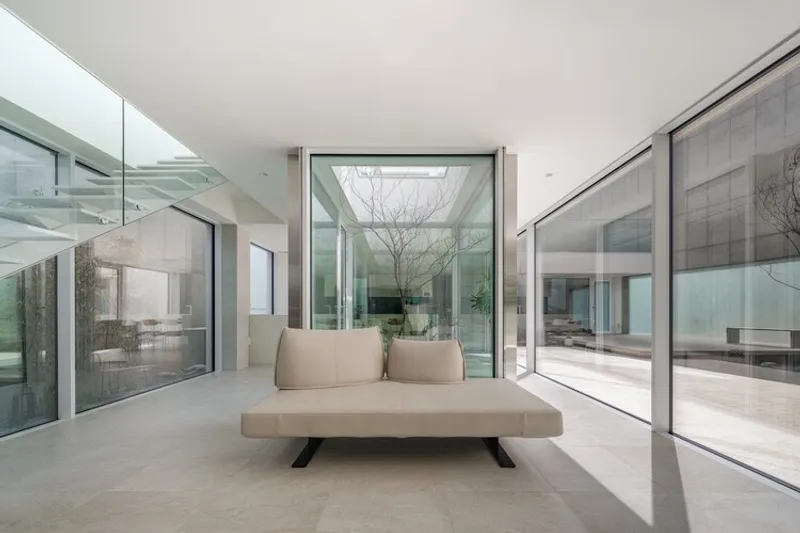
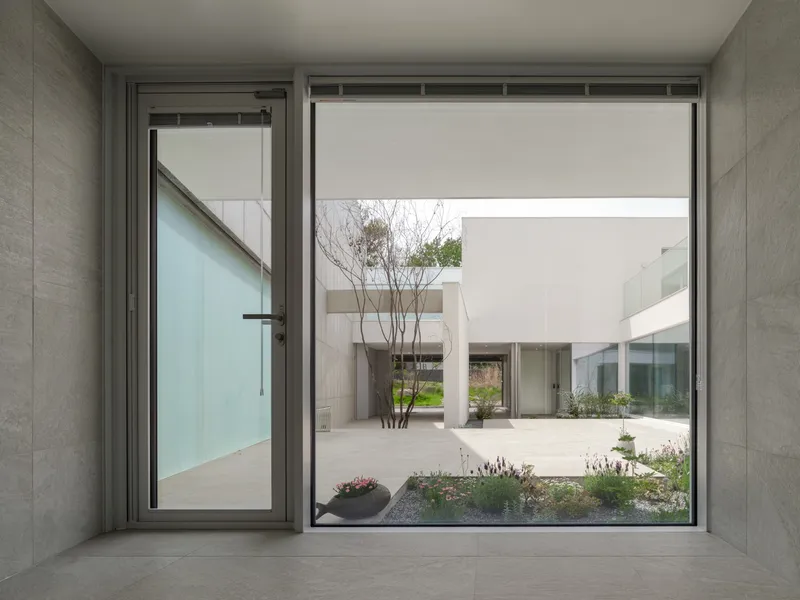
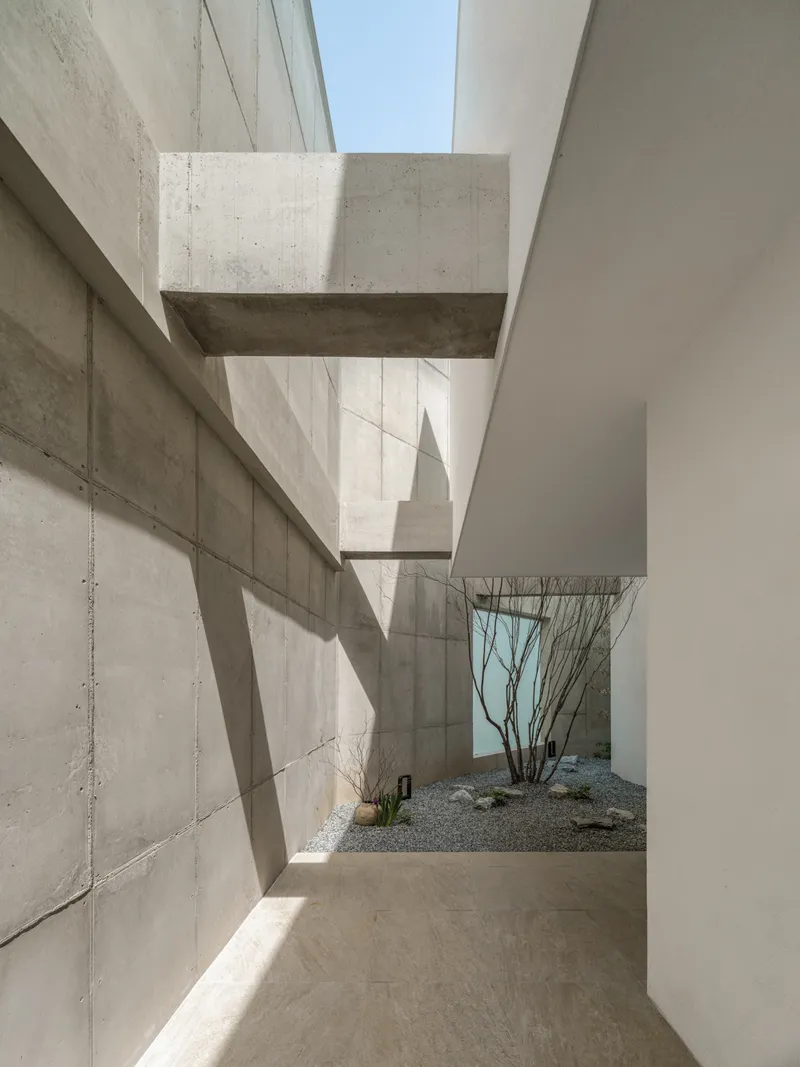
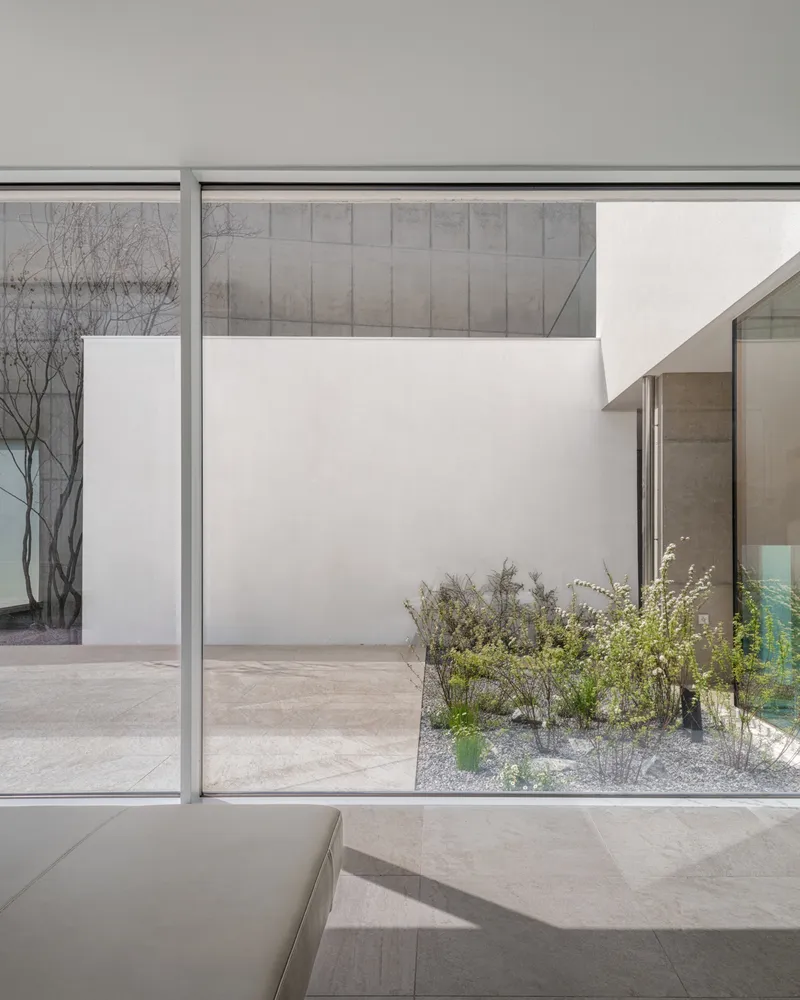
At the heart of the home, a small courtyard between the living room and kitchen acts as both a divider and a connector. While separating spaces with different functions and moods, it also draws natural light, rain, and even winter snow deep into the house, allowing seasonal changes to become part of everyday life.
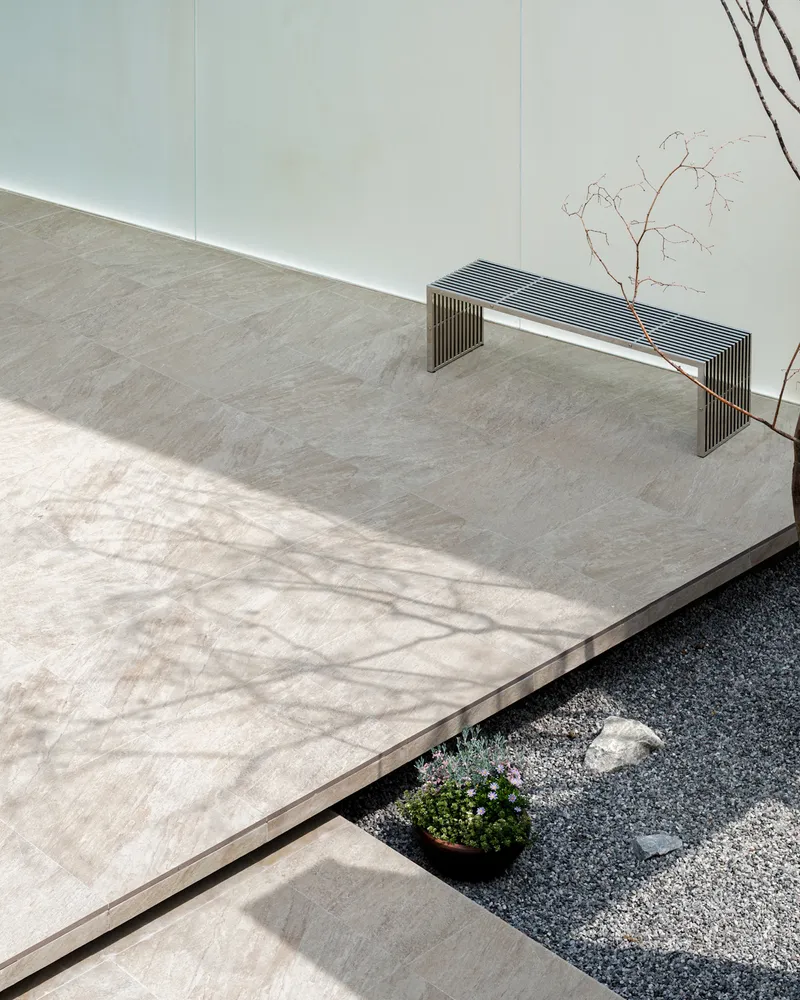
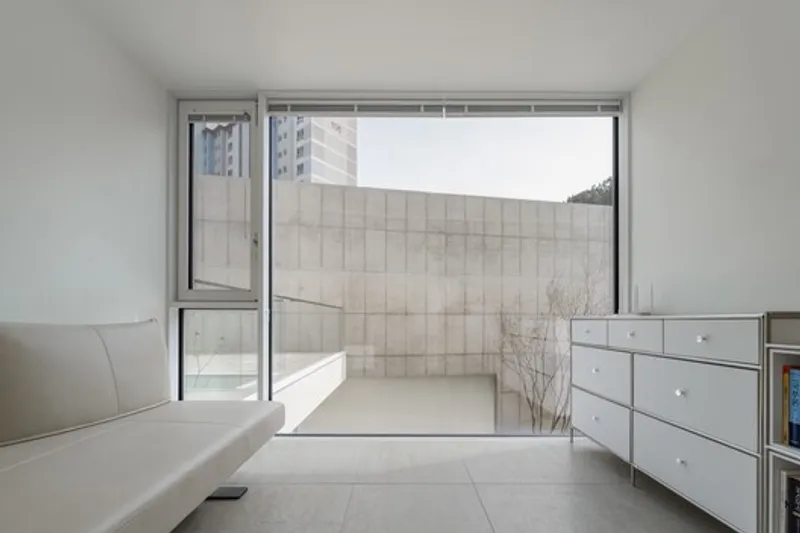
Outdoor elements continue to shape interior experiences throughout the house. Bathrooms benefit from adjacent outdoor spaces, while circulation paths—such as the route from the kitchen to the guest room—are designed to feel like walks through a forest, blurring the boundary between inside and outside.
Vertical Living and Private Terraces
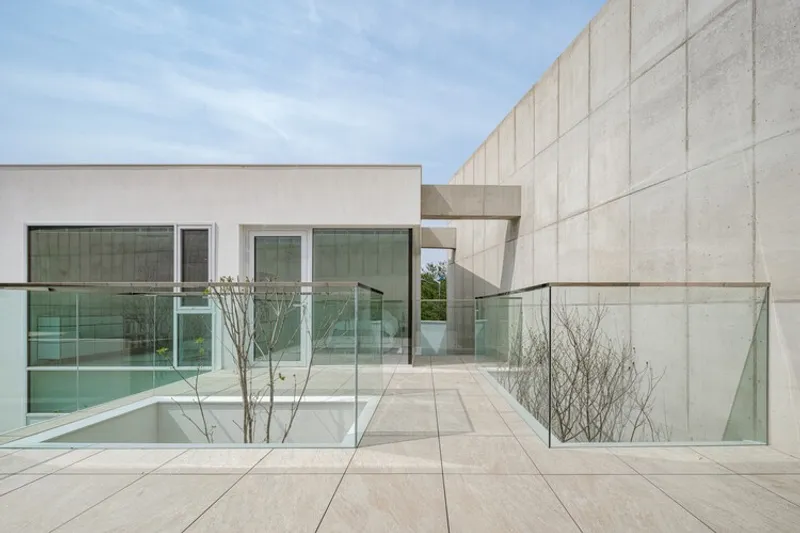
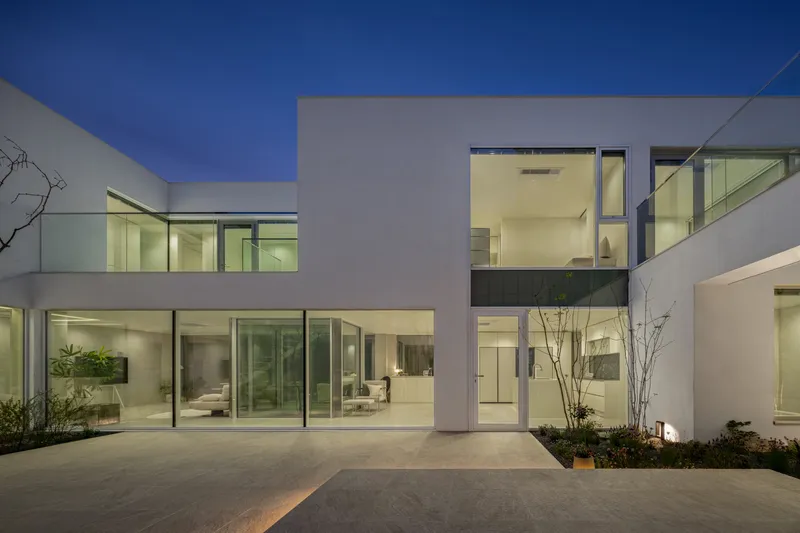
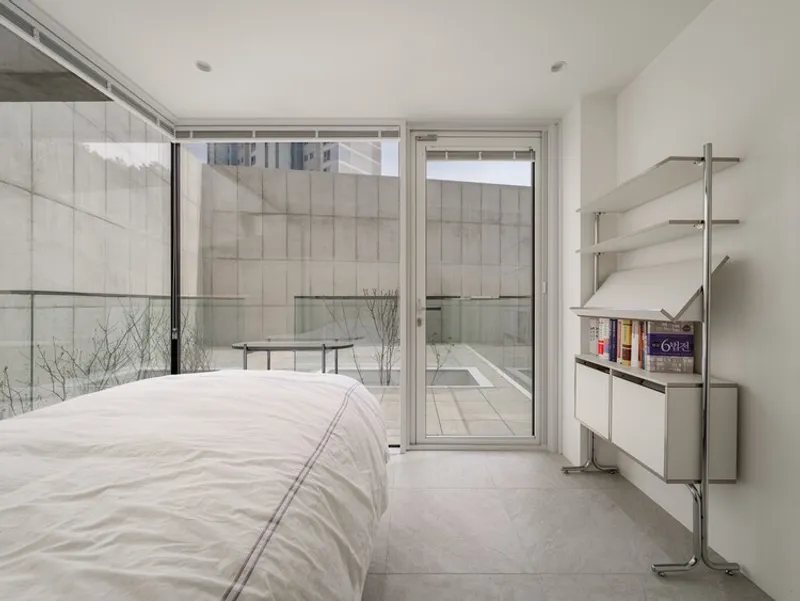
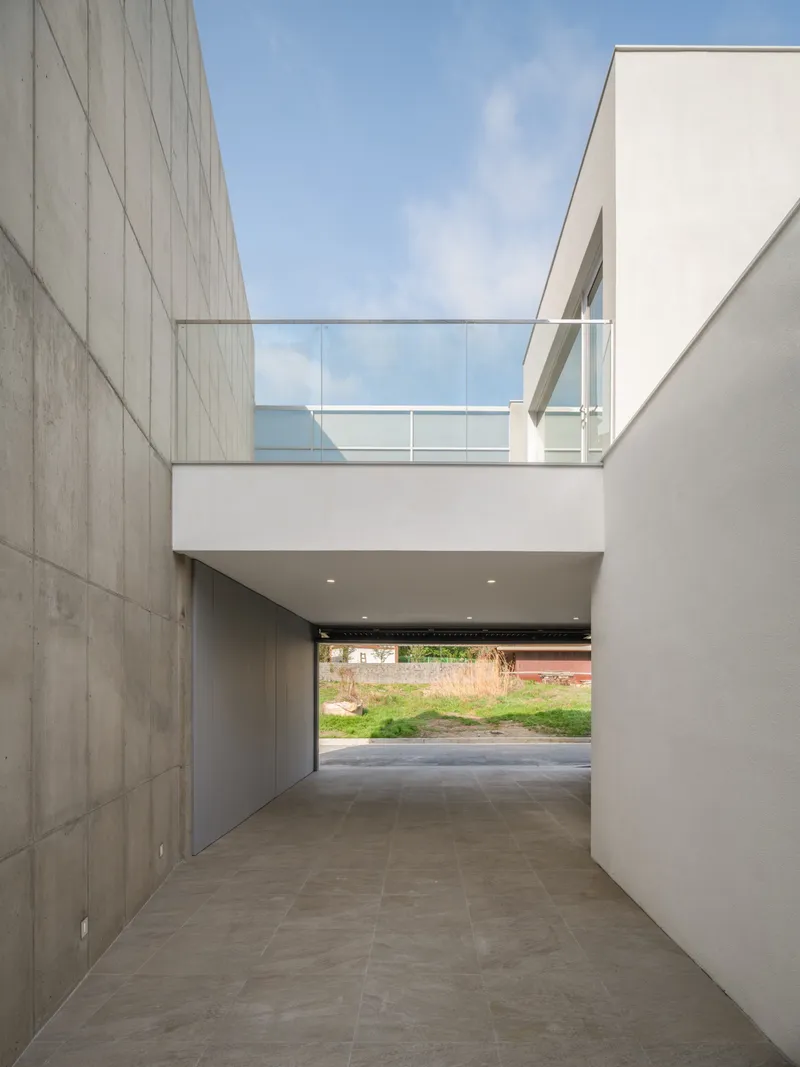
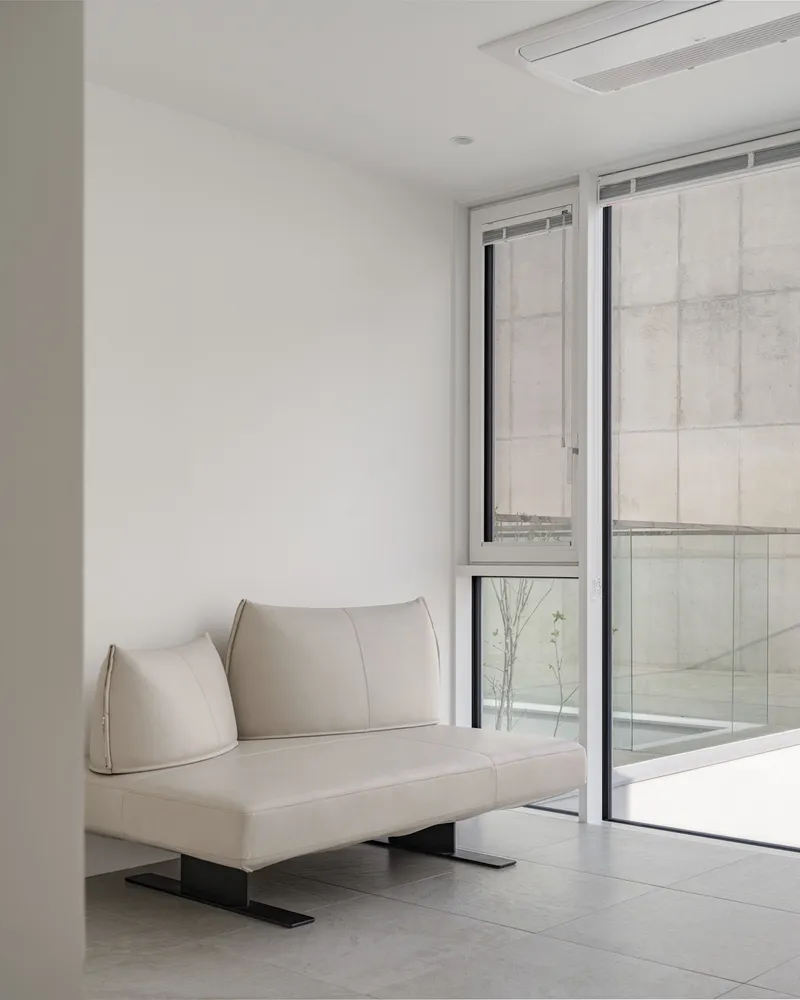
On the second floor, each bedroom is paired with its own outdoor space, reinforcing personal autonomy while maintaining a strong connection to the landscape. Glass walls allow ample natural light to fill the rooms, creating bright yet comfortable interiors that open seamlessly onto terraces.
These upper-level outdoor spaces are visually and spatially connected to the courtyards below. Plants rise from the ground floor into the second-floor terraces, forming a layered and dynamic spatial composition that unites the house vertically.
Flexibility for a Growing Family
Between the children’s rooms, a small shared hall functions as an informal family retreat—a place to read, drink coffee, or quietly relax. This space reflects the house’s emphasis on shared yet adaptable living.
To accommodate future changes in family life, the walls separating the children’s rooms are constructed using lightweight, adjustable drywall rather than fixed concrete. This allows the layout to evolve over time, ensuring the house can adapt to shifting needs without major structural intervention.
A Home That Feels Like a Private Campground
Throughout VEGA House, varied plantings and interconnected indoor–outdoor spaces heighten awareness of seasonal shifts, weather, and time. This constant dialogue with nature transforms the home into a personalized camping ground, echoing the architects’ initial inspiration drawn from a nearby camping caravan and the family’s love for outdoor living.
VEGA House ultimately proposes a model of contemporary domestic architecture that is introspective yet open, protective yet generous—where everyday life unfolds in close harmony with nature.
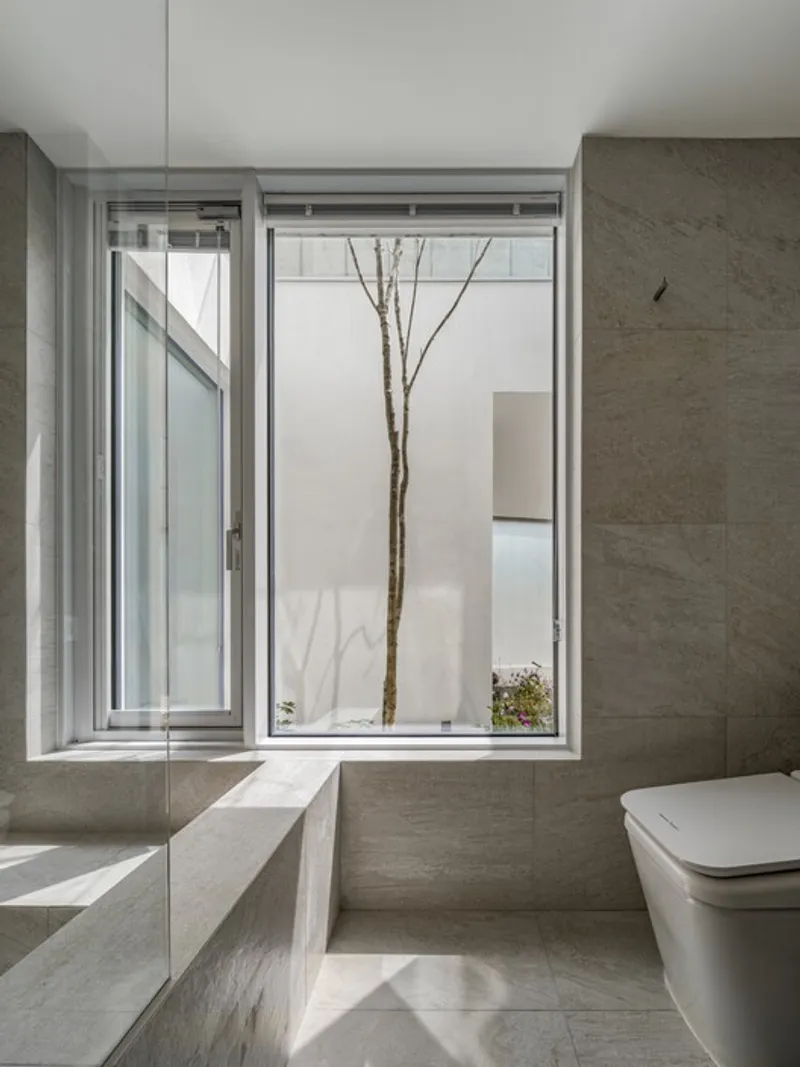
All the Photographs are works of Archirie


Popular Articles
Popular articles from the community

Temporary Home for Dogs: A Reversed Zoo Rethinks Animal Shelter Architecture
In Bucharest, a sinuous corridor and freed landscape flip the logic of containment, designing a shelter that works to make itself unnecessary.
Manzana Morphosis: Stretching Barcelona's Grid into a Living Landscape for 2050
A radical reworking of the Eixample manzana turns density into a tool for generous public space, vertical ecology, and environmental performance.

Tsunami Convergenics: Turning Catastrophic Ocean Forces into Underwater Housing Infrastructure
A speculative underwater settlement off the coast of Onagawa, Japan, treats tsunamis and typhoons as energy sources rather than threats.

Singing Woman: An Opera House That Performs Before the Curtain Rises
Ovidiu Cristian Pavel's conceptual opera house translates Estonia's choral identity into a sculpted waterfront landmark facing the Baltic Sea.

Similar Reads
You might also enjoy these articles


Hodi-Mandai Geram
Project Function: Preservation and revitalization of the Intangible heritage and socio-spatial identity of the Hodi by Housing, Cultural Memory Center, Sacred Grove, landscape, local tourism economy


Olio Towers: A Mid-Rise for Performers That Fuses Housing, Rehearsal, and Stage
Located blocks from Houston's Theater District, this modular tower stacks living units around a central performance atrium.

Oasis: Modular Green Housing Carved into Dhaka's Urban Fabric
A shortlisted Plugin Housing entry reclaims unauthorized settlements in Dhaka with stepped concrete volumes, green roofs, and ventilation-driven design.

Black Hole: A Floating Megastructure for the Post-Physical Era
Emiliano Mazzarotto envisions a spherical, self-scaling arena where e-sports, digital hotels, and holographic stadiums replace traditional public space.

Explore Native Veggie Garden Competitions
Discover active competitions in this discipline

Challenge to reimagine the Iron Throne

Photograph architecture without architects

Illustrate the lost glory of Angkor Wat - Render Challenge

Design challenge to reuse E-waste
Comments (0)
Please login or sign up to add comments
No comments yet. Be the first to comment!