
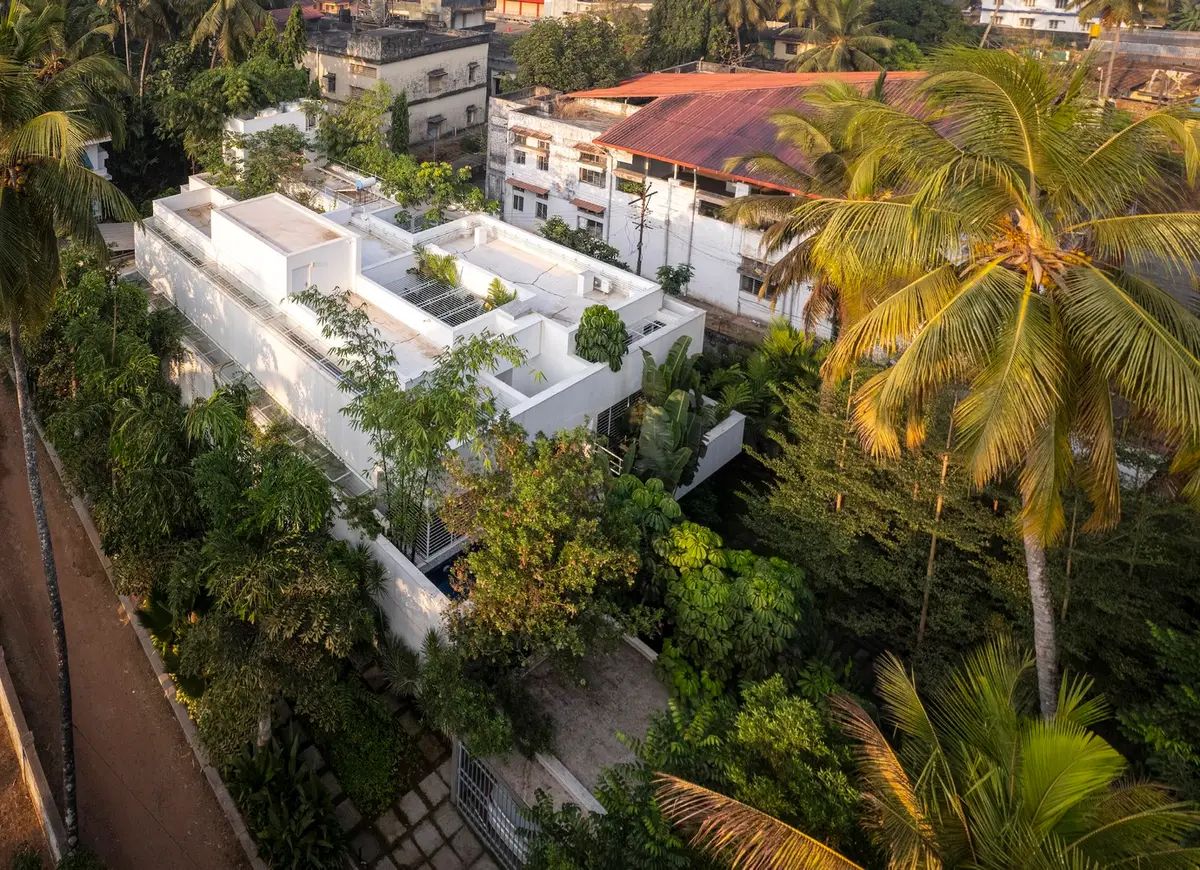
Veiled House by Gaurav Roy Choudhury Architects (GRCA): A Blend of Privacy, Architecture, and Nature in Kundapura
Veiled House blends privacy and nature with shifting white walls, courtyards, and dynamic spaces, offering a unique architectural experience.


Nestled in the town of Kundapura along India’s western coast, the Veiled House stands as an architectural marvel designed for a family longing for anonymity and privacy in a community-driven small town. This stunning home, designed by Gaurav Roy Choudhury Architects (GRCA), balances modern architectural beauty with the need for seclusion in a bustling environment.
Location and Site Planning
The Veiled House is strategically positioned on a long, north-south-oriented site in the center of Kundapura. The house is shielded from the busy by-lane and town noise by being pushed toward the southern edge of the plot, creating a green buffer zone. The eastern edge, accessible via a cul-de-sac, serves as the primary entry, offering a more peaceful approach into the residence.
Layout and Design
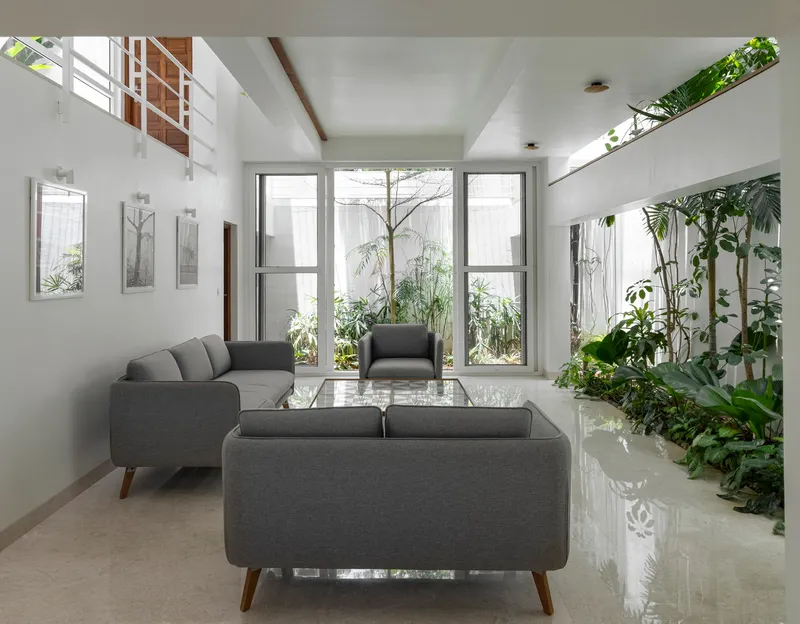
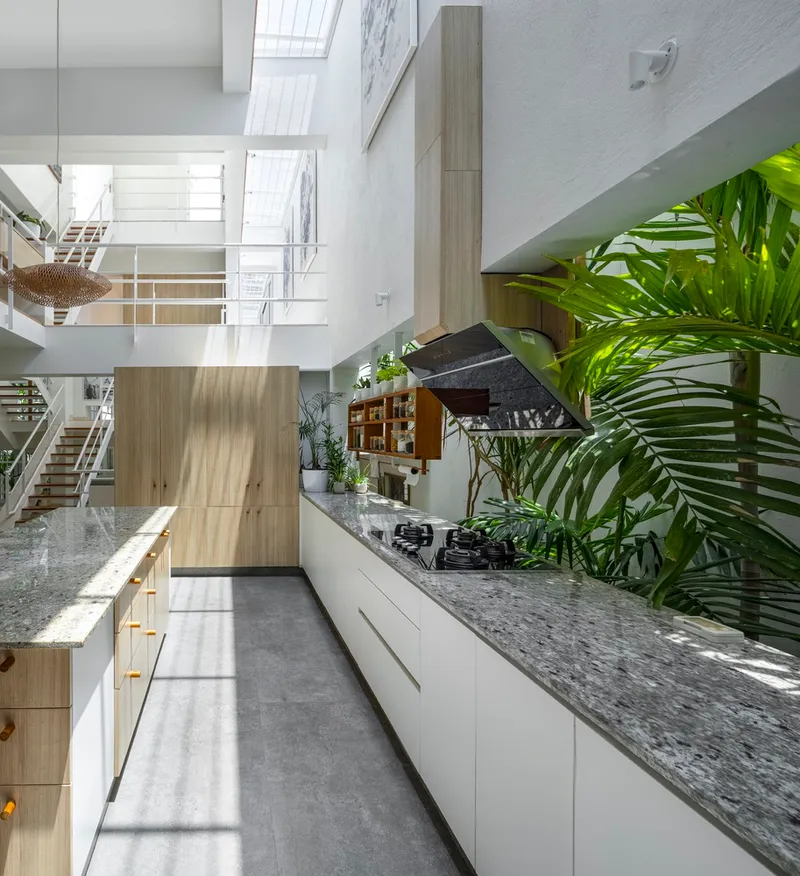
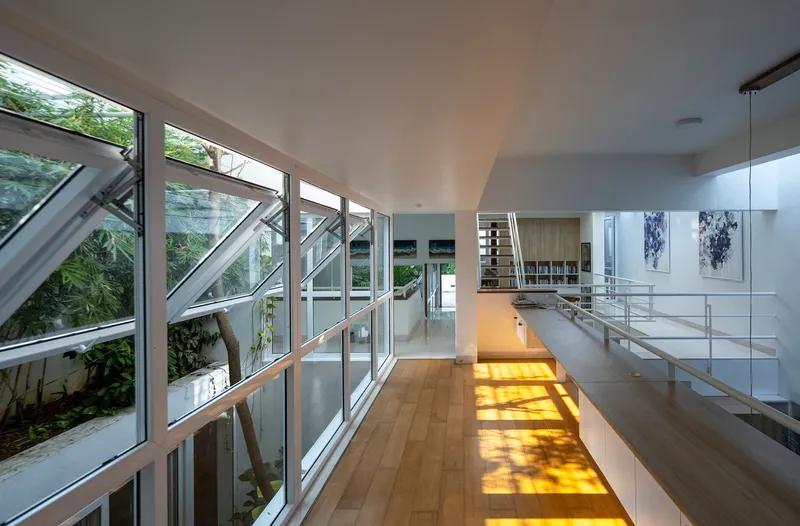
The home is organized in a way that the public spaces, including the living room, kitchen, study, AV room, and pool, extend along the eastern side of the house. Meanwhile, the private bedrooms occupy the western section, ensuring a clear distinction between the shared and personal areas. The site’s topography introduces a split level to the design, raising the southern blocks by 3 feet from the northern ones, breaking the massing into smaller, more accessible sections.
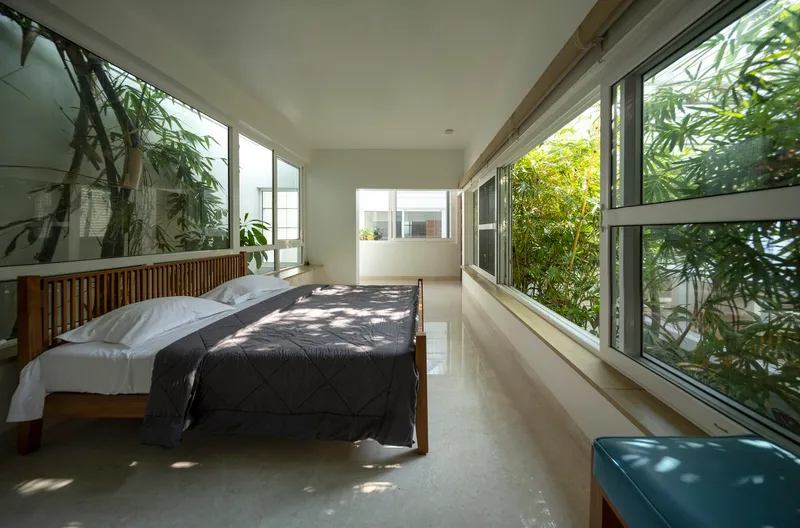
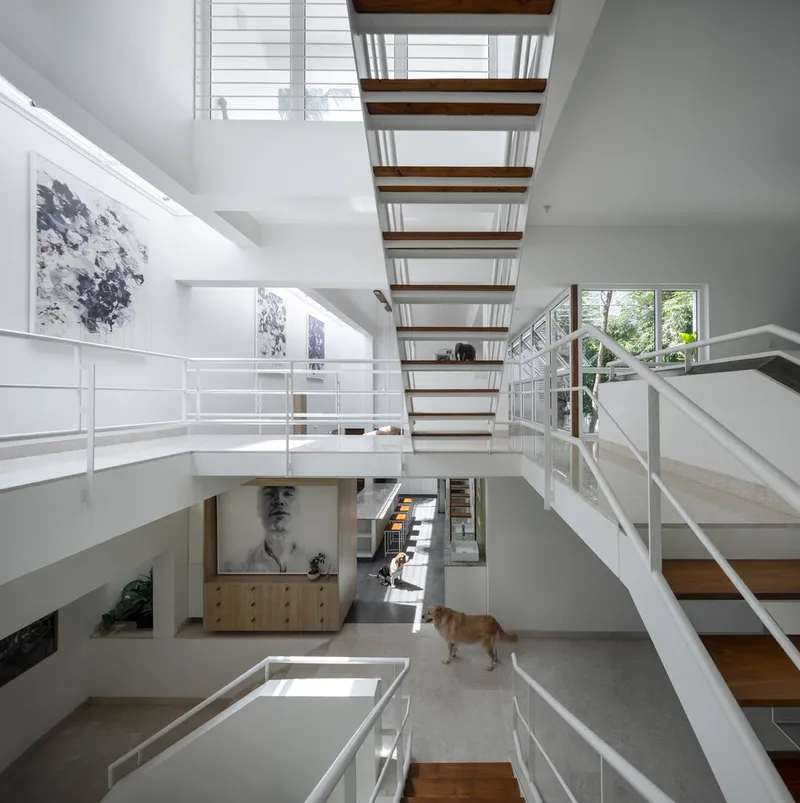
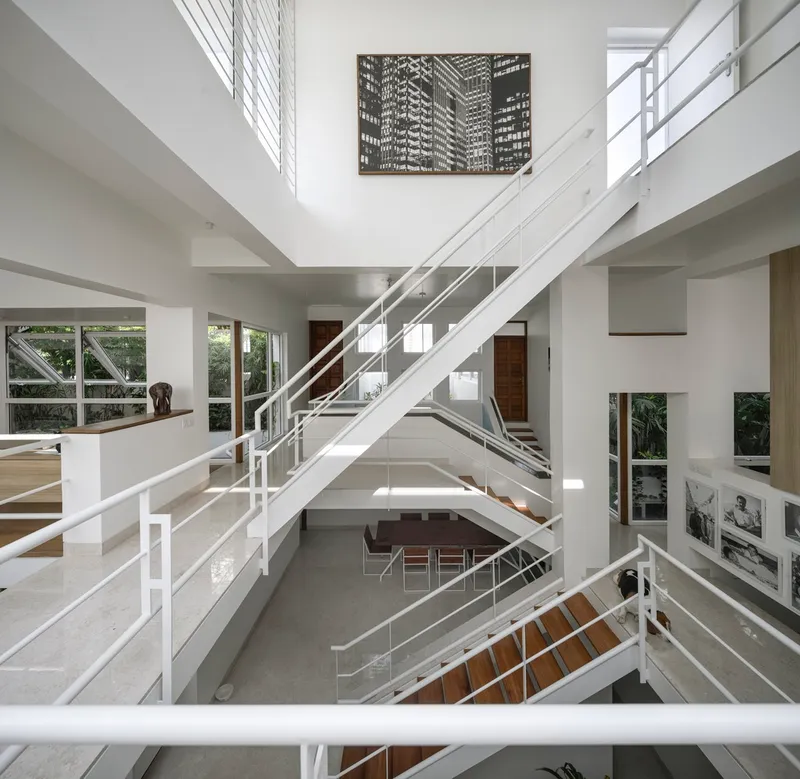
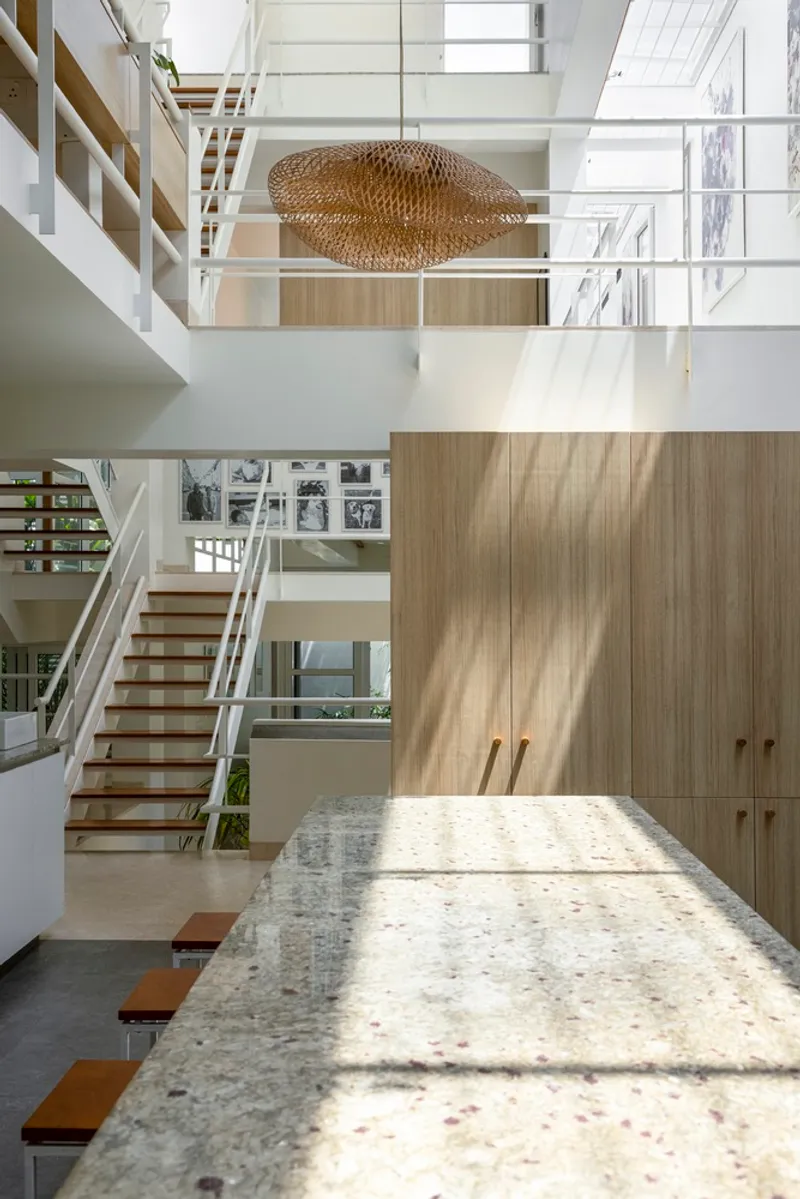
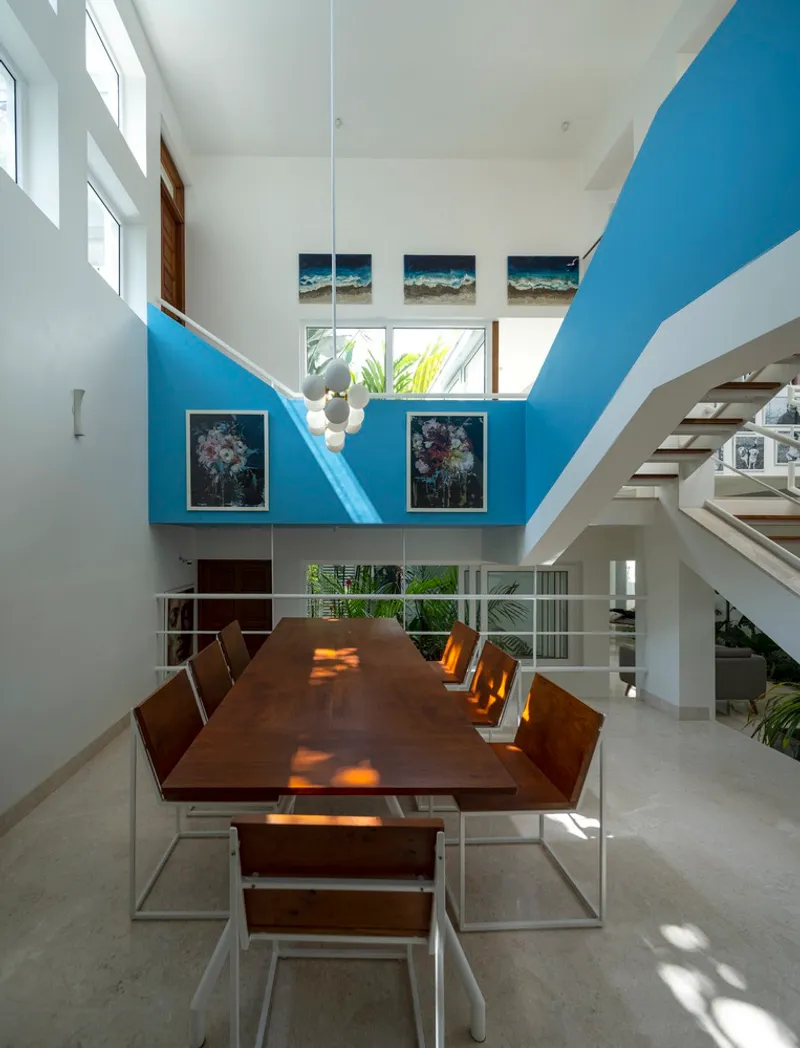
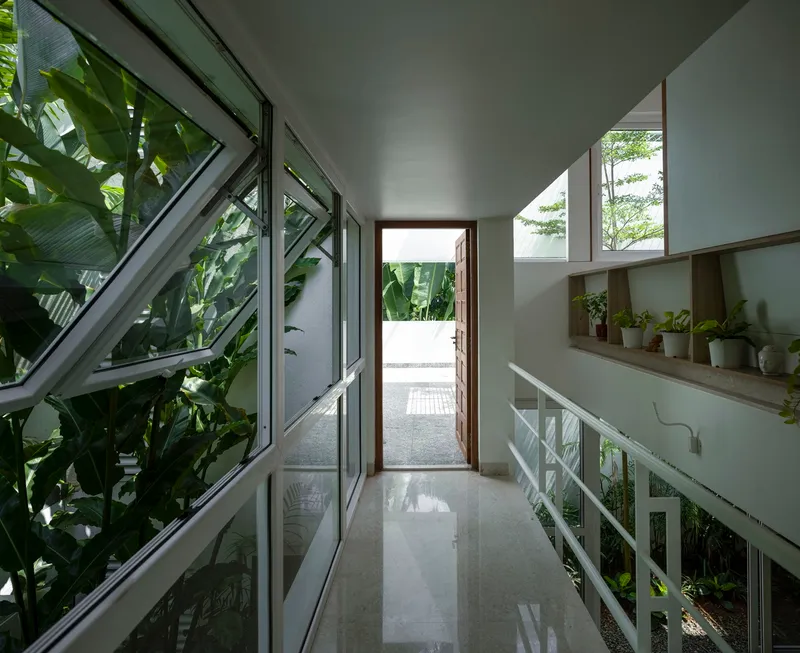
A unique aspect of the Veiled House is its use of central courtyards. Two courtyards—one in the raised southern block and one in the lower northern block—serve as the central focus of the home. These courtyards not only function as private spaces for the bedrooms but also bring light and greenery into the living spaces, blurring the lines between the public and private domains.
The ‘Veil’ Concept
The Veiled House is described as a “faceless” home, defined by its shifting white walls that act as veils, sheltering the house while allowing selective openness. These man-made fiber veils stand in contrast to the surrounding wild greenery and animate the structure throughout the day and seasons, becoming a dynamic backdrop for the family’s life and memories.
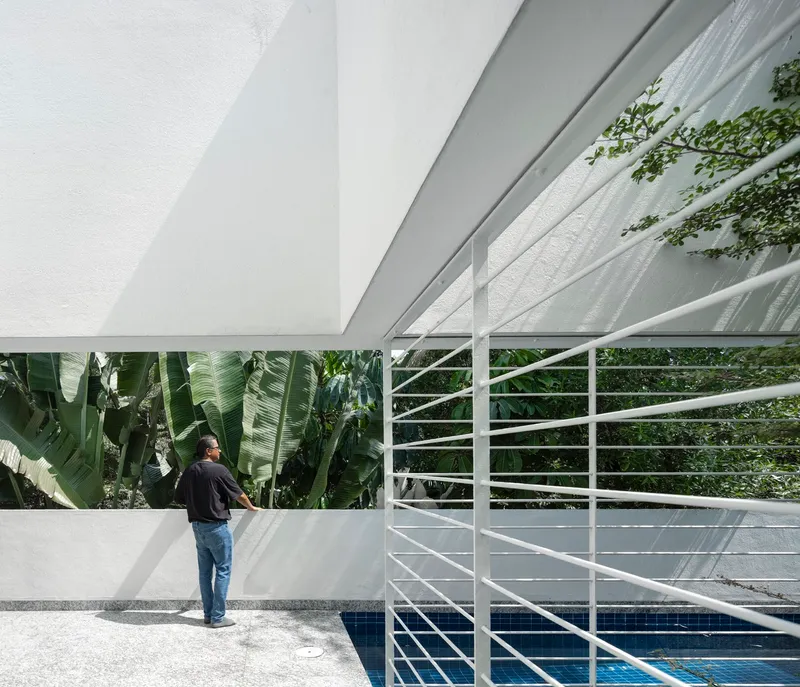
This duality of nature and built form is central to the design, as the house remains a structure that provides both protection and permeability. The wildness of the surrounding land remains untouched, entering the home through the gaps in the veils, creating a symphony between the natural and built environments.
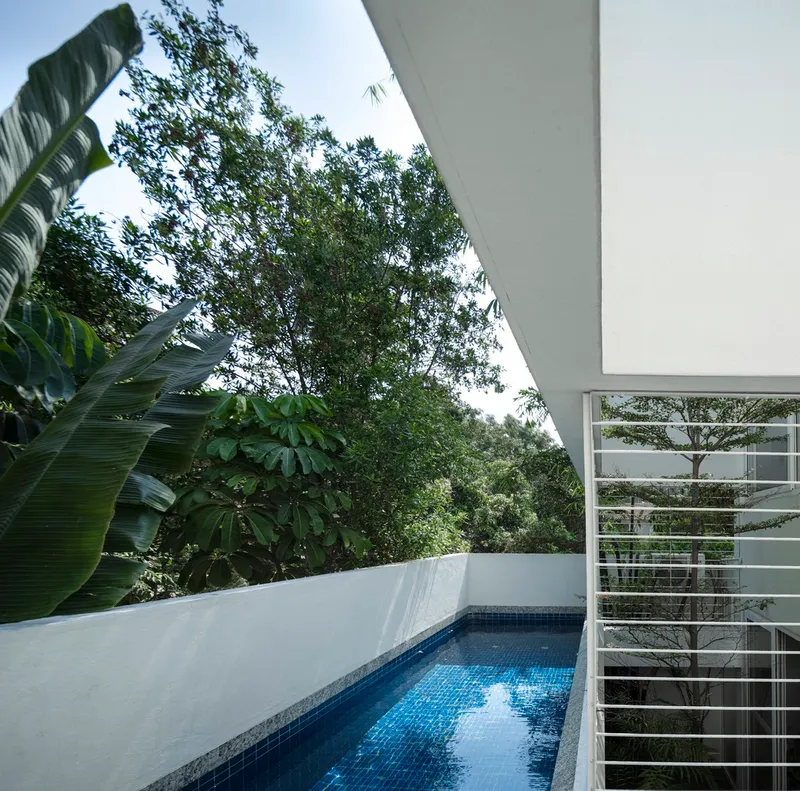
Architectural Significance
The Veiled House demonstrates a profound integration of privacy and openness, allowing for an intimate connection with nature while maintaining the family’s seclusion. The architectural language of shifting walls, courtyards, and veils creates an experience that dissolves traditional boundaries between the exterior and interior, blending functionality with sensory engagement.
The design of the house ensures that nature and the built form exist harmoniously, enhancing the daily lives of the inhabitants. The Veiled House, through its innovative use of space and materials, represents a perfect example of how architecture can evoke emotion and connection, while still providing privacy and protection in a densely populated environment.
Materials and Construction
In terms of materiality, the house makes extensive use of shifting white walls, providing a minimalist aesthetic that focuses on texture, light, and shadow. The play between the man-made veils and the natural landscape forms a compelling dialogue between the architectural structure and the surrounding environment.
All Photographs are works of Niveditaa Gupta


Popular Articles
Popular articles from the community


LT2A and OPEN Architectes Thread a Brick and Glass High School Through a Wooded Belgian Campus
In Braine-l'Alleud, a 3,000 m² wing for Collège Cardinal Mercier pairs pale brick with a glazed colonnade, deferring to a small chapel and a dense wood.

David Macias Steps a Doorless Stone and Plaster House Down a Tropical Colombian Hillside
In the humid hills of Colombia, Threshold House replaces the front door with an open void and terraces its 850 m² down the slope instead of fighting it.

Jaramillo Van Sluys Arquitectura and Urbanismo Turn a Demolished Registry Lot in Quito into an Orchard Plaza
In Quito's Centro Histórico, a 2,800 m² plaza exposes the San Agustín convent wall and redraws its lost Augustinian orchard in volcanic stone.

Juan García Correa, John González and Claudia Rueda Sink a Circular Amphitheater into a Manizales Engineering Building
On the La Nubia campus in Manizales, Colombia, the S1 Building folds labs and offices into a hillside of ramped lawns that double as a campus route.

Similar Reads
You might also enjoy these articles


Hodi-Mandai Geram
Project Function: Preservation and revitalization of the Intangible heritage and socio-spatial identity of the Hodi by Housing, Cultural Memory Center, Sacred Grove, landscape, local tourism economy


Olio Towers: A Mid-Rise for Performers That Fuses Housing, Rehearsal, and Stage
Located blocks from Houston's Theater District, this modular tower stacks living units around a central performance atrium.

Oasis: Modular Green Housing Carved into Dhaka's Urban Fabric
A shortlisted Plugin Housing entry reclaims unauthorized settlements in Dhaka with stepped concrete volumes, green roofs, and ventilation-driven design.

Black Hole: A Floating Megastructure for the Post-Physical Era
Emiliano Mazzarotto envisions a spherical, self-scaling arena where e-sports, digital hotels, and holographic stadiums replace traditional public space.

Explore Uttarakhand Architecture Competitions
Discover active competitions in this discipline

Challenge to reimagine the Iron Throne

Photograph architecture without architects

Illustrate the lost glory of Angkor Wat - Render Challenge

Design challenge to reuse E-waste
Comments (0)
Please login or sign up to add comments
No comments yet. Be the first to comment!