
Verdant House by CAN: A Sustainable Home Renovation with Nature-Inspired Design
A sustainable home renovation by CAN in London, Verdant House merges natural materials with innovative design for modern family living.


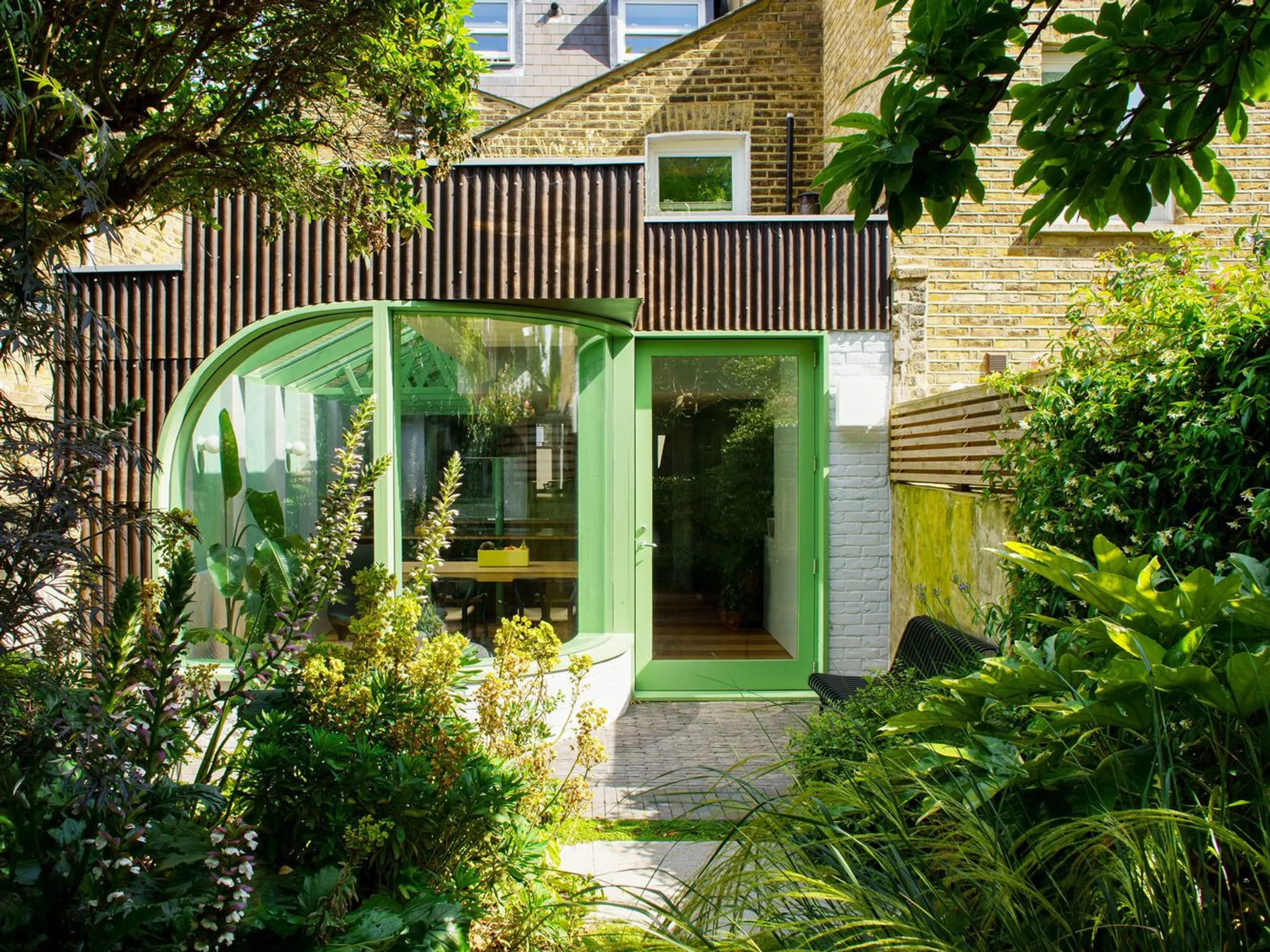
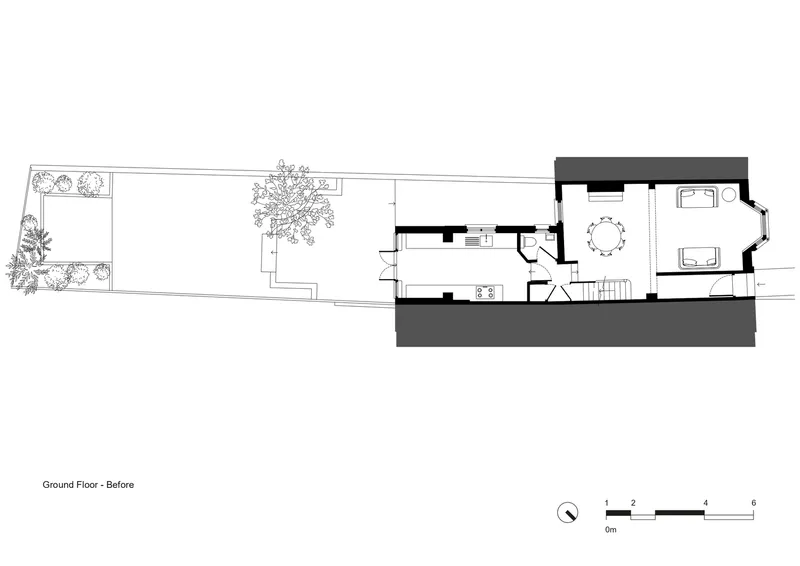
In the heart of Stoke Newington, London, the Verdant House by CAN reimagines a terraced home into a vibrant, functional space designed to harmonize with nature. Completed in 2024, this renovation transforms a disjointed ground floor into a cohesive, open-plan living area that connects seamlessly to the outdoors. With its emphasis on sustainable materials and nature-inspired aesthetics, Verdant House exemplifies innovative design tailored to a young family’s evolving needs.

A Transformation Rooted in Sustainability
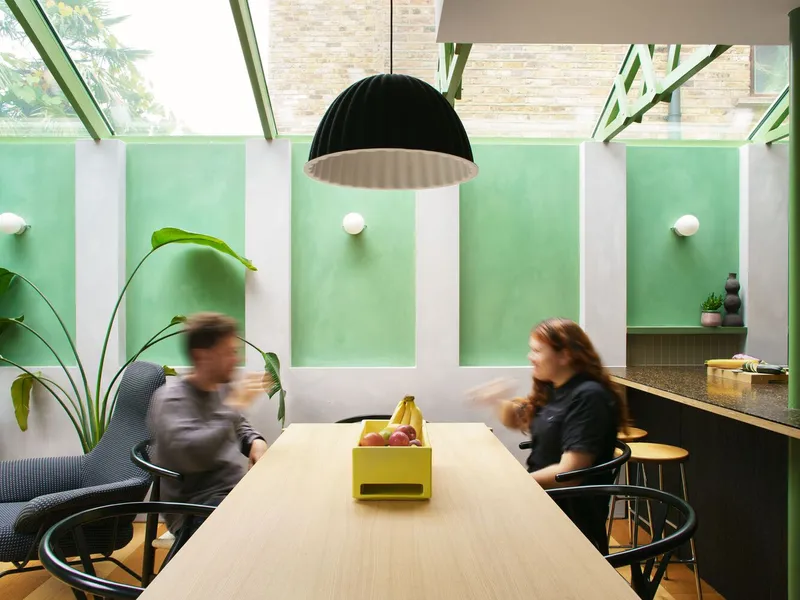
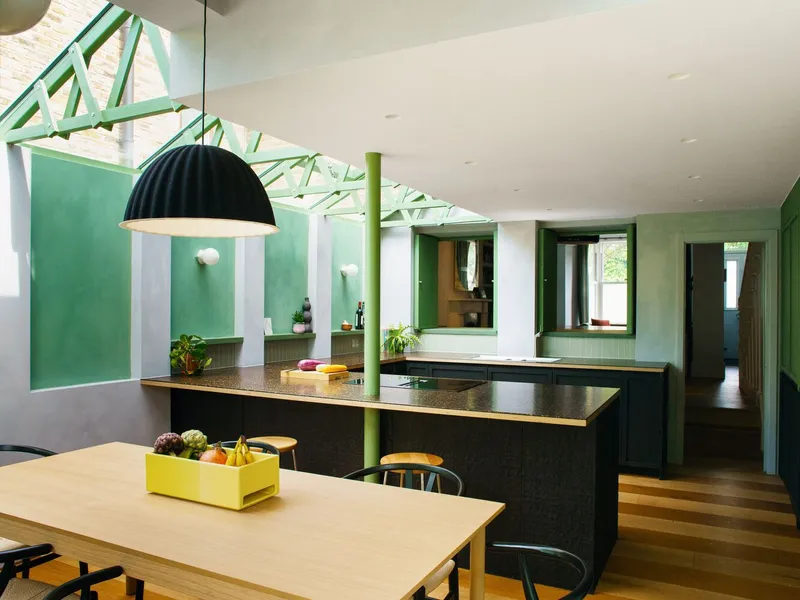
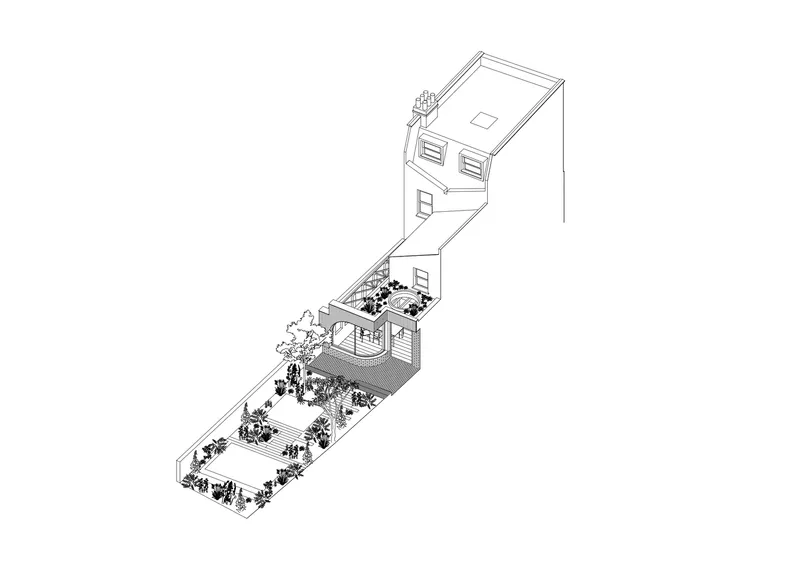
The original structure suffered from a failing conservatory and a series of disconnected spaces. CAN’s intervention involved a ground floor redesign, introducing a glulam-framed extension that redefined the living, dining, and kitchen areas. The extension prioritizes flexibility, featuring full-height hemp fiber curtains and Douglas fir shutters to allow spaces to open or close according to the family’s needs.
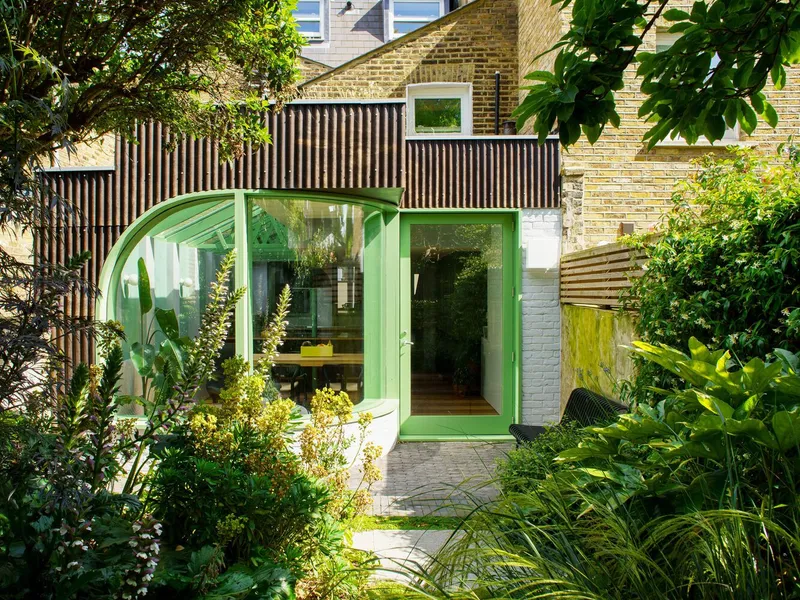
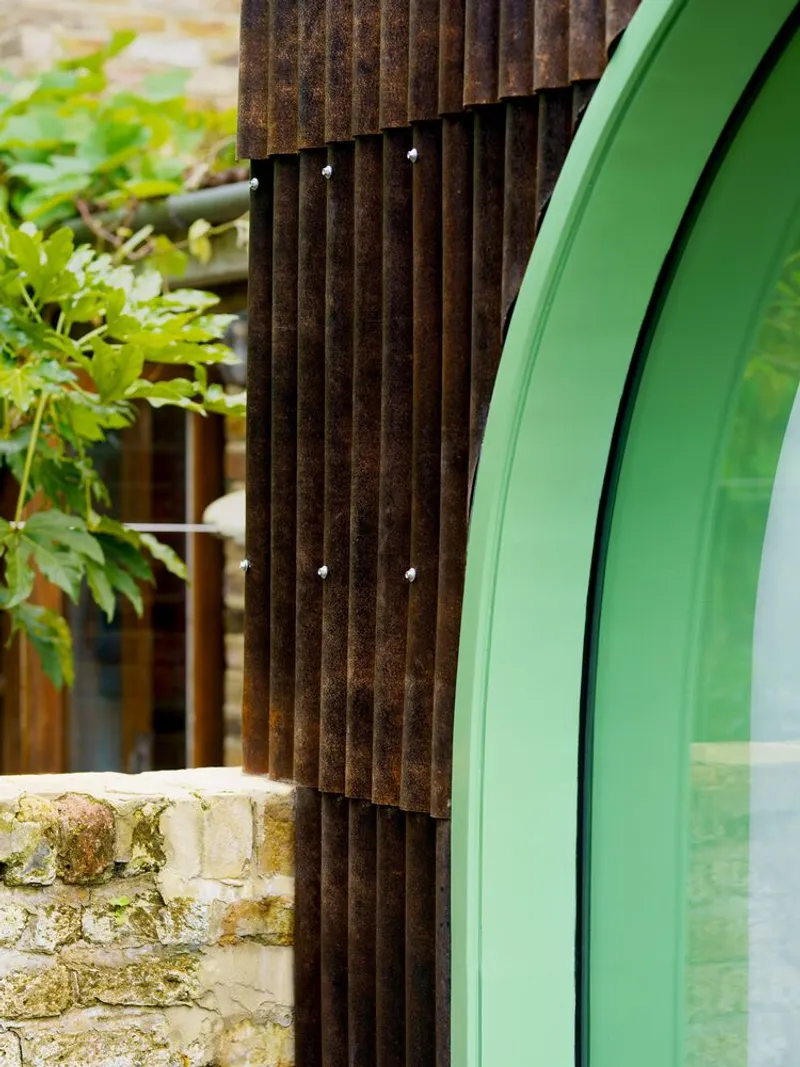
Sustainability was central to the design. The architects incorporated low-carbon materials such as a timber-framed structure and a meadow-planted roof. Hemp-fiber corrugated cladding on the exterior not only reduces environmental impact but also evolves over time, weathering beautifully to reflect natural textures.
The Heart of the Home: A Nature-Infused Kitchen
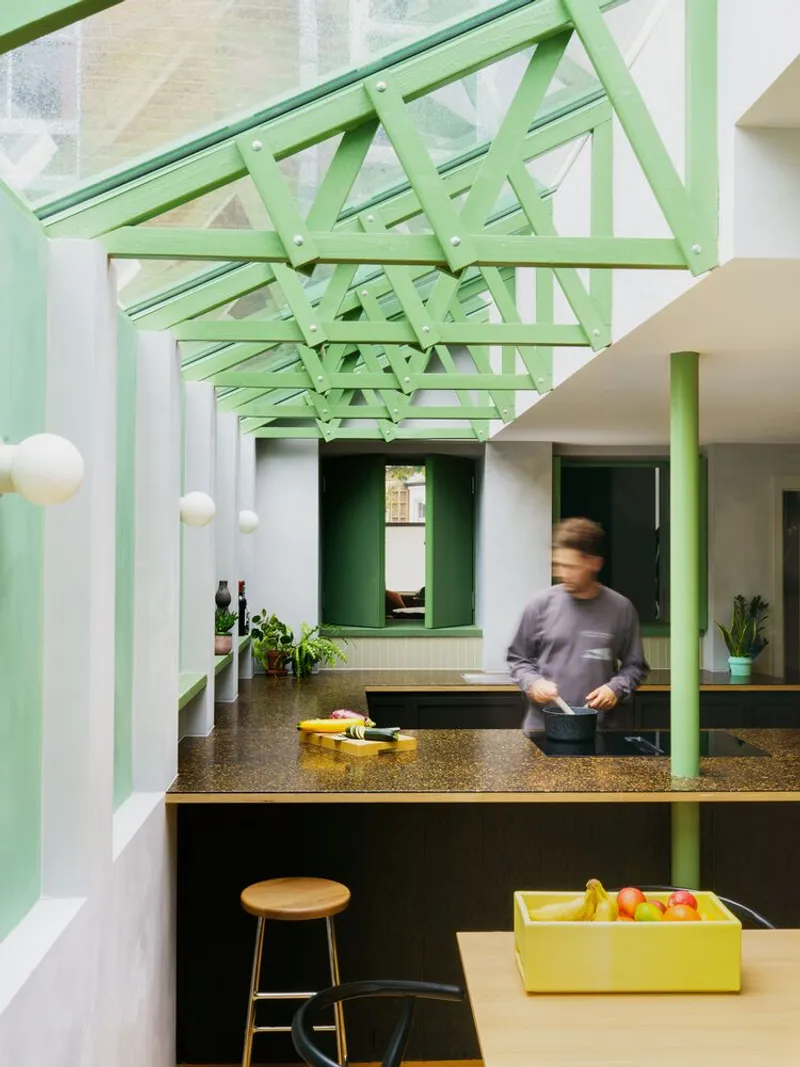
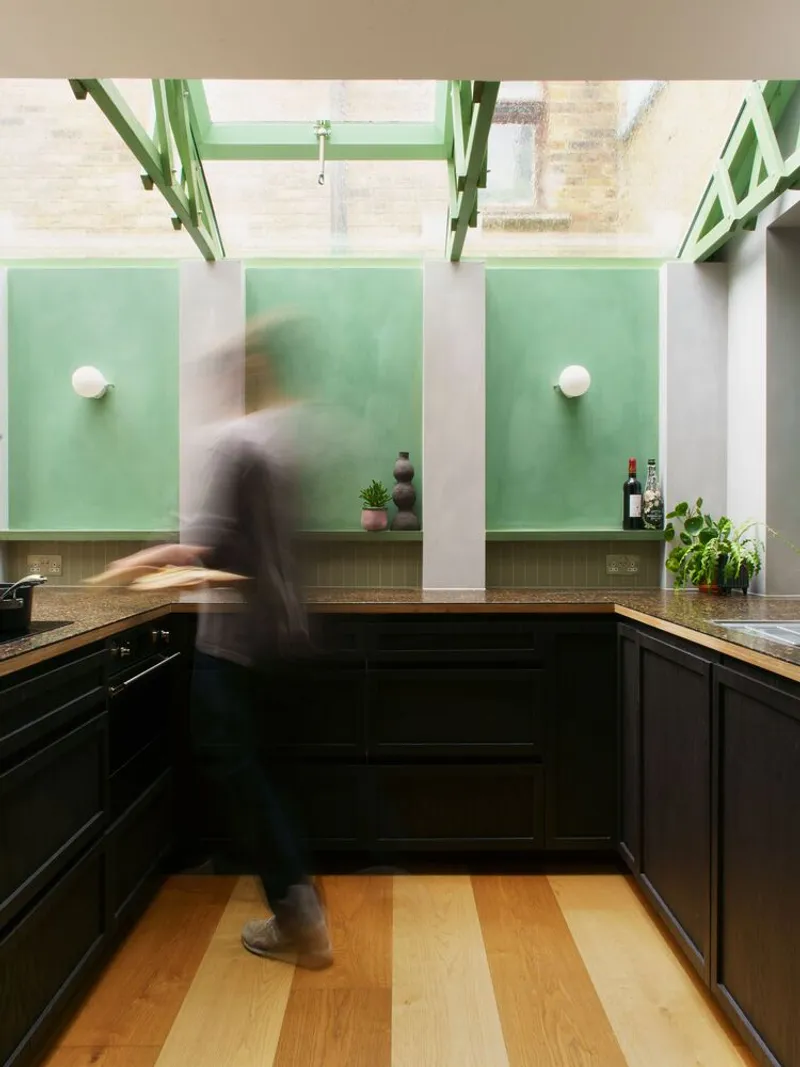
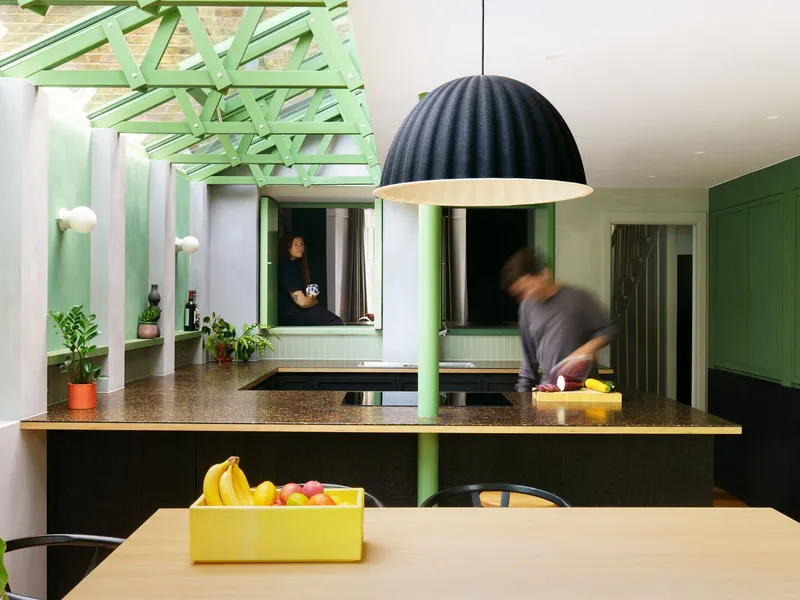
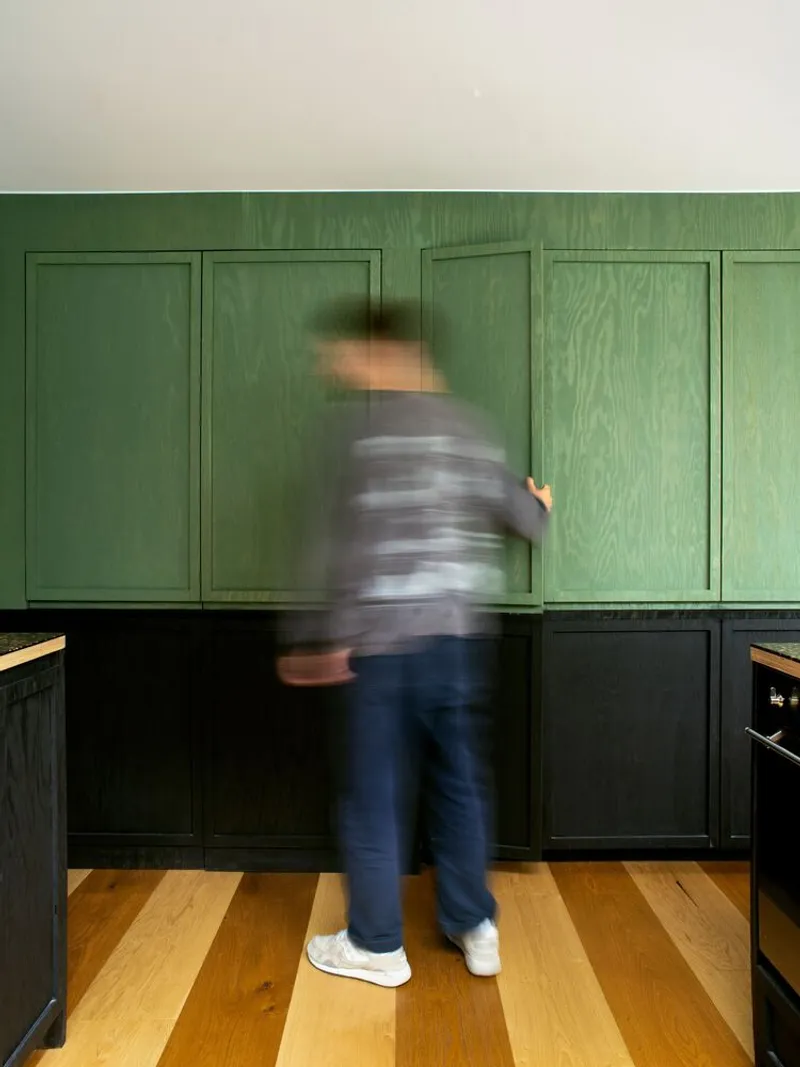
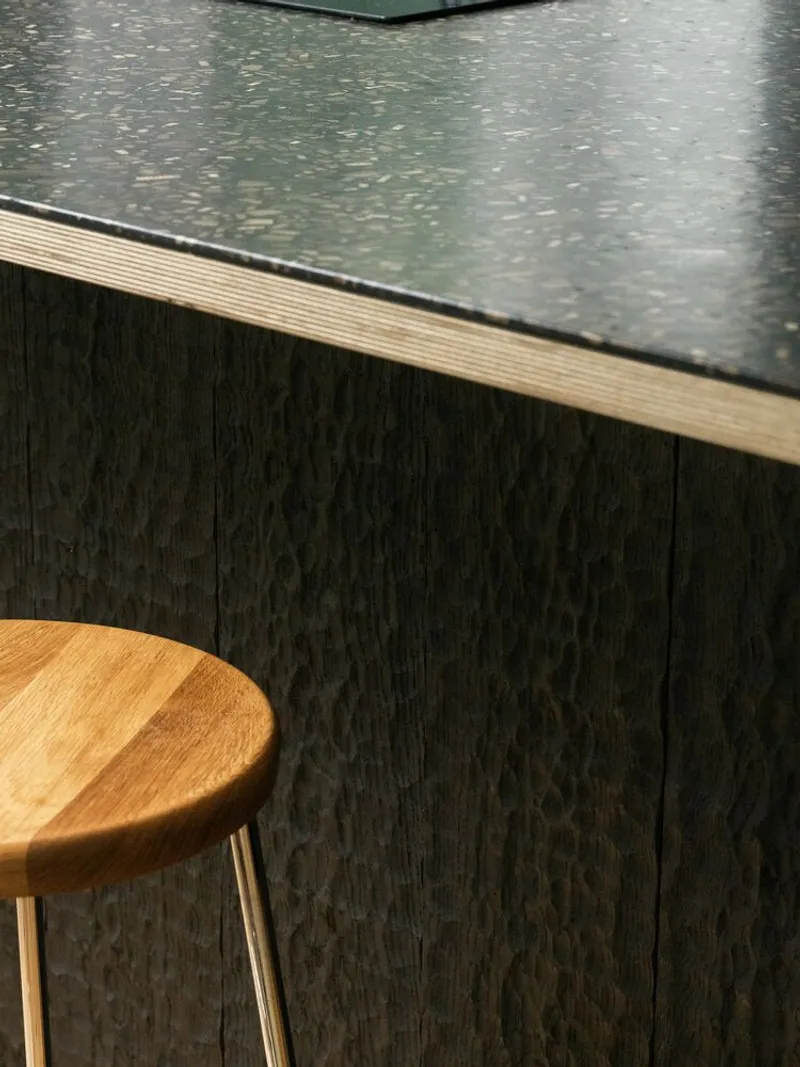
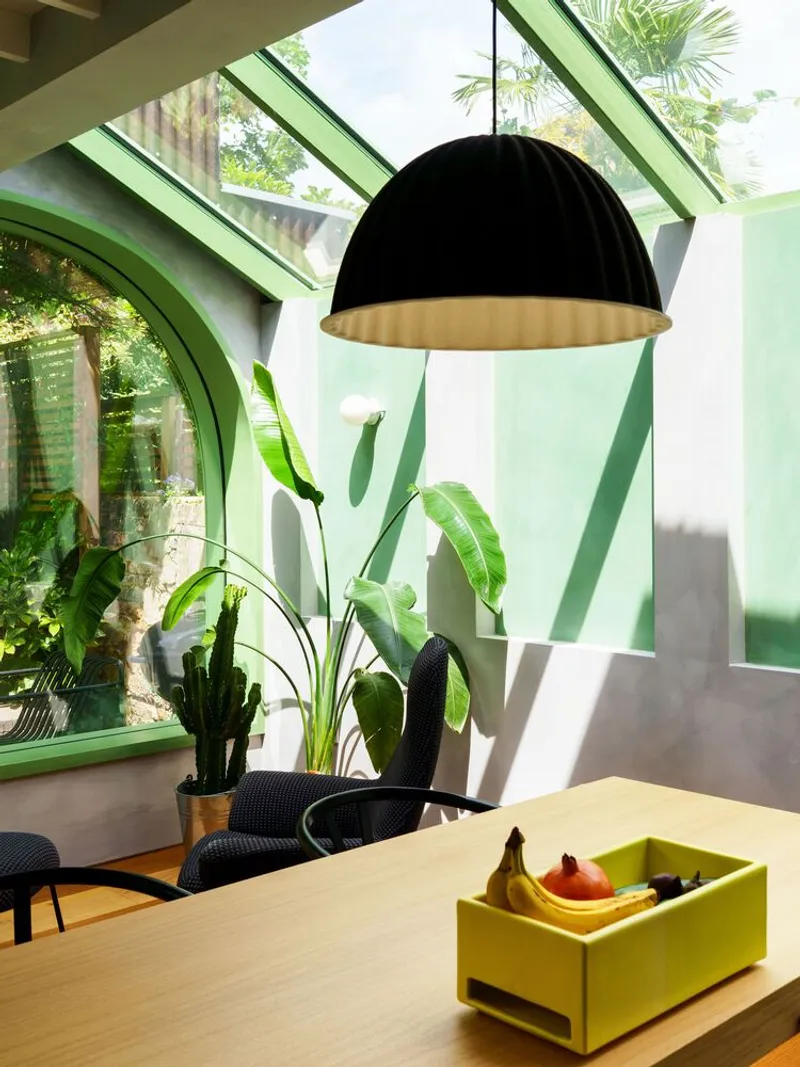
At the core of Verdant House lies a light-filled kitchen, embodying the project’s commitment to nature-inspired design. CAN designed custom cabinetry using chiselled oak boards stained with linseed oil, pairing them with IKEA carcasses for a blend of bespoke and practical solutions.
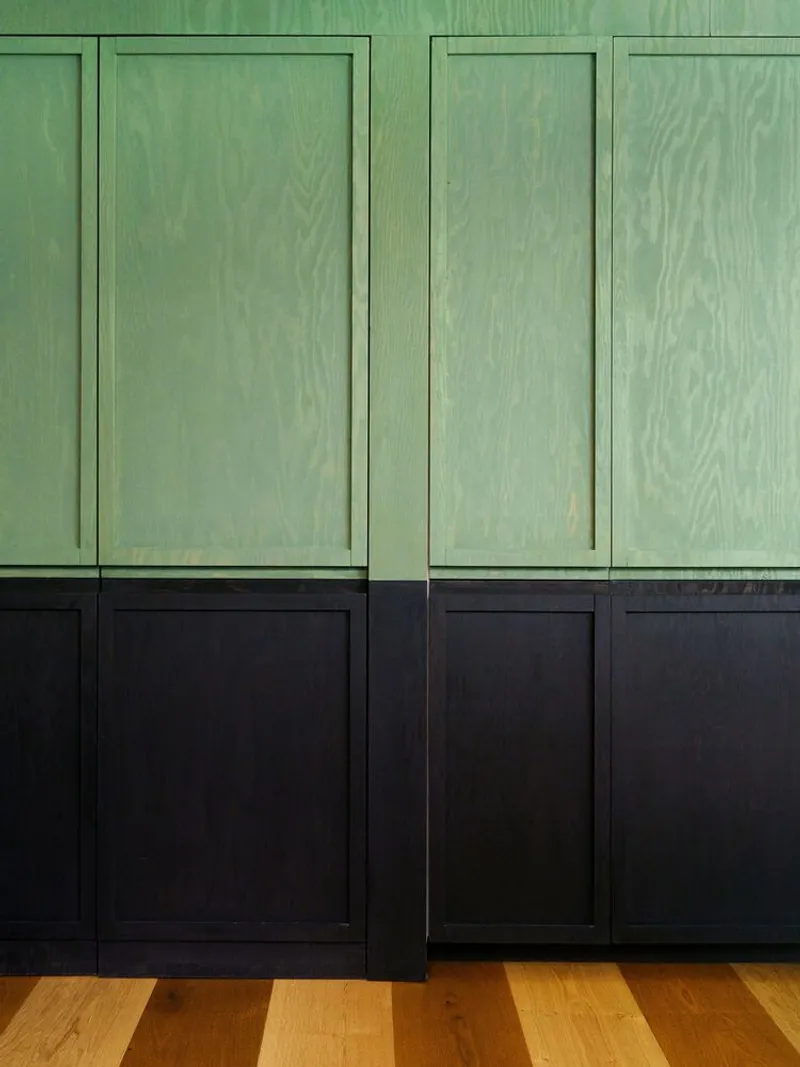
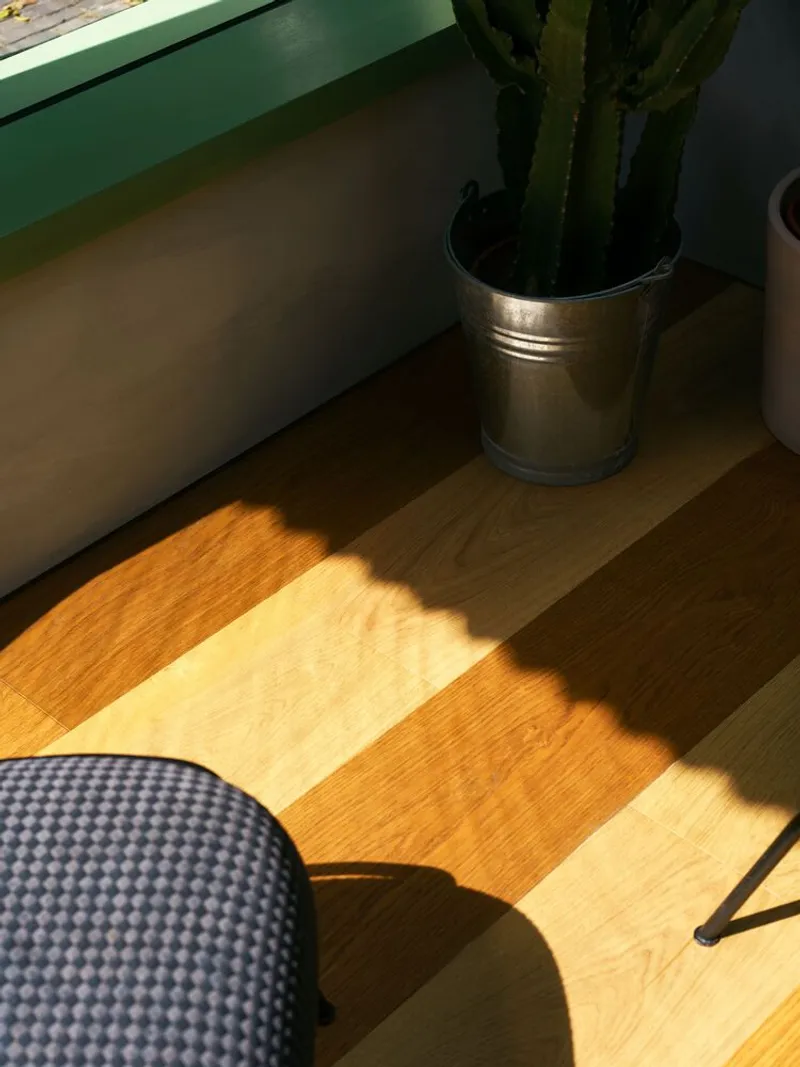
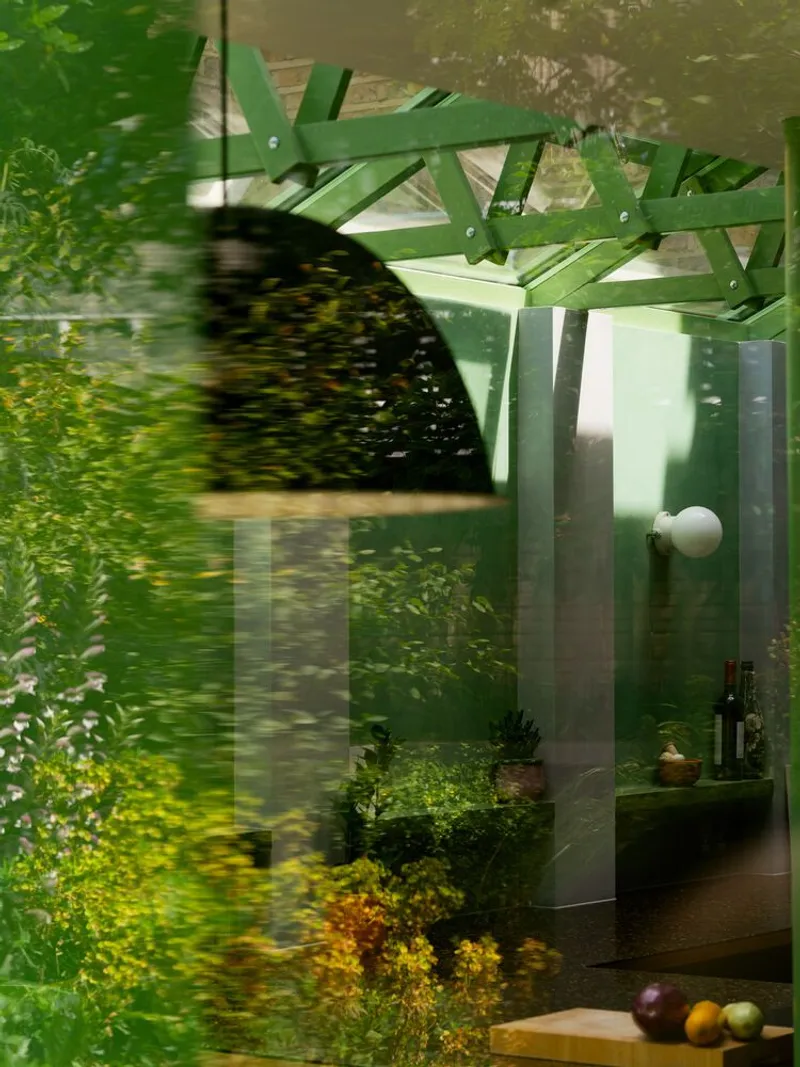
A roof light supported by bolted trusses floods the kitchen with natural light, while overhead glazing amplifies the airy ambiance. The flooring features alternating tones of oak boards arranged in a stripe pattern, adding tactile richness and warmth to the space.


Seamless Indoor-Outdoor Connection
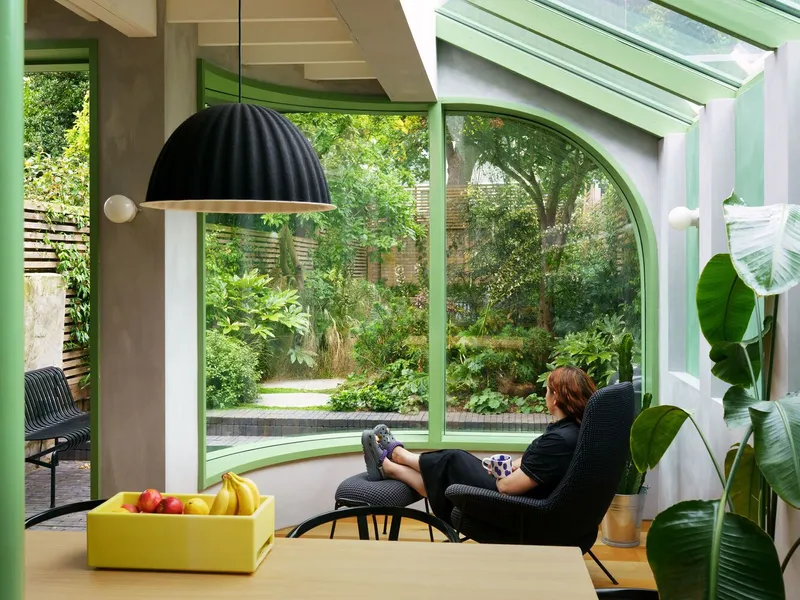
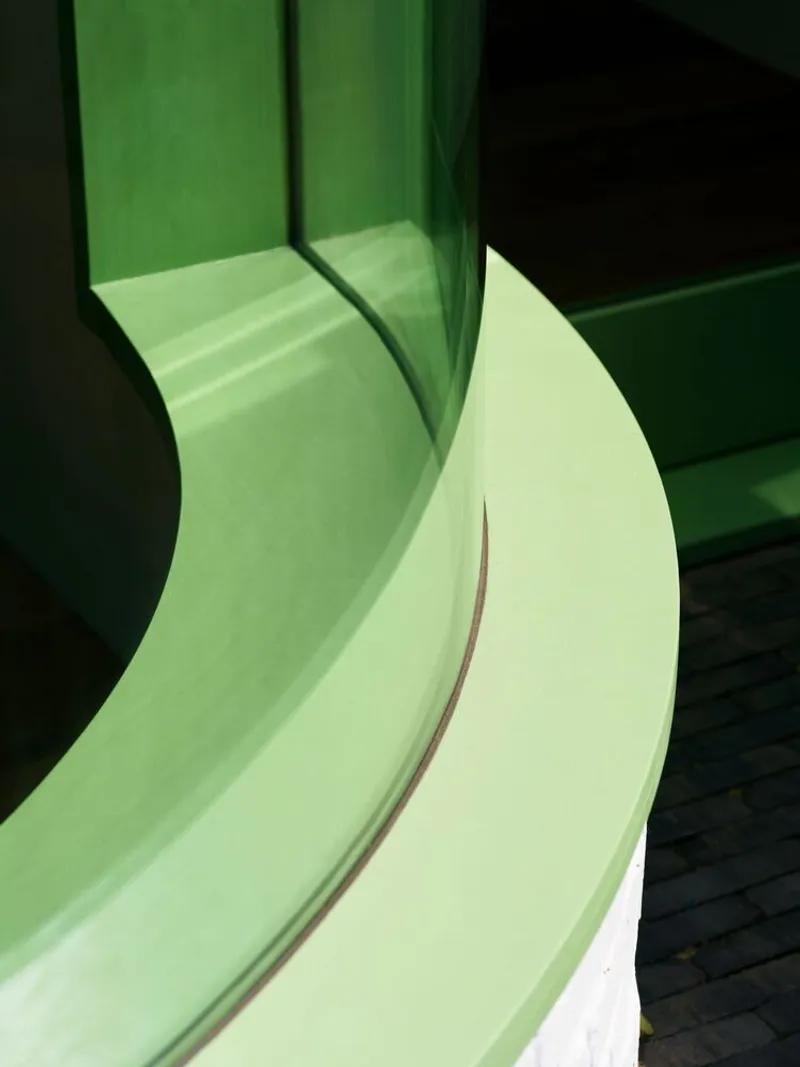
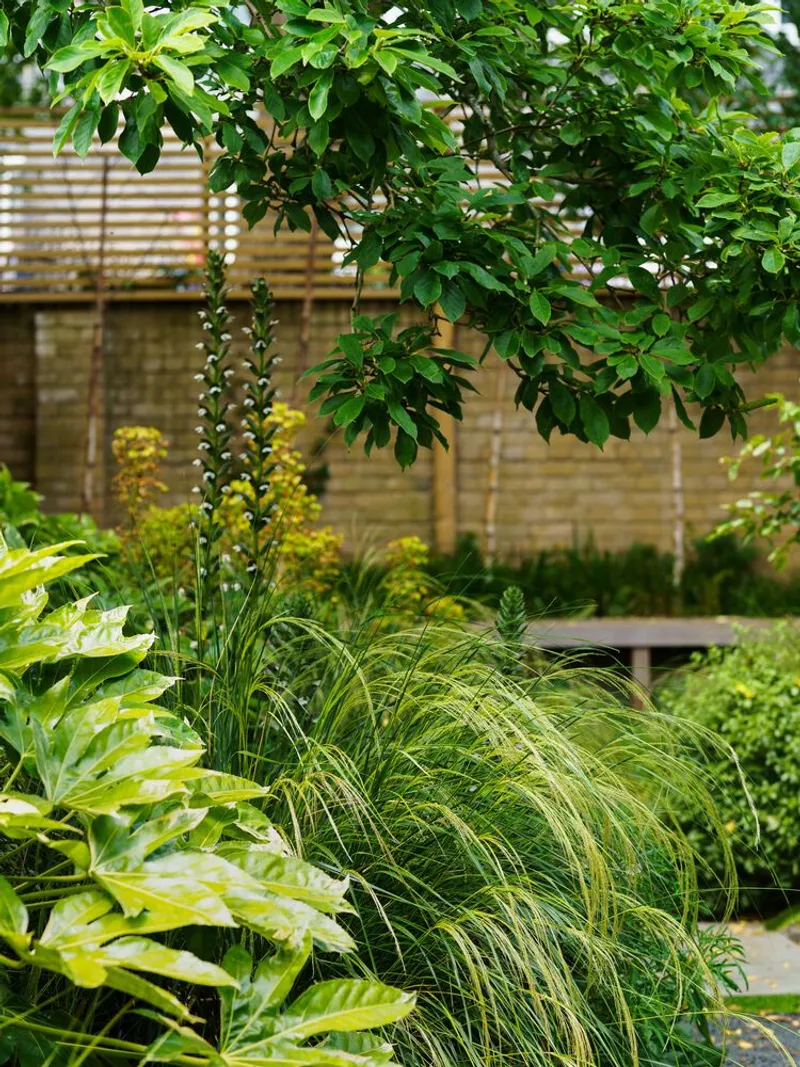
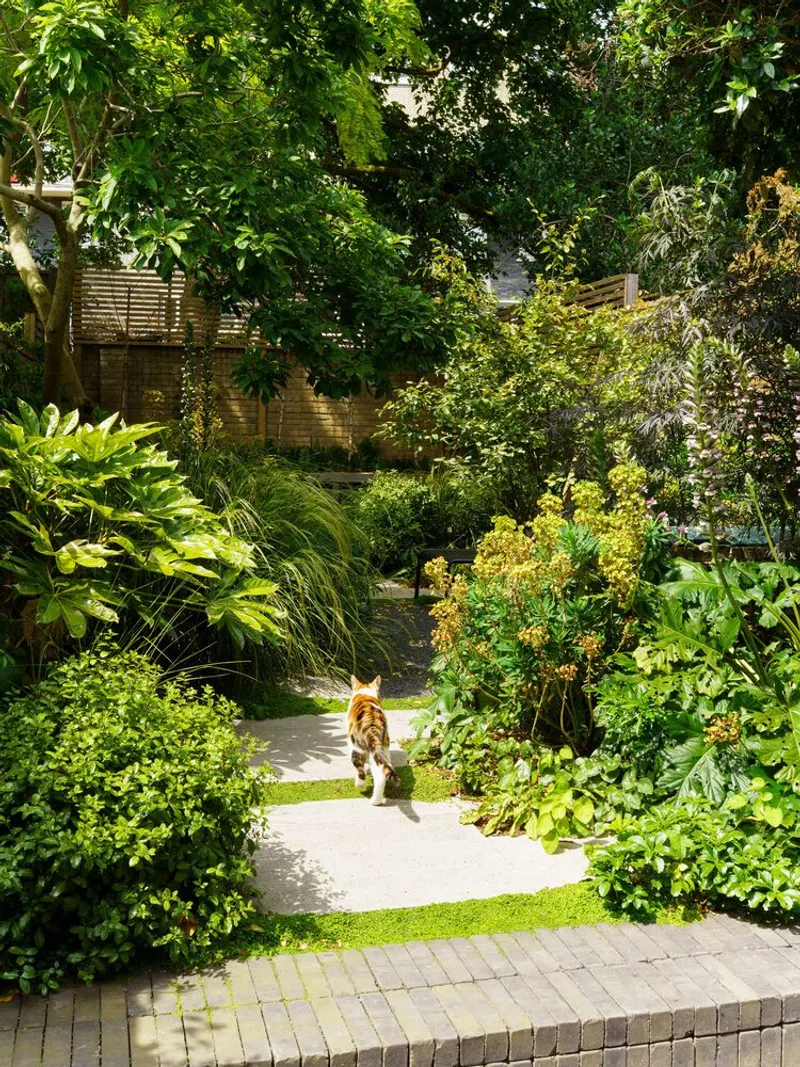
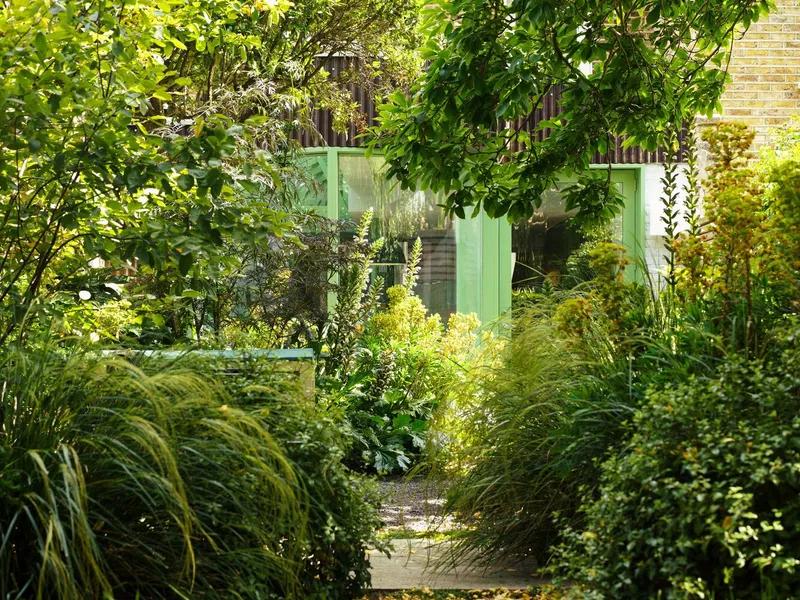
A standout feature of the renovation is the seamless connection to the west-facing garden. A bespoke curved glass window frames views of lush greenery, creating an organic transition between indoor and outdoor spaces. Oversized glazed doors and overhead light openings enhance the sense of openness, allowing nature to take center stage within the home.

Innovative Material Choices
CAN’s thoughtful material selection reflects a commitment to low-impact living. The exterior cladding, made of hemp fiber, is breathable and eco-friendly. Lime wash paint and recycled timber terrazzo kitchen worktops emphasize natural aesthetics and sustainability. These choices balance practicality with a unique design language, creating a home that feels grounded and alive.

A Personal and Playful Design
The Verdant House is as much about celebrating the clients’ personal tastes as it is about sustainable innovation. From playful flooring patterns to bespoke elements, every detail reflects the family’s lifestyle. CAN lowered the floor level in the extension by 20 centimeters, creating an expansive feel without dramatic structural changes.

Mat Barnes, Founding Director at CAN, described the project as "soft but high-impact," a testament to the studio’s ability to craft spaces that are both functional and visually striking.

A Model for Sustainable Living
Verdant House stands as a benchmark for sustainable home renovation, blending thoughtful design with environmental responsibility. By prioritizing natural materials, innovative techniques, and a harmonious relationship with the outdoors, CAN has created a home that adapts to its inhabitants while celebrating the beauty of nature.

All Photographs are work of Rick Pushinsky



Popular Articles
Popular articles from the community


AL-JANNAH: Sustainable Architecture and Permaculture for Afghan Widows
AL-JANNAH uses sustainable architecture and permaculture to create resilient oasis of housing, learning, work and renewal for Afghan widows.

The Ocean Hive: Sustainable Architecture for a Self-Sufficient Civilization at Sea
The Ocean Hive imagines sustainable architecture at sea, where modular habitats, algae, wave power and ocean waste sustain a growing colony.

Conexión: Biophilic Design Reimagines High-Rise Living in Hong Kong
Conexión reimagines high-rise living in Hong Kong through biophilic design, green facades, shared spaces, daylight, water and nature within.

Riyadh For All: Intergenerational Urban Design for Active Aging in Rabat
Riyadh For All reimagines urban design in Rabat with intergenerational co-living, adaptive courtyards, and Moroccan cultural exchange today.

Similar Reads
You might also enjoy these articles


Hodi-Mandai Geram
Project Function: Preservation and revitalization of the Intangible heritage and socio-spatial identity of the Hodi by Housing, Cultural Memory Center, Sacred Grove, landscape, local tourism economy


Olio Towers: A Mid-Rise for Performers That Fuses Housing, Rehearsal, and Stage
Located blocks from Houston's Theater District, this modular tower stacks living units around a central performance atrium.

Oasis: Modular Green Housing Carved into Dhaka's Urban Fabric
A shortlisted Plugin Housing entry reclaims unauthorized settlements in Dhaka with stepped concrete volumes, green roofs, and ventilation-driven design.

Black Hole: A Floating Megastructure for the Post-Physical Era
Emiliano Mazzarotto envisions a spherical, self-scaling arena where e-sports, digital hotels, and holographic stadiums replace traditional public space.

Explore Architecture Competitions
Discover active competitions in this discipline



Challenge to reimagine the Iron Throne


Photograph architecture without architects


Illustrate the lost glory of Angkor Wat - Render Challenge


Design challenge to reuse E-waste
Comments (0)
Please login or sign up to add comments
No comments yet. Be the first to comment!