
Verdant: Reimagining the Library of the Future through Green Architecture
A visionary project blending green architecture with educational and social spaces in Poland.


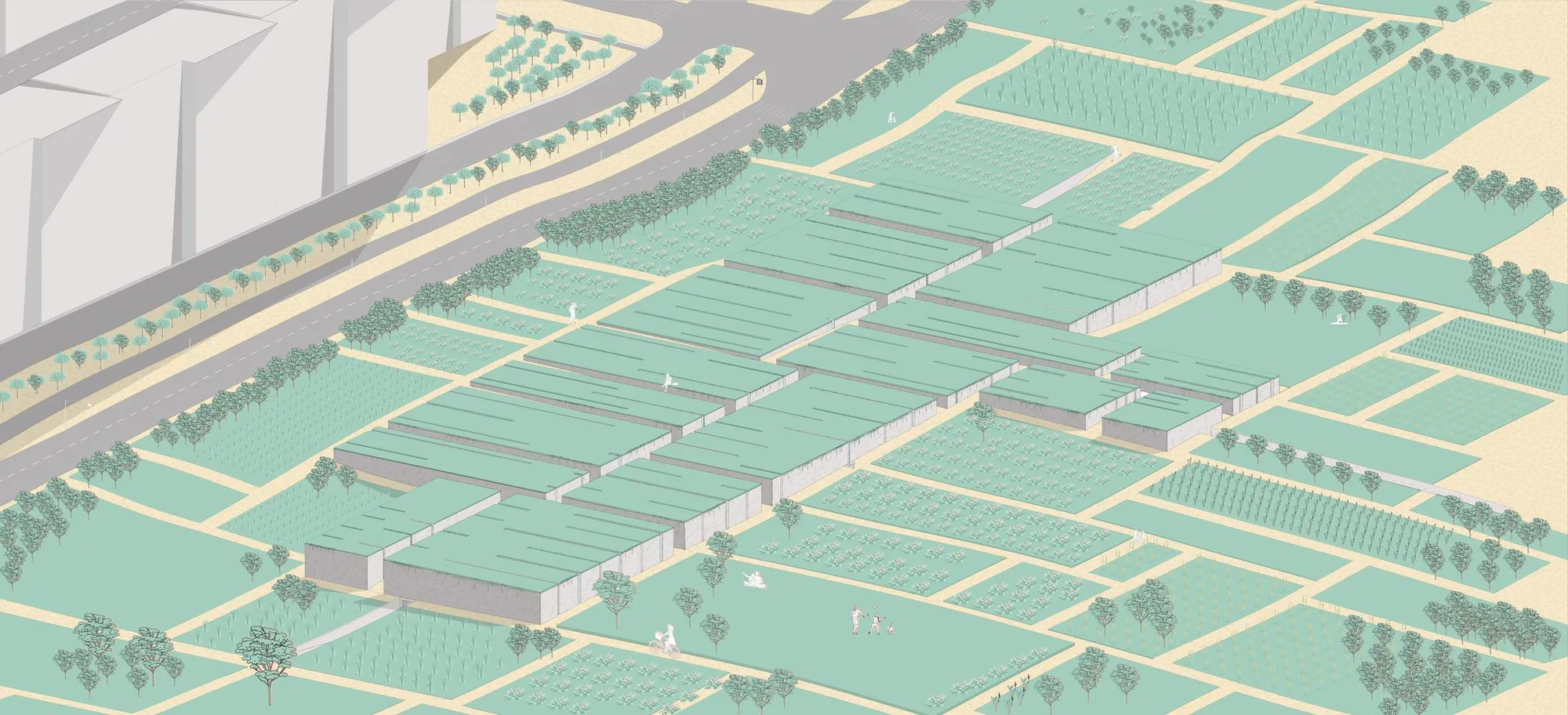
In a rapidly evolving digital age, the concept of a traditional library is undergoing significant transformation. The project "Verdant," created by Almina Aydin and IremNur Ozkok, Shortlisted entry of Libgen, represents a groundbreaking vision for the library of the future. This innovative design integrates agricultural landscapes with social and educational spaces, offering a fresh perspective on how we learn and interact with our environment. By making "The Allotment Gardens" in Poland the central element, Verdant envisions a green, living library where the genes of plants and living organisms are stored, ensuring the continuity of life and fostering a community-oriented, educational atmosphere.

Project Background and Design Inspiration
The inspiration for Verdant stems from the unique cultural and environmental landscape of Lublin, Poland. Lublin's green continuity and historical allotment gardens serve as the foundation for this visionary project. The designers aimed to answer a critical question posed by the competition: "What kind of place is the library of the future?" Instead of focusing solely on digital advancements, they explored alternative modes of learning and interaction with nature.
Analysis and Concept Development
Historical and Regional Analysis
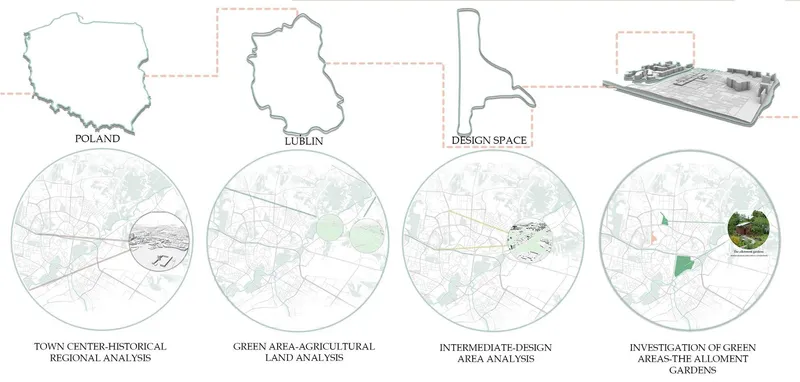
The initial phase of the project involved a thorough analysis of Lublin's town center, historical regions, and agricultural lands. The designers identified three distinct regions within the city:
The historic district or city center, characterized by old architectural structures and high population density.
The agricultural land areas, marked by low population density and rich agricultural heritage..
The intermediate design space, situated between the agricultural areas and the city center, representing an expanding settlement zone.
This analysis highlighted the green continuity in Lublin and the importance of integrating nature into the urban fabric.
Agricultural Integration
Verdant's design leverages the concept of allotment gardens, which are small plots of land allocated to individuals or communities for gardening and agriculture. These gardens promote ecological sustainability, social interaction, and hands-on learning. The project integrates existing agricultural permits and elevates agricultural areas without disturbing the natural landscape. By placing spaces under excavated soil and partially above it, the design maintains the agricultural traces while creating a harmonious blend of built and natural environments.

Architectural Features and Functional Spaces
Gene Library and Storage Areas
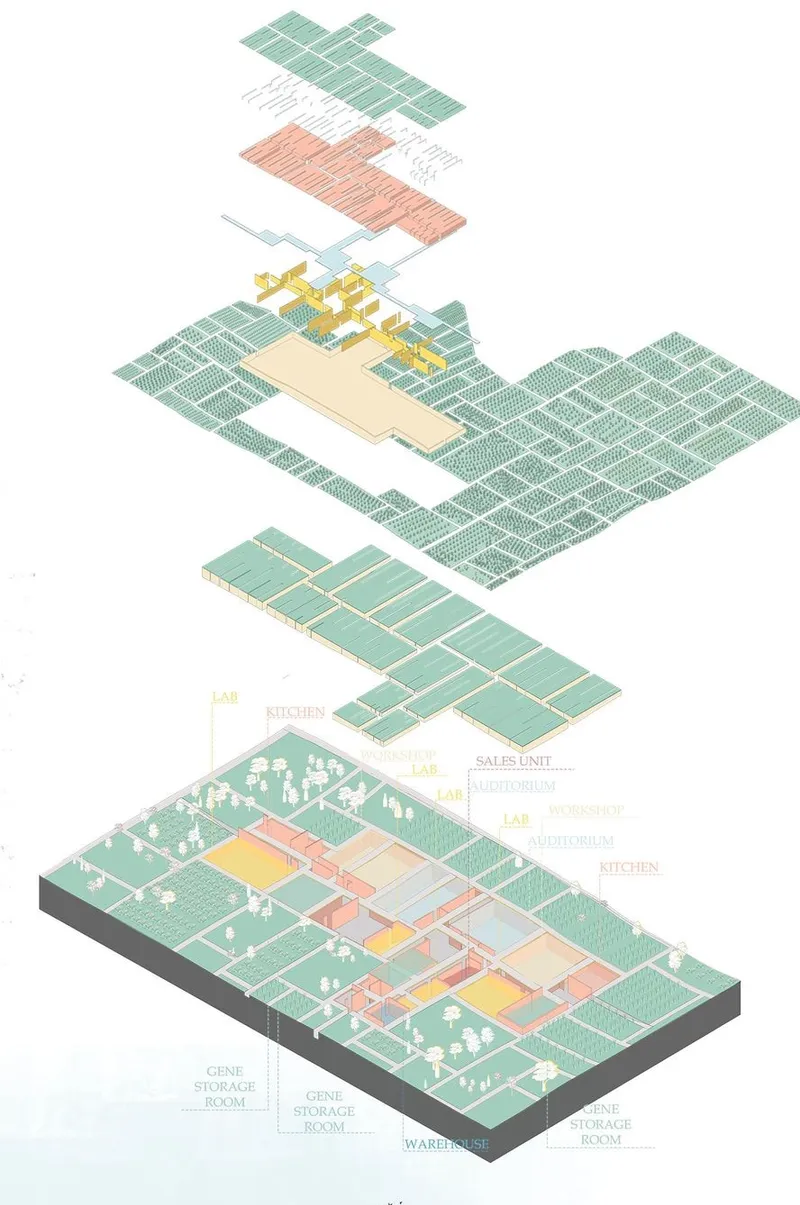
At the heart of Verdant lies the Gene Library, a facility dedicated to preserving genetic diversity and preparing for future needs. This library stores genes from plants, animals, and microorganisms, safeguarding them against environmental threats and human activities. The gene library serves as a vital resource for medical research, commercial applications, and species conservation.
Public and Private Spaces
Verdant's design is divided into public and private spaces, each serving distinct functions:
Public Spaces: These areas include auditoriums, workshops, kitchens, and social spaces where people can gather, learn, and interact. Conferences, agricultural workshops, and informal gatherings foster human-to-human learning and community building.
Private Spaces: Dedicated to gene storage, laboratories, and sales units, these areas facilitate scientific research and commercial activities related to genetic material.
Green Continuity and Afforestation
To maintain the green character of the site, Verdant incorporates extensive afforestation along the main roadside border, providing sound muting and enhancing the ecological value of the area. The project also includes specific plant and fruit suggestions for agricultural land, promoting biodiversity and sustainable agriculture.

Social and Educational Impact
Learning from Nature
Verdant redefines the concept of a library by emphasizing learning from nature. Interaction with plants, trees, and soil fosters a deeper understanding of the natural world. This nature-to-human learning approach complements traditional methods and offers a holistic educational experience.
Human-to-Human Learning
The design facilitates human-to-human learning through various interactive activities. Workshops, agricultural practices, and social events encourage knowledge transfer and collaboration. The allotment gardens provide a practical setting for hands-on learning and community engagement.

Preservation and Innovation
By preserving genetic material and promoting agricultural practices, Verdant addresses both ecological and sociological challenges. The project aims to mitigate the effects of urbanization and declining agricultural areas in Lublin, ensuring that future generations can benefit from the rich agricultural heritage of the region.
Verdant represents a visionary approach to green architecture and the future of libraries. By integrating agricultural landscapes with social and educational spaces, the project offers a unique model for sustainable development and community engagement. Verdant's emphasis on learning from nature, preserving genetic diversity, and fostering human-to-human interaction sets a new standard for architectural innovation. As we look to the future, projects like Verdant remind us of the importance of maintaining a connection with nature and leveraging it to create vibrant, resilient communities.



Popular Articles
Popular articles from the community


The Earth Pod: 3D Printed Homes for Resilient Refugee Communities
The Earth Pod reimagines refugee housing through 3D printed homes made from clay, combining resilience, self-sufficiency, and rapid shelter.

Hill & Cross Opera: Sculptural Opera House Architecture Shaped by Tallinn’s Landscape and Identity
Hill & Cross Opera reimagines opera house architecture in Tallinn through its sculptural hill, civic plaza, glass wave and a luminous cross.

Conexión: Biophilic Design Reimagines High-Rise Living in Hong Kong
Conexión reimagines high-rise living in Hong Kong through biophilic design, green facades, shared spaces, daylight, water and nature within.

The Musturak Paradise: Senior Living Architecture for a Connected Future in Temara, Morocco
The Musturak Paradise reimagines senior living architecture in Temara via private homes, social spaces, culture, community, and shared care.

Similar Reads
You might also enjoy these articles

Day and Night Park: A Time-Based Urban Newsstand in Beijing
A temporary urban newsstand in Beijing blending travel, light, and reading through poetic colors, compact form, and community-focused design.

Modernist Patio Renovation in El Masnou, Barcelona by Oliver Segura Arquitectura + Cebrià Arquitectura
Modernist patio renovation blending tradition and innovation with a movable pool, leveled floors, and Catalan materials in El Masnou.

Alto Residencial Coop: Cooperative Housing Development in Santiago de Compostela by Carbajo Barrios Arquitectos
A linear cooperative housing complex blending white volumes and perforated metal façades, enhancing community living, natural light, privacy, and urban integration.

Vil Genis School by BPA ARCHITECTURE – Massy, France
Vil Genis School in Massy, France, features sustainable design, south-facing classrooms, community integration, accessible spaces, and modern educational architecture.

Explore Green Spaces Competitions
Discover active competitions in this discipline



Challenge to reimagine the Iron Throne


Photograph architecture without architects


Illustrate the lost glory of Angkor Wat - Render Challenge


Design challenge to reuse E-waste
Comments (0)
Please login or sign up to add comments
No comments yet. Be the first to comment!