
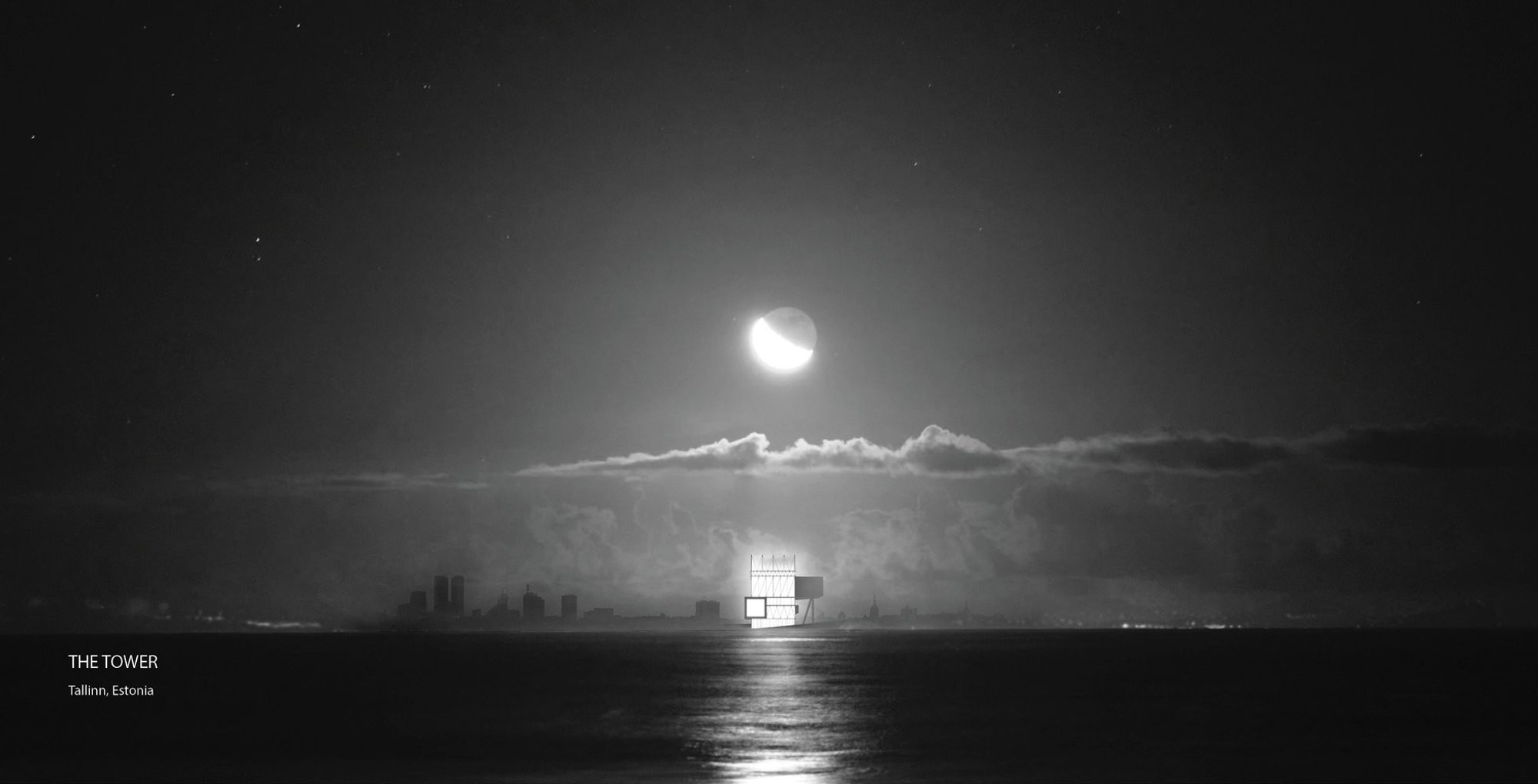
Vertical Opera House Architecture: The Tower in Tallinn
A vertical opera house in Tallinn redefines cultural architecture as a public landscape, merging performance, city, and waterfront into one.

Positioned along Tallinn’s historic waterfront, The Tower proposes a radical shift in opera house design by transforming a traditionally inward-looking typology into an open, civic, and spatially layered cultural infrastructure. Conceived as a vertical opera house, the project challenges the exclusivity of performance architecture and repositions it as a public catalyst embedded within the urban fabric.
Designed by Lyric Barnik, this Honorable Mention entry in the Opera by the Sea competition draws from the symbolic clarity of a lighthouse. It stands not only as a performance venue but as an urban marker, signaling cultural engagement and accessibility. The project reframes the opera house as a hybrid between architecture, landscape, and public space.
Concept: Opera House as Urban Lighthouse
The conceptual foundation of the project emerges from Tallinn’s layered cultural identity and maritime history. The building adopts the imagery of a lighthouse, functioning as both a visual anchor and a symbolic beacon of public culture.
Rather than spreading horizontally like conventional opera houses, the program is stacked vertically. This strategic move minimizes the footprint while liberating the ground plane, allowing it to transform into an accessible and continuous public landscape. The architecture becomes an extension of the city rather than an isolated cultural object.
The verticality also establishes a gradient from public to private. Lower levels remain porous and civic-oriented, while upper levels accommodate more controlled performance environments. This spatial hierarchy enhances user engagement while maintaining operational efficiency.
Public Realm Integration and Landscape Strategy
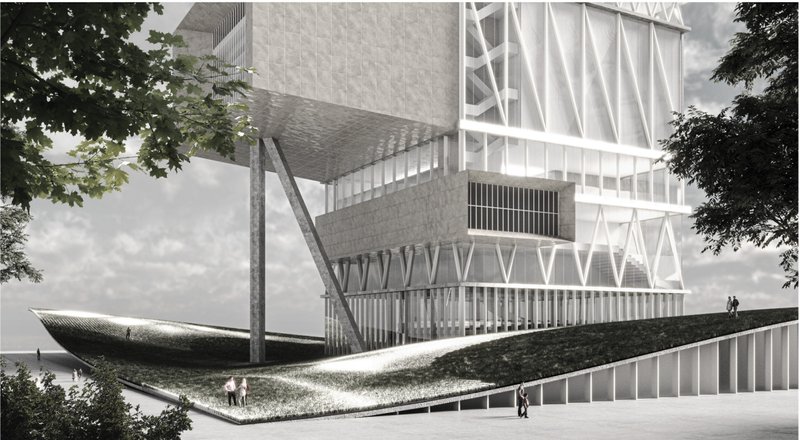
A defining feature of this vertical opera house architecture is its integration with the surrounding topography. The ground plane is sculpted into an undulating landscape that flows through the building, forming a continuous public surface.
This landscape operates as both circulation and program. It creates a valley-like condition that guides visitors through the site while simultaneously offering viewing platforms toward the sea and the city. Elevated portions of the terrain act as canopies, accommodating public programs such as recreational courts and gathering spaces beneath.
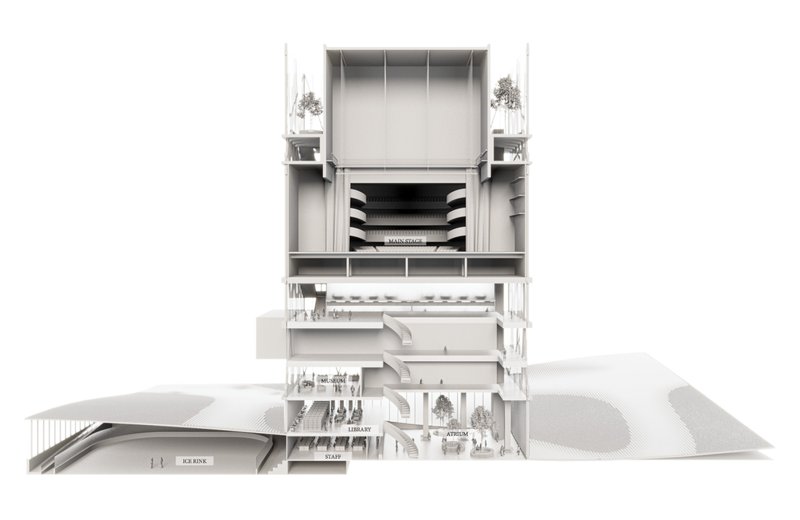
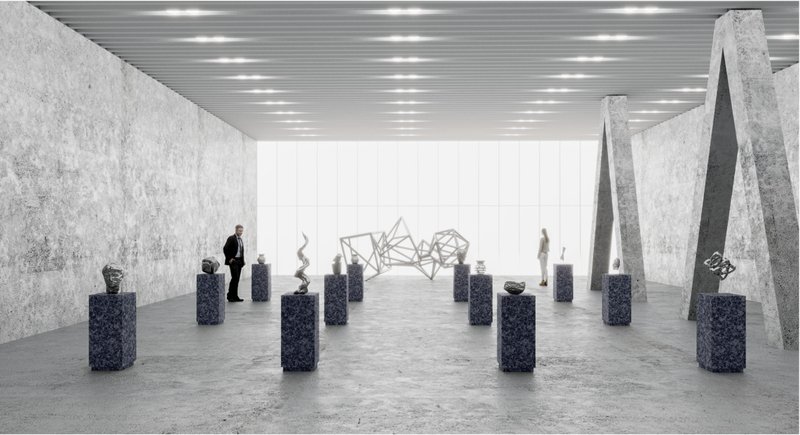
By reducing the building footprint and redistributing functions vertically, the project prioritizes public accessibility. Spaces such as the library, museum, gallery, and ice rink extend the building’s role beyond performance, establishing it as a year-round civic hub.
Program Organization and Spatial Logic
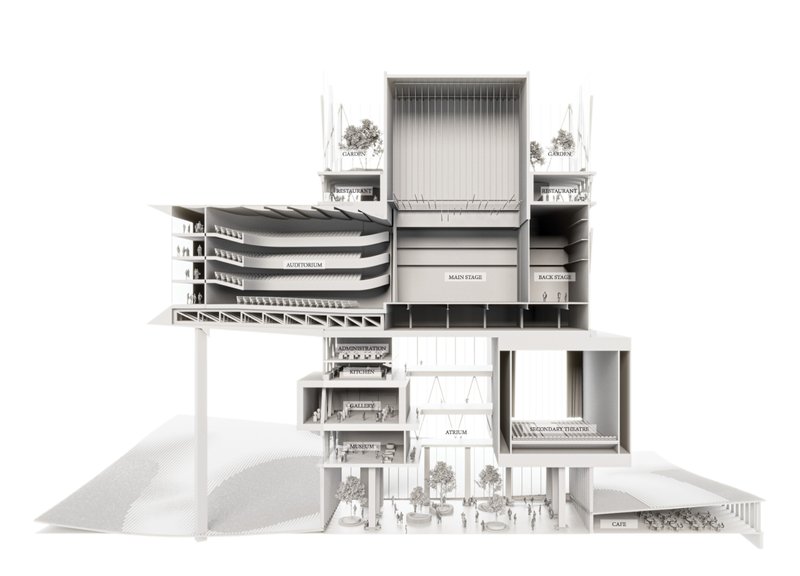
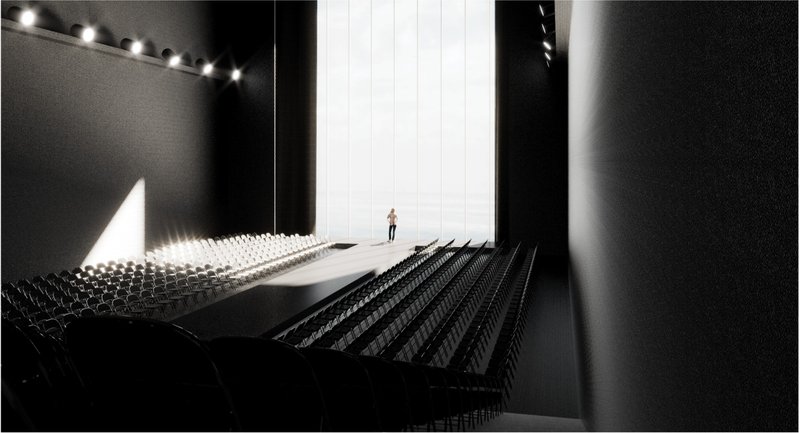
The internal organization reflects a clear and efficient stacking strategy. The main auditorium and secondary performance hall are vertically aligned, enabling shared back-of-house functions such as rehearsal and storage spaces.
This stacking not only optimizes spatial efficiency but also enhances flexibility. The secondary hall is designed as a reconfigurable space, capable of adapting to various performance formats. Circulation is centralized through a vertical core and interconnected stair systems, reinforcing spatial clarity.
Public programs occupy the lower and intermediate levels, gradually transitioning into performance-specific zones. The atrium acts as a central connector, visually and physically linking different functions while maintaining a sense of openness.
Structural Expression and Material Strategy
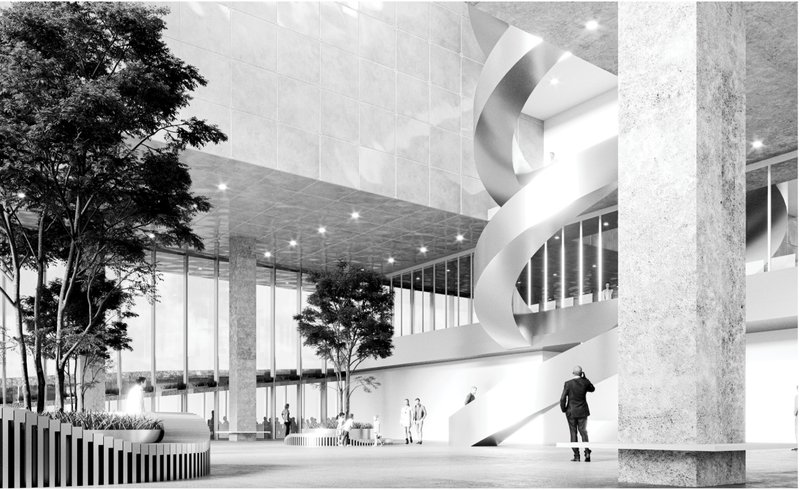
Structurally, the building employs a combination of perimeter framing and strategic cantilevers to achieve its distinctive massing. The primary auditorium projects outward, creating a dramatic cantilever that frames the main entrance and reinforces the building’s iconic presence.
Slender columns and external structural elements contribute to the perception of a suspended volume, giving the upper mass a floating quality. This structural articulation is not merely aesthetic but also communicates the internal organization of the building.
The extensive use of glass enhances transparency, allowing visitors to visually engage with the building’s programs and circulation. This permeability dissolves the boundary between interior and exterior, reinforcing the project’s public-oriented agenda.
Contextual Response: Reinterpreting Linnahall
The project directly engages with the adjacent Linnahall Arena, a historically significant yet underutilized structure. Instead of competing with it, the proposal integrates and extends its public qualities.
By introducing a vertical counterpart to Linnahall’s horizontal mass, the design establishes a dynamic architectural dialogue. The new opera house acts as a contemporary reinterpretation of the site, offering flexibility and adaptability for future cultural needs.
Public programs such as the library, museum, and recreational facilities address the declining relevance of Linnahall by reactivating the site as a multifunctional civic destination. The project thus operates as both an architectural intervention and an urban regeneration strategy.
Jury Perspectives and Critical Evaluation
The project received mixed but insightful feedback from the jury, highlighting both its conceptual strengths and practical challenges.
Venelin Kokalov noted the strength of the contextual concept, emphasizing that the proposal successfully engages with its surroundings. However, concerns were raised regarding the clarity of programmatic representation and the need for more explicit annotations to communicate the design intent.
Karli Luik appreciated the idea of introducing a vertical opera house as a contemporary lighthouse adjacent to Linnahall. The contrast between vertical and horizontal forms was seen as compelling. At the same time, concerns were expressed about the building’s scale, which was perceived as overwhelming. Functional challenges, particularly in terms of logistics, were also identified. Additionally, certain programmatic elements, such as sports facilities, were questioned in relation to the site’s cultural context.
The Tower presents a compelling case for rethinking opera house architecture through verticality, public integration, and symbolic clarity. By merging performance spaces with civic programs and landscape strategies, the project transcends conventional typologies and proposes a new model for cultural infrastructure.
As a vertical opera house, it not only redefines spatial organization but also expands the role of architecture in shaping public life. Despite challenges related to scale and logistics, the proposal remains a bold exploration of how cultural buildings can evolve to meet contemporary urban demands.




Popular Articles
Popular articles from the community

Not All Architecture Grounds a Timber Retreat in Victoria's Coastal Bushland
Ironbark House stretches low beneath eucalyptus canopy, threading a quiet domestic life between courtyard, deck, and landscape.

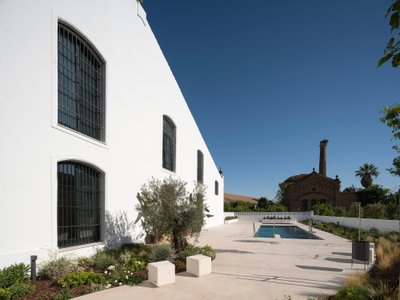
De la Riva Sherry Homes By Juan Vega Arquitectos
De la Riva Sherry Homes transform a historic winery into unique residences, blending industrial heritage, modern comfort, and community-focused courtyard living.
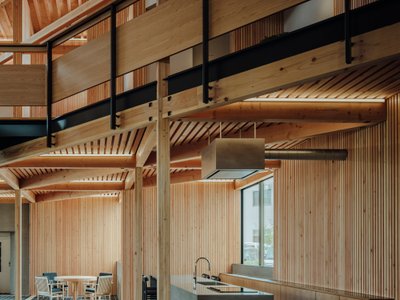
ure LLC Builds a Timber-Framed Suburban Office That Doubles as a Community Living Room in Hiroshima
KItoNOKO wraps sawtooth roofs and corrugated metal around an exposed timber frame to give a commercial district a new civic anchor.
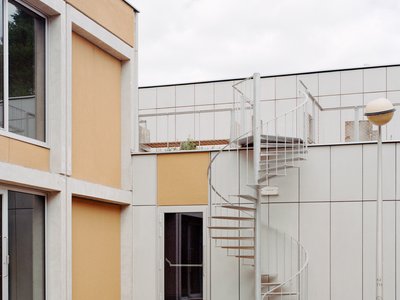
MAKER architecten Rewire a 1972 Brutalist Dormitory on the VUB Campus as a Living Lab
A modular renovation strategy in Belgium breathes new life into Willy Van Der Meeren's modernist student housing without erasing its concrete bones.
Similar Reads
You might also enjoy these articles

Twilight Crossing: A Pedestrian Bridge That Performs with Light and Water
Angel Gamboa's tensile cable bridge transforms a lakeside crossing into a choreographed sequence of color, reflection, and framed views at dusk.
Digital Façade Design for our cities’ urban fronts
Prima Facie - Result Story
Protecting avian biodiversity: Bird observatories to help spread awareness & save rare bird species.
Results for ‘Fly’ - Landscape design competition out now


Explore Interior Design Competitions
Discover active competitions in this discipline




The Global Benchmark for Architecture Dissertation Awards


Challenge to design luxury tourism on rails

VR headsets Storefront design competition

Designing a staircase for a client
Comments (0)
Please login or sign up to add comments
No comments yet. Be the first to comment!