

Studio David Thulstrup Carves a Double-Height Living Space from an 1890s Copenhagen Rooftop
A 150-square-meter attic apartment on Vester Voldgade balances exposed timber beams, Dinesen oak, and a zinc-finished spiral staircase.


Most rooftop conversions play it safe: white walls, dormers, a skylight or two. Studio David Thulstrup took a different tack with this apartment on Vester Voldgade in central Copenhagen. When the owner purchased the attic space directly above their existing flat, Thulstrup saw an opportunity to blow the ceiling open, expose the pitched roof structure, and build a double-height living room that pivots around light and raw timber. The result is a 150-square-meter residence that reads less like an attic retrofit and more like a purpose-built loft, one where the 1890s building's bones do real aesthetic work rather than merely surviving behind plasterboard.
What makes the project genuinely interesting is how Thulstrup treats contrast as a structural principle, not a decorative afterthought. Warm Dinesen Heart Oak floors meet cold Bornholm granite. Original wooden beams sit above glass-blasted steel finished in an industrial yellow-plated zinc. A 200-kilogram glazed lava stone coffee table anchors a room defined by airy, unpartitioned volume. Every pairing is deliberate and legible. The apartment never feels confused by its dual identity because the architect has given each material enough room to speak clearly before the next one enters the conversation.
Opening Up the Roof
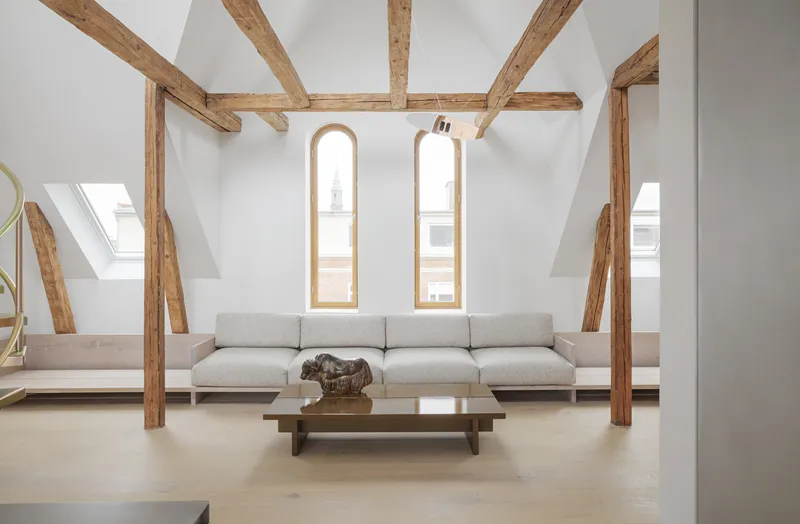

The most significant move here is the removal of the floor plate between the two levels, creating a living area where exposed rafters arc overhead like the ribs of an inverted hull. Thulstrup elongated the building's original arched windows at the center of this space, pulling daylight deeper into the plan. The decision to leave the structural timber exposed, rather than boxing it in, gives the room a vertical energy that most Copenhagen apartments simply cannot offer. Walls were pared back wherever possible to allow light to travel without interruption, and the absence of doors or room dividers reinforces the sense that the entire apartment breathes as a single volume.
A hallway view toward the kitchen reveals how the neutral palette, pale oak flooring and white-painted surfaces, acts as connective tissue between zones. Upper clerestory windows maintain a consistent wash of diffused daylight across the plan. The effect is calm without being sterile, a space that feels genuinely lived in yet architecturally precise.
Kitchen, Dining, and the Second Terrace


The combined kitchen and dining space sits at the junction between interior and exterior, with large bi-folding glass doors opening onto a second terrace that functions as an outdoor extension of the room. Thulstrup designed the kitchen around a central island, keeping the countertop and cabinetry restrained so they recede into the architecture rather than compete with it. Light wood flooring runs uninterrupted from the kitchen through to the dining area, reinforcing the open-plan logic.
The dining nook tucks under the sloped white ceiling with a yellow pendant lamp that introduces a single warm accent. An in-built dining bench along the wall is one of several custom elements that double as architectural features, thickening the wall plane and eliminating the clutter of freestanding furniture. The oval table beneath keeps the geometry soft in what could otherwise be a tight, angular corner.
Custom Furniture as Architecture

Thulstrup has a habit of treating furniture as fixed elements of the architecture rather than movable objects, and this apartment is a clear showcase of that instinct. A built-in sofa bench runs the full length of one living room wall, providing seating depth while reinforcing the room's horizontal proportions. A built-in desk slots beneath an angled timber beam in a bedroom alcove, turning a residual space under the pitch into a functional work nook. The single chair beside it is all the room needs.
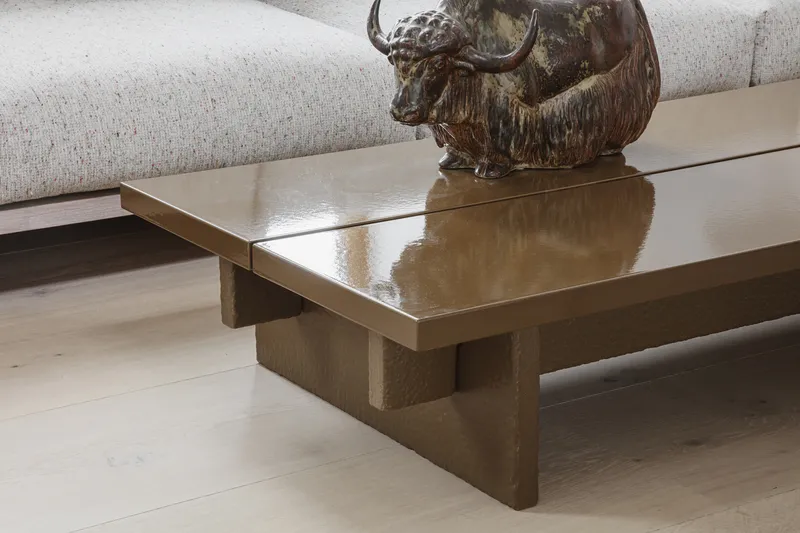
The 200-kilogram glazed lava stone coffee table is the exception: it is freestanding but so heavy it might as well be permanent. Its bronze tone and rough texture ground the living area, providing a counterweight to the lightness of oak and plaster surrounding it. The bronze sculpture sitting on the table surface reinforces the object's status as something closer to a geological specimen than a piece of furniture.
Bathrooms Carved into the Roof
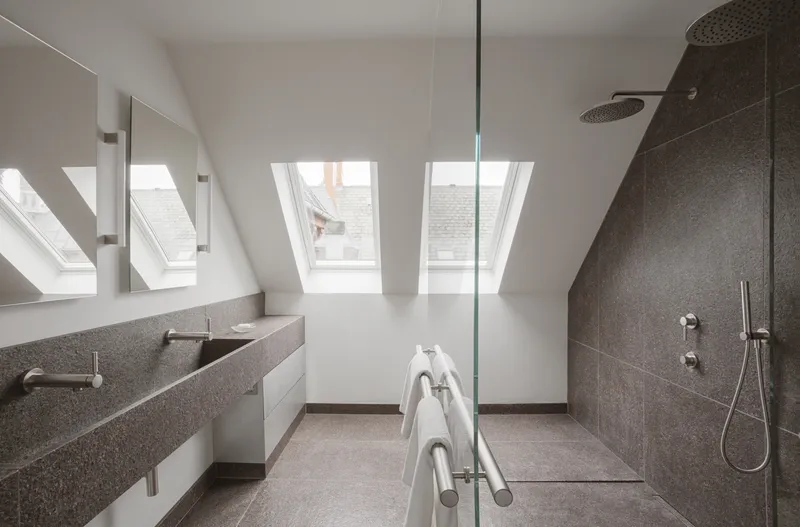
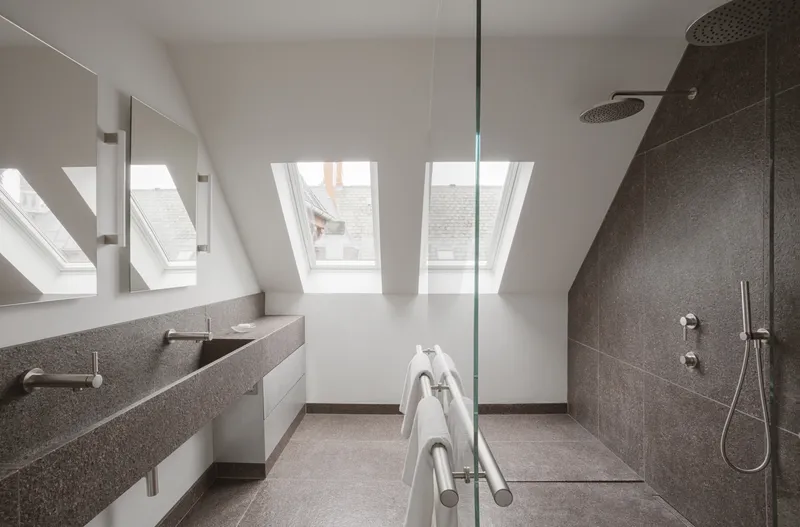
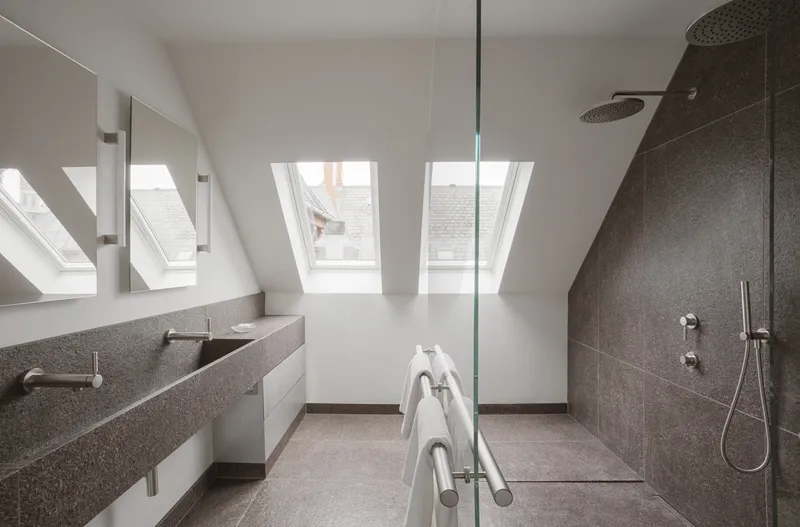
Three images of the bathroom speak to how carefully Thulstrup handled the most compressed spaces in the apartment. Terrazzo surfaces wrap the vanity and walls, bringing a cool mineral quality that contrasts sharply with the warmth of oak elsewhere. A glass partition encloses the shower without interrupting the visual continuity of the sloped ceiling, and multiple skylights cut through the roof plane to cast sharp, shifting shadows across the surfaces throughout the day.
The skylights are the real story here. In a conventional attic conversion, the bathroom gets whatever leftover space the plan allows, usually dark and cramped. By punching openings directly through the pitch, Thulstrup made the bathroom one of the brightest rooms in the apartment. The angled shadows that result are not incidental; they register the passage of time across the terrazzo in a way that turns a utilitarian room into something almost meditative.
Why This Project Matters
Copenhagen is full of 1890s residential buildings where the attic sits unused or underbuilt. The Vester Voldgade Apartment demonstrates that these spaces hold far more potential than a simple loft extension. By treating the roof structure as a design asset rather than a constraint, and by deploying a tight palette of local materials (Danish oak, Bornholm granite) alongside more unexpected ones (industrial zinc, volcanic stone), Studio David Thulstrup produced a home that is legibly Scandinavian without defaulting to the minimalist clichés that label implies.
The broader lesson is about proportion and contrast working in concert. Every pairing in the apartment, warm against cool, heavy against light, old timber against new steel, is managed with a precision that keeps the space from tipping into either museum preservation or slick renovation. Thulstrup found the register where a 130-year-old building can feel genuinely contemporary, and that register turns out to be quieter, more material, and more light-driven than most architects are willing to attempt.
Vester Voldgade Apartment by Studio David Thulstrup. Copenhagen, Denmark. 150 sqm. Completed 2020. Photography by Irina Boersma.
About the Studio
Share Your Own Work on uni.xyz
If projects like this are the kind of work you want to make, uni.xyz is a place to publish your own, find collaborators, and enter design competitions.


Popular Articles
Popular articles from the community


Conexión: Biophilic Design Reimagines High-Rise Living in Hong Kong
Conexión reimagines high-rise living in Hong Kong through biophilic design, green facades, shared spaces, daylight, water and nature within.

Co-Life: Senior Housing Design That Reconnects Older Adults With the City
Co-Life reimagines senior housing design through healing gardens, shared streets, workshops, and a sustainable community across generations.

Co-life: Sustainable Architecture for Age-Friendly Community Living
Co-life reimagines sustainable architecture for seniors through courtyards, rammed earth, shared gardens, and spaces designed for belonging.

Riyadh For All: Intergenerational Urban Design for Active Aging in Rabat
Riyadh For All reimagines urban design in Rabat with intergenerational co-living, adaptive courtyards, and Moroccan cultural exchange today.


Similar Reads
You might also enjoy these articles


Hodi-Mandai Geram
Project Function: Preservation and revitalization of the Intangible heritage and socio-spatial identity of the Hodi by Housing, Cultural Memory Center, Sacred Grove, landscape, local tourism economy


Olio Towers: A Mid-Rise for Performers That Fuses Housing, Rehearsal, and Stage
Located blocks from Houston's Theater District, this modular tower stacks living units around a central performance atrium.

Oasis: Modular Green Housing Carved into Dhaka's Urban Fabric
A shortlisted Plugin Housing entry reclaims unauthorized settlements in Dhaka with stepped concrete volumes, green roofs, and ventilation-driven design.

Black Hole: A Floating Megastructure for the Post-Physical Era
Emiliano Mazzarotto envisions a spherical, self-scaling arena where e-sports, digital hotels, and holographic stadiums replace traditional public space.

Explore Residential Building Competitions
Discover active competitions in this discipline


Challenge to design mud housing for contemporary communities


Challenge to reimagine the Iron Throne


Photograph architecture without architects


Illustrate the lost glory of Angkor Wat - Render Challenge
Comments (0)
Please login or sign up to add comments
No comments yet. Be the first to comment!