

Villahermosa Boardwalk: Revitalizing the Grijalva Riverfront with Sustainable Urban Design
Villahermosa Boardwalk revitalizes the Grijalva Riverfront with sustainable public spaces, recreational areas, cultural enhancements, flood-resilient design, and pedestrian-friendly urban architecture


The Villahermosa Boardwalk (Malecón de Villahermosa) represents a transformative urban and architectural intervention along the Grijalva River, reconnecting the city with its natural and cultural heritage. Designed collaboratively by Mauricio Rocha + Taller de Arquitectura, TaAU, and Alejandro Castro, the project emphasizes public space revitalization, sustainable design, and community engagement, creating a dynamic riverside environment that serves both locals and visitors.


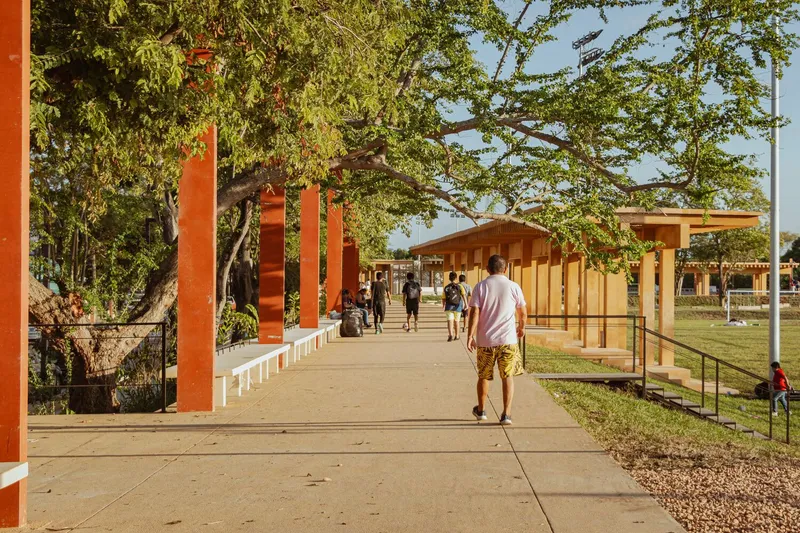
Restoring the Urban-Nature Connection
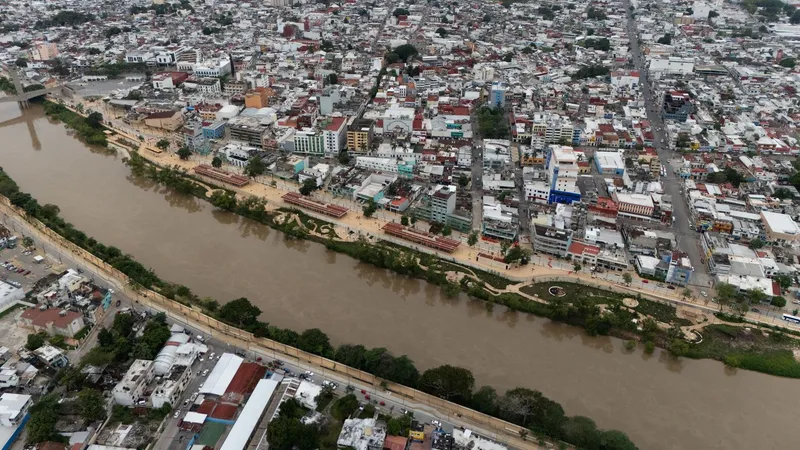
Historically, a containment wall was built along the river to address flooding. While functional, it gradually severed the city’s connection to the Grijalva River, diminishing public engagement with this vital natural resource. The boardwalk project restores this link by reimagining the riverfront as a pedestrian-friendly, recreational, and cultural corridor, fostering a stronger bond between Villahermosa’s inhabitants and the river’s ecosystem.
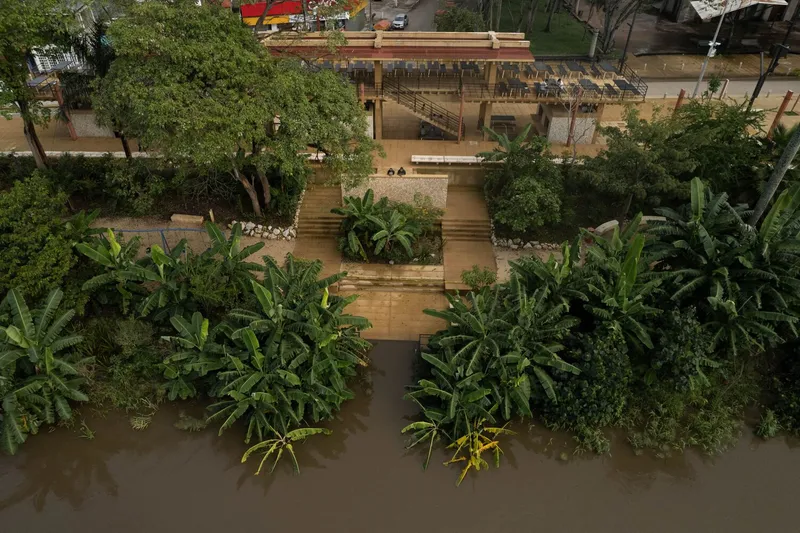

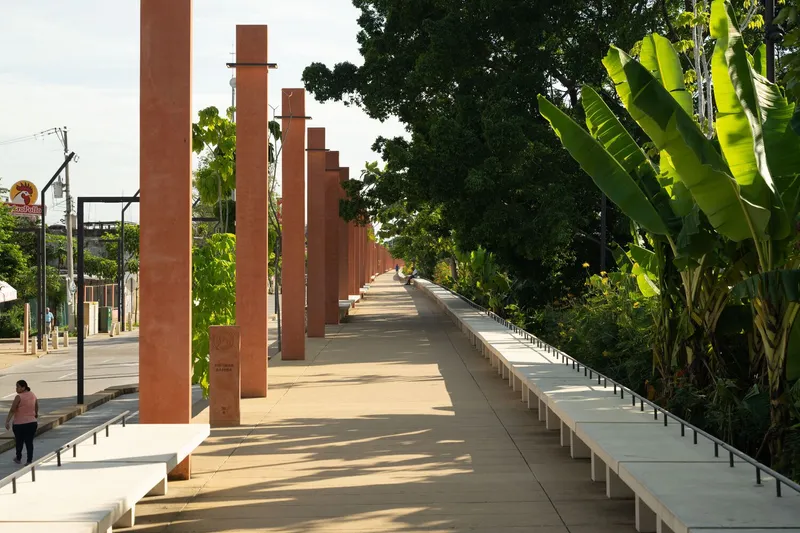
Spanning 6 kilometers along both riverbanks, the masterplan, promoted by SEDATU, incorporates panoramic river views, pedestrian pathways, and spaces for outdoor leisure and sports. Recreational facilities include baseball fields, basketball and soccer courts, a skatepark, playgrounds, and pavilions, while restaurants and kiosks integrate seamlessly with the surrounding landscape, boosting local employment and attracting national and international tourism.


Cultural Enhancement and Accessibility
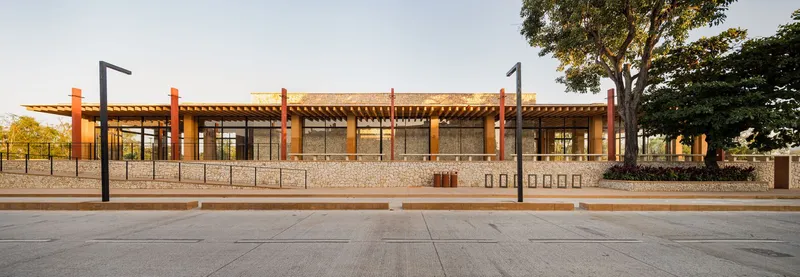
The boardwalk also elevates Villahermosa’s cultural identity. The Regional Anthropology Museum façade was restored and enhanced with a latticework by artist Carlos Pellicer, creating a visually striking cultural anchor. A continuous bike path promotes sustainable, non-motorized mobility, while the rehabilitation of docks and piers ensures public access to the river.
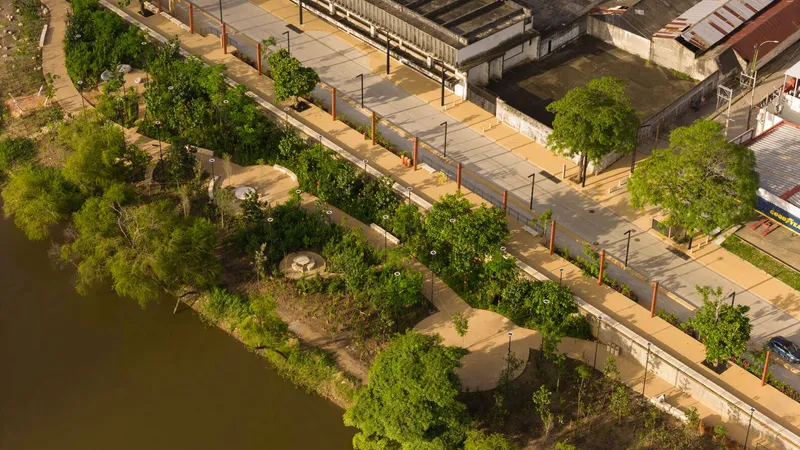
To improve safety and inclusivity, sidewalks were renovated, pedestrian crossings and access ramps were added, and features for visually impaired users were integrated. A new lighting system enhances nighttime usability, while native low-maintenance vegetation provides natural shade, temperature regulation, and ecological benefits along the riverbanks and streets.
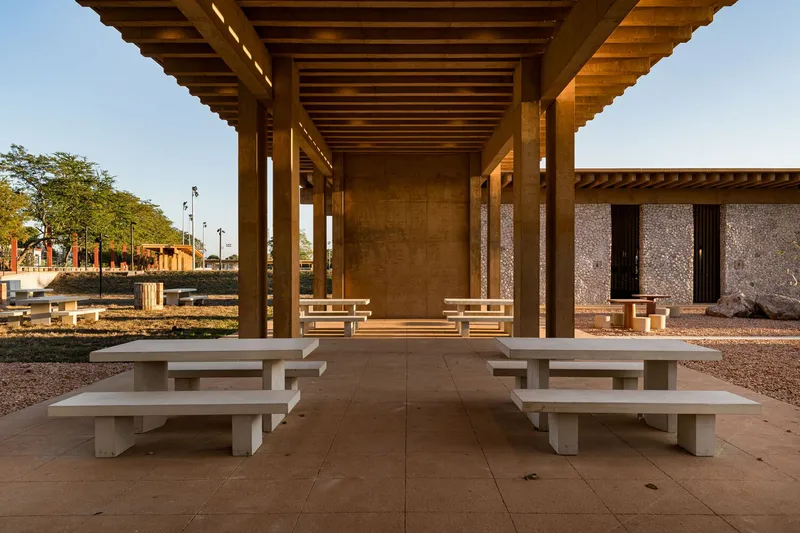
Reforestation and Flood-Resilient Design
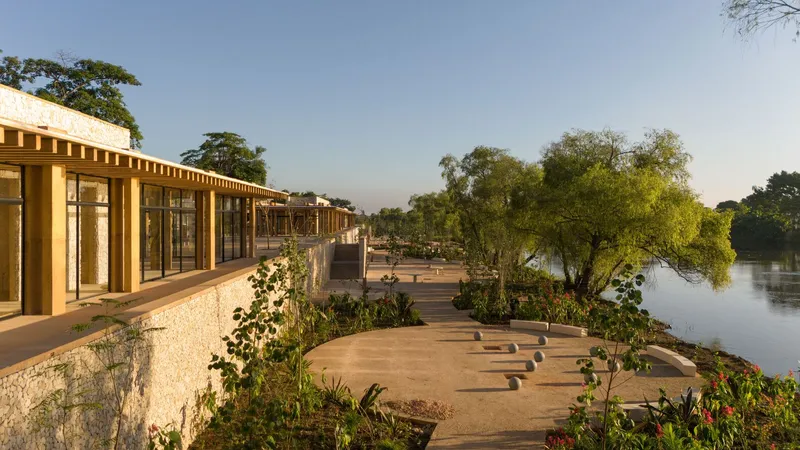
The project restored over 125,000 m² of riverbank, reforesting with native plants and creating multifunctional zones designed to flood seasonally without compromising usability. These spaces include playgrounds, benches, tables, contemplative areas, pedestrian walkways, and public parks that coexist harmoniously with the river’s natural cycles. Vegetation supports microclimate regulation, serves as organic matter for the river, and enhances biodiversity along the waterfront.

Timeless and Sensitive Architecture
The Villahermosa Boardwalk demonstrates architecture that is both elegant and contextually aware, responding to the cultural logic and daily practices of its inhabitants. Its contemporary and creative construction emphasizes the intrinsic value of nature, urban life, and public engagement, creating a vibrant, resilient, and sustainable riverfront.
By merging urban planning, landscape architecture, and cultural heritage, the boardwalk has become a benchmark in Mexican public space design, fostering a renewed relationship between the city, its people, and the Grijalva River.

All photographs are works of Ana Paula Álvarez, Aldo Belenda




Popular Articles
Popular articles from the community


Conexión: Biophilic Design Reimagines High-Rise Living in Hong Kong
Conexión reimagines high-rise living in Hong Kong through biophilic design, green facades, shared spaces, daylight, water and nature within.

Co-Life: Senior Housing Design That Reconnects Older Adults With the City
Co-Life reimagines senior housing design through healing gardens, shared streets, workshops, and a sustainable community across generations.
AL-JANNAH: Sustainable Architecture and Permaculture for Afghan Widows
AL-JANNAH uses sustainable architecture and permaculture to create resilient oasis of housing, learning, work and renewal for Afghan widows.

The Musturak Paradise: Senior Living Architecture for a Connected Future in Temara, Morocco
The Musturak Paradise reimagines senior living architecture in Temara via private homes, social spaces, culture, community, and shared care.


Similar Reads
You might also enjoy these articles


Hodi-Mandai Geram
Project Function: Preservation and revitalization of the Intangible heritage and socio-spatial identity of the Hodi by Housing, Cultural Memory Center, Sacred Grove, landscape, local tourism economy


Olio Towers: A Mid-Rise for Performers That Fuses Housing, Rehearsal, and Stage
Located blocks from Houston's Theater District, this modular tower stacks living units around a central performance atrium.

Oasis: Modular Green Housing Carved into Dhaka's Urban Fabric
A shortlisted Plugin Housing entry reclaims unauthorized settlements in Dhaka with stepped concrete volumes, green roofs, and ventilation-driven design.

Black Hole: A Floating Megastructure for the Post-Physical Era
Emiliano Mazzarotto envisions a spherical, self-scaling arena where e-sports, digital hotels, and holographic stadiums replace traditional public space.


Explore Architecture Competitions
Discover active competitions in this discipline



Challenge to reimagine the Iron Throne


Photograph architecture without architects


Illustrate the lost glory of Angkor Wat - Render Challenge


Design challenge to reuse E-waste
Comments (0)
Please login or sign up to add comments
No comments yet. Be the first to comment!