

Vineyard House by NŌ Architects: A Poetic Manifestation of Vineyard House Architecture in Spain
The Vineyard House by NŌ Architects redefines vineyard house architecture through sensory design rooted in landscape, tradition, and material poetry.


Embracing the Landscape Through Vineyard House Architecture
Set within the gentle terrain of Fontanars dels Alforins, Spain, the Vineyard House by NŌ Architects stands as a profound dialogue between land and architecture. Designed in 2020 and encompassing 205 square meters, the residence is more than a house—it is a sanctuary rooted in the timeless rhythms of viticulture and Mediterranean light. Through an eloquent blend of traditional materials and contemporary restraint, this dwelling exemplifies vineyard house architecture, where domestic life is gracefully tethered to the land’s agricultural legacy.
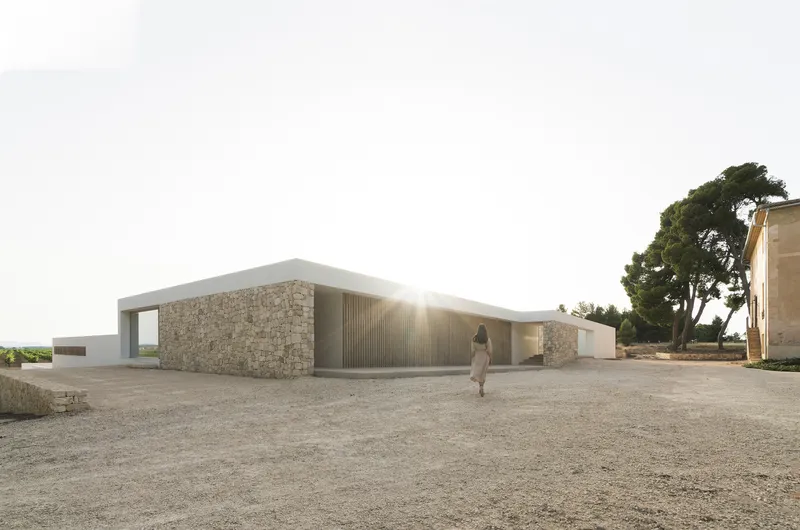


Surrounded by endless rows of grapevines that ripple in the Valencian breeze, the house dissolves into the landscape. It whispers rather than shouts, absorbing the character of its setting while reflecting a modern sensibility anchored in tactile authenticity.


A Timeless Refuge Rooted in Material Honesty
Constructed using natural stone, wood, and lime, the house radiates an ancestral warmth. These materials were not chosen for style, but for memory. Their textures and tones recall the quiet strength of rural architecture, grounding the home in local tradition. As light washes over these surfaces throughout the day, it animates the space with ever-changing shadows, evoking a sense of time suspended.

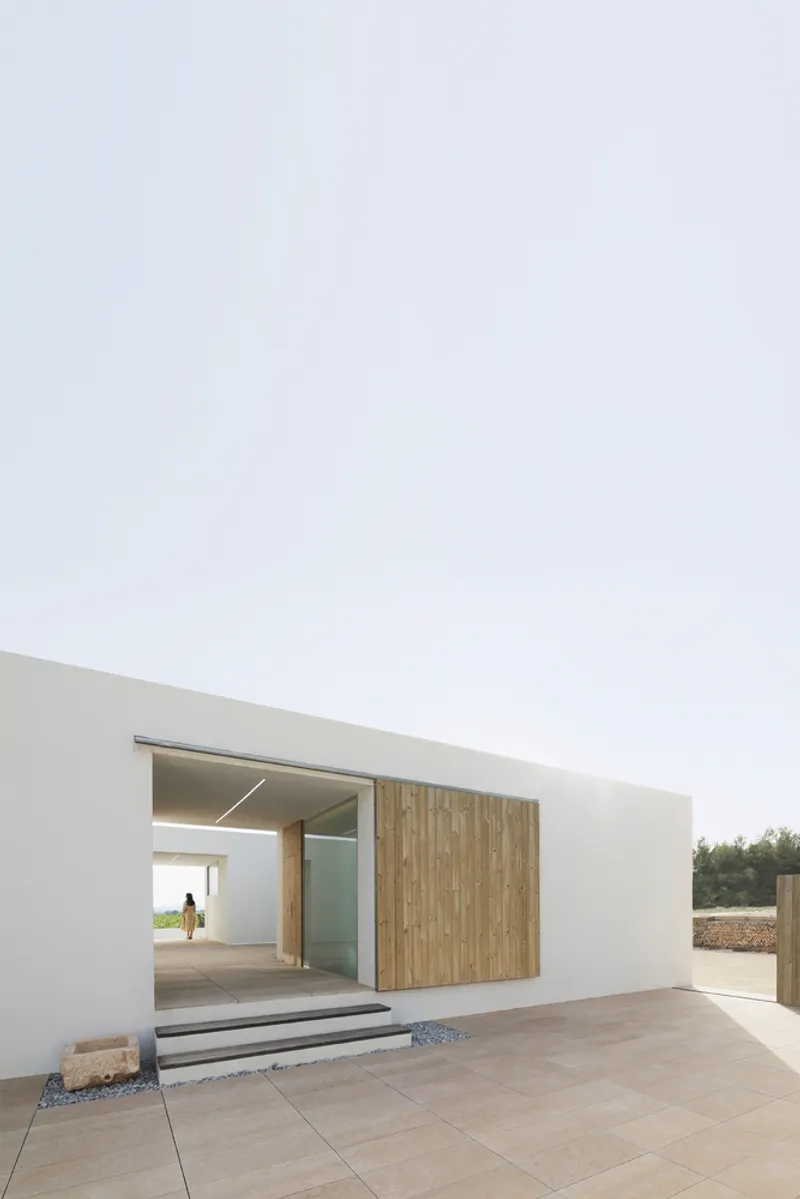
The architecture does not seek dominance over its environment; instead, it listens. Spaces are softly defined, openings are generous but nuanced, and transitions between interior and exterior are fluid. The Vineyard House is not just a container of life—it is an extension of the vineyard itself, rising gently from the earth like a crafted stone nestled in the terrain.


A Pre-Existing Cave Becomes a Sacred Core
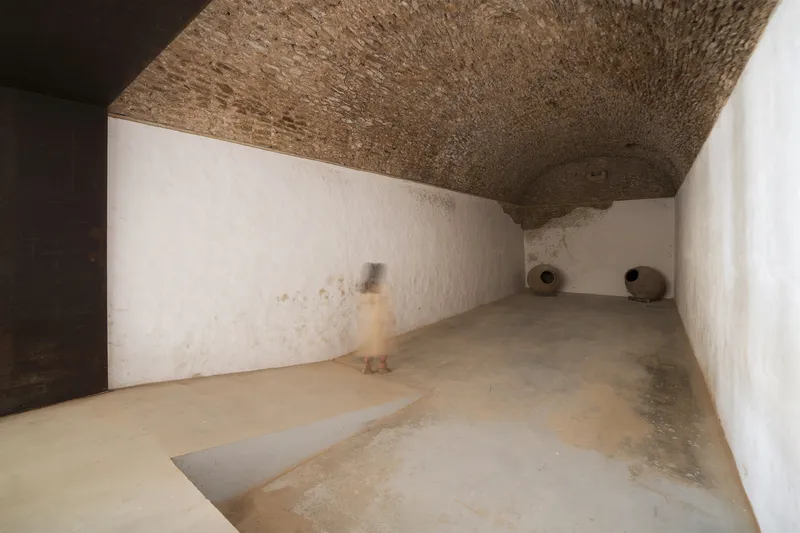
Beneath the house lies a unique feature: a pre-existing wine cave that roots the home even deeper in the soil and in history. This ancient space retains the scent of fermented grapes and oak barrels, echoing generations of harvests. Rather than being erased or concealed, the cave becomes central to the architectural narrative—a sacred chamber where the past is not merely remembered but inhaled.


This subterranean retreat is a space of stillness. Here, the coolness of stone and the soft penumbra of filtered light invoke a contemplative mood. It functions not only as a wine cellar but as a symbolic heart, where memory and matter converge in silence.


Shaping Experience Through Light, Shadow, and Movement
The Vineyard House is choreographed like a journey. Large movable wooden panels shift across the facade, revealing or concealing views depending on the time of day or season. These screens—more veil than wall—mediate privacy and exposure, animating the building’s character while responding to the elements.

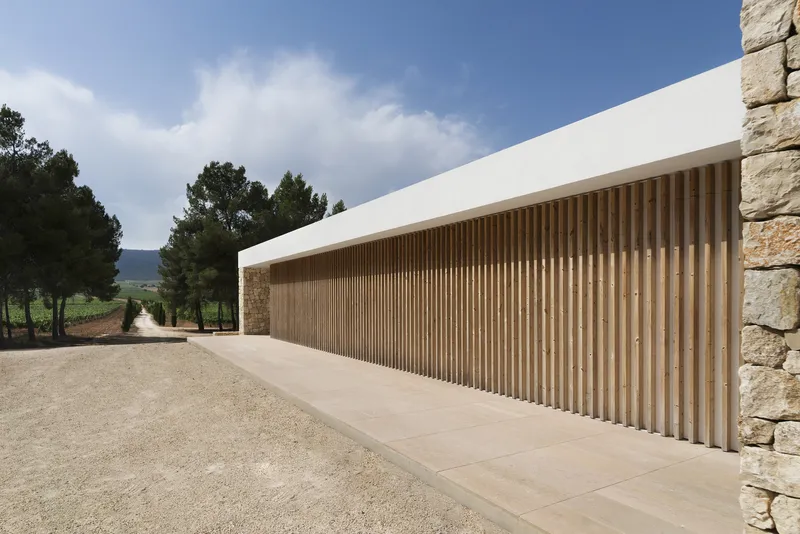
Inside, the space flows from intimate alcoves to expansive views. Openings are carefully placed to frame the vineyard beyond, allowing nature to seep into the domestic realm. This architecture is not concerned with permanence but with transformation—daily, seasonal, and spiritual. To live here is to live in conversation with the land.


A Philosophy of Inhabiting, Not Just Living
This house is not simply designed to be occupied—it is meant to be inhabited in the deepest sense. In the Vineyard House, to inhabit means to surrender to the rhythms of nature, to become attuned to the scent of soil after rain, to the rustle of leaves in the wind, and to the golden silence of dusk.
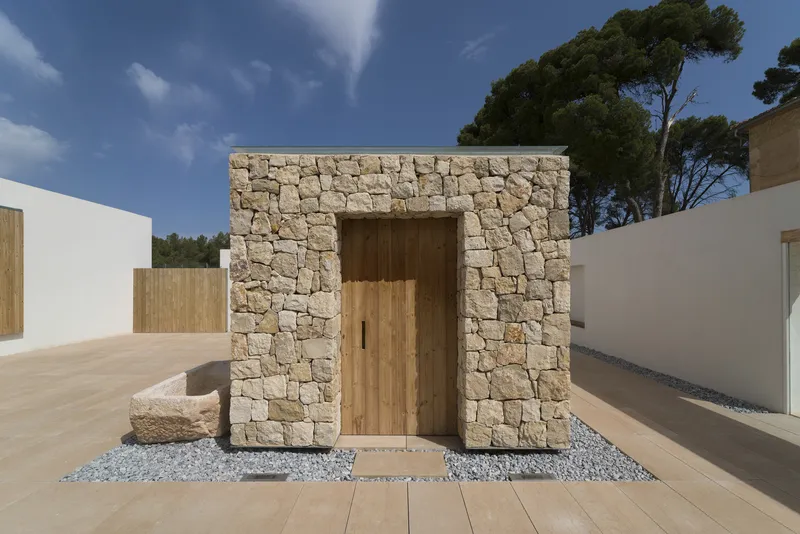
The design rejects artificial boundaries. Instead, it embraces gradients—between inside and out, between old and new, between shelter and openness. This is the essence of vineyard house architecture at its most refined: a lifestyle that flows with the terrain, the climate, and the culture of place.

A Contemporary Interpretation of Vineyard House Architecture
Through the Vineyard House, NŌ Architects deliver a profound reinterpretation of vineyard house architecture for the 21st century—minimal yet rooted, restrained yet deeply emotional. The project honors its rural setting without mimicry, offering a modern vernacular that elevates both craft and context.
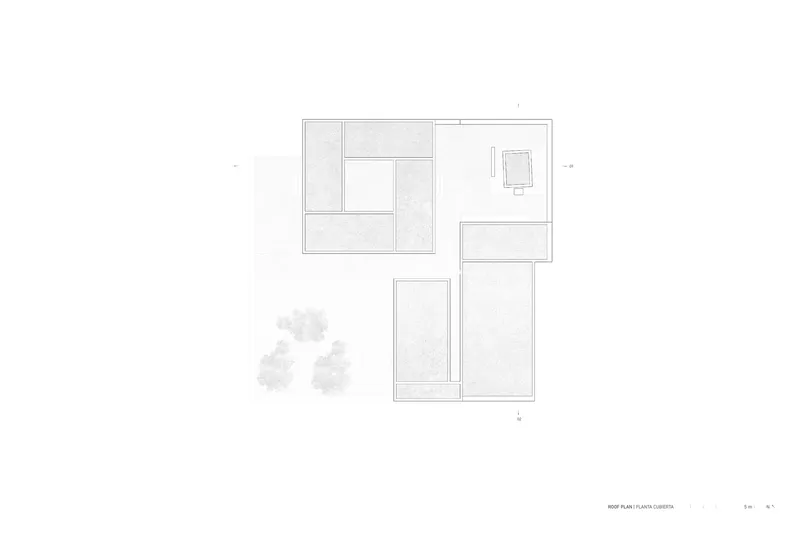


Every line drawn, every material selected, and every opening carved speaks to a humble but powerful architectural philosophy—one that honors the earth, engages the senses, and invites a slower, more conscious way of dwelling. In this house, architecture becomes a vessel for memory, light, and land.


All Photographs are works of Adrian Mora Moroto


Popular Articles
Popular articles from the community

Temporary Home for Dogs: A Reversed Zoo Rethinks Animal Shelter Architecture
In Bucharest, a sinuous corridor and freed landscape flip the logic of containment, designing a shelter that works to make itself unnecessary.
Faces of the Soviet Avant-Garde: Turning Moscow's Street Names into an Open-Air Museum
A network of sculptural installations across a Moscow residential district transforms forgotten architect names into spatial encounters with cultural memor

Opera by the Sea Estonia: Three Shells Dissolving Architecture into Tallinn's Coastline
A winning opera house proposal replaces monumental form with interconnected shells that blur the boundary between building, park and Baltic Sea.

Manzana Morphosis: Stretching Barcelona's Grid into a Living Landscape for 2050
A radical reworking of the Eixample manzana turns density into a tool for generous public space, vertical ecology, and environmental performance.

Similar Reads
You might also enjoy these articles


FAMM Arquitectura Organizes Ten Villas Around Courtyards and Jungle in Nosara, Costa Rica
El Molino pairs two elongated volumes with deep overhangs and timber louvers to build a compact coastal community five minutes from the beach.
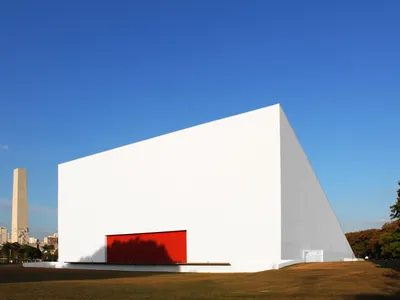
Oscar Niemeyer's Ibirapuera Park Pavilions Define São Paulo's Cultural Identity in Concrete and Curve
A constellation of modernist volumes set within São Paulo's most important urban park, conceived for the city's 400th anniversary in 1954.
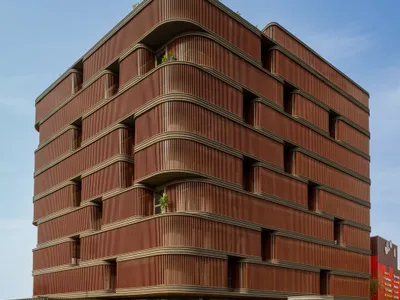
Sanjay Puri Architects Wraps a Jaipur Office Tower in Capsule-Shaped Green Buffers
A nine-level climate-responsive workplace near Jaipur Airport uses stacked planter terraces and aluminium screens to fight 40°C heat.
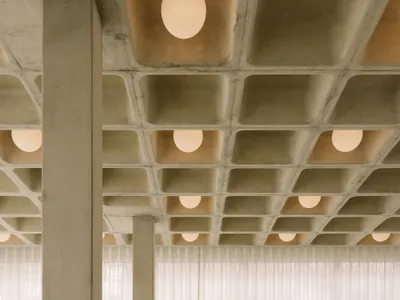
RHO Converts a Berlin Spree-Side Industrial Courtyard into Enkime's 1,000 m² Agency Headquarters
A social media agency's new home in Charlottenburg trades glossy branding for concrete waffle ceilings, glazed tile, and sheer curtains.

Explore Wineyard Competitions
Discover active competitions in this discipline

Challenge to reimagine the Iron Throne

Photograph architecture without architects

Illustrate the lost glory of Angkor Wat - Render Challenge

Design challenge to reuse E-waste
Comments (0)
Please login or sign up to add comments
No comments yet. Be the first to comment!