

Vitro: A Living, Breathing Space Station That Responds to Music, Mood, and Motion
A shortlisted entry reimagines orbital architecture as a fluid, emotionally intelligent organism built from slime-like materials and audio-reactive surface


What if a building could listen to music and reshape itself in response? Vitro proposes exactly that: a recreational-cultural station in orbit where architecture abandons permanence altogether, replacing rigid walls with viscous, gelatinous membranes that stretch, divide, and reorganize in zero gravity. Across three interconnected bubble environments, the station reads occupant behavior, sonic frequencies, and spatial movement to morph its surfaces in real time. It is not a container for activity; it is an active participant in it.
Designed by Mastoureh Mousavi, Vitro was shortlisted in the UnIATA '19 competition. The project draws on Greg Lynn's theories of animated form, environmental theater, and advanced digital simulation to explore what architecture becomes when gravity, solidity, and static enclosure are removed from the equation. Through metaball simulations, audio-reactive logic, and frame-by-frame material analysis, Mousavi builds a compelling argument that space architecture must be as adaptive and unpredictable as the humans who inhabit it.
A Sensory Chamber That Moves When You Do
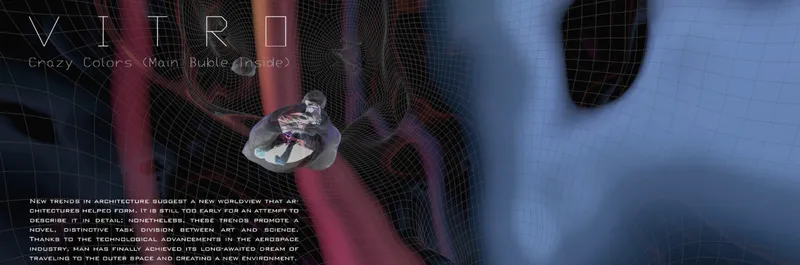
The first spatial node, called Crazy Colors, functions as a theatrical sensory chamber. Envisioned as the station's primary interior bubble, it constantly adapts its shape and color palette to user presence and behavior. The gridded bubble form shown in the rendering contains a lone figure surrounded by radiating color fields, conveying the idea that this is not a room you enter but an environment that activates around you. Advanced software simulations drive the evolution of these forms, testing states of constant transformation rather than fixed geometry.
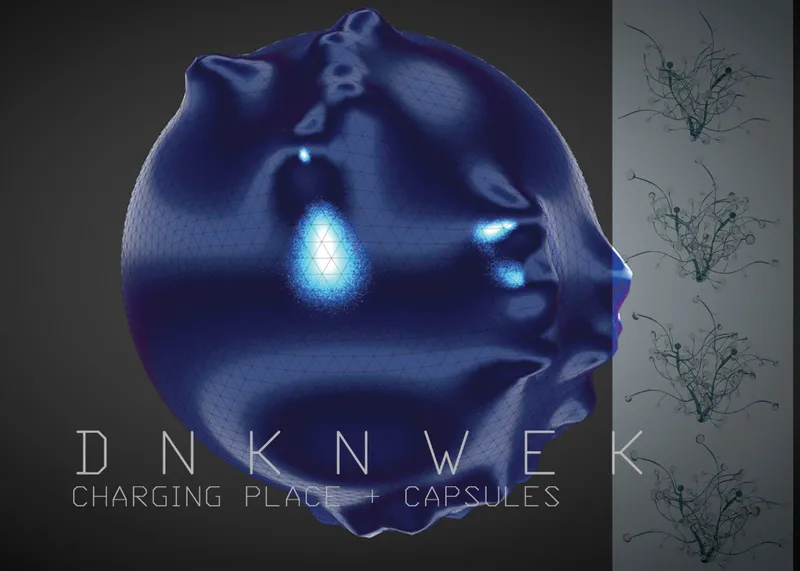
What makes this space radical is its refusal to be passive. Digital animation and augmented environmental data feed the bubble's behavior, making it a responsive organism that interprets both internal occupant signals and external orbital data. The blue bulbous capsule form, with its illuminated openings and iterative sketches visible alongside, reveals Mousavi's design process: a progression from conceptual blob to a technically considered envelope that can visualize information through spatial deformation.
Slime as Architectural Material: The Clastic Space
The second zone, Clastic Space, is where the project's material logic becomes most provocative. Drawing directly from Greg Lynn's challenge to architectural stasis, Mousavi selects slime as a primary design inspiration for its capacity to stretch, deform, and adapt to pressure and flow. In zero gravity, these material behaviors become even more radical. Metaball simulations model how modular pods and capsules might drift, collide, and dynamically reorganize within the larger bubble, replacing rigid partitions with fluid spatial boundaries.
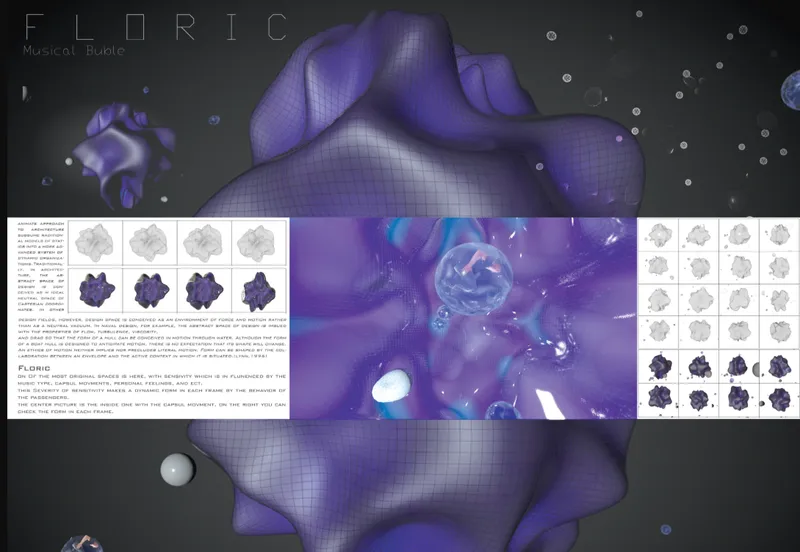
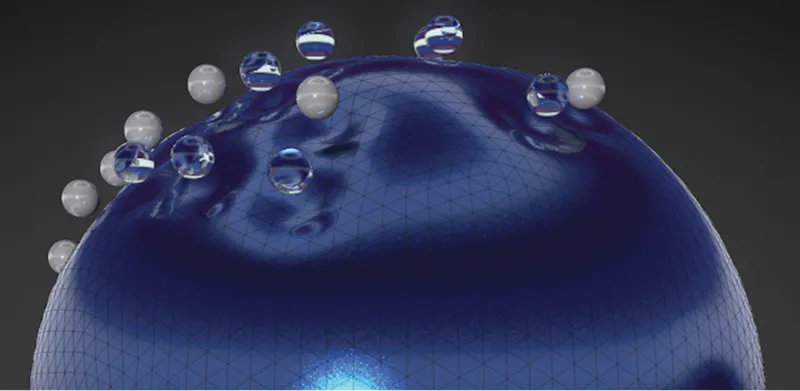
The presentation board reveals this development clearly: purple bubble-like capsule renderings sit alongside interior views and design development diagrams that trace the evolution of form through frame-by-frame analysis. The close-up of the gridded blue capsule surface, with its transparent and opaque spherical protrusions, shows how the membrane negotiates between enclosure and porosity. Clastic Space serves as a transitional corridor, parsing spatial functions into zones that are never fixed, only momentarily stable.
Architecture That Hears: The Audio-Reactive Musical Bubble
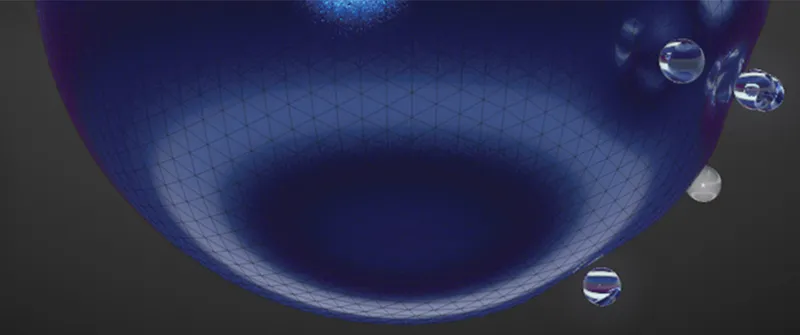
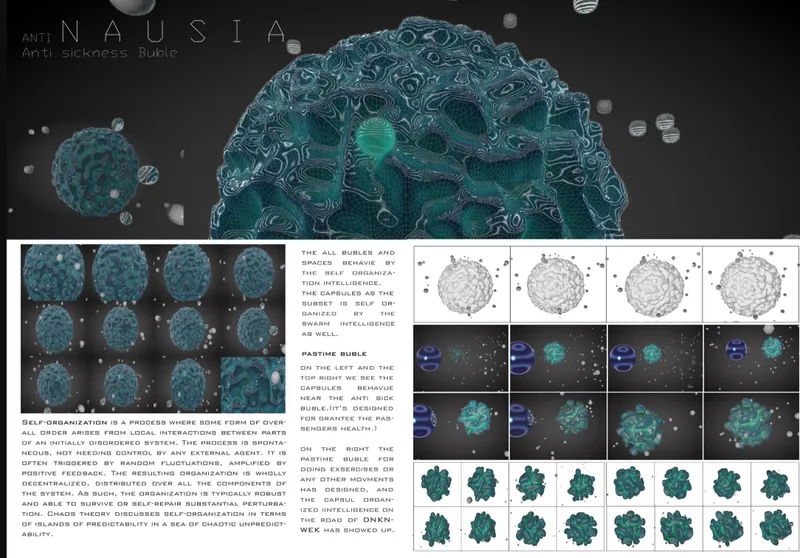
The most experimental zone in the station, called Floric or the Musical Bubble, introduces what Mousavi describes as emotionally intelligent architecture. The capsule at its core reads the music, mood, and movements of its occupants and reshapes its surface topology accordingly. Audio-reactive design logic translates sonic frequencies into spatial deformation, making architecture performative and kinetic. The detail view of the curved blue membrane with its illuminated underside and floating sphere elements captures this quality: a surface that seems to vibrate, to hover between states, never settling into a single configuration.
The final presentation board, displaying the turquoise porous bubble structure with plan diagrams and rendering sequences below, maps out the system's operational logic. What emerges is a space where the boundary between occupant and architecture dissolves. Music becomes form. Movement becomes enclosure. The station does not simply house cultural activity; it becomes the cultural experience itself, generating new spatial configurations with every sound and gesture.
Why This Project Matters
Vitro is significant not because it offers a buildable blueprint for an orbital station, but because it forces a fundamental question: what happens to architecture when you remove the ground? Mousavi's answer is that architecture must become responsive, fluid, and emotionally attuned. By grounding speculative design in real material behaviors (viscous deformation, metaball dynamics, audio-reactive surface logic), the project avoids the trap of pure fantasy. Each bubble zone is developed through rigorous digital simulation, giving the proposal a technical backbone that supports its imaginative ambition.
As space architecture transitions from speculative exercise to genuine design challenge, projects like Vitro establish critical conceptual territory. They argue that psychological comfort, sensory richness, and social interaction in isolation are not secondary concerns but the primary drivers of spatial design beyond Earth. Mousavi's work, recognized as a shortlisted entry in UnIATA '19, demonstrates that the next generation of designers is already thinking past the engineering problem and into the human one: how do we make life in orbit not just survivable, but worth living?
View the Full Project
About the Designers
Designer: Mastoureh Mousavi
Enter a Design Competition on uni.xyz
uni.xyz runs architecture and design competitions year-round that reward proposals with spatial conviction and real site intelligence.
Project credits: Designing a Recreational-Cultural Station in the Space Through Studying the Transformation of the Concept of the Archite by Mastoureh Mousavi UnIATA '19 (uni.xyz).


Popular Articles
Popular articles from the community

Tsunami Convergenics: Turning Catastrophic Ocean Forces into Underwater Housing Infrastructure
A speculative underwater settlement off the coast of Onagawa, Japan, treats tsunamis and typhoons as energy sources rather than threats.

Singing Woman: An Opera House That Performs Before the Curtain Rises
Ovidiu Cristian Pavel's conceptual opera house translates Estonia's choral identity into a sculpted waterfront landmark facing the Baltic Sea.

Opera on the Sea: Driftwood Logic Shapes a Timber Opera House on Estonia's Coast
Trevor Orgill's opera house translates the entangled drift of floating timber into a civic building where wood, water, and music converge.

Opera by the Sea Estonia: Three Shells Dissolving Architecture into Tallinn's Coastline
A winning opera house proposal replaces monumental form with interconnected shells that blur the boundary between building, park and Baltic Sea.

Similar Reads
You might also enjoy these articles

Shakur's House: Exposed Brick as an Interior Organiser in a 168 m² Mashhad Residence
Brick moves indoors in this Mashhad residence, where masonry walls, glass partitions and teal planes sequence a compact home without closing it off.

Day and Night Park: A Time-Based Urban Newsstand in Beijing
A temporary urban newsstand in Beijing blending travel, light, and reading through poetic colors, compact form, and community-focused design.

Modernist Patio Renovation in El Masnou, Barcelona by Oliver Segura Arquitectura + Cebrià Arquitectura
Modernist patio renovation blending tradition and innovation with a movable pool, leveled floors, and Catalan materials in El Masnou.

Alto Residencial Coop: Cooperative Housing Development in Santiago de Compostela by Carbajo Barrios Arquitectos
A linear cooperative housing complex blending white volumes and perforated metal façades, enhancing community living, natural light, privacy, and urban integration.


Comments (0)
Please login or sign up to add comments
No comments yet. Be the first to comment!