
VLOT Architecten Builds a 560 m² Rural Home on a Cow Shed's Manure Pit in Brandwijk
Two zinc-and-timber volumes arranged in an L shape frame the quiet Dutch polder landscape through carefully gridded openings.


What do you do with the concrete remains of a cow shed's manure pit? Most architects would demolish it and start fresh. VLOT architecten kept it, extended its walls upward by a meter, and turned it into the foundation of a 560 m² family house in Brandwijk, a small village in the South Holland polder. The decision was not sentimental but structural: the soft ground here demands lightweight construction, and a prefabricated timber frame sitting atop an existing substructure solved that problem elegantly.
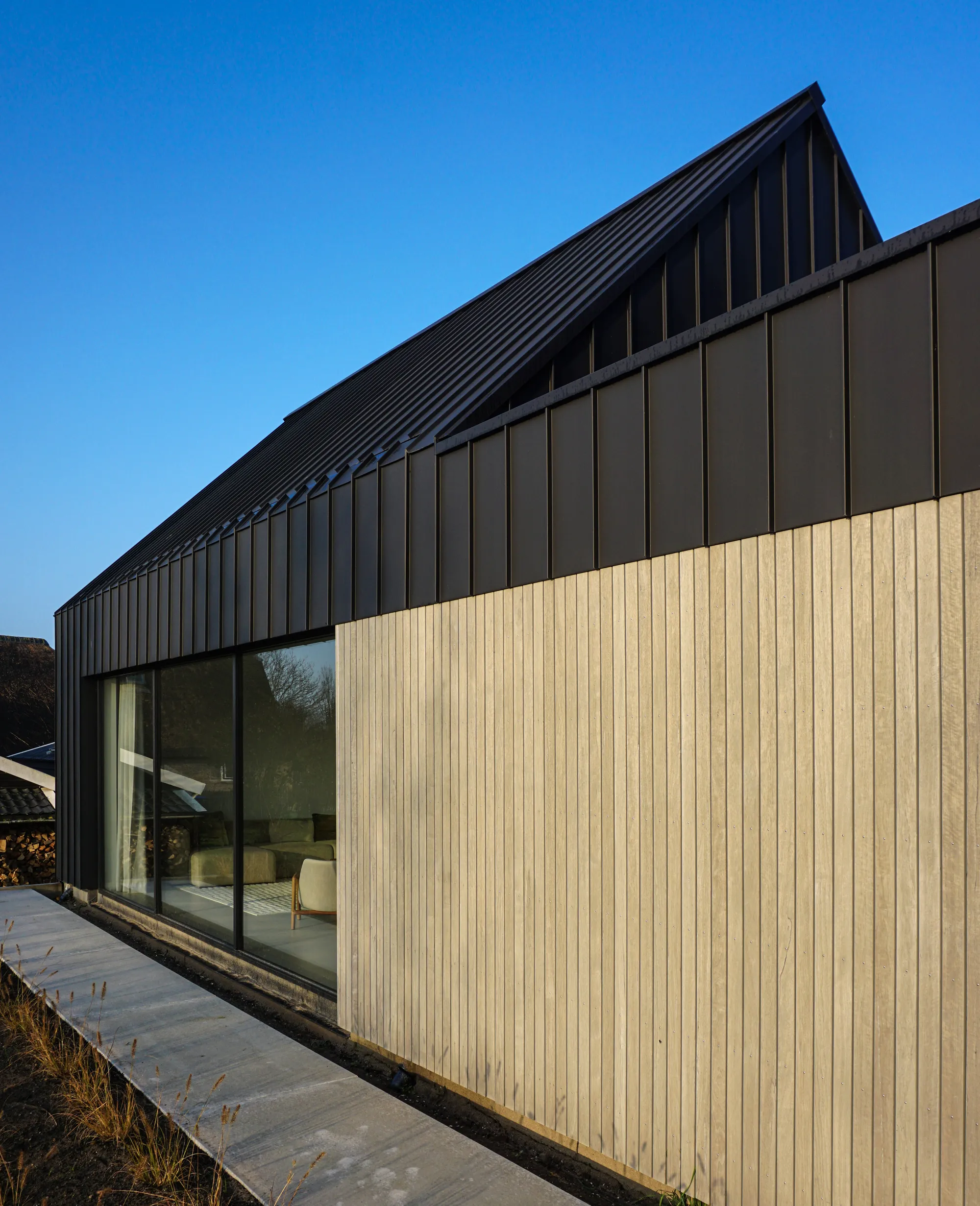
House B7 is organized as two gabled volumes arranged in an L. One wing holds bedrooms and bathrooms, following the direction of the surrounding landscape. The other contains the living and dining areas and runs parallel to the country road. Where the two volumes meet, a sheltered outdoor space forms, part courtyard, part terrace, fully oriented toward the open fields. Every window, every panel, every gap in the facade answers to a single 400mm grid that governs the entire design, from the custom-width zinc panels to the proportions of the largest openings.
Two Volumes, Two Directions
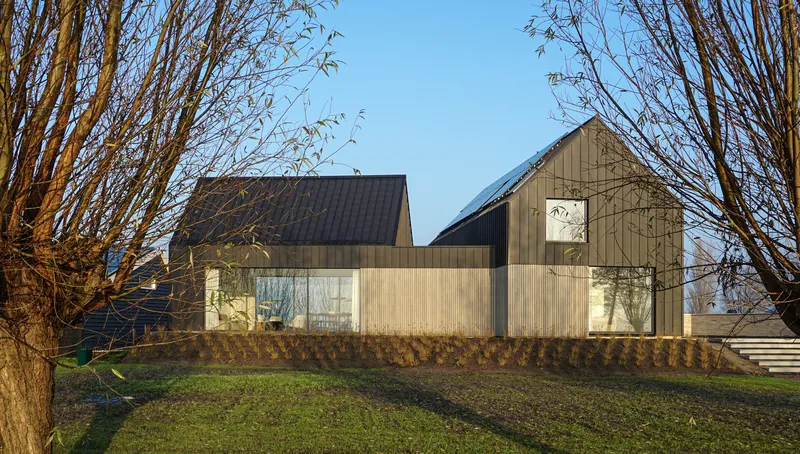
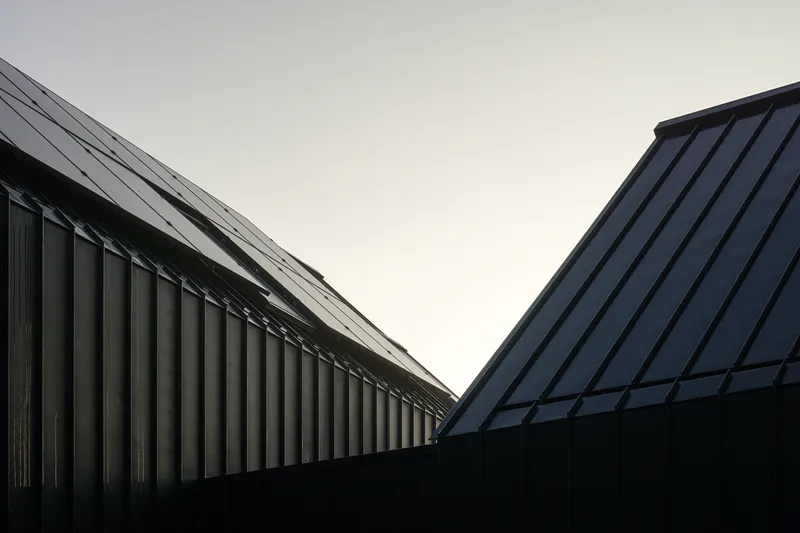
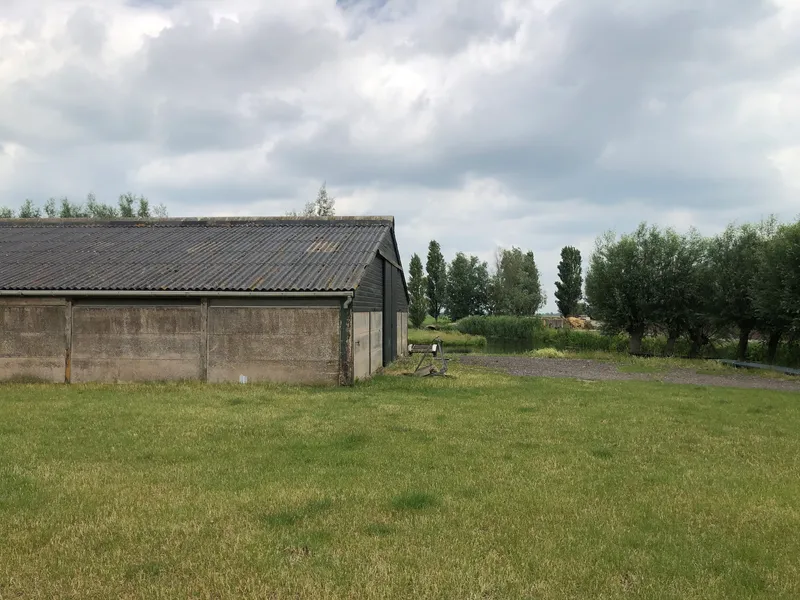
The two gabled forms read as distinct objects that have been carefully angled to respond to the site's two dominant orientations: the country road and the polder landscape beyond. Their rooflines meet in a sharp V, visible from the approach, signaling that this is not one building pretending to be a barn but two linked volumes with different programs and different relationships to the ground. The original cow shed is gone, but its footprint and infrastructure persist beneath the new house.
From the air, the L-shaped plan is legible as a strategy for creating shelter. The Dutch polder is flat and exposed, wind sweeps across it uninterrupted, and the two wings act as walls that define a protected outdoor room. It is a simple move with outsized effect.
A Facade Built on a Grid
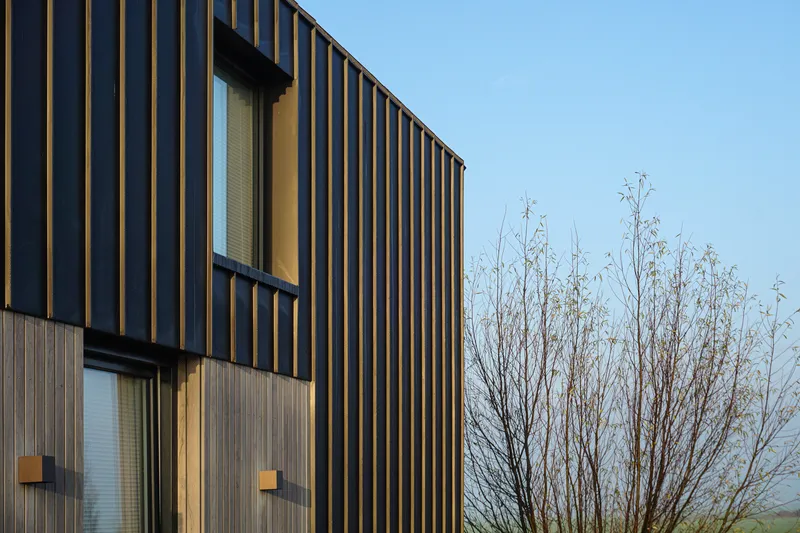
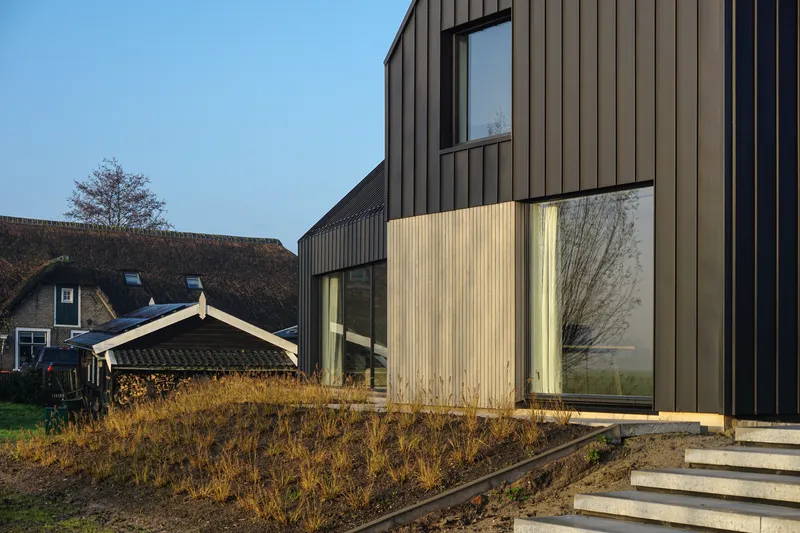
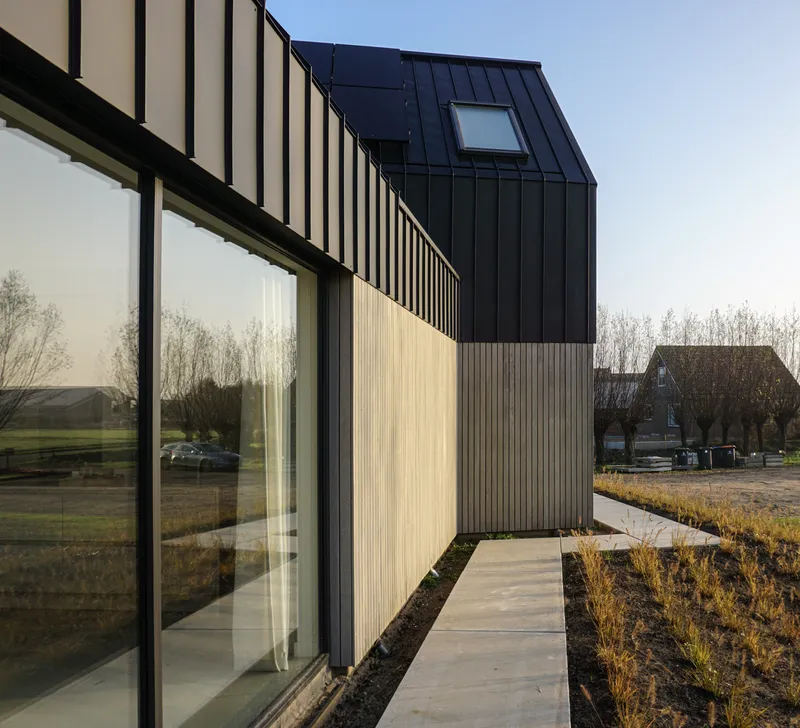
The 400mm module is the project's secret discipline. Zinc panels are cut to exactly 400mm wide. Timber boards run 90mm with 10mm gaps between them. Large windows are sized as square multiples of the grid. The result is a facade that looks casual, almost agricultural in its plainness, but is in fact coordinated down to the millimeter. Dark NedZink cladding wraps portions of the roof and walls, while lighter timber sections break up the mass and give the house a warmth that pure metal would deny it.
The planted beds at the base of the walls, filled with dried grasses and low planting, blur the line between building and ground. A concrete walkway traces the edge, functional but also a datum line that reinforces the horizontality of the composition.
Framing the Polder
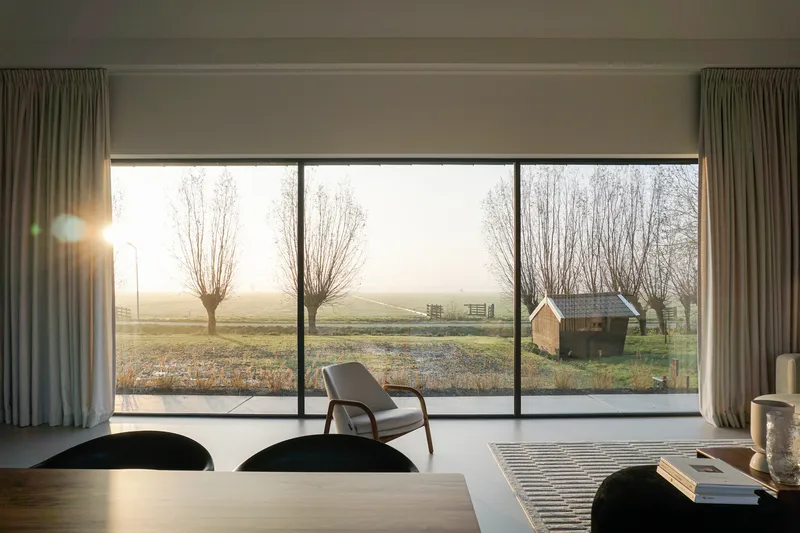
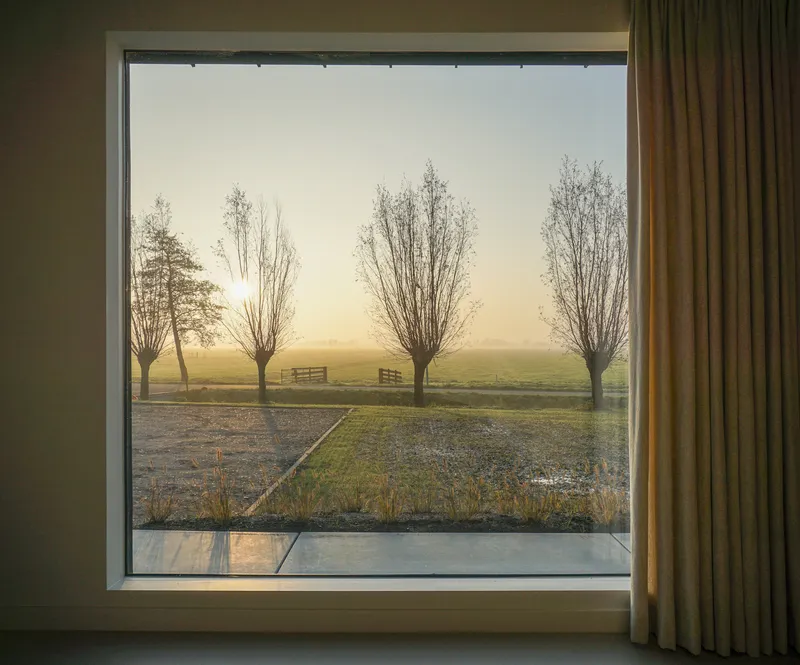
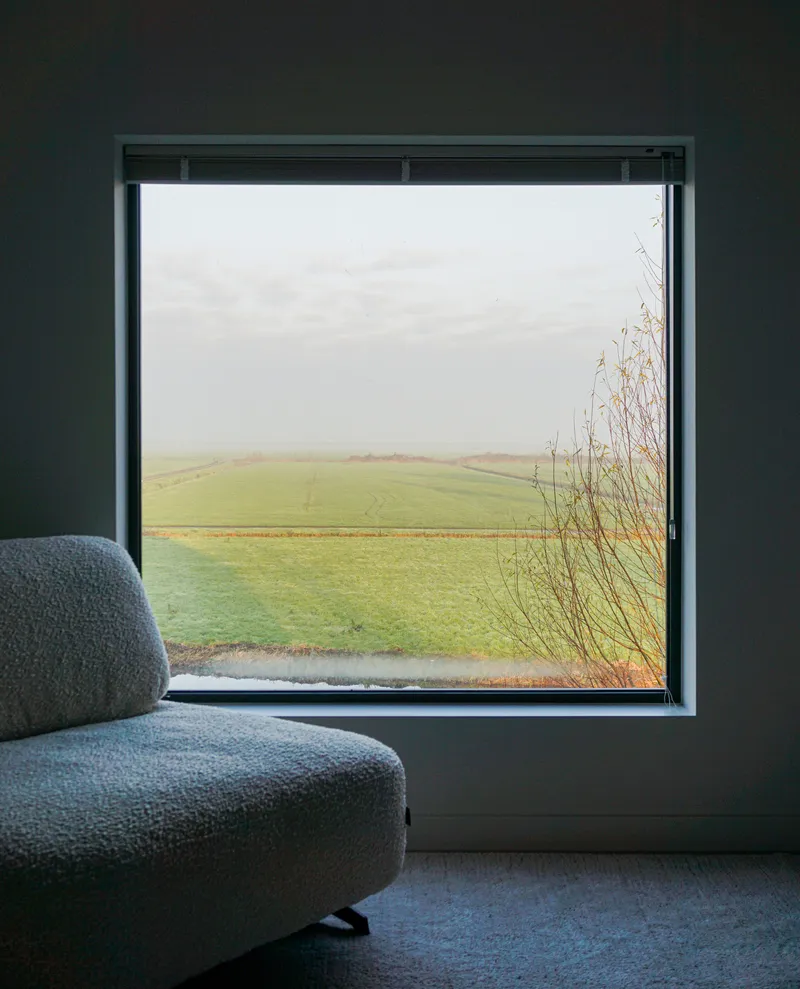
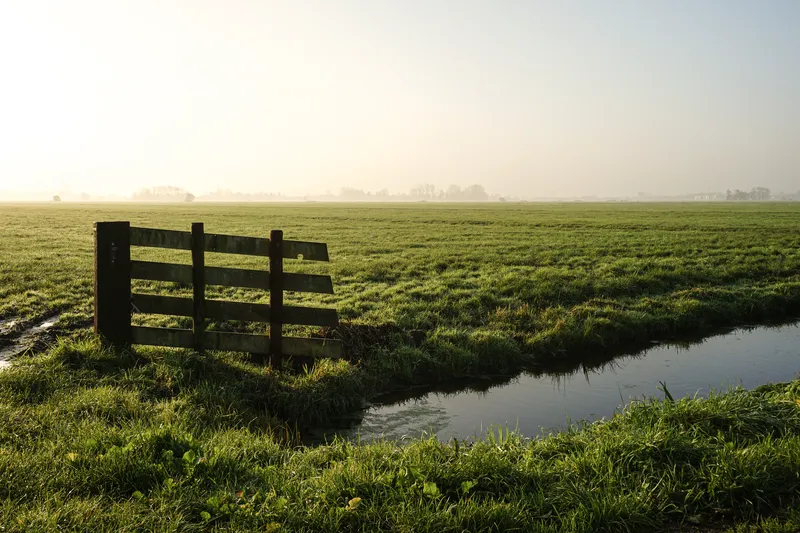
VLOT architecten positioned windows not for light alone but for specific views. The living and dining volume contains two horizontal openings, each six meters wide, that allow you to see straight through the house from the country road to the landscape beyond. Other openings are more intimate: a square window seat overlooks green farmland, a bedroom frame captures four pollarded willows standing in a frosty field at dawn. The windows are not decorative; they are instruments for selecting what the landscape offers.
The effect is cinematic. Mist rolls across the pasture, pollarded trees stand like sentinels, drainage canals catch morning light. None of this is accidental. The orientation of each volume was determined by the landscape directions VLOT identified early in the design process, and the window positions follow from that logic.
Living Under the Ridge
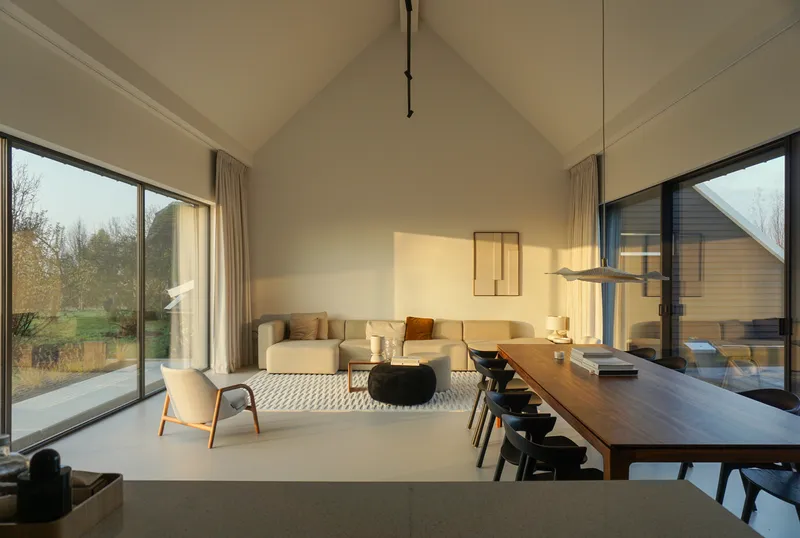
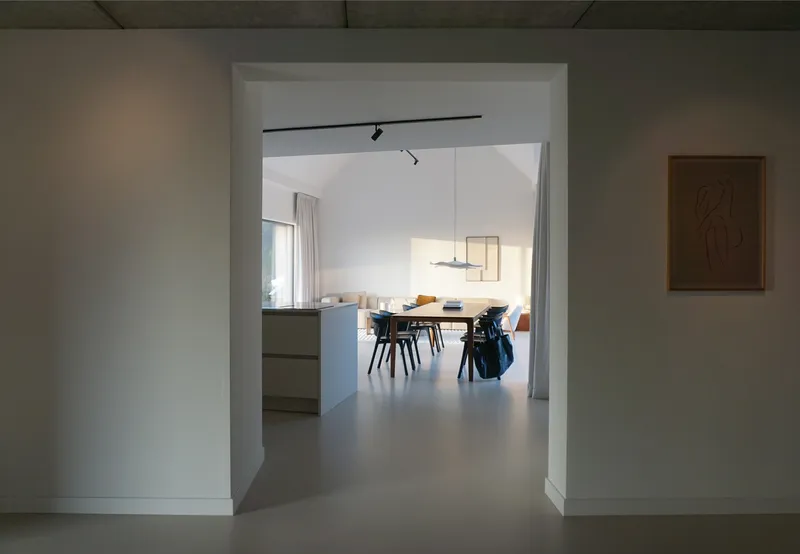
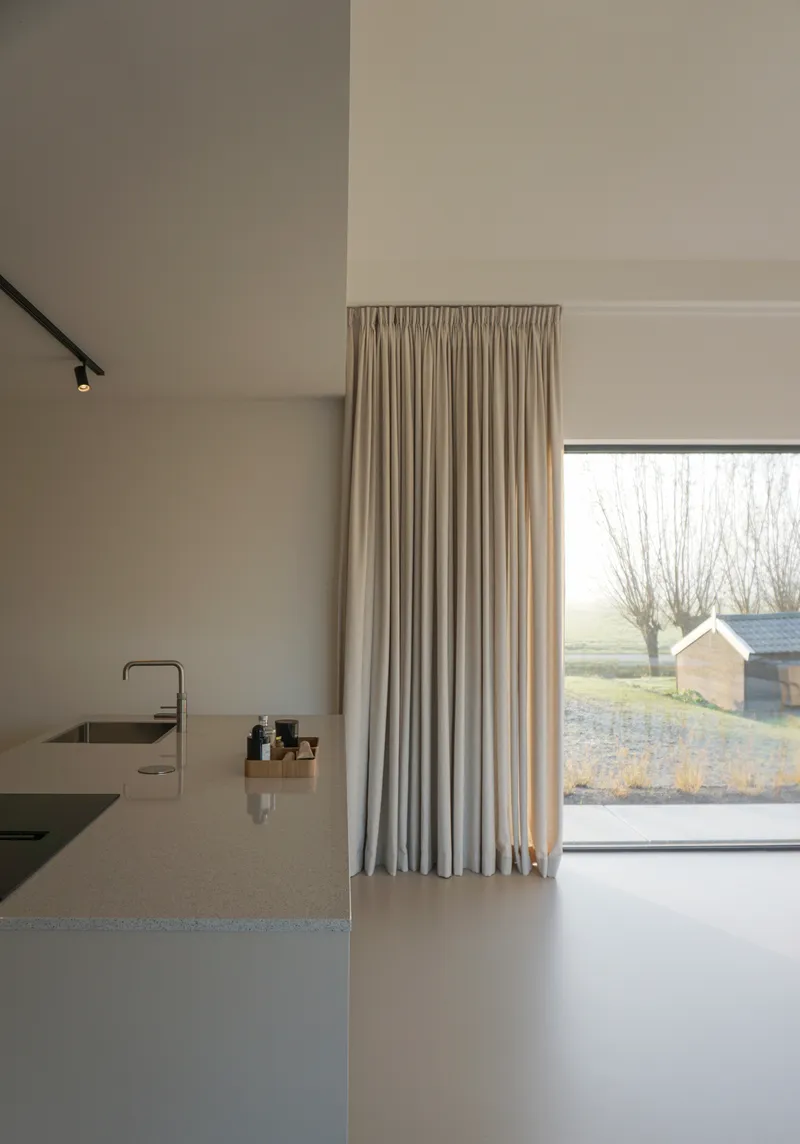
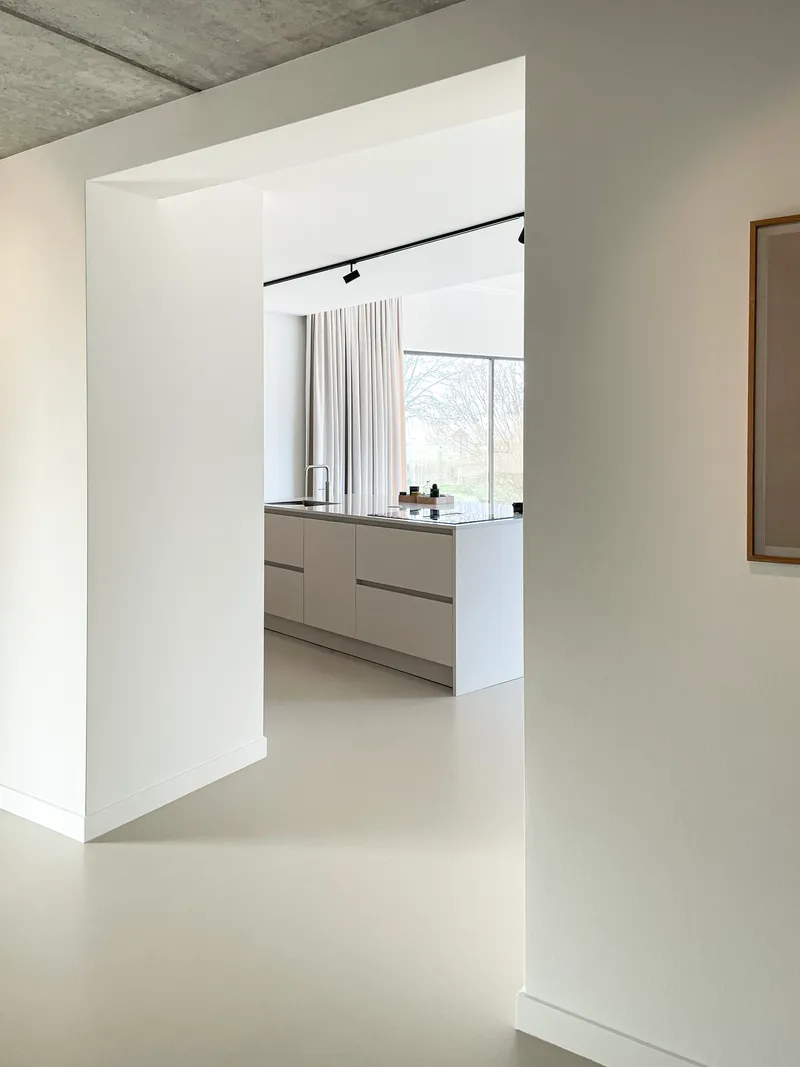
Inside, the vaulted plywood ceiling of the living wing reveals the timber structure and gives the open-plan space a generous vertical dimension. Materials are kept deliberately restrained: pale resin floors, linen curtains, exposed concrete where the old manure pit walls have been extended. A kitchen island with an integrated sink sits beneath a large window, turning the most utilitarian room in the house into a lookout post over the winter landscape.
The threshold between the two volumes is marked by a shift in ceiling material, from plywood to exposed concrete, and a subtle change in floor level that acknowledges the transition from the living program to the bedroom wing. It is a moment of compression that makes the spaces on either side feel more expansive.
Thresholds and Terrain
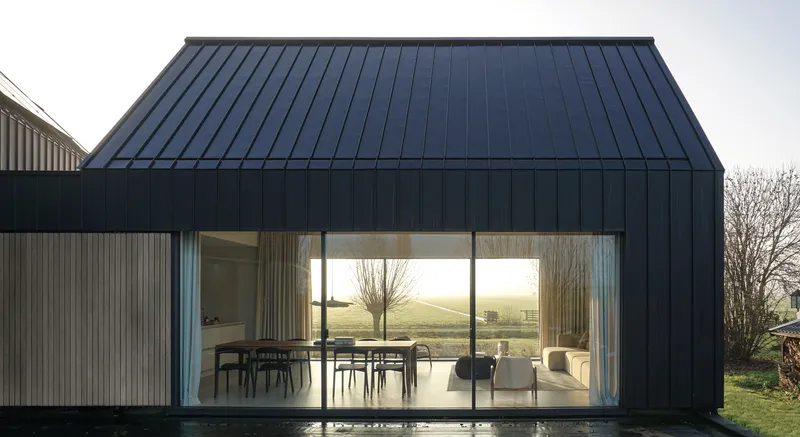
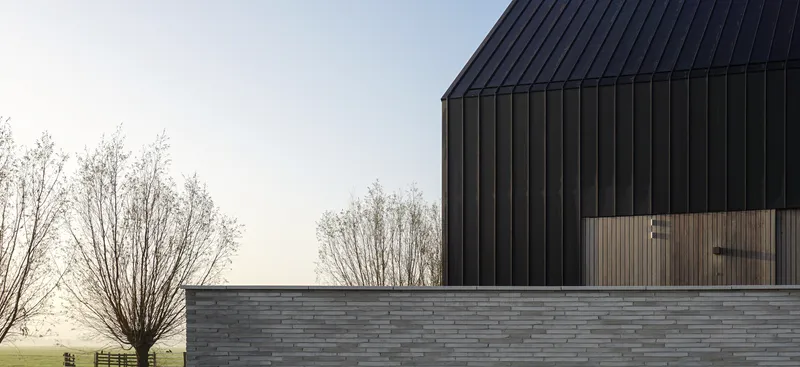
The full-height glazed wall opening onto the terrace collapses the boundary between indoors and out. In summer, the living room extends into the sheltered courtyard; in winter, the glass wall becomes a screen for watching weather move across the polder. The horizontal stacked stone base wall beneath the dark cladding anchors the building to the earth and recalls the agricultural structures that preceded it.
The manure pit's concrete walls, extended one meter upward, create a semi-embedded lower level that adds a layer of living space below the main floor. This move turns a liability, the remnant of a demolished barn, into a spatial asset, adding depth and complexity to a plan that reads as simple from the outside.
Construction and Prefabrication
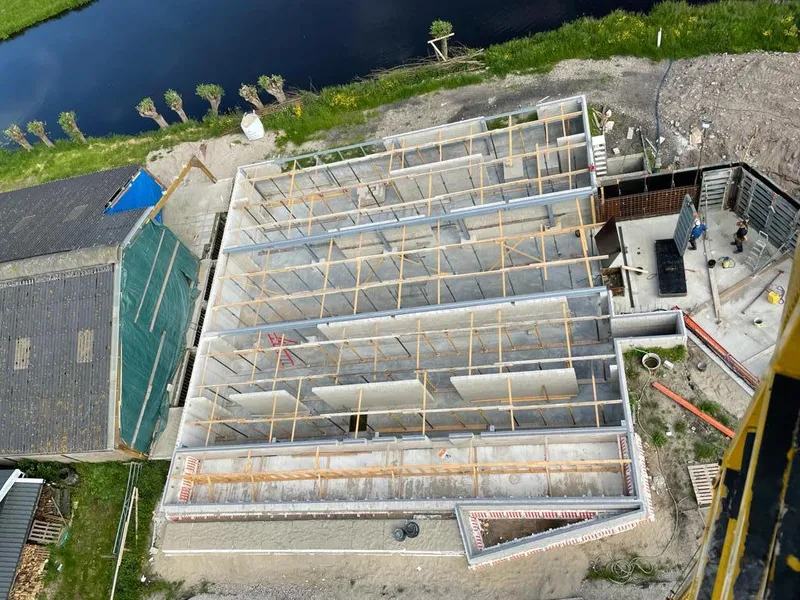
An aerial photograph taken during construction reveals the timber frame laid out beside the canal, its regularity confirming the modular discipline. Prefabrication was not an aesthetic choice but a practical one: the soft polder soil and the need for a lightweight superstructure meant that a timber frame, assembled off-site and craned into place, was the most rational solution. The 400mm grid ensured that every element, from structural members to cladding panels, could be manufactured with minimal waste.
Plans and Drawings
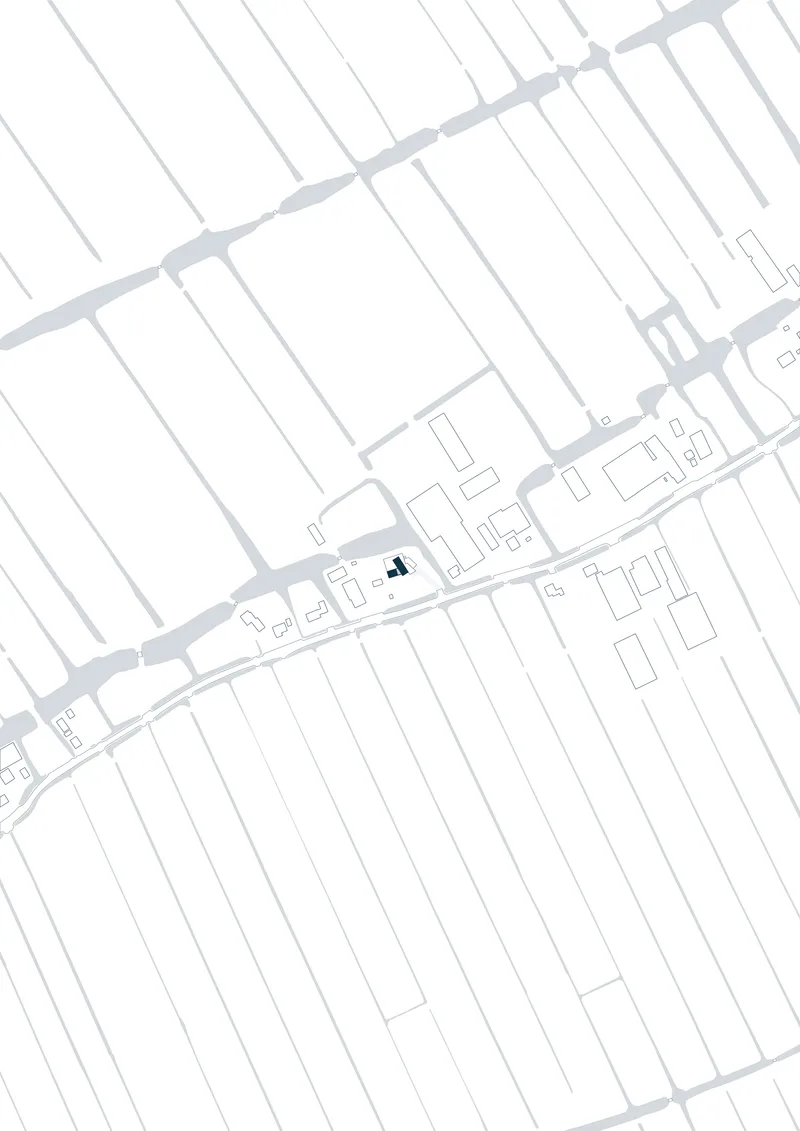
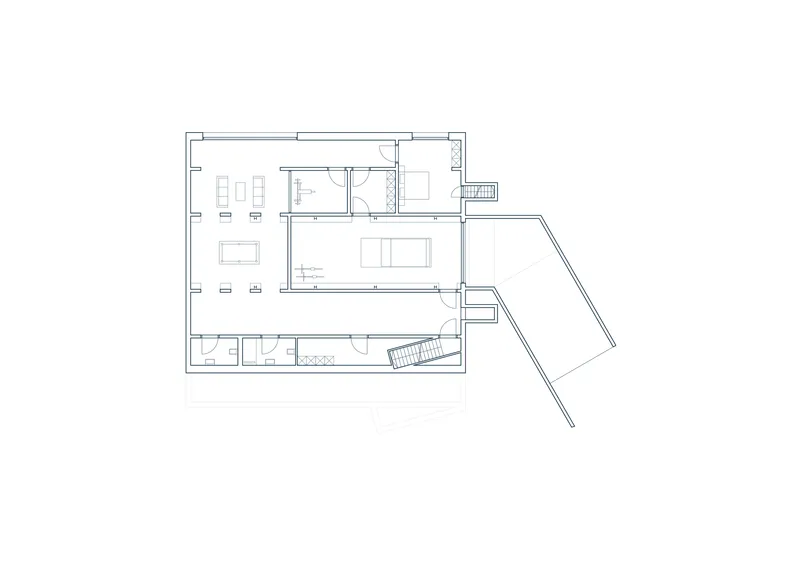
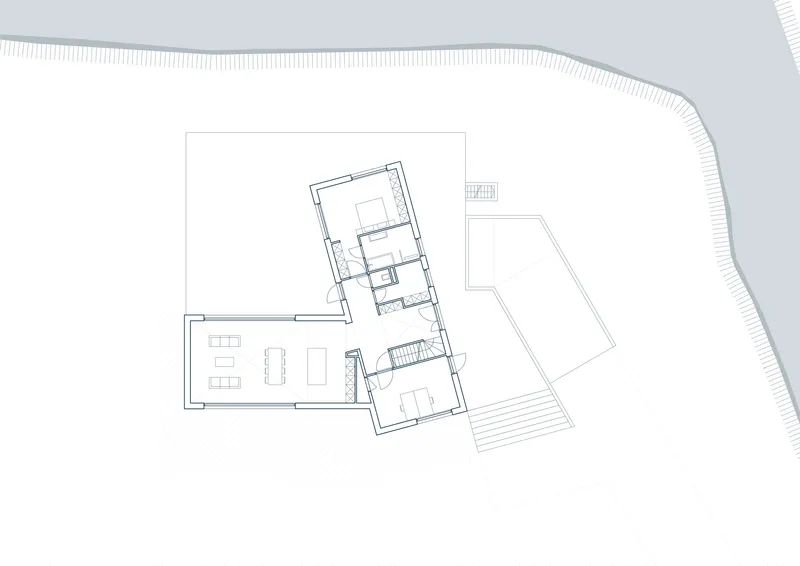
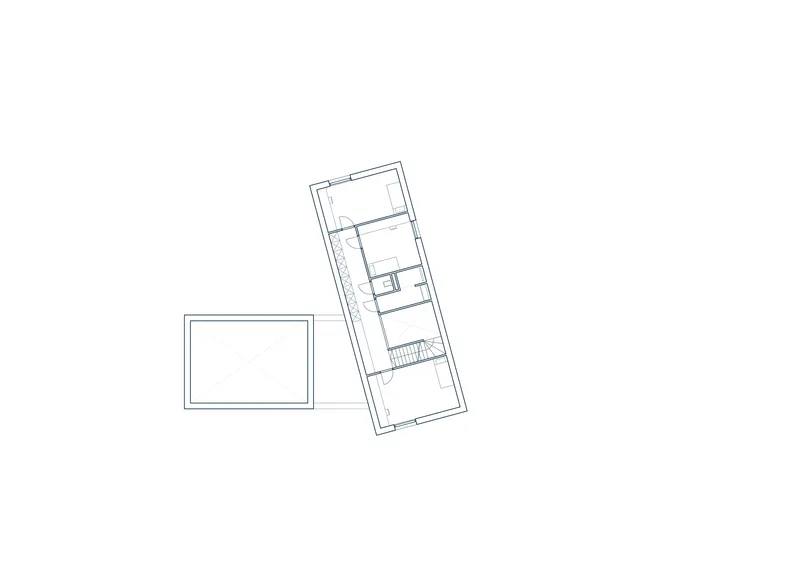
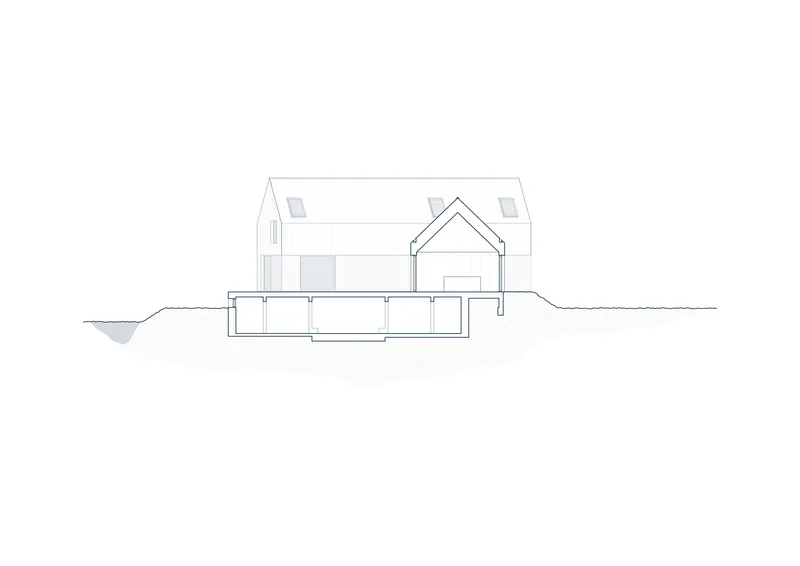
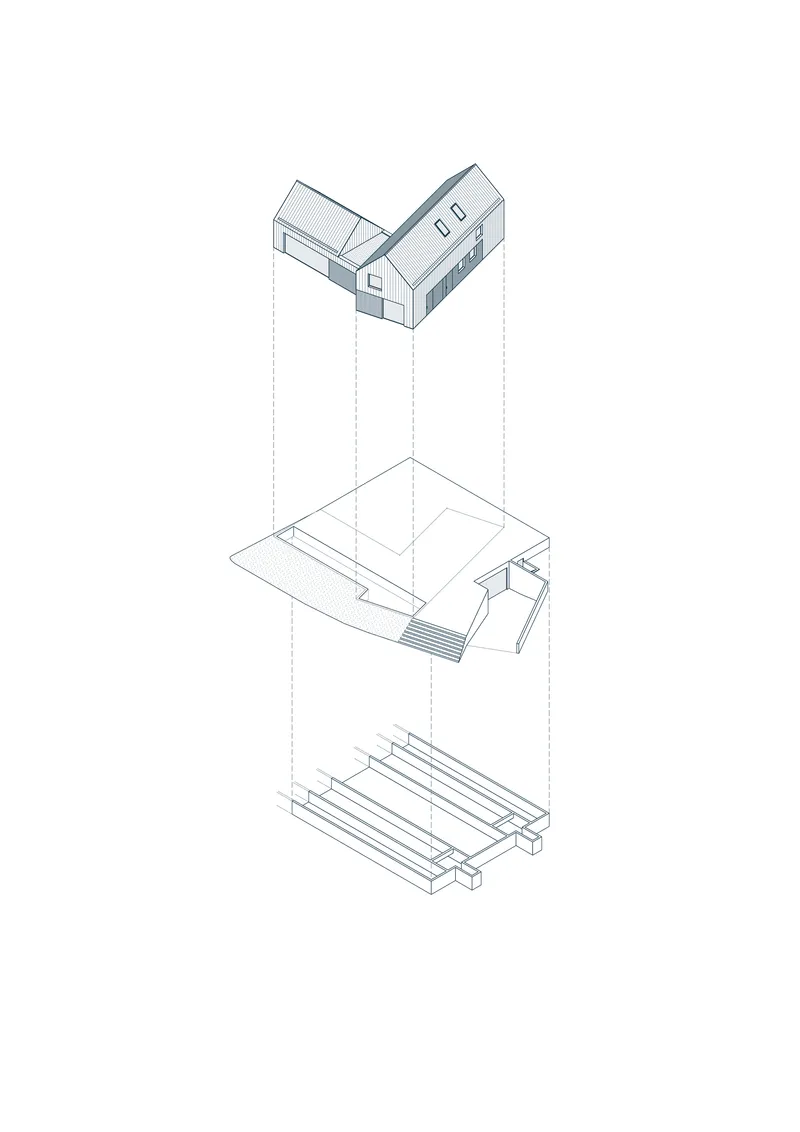
The drawings make the L-shaped strategy explicit. The site plan shows the building positioned along a diagonal street, angled to capture the longest views across the polder. The ground floor plans reveal how the two volumes overlap at a central circulation zone, with the bedroom wing stepping down to follow the terrain. The section confirms what the interior photographs suggest: the gabled form is partially embedded in sloping ground, with the extended manure pit walls creating a lower level that is neither basement nor ground floor but something in between. The exploded axonometric is especially instructive, showing the layered relationship between the old foundation, the new ground floor, and the upper gabled volume.
Why This Project Matters
House B7 is a quiet argument for designing with what is already there. The manure pit could have been filled in and forgotten. Instead, it became the generator of the project's spatial section and its structural logic. VLOT architecten did not romanticize the agricultural past of the site; they absorbed its physical infrastructure and built something new on top of it. The 400mm grid, the prefabricated timber frame, the zinc and timber cladding: all of these are contemporary choices, but they sit on a foundation that is entirely specific to this plot of polder land.
The project also demonstrates that rigorous modular thinking does not have to produce rigid architecture. The grid is everywhere, yet the house feels relaxed, even loose in its relationship to the landscape. Windows open where views demand them. Volumes angle where the site suggests it. The discipline is in the system; the freedom is in its application. For a 560 m² house in a village of a few hundred people, that balance is exactly right.
House B7 by VLOT architecten. Brandwijk, The Netherlands. 560 m². Completed 2022. Photography by VLOT architecten.
About the Studio
Share Your Own Work on uni.xyz
If projects like this are the kind of work you want to make, uni.xyz is a place to publish your own, find collaborators, and enter design competitions.


Popular Articles
Popular articles from the community


Conexión: Biophilic Design Reimagines High-Rise Living in Hong Kong
Conexión reimagines high-rise living in Hong Kong through biophilic design, green facades, shared spaces, daylight, water and nature within.

The Musturak Paradise: Senior Living Architecture for a Connected Future in Temara, Morocco
The Musturak Paradise reimagines senior living architecture in Temara via private homes, social spaces, culture, community, and shared care.

Lunar Spiral: Space Architecture Shaped by the Mathematics of the Universe
Lunar Spiral reimagines space architecture through Fibonacci geometry, lunar regolith, levitating habitats, and self-sustaining Moon living.

Play: Fragments of Their World
Familiar architecture becomes modular playground design, creating safe spaces where displaced children can learn, connect, imagine and play.

Similar Reads
You might also enjoy these articles

Bao Huynh Watercolor Atelier: A Serene Art Retreat in Hội An
Bao Huynh Watercolor Atelier in Hội An blends multifunctional art spaces, sustainable design, local materials, and family-friendly living in a serene environment.

Atelier Macri Concept Store Interior Design by CASE-REAL
Atelier Macri store features a "ko" counter, walnut wood details, cork displays, blending retail, gallery, and seamless customer experiences.

Manuel Vargas Izquierdo Stadium and High-Performance Sports Center: Architectural Excellence in Jalpa de Méndez
The Manuel Vargas Izquierdo Stadium blends sustainable design, inclusive sports facilities, and cultural-inspired architecture, revitalizing Jalpa de Méndez’s public spaces.
KAKR Buluh Awar Hall: Revitalizing Community and Ecology Through Bamboo Architecture
Community built bamboo hall revitalizes Buluh Awar village, empowering youth, restoring ecology, celebrating vernacular craftsmanship through sustainable architecture and culture.

Explore Residential Building Competitions
Discover active competitions in this discipline


Challenge to design mud housing for contemporary communities


Challenge to reimagine the Iron Throne


Photograph architecture without architects


Illustrate the lost glory of Angkor Wat - Render Challenge
Comments (0)
Please login or sign up to add comments
No comments yet. Be the first to comment!