
Volcano-In Visitor Center: PLAT ASIA in Inner Mongolia
PLAT ASIA built a 3,532 m² visitor center inside an extinct volcano in Inner Mongolia, with a three-lobed roof that follows the landform.


Inner Mongolia is full of geological scars that most architects would refuse to touch. The grassland is enormous and quiet, the winters are punishing, and the most dramatic landforms are extinct volcanoes that erupted long before any human history. The Volcano-In Visitor Center, completed in 2025 by PLAT ASIA in Xilingol League, is a 3,532 square metre building that sits inside the C-shaped curve of one of those extinct volcanoes, which last erupted around 150,000 years ago.
This is a difficult brief in every direction. The site is sacred to the local geology, the climate is brutal, the visitor program demands large interior volumes, and any built object risks becoming a foreign body in a landscape that has been undisturbed for millennia. Lead architect Bian Baoyang and the PLAT ASIA team responded with a building that tries to dissolve rather than dominate.
The Site
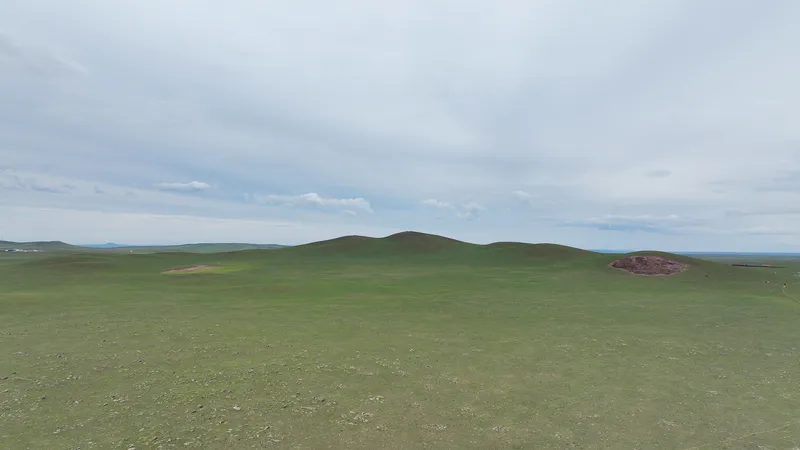
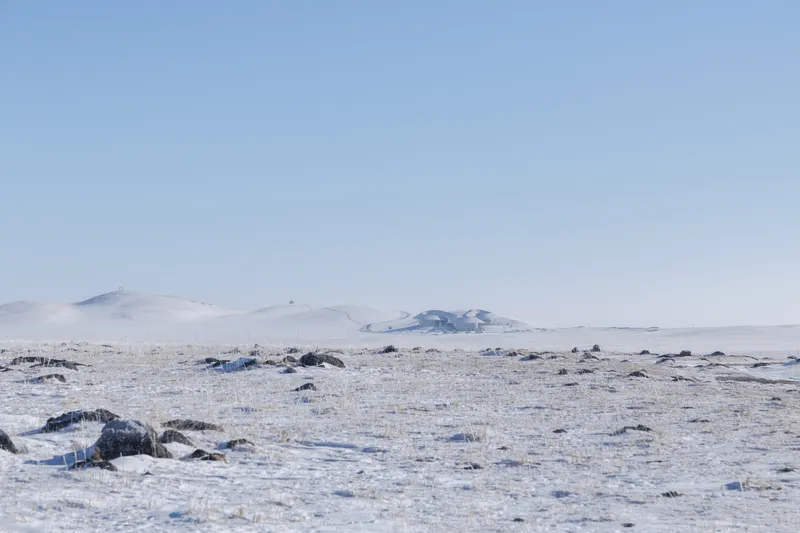
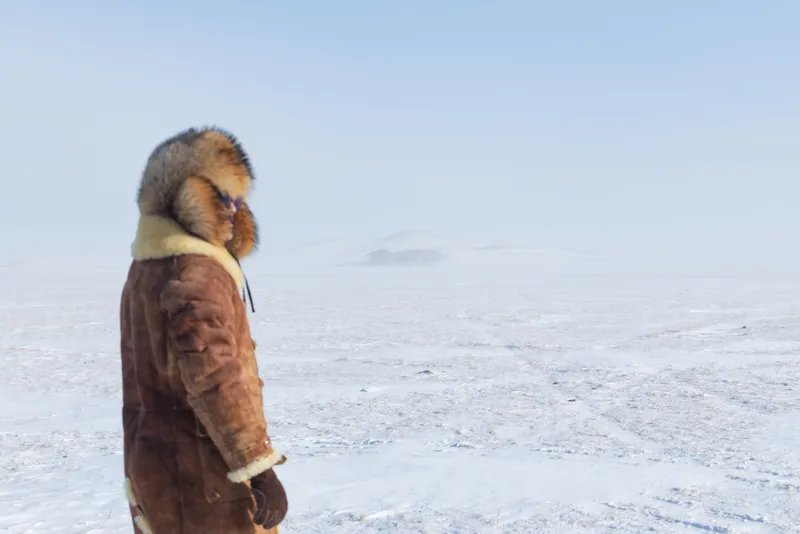
The original site photograph is the most useful starting point. The C-shaped volcano is a low rise in an otherwise empty grassland. There are no trees, no fences, no comparison points. In summer it is green. In winter it is white from horizon to horizon.
Building anything here means making decisions about visibility that most architects never have to confront. There is no neighbouring context to defer to and no street wall to align with. Every exterior surface will be seen from any angle and any distance. The architects accepted this and let it shape the geometry.
A Roof That Reads as Landform
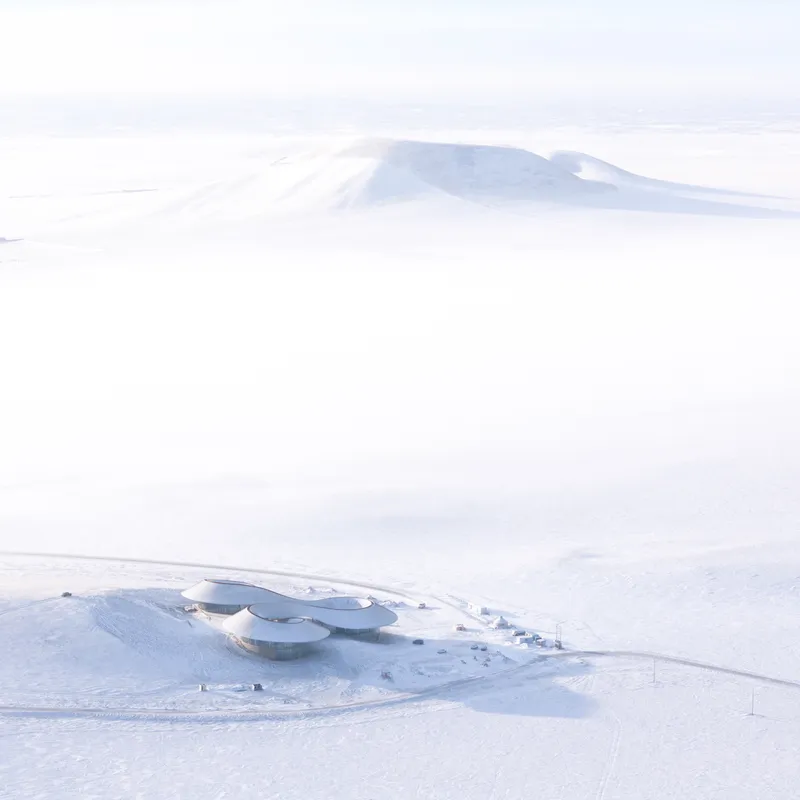
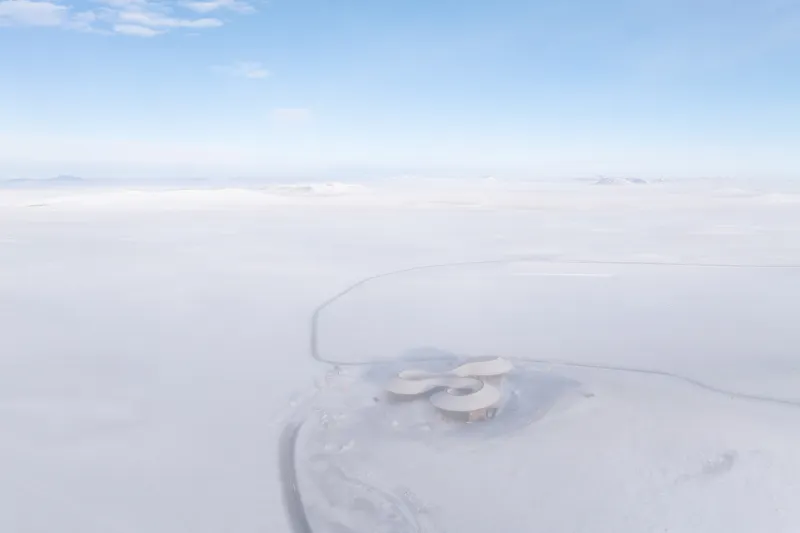
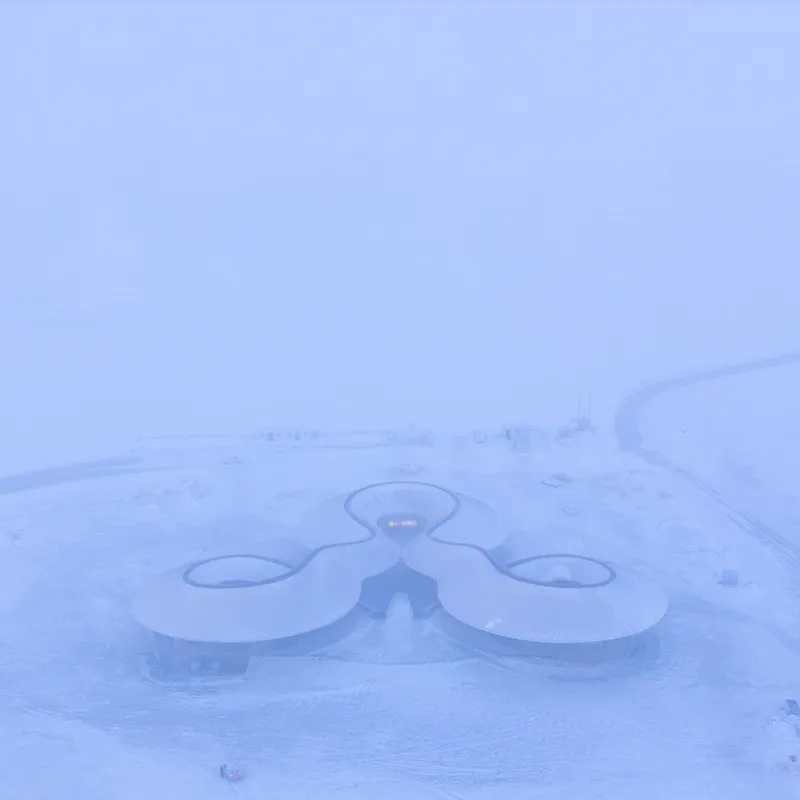
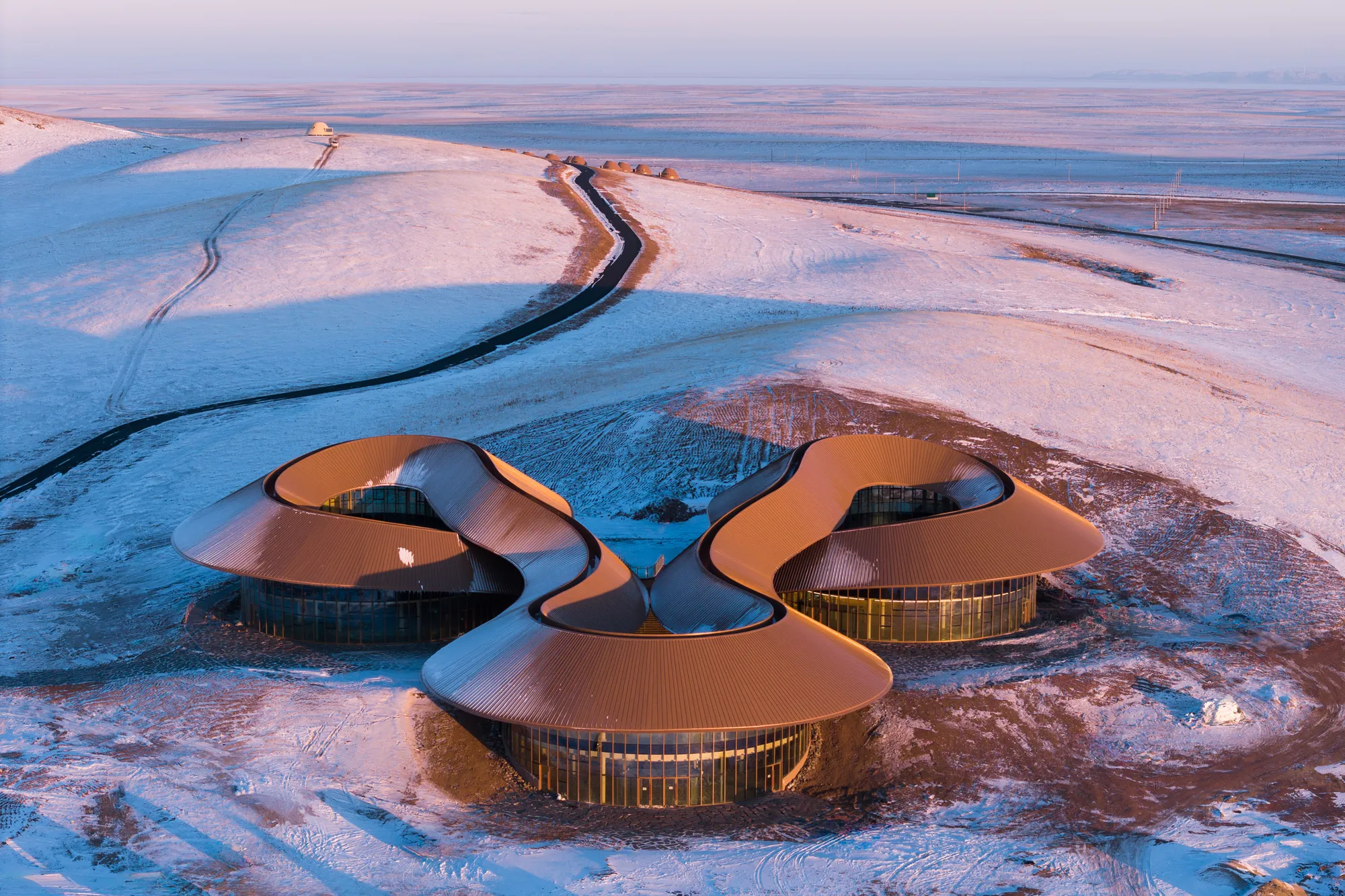
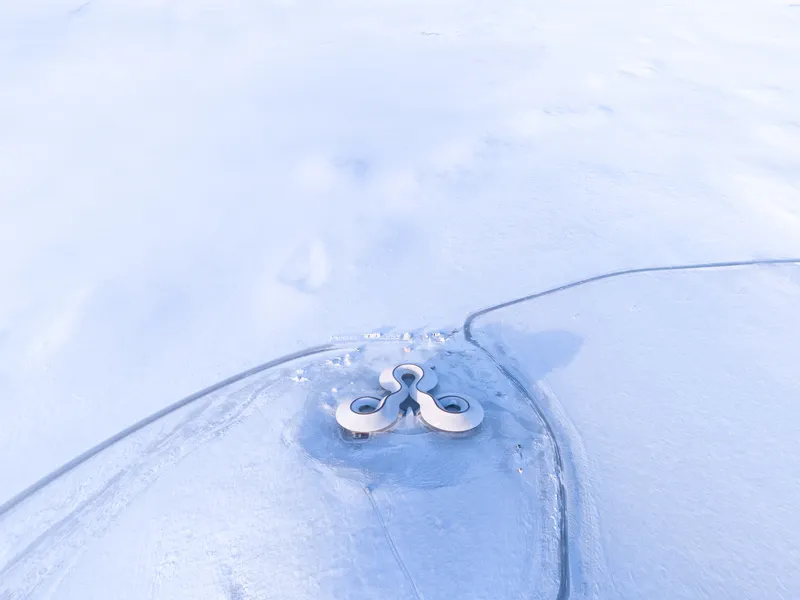
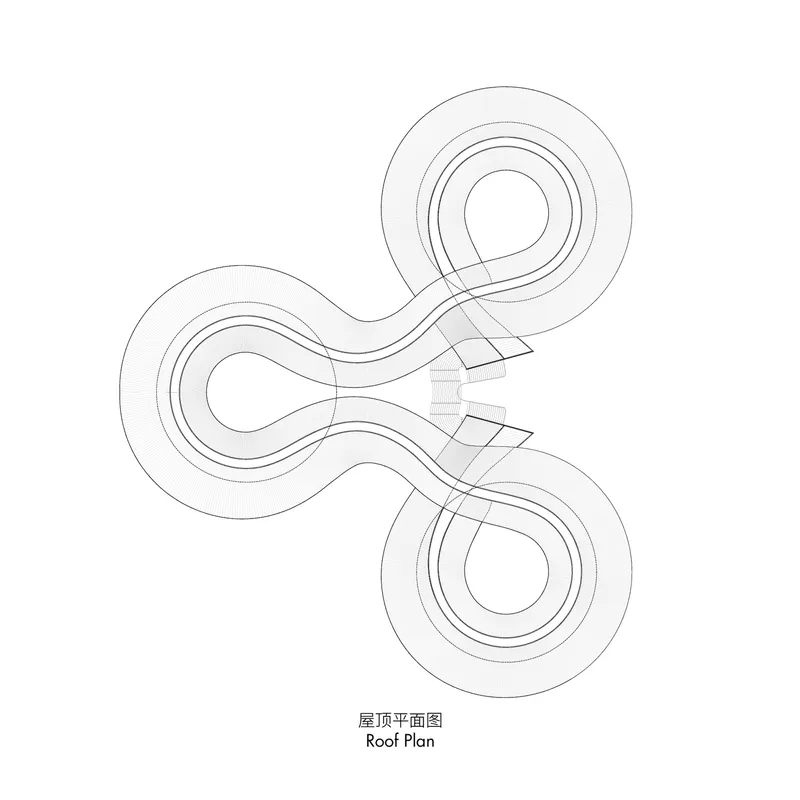
From the air, the building reads as a three-lobed cloverleaf, a triskelion of curved roof shells joined at the centre. The form is recognisable, but it is also low, soft, and continuous with the slope it sits on. In heavy snow, the roof and the hill become a single object.
This is the project's first move and probably its most important one. A vertical building here would have looked like an alien artefact. A flat building would have looked arbitrary. A building that follows the geometry of the volcano itself, three radiating arcs around a central crater, manages to feel inevitable.
The Roof Geometry, Up Close
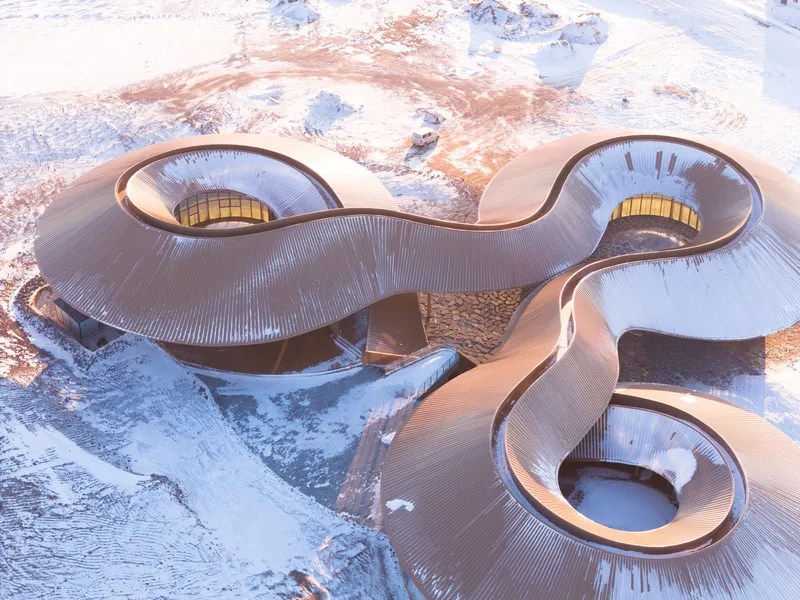
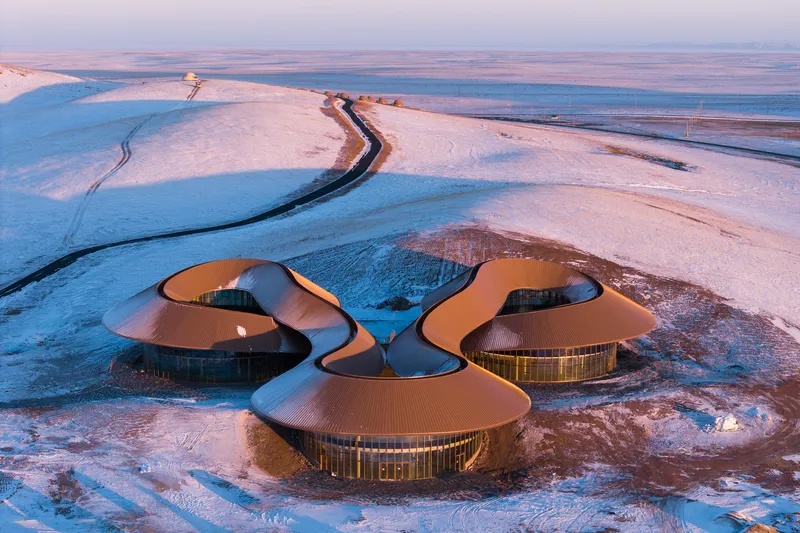
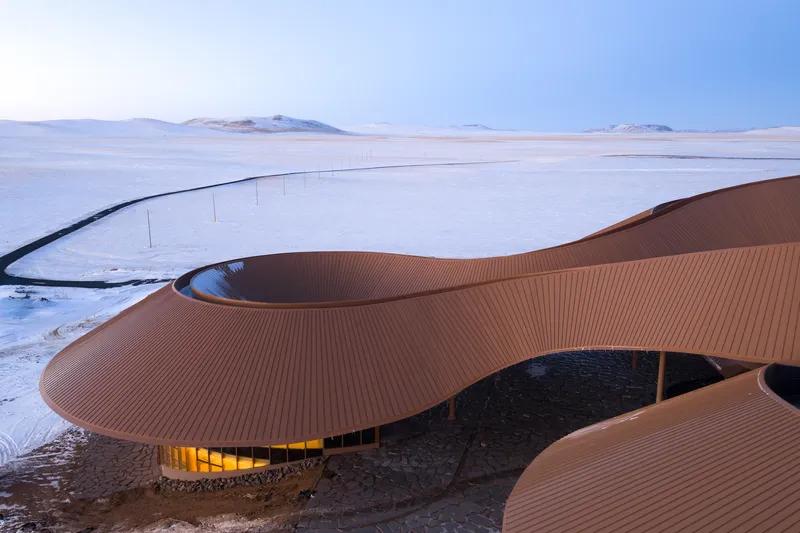
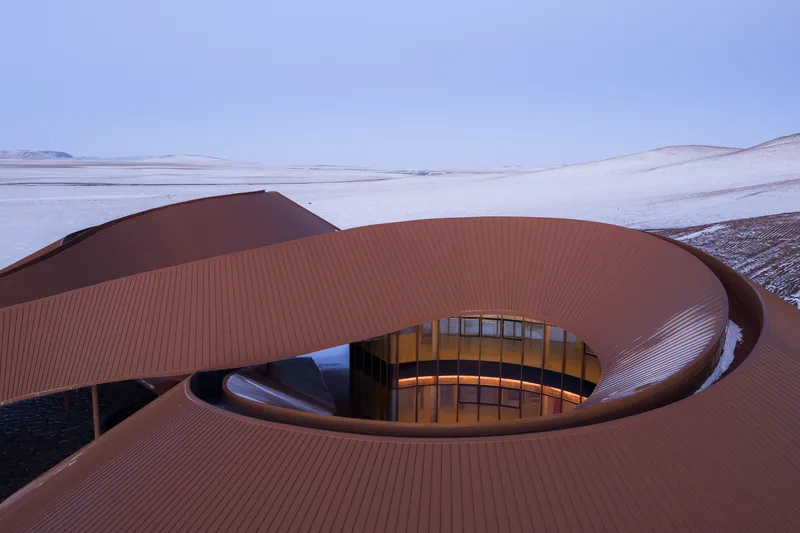
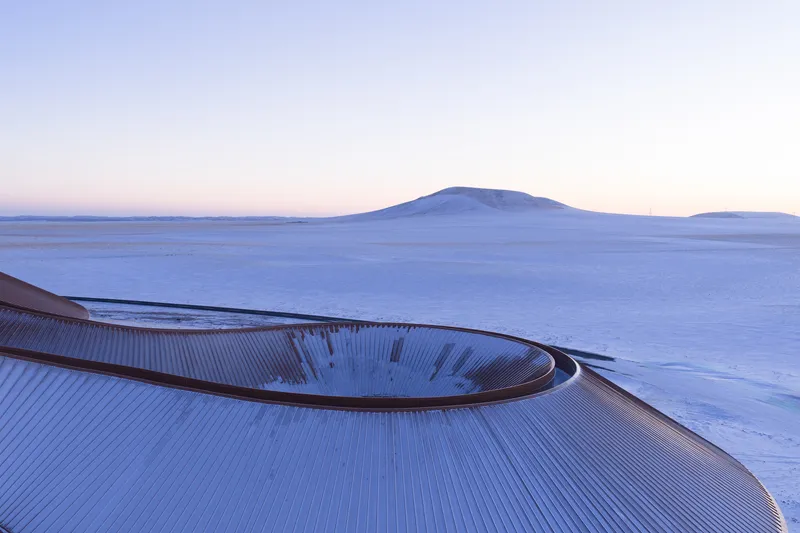
Up close, the roof is the most distinctive piece of the project. Each of the three lobes is a curved surface that rises slightly toward its outer edge and dips toward the centre, where a circular skylight cuts through to bring light into the interior. The radial pattern of the roof structure, made visible in the close-up shots, is what gives it its texture.
From a distance the roof reads as one fluid surface. From the air it resolves into a clear plan. From close up it becomes a piece of structural craft, with the rhythm of the radial ribs running outward from each centre. Three scales of reading, all of them deliberate.
Material and Colour
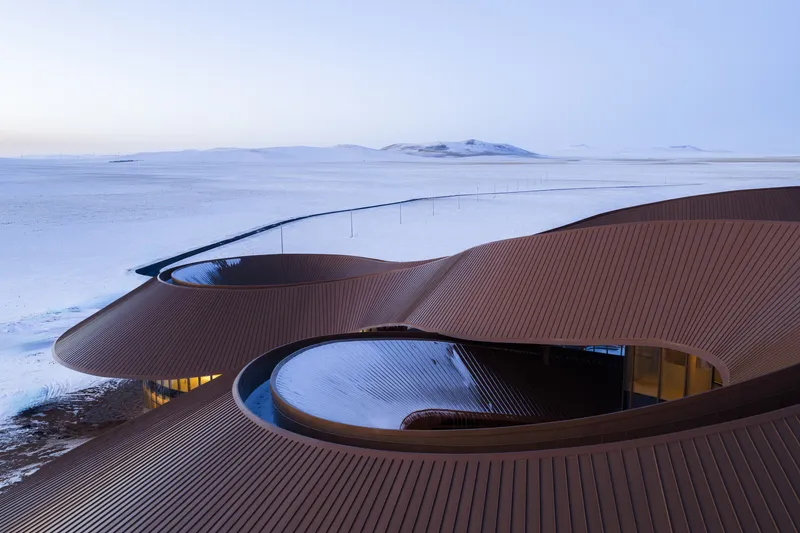
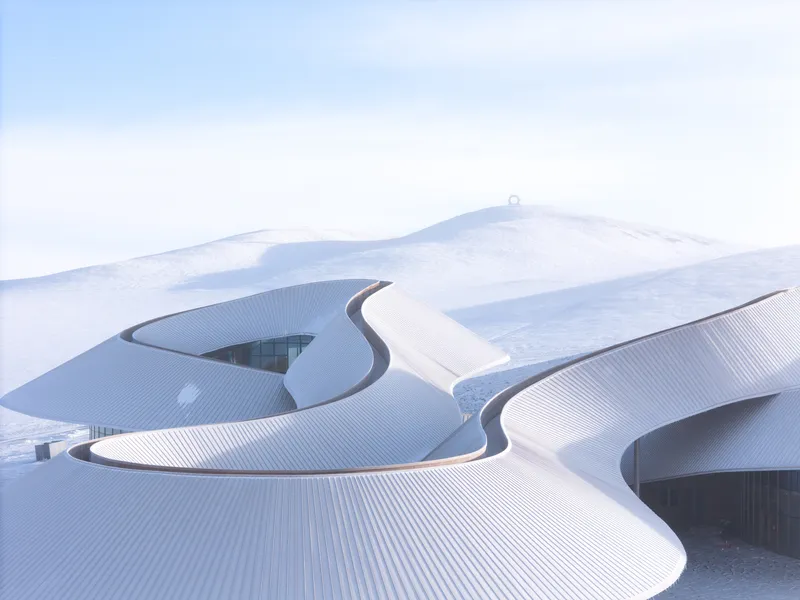
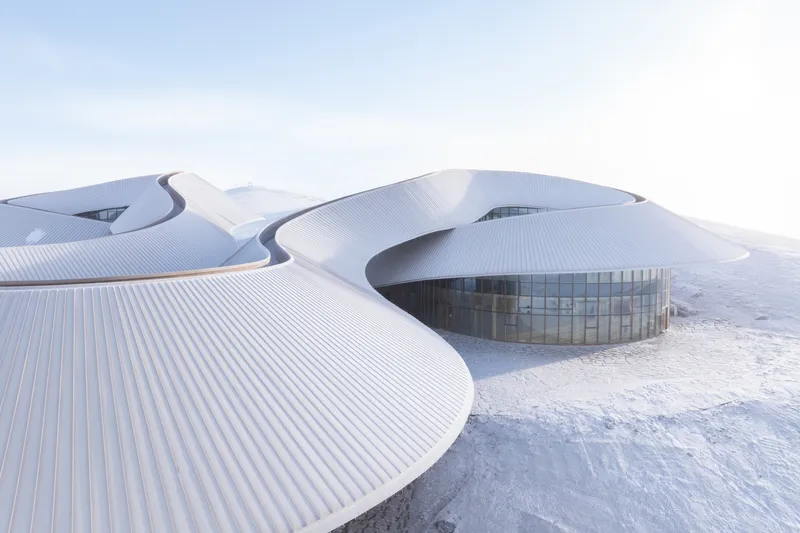
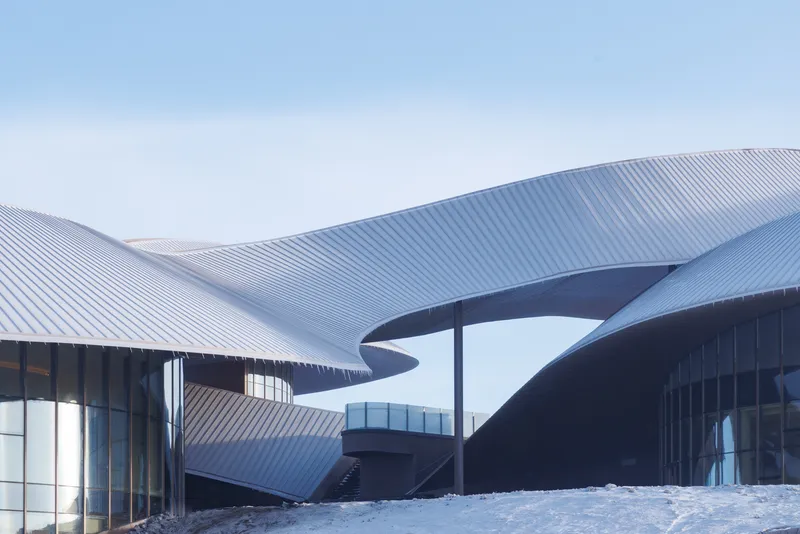
The roof material changes character depending on the light. In the cold blue light of midwinter it reads as a soft white surface that almost disappears into the snow. At sunset it warms to a copper tone that picks up the colour of the sky. In the high-contrast aerials it reads as ribbed metal, almost like a wave.
This is exactly the right material strategy for a building of this kind. A static colour would have read as foreign in every season. A surface that picks up the colour of the surrounding light reads as part of the landscape no matter when you look at it.
Glass at the Ground
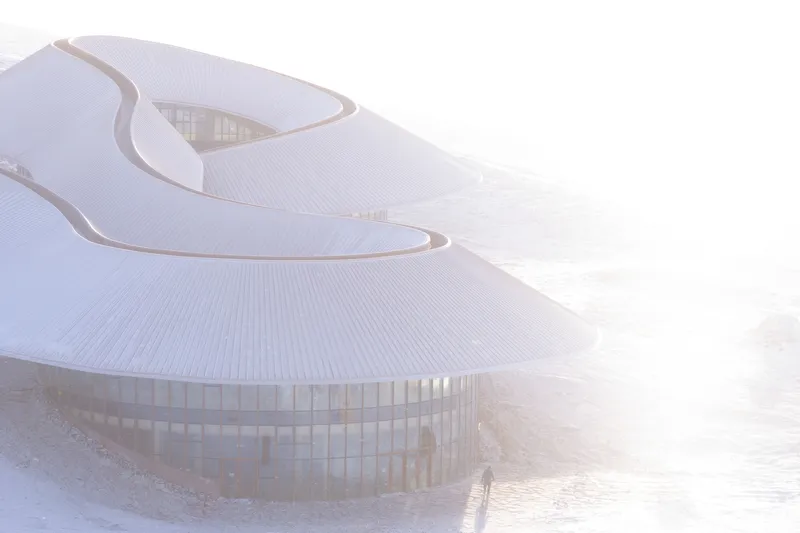
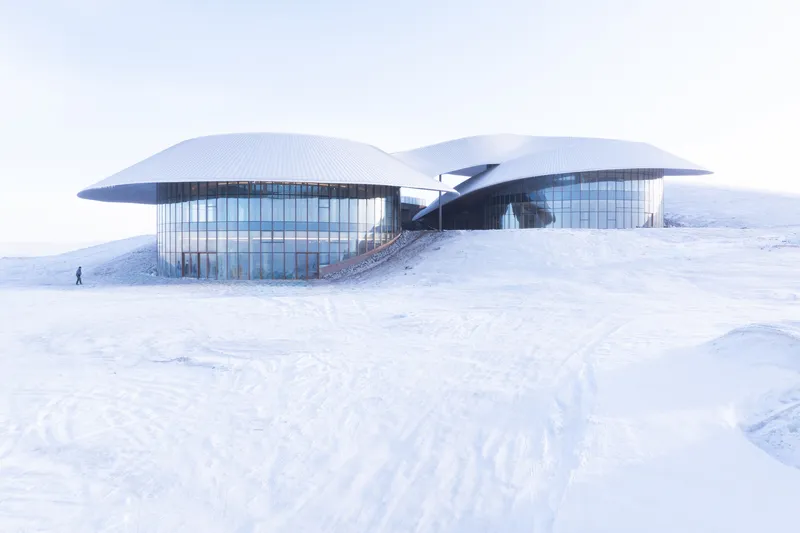
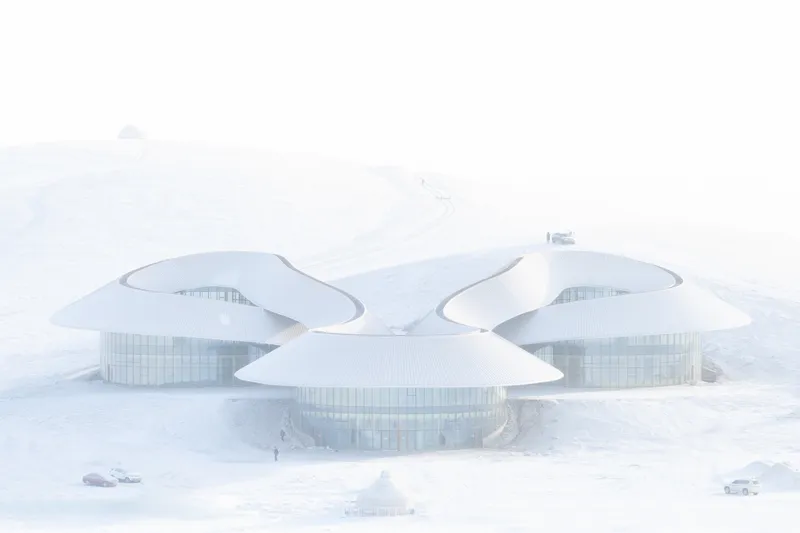
Beneath the curving roof, the ground floor is largely glazed. Cylindrical drums of glass push up into the lobes of the roof, so the interior reads as continuous with the landscape. From outside, you can see straight through the building and out the other side.
This is the standard contemporary move for a visitor centre in a wild landscape, but it works here because the proportions are correct. The glass is not too tall, the columns are slender enough to disappear, and the curving overhangs above shade the interior in the few months of the year when shading matters.
Inside the Crater
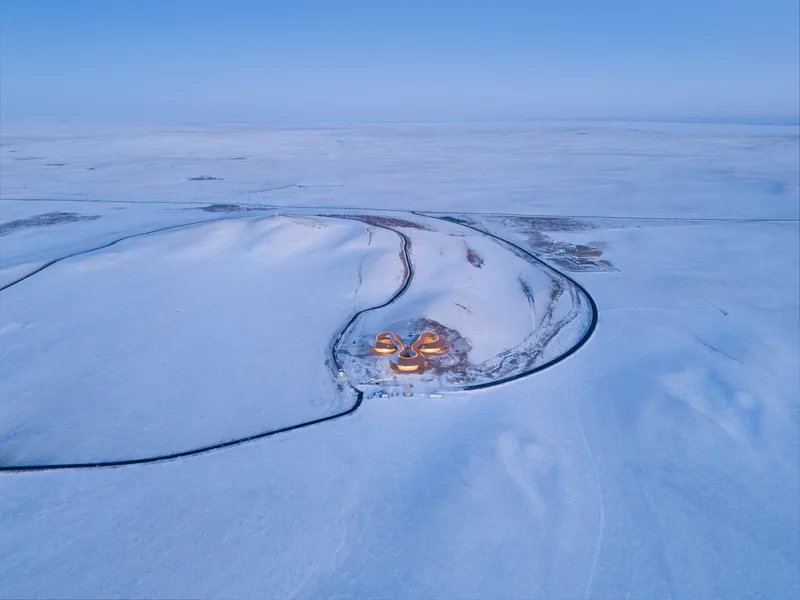
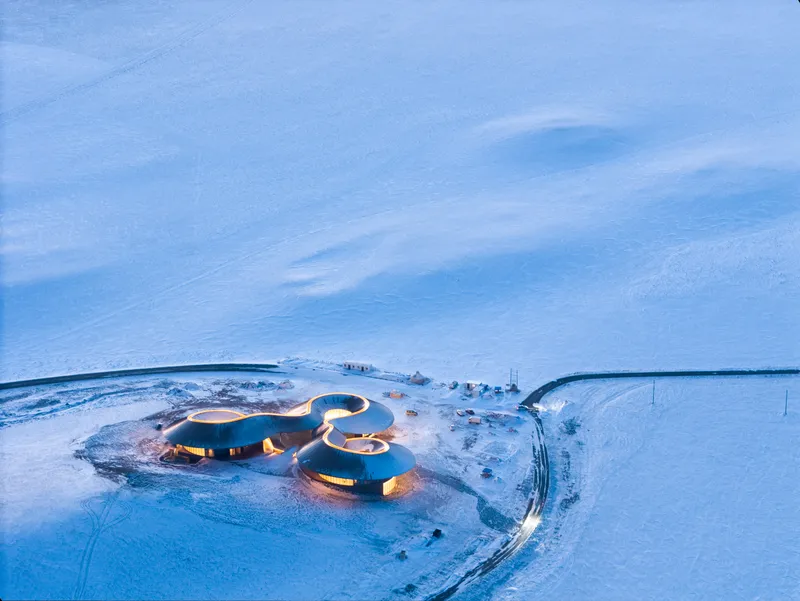
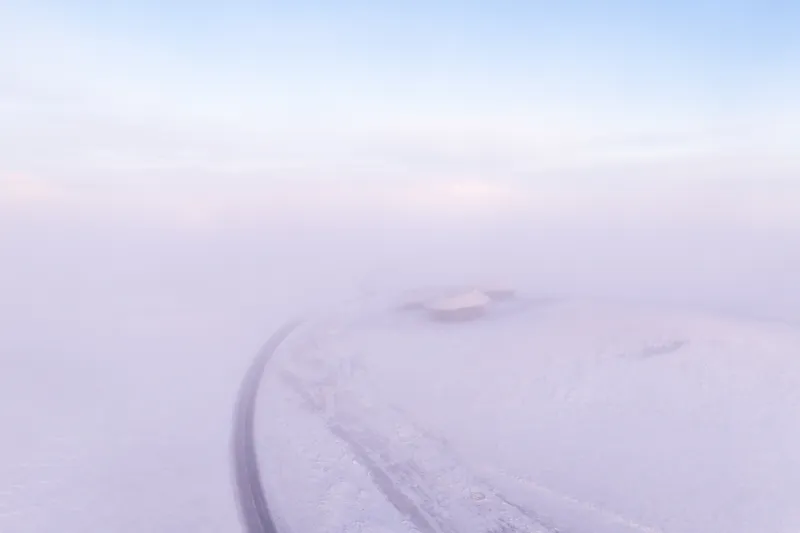
The aerial shots from dusk are the most atmospheric in the set. The interior glows warm against the cold blue snow, the road curves past the volcano like a single line drawn through emptiness, and the entire scene reads as a piece of land art that happens to contain a building.
Visitor centres rarely manage this kind of atmosphere. They tend to be over-signposted, over-lit, and over-programmed. Volcano-In Visitor Center succeeds because it stays quiet, even at night. The light comes out of the skylights and the glazed drums, not out of feature signage.
Scale and Distance
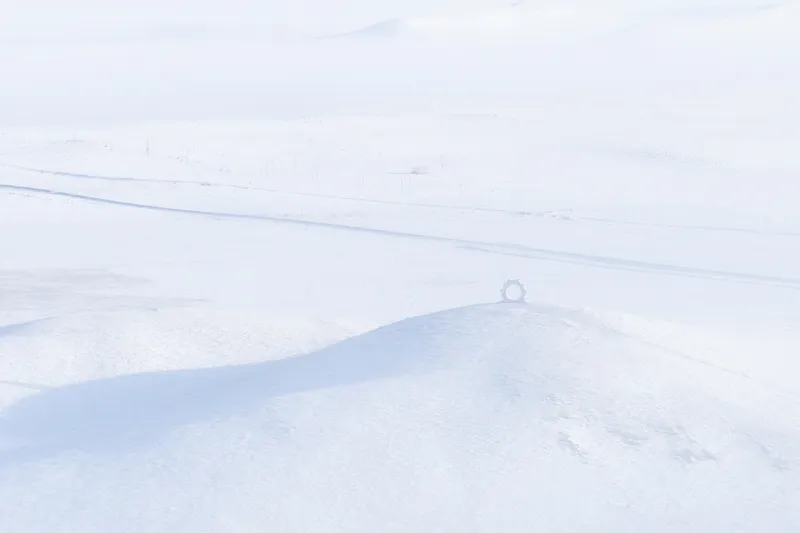
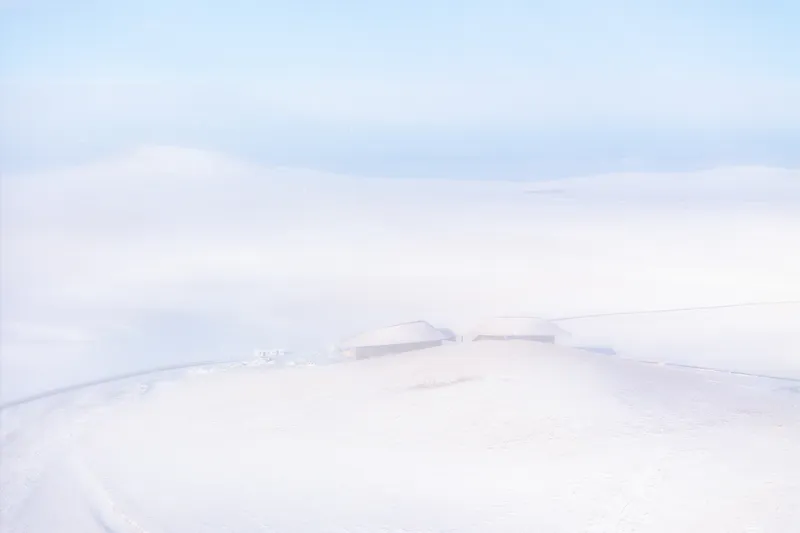
The most useful thing about the photographer's set is how often the building is shown as a tiny element in a vast field. These are the images that tell you what the project is actually about. It is not about its own form. It is about its position in a landscape that does not need it to be there.
This is a difficult thing to communicate in architecture media, where the default tendency is to crop tight and make every building look heroic. The decision to keep the building small in many of the photographs is itself a piece of editing, and it makes the project read more honestly.
Approach and Ground
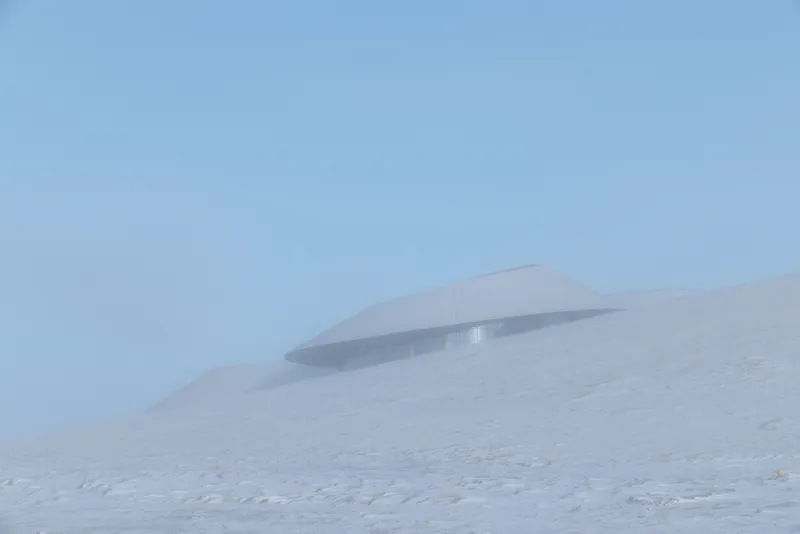
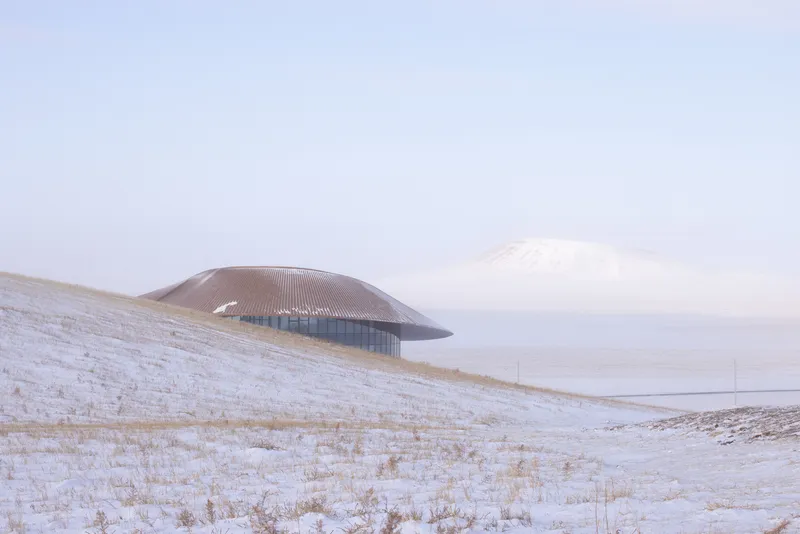
Approached from the surrounding road, the building first appears as a low form on a snowy ridge. The volcano cone behind it is the larger landmark. Only as you get closer does the building's geometry become legible, and only at the entrance does the section open up to reveal the interior.
This kind of choreographed approach is exactly what a visitor centre on a long open site should provide. The building is the destination, but the journey toward it is part of the architecture too.
Roof, Snow, Sun
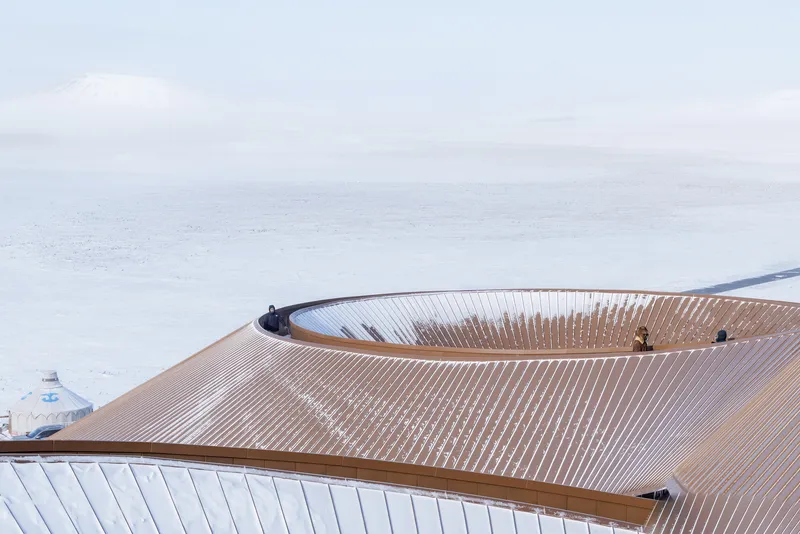
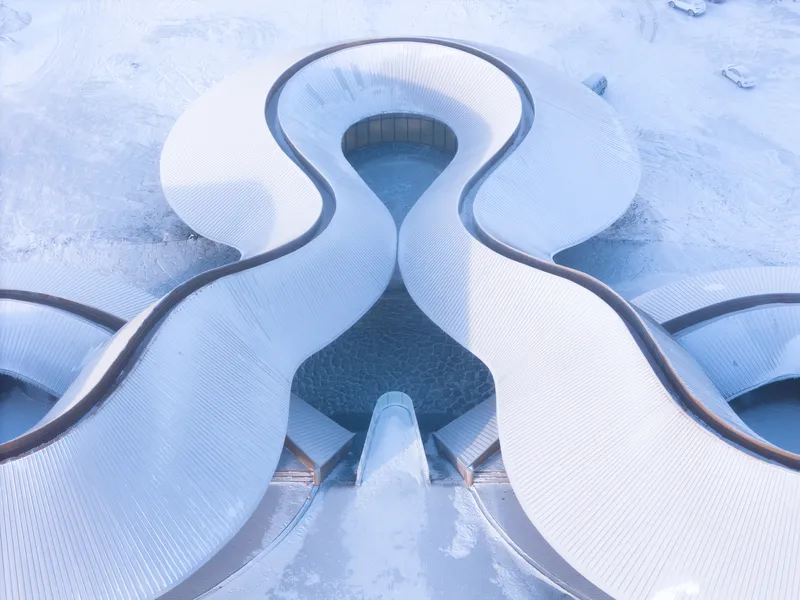
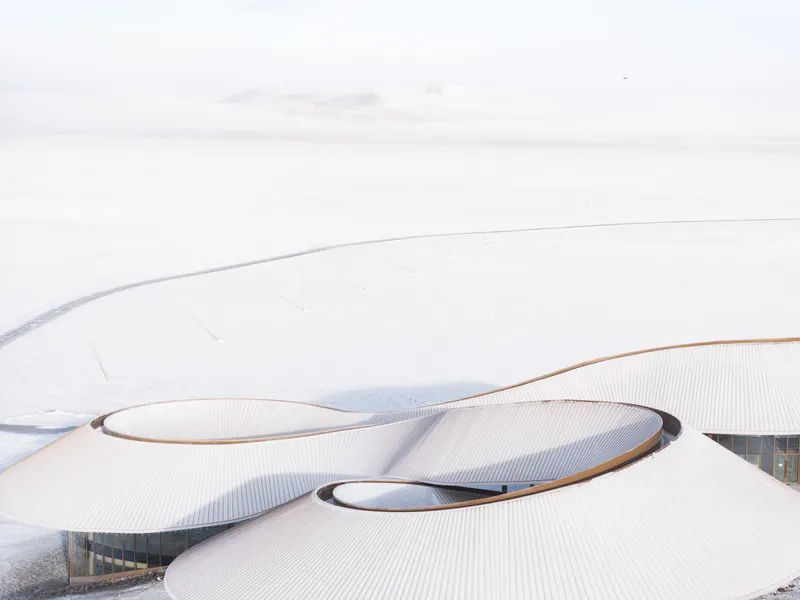
The roof handles snow well. The curved geometry sheds it, the radial structure carries the load, and the skylights are positioned where the snow naturally clears. This is not glamorous detail to talk about, but it is what determines whether a building in this climate survives the next twenty winters or starts leaking in the first one.
The architects, working with HUACHENGBOYUAN as the construction drawing designer and Beijing Jinshengjie for the steel and membrane structure, clearly thought this through. It is the kind of engineering that disappears when it works.
Twilight
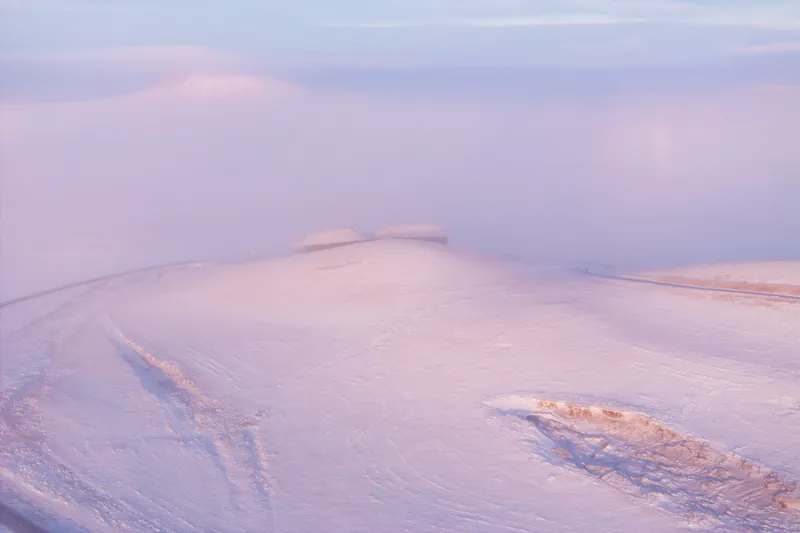
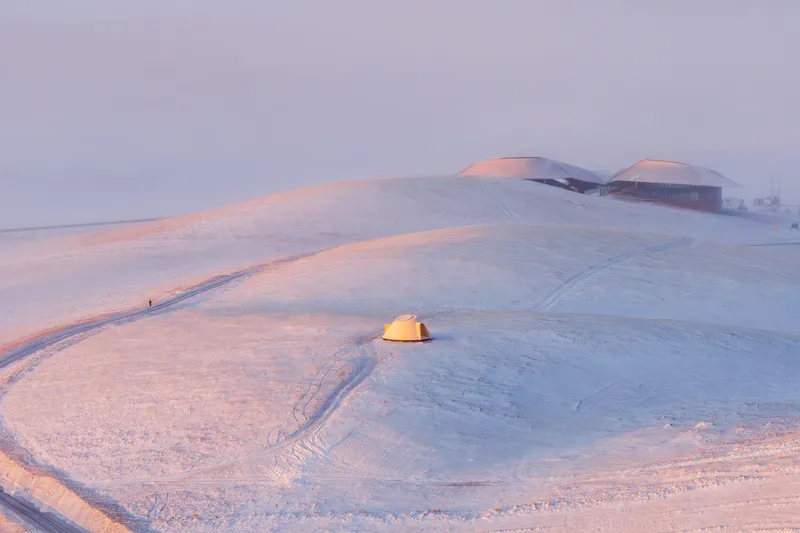
The twilight images, with their pink and lavender skies and the small lit yurt-like marker on the snow, are the project's most photographic moments. They also happen to be the moments that confirm the architecture is doing its job. The building is visible enough to be a destination and quiet enough not to compete with the sky.
Drawings
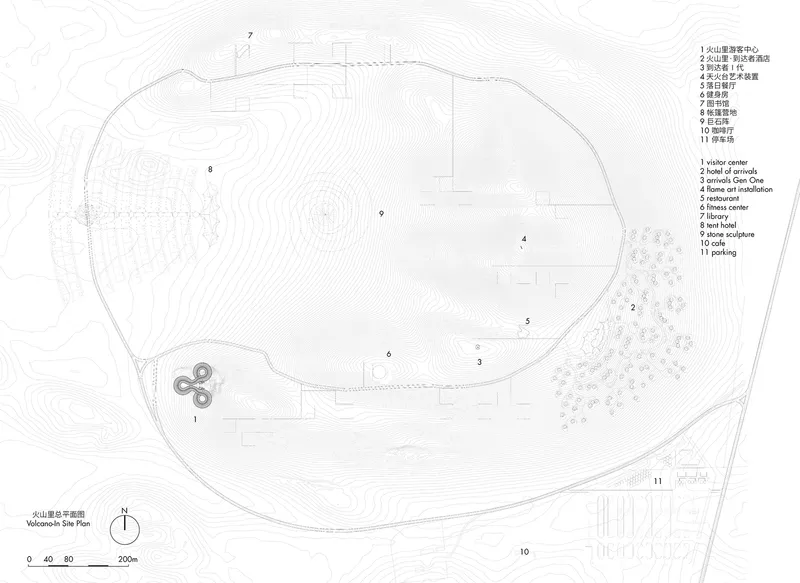
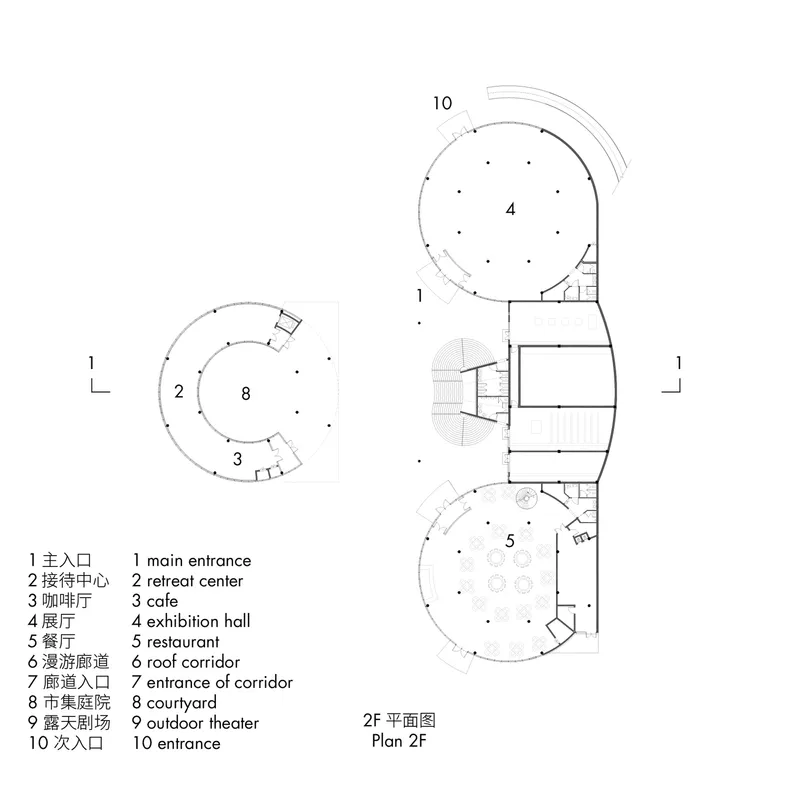
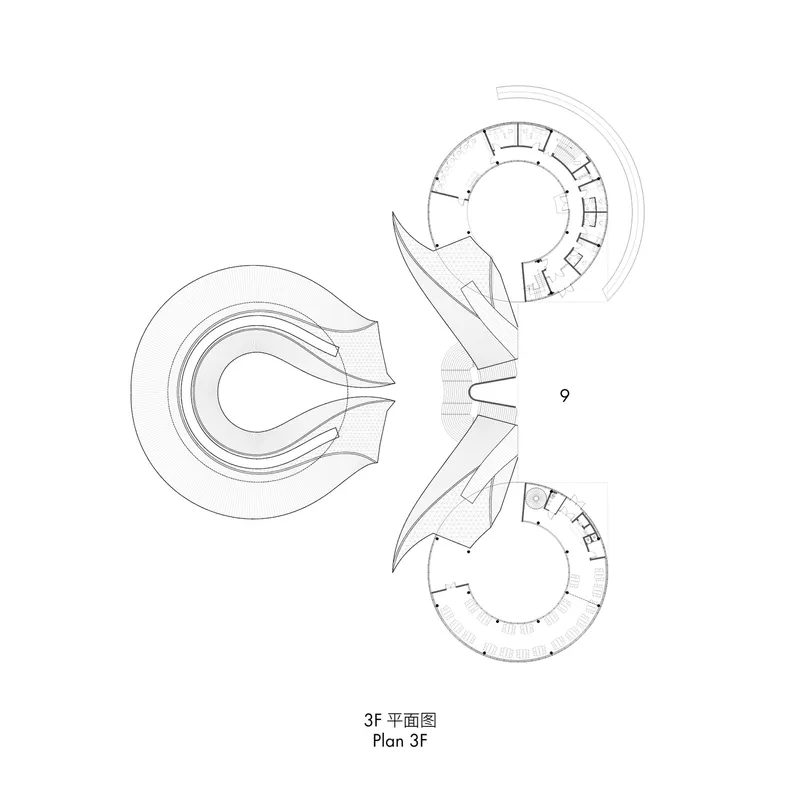
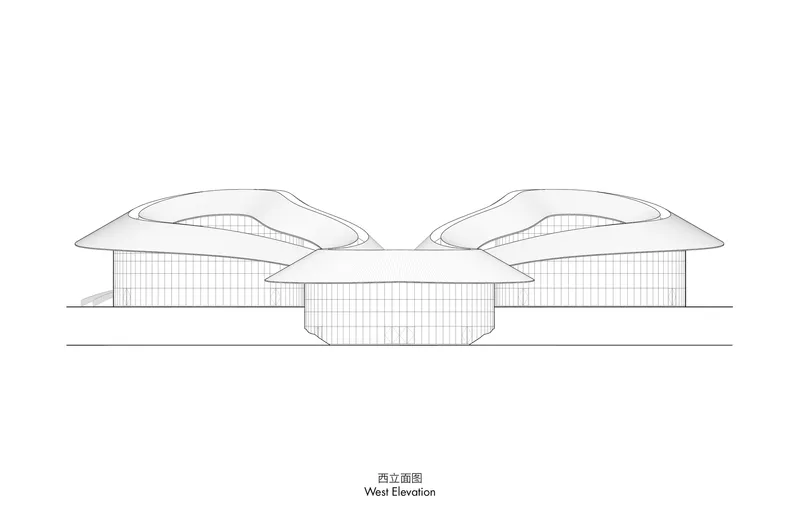
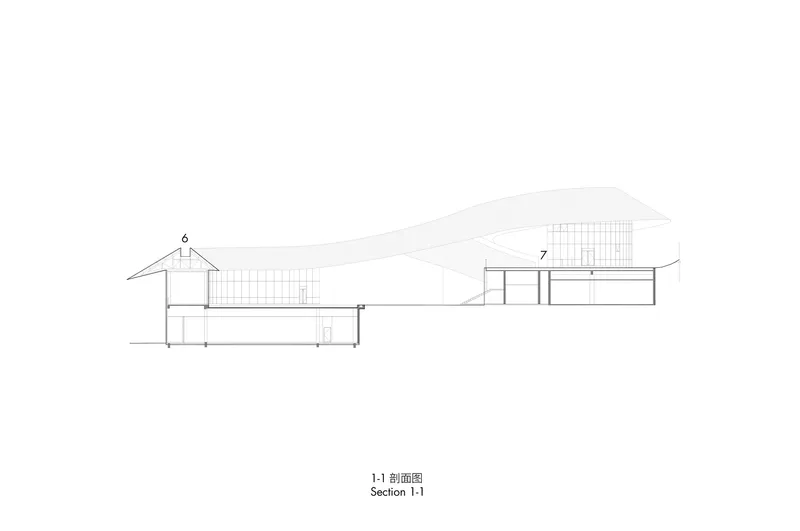
The plans confirm what the photographs suggest. The three lobes radiate from a central core that holds the main public spaces. Each lobe contains a different programmatic function. The roof plan and the section show how the curving shells meet the ground and how the interior volumes follow the roof geometry.
Why This Project Matters
The visitor centre as a building type has become tired. Most of them are bigger than they need to be, more decorative than they need to be, and more disconnected from their site than they should be. Volcano-In Visitor Center proposes a different model. It is a building that takes its form from the landscape, its scale from a quiet humility, and its material strategy from the seasons.
The lessons are transferable to any project on a sensitive site: keep the building low, follow the geometry of the landform, choose materials that change with the light, design the section so the roof carries the architectural identity, and accept that some of the best images of the project will be the ones where the building is barely visible. PLAT ASIA has put together one of the more disciplined recent examples of this approach.
About the Studio
Share Your Own Work on uni.xyz
If you are working on cultural or visitor architecture in remote landscapes, uni.xyz is a place to publish your work, find collaborators, and enter design competitions.
Project credits: Volcano-In Visitor Center by PLAT ASIA. Xilingol League, Inner Mongolia, China. 3,532 m². Completed 2025. Principal architect: Bian Baoyang. Photographs: Arch-Exist.



Popular Articles
Popular articles from the community


Conexión: Biophilic Design Reimagines High-Rise Living in Hong Kong
Conexión reimagines high-rise living in Hong Kong through biophilic design, green facades, shared spaces, daylight, water and nature within.

Riyadh For All: Intergenerational Urban Design for Active Aging in Rabat
Riyadh For All reimagines urban design in Rabat with intergenerational co-living, adaptive courtyards, and Moroccan cultural exchange today.

Play: Fragments of Their World
Familiar architecture becomes modular playground design, creating safe spaces where displaced children can learn, connect, imagine and play.

Lunar Spiral: Space Architecture Shaped by the Mathematics of the Universe
Lunar Spiral reimagines space architecture through Fibonacci geometry, lunar regolith, levitating habitats, and self-sustaining Moon living.


Similar Reads
You might also enjoy these articles

Bao Huynh Watercolor Atelier: A Serene Art Retreat in Hội An
Bao Huynh Watercolor Atelier in Hội An blends multifunctional art spaces, sustainable design, local materials, and family-friendly living in a serene environment.

Atelier Macri Concept Store Interior Design by CASE-REAL
Atelier Macri store features a "ko" counter, walnut wood details, cork displays, blending retail, gallery, and seamless customer experiences.

Manuel Vargas Izquierdo Stadium and High-Performance Sports Center: Architectural Excellence in Jalpa de Méndez
The Manuel Vargas Izquierdo Stadium blends sustainable design, inclusive sports facilities, and cultural-inspired architecture, revitalizing Jalpa de Méndez’s public spaces.

KAKR Buluh Awar Hall: Revitalizing Community and Ecology Through Bamboo Architecture
Community built bamboo hall revitalizes Buluh Awar village, empowering youth, restoring ecology, celebrating vernacular craftsmanship through sustainable architecture and culture.

Explore Landscape Design Competitions
Discover active competitions in this discipline



Challenge to reimagine the Iron Throne


Photograph architecture without architects


Illustrate the lost glory of Angkor Wat - Render Challenge


Design challenge to reuse E-waste
Comments (0)
Please login or sign up to add comments
No comments yet. Be the first to comment!