
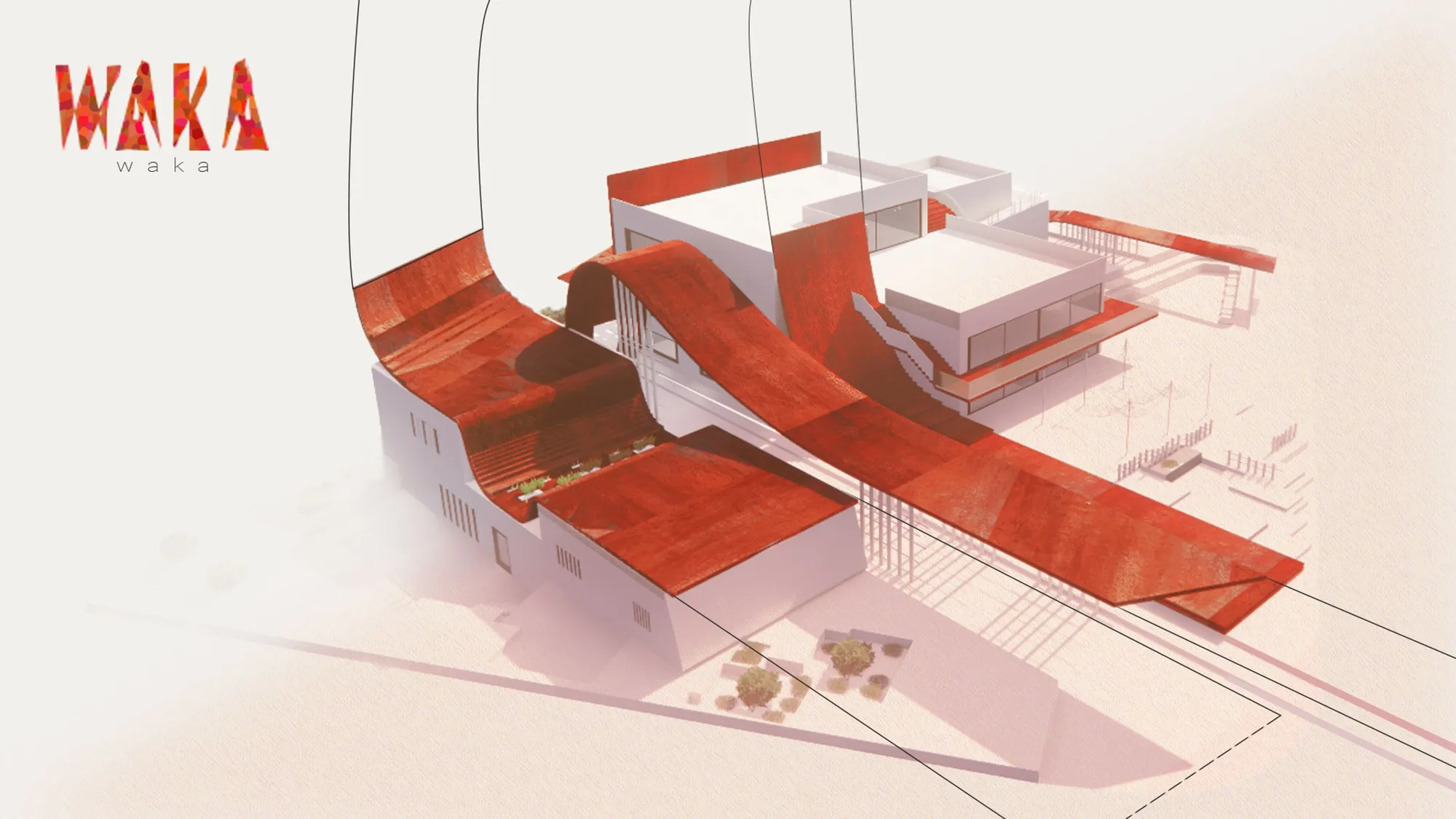
Waka: A Journey in Sustainable Architecture Design
Waka: A Journey in Sustainable Architecture – Redefining community spaces with culture, nature, and innovation for a better tomorrow.


Reimagining Spaces for a Better Tomorrow
Project by: Hani Mansurnejad, Hedieh Tavalla, and Faezeh Ghahraei
Waka is a remarkable volunteer center located in Durban, South Africa, specifically in the Bonela neighborhood. The project exemplifies sustainable architecture design, blending innovative building techniques with cultural relevance. This collaborative project aims to enhance community living by addressing the unique dynamics of temporary, non-concentrated neighborhoods.
This project People's Choice Award entry of Hood
A Community-Oriented Design Approach
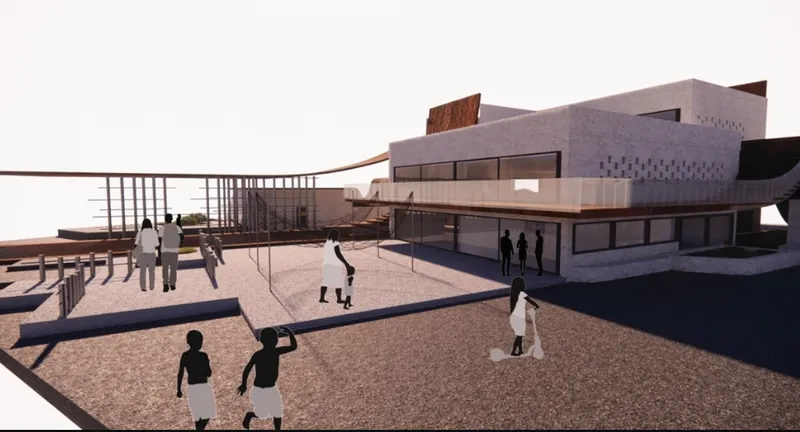
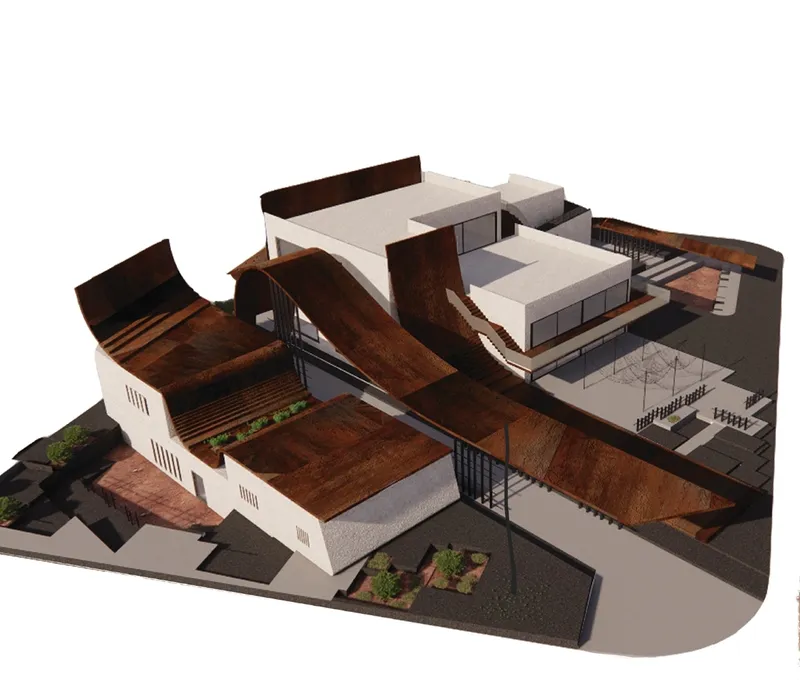
The layout of the Waka center is divided into strips, each designated for specific functions and activities. These strips rotate at a 30-degree angle, fostering communication and connection between the structures and the residents. This thoughtful design creates a harmonious balance between form and function, ensuring the space meets the needs of its users while maintaining aesthetic appeal.
Key Design Features
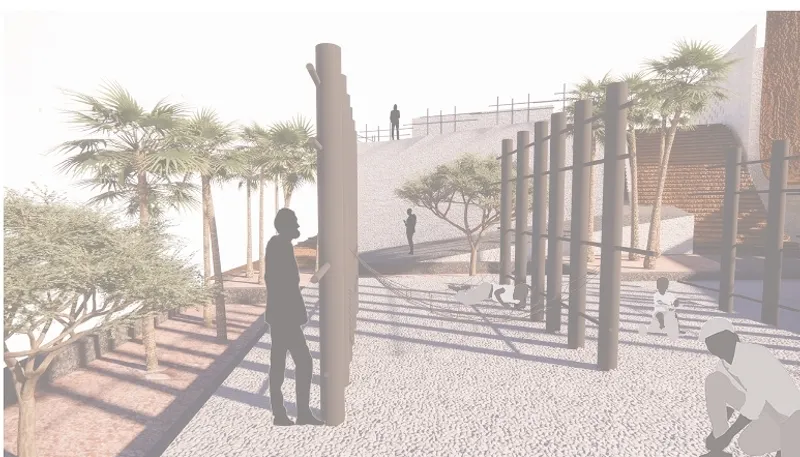
- Integration with Nature:The project focuses on incorporating natural elements, open spaces, and greenery, providing residents with a calming environment.
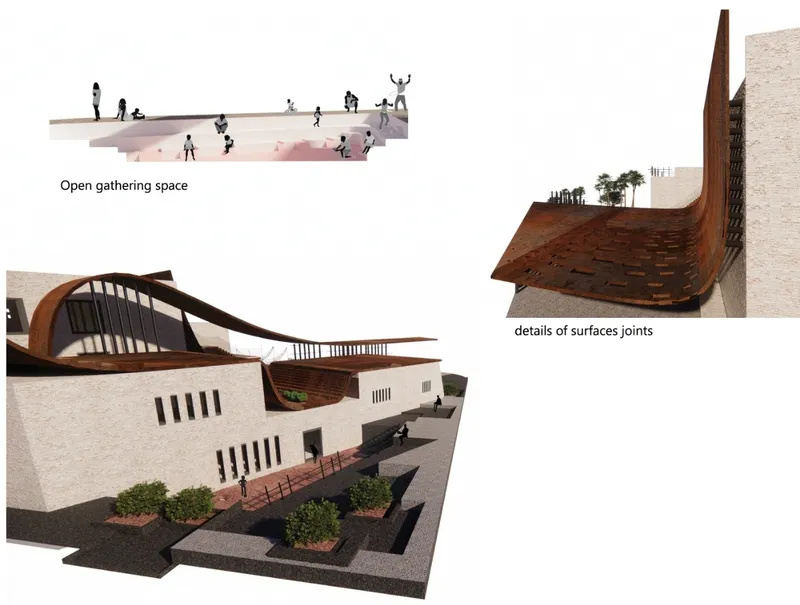
- Dynamic Roof Structures:The wavy rooflines are a standout feature, creating fluid transitions between indoor and outdoor spaces. These shapes reflect the surrounding landscape, seamlessly blending the architecture with its context.
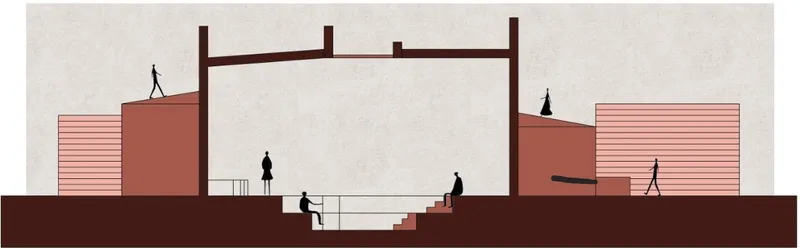
- Open Gathering Areas:Public spaces, including an amphitheater and gathering spots, foster community engagement and interaction. These areas emphasize accessibility and inclusivity for diverse groups.
- Sustainability Focus:Materials and design techniques emphasize eco-friendliness, reflecting the team's commitment to sustainable practices.
- Cultural Identity:The project incorporates intricate patterns inspired by local art and culture, ensuring the center resonates with the community's identity.

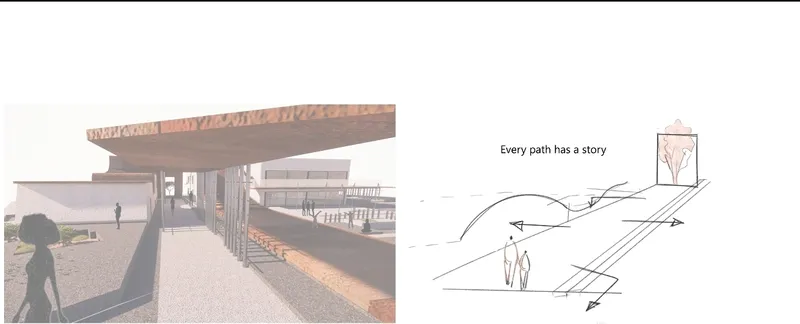
"Every Path Has a Story"
The narrative of Waka emphasizes the importance of journey and connection. As users navigate the space, they experience interwoven surfaces that guide them through its various functional areas. This approach ensures that architecture is not just a shelter but an immersive experience.




Popular Articles
Popular articles from the community


Riyadh For All: Intergenerational Urban Design for Active Aging in Rabat
Riyadh For All reimagines urban design in Rabat with intergenerational co-living, adaptive courtyards, and Moroccan cultural exchange today.

The Earth Pod: 3D Printed Homes for Resilient Refugee Communities
The Earth Pod reimagines refugee housing through 3D printed homes made from clay, combining resilience, self-sufficiency, and rapid shelter.

The Ocean Hive: Sustainable Architecture for a Self-Sufficient Civilization at Sea
The Ocean Hive imagines sustainable architecture at sea, where modular habitats, algae, wave power and ocean waste sustain a growing colony.

Co-life: Sustainable Architecture for Age-Friendly Community Living
Co-life reimagines sustainable architecture for seniors through courtyards, rammed earth, shared gardens, and spaces designed for belonging.


Similar Reads
You might also enjoy these articles


Hodi-Mandai Geram
Project Function: Preservation and revitalization of the Intangible heritage and socio-spatial identity of the Hodi by Housing, Cultural Memory Center, Sacred Grove, landscape, local tourism economy


Olio Towers: A Mid-Rise for Performers That Fuses Housing, Rehearsal, and Stage
Located blocks from Houston's Theater District, this modular tower stacks living units around a central performance atrium.

Oasis: Modular Green Housing Carved into Dhaka's Urban Fabric
A shortlisted Plugin Housing entry reclaims unauthorized settlements in Dhaka with stepped concrete volumes, green roofs, and ventilation-driven design.

Black Hole: A Floating Megastructure for the Post-Physical Era
Emiliano Mazzarotto envisions a spherical, self-scaling arena where e-sports, digital hotels, and holographic stadiums replace traditional public space.


Explore African Architecture Competitions
Discover active competitions in this discipline



Challenge to reimagine the Iron Throne


Photograph architecture without architects


Illustrate the lost glory of Angkor Wat - Render Challenge


Design challenge to reuse E-waste
Comments (0)
Please login or sign up to add comments
No comments yet. Be the first to comment!