
West Gate Tunnel by Wood Marsh Architecture: Melbourne’s Landmark Infrastructure Project
West Gate Tunnel by Wood Marsh Architecture in Melbourne blends infrastructure, Indigenous heritage, sculptural design, and sustainable urban planning for a dynamic travel experience.


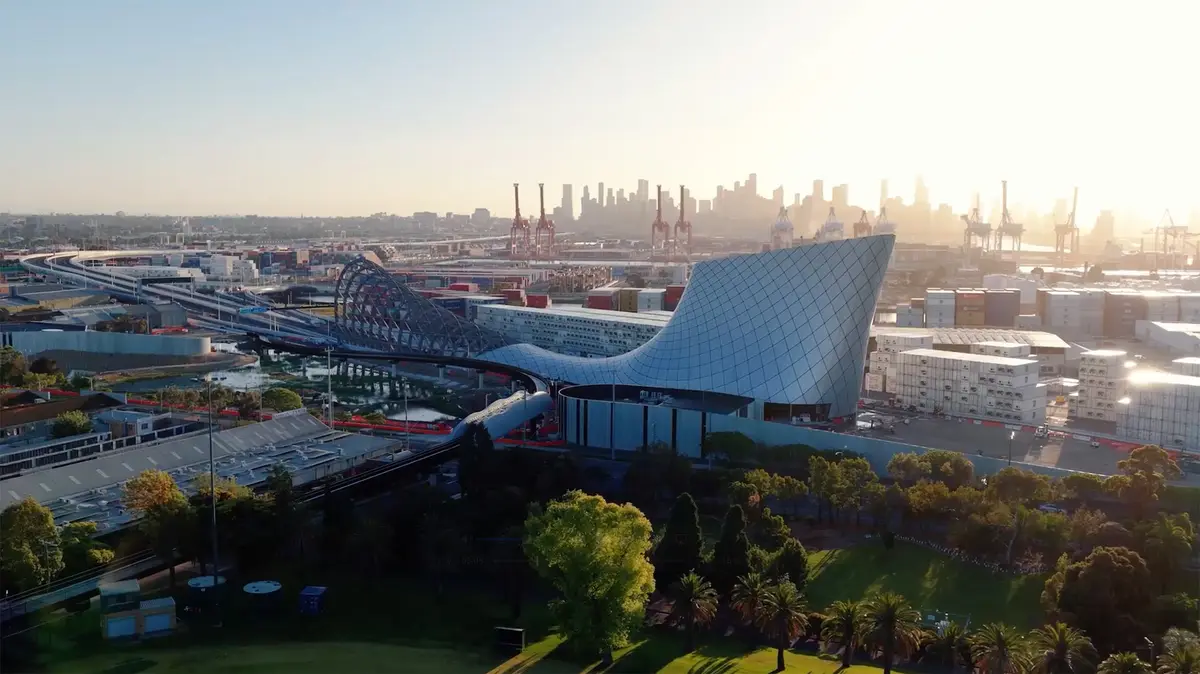
The West Gate Tunnel, designed by Wood Marsh Architecture, is one of Melbourne’s largest and most significant infrastructure projects. This underground roadway alleviates congestion on the West Gate Bridge while providing a direct connection to the city’s western industrial and port precinct. More than a transport solution, the tunnel is a cultural and sculptural landmark, incorporating Indigenous heritage, maritime history, and innovative urban design.
The project spans multiple waterways and integrates engineering excellence with sculptural design, transforming a routine commute into a dynamic and visually engaging journey.
Design Concept
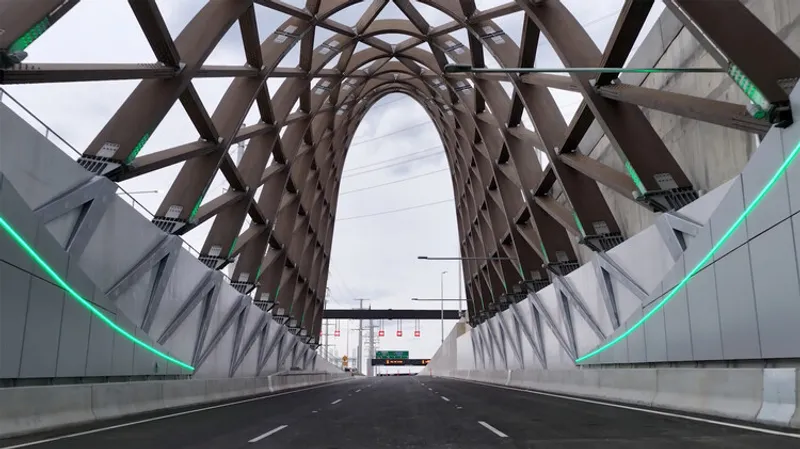
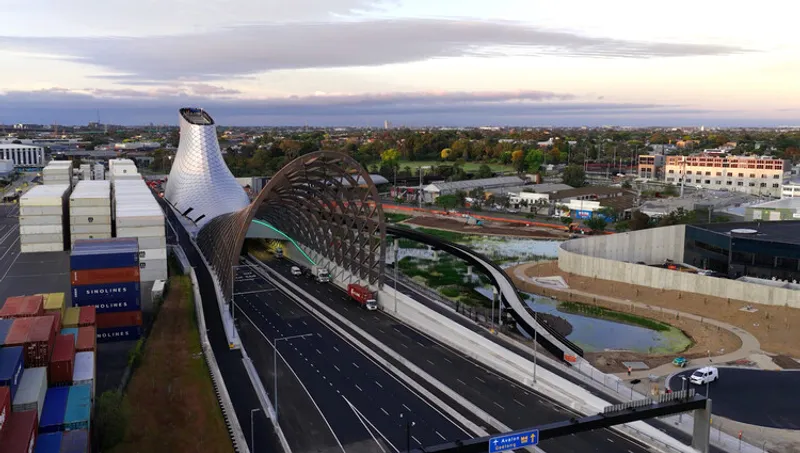
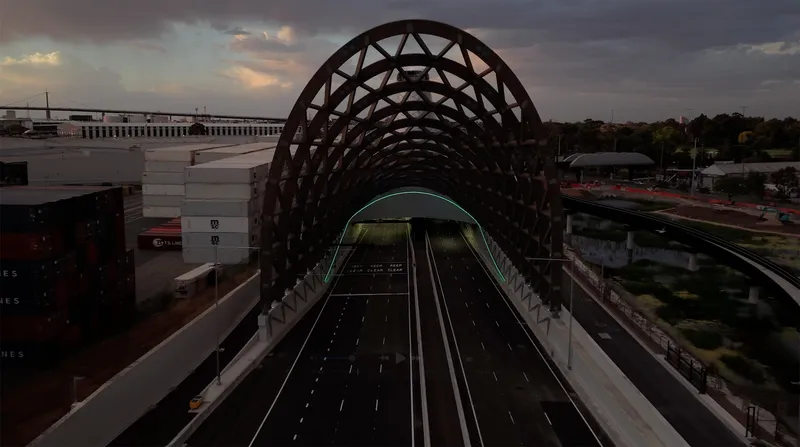
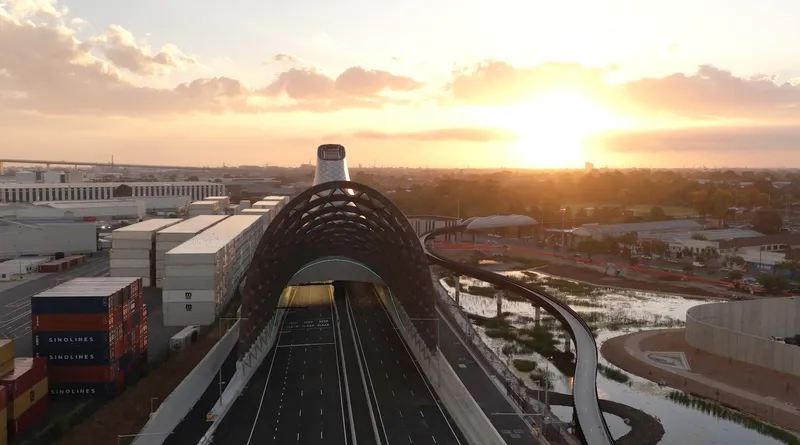
The architectural narrative draws inspiration from 60,000-year-old Indigenous fishing and eel-harvesting practices, as well as colonial dockside culture. The tunnel and associated structures reference weaving nets, ropes, and baskets, establishing a symbolic connection between the infrastructure and Melbourne’s cultural and maritime history.
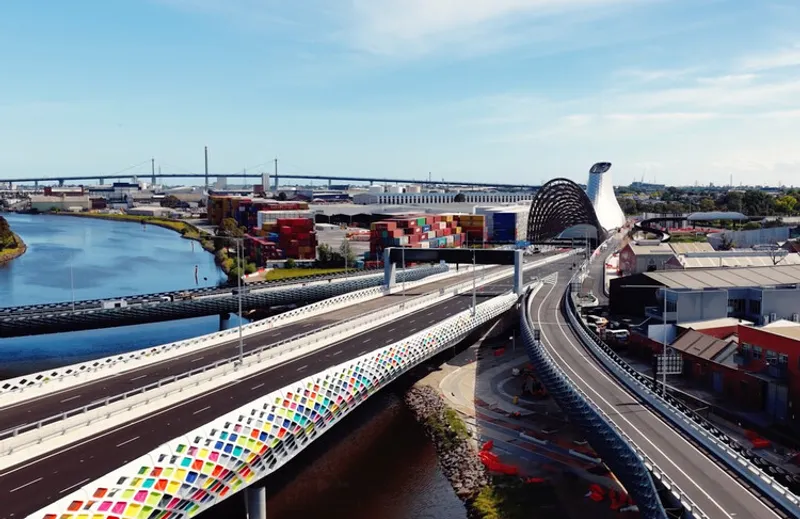
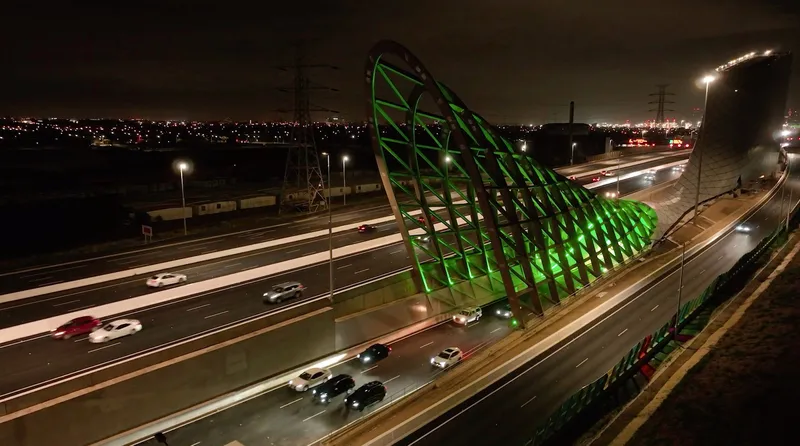
- Sculptural Elements: Two key sculptural structures mark the tunnel entrance and exit, engineered from sustainable plantation timber for minimal maintenance and a reduced carbon footprint.
- Lighting Design: Bright, filtered lighting at the entrances assists wayfinding, while prismatic rainbow lighting inside the tunnel evokes the experience of swimming among fish underwater.
- Vent Stack: A 50-meter sculptural vent stack contrasts with the net-like forms, reflecting light and creating the illusion of fluid movement.

Urban Integration
Wood Marsh Architecture reimagines the tunnel as more than a road:
- Side Ramps: The ramps over the Maribyrnong River are shaped as fish and eels, featuring silver-grey finishes and vibrant Perspex panels that mimic natural fish scales.
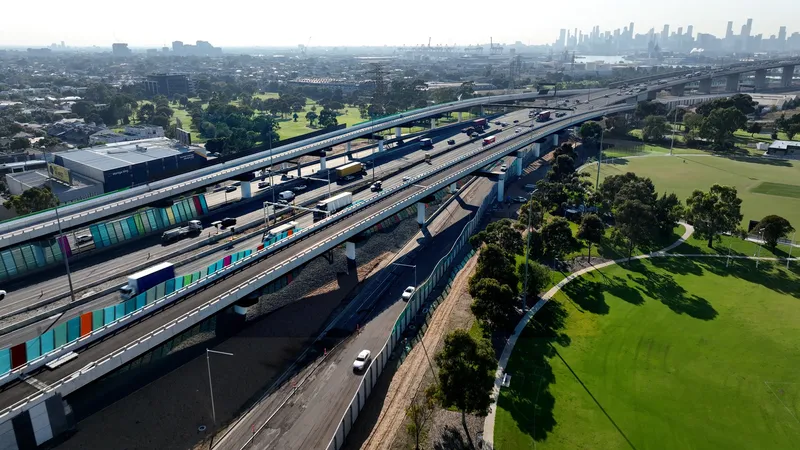
- Cycling Infrastructure: A 1.5 km dedicated veloway, named the Dixon Veloway for late Victorian cycling legend Iris Dixon, provides a visually striking, safe corridor for cyclists.
- Open Space and Landscaping: Over 9 hectares of landscaped areas include Indigenous art, playgrounds, BMX tracks, and recreational spaces, designed in collaboration with Tract Consultants.
Materiality and Visual Experience
The design employs a layered approach to materials, colors, and forms, ensuring the tunnel is functional, visually stimulating, and culturally resonant:
- Noise Walls: Fluid concrete patterns reference maritime history, combined with colorful Perspex panels that project vibrant light onto road surfaces.
- Pedestrian Pathways: Taut perforated metal structures, illuminated at night, enhance safety and create a sculptural walkway experience.
- Wayfinding Poles: Illuminated orange poles mark key changes in the road network, establishing a unified visual language that guides users while referencing Melbourne’s historic yellow and red road infrastructure.

Cultural and Environmental Considerations
The project is a fusion of engineering, sculptural design, and heritage storytelling:
- Indigenous References: Indigenous fishing and weaving traditions are embedded in the tunnel’s sculptural motifs.
- Maritime Heritage: Forms and patterns reference historical dockside ropes and shipping infrastructure.
- Sustainability: Timber sourced from plantations, durable finishes, and energy-efficient lighting minimize environmental impact while maintaining durability.
The West Gate Tunnel is a landmark Melbourne infrastructure project that seamlessly integrates function, cultural narrative, and visual design. By combining engineering, sculptural artistry, and urban planning, Wood Marsh Architecture has enhanced mobility, improved wayfinding, and created a memorable, culturally rich experience for motorists, cyclists, and pedestrians.
This project represents a holistic approach to modern infrastructure, setting a benchmark for future transport design that balances efficiency, heritage, and public engagement.


Popular Articles
Popular articles from the community


David Ortega Stacks a Two-Story Mexico City Penthouse Around a Steel Stair and a Pergola-Shaded Roof Terrace
In Colonia Roma, a 300 m² penthouse uses oak joinery, a planted steel stair and a slatted roof pergola to make a new-build apartment feel like a house.


Aquadapt: An Underwater Habitat That Rewrites Its Rooms by the Hour
Curved modules ring the seabed while one shell shifts from breakfast room to cinema, farm and football pitch as residents' needs change.

Opera on the Sea: Driftwood Logic Shapes a Timber Opera House on Estonia's Coast
Trevor Orgill's opera house translates the entangled drift of floating timber into a civic building where wood, water, and music converge.

ETEH Reworks the Shared Spaces of São Domingos School in Brazil Around Timber, Color and Hanging Plants
At São Domingos School in Brazil, 436 m² of hall, refectory and library are recast with timber joinery, a yellow and blue code and trailing greenery.

Similar Reads
You might also enjoy these articles


Hodi-Mandai Geram
Project Function: Preservation and revitalization of the Intangible heritage and socio-spatial identity of the Hodi by Housing, Cultural Memory Center, Sacred Grove, landscape, local tourism economy


Olio Towers: A Mid-Rise for Performers That Fuses Housing, Rehearsal, and Stage
Located blocks from Houston's Theater District, this modular tower stacks living units around a central performance atrium.

Oasis: Modular Green Housing Carved into Dhaka's Urban Fabric
A shortlisted Plugin Housing entry reclaims unauthorized settlements in Dhaka with stepped concrete volumes, green roofs, and ventilation-driven design.

Black Hole: A Floating Megastructure for the Post-Physical Era
Emiliano Mazzarotto envisions a spherical, self-scaling arena where e-sports, digital hotels, and holographic stadiums replace traditional public space.

Explore Citylink Competitions
Discover active competitions in this discipline

Challenge to design locus for the upliftment of human rights

Challenge to reimagine the Iron Throne

Photograph architecture without architects

Illustrate the lost glory of Angkor Wat - Render Challenge
Comments (0)
Please login or sign up to add comments
No comments yet. Be the first to comment!