

White Tower – A Revolutionary 3D-Printed Landmark by Studio Benjamin Dillenburger and Michael Hansmeyer
A groundbreaking 3D-printed tower in Switzerland combining digital fabrication, intricate ornamentation, and a unique performance space overlooking the Alpine landscape.


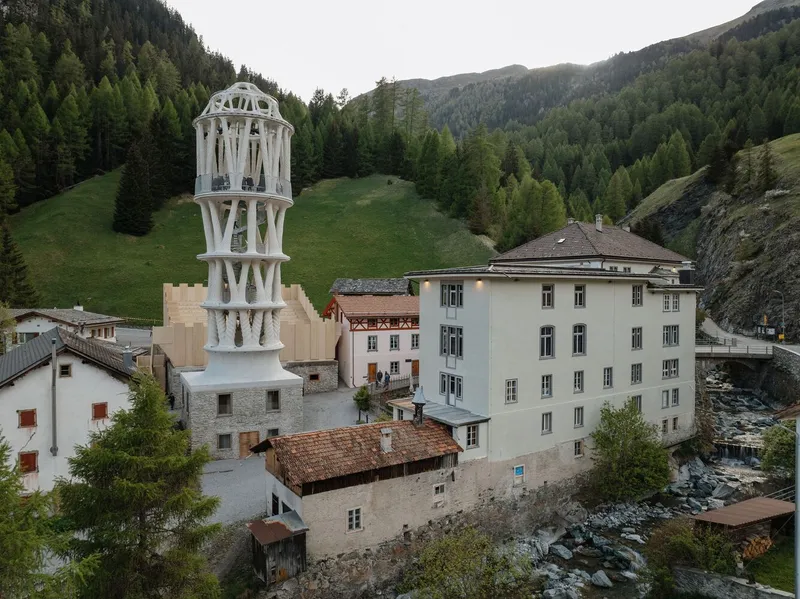
The White Tower (Tor Alva) in Mulegns, Switzerland, stands as one of the world’s most ambitious innovations in computational design, digital fabrication, and 3D-printed architecture. Conceived by Benjamin Dillenburger and Michael Hansmeyer in collaboration with the Origen Cultural Foundation, this groundbreaking structure redefines how architecture can merge technology, culture, and landscape. As the tallest 3D-printed building ever constructed, the White Tower introduces a new paradigm for sustainable, experimental, and culturally embedded architectural practice.
Located in the tranquil Alpine village of Val Surses, the tower rises as both a beacon of artistic expression and a contemporary reinterpretation of Mulegns’ cultural history. Designed as an immersive performance venue, it offers an unprecedented architectural experience rooted in form, materiality, and digital innovation.

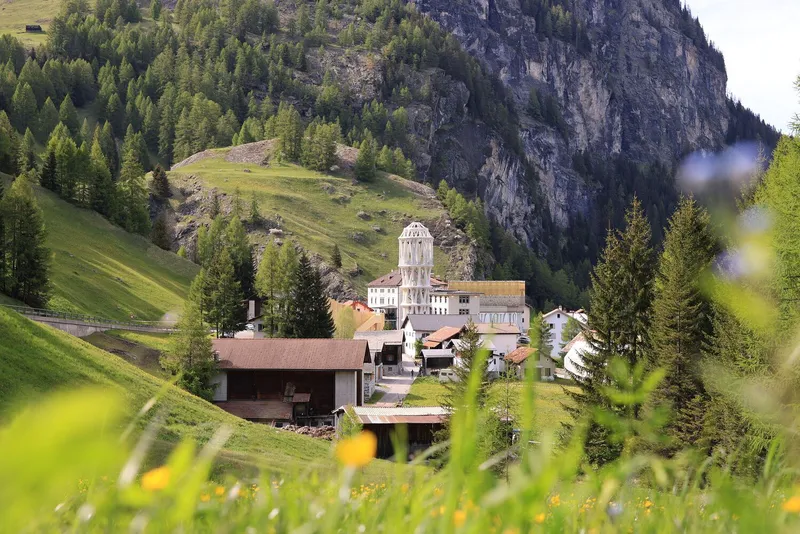

A Beacon of Culture, Innovation, and Alpine Identity
The White Tower was envisioned not only as a performance space but as a catalyst to revitalize a village facing demographic and economic challenges. Through its dramatic silhouette and ethereal ornamentation, the tower becomes a cultural landmark along the historic Julier Pass route.
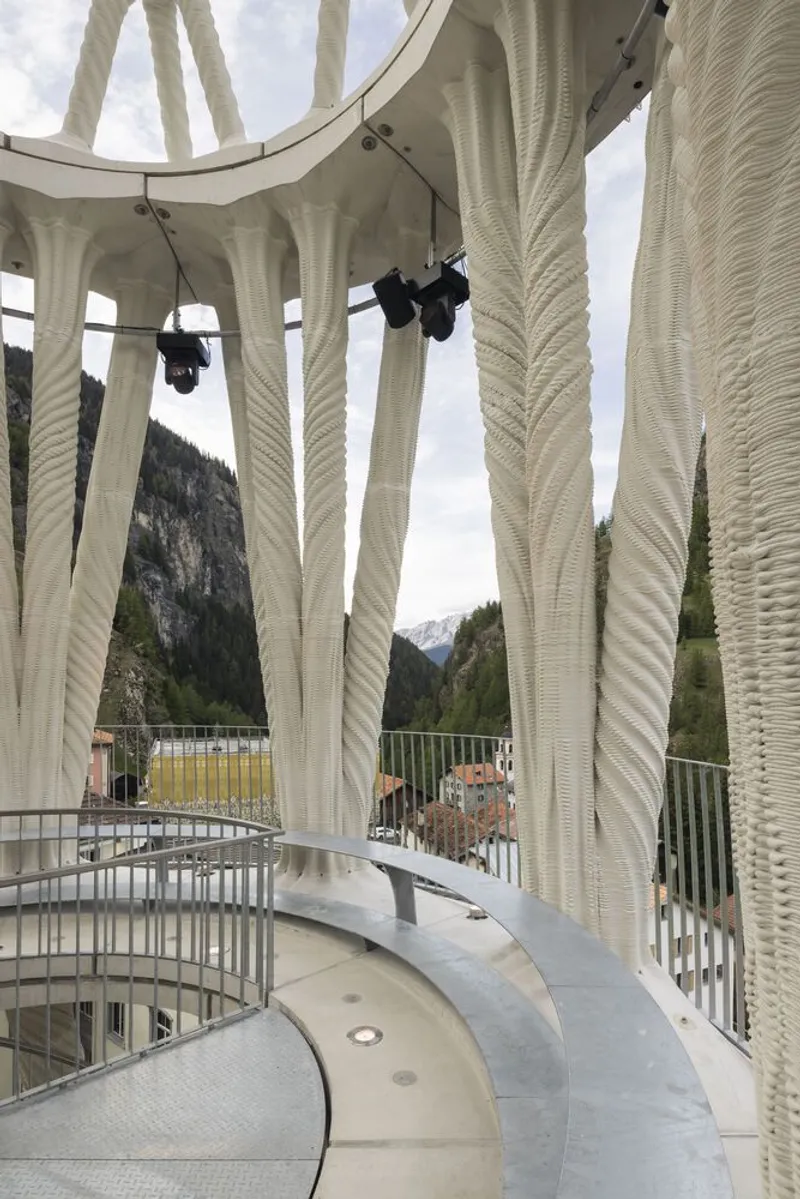
At the top sits a cupola theater—a light-filled, intimate venue suspended above the village rooftops. Here, a dense forest of filigree branching columns creates a dreamlike atmosphere where architecture, performance, and landscape dissolve into one immersive spatial experience. This unique setting merges tradition with digital futurism, generating a new cultural anchor for the region.


Architectural Expression – A New Language of 3D-Printed Ornamentation
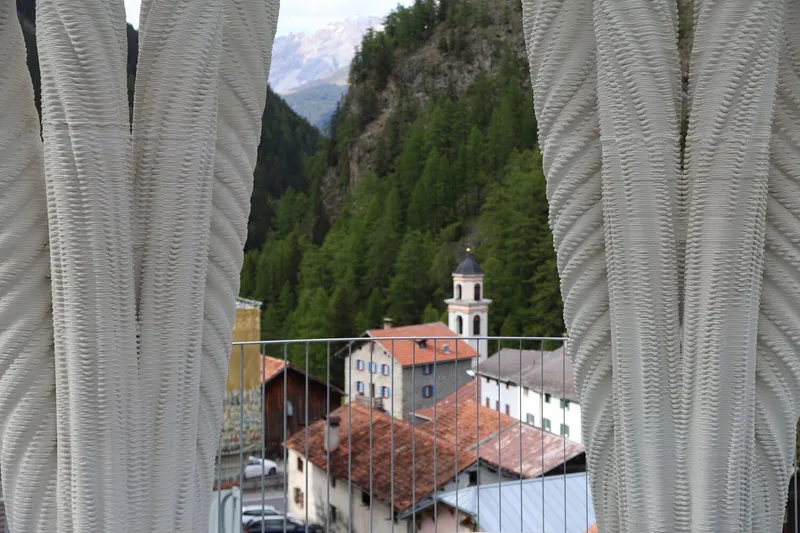
The White Tower is composed of 32 custom 3D-printed concrete columns, each distinguished by intricate detailing and multi-scalar ornamentation. Every element is computationally generated, enabling geometric expressions impossible to create through traditional formwork or manual craft.
Robotic fabrication plays a central role in shaping this new architectural language:
- Each column is printed as a thin-walled, structurally optimized form.
- The surface texture becomes a key architectural feature, creating shadow play, tactility, and depth.
- The design recalls the exuberant craftsmanship of Baroque architecture in Grisons, yet it emerges entirely from digital algorithms and robotic precision.
Visitors ascend a central spiral staircase that gradually transitions from shadowed, cavernous chambers to bright, airy volumes. Slender intertwining columns guide the eye upward until they converge beneath the filigree dome of the cupola. Here, a circular stage surrounded by 32 seats offers spectacular views of the surrounding Alps.
At dusk, the tower glows from within, transforming it into an illuminated lantern—an iconic, poetic marker in the landscape.
Pioneering Research – The Future of Digital and Circular Construction
The White Tower serves as a real-world laboratory, showcasing advanced research from ETH Zurich and cross-disciplinary experts in structural engineering, material science, and robotics. Its innovations shape the future of sustainable building.


Key Technological Breakthroughs
1. Load-bearing 3D-printed concrete columns The tower is the world’s first multi-story building to use fully structural 3D-printed concrete components, reinforced during the printing process.
2. Dual-robot fabrication system Two synchronized robots collaborate:
- One robot extrudes the concrete into intricate freeform elements.
- The second robot inserts reinforcement in real time between layers.
3. Material efficiency and formwork-free construction Concrete is only used where structurally required, dramatically reducing material waste compared to conventional casting.
4. Modular and circular design All connections are designed for simple disassembly. After its planned five-year presence in Mulegns, the structure can be dismantled and reassembled in a new location—an exemplary step toward circular architecture.


A Vision for the Future of Architecture
The White Tower demonstrates how advanced computation, parametric design, and sustainable digital manufacturing can challenge the boundaries of architectural creation. It blends:
- Cultural storytelling
- Environmental responsibility
- Technological experimentation
- Material innovation

All photographs are works of CheWei Lin, Nijat Mahamaliyev, Birdviewpicture, Benjamin Hofer, Benjamin Dillenburger and Michael Hansmeyer, Andrei Jipa, Girts Apskalns


Popular Articles
Popular articles from the community


The Amber Palace Opera: A Geological Fiction Surfaces on Tallinn's Baltic Waterfront
Pierre Brillard reimagines a Baltic legend as a public landscape, opera house, and waterfront promenade rooted in Tallinn's coastal identity.

Faces of the Soviet Avant-Garde: Turning Moscow's Street Names into an Open-Air Museum
A network of sculptural installations across a Moscow residential district transforms forgotten architect names into spatial encounters with cultural memor

Singing Woman: An Opera House That Performs Before the Curtain Rises
Ovidiu Cristian Pavel's conceptual opera house translates Estonia's choral identity into a sculpted waterfront landmark facing the Baltic Sea.
Temporary Home for Dogs: A Reversed Zoo Rethinks Animal Shelter Architecture
In Bucharest, a sinuous corridor and freed landscape flip the logic of containment, designing a shelter that works to make itself unnecessary.

Similar Reads
You might also enjoy these articles


Hodi-Mandai Geram
Project Function: Preservation and revitalization of the Intangible heritage and socio-spatial identity of the Hodi by Housing, Cultural Memory Center, Sacred Grove, landscape, local tourism economy


Olio Towers: A Mid-Rise for Performers That Fuses Housing, Rehearsal, and Stage
Located blocks from Houston's Theater District, this modular tower stacks living units around a central performance atrium.

Oasis: Modular Green Housing Carved into Dhaka's Urban Fabric
A shortlisted Plugin Housing entry reclaims unauthorized settlements in Dhaka with stepped concrete volumes, green roofs, and ventilation-driven design.

Black Hole: A Floating Megastructure for the Post-Physical Era
Emiliano Mazzarotto envisions a spherical, self-scaling arena where e-sports, digital hotels, and holographic stadiums replace traditional public space.

Explore Revolving Tower Competitions
Discover active competitions in this discipline

Challenge to reimagine the Iron Throne

Photograph architecture without architects

Illustrate the lost glory of Angkor Wat - Render Challenge

Bring back Drive In's
Comments (0)
Please login or sign up to add comments
No comments yet. Be the first to comment!