

Who was the architect, Arata Isozaki?
8 important facts to know about the passing of the renowned Japanese Architect at 91 years of age


On December 29, 2022, the world lost a renowned architect, Arata Isozaki, who passed away at his home on Japan's southern island of Okinawa at the age of 91. Isozaki, who was born in Oita on July 23, 1931, was a highly influential figure in the world of Japanese architecture and was considered one of the most well-known architects of the contemporary architecture scene.
Through his critical writings and participation as a jury member for major architecture competitions, Isozaki played a significant role in bringing the ideas of young architects from around the world to fruition. In 2019, Isozaki was awarded the Pritzker Architecture Prize, which is the highest honour in the field of architecture. He was recognized as a post-modern giant who seamlessly blended the culture and history of the East and the West in his designs.
Discover 8 key events that influenced the career of Arata Isozaki.
1. Isozaki worked under Kenzo Tange before establishing his own firm in 1963.
Isozaki completed his education in the field of architecture at the University of Tokyo's Faculty of Engineering in 1954 and kickstarted his career under the mentorship of Kenzo Tange, the 1987 Pritzker Prize winner. He founded Arata Isozaki & Associates in 1963, during a time when Japan was rebuilding itself after the war and facing political, economic and cultural turmoil.
2. The Second World War had an important influence on his early vision of architecture.
Prior to World War II, Arata Isozaki was born in Ōita, on the Island of Kyushu in Japan. At the age of 14, he witnessed the bombings of Hiroshima and Nagasaki. His architectural designs were built with the belief that although buildings are temporary, they should provide visual pleasure for those who use and pass by them.
“When I was old enough to begin an understanding of the world, my hometown was burned down. Across the shore, the Atomic bomb was dropped on Hiroshima, so I grew up near ground zero. It was in complete ruins, and there was no architecture, no buildings and not even a city. Only barracks and shelters surrounded me. So, my first experience of architecture was the void of architecture, and I began to consider how people might rebuild their homes and cities.”
3. Isozaki was a member of the first generation of juries of the Pritzker Prize
In 1979, he was selected to be a member of the inaugural Pritzker Prize Jury and remained on the panel for an additional five years.

Photo: © GianAngelo Pistoia, https://commons.wikimedia.org/wiki/User:GianAngelo_Pistoia
4. Isozaki included in his work the concept of 'Ma'
In Japanese culture, the idea of ma or space-time is prevalent, but the idea that it informs all architecture and design and impacts every aspect of life is foreign to Western thinking. For the Japanese, space is understood through intervals and dimensions around its edges rather than the emptiness within. Space begins as the distance between two points before it transforms into something like a room or a house.
5. He designed a robot
For the 1970 Osaka Expo, Arata Isozaki created a 'Demonstration Robot' that was housed within Kenzo Tange's Festival Plaza space frame. The robot featured two control rooms in its heads, with one receiving external data and sending it to the other, which then issued commands for the emission of smoke, smells, light, and sounds. The robot's body would rise and its base transformed into a performance stage.

6. In 2005, Arata Isozaki founded the Italian branch of his office, Arata Isozaki & Andrea Maffei Associates.
In 1997, Arata Isozaki (born in Oita in 1931) and Andrea Maffei (born in Modena in 1968) first crossed paths when Maffei relocated from Florence to Tokyo to collaborate with the renowned Japanese architect. Their partnership led to the formation of the Arata Isozaki & Andrea Maffei Associati in Milan in 2005. The architecture firm serves as a laboratory for reimagining and revitalizing urban neighbourhoods in some of Italy's most significant cities.
 Torre Allianz - CityLife
7. Isozaki has built more than 100 architectural projects in 6 decades
In partnership with the company he established over 60 years ago, Isozaki has created designs for over 100 structures located in various regions including Asia, Europe, North America, the Middle East, and Australia. The majority of Isozaki's projects not only showcase his unique aesthetic style, but also address the political, social, and cultural needs of the clients whom they were created for.
8. His works also include philosophy, visual art, film and theatre.
Arata Isozaki's work encompassed multiple disciplines, including architecture, urban design, graphics design, fashion, furniture design, and set design. He also played the role of a writer and collaborated with various artists.
 Arata Isozaki; Domus: La Casa del Hombre, photo courtesy of Hisao Suzuki
Cover photo: Courtesy of © citylife.it
References (1)

Popular Articles
Popular articles from the community


Tsunami Convergenics: Turning Catastrophic Ocean Forces into Underwater Housing Infrastructure
A speculative underwater settlement off the coast of Onagawa, Japan, treats tsunamis and typhoons as energy sources rather than threats.

The Amber Palace Opera: A Geological Fiction Surfaces on Tallinn's Baltic Waterfront
Pierre Brillard reimagines a Baltic legend as a public landscape, opera house, and waterfront promenade rooted in Tallinn's coastal identity.

Singing Woman: An Opera House That Performs Before the Curtain Rises
Ovidiu Cristian Pavel's conceptual opera house translates Estonia's choral identity into a sculpted waterfront landmark facing the Baltic Sea.

Temporary Home for Dogs: A Reversed Zoo Rethinks Animal Shelter Architecture
In Bucharest, a sinuous corridor and freed landscape flip the logic of containment, designing a shelter that works to make itself unnecessary.

Similar Reads
You might also enjoy these articles
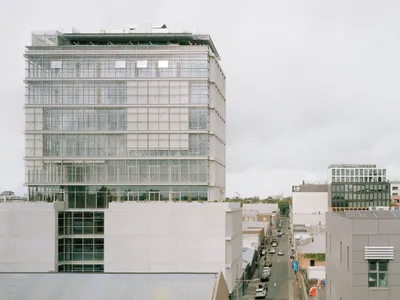
116 Rokeby Building, Collingwood
Sustainable Collingwood office building featuring double-skin façade, natural ventilation, rooftop amenities, and carbon-neutral design focused on wellbeing and longevity.
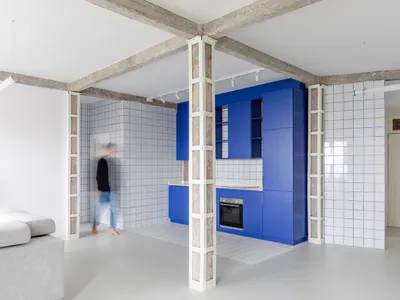
Contemporary Apartment Renovation in Spain: RV House by BIAN Opens Up to the Sea
A minimalist 1930s apartment in Santander is transformed into a flexible, sea-facing home through contemporary Spanish renovation.
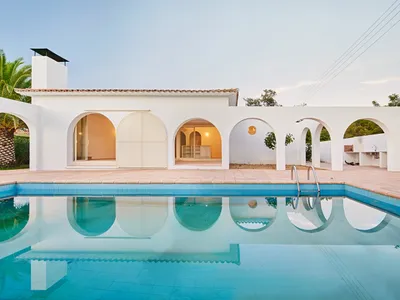
3 Marías House: A Contemporary Mediterranean Courtyard Retreat by Bajet Giramé + Burckhardt
Mediterranean courtyard home blending traditional architecture with modern design, terracotta flooring, flexible interiors, sustainable climate strategies, and garden integration.
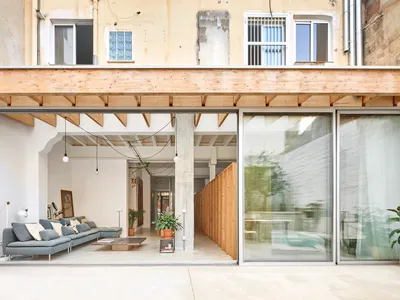
NZ10 Apartment by auba studio: Adaptive Reuse in Palma de Mallorca
Adaptive reuse apartment transforms bakery into light-filled home with patios, privacy layers, and wood interiors enhancing urban living experience.

Explore İshak Şimşek Arhitecture Competitions
Discover active competitions in this discipline


Challenge to reimagine the Iron Throne

Photograph architecture without architects

Illustrate the lost glory of Angkor Wat - Render Challenge

Bring back Drive In's
Comments (0)
Please login or sign up to add comments
No comments yet. Be the first to comment!