

Winery Bélair-Monange by Herzog & de Meuron
Herzog & de Meuron’s Bélair-Monange Winery merges heritage, landscape, and concrete architecture, creating a sustainable, sculptural landmark in Saint-Émilion, France.


A Sculptural Winery Rooted in Heritage and Landscape
Located in the UNESCO World Heritage village of Saint-Émilion, France, the Winery Bélair-Monange by Herzog & de Meuron represents a delicate balance between heritage preservation, contemporary architecture, and sustainable wine production. Completed in 2023, the 4,590 m² project redefines the typology of a winery — merging architecture, landscape, and viniculture into a unified cultural expression.
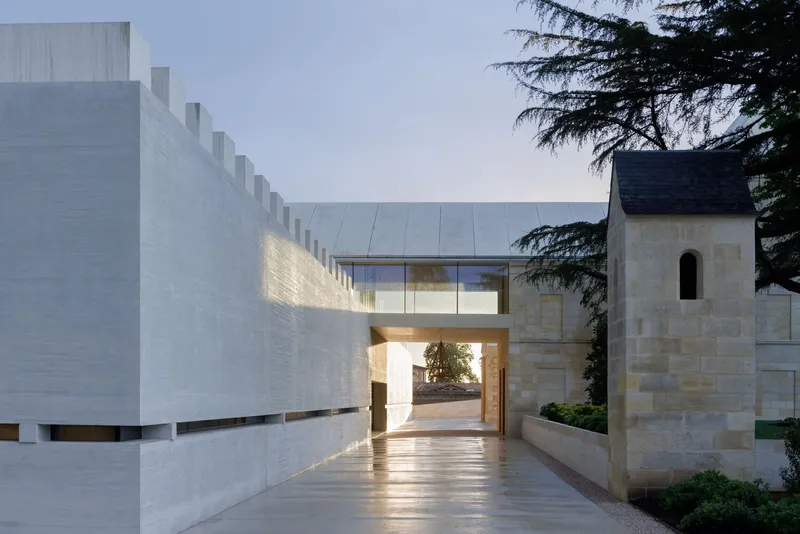
This architectural intervention not only enhances the functionality of the estate’s winemaking process but also contributes to the cultural and environmental identity of Saint-Émilion, one of France’s most revered wine regions.
Context and Continuity
The Bélair-Monange Winery continues a 20-year collaboration between Herzog & de Meuron and the Moueix family, following their iconic Dominus Winery in Napa Valley. Situated on the clay-limestone plateau of Croix Gaudin, the project respects the geological and historical context of the area. The site’s undulating topography, vineyards, and proximity to the Dordogne Valley establish a poetic dialogue between architecture and terroir.
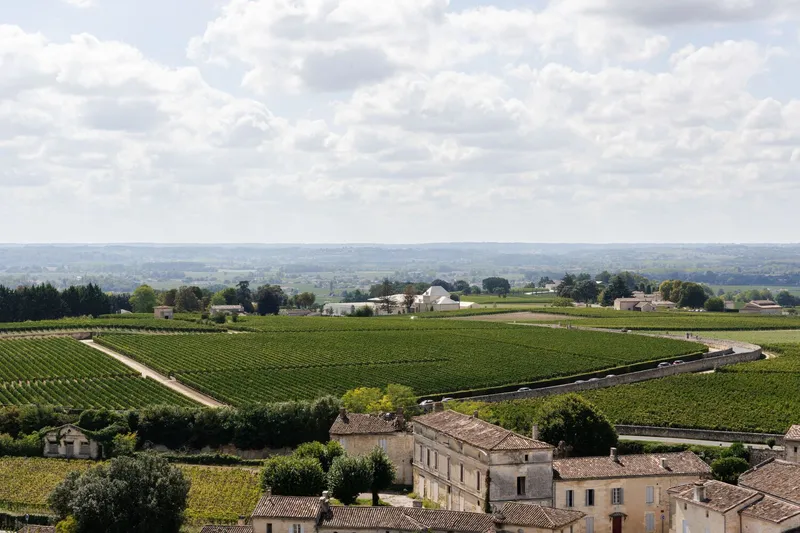
The region’s history dates back to Roman times, with Saint-Émilion’s medieval churches, chapels, and monasteries serving as silent witnesses to centuries of winemaking culture. The new winery embraces this heritage, ensuring that each intervention preserves the area’s cultural and ecological integrity.
Integrating Landscape, Heritage, and Modern Architecture
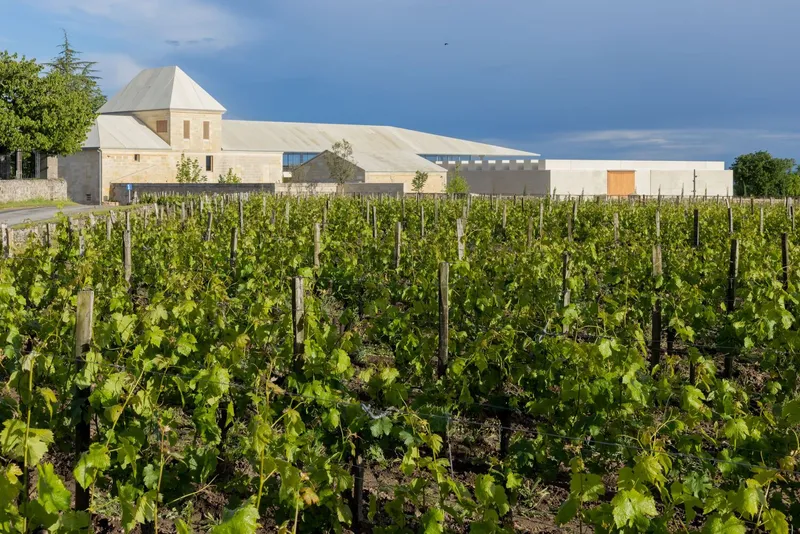
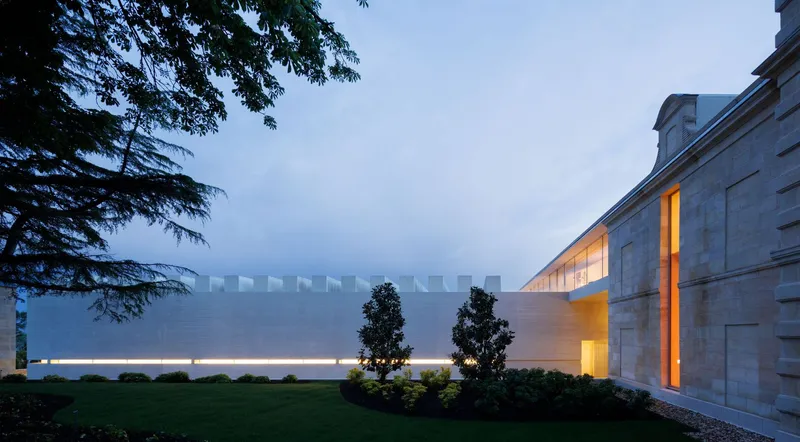
Herzog & de Meuron’s design approach stems from material continuity and spatial restraint. The project integrates seamlessly with the adjacent Magdelaine Park, characterized by its ancient holm oaks, lime trees, and sycamore maples. The park acts as a natural threshold, leading to a monolithic architectural ensemble that embodies both permanence and subtle transformation.
At the heart of the site lies a 19th-century stone house, preserved and transformed into a sculptural centerpiece. Most of its original openings were delicately infilled, leaving shadowed impressions that evoke the palimpsest of history. Three new window openings reorient the structure towards the Dordogne Valley, reconnecting the old with the new.
Architecture and Material Expression
The new winery cellars are partially embedded into the terrain, forming a concrete monolith that echoes the solidity of the stone house. The ochre-hued concrete, chosen for its thermal stability and textural richness, provides an ideal environment for wine maturation. This material duality — stone and concrete — symbolizes the dialogue between heritage and modernity.
Large wooden doors on the southern façade recall vernacular architecture, transforming during harvest season to open the interior to the vineyards. The roof’s concrete beams, referencing ancient Roman furrows, are sculpted to enhance passive ventilation — a sustainable gesture rooted in regional craft and climatic intelligence.
Spatial Organization and Symbolism
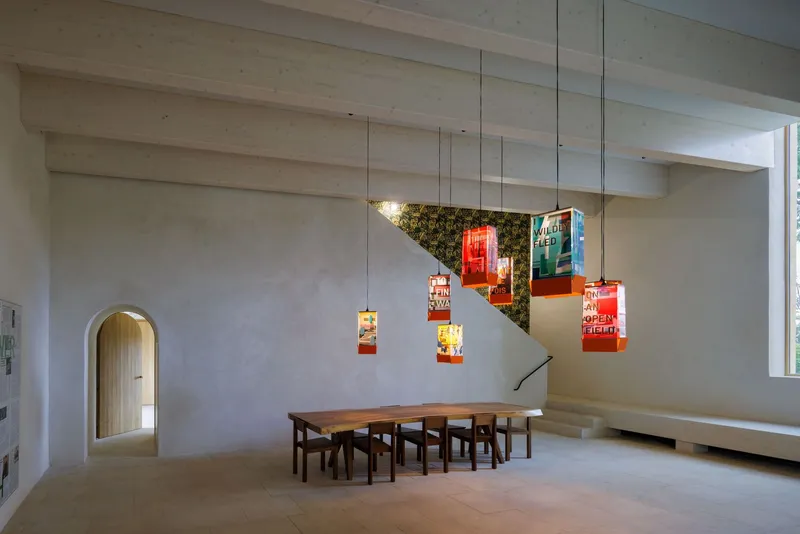
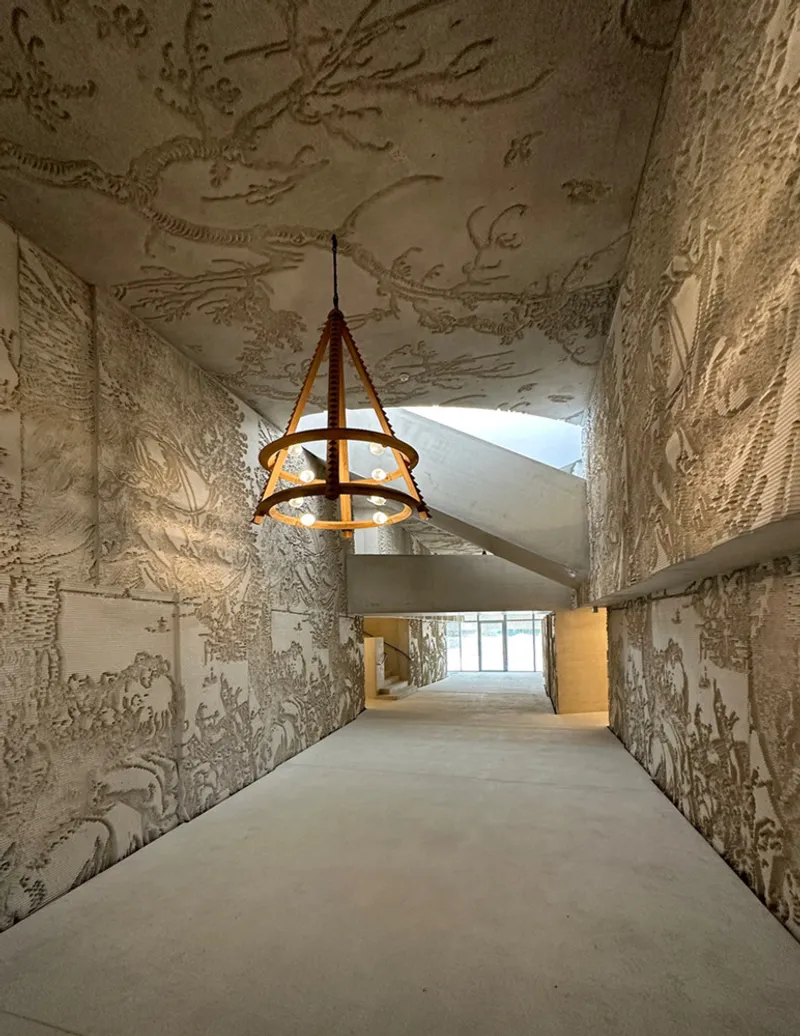
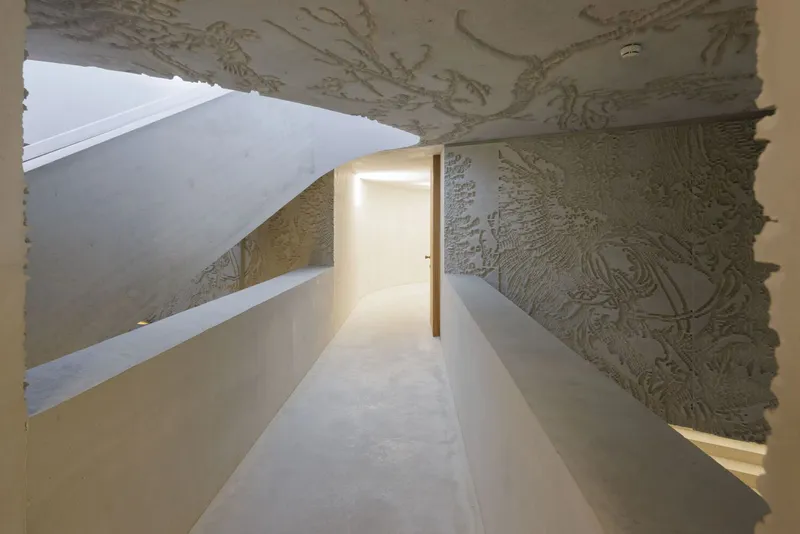
The winery’s layout follows a quadruple symmetry, organized around a central concrete passageway — a reference to the underground quarries and monolithic church of Saint-Émilion. The raw concrete walls and ceiling feature an engraving pattern inspired by Albrecht Dürer’s 1504 work, “Joachim and the Angel,” which also adorns the estate’s wine labels.
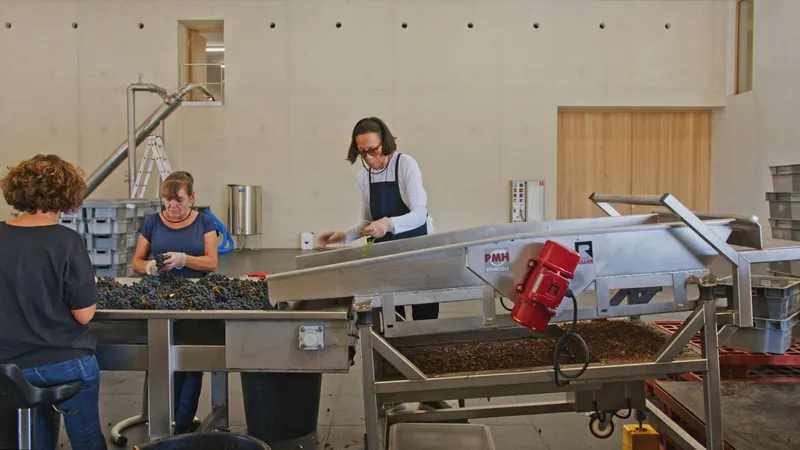
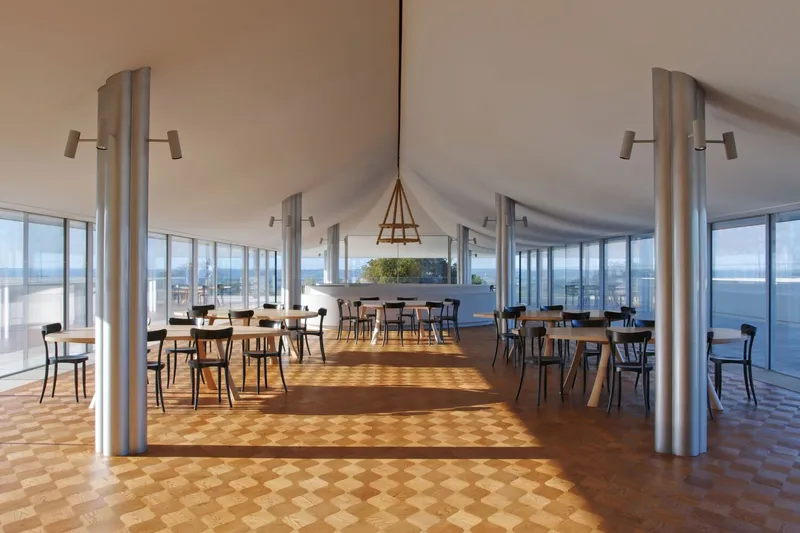
This central spine connects the four principal zones: the harvest reception area, vat room, and twin barrel cellars. A monumental staircase carved into the concrete mass unites the spaces vertically, guiding movement from production to the upper-level tasting and reception rooms. These spaces open entirely toward the landscape, offering panoramic views of the Dordogne Valley, where architecture meets terroir in full sensory experience.
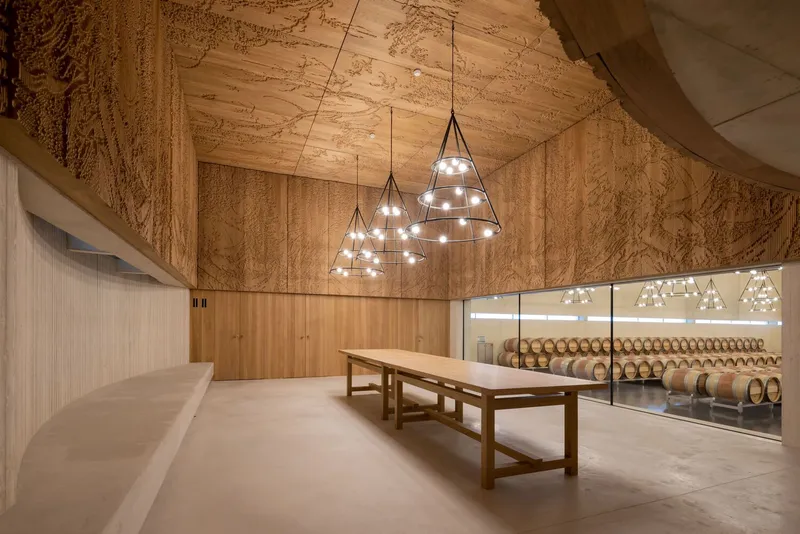
A Dialogue Between Architecture and Terroir
The design of Bélair-Monange Winery is not only a technical achievement but a cultural and environmental statement. Every architectural gesture — from the buried cellar volumes to the restrained façades — is a reflection of Saint-Émilion’s geological and agricultural essence.
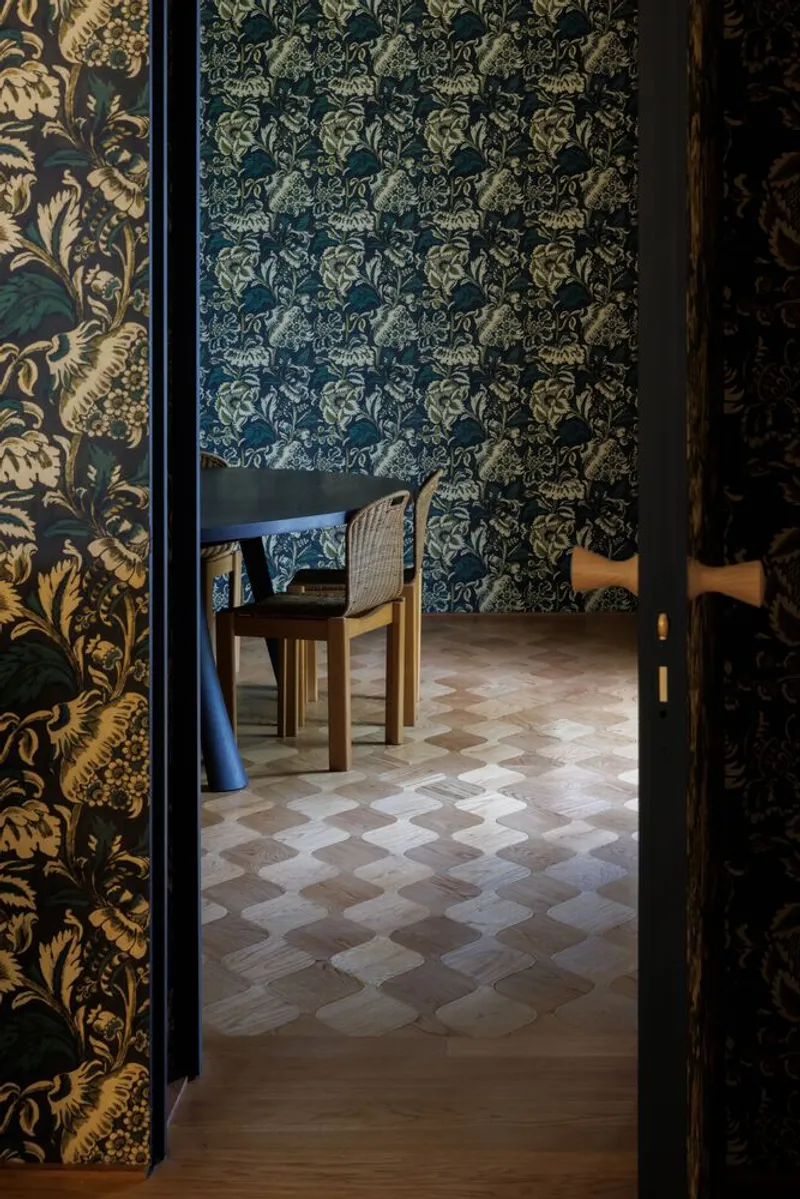
The project transcends mere production efficiency, transforming the winery into a public cultural landmark. Visitors are invited to experience viniculture firsthand, bridging the gap between wine, landscape, and architectural experience.
Through its material authenticity, contextual sensitivity, and spatial choreography, Herzog & de Meuron’s design elevates the winery into a living expression of terroir — one where architecture and nature mature together, much like the wine it produces.
Project Details
Architects: Herzog & de Meuron Location: Saint-Émilion, France Project Area: 4,590 m² Year: 2023 Photographers: Iwan Baan, Christoph Röttinger Structure: Batiserf Client: Moueix Family
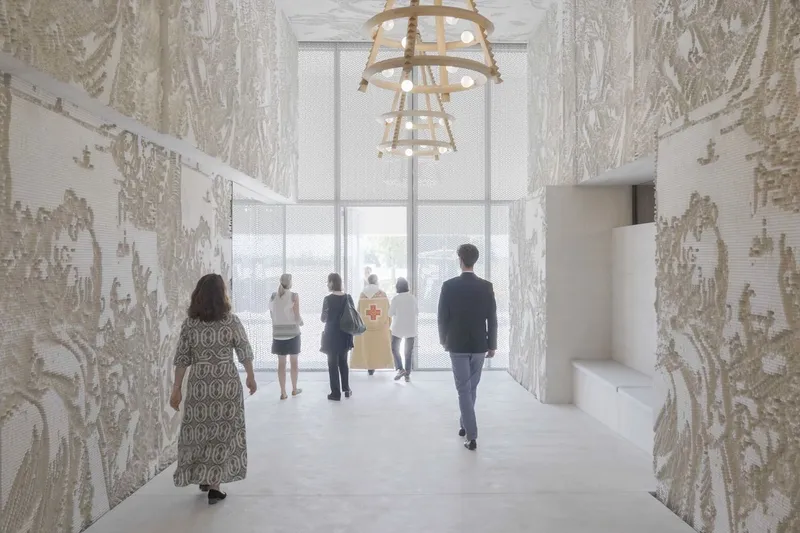
All photographs are works of Christoph Röttinger - Herzog & de Meuron


Popular Articles
Popular articles from the community


U.GA Architects Wraps an Oval Rooftop Pool in Curved Board-Formed Concrete on Busan's Jeollidan-gil
In Busan's Jeonpo-dong, a 454 m² mixed-use block stacks a neighborhood facility, guest rooms and an oval rooftop pool inside spiraling concrete walls.

longwave studio Reorganizes a 112 m² Tainan Apartment Around the Daily Routines of a Family and Two Cats
In Tainan, Taiwan, birch plywood, rust-red furniture and a freestanding plaster wall link arrival, storage, work and family life in one apartment.

Architekt Andreas Gruber Scatters 23 Dark Timber Chalets Across a South Tyrolean Forest Edge
In Molini di Tures, Amonti Chalets breaks a resort into a hamlet of gabled timber houses, with parking, storage and services pushed into the slope.

Juan García Correa, John González and Claudia Rueda Sink a Circular Amphitheater into a Manizales Engineering Building
On the La Nubia campus in Manizales, Colombia, the S1 Building folds labs and offices into a hillside of ramped lawns that double as a campus route.

Similar Reads
You might also enjoy these articles


Hodi-Mandai Geram
Project Function: Preservation and revitalization of the Intangible heritage and socio-spatial identity of the Hodi by Housing, Cultural Memory Center, Sacred Grove, landscape, local tourism economy


Olio Towers: A Mid-Rise for Performers That Fuses Housing, Rehearsal, and Stage
Located blocks from Houston's Theater District, this modular tower stacks living units around a central performance atrium.

Oasis: Modular Green Housing Carved into Dhaka's Urban Fabric
A shortlisted Plugin Housing entry reclaims unauthorized settlements in Dhaka with stepped concrete volumes, green roofs, and ventilation-driven design.

Black Hole: A Floating Megastructure for the Post-Physical Era
Emiliano Mazzarotto envisions a spherical, self-scaling arena where e-sports, digital hotels, and holographic stadiums replace traditional public space.

Explore Winery & Resort Competitions
Discover active competitions in this discipline

Challenge to reimagine the Iron Throne

Photograph architecture without architects

Illustrate the lost glory of Angkor Wat - Render Challenge

Design challenge to reuse E-waste
Comments (0)
Please login or sign up to add comments
No comments yet. Be the first to comment!