

Winery Tenute Maestrale by Spaziozero + X Architekten: A Landscape-Born Architecture in Southern Sardinia
Winery Tenute Maestrale by Spaziozero + X Architekten integrates corten steel, concrete, and landscape, creating a sustainable, minimalist Sardinian winemaking facility.


Amid the rolling vineyards and olive groves of Donori, Sardinia, Winery Tenute Maestrale by Spaziozero + X Architekten emerges as a powerful yet discreet synthesis of architecture, production, and landscape. The 1,500-square-meter winery demonstrates how industrial functionality can coexist harmoniously with the natural beauty of rural terrain, creating a building that enhances, rather than dominates, its environment.
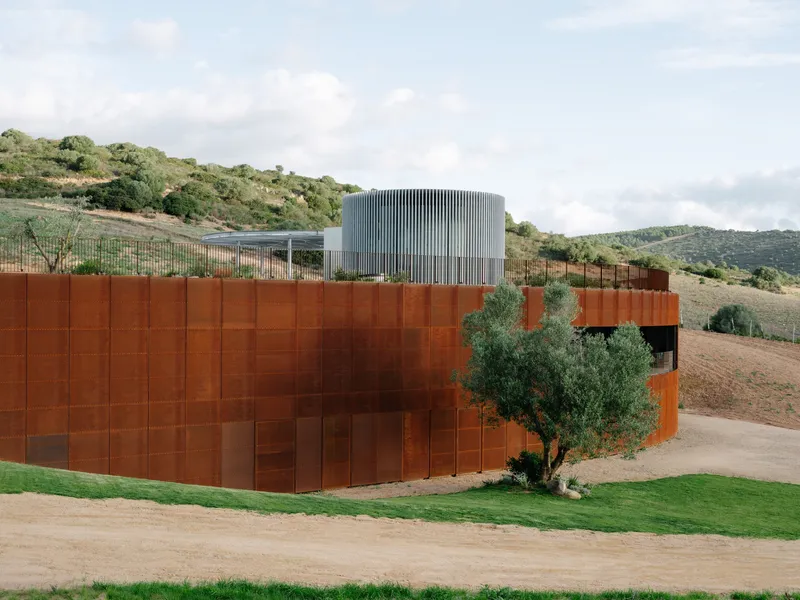
Rooted in the Landscape
Strategically positioned on the northern edge of Donori, in the fertile Parteolla region, the winery sits within a landscape shaped for centuries by agriculture. The design rejects the idea of the typical isolated industrial structure. Instead, it was conceived as an architectural continuation of the land itself—one that defines a boundary without separation, blending production with panorama.
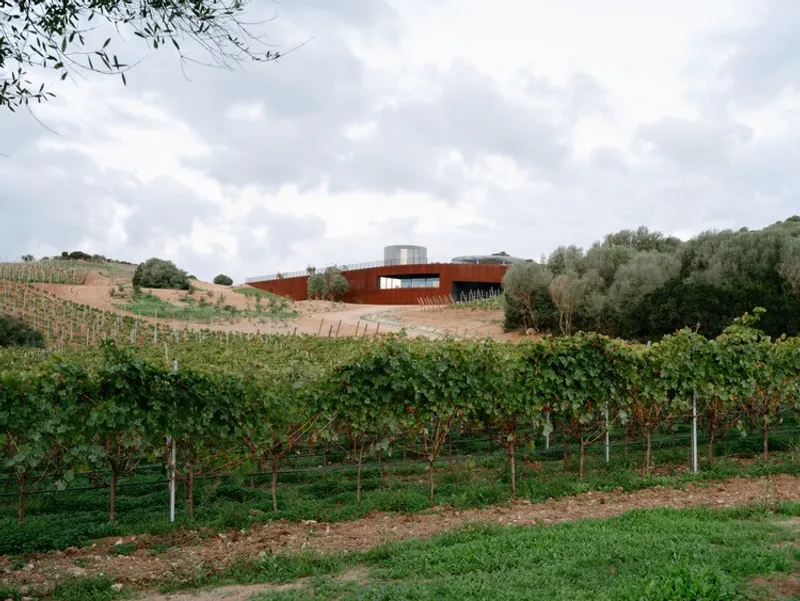
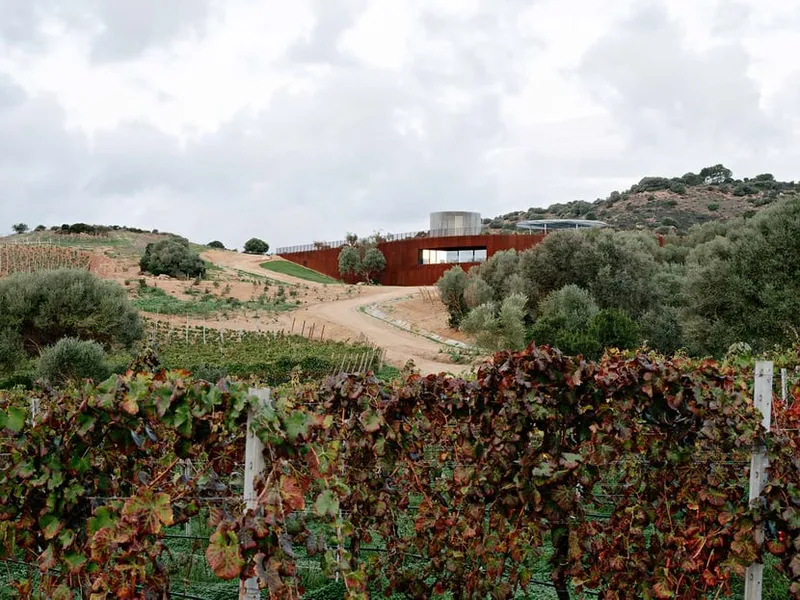
Its horizontal composition and earthy tones allow the building to merge seamlessly into the terrain. The architecture does not intrude—it emerges from the soil, creating a natural transition between cultivated land and open sky. A panoramic terrace crowns the structure, offering sweeping views of the vineyards and the Gerrei mountains, reminding visitors of the deep relationship between region and vine.
Architecture of Subtle Strength
The project was designed with a guiding principle of architectural restraint. Spaziozero and X Architekten sought to express function through clarity rather than ornamentation. As a result, the winery’s visible architecture is pared back to essential gestures that communicate purpose, precision, and permanence.
Two-thirds of the building is buried underground, insulating it thermally and visually integrating it with the landscape. Only the southern façade reveals itself—a monumental surface clad in perforated corten steel panels. These panels, rich in rust-red hues, echo the warm colors of the Sardinian soil and age naturally with time, reinforcing the building’s dialogue with weather and seasons.
This single visible elevation carries two distinct interventions:
- A large loggia cut-out, which houses the wine-tasting room and opens fully to sunlight and landscape.
- A deep sculpted void, marking the entrance to the production area, acting as both threshold and spatial sculpture.
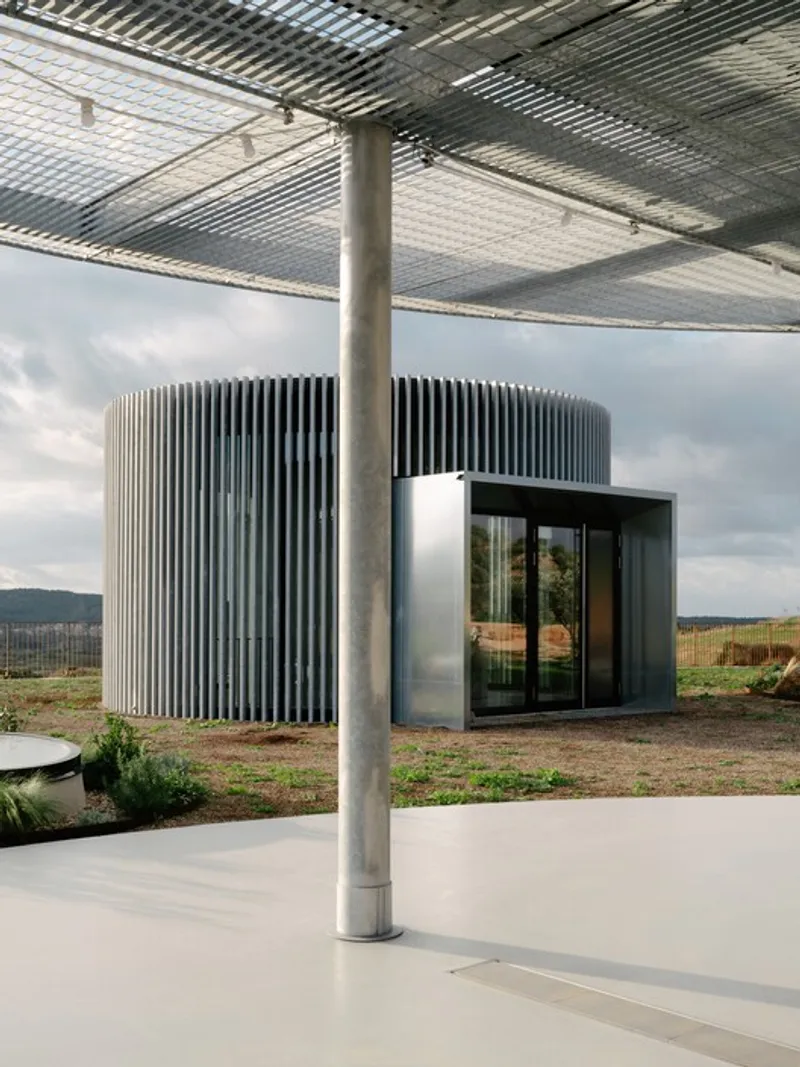
Together, these openings anchor the otherwise monolithic form with movement, shadow, and light—creating a refined conversation between human activity and geological permanence.
Program and Spatial Experience
The winery unfolds vertically across multiple semi-buried levels, with visitor, production, and storage areas arranged to follow the winemaking process from grape to bottle.
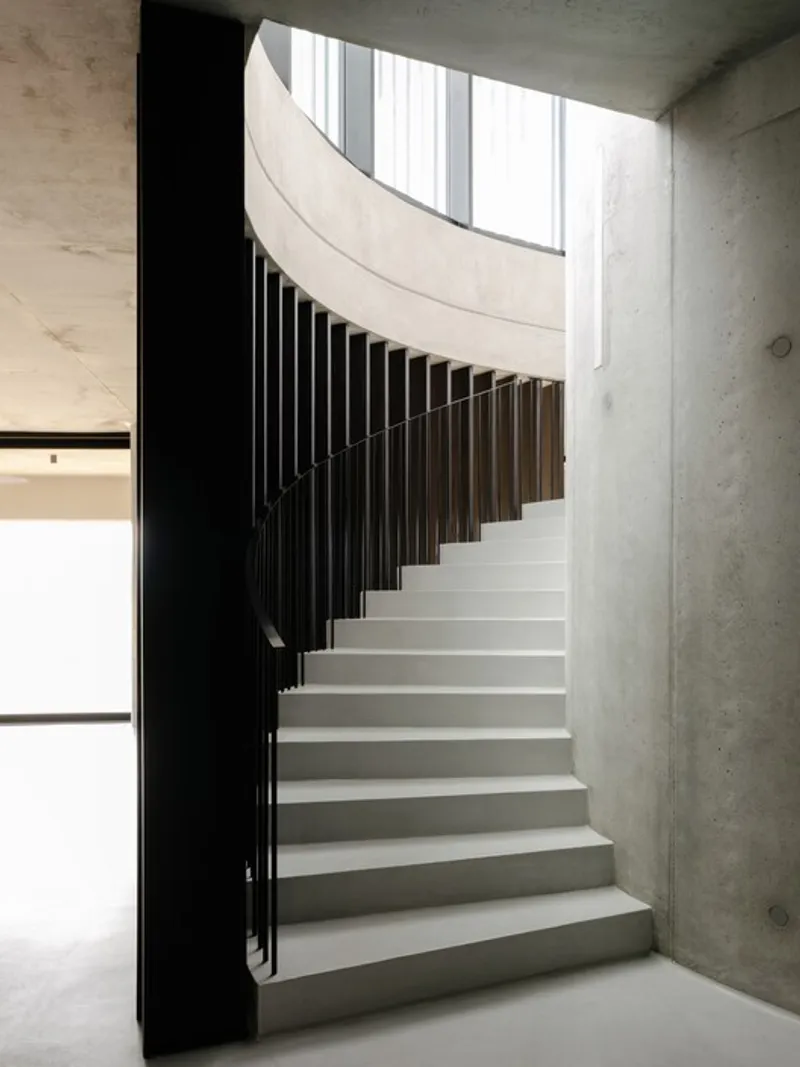
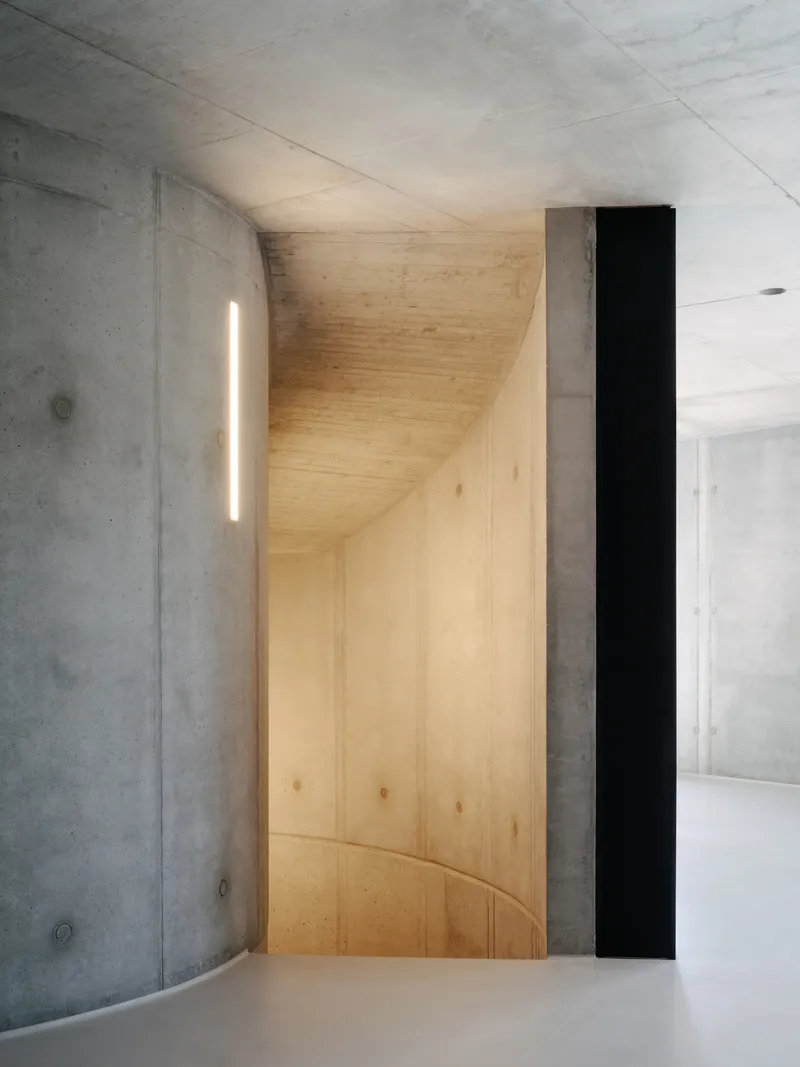
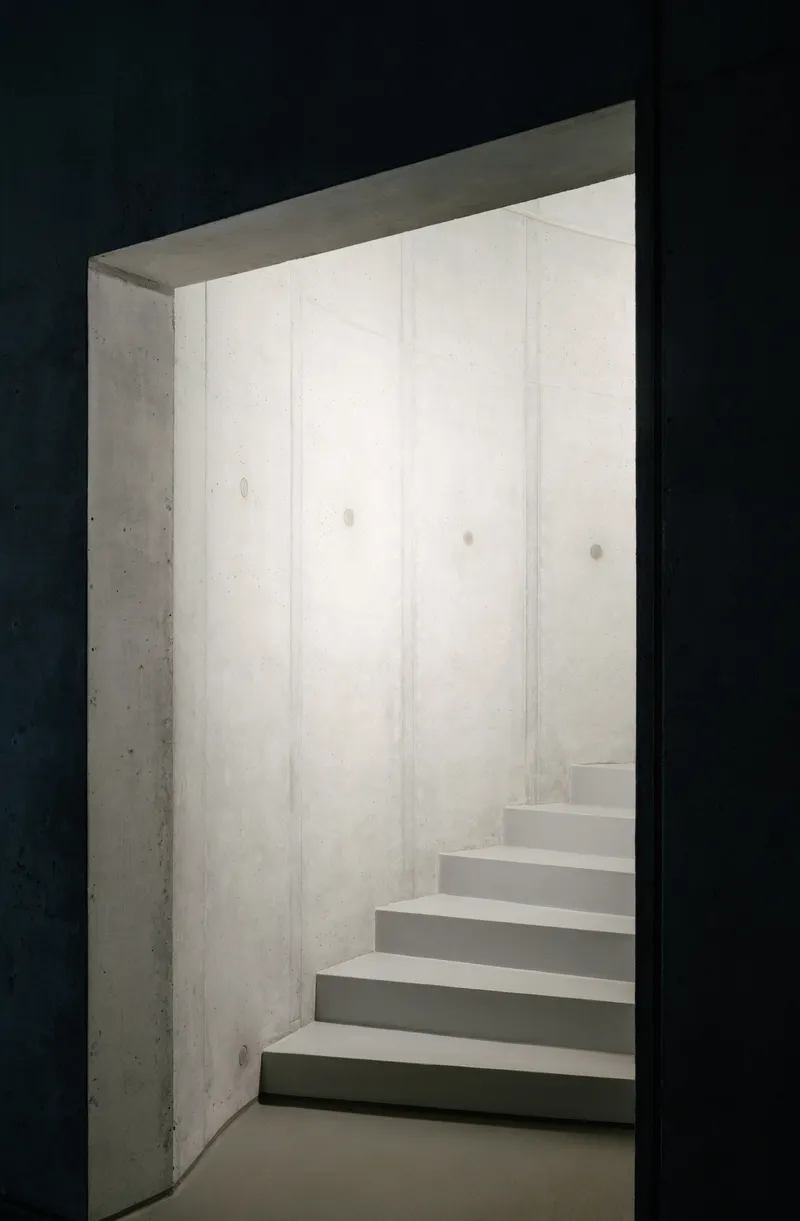
- At ground level, a cylindrical access tower clad in galvanized steel marks the main entry point. It houses an elevator and spiral staircases that connect to various levels.
- Above, a roof pergola shelters the grape reception area, where the first pressing occurs. The crushed grapes drop directly into tanks located below, ensuring a gravity-led production process consistent with traditional winemaking methods.
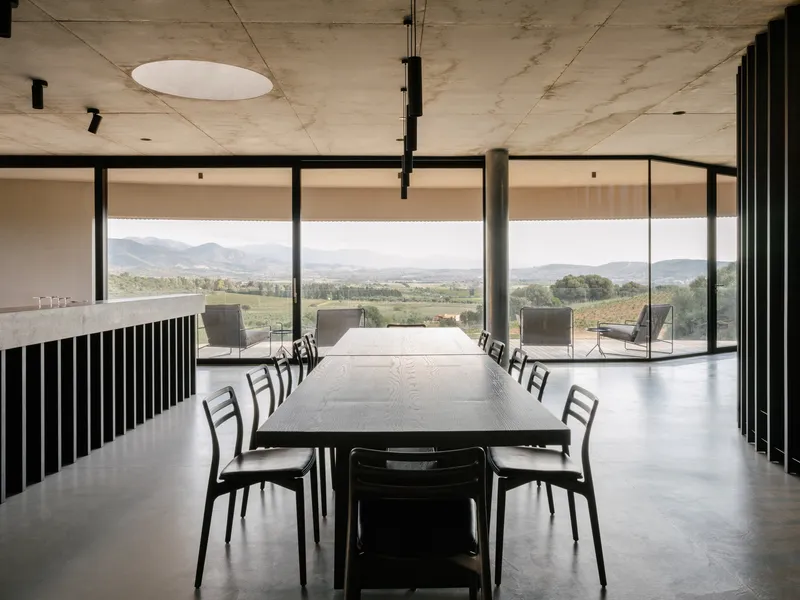
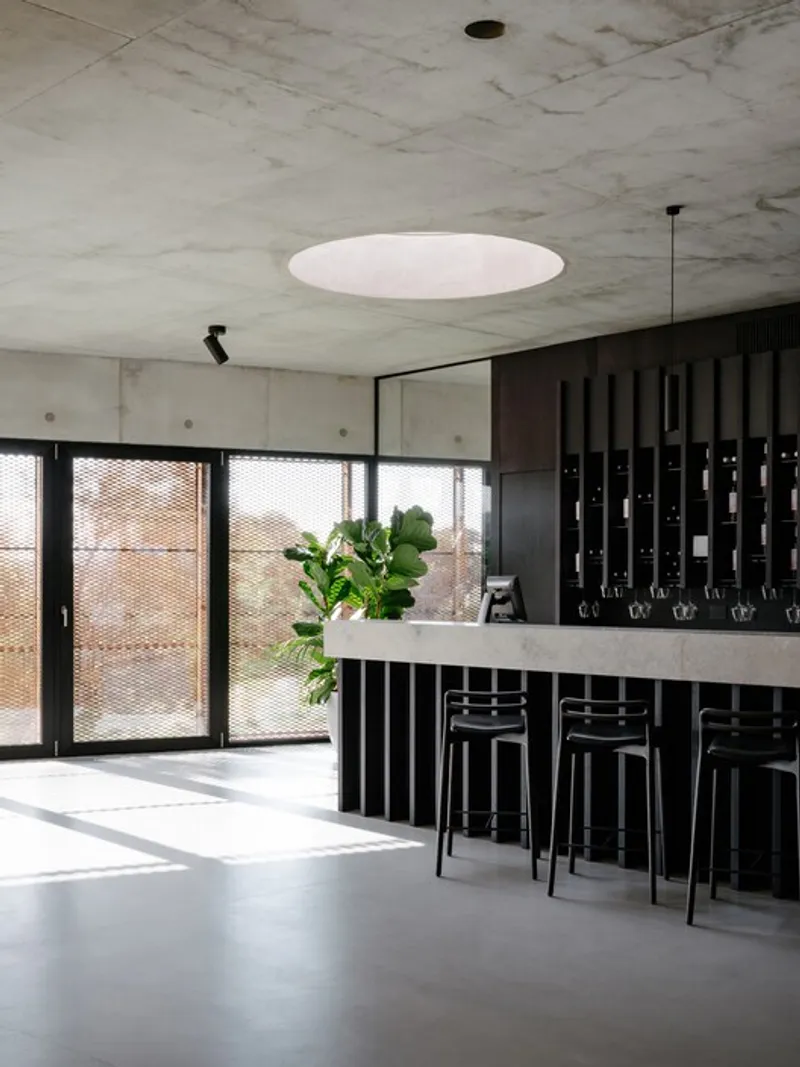
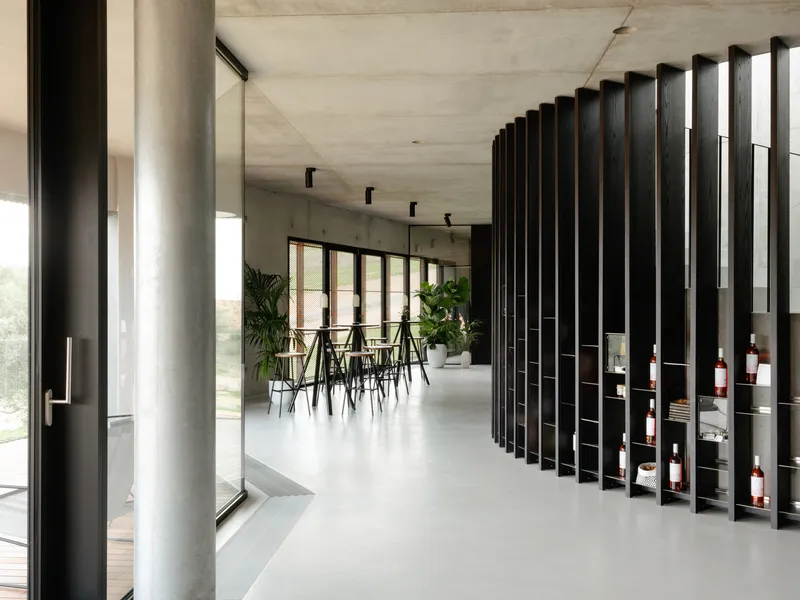
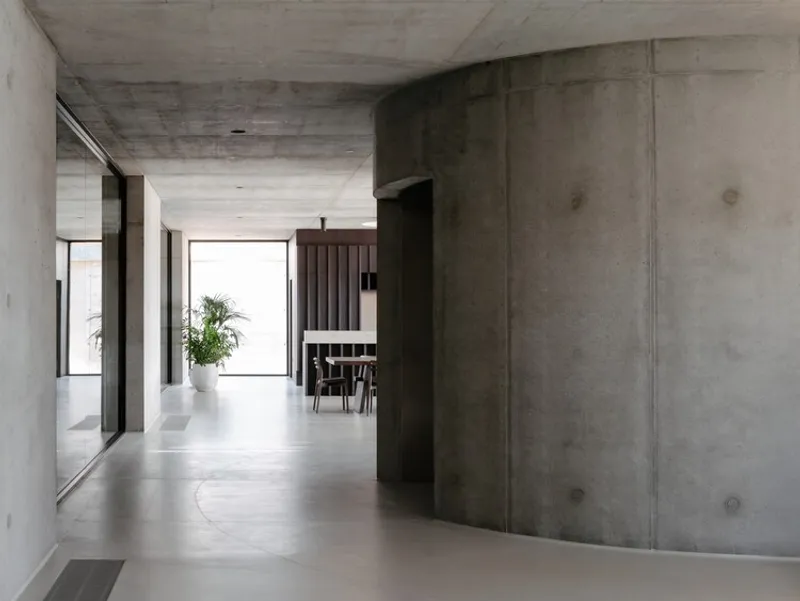
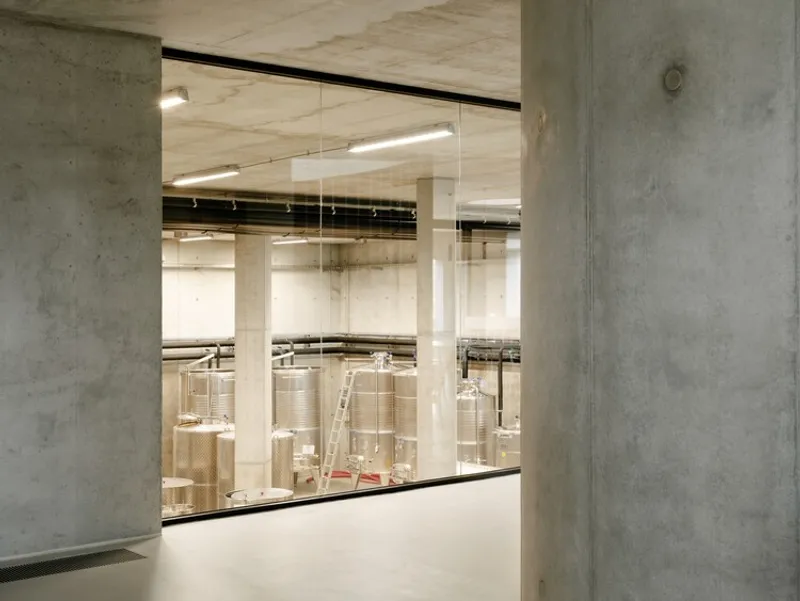
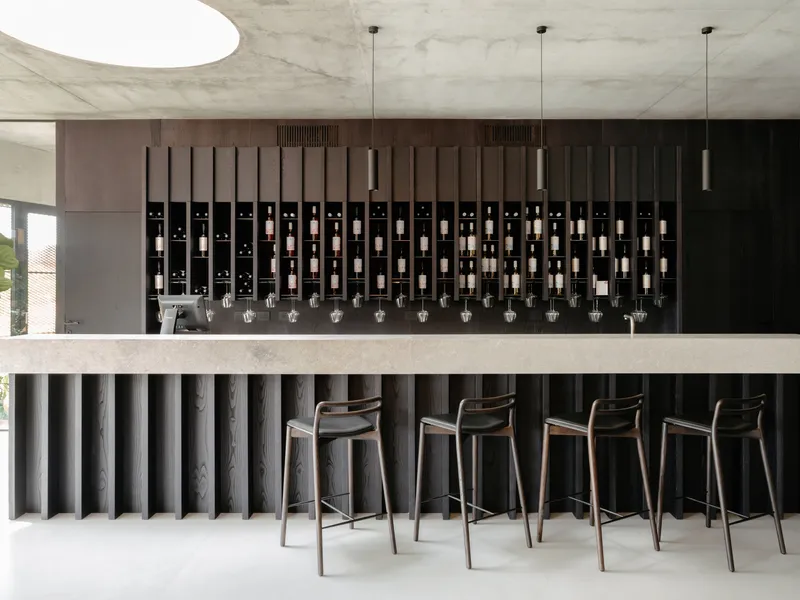
The first underground floor accommodates public spaces: the reception area, tasting rooms, and hospitality suites, each featuring large viewing windows that frame glimpses of the production below. Here, darkened chestnut wood finishes warm the concrete interiors, creating an atmosphere of intimacy and sensory richness.
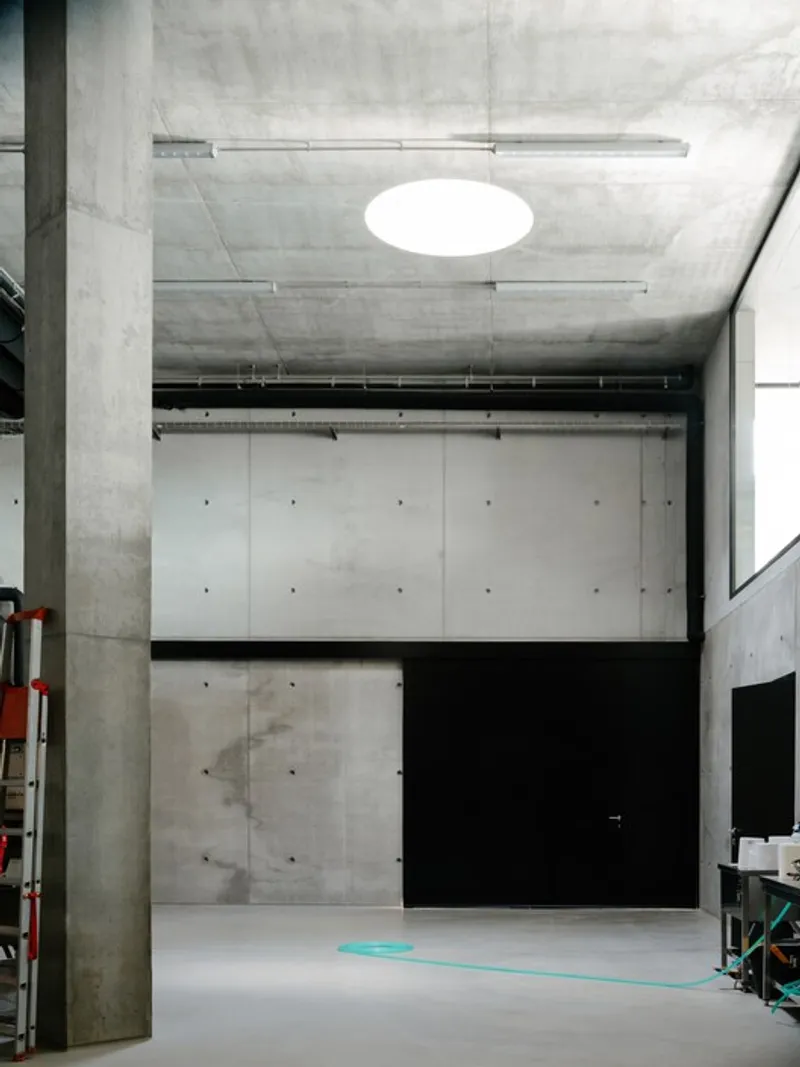
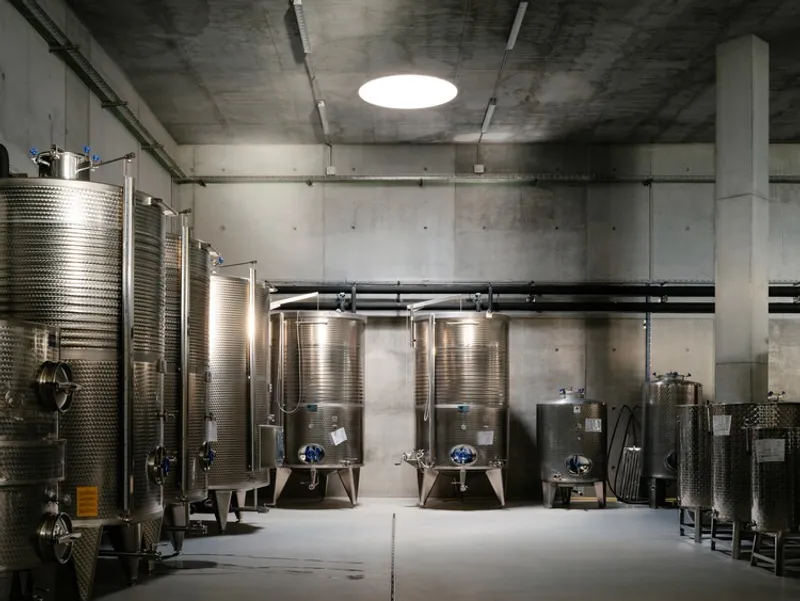
The second basement level houses essential production zones—fermentation tanks, barrel cellars, and bottling areas—where consistent underground temperatures naturally regulate the delicate aging processes, reducing reliance on artificial cooling systems.
Material Expression and Construction Logic
Material selection is based on honesty and performance. The reinforced concrete structure conveys both strength and simplicity, its unfinished texture forming a backdrop for the ritual precision of wine production.
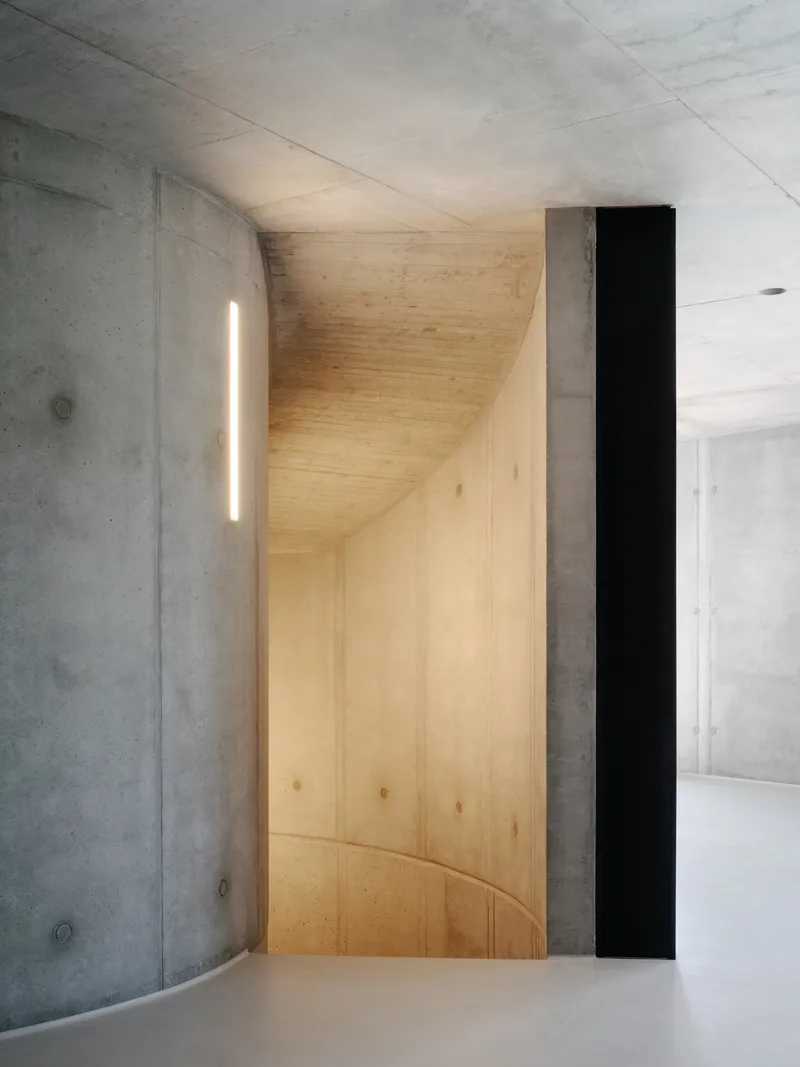
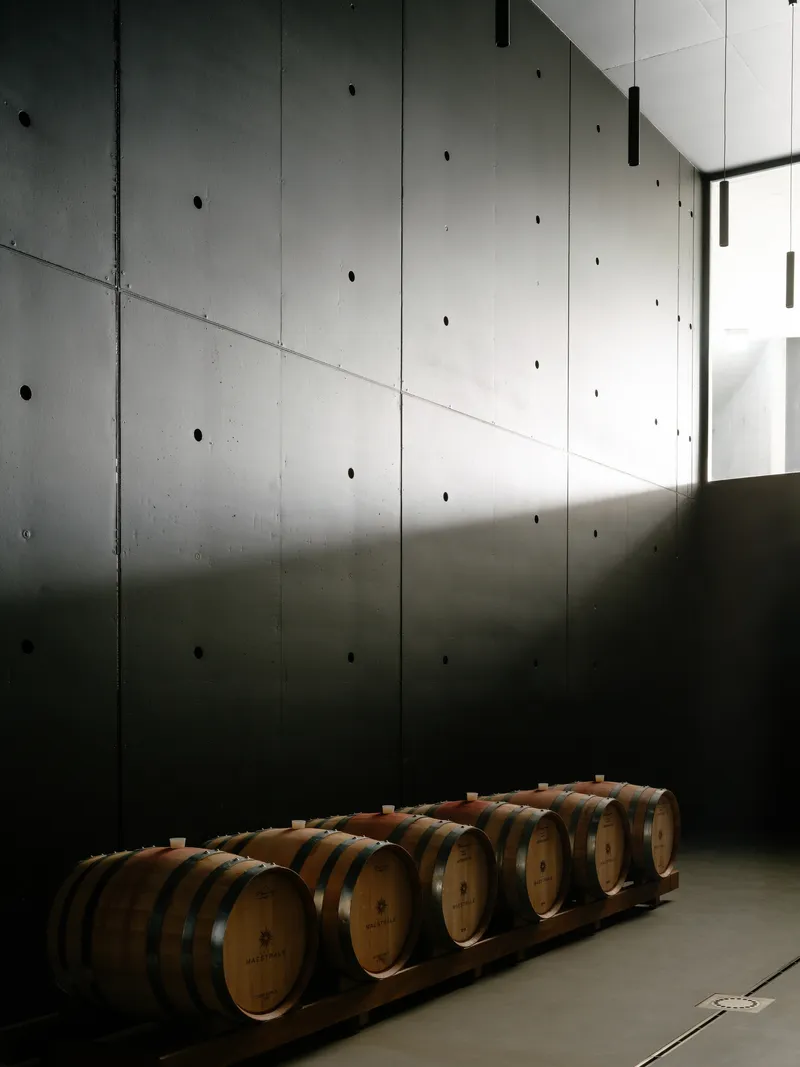
Throughout, materials are chosen for their local relevance and endurance:
- Corten steel for façade longevity and color integration.
- Chestnut wood for interior cabinetry, adding warmth and tactility.
- Galvanized steel for the access tower, contrasting the matte roughness of concrete with a silvery industrial sheen.
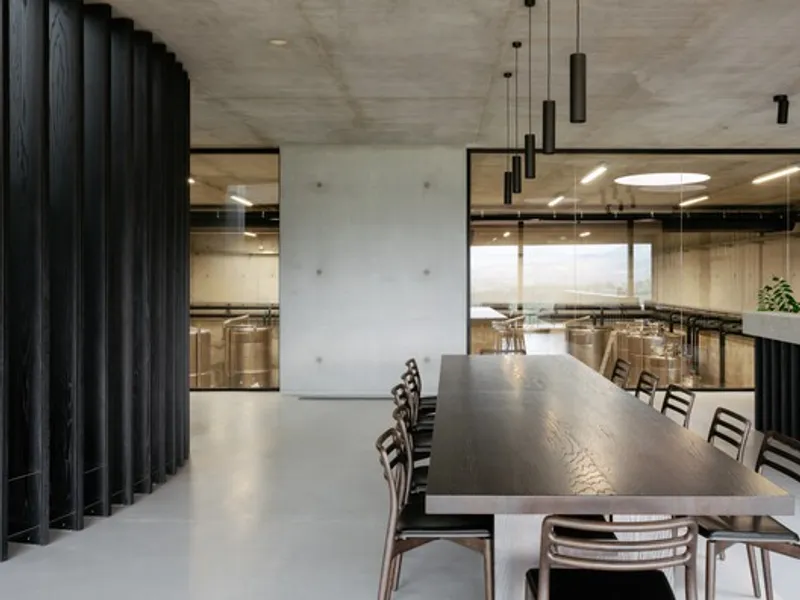
The architects deliberately avoided decorative excess, focusing instead on elements that serve both functional and sensorial purpose—light, shadow, temperature, and rhythm.
Sustainability Through Building Logic
The winery’s semi-buried configuration is inherently energy-efficient. Subterranean levels maintain stable temperatures year-round, significantly reducing energy use for cooling or heating. Skylights, natural ventilation shafts, and the open loggias orchestrate passive daylighting and airflow, eliminating dependence on mechanical systems wherever possible.
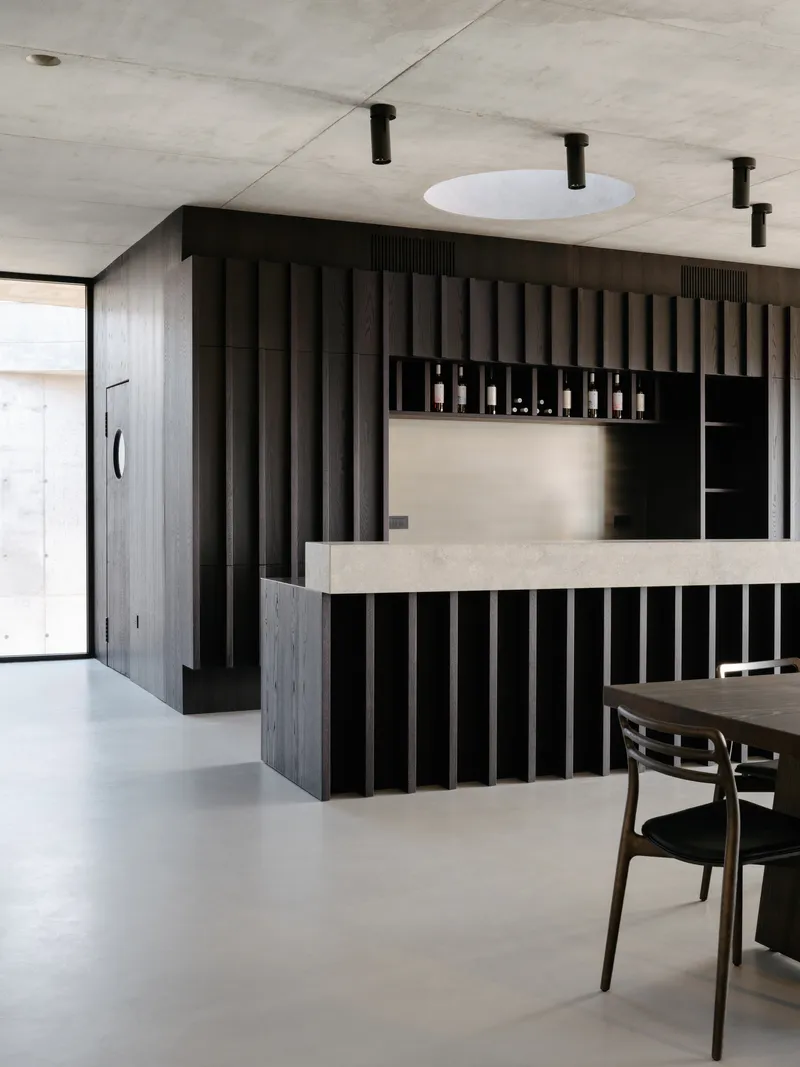
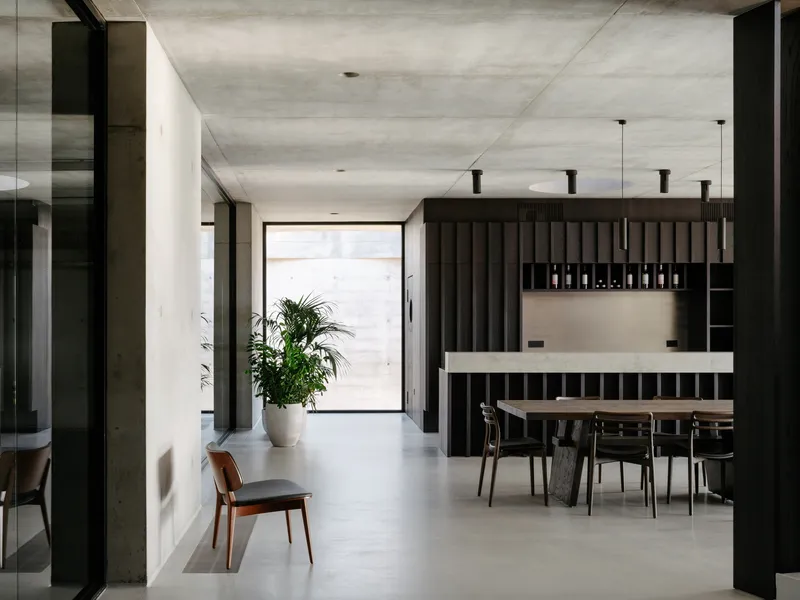
This symbiosis of form and environment reflects an architectural ethic of sustainability through simplicity—where efficiency, durability, and restraint lead to longevity. The result is a built form that minimizes visibility and energy footprint while amplifying ecological and cultural harmony.
Architecture as Earth and Craft
From the vineyards below, Winery Tenute Maestrale appears almost as a geological extension—part hill, part sculpture, and part industrial machine. The muted corten skin shifts with the weather, mirroring the landscape’s cyclical rhythms. Within, concrete and steel support the machinery of viticulture while maintaining a meditative, almost monastic quietness.
Spaziozero + X Architekten demonstrate that industrial architecture can transcend function, embodying place, history, and human craft. The building becomes a dialogue between permanence and transformation, expressing the very essence of winemaking—the slow, patient art of change.
All the photographs are works of Giaime Meloni


Popular Articles
Popular articles from the community


GROUP A Strips a 1969 Rotterdam Harbor Headquarters to Its Frame and Wraps It in Timber Louvers
In Rotterdam's M4H harbor district, Ferro Offices reuses a 1969 frame, adds one timber storey and reaches BREEAM-NL Outstanding.

David Macias Steps a Doorless Stone and Plaster House Down a Tropical Colombian Hillside
In the humid hills of Colombia, Threshold House replaces the front door with an open void and terraces its 850 m² down the slope instead of fighting it.

Cube Design Draws an Ecological Corridor Between Two Shenzhen Hills with the Nankai Building
Beside Shenzhen's container docks, the Nankai Building pairs stacked balconies with a climbing green screen to connect two hillsides across its height.

David Ortega Stacks a Two-Story Mexico City Penthouse Around a Steel Stair and a Pergola-Shaded Roof Terrace
In Colonia Roma, a 300 m² penthouse uses oak joinery, a planted steel stair and a slatted roof pergola to make a new-build apartment feel like a house.

Similar Reads
You might also enjoy these articles


Hodi-Mandai Geram
Project Function: Preservation and revitalization of the Intangible heritage and socio-spatial identity of the Hodi by Housing, Cultural Memory Center, Sacred Grove, landscape, local tourism economy


Olio Towers: A Mid-Rise for Performers That Fuses Housing, Rehearsal, and Stage
Located blocks from Houston's Theater District, this modular tower stacks living units around a central performance atrium.

Oasis: Modular Green Housing Carved into Dhaka's Urban Fabric
A shortlisted Plugin Housing entry reclaims unauthorized settlements in Dhaka with stepped concrete volumes, green roofs, and ventilation-driven design.

Black Hole: A Floating Megastructure for the Post-Physical Era
Emiliano Mazzarotto envisions a spherical, self-scaling arena where e-sports, digital hotels, and holographic stadiums replace traditional public space.

Explore Architecture Competitions
Discover active competitions in this discipline

Challenge to reimagine the Iron Throne

Photograph architecture without architects

Illustrate the lost glory of Angkor Wat - Render Challenge

Design challenge to reuse E-waste
Comments (0)
Please login or sign up to add comments
No comments yet. Be the first to comment!