
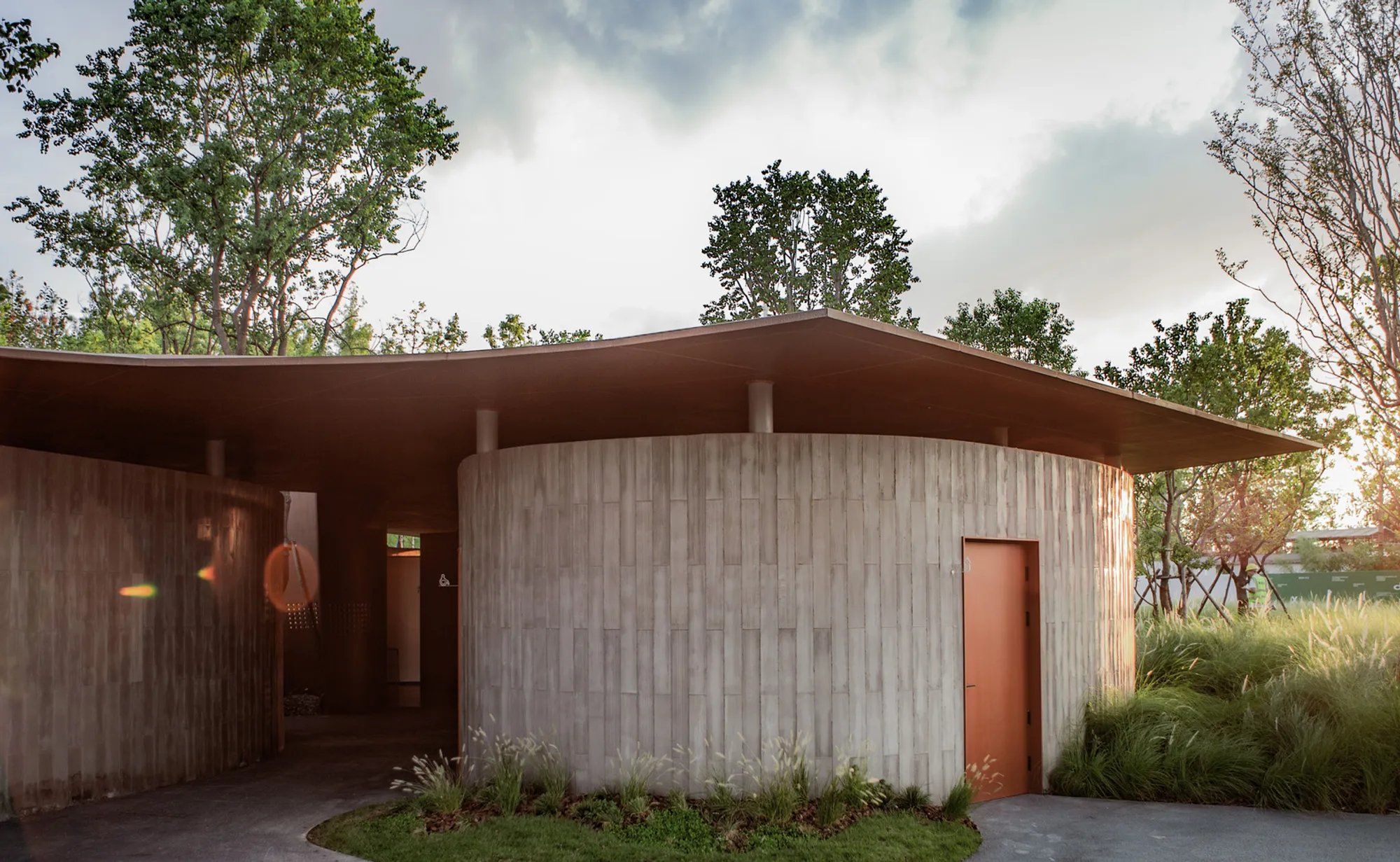
Wuhan LuxeIsland Pavilion: A Low-Intervention Landmark Blending Architecture and Nature
A floating, nature-integrated pavilion in Wuhan blending curved roofs, passive design, and earthy materials to create a tranquil, immersive landscape refuge.


A Tranquil Escape at Wuhan’s Urban Edge
The Wuhan LuxeIsland Pavilion by ZHIFEI ARCHITECTURE DESIGN redefines contemporary architectural engagement with nature. Located on the quiet outskirts of Wuhan, this 270-square-meter pavilion acts as a gateway to a cultural tourism destination envisioned as a natural refuge from dense city life.
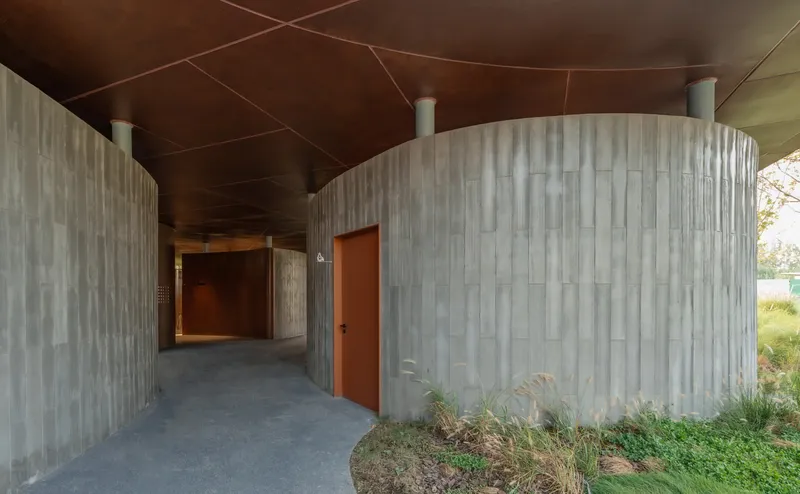
Designed by lead architect Chen Zhifei, the project embraces a philosophy of “low-intervention, high-integration”, allowing nature to remain the protagonist while architecture humbly frames the landscape. The design fosters a calm retreat where visitors can pause, reconnect with nature, and experience a slower rhythm of life.
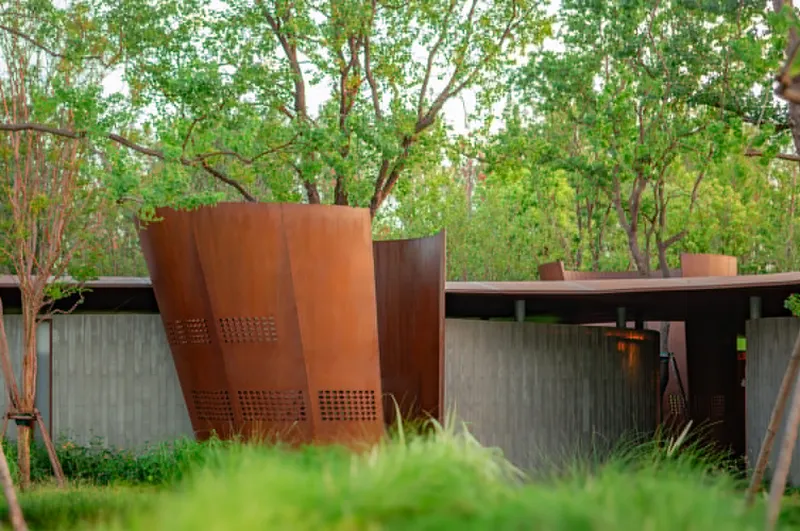
Nature-Led Design Philosophy
Wuhan LuxeIsland prioritizes ecological sensitivity and landscape continuity. The architects respond to the growing desire for nature-immersive public spaces by minimizing built impact and maximizing environmental experience.
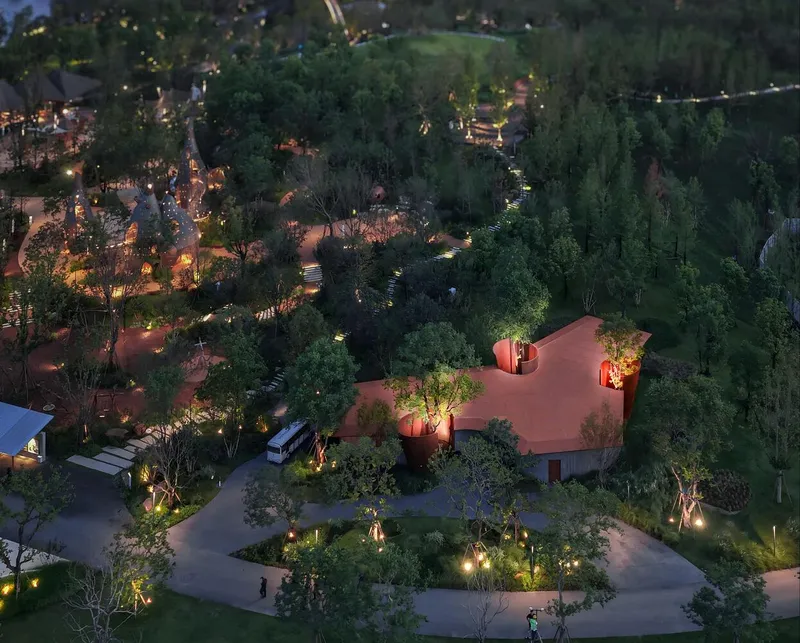
Rather than imposing form on the terrain, the pavilion follows the site’s contours, dissolving boundaries between the built and the organic. The result is a structure that feels discovered—a subtle presence rather than a dominating landmark.
Architecture as a Conversational Element
At LuxeIsland Pavilion, architecture and landscape exist in constant dialogue.
The pavilion acts as:
- A “vanishing presence” — subtle, quiet, and anchored in the environment
- A “conversationalist” — framing views, welcoming nature indoors, and encouraging contemplation
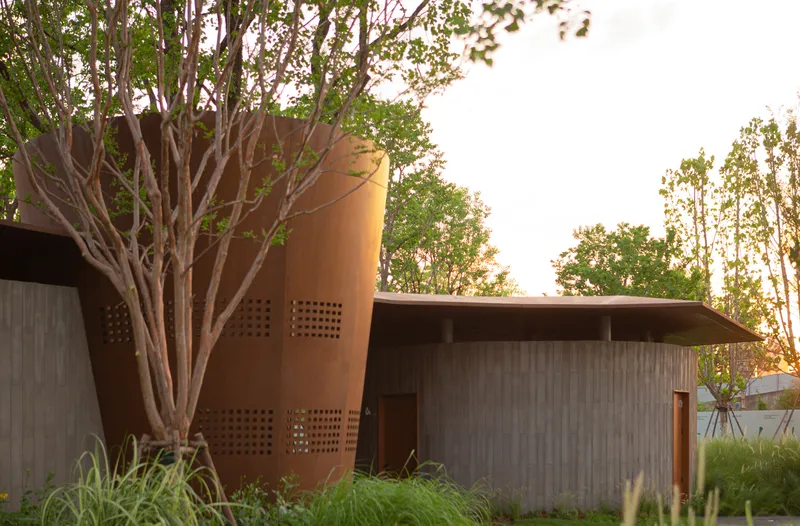
Wide eaves, sheltered grey zones, and fluid semi-open spaces create seamless indoor-outdoor transitions, offering shifting perspectives of foliage, light, wind, and water. These gradual spatial thresholds make movement through the pavilion feel intuitive and serene.
Floating Curved Roof & Sculptural Volumes
The signature architectural gesture is the softly curving floating roof, composed of three converging arcs that rest above three elliptical interior volumes housing park facilities and support functions.
Key design features:
- Independent elliptical forms reduce visual mass
- Roof and walls separated to enhance floating lightness and natural ventilation
- Passive environmental systems reduce energy reliance, allowing the architecture to “breathe” with the site
This sculptural arrangement creates a dynamic, fluid canopy that appears to hover above the landscape, evoking shelter without enclosure.
Tree-Centered Architectural Elements
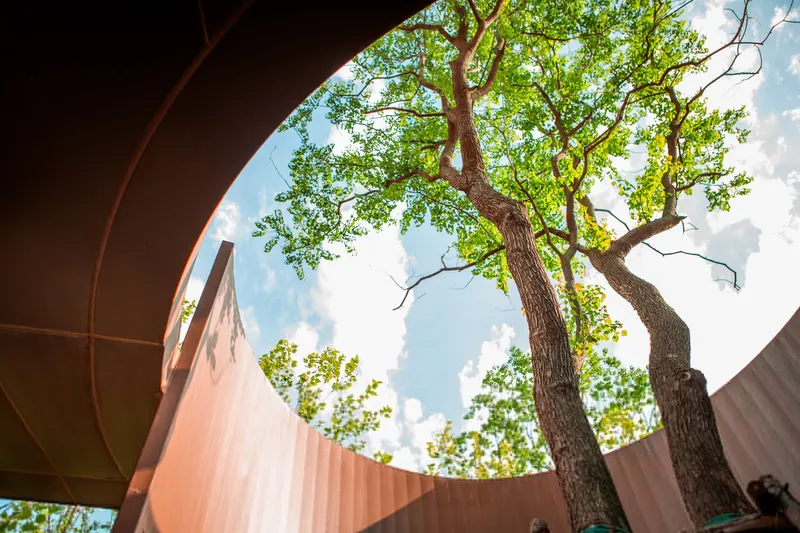
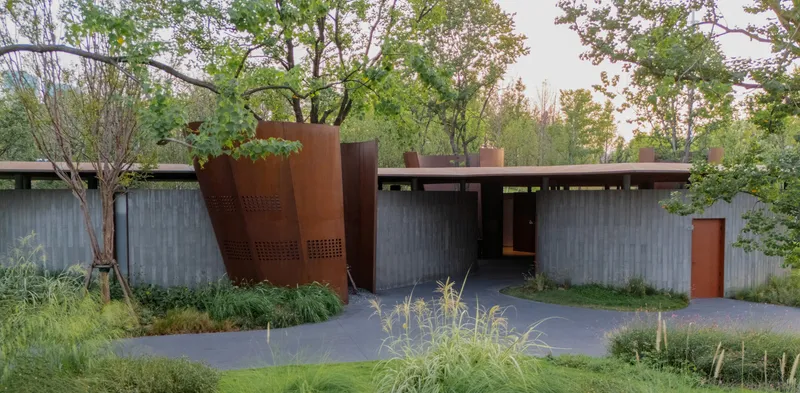
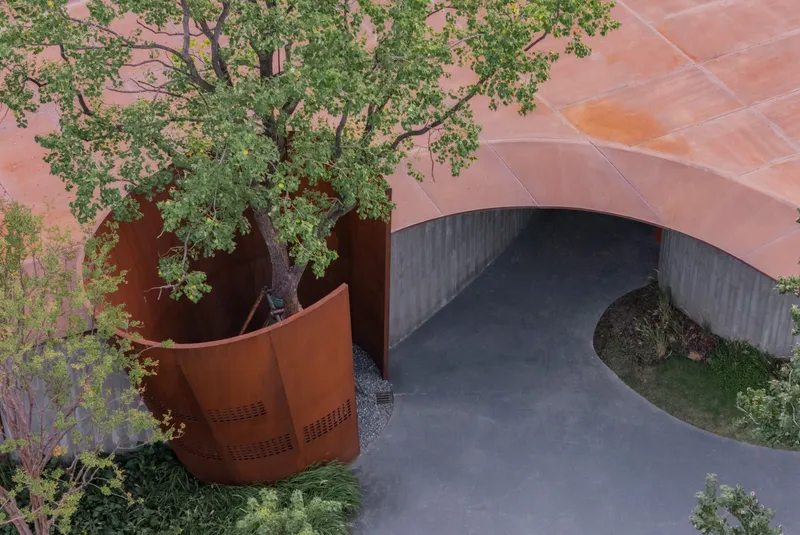
Embedded cylindrical cut-out "flowerpots" in both roof and walls form vertical apertures around existing trees. These create:
- Green-filled voids that celebrate mature plant life
- Spaces for shade, rest, and sensory immersion
- Direct interaction between visitors and nature
Architecture literally grows with the landscape—a symbiotic spatial experience where trees shape built form.
Materiality Rooted in Nature
A thoughtful palette reinforces the project’s environmental ethos:
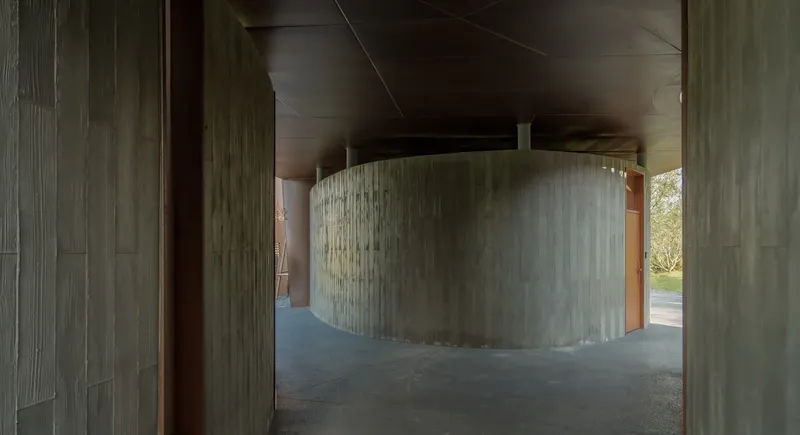
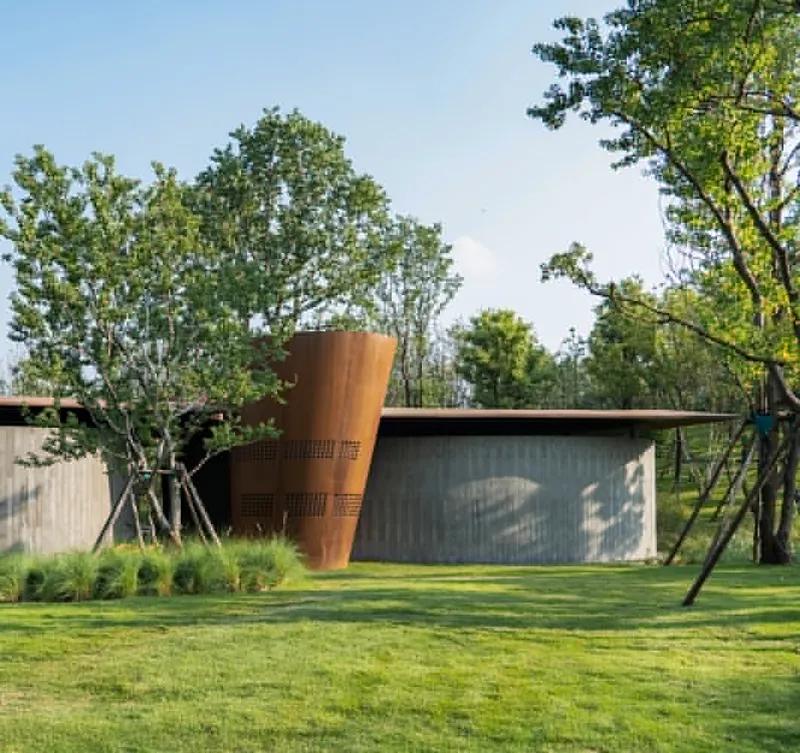
- Corten steel canopy that ages naturally, developing a rust-red patina
- Textured concrete walls that ground the structure in the earth
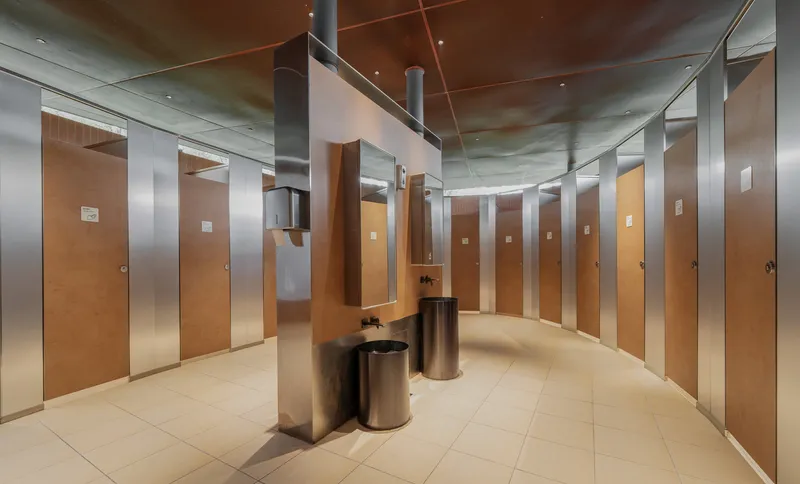
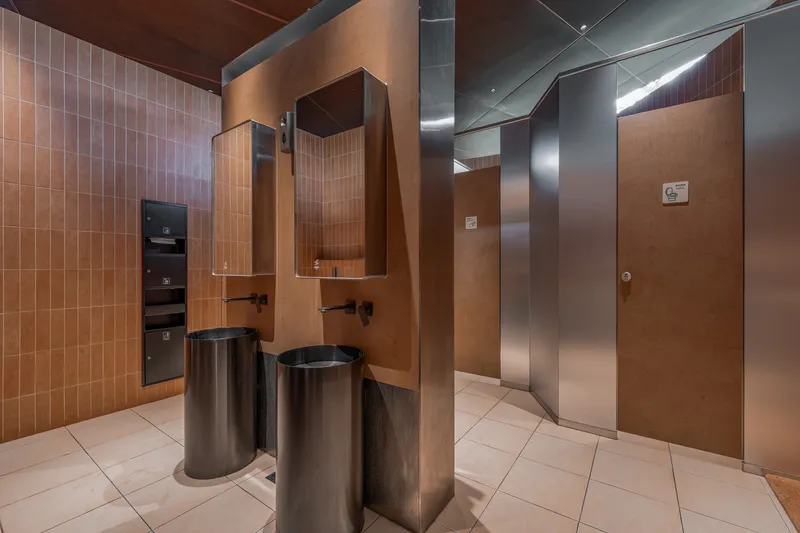
- Terracotta bricks and warm tiles that soften sensory transitions indoors
These materials weather gracefully, revealing time, climate, and growth—turning the pavilion into an evolving, living element of the site.
A Meditation Pavilion for Modern Life
Wuhan LuxeIsland Pavilion functions beyond a shelter—it's a mindful space for slow travel, quiet reflection, and sensory engagement. With elegance and restraint, the architecture demonstrates how simple, grounded design can create profound human-nature connections.


Popular Articles
Popular articles from the community


Lunar Spiral: Space Architecture Shaped by the Mathematics of the Universe
Lunar Spiral reimagines space architecture through Fibonacci geometry, lunar regolith, levitating habitats, and self-sustaining Moon living.

The Musturak Paradise: Senior Living Architecture for a Connected Future in Temara, Morocco
The Musturak Paradise reimagines senior living architecture in Temara via private homes, social spaces, culture, community, and shared care.

The Earth Pod: 3D Printed Homes for Resilient Refugee Communities
The Earth Pod reimagines refugee housing through 3D printed homes made from clay, combining resilience, self-sufficiency, and rapid shelter.

The Ocean Hive: Sustainable Architecture for a Self-Sufficient Civilization at Sea
The Ocean Hive imagines sustainable architecture at sea, where modular habitats, algae, wave power and ocean waste sustain a growing colony.


Similar Reads
You might also enjoy these articles


Hodi-Mandai Geram
Project Function: Preservation and revitalization of the Intangible heritage and socio-spatial identity of the Hodi by Housing, Cultural Memory Center, Sacred Grove, landscape, local tourism economy


Olio Towers: A Mid-Rise for Performers That Fuses Housing, Rehearsal, and Stage
Located blocks from Houston's Theater District, this modular tower stacks living units around a central performance atrium.

Oasis: Modular Green Housing Carved into Dhaka's Urban Fabric
A shortlisted Plugin Housing entry reclaims unauthorized settlements in Dhaka with stepped concrete volumes, green roofs, and ventilation-driven design.

Black Hole: A Floating Megastructure for the Post-Physical Era
Emiliano Mazzarotto envisions a spherical, self-scaling arena where e-sports, digital hotels, and holographic stadiums replace traditional public space.

Explore Architecture Competitions
Discover active competitions in this discipline



Challenge to reimagine the Iron Throne


Photograph architecture without architects


Illustrate the lost glory of Angkor Wat - Render Challenge


Design challenge to reuse E-waste
Comments (0)
Please login or sign up to add comments
No comments yet. Be the first to comment!