
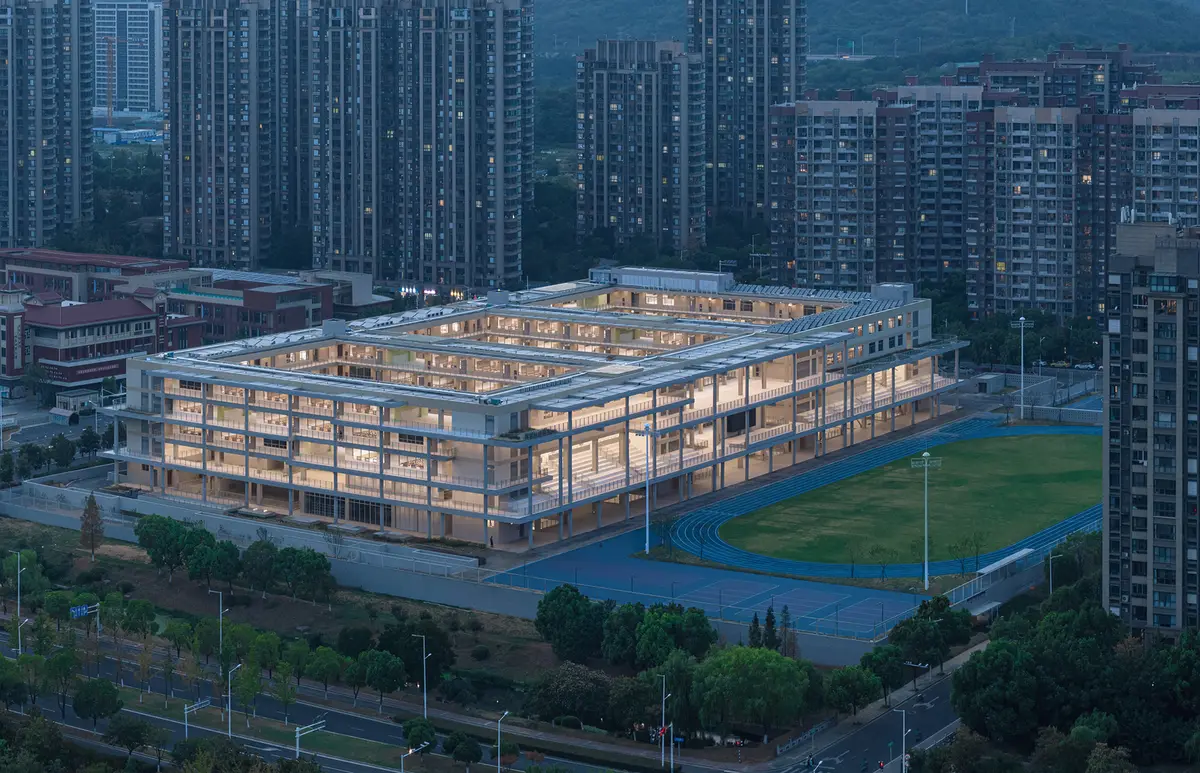
Xianlin School by Yanfei Architects: Redefining the Modern General School in Nanjing
Xianlin School by Yanfei Architects in Nanjing redefines general school design, combining large-scale functionality, student well-being, sustainable materials, and flexible learning spaces.


Architects: Yanfei Architects
Xianlin School represents a bold exploration of the "general school" concept, responding to historical, social, and economic influences in Chinese education. Originally, general education systems in China drew inspiration from the USSR after the founding of the People’s Republic of China. Early primary and secondary schools were locally funded, and school construction standards relied heavily on provincial design codes and reference atlases.
By 1985, compulsory education became a state-financed program, ushering in the era of nine-year compulsory education. Early school designs prioritized basic functional requirements: lighting, ventilation, noise control, and thermal comfort: reflecting large class sizes, limited resources, and the need to support students’ physical and psychological well-being. Xianlin School builds on this legacy while addressing the complexities of contemporary urban educational planning.
Balancing Functionality and Form
The 1986 Architectural Design Code for Primary and Secondary Schools introduced performance-based standards, gradually shifting focus toward form and architectural expression. By the 1990s, urbanization and demographic shifts led to school consolidation policies and the rise of larger, high-performing institutions. Amidst this evolution, the "general school" often became associated with standardized, formulaic designs.
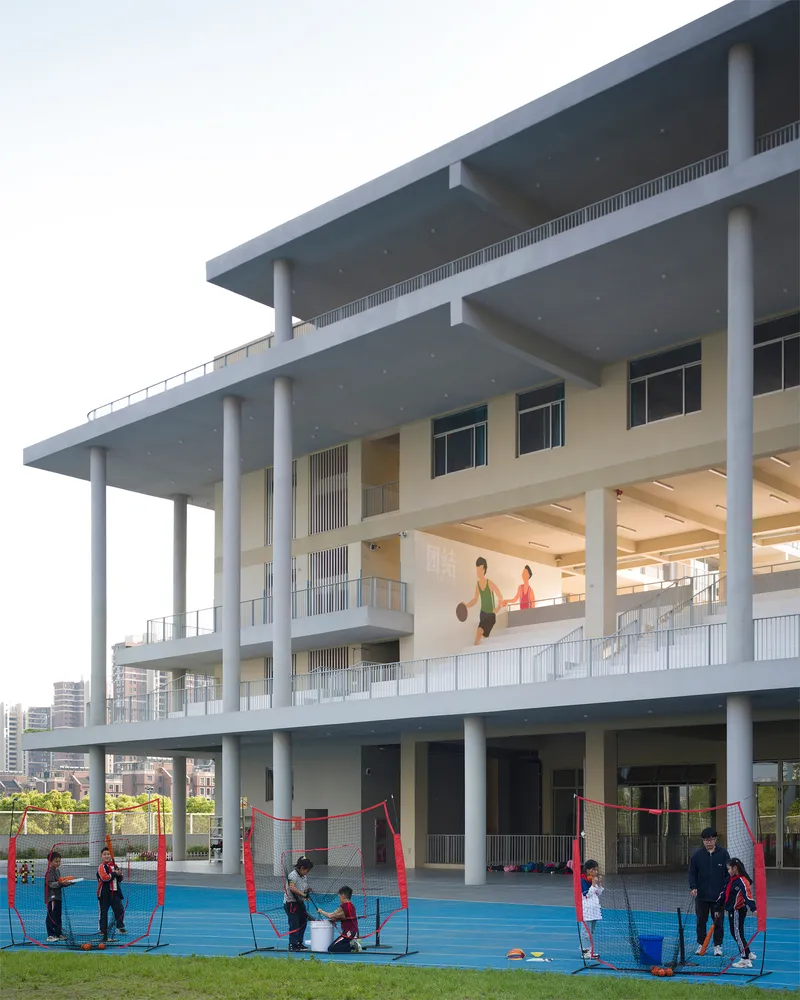
Xianlin School challenges this norm by reinterpreting generality as an opportunity for optimized performance, large-scale teaching efficiency, and enhanced student experience. The design addresses critical considerations such as building layout, playground integration, structural spans, classroom dimensions, public space proportions, prefabrication rates, lighting, ventilation, energy consumption, psychological safety, and traffic management, all encoded within a standard floor area ratio (FAR = 1.0).
Architectural Strategies and Spatial Design
Yanfei Architects implemented several key design strategies to harmonize functionality and spatial quality:
- North-South Double Corridors: Ensure uniform two-way natural lighting and efficient circulation.
- Symmetrical Window and Door Layouts: Maximize natural ventilation and improve classroom sightlines, enhancing visual connection between desks and blackboards.
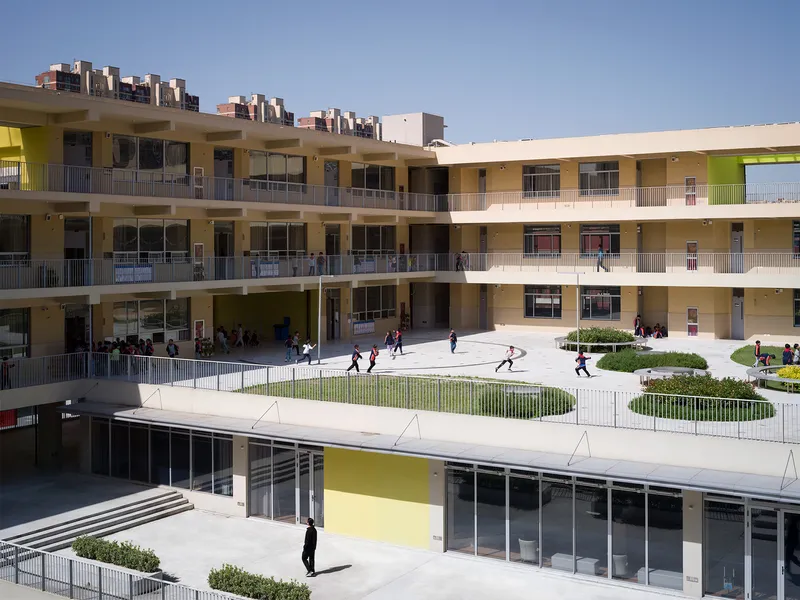
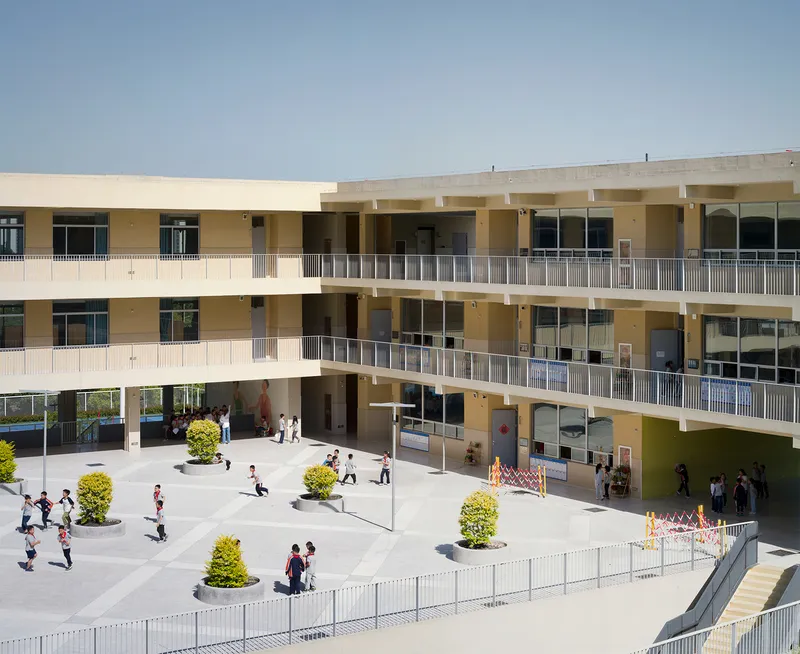
- 40m Wide Inner Courtyard: Provides ample outdoor activity space while minimizing noise interference between classroom rows.
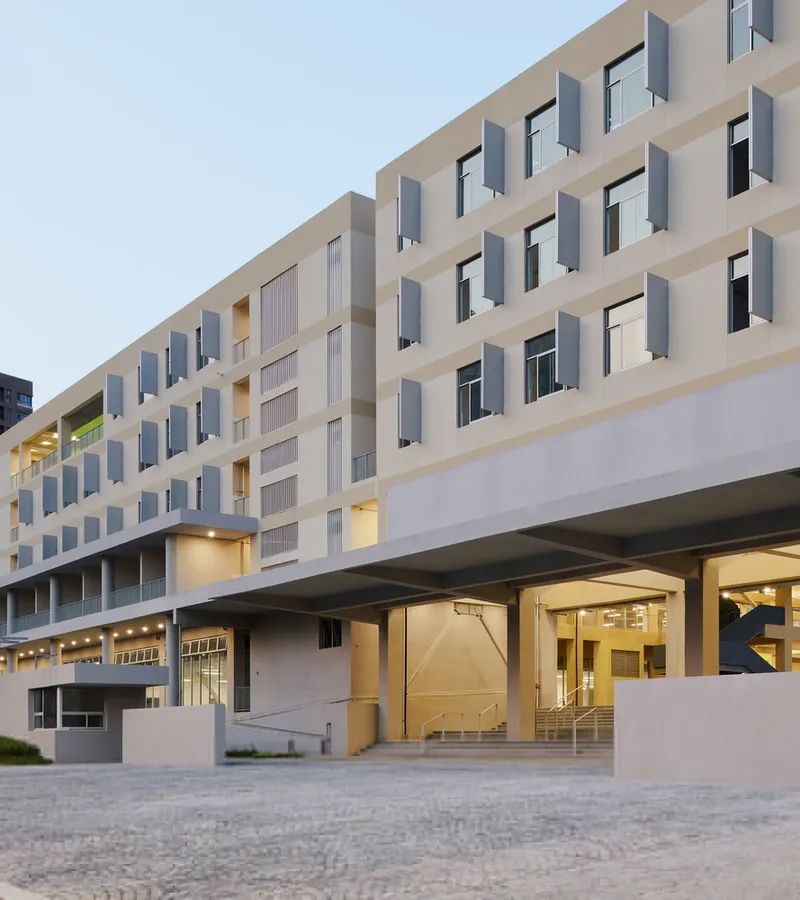
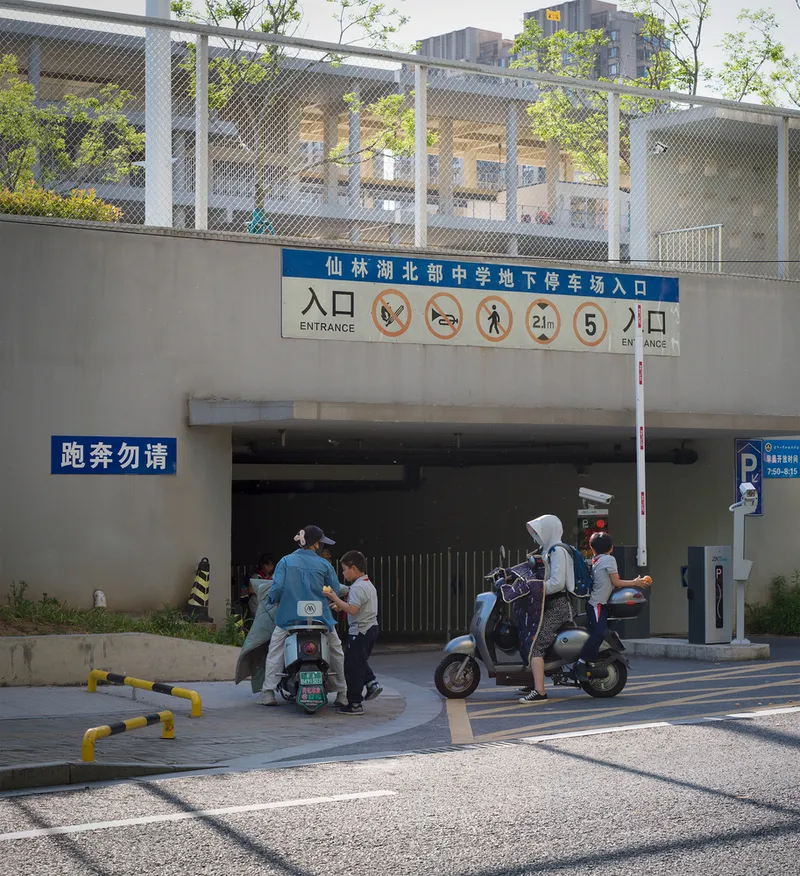
- Axial Modulus Grid (8.4m x 9.6m): Supports basement pick-up/drop-off areas, reduces local traffic congestion, and allows for future classroom expansion.
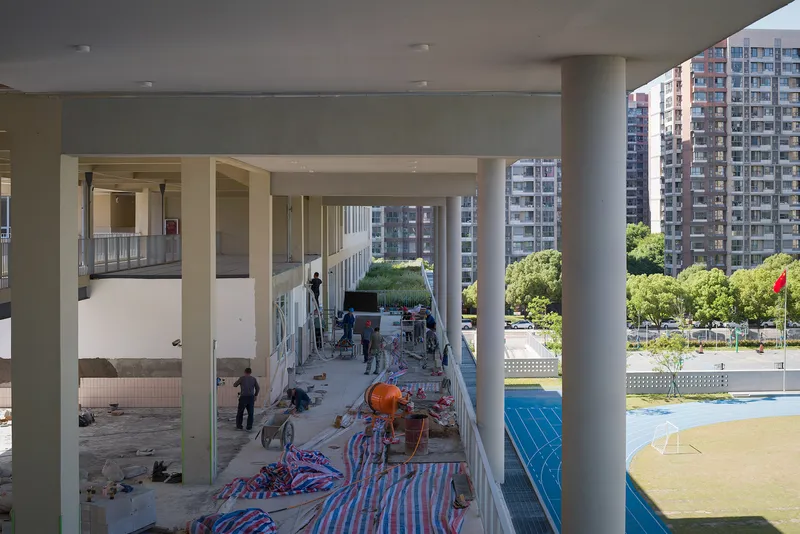
The resulting plan is a multi-dimensional, stacked layout: 3 to 5 floors for classrooms, 1 to 2 floors for public functions, and a basement floor dedicated to pick-up, drop-off, and equipment zones. The interplay of inner and outer corridors preserves historical collective memory of school playgrounds while addressing seismic safety and urban context.
Materiality and System Efficiency
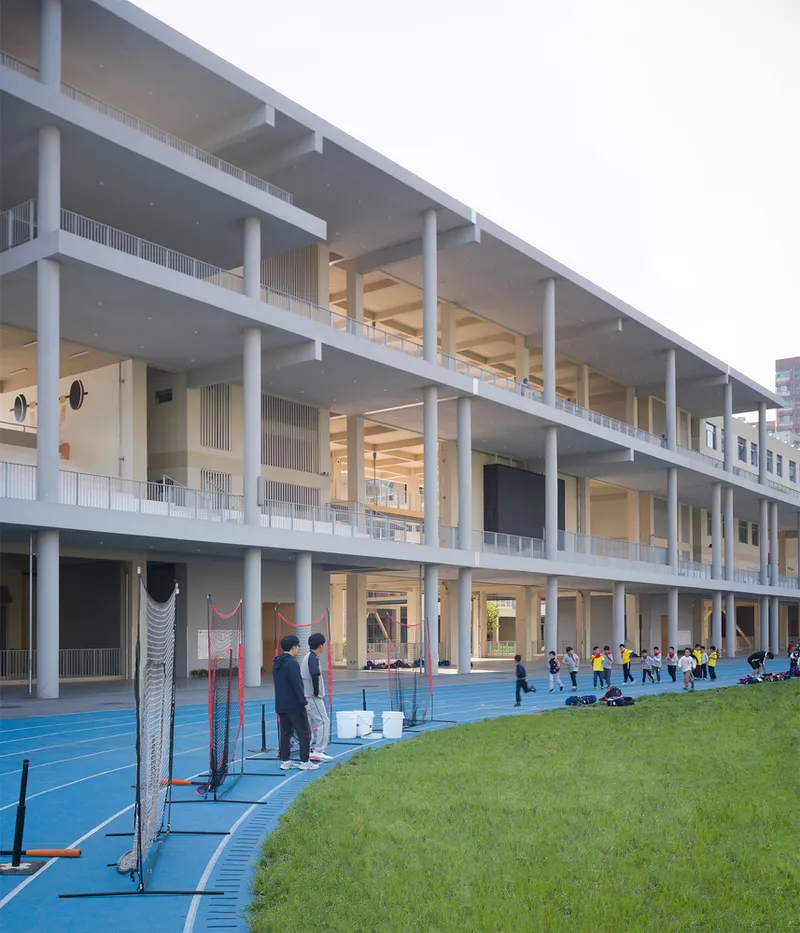
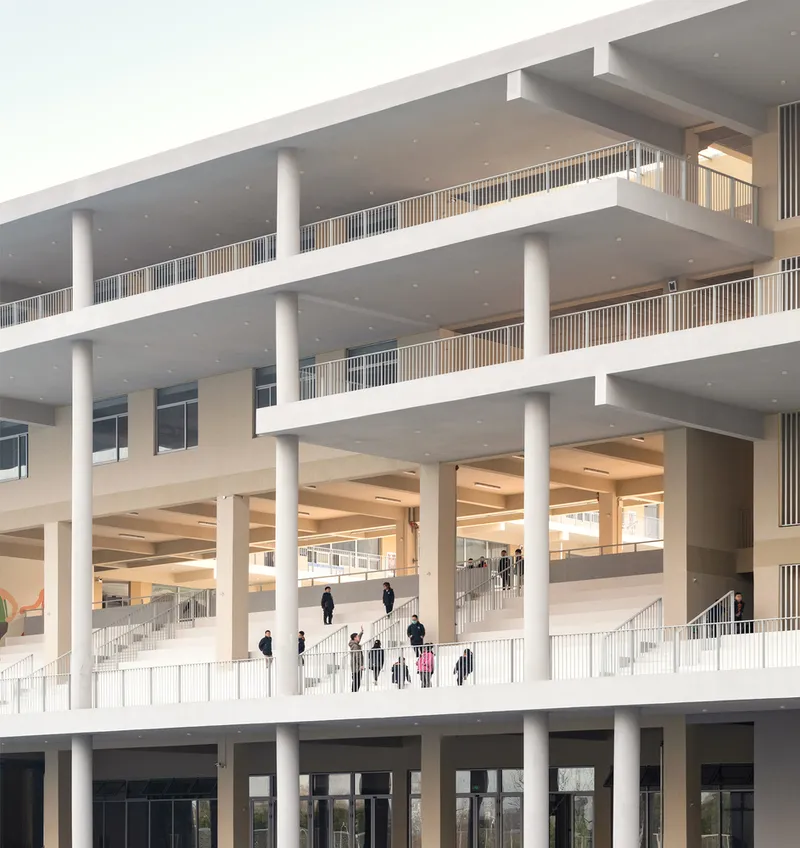
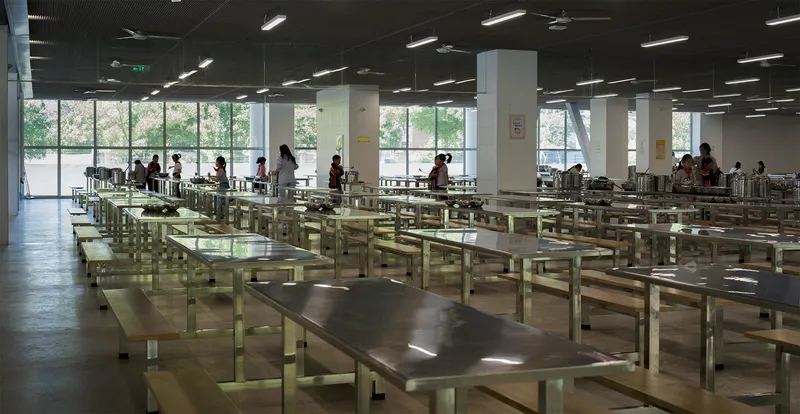
Xianlin School emphasizes durable, versatile, and low-maintenance materials. Electromechanical systems are integrated with minimal visual impact:
- Vertical pipe wells and roof-mounted air-conditioning units.
- Pre-built lighting embedded in laminated floor slabs.
- Coordinated drainage systems along corridors and balustrades.
These choices optimize energy efficiency and operational ease, supporting a sustainable, high-performing educational environment.
Student Experience and Everyday Life
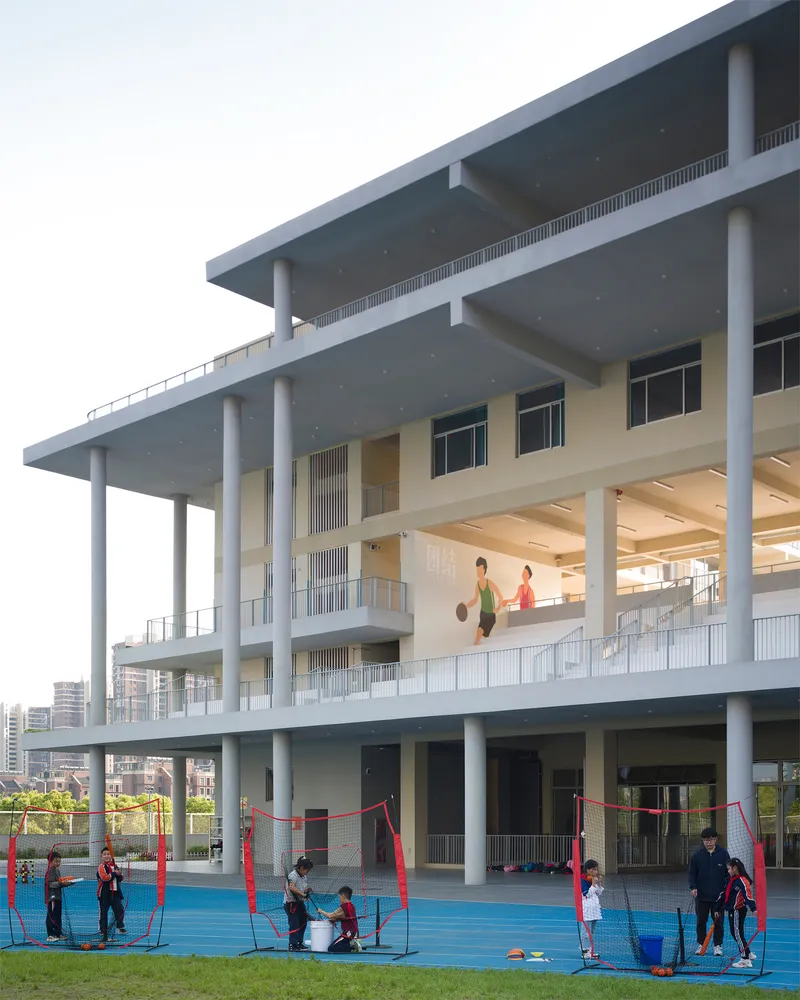
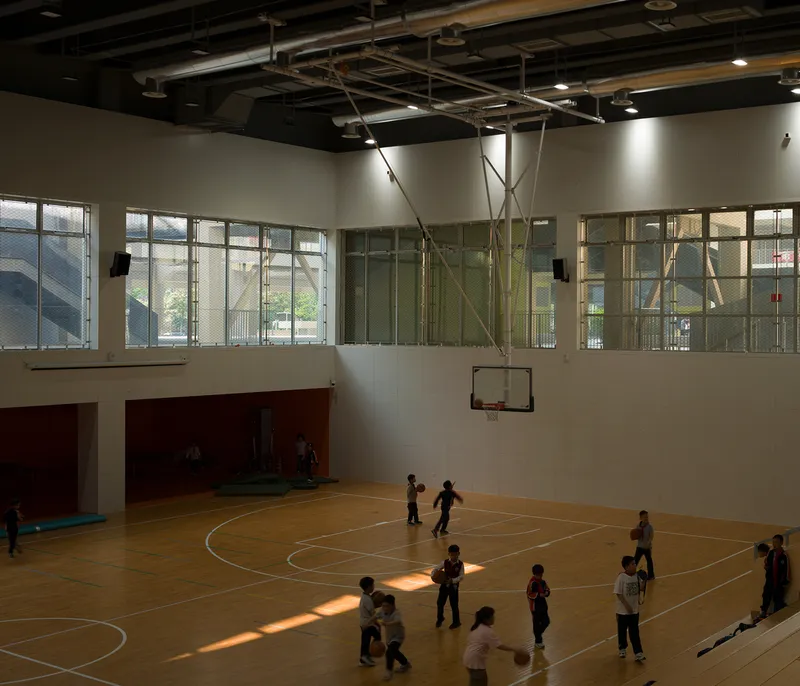
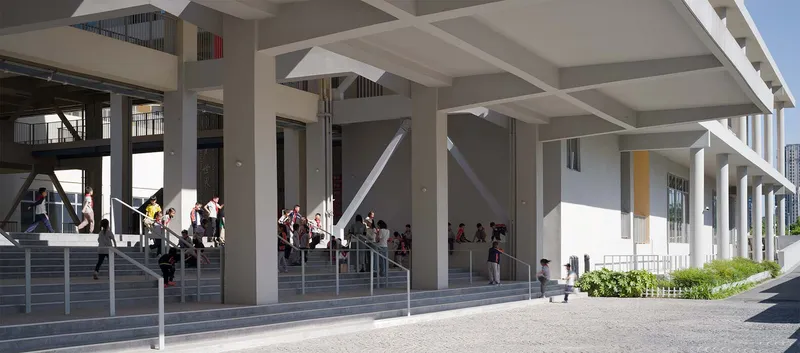
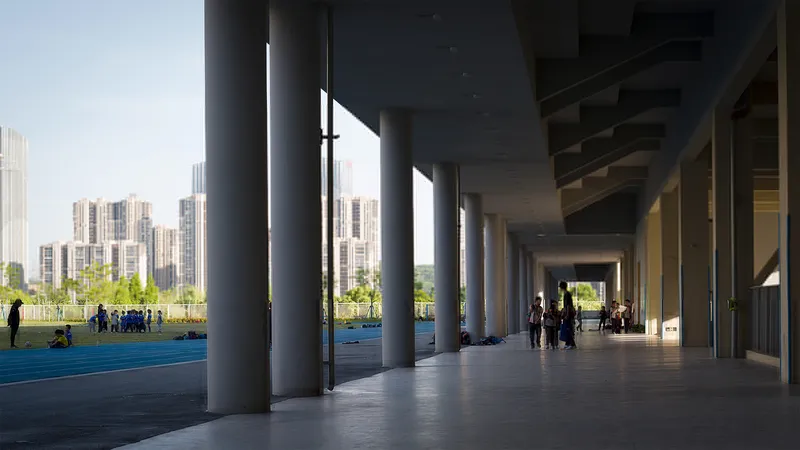
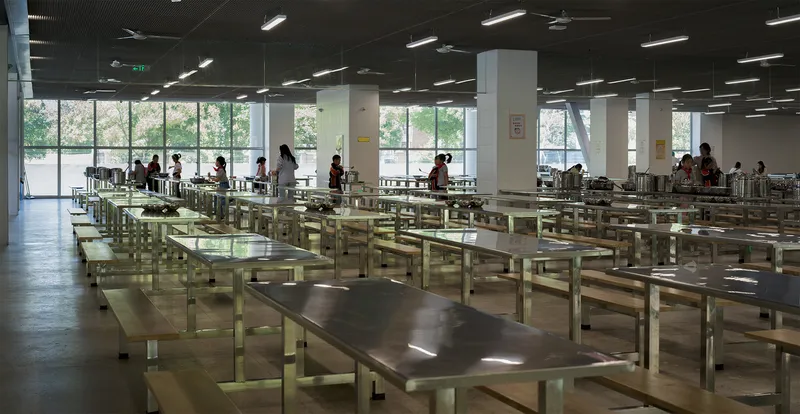
Currently functioning as the second-grade section of Jinling Elementary School (Xianlin Lake Campus), Xianlin School demonstrates its adaptability and capacity. Students enjoy vibrant spaces, from open classrooms and inner courtyards to bustling cafeterias and playgrounds. The design supports diverse activities, after-school sports, and club programs while fostering community interaction and psychological well-being.
The architecture accommodates both the realities of large-scale education and the joy of student life. Observing students in action reveals the school’s capacity, flexibility, and ability to provide a meaningful daily experience beyond mere functional requirements.

A New Vision for General Schools
Xianlin School redefines the concept of the general school. By balancing massification with quality design, it illustrates that standardized education can coexist with architectural innovation. Yanfei Architects’ approach demonstrates how thoughtful planning, material efficiency, and spatial organization can elevate ordinary school structures into inspiring, adaptable learning environments.
This project embodies the future of primary and secondary school design, merging historical awareness, urban context, and student-centered architecture.
All photographs are works of
Shengliang Su, Yanfei Architects, Hao Chen
Nanjing, China


Popular Articles
Popular articles from the community


Jaramillo Van Sluys Arquitectura and Urbanismo Turn a Demolished Registry Lot in Quito into an Orchard Plaza
In Quito's Centro Histórico, a 2,800 m² plaza exposes the San Agustín convent wall and redraws its lost Augustinian orchard in volcanic stone.

Juan García Correa, John González and Claudia Rueda Sink a Circular Amphitheater into a Manizales Engineering Building
On the La Nubia campus in Manizales, Colombia, the S1 Building folds labs and offices into a hillside of ramped lawns that double as a campus route.

David Macias Steps a Doorless Stone and Plaster House Down a Tropical Colombian Hillside
In the humid hills of Colombia, Threshold House replaces the front door with an open void and terraces its 850 m² down the slope instead of fighting it.

U.GA Architects Wraps an Oval Rooftop Pool in Curved Board-Formed Concrete on Busan's Jeollidan-gil
In Busan's Jeonpo-dong, a 454 m² mixed-use block stacks a neighborhood facility, guest rooms and an oval rooftop pool inside spiraling concrete walls.

Similar Reads
You might also enjoy these articles

Bamboo Housing Challenge 2026: Design Affordable, Sustainable Homes Using Bamboo
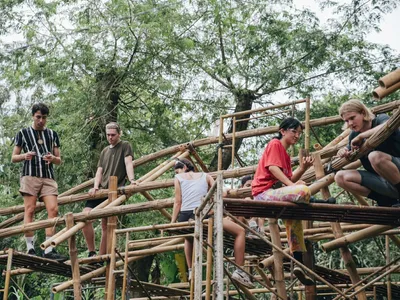
An international design competition by Bamboo U and IBUKU inviting architects and designers to reimagine affordable housing using bamboo — with the winning design built full-scale in Bali.

Computational Design & Education: Beegraphy Design Awards Introduces 7th Category (Featuring Jiyun's Innovative Approach)
Dive into Beegraphy’s 7th Design Awards category, where computational design meets education to create immersive, interactive learning tools, inspired by Jiyun’s work.

From Parametric Lighting to Urban Furniture: Join the 2nd Workshop in Beegraphy’s Computational Design Series
Dive into Cutting-Edge Design Techniques and Practical Applications with Industry Experts

Last Call: Unleash Your Architectural Genius in SHAK's Kindergarten Design Competition
Urgent call for architects to join SHAK's kindergarten design competition before the looming deadline

Explore Educational Building Competitions
Discover active competitions in this discipline

Challenge to design public laboratory

Challenge to reimagine the Iron Throne

Photograph architecture without architects

Illustrate the lost glory of Angkor Wat - Render Challenge
Comments (0)
Please login or sign up to add comments
No comments yet. Be the first to comment!